Can Bass and Trout Live in the Same Lake?
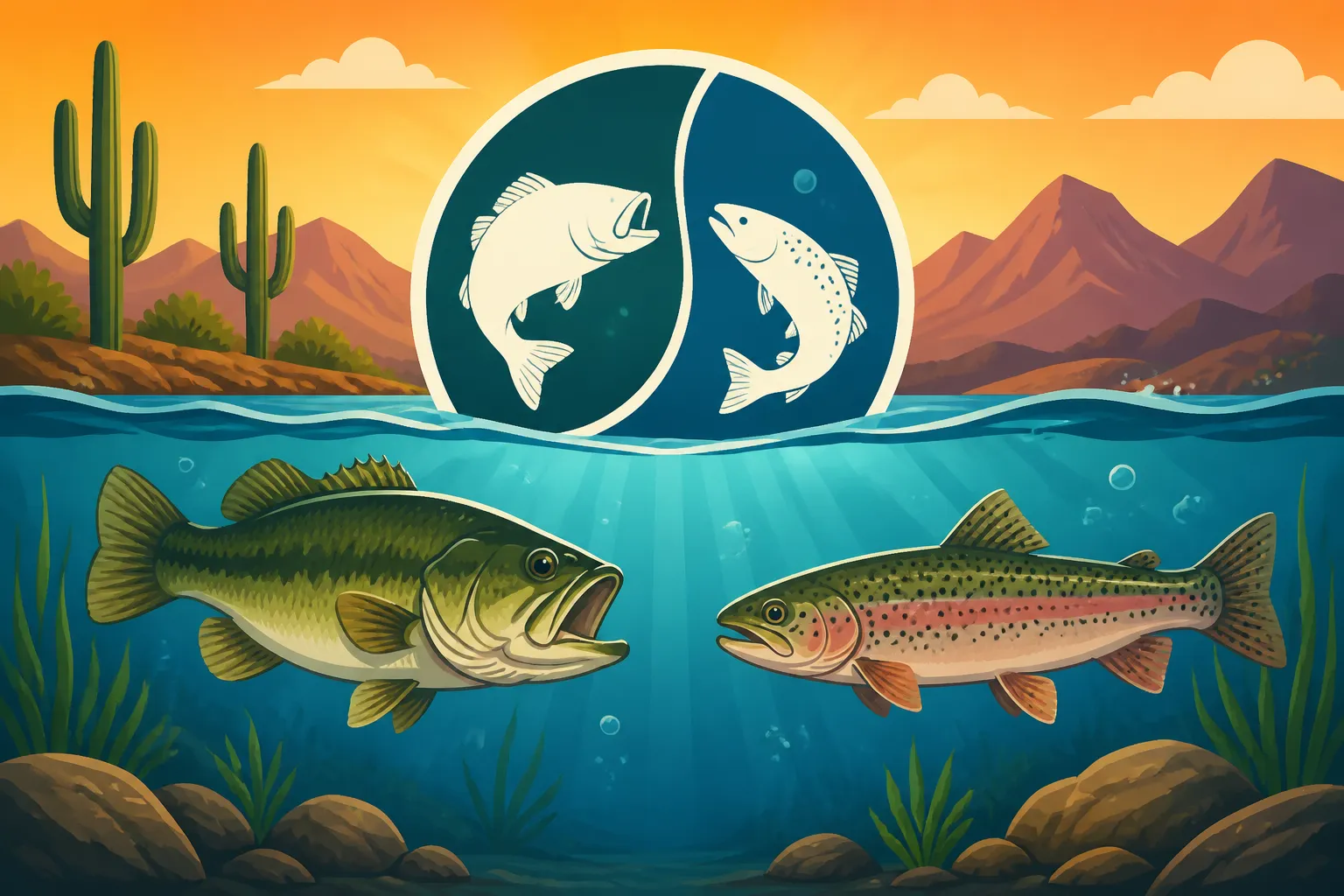
It’s a question many Arizona anglers ponder when they head out to their favorite lake: can the feisty largemouth bass and the cool-water loving rainbow trout actually coexist in the same body of water? It feels like a contradiction, doesn't it? One thrives in warmer, shallower waters, while the other prefers the crisp, oxygen-rich depths. Yet, in the diverse aquatic environments of Arizona, the answer isn't always a simple yes or no, and understanding the delicate balance at play can profoundly impact your fishing success. This guide will dive into the ecological realities that allow or prevent these popular sport fish from sharing the same lake, especially in our unique desert state.
Understanding the Distinct Needs of Bass and Trout
Before we can even begin to talk about coexistence, it's crucial to understand that bass and trout are fundamentally different fish with distinct ecological requirements. Imagine trying to get a desert tortoise and a polar bear to share the same backyard – it’s a bit of an exaggeration, but it highlights the challenge. These differences primarily revolve around water temperature, habitat preferences, and diet.
Water Temperature Requirements
Perhaps the most significant factor separating bass and trout is their preferred water temperature range. Bass, particularly largemouth bass, are warm-water fish. They thrive in water temperatures generally between 65°F and 80°F (18°C to 27°C). Their metabolism slows down considerably in colder water, making them less active and harder to catch. In the scorching Arizona summers, they seek out warmer shallows to feed and spawn, often tolerating temperatures that would be fatal to trout.
Trout, on the other hand, are cold-water species. Rainbow trout, a popular stocked species in Arizona, prefer water temperatures ranging from about 45°F to 65°F (7°C to 18°C). Anything above 70°F (21°C) can cause significant stress, and prolonged exposure to higher temperatures can be lethal. They need high levels of dissolved oxygen, which is more readily available in colder water. This physiological difference means that a lake must offer a specific thermal stratification – layers of water at different temperatures – for both species to survive.
Habitat and Structure Preferences
Beyond temperature, bass and trout also have distinct preferences for where they like to hang out. Largemouth bass are ambush predators, often found near cover and structure in shallower areas. Think submerged timber, thick weed beds, rocky points, and docks. They use these features to hide from prey and launch surprise attacks. You'll often find them cruising the edges of drop-offs or lurking under overhanging branches, perfectly camouflaged. Their habitat often includes mud, sand, and gravel bottoms where they can dig nests for spawning.
Trout, especially rainbow trout, prefer open, cooler water, often deeper in lakes or in moving currents in rivers and streams. In lakes, they'll gravitate towards the thermocline, the layer where the water temperature rapidly changes, which offers them the ideal temperature and oxygen levels. They're often found suspended in open water or near deep rocky structures, away from the dense vegetation preferred by bass. While they do seek cover, it's typically more about shade and protection from aerial predators in open water than hiding within dense aquatic plants.
Dietary Habits and Forage
Their diets also vary, though there can be some overlap, which sometimes leads to competition. Bass are opportunistic predators with a broad diet. Younger bass might munch on insects and small crustaceans, but as they grow, they shift to eating smaller fish like sunfish, minnows, crayfish, frogs, and even small snakes or rodents. They are aggressive eaters, especially during warmer periods, and are very visually oriented when hunting. If it moves and fits in their mouth, a bass might try to eat it. You can learn more about their preferences in a Largemouth Bass Fishing Guide for Arizona.
Trout, particularly stocked rainbow trout, primarily feed on aquatic insects, insect larvae, small crustaceans, and zooplankton. Larger trout will also consume smaller fish, including juvenile bass or other trout. In lakes where they coexist, trout might feed on the same baitfish that bass do, such as shad or minnows, leading to some degree of food competition. However, their primary foraging grounds often differ, with trout patrolling open water column while bass remain closer to cover.
Factors Enabling Coexistence in Arizona Lakes
Given their differing needs, it might seem impossible for bass and trout to share the same aquatic home. Yet, in many Arizona lakes, they do! This is largely thanks to specific environmental conditions and strategic management by wildlife agencies.
Thermal Stratification: The Key to Shared Waters
The most critical factor allowing bass and trout to coexist in a single lake is thermal stratification. Many of Arizona's larger, deeper reservoirs, especially those at higher elevations or with significant depth, exhibit this phenomenon, particularly during the warmer months. Imagine the lake as a layered cake:
- Epilimnion: The top layer of water, warmed by the sun. This is where you'll find the bass, enjoying the warmer temperatures and abundant shallow-water cover.
- Thermocline: A middle layer where the temperature drops rapidly. This can be a transition zone, and sometimes a prime feeding area for both, but more suitable for trout.
- Hypolimnion: The deepest, coldest layer. This is the trout's sanctuary during the summer, where temperatures remain consistently cool and oxygen levels are adequate.
Without this distinct layering, if a lake remains uniformly warm throughout, trout simply cannot survive year-round. Conversely, if a lake is too shallow and cold throughout, bass would struggle to thrive and reproduce. Arizona's unique landscape, with deep mountain lakes and large desert reservoirs fed by snowmelt, often provides these crucial thermal refuges.
Lake Size and Depth
The sheer size and depth of many Arizona lakes play a significant role. Larger and deeper lakes offer a greater diversity of habitats and thermal zones. A vast reservoir like Lake Powell or Roosevelt Lake isn't just one homogeneous body of water; it has countless coves, channels, deep main lake basins, and varying shorelines. This expansive environment allows both species to find their preferred conditions without constantly competing for the exact same space.
In smaller, shallower ponds, coexistence is far less likely. If a pond is too shallow, it heats up uniformly during the summer, eliminating the cold-water refuge trout need. In such cases, one species will typically outcompete or outlast the other, or only one species will be stocked. This is why many community fishing ponds, which are generally smaller, are managed specifically for either bass/catfish or periodically stocked trout in cooler months.
Stocking Programs and Management
The Arizona Game and Fish Department (AZGFD) plays a vital role in managing species coexistence, particularly with trout. Many of Arizona's trout fisheries are "put-and-take" fisheries, meaning trout are regularly stocked for anglers to catch. These stocked trout might be introduced when water temperatures are favorable, often in the cooler months, and they are typically larger fish ready to be caught. This allows anglers to pursue trout in lakes that might otherwise be too warm for them to naturally reproduce or survive year-round.
In some cases, lakes are managed for "two-story" fisheries, specifically designed to support both warm-water (bass) and cold-water (trout) species. This involves careful monitoring of water quality, temperature, and forage availability. The stocking schedule for trout is often timed to coincide with favorable conditions, ensuring they have the best chance to thrive for a period. For instance, you can check the Trout Stocking Season in Arizona to see when and where trout are being introduced.
Challenges and Conflicts When Bass and Trout Share Water
While coexistence is possible under the right conditions, it's not without its challenges. The natural instincts and ecological roles of bass and trout can lead to conflicts, primarily around predation and competition for food.
Predation: Bass Eating Trout
Let's not beat around the bush: bass are predators, and if a trout fits in their mouth, they'll eat it. Smaller, recently stocked trout are particularly vulnerable to larger bass. When trout are released into a lake, especially during periods when bass are actively feeding in shallower waters, they can become an easy meal. This is a natural part of the food web, but it can impact trout survival rates and the overall fishing experience if too many stocked fish are quickly consumed.
This predation pressure is one of the reasons stocking programs are carefully planned. Agencies often stock larger trout to reduce vulnerability, or release them into areas where bass activity is lower. However, it's an ongoing battle, and any angler who has caught a bass with a trout tail sticking out of its mouth can attest to this dynamic.
Competition for Forage
While their primary diets differ, there can be overlap, especially when baitfish like shad or smaller panfish are abundant. Both bass and larger trout will readily consume these protein-rich food sources. If the forage base is limited, competition can become intense, potentially impacting the growth rates and overall health of both populations.
Consider a hypothetical scenario in a reservoir like Lake Pleasant. If threadfin shad populations are low, both the striped bass and the occasional stocked rainbow trout, along with the abundant largemouth, will be vying for every available shad. This competition can stress the ecosystem and make fishing tougher for anglers as fish become more spread out and selective. Understanding the Fish Species Guide for Arizona Lakes can help you recognize the full cast of characters competing for food.
Environmental Stress and Imbalance
Even in a stratified lake, environmental conditions can shift, putting stress on one or both species. Prolonged droughts, for example, can lead to lower lake levels, reducing overall depth and potentially shrinking the cold-water hypolimnion. This can push trout into warmer, less oxygenated water, or force them into closer proximity with bass, increasing predation and competition.
Conversely, unusually cold summers or heavy snowmelt can alter the thermal layers, sometimes making areas less ideal for bass. These natural fluctuations, coupled with human impacts, mean that the balance allowing coexistence is always somewhat precarious and requires constant monitoring and adaptive management strategies.
Identifying Lakes Where Both Species Thrive in Arizona
So, knowing all this, how can an Arizona angler identify a lake where they might realistically target both bass and trout? It comes down to looking for those critical characteristics we’ve discussed.
Deep, Stratified Reservoirs
Your best bet for finding bass and trout in the same waters will be Arizona’s larger, deeper reservoirs, particularly those at higher elevations. These are the lakes most likely to maintain a cold-water refuge for trout even during the peak summer heat.
- Payson Area and White Mountains: Lakes like Woods Canyon Lake, Willow Springs Lake, and Chevelon Canyon Lake are excellent examples. These high-elevation lakes are naturally cooler and deeper, making them prime trout habitat. Yet, many also hold good populations of bass, especially smallmouth bass, which are more tolerant of cooler water than their largemouth cousins and thrive in rocky, canyon environments. For more specific information, you might look into a Best White Mountains Fishing Lakes in Arizona guide.
- Central Arizona Lakes: Larger reservoirs like Roosevelt Lake, Apache Lake, and Canyon Lake, while primarily known for their incredible bass fishing (largemouth and smallmouth), also receive trout stockings, particularly in the cooler months or in specific arms that offer deeper, cooler water. It's not uncommon to catch a bass and then switch gears to target trout on the same trip in these expansive bodies of water. Roosevelt Lake Arizona Fishing Guide can provide deeper insights.
Seasonal Opportunities and Timing Your Trip
Even in lakes where both species are present, the best time to target both simultaneously might be during specific seasons. Spring and fall often present the sweet spot. During these transition periods, water temperatures are more moderate throughout the lake, and both bass and trout may be found in similar depth ranges, making them more accessible to anglers.
In summer, you'll often have to adapt your techniques dramatically: deep-water tactics for trout (think trolling or deep jigging) and early morning/late evening topwater or shaded cover fishing for bass. Winter fishing in many desert lakes sees bass slow down significantly, while stocked trout remain active and are a primary target. Understanding Arizona Fishing Seasons Explained is crucial for planning your multi-species adventure.
How to Fish for Both Species in Shared Waters
To successfully target both bass and trout in the same lake, you'll need a versatile approach.
Gear and Tackle Adaptations
You don't necessarily need two completely different setups, but having options helps. For bass, you might favor a medium-heavy rod with a baitcasting reel, spooled with heavier line for pulling fish out of cover. For trout, a lighter action rod with a spinning reel and lighter line is often preferred for more delicate presentations.
However, a good medium-action spinning rod with 6-10 lb test line can be a decent compromise for both. You'll want a tackle box with a variety of lures. For bass, think crankbaits, jigs, plastic worms, and spinnerbaits. For trout, consider small spoons, spinners, powerbait, or even fly tackle if you're into that. Looking for the Best Baits and Lures for Arizona Fishing can give you some excellent ideas. A good tackle box setup that allows you to easily switch between lures is a must. You can find many versatile tackle boxes on Amazon to keep your gear organized for both species.
Strategic Location and Presentation
When targeting both, you'll often need to adapt your location and presentation. Start by focusing on areas that act as transition zones – points where shallow water drops off into deeper areas, or creek channels that feed into the main lake. These are often places where trout might move up from the depths to feed, and bass might be lurking on the edges.
For bass, cast towards visible structure or cover in shallower water. Work your lures slowly and deliberately. For trout, try trolling in open water, casting small lures or powerbait from shore into deeper channels, or drift fishing with live bait like worms or minnows. If you're struggling to find the fish, a portable fish finder, easily available on Amazon, can help you locate those deeper thermal layers where trout might be holding.
Conclusion
The idea of bass and trout coexisting in the same Arizona lake isn't a myth; it's a testament to the resilience of nature and the thoughtful management of our state's fisheries. While they are distinctly different creatures with unique needs, factors like thermal stratification, the sheer size and depth of our reservoirs, and strategic stocking programs make it a reality.
As an angler, understanding these dynamics not only answers the question of "can they?" but also equips you with the knowledge to target both species more effectively. It encourages a more versatile approach to your fishing, inviting you to explore different depths, techniques, and seasons. So next time you're on a beautiful Arizona lake, remember that beneath the surface, a fascinating ecological dance is taking place, often with both a warm-water predator and a cold-water beauty sharing the same stage. Knowing this, you can better appreciate the complex environments we're lucky enough to fish. Don't forget to pack plenty of sunscreen and a wide-brimmed hat, easily found on Amazon, because you'll want to spend all day exploring these incredible waters.
Disclaimer
This article is for general informational purposes only and does not constitute professional advice. Laws, prices and regulations vary by location and change over time. Consult a qualified professional for guidance on your specific situation.