Smallmouth Bass Fishing Guide for Arizona
Ah, the smallmouth bass! If you've ever tangled with one of these feisty, hard-fighting fish in Arizona's sun-drenched waters, you know the thrill. But if you're like many anglers, you might find yourself scratching your head, wondering where to find them and how to coax a bite when these bronze beauties can be notoriously finicky. This comprehensive guide is going to dive deep into everything you need to know to successfully target, hook, and land smallmouth bass across the diverse and sometimes challenging fishing environments Arizona offers, helping you turn those frustrating days into triumphant tales.
Understanding Arizona's Smallmouth Bass Landscape
Arizona, with its vast deserts and surprising pockets of water, might not be the first place that comes to mind for smallmouth bass. Yet, our state harbors some truly exceptional smallmouth fisheries, offering anglers a unique challenge and incredible reward. These aren't your typical pond bass; Arizona smallmouth are often lean, mean, and incredibly powerful, perfectly adapted to their rocky, clear-water environments. Understanding their preferred habitats and characteristics is the first step to becoming a successful smallmouth angler here.
Where Smallmouth Bass Thrive in Arizona
Unlike their largemouth cousins who prefer weedy, shallow, and often murkier waters, smallmouth bass are creatures of clear, cool water with plenty of rock and gravel. Think deep main lake points, rocky outcroppings, submerged ledges, and canyon walls. They love structure – big boulders, rock slides, and even standing timber, anything that offers ambush points and protection. The Arizona lakes where you'll typically find them in abundance usually fit this bill perfectly. Lakes like Powell, Apache, and sometimes even the cooler, deeper sections of other reservoirs, become prime smallmouth territory. Their environment shapes them, making them leaner, stronger, and more aggressive when disturbed. They're often found deeper than largemouth, particularly during the hot summer months, seeking out cooler, oxygen-rich water.
What Makes Arizona's Smallmouth Unique
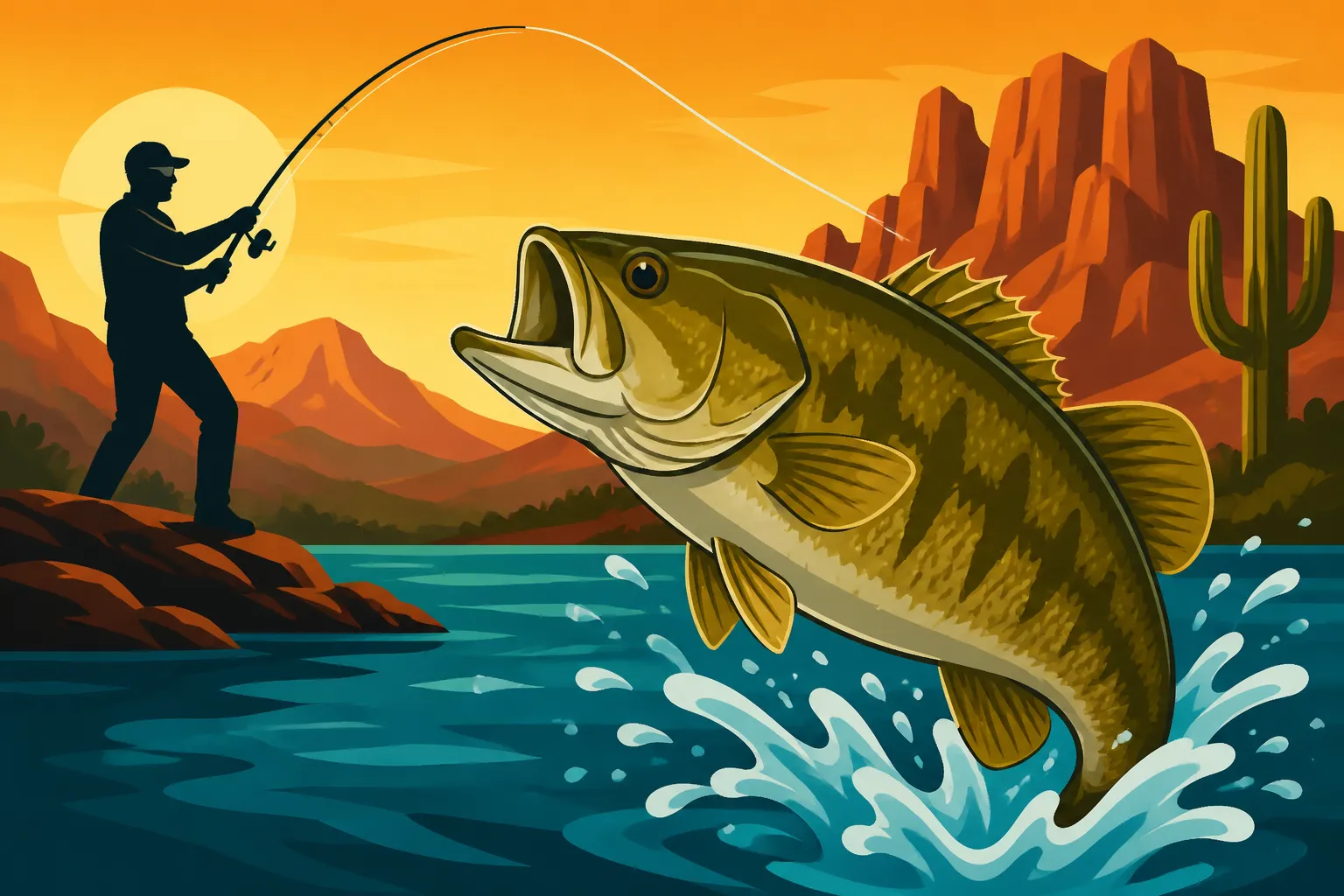
Arizona's smallmouth bass are truly special. Because many of our lakes are massive, deep canyon reservoirs with incredibly clear water, these fish have adapted to a very sight-oriented hunting style. This means they can be highly particular about lure presentation, color, and even retrieve speed. They are also notoriously hard fighters, famous for their aerial acrobatics and powerful runs. You might hook into a smallmouth that feels twice its size on the other end of your line, leaping and shaking its head in an attempt to throw the hook. The forage base in these clear-water lakes, often consisting of crayfish, shad, and even smaller baitfish, also influences their behavior and preferred diet. Targeting these fish often requires a blend of patience, persistence, and an understanding of their predatory instincts within these unique desert lake ecosystems. You'll find that an Arizona smallmouth, even a modest one, fights with a ferocity that can rival much larger fish from other regions.
Identifying Smallmouth Bass
Distinguishing a smallmouth bass from a largemouth bass is pretty straightforward once you know what to look for, but it's crucial for understanding their habitat and feeding preferences. The most obvious difference lies in the jawline: on a smallmouth, the upper jaw does not extend beyond the back of the eye when the mouth is closed. For a largemouth, it extends well past. Smallmouth also typically have vertical bars or splotches along their flanks, giving them that characteristic "bronze" coloration, rather than the distinct horizontal stripe of a largemouth. Their dorsal fin is usually connected, with little to no deep notch separating the spiny and soft-rayed parts, a subtle but tell-tale sign. Understanding these physical cues not only helps with identification but also reinforces the fact that these are different species with distinct preferences. You can dive deeper into these distinctions with our guide on Largemouth vs Smallmouth Bass Identification.
Essential Gear for Arizona Smallmouth Bass
Successfully targeting Arizona's smallmouth requires a thoughtful approach to your gear. These fish live in environments where presentation often trumps brute force, and their fighting prowess demands tackle that can stand up to the challenge. Investing in the right tools will make your days on the water more productive and enjoyable.
Rods and Reels for Precision Casting
For smallmouth bass, especially in clear Arizona waters, finesse and sensitivity are key. I generally recommend spinning tackle for most smallmouth applications, particularly when using lighter lures and lines. A medium-light to medium power spinning rod, typically 6'6" to 7'2" in length, with a fast action tip, is ideal. This combination allows for long, accurate casts of lighter baits and provides the sensitivity needed to detect subtle bites. The fast action helps you feel those quick taps and set the hook effectively, even on a fish far from the boat. For reels, a good quality 2500 or 3000 series spinning reel provides a smooth drag system, which is absolutely critical for fighting strong smallmouth on lighter lines, preventing break-offs during their famous jumps and runs. You'll find a great selection of suitable options for both rods and reels on platforms like Amazon. For more general advice, you might check out our guide on Best Fishing Rods for Bass in Arizona and Best Fishing Reels for Beginner Anglers in Arizona.
Line Choices for Clear Water and Structure
Your line choice is paramount when fishing for smallmouth in Arizona's clear lakes. Fluorocarbon is often the top choice for its near invisibility underwater, crucial when fish are wary. A mainline of 6-10 pound test fluorocarbon is a good starting point, balancing strength with stealth. Some anglers prefer to use braided line as a mainline (10-15 pound test) for its incredible sensitivity and casting distance, adding a 6-10 foot fluorocarbon leader (6-10 pound test) tied with an FG knot or similar strong knot. The braid-to-fluoro setup offers the best of both worlds: casting distance and feel from the braid, and invisibility from the fluorocarbon. Monofilament can also work in certain situations, especially for topwater lures where its buoyancy is an advantage, but its visibility can be a drawback in extremely clear conditions. Always check your line regularly for abrasions, especially after fishing around rocky areas, as a small nick can lead to a heartbreaking break-off when you've got a big smallmouth on the line.
Tackle Box Staples: Lures and Baits
When it comes to smallmouth bass in Arizona, variety is the spice of life, but some lures are perennial favorites.
- Jigs: Finesse jigs (1/8 to 1/4 oz) with small craw or grub trailers are fantastic for mimicking crayfish, a primary smallmouth food source. They are incredibly versatile for fishing rocky bottoms and submerged structure. Consider natural colors like greens, browns, and black/blue.
- Drop Shots: This technique is a smallmouth killer, especially when fish are deep or lethargic. Small soft plastics (3-4 inch worms, minnow imitations, or tubes) rigged on a drop shot hook, with a weight below, allow the bait to suspend perfectly in the strike zone. This is a must-have setup for those clear, deep-water scenarios. You can learn more with our Drop Shot Techniques for Smallmouth Bass guide.
- Crankbaits: Smaller, natural-colored crankbaits that dive to different depths can be very effective, particularly in the spring and fall. Shad and crawfish patterns are usually excellent choices.
- Soft Plastics: Tubes, grubs, and small worms rigged on jig heads or weightless are always in my tackle box. "Ned rigs" have also become incredibly popular for their subtle, irresistible action.
- Topwater: Don't forget walking baits or poppers for those glorious early morning or late evening bites, especially around prominent points or shallow rocky flats.
- Spinnerbaits and Chatterbaits: While not always the first choice, smaller versions can be effective in stained water or when searching for active fish.
Always have a good selection of these, and don't be afraid to experiment with colors and sizes.
| Lure Type | Best Use Cases | Key Features | Retrieve Style |
|---|---|---|---|
| Finesse Jigs | Rocky bottoms, deep structure, imitating craws | Natural colors, weed guard, brush-style skirt | Hop, drag, slow retrieve |
| Drop Shot Rigs | Deep water, finicky fish, suspended bass | Small soft plastics, weight below hook | Shaking, subtle lifts, dead sticking |
| Crankbaits | Covering water, active fish, varying depths | Shad/crawfish patterns, buoyant, varying lip | Steady retrieve, stop-and-go |
| Soft Plastic Worms | Versatile, bottom fishing, finesse | Senkos, straight worms, creature baits, Ned rigs | Drag, twitch, Texas/Carolina rig |
| Topwater Lures | Low light, active fish, shallow water | Poppers, walking baits, prop baits | Walk-the-dog, pop, twitch |
Mastering Smallmouth Bass Techniques in Arizona
Smallmouth bass fishing in Arizona is a game of strategy and adaptation. The clear water, rocky terrain, and often extreme weather conditions demand a refined approach. It's not just about what lure you throw, but how and where you present it.
Targeting Rocky Structure and Drop-offs
Smallmouth bass are inextricably linked to rocky structure. They use it for ambush, protection from predators, and as a hiding spot from the intense Arizona sun. My go-to strategy involves meticulously dissecting these areas. Start by identifying main lake points, submerged humps, rock slides, and steep canyon walls. These are prime hunting grounds. When you're on the water, pay close attention to your electronics. A good fish finder is invaluable for locating submerged rock piles, ledges, and breaks in the bottom contour where smallmouth often stack up. They won't just be sitting on flat bottom; they'll be tight to the cover, often just on the "down-current" or "down-wind" side of a point, waiting for bait to swim by. Fan casting around these structures, starting shallow and working deeper, is a great way to cover water. Don't be afraid to let your bait sink all the way to the bottom and slowly work it back, feeling for every rock and crevice. Often, the strike will come as your lure ticks off a piece of cover.
Effective Presentations for Different Seasons
Smallmouth behavior, and therefore your presentation, will change dramatically with the seasons in Arizona.
- Spring (Pre-spawn/Spawn): As water temperatures rise into the 50s and low 60s, smallmouth move shallower, often onto gravel points and flats to spawn. This is a great time for crankbaits, spinnerbaits, and even topwater in the mornings. Once they are on beds, sight fishing with tubes, finesse jigs, or drop shots can be effective, but remember to respect these fish during their vulnerable spawning period.
- Summer: The brutal Arizona summer heat sends smallmouth deep. Look for them on main lake points, deep ledges, and submerged humps, often 20-50 feet down, sometimes even deeper. Drop shots, deep-diving crankbaits, and heavy jigs become essential. Focus on early mornings and late evenings for shallower bites, or commit to working deep structure during the day.
- Fall: As water temperatures cool, smallmouth become incredibly active, feeding aggressively to build up fat reserves for winter. They'll often push baitfish to the surface, creating exciting "boils" or schooling events. This is prime time for reaction baits like crankbaits, jerkbaits, and swimbaits. Topwater action can be phenomenal.
- Winter: Smallmouth become lethargic in cold water, moving to deep, stable areas like main lake basins, deep rock piles, and bluff walls. Vertical presentations like jigging spoons, blade baits, and slow-worked drop shots are most effective. Bites will be subtle, so sensitivity in your rod and line is crucial.
Understanding these seasonal shifts in Seasonal Movement Patterns of Arizona Bass is critical for consistent success.
Reading the Water and Adjusting Your Approach
Being able to "read the water" is an invaluable skill for smallmouth fishing. Look for clues like baitfish activity (flicks on the surface, nervous schools), water clarity changes, and current seams. If you see shad jumping, there's likely a predator nearby. If the water is unusually clear, you might need to scale down your line size and use more subtle lure colors. Conversely, slightly stained water might call for a bolder color or more vibration. Wind is another huge factor; a choppy surface can break up the light, making fish less wary and more likely to bite, while calm conditions often demand stealth and finesse. Always observe, analyze, and be willing to change your lure, presentation, or even your location if what you're doing isn't working. Smallmouth are smart and adaptable, and so should you be. Don't forget that having the right fishing license is the absolute first step – make sure you've got your Arizona Fishing License Guide sorted before you head out!
Top Arizona Smallmouth Bass Fishing Spots
Arizona boasts several fantastic smallmouth bass fisheries, each offering its own unique challenges and rewards. While many lakes have largemouth, the ones truly known for their smallmouth populations often share a common characteristic: deep, clear, rocky environments.
Lake Powell: A Smallmouth Paradise
If there's one name that dominates Arizona smallmouth conversations, it's Lake Powell. This massive reservoir, straddling the Arizona-Utah border, is renowned for its incredible smallmouth population. The lake's vast network of canyons, sheer rock walls, and endless coves provides an ideal habitat for these bronze bombers. The smallmouth here thrive on the abundant threadfin shad and crayfish. Anglers flock to Powell for the sheer numbers of fish and the chance at trophy-sized specimens. Focus on main lake points, rock slides, submerged humps, and the countless side canyons. Early mornings and late evenings often bring fish shallower, but don't shy away from working deep ledges with drop shots or jigs during the bright parts of the day. The sheer size of Lake Powell means you'll need a good boat and a strategic plan to cover water effectively. For more in-depth information, check out our Lake Powell Arizona Fishing Guide. While you're there, remember to check the specific Fishing Bag and Possession Limits Explained for Lake Powell, as they can sometimes differ from general statewide rules.
Apache Lake: Challenging but Rewarding
Apache Lake, part of the scenic Apache Trail, is another gem for Arizona smallmouth. This narrow, canyon-bound lake offers stunning scenery and a challenging but highly rewarding smallmouth fishery. Apache Lake is characterized by steep canyon walls, rocky shorelines, and plenty of submerged timber, particularly in its upper reaches. While it might not produce the sheer numbers of smallmouth that Powell does, Apache is known for its quality fish. Fishing here often requires precise casting into tight pockets and working lures slowly along bluff walls and rock slides. During the summer, smallmouth here will often hold tight to deep rock ledges and submerged brush. Keep an eye out for schooling smallmouth busting shad on the surface, especially in the mornings and evenings. Apache Lake requires patience and skill, but the reward of a hard-fighting smallmouth in such a beautiful setting is truly unforgettable. Our Apache Lake Arizona Fishing Guide has more details on this fantastic spot.
Other Notable Smallmouth Waters
While Powell and Apache are the undisputed kings, other Arizona waters can offer surprising smallmouth opportunities:
- Roosevelt Lake: While primarily a largemouth lake, Roosevelt's deeper, clearer sections, particularly around rocky points and main lake humps, can hold respectable populations of smallmouth. Look for them in areas with less vegetation and more rock. Roosevelt Lake Arizona Fishing Guide has more info on this large reservoir.
- Canyon Lake: Another one of the Salt River chain lakes, Canyon Lake also has clearer water and plenty of steep, rocky banks. Smallmouth here can be found alongside largemouth, often preferring similar rocky habitats.
- Bartlett Lake: Though more known for its largemouth, Bartlett has areas of rocky structure, particularly in the lower lake, that can hold smallmouth. It's often a bonus catch while targeting largemouth, but dedicated effort on the right structure can yield good results.
No matter which lake you choose, remember that smallmouth bass fishing often involves covering a lot of water and adapting to the conditions. And always, always consult the current Arizona Fishing Regulations Explained before you head out!
Seasonal Strategies for Arizona Smallmouth
Successfully catching smallmouth bass in Arizona means understanding their behavior throughout the year. The extreme temperature swings and distinct seasons profoundly influence where these fish are, what they're eating, and how aggressively they'll bite. Adapting your strategy to the season is crucial for consistent success.
Spring Spawning and Pre-Spawn Patterns
Spring is arguably the most anticipated season for smallmouth anglers in Arizona. As the days lengthen and water temperatures begin to climb into the 50s Fahrenheit, smallmouth start their migration from deeper wintering grounds to shallower spawning areas. This "pre-spawn" phase sees them feeding heavily, bulking up for the energy-intensive spawn. Look for them on points, secondary humps, and flats adjacent to deep water, especially areas with gravel or smaller rocks. Crankbaits, jerkbaits, and spinnerbaits are fantastic for active, pre-spawn fish. As temperatures reach the low to mid-60s, smallmouth will move onto beds, typically in protected coves or along shallow rocky banks. During the spawn, sight fishing with tubes, finesse jigs, or drop shots can be effective, but remember to minimize disturbance to spawning fish. The smallmouth during this period are often very protective of their beds, leading to aggressive strikes if a lure is perceived as a threat.
Summer Deep Water and Early Morning Bites
When the intense Arizona summer heat arrives and water temperatures soar, smallmouth bass retreat to cooler, deeper waters. This is when your electronics become your best friend. Focus on main lake points, steep bluff walls, and deep humps, often 25 to 60 feet down. Don't be surprised to find them even deeper in the hottest parts of the day, particularly in thermocline layers if your lake develops one. Drop shots, football jigs, and deep-diving crankbaits are your best bets for targeting these deep-holding fish. Slow, methodical presentations are usually key. However, don't overlook the magic of early mornings and late evenings during the summer. As the sun dips, smallmouth will often move shallower to feed, sometimes even chasing baitfish on the surface. Topwater lures or shallow-running crankbaits can produce explosive strikes during these low-light periods. Remember your sun protection and stay hydrated if you're out during the day!
Fall Feeding Frenzies and Winter Slow-Down
Fall brings relief from the heat and some of the most exciting smallmouth fishing of the year. As water temperatures cool into the 60s and 70s, smallmouth become incredibly active, feeding aggressively to build up fat reserves for the coming winter. This is often when you'll witness "boils" – schools of smallmouth pushing shad to the surface, creating a chaotic feeding frenzy. Reaction baits like topwater lures, jerkbaits, and fast-moving crankbaits excel during this period. Focus on areas where baitfish are congregating, such as main lake points, creek channels, and the backs of coves. It's a fantastic time for covering water and looking for active fish. As winter sets in and water temperatures drop further (into the 40s and low 50s), smallmouth move to deep, stable areas. They become less active, but can still be caught. Focus on vertical presentations over deep rock piles, ledges, and bluff walls with jigging spoons, blade baits, or slow-worked drop shots. Bites will be subtle, so pay close attention to your line and rod tip. Sometimes the fish will simply "load up" on the bait, feeling like dead weight rather than a distinct strike. For tips on battling the cold without ice, check out Ice-Free Winter Fishing Techniques.
Conservation and Responsible Angling
As dedicated anglers, it's our shared responsibility to protect Arizona's incredible smallmouth bass fisheries. The health of these populations ensures that future generations can enjoy the same thrilling experiences we do today. Conservation practices aren't just about following rules; they're about being a steward of our natural resources.
Catch and Release Best Practices
Many smallmouth bass anglers practice catch and release, especially for larger, older fish that are important for the gene pool. If you choose to release your catch, doing so properly is vital for the fish's survival.
- Minimize handling: Try to keep the fish in the water as much as possible. If you must handle it, do so quickly and gently.
- Wet hands: Always wet your hands before touching a fish to avoid removing its protective slime coat, which guards against disease.
- Support the fish: Hold the fish horizontally, supporting its belly, especially if it's a larger one. Avoid holding it vertically by the jaw or gills, which can damage internal organs.
- Remove hooks carefully: Use pliers or a de-hooking tool to remove hooks quickly. If the hook is deeply swallowed, cut the line as close to the hook as possible rather than tearing the fish's throat.
- Revive the fish: If the fish seems stressed, hold it gently in the water, facing into a mild current, until it regains its strength and can swim away on its own. Never "throw" a fish back into the water.
Implementing these practices helps ensure that the fish you release can go on to spawn and grow, contributing to a healthy fishery. More information can be found in our guide on Catch and Release Rules for Arizona Anglers.
Understanding Bag and Size Limits
It’s absolutely critical to know and follow all Arizona Game and Fish Department (AZGFD) regulations regarding smallmouth bass. These rules are in place to manage fish populations and ensure their sustainability. Bag limits dictate how many fish you can keep per day, while size limits specify the minimum or maximum length of fish you are allowed to harvest. These regulations can vary significantly from one lake to another, so never assume. Always consult the current Arizona Fishing Regulations booklet before heading out to any specific body of water. For example, Lake Powell might have different rules than Apache Lake. Non-compliance can result in fines and other penalties. As the saying goes, "ignorance of the law is no excuse." Make it a habit to review the regulations annually or whenever you visit a new fishing spot. Also, remember that even if you're just fishing for a day, you still need a valid license; check out Arizona One-Day Fishing License Cost.
Protecting Native Species and Habitats
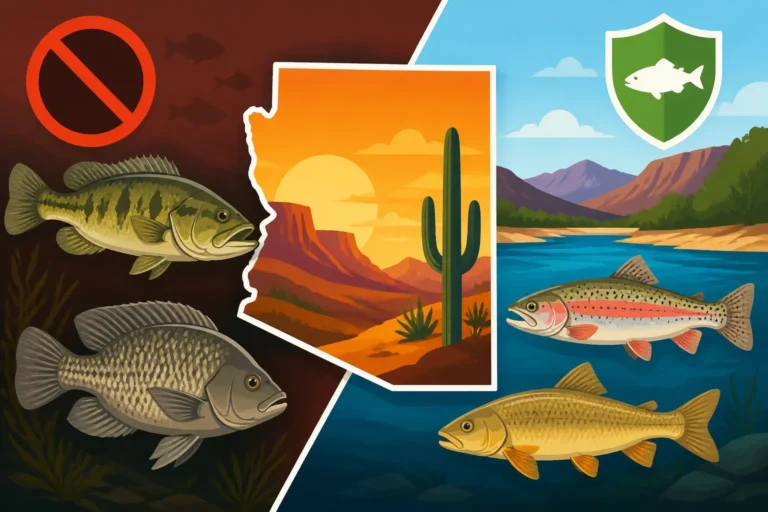
While smallmouth bass are a fantastic sport fish, it's important to remember that many of Arizona's aquatic ecosystems are home to delicate native species, some of which are endangered. Anglers play a vital role in preventing the spread of aquatic invasive species (AIS), which can devastate native fish populations and their habitats. Always clean, drain, and dry your boat, trailer, and all fishing gear after leaving any body of water, especially before moving to another. This simple step can prevent the transfer of harmful organisms like quagga mussels. Be mindful of where you dispose of old fishing line and tackle; these can become "ghost fishing" hazards or create pollution. Additionally, never release live bait into a different body of water than where it was collected or purchased, as this can introduce new species that outcompete or prey upon native fish. By being aware and taking proactive steps, we can all contribute to the long-term health and biodiversity of Arizona's waters, ensuring they remain vibrant for both sport fish and critical native species.
Disclaimer
This article is for general informational purposes only and does not constitute professional advice. Laws, prices and regulations vary by location and change over time. Consult a qualified professional for guidance on your specific situation.