Spring Bass Fishing Tactics in Arizona
Spring in Arizona is a beautiful, albeit sometimes frustrating, time for bass anglers. One day you're seeing signs of life, the next a cold snap pushes everything back, leaving you wondering where the fish went. This guide is all about helping you decode the fickle nature of spring bass fishing, offering practical tactics and insights so you can consistently find and catch largemouth and smallmouth bass as Arizona's waters warm up.
Understanding Arizona's Spring Bass Behavior
As the desert shakes off its winter chill, Arizona's bass begin a predictable, yet often complex, migration and feeding pattern. Understanding these stages – pre-spawn, spawn, and post-spawn – is absolutely crucial for successful spring fishing. Each phase demands a different approach, from lure choice to fishing depth and retrieve speed.
Pre-Spawn Excitement: Cold to Warming Waters
The pre-spawn period is arguably one of the most exciting times to fish for bass in Arizona. This phase typically kicks off when water temperatures climb into the low to mid-50s Fahrenheit, often starting in late February or early March in warmer desert lakes and extending into April in higher elevation waters. During this time, bass are emerging from their deeper winter haunts and starting to move towards shallower staging areas. They're driven by two primary instincts: feeding heavily to bulk up for the upcoming spawn and exploring potential bedding sites.
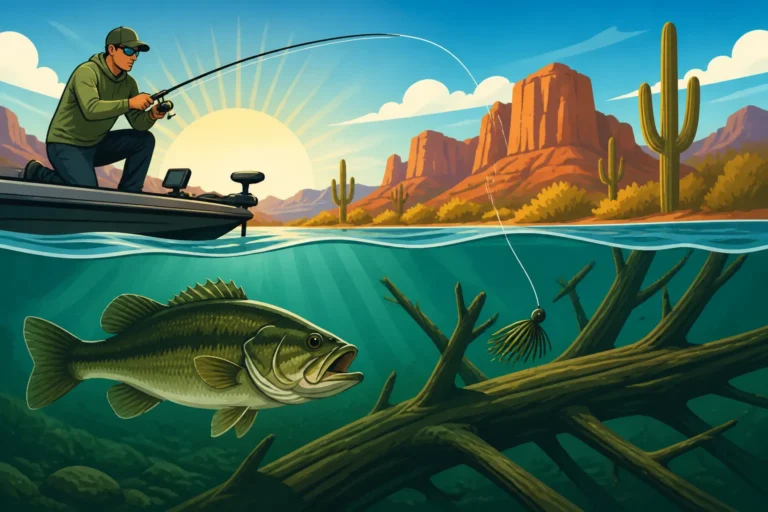
You'll find these hungry bass congregating on points, secondary points, creek channel bends, and submerged roadbeds that offer quick access to both deep water and shallow flats. They're often grouped up, so if you catch one, there are likely more in the vicinity. Their metabolism is kicking into high gear, making them very aggressive feeders. This is prime time for "power fishing" tactics, where you cover a lot of water with reaction baits designed to trigger strikes from these actively searching fish. Think about areas where they can ambush baitfish that are also moving shallower.
The Spawn: Nesting and Protecting
Once water temperatures consistently hit the high 50s and low 60s Fahrenheit, the bass spawn kicks into full gear. This can happen as early as March in southern Arizona lakes like Canyon Lake or Saguaro Lake, and later in April or even early May in northern reservoirs. During the spawn, male bass move into shallow, protected coves and pockets to fan out nests, usually on hard bottoms like gravel, sand, or even submerged rock. Females then move onto these beds, lay their eggs, and often retreat to nearby slightly deeper water, though some may linger.
The males, however, become incredibly territorial and protective of their nests. This is where fishing gets tricky. Spawning bass aren't necessarily feeding out of hunger; they're striking at anything that poses a threat to their eggs or fry. This means your presentations need to be irritating and persistent. You'll often be sight fishing for these bass, trying to coax them into biting. It requires patience and a delicate touch, as spooking a spawning bass can send it off the bed for a long time, sometimes permanently. Respecting the fish during this vulnerable time is also key; consider practicing catch and release, especially for females full of eggs, to help ensure healthy populations.
Post-Spawn Recovery: Hunger and Aggression
After the rigors of spawning, both male and female bass need to recover and replenish their energy stores. This post-spawn phase usually begins when water temperatures reach the mid-60s to low 70s, typically from late April through May. Initially, bass can be somewhat lethargic, resting in slightly deeper water adjacent to their spawning grounds, often relating to submerged brush, docks, or other forms of cover. However, as they regain their strength, they become incredibly aggressive feeders once again.
The key difference from pre-spawn is their location. Post-spawn bass will often scatter more, moving out to main lake points, deeper humps, and brush piles where they can ambush baitfish that are also active in warmer waters. They're still focused on feeding, but not necessarily grouped up in the same way. This period can offer some fantastic topwater action, as bass are willing to chase down prey near the surface. You'll need to cover water efficiently, often looking for schooling baitfish or areas with good current and structure. Keep an eye out for shad in these main lake areas, as bass will follow them.
Essential Spring Bass Fishing Gear
Having the right tools for the job can make all the difference, especially when bass behavior shifts so rapidly throughout the Arizona spring. From your rod and reel setup to your choice of line, tailoring your gear to the specific conditions and tactics will greatly improve your success rate.
Rod and Reel Choices for Versatility
Spring bass fishing in Arizona calls for a versatile array of rods and reels to match the diverse tactics required for pre-spawn, spawn, and post-spawn stages. For the aggressive pre-spawn period and covering water with power baits like spinnerbaits and crankbaits, a medium-heavy to heavy power casting rod, around 7 to 7.5 feet in length, with a fast action tip, is ideal. This setup provides the backbone needed for strong hooksets and to control larger fish, while the fast action allows for accurate casting and sensitivity. Pair this with a baitcasting reel with a gear ratio in the 6.1:1 to 7.1:1 range for a good balance of retrieve speed and power. Brands like Shimano, Daiwa, or even more budget-friendly options found on Amazon, offer excellent choices for these setups.
When you're dealing with more subtle presentations during the spawn or targeting sluggish post-spawn fish, a lighter touch is needed. A medium power spinning rod, 6.5 to 7 feet long, with a fast or extra-fast action, is perfect for finesse techniques like drop-shotting, wacky rigs, or light Texas rigs. The sensitivity of a spinning rod will help detect those faint bites from tentative fish. Combine this with a 2500 or 3000 series spinning reel. Having a dedicated rod for each primary technique can really maximize your efficiency on the water.
Line Selection for Different Presentations
Your choice of fishing line is just as critical as your rod and reel. For power fishing with heavier baits in open water or around moderate cover, a 12-17 pound fluorocarbon line is often a top choice. Fluorocarbon offers low visibility in clear Arizona waters, excellent abrasion resistance for fishing around rocks and brush, and minimal stretch for enhanced sensitivity and solid hooksets. Alternatively, braided line (30-50 lb test) can be an excellent option when fishing in extremely heavy cover or when you need maximum casting distance, especially with topwater baits in post-spawn.
However, for finesse techniques during the spawn or when bass are finicky, dropping down to 6-10 pound fluorocarbon or monofilament line is necessary. Monofilament offers a bit more stretch, which can be forgiving when fighting fish on lighter tackle, and it excels for topwater baits because of its buoyancy. Some anglers even combine lines, using a braided main line with a fluorocarbon leader (6-10 feet) for the best of both worlds – the strength and sensitivity of braid, with the low visibility of fluorocarbon at the business end. Always match your line to the cover you're fishing and the lure you're presenting. Consider carrying a variety of line types and strengths, available readily from suppliers like Amazon, to adapt to changing conditions.
Terminal Tackle Essentials
Don't overlook the small but mighty components of your terminal tackle box. For spring bass, having a good selection of hooks, weights, and swivels is non-negotiable. For soft plastics, you'll want extra wide gap (EWG) hooks in sizes 3/0 to 5/0 for Texas rigging, and straight shank hooks in 1/0 to 2/0 for wacky rigging or Neko rigs. For drop shotting, specialized drop shot hooks (size 1 to 2/0) are key for optimal bait presentation.
When it comes to weights, a variety of bullet weights for Texas rigs (1/8 oz to 3/8 oz), nail weights for Neko rigs, and cylindrical drop shot weights (1/8 oz to 1/4 oz) will cover most scenarios. Tungsten weights are more expensive but offer increased sensitivity and a smaller profile than lead, which can make a difference in detecting subtle bites. Finally, remember sturdy snap swivels or direct knots for crankbaits and spinnerbaits, allowing them to perform their intended action properly without line twist. Always check your knots and leader lines regularly for nicks and abrasions, especially after catching a fish or fishing heavy cover.
Top Spring Bass Lures and Baits
The Arizona spring offers a smorgasbord of feeding opportunities for bass, and matching your lure presentation to their mood and location is paramount. From aggressive power fishing to delicate finesse tactics, having the right arsenal of baits will make your trip a success.
Pre-Spawn Power Fishing Baits
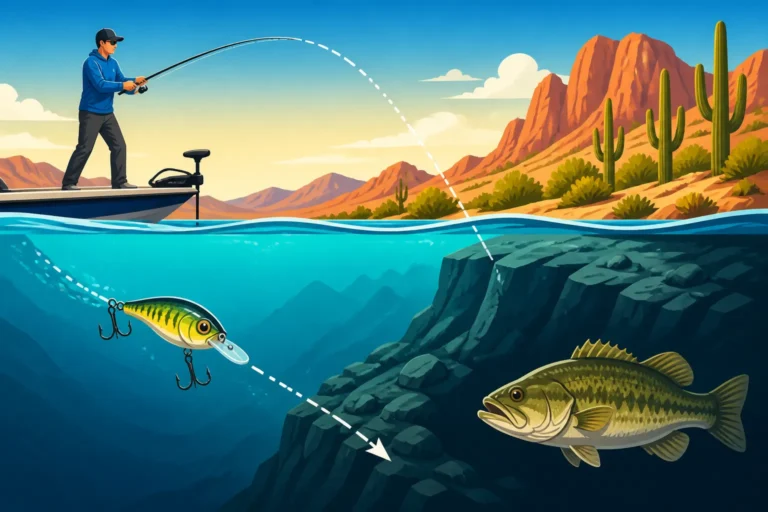
During the pre-spawn, bass are actively searching for food and are typically aggressive, making it an ideal time for power fishing. Think lures that cover water quickly and trigger reaction strikes. Crankbaits are phenomenal for this. Medium-diving crankbaits (that run 6-12 feet deep) in shad patterns (like chrome/blue or natural shad) or crawfish colors (red/orange) are extremely effective when bass are staging on points or ledges. The deflection off submerged structure can often induce a violent strike. Check out our Crankbait Fishing Techniques for Bass guide for more in-depth tips.
Spinnerbaits and chatterbaits are also absolute staples. A 3/8 to 1/2 ounce spinnerbait with tandem willow leaf blades (for flash and speed) or Colorado blades (for thumping vibration in murky water) can be deadly. White, chartreuse, or a combination are classic colors. Chatterbaits, often referred to as bladed jigs, combine the flash of a spinnerbait with the vibration of a crankbait, making them incredibly attractive to pre-spawn bass, especially when fished around grass lines or shallow cover. Look for brands like Z-Man or Strike King, easily found on Amazon, for reliable chatterbaits.
Subtle Presentations for Spawning Bass
Once bass move onto their beds to spawn, their feeding behavior shifts dramatically. They're not necessarily eating, but rather defending their territory. This calls for more subtle, intrusive presentations. Soft plastics rigged to stay in the strike zone longer are your best friend. A Texas-rigged creature bait or a lizard is a classic choice. Lizards, in particular, are thought to be egg predators, eliciting an aggressive strike from a protective male bass. Green pumpkin, watermelon seed, or black/blue are go-to colors. Rig them weightless or with a very light bullet weight (1/8 oz or less) to allow for a slow fall.
Wacky-rigged Senkos or other stick baits are also incredibly effective. The slow, tantalizing wiggle of a wacky rig as it falls often proves irresistible to a bedded bass. Presenting these baits directly into the nest or just outside of it, and letting them sit or twitching them subtly, can eventually wear down even the most stubborn fish. The key is persistence; make multiple casts to the same fish, sometimes letting the bait sit motionless for extended periods, until the bass commits. Our How to Fish a Plastic Worm for Bass article delves deeper into these techniques.
Post-Spawn Reaction Baits
As bass recover from the spawn and move into their summer patterns, they become more scattered but are often aggressively feeding. This phase offers a fantastic opportunity for a mix of power and finesse, with a strong emphasis on reaction baits. Topwater lures truly shine during the post-spawn, especially during low light conditions or on cloudy days. Poppers, walk-the-dog style baits (like a Heddon Super Spook), and prop baits can draw explosive strikes from recovering bass. Target main lake points, shallow flats, and areas with schooling baitfish. Consult our Topwater Fishing Techniques for Bass guide for more insights.
For subsurface action, swim jigs or small swimbaits retrieved just above submerged grass or timber can be highly effective. A white or natural shad colored swimbait, rigged on a weighted swimbait hook, mimics baitfish perfectly. Additionally, jigs (especially football jigs or skirted jigs) can still be productive, particularly when bass are holding on deeper structure or brush piles. Tip your jig with a plastic chunk or craw trailer for added bulk and action. Remember, post-spawn bass are often still focused on replenishment, so presentations that imitate easy meals are often the most successful.
| Spring Fishing Stage | Typical Water Temperature | Key Lure Types | Primary Techniques |
|---|---|---|---|
| Pre-Spawn | 50-59°F (10-15°C) | Crankbaits, Spinnerbaits, Chatterbaits, Jigs, Lipless Crankbaits | Power fishing, covering water, targeting points, channel swings, rocky banks |
| Spawn | 60-68°F (16-20°C) | Soft Plastics (Lizards, Senkos, Creature Baits), Drop Shots, Jigs | Sight fishing, slow presentations, irritating, targeting beds in shallow coves |
| Post-Spawn | 65-75°F (18-24°C) | Topwater Lures, Swimbaits, Flukes, Jigs, Carolina Rigs, Deep Crankbaits | Covering water (flats, points), targeting schooling fish, offshore structure, ambush points |
Effective Techniques for Different Spring Stages
Mastering spring bass fishing in Arizona isn't just about having the right lure; it's about employing the right technique at the right time. Each stage of the spring transition demands a distinct approach to effectively locate and trigger strikes from bass.
Locating Pre-Spawn Bass
Finding pre-spawn bass often involves a methodical search in staging areas. Start by identifying main lake points and secondary points that lead into spawning coves. These act as highways for bass moving from deeper winter haunts to shallower areas. Use your electronics to look for baitfish schools and any submerged structure like humps, ledges, or brush piles along these migration routes. Bass will often stack up on the warmer, sun-exposed sides of these points. Our How to Read a Fish Finder for Bass guide offers excellent tips for this.
Your technique should focus on covering water efficiently. Fan-cast crankbaits or spinnerbaits across these points and ledges. Pay attention to how the lure feels as it bumps into structure; this is often where strikes will occur. Vary your retrieve speed until you find what the fish prefer. If you get a bite, slow down and thoroughly work the area, as pre-spawn bass are often grouped up. Don't be afraid to experiment with different depths; sometimes bass will be holding slightly deeper on the ledges, and other times they'll be cruising just off the shallow flats. The goal is to intersect their path as they move towards the spawning grounds.
Targeting Spawning Bass on Beds
Fishing for spawning bass requires patience, keen observation, and a precise presentation. First, you need to find the beds. Look for lighter, circular depressions on the bottom in shallow, protected coves, usually in 1 to 5 feet of water. Polarized sunglasses are absolutely essential for spotting these nests and the bass guarding them. Once you've located a bed and a bass on it, approach cautiously to avoid spooking the fish.
Present your soft plastic bait (Texas-rigged creature, lizard, or wacky-rigged Senko) into the bed. The key here is not to retrieve the bait, but to let it sit in the nest, often for 30 seconds to a minute or even longer. Twitch it subtly, just enough to make it appear like an intruder. The male bass will often try to pick up the bait and move it off the bed rather than eat it. When you feel a slight tension or the line moves, set the hook! It can be a mental game, but watching the bass's reaction and adjusting your presentation can be incredibly rewarding. Remember that Arizona Fishing Regulations Explained should always be consulted, as specific rules for targeting spawning fish might apply in certain areas, though typically it's more about ethical angling choices than legal restrictions in Arizona.
Covering Water for Post-Spawn Aggressors
After the spawn, bass disperse and often spread out across the lake. The goal during this phase is to efficiently cover water and target areas where recovering bass will ambush baitfish. Focus on main lake points, shallow to mid-depth flats, humps, and brush piles. Look for areas with access to deeper water nearby, as bass will often retreat there between feeding periods.
This is a great time to experiment with both reaction baits and finesse presentations. Start by covering water with topwater lures in the early mornings or late evenings, or when you see signs of schooling baitfish. During the day, switch to faster-moving baits like swimbaits, flukes, or even Carolina rigs to cover large areas of flats and ledges. A Carolina rig, with its leader separating the weight from the bait, allows a soft plastic to waft enticingly behind the main line, drawing strikes from curious or hungry bass. Pay close attention to current breaks or wind-blown banks, as these areas often concentrate baitfish and, consequently, hungry bass.
Prime Spring Bass Fishing Locations in Arizona
Arizona might be known for its desert landscape, but it boasts some truly incredible bass fishing opportunities, especially as the spring temperatures start to rise. Knowing which lakes and what kind of structure to target can make all the difference.
Major Desert Lakes: Roosevelt, Pleasant, Bartlett
When it comes to spring bass fishing in Arizona, the large desert reservoirs are king. Roosevelt Lake, located northeast of Phoenix, is a prime example. As water temperatures climb into the mid-50s and 60s, bass begin moving out of the deeper timber and channel swings towards the vast shallow flats and numerous coves. The Tonto Creek arm and the Salt River arm are excellent places to start, as they often warm up faster and offer abundant submerged brush and rock. You can find detailed information on fishing this massive lake in our Roosevelt Lake Arizona Fishing Guide. Anglers often find success here with crankbaits, spinnerbaits, and jigs during the pre-spawn, transitioning to Texas rigs and wacky worms on the beds, and then topwater and swimbaits post-spawn.
Lake Pleasant, just north of Phoenix, is another spring bass hotspot. This deep, clear lake offers excellent opportunities for both largemouth and smallmouth bass. In spring, look for bass to stage on the numerous points and humps that lead into protected coves. The northern coves, such as the Agua Fria arm, tend to warm up quickly and attract spawning fish. Smallmouth bass, in particular, thrive here and will often be found on rocky points and ledges. For tips specific to this lake, check out our Lake Pleasant Arizona Fishing Guide. For largemouth, target submerged cedar trees and brush piles. Remember to check the current Bass Combined Limit at Lake Pleasant before your trip.
Bartlett Lake, located on the Verde River, offers excellent largemouth fishing with a mix of rocky banks, sandy flats, and mesquite bushes. Spring is fantastic here, as bass move into the countless coves and creeks. The upper end of the lake, where the Verde River enters, often warms up first and can be very productive for early spring bass. Its diverse structure provides great opportunities for jigs, shaky heads, and Texas rigs around the brush. These large reservoirs are generally considered some of the Best Bass Fishing Lakes in Arizona.
Smaller Impoundments and Community Lakes
Don't overlook Arizona's smaller impoundments and community lakes, especially if you're looking for a quick outing or an easier bank fishing experience. Lakes like Canyon Lake and Saguaro Lake, part of the Salt River chain, offer stunning scenery and fantastic bass fishing. These lakes often warm up earlier than the larger, deeper reservoirs and can see an earlier spawn. Their clearer waters can make bass more spooky, so finesse techniques often shine here. Look for bass relating to the sheer canyon walls, rocky points, and submerged timber.
Many of Arizona's urban community lakes, managed by the Arizona Game and Fish Department (AZGFD) Community Fishing Program, also get stocked with bass. While these lakes are generally smaller, they can offer surprisingly good action, especially for beginners or families. Bass in these lakes will often relate to any available structure like docks, submerged grass, or brush piles. They are also easily accessible, making them a great option for trying out new Best Bass Fishing Techniques for Arizona Lakes without a long drive.
River Systems and Tributaries
While Arizona is largely a desert state, its river systems and their associated tributaries can also offer unique spring bass fishing opportunities. The lower Salt River and Verde River below the major impoundments hold decent populations of bass. These river sections often have current, which can influence where bass position themselves. Look for current breaks, eddies behind large rocks, and submerged vegetation along the banks. Flipping jigs or Texas-rigged plastics into these slack water areas can be productive.
The Colorado River system, particularly sections like Lake Havasu or the backwaters below various dams, also boasts incredible spring bass fishing. Largemouth bass thrive in the abundant cattails, tules, and submerged vegetation, while smallmouth prefer rocky areas and current. Spring is an excellent time to target these riverine bass before the intense summer heat sets in. Keep in mind that for the Colorado River, especially near border areas, Out-of-State Angler Rules in Arizona might apply or you might need a different stamp to fish both sides of the river effectively.
Navigating Weather and Water Conditions in Spring
Spring in Arizona is a season of transition, meaning rapidly changing weather and water conditions are the norm. Understanding how these factors influence bass behavior and adjusting your tactics accordingly is key to consistent success.
Dealing with Changing Weather Fronts
Arizona's spring weather can be notoriously unpredictable. One week you might have glorious 80-degree days, pushing water temperatures up and bass into shallow spawning areas. The next, a cold front can roll through, dropping air temperatures by 20 degrees or more and bringing strong winds. These fronts can send bass scrambling back to deeper, more stable water, making them much harder to catch. When a cold front hits, expect bass to become sluggish and suspend near deeper cover or drop back to points adjacent to deep water.
Your best strategy is to slow down your presentation. Swap out those fast-moving crankbaits for finesse tactics like drop shots, shaky heads, or slow-fished jigs. Target the edges of cover rather than directly in it, and work your baits painstakingly slowly. Often, a subtle twitch or a dead stick will be what it takes to coax a bite. Conversely, after several days of stable, warming weather, bass will likely be more aggressive and shallower, allowing you to use faster retrieves and more reaction-oriented baits. Keep an eye on weather forecasts and adjust your game plan before you even get to the lake.
Understanding Water Temperature and Clarity
Water temperature is the single most critical factor dictating bass behavior in the spring. As discussed, bass transition through pre-spawn, spawn, and post-spawn according to specific temperature ranges. Investing in a good water temperature gauge on your boat or even a handheld thermometer for bank fishing is invaluable. Knowing the exact temperature can help you pinpoint which stage the fish are in and, therefore, what depths and presentations will be most effective. For instance, if you know the Water Temperature for Bass Spawning is around 60-68 degrees Fahrenheit, you'll be looking for shallow beds.
Water clarity also plays a significant role. Arizona's desert lakes can range from extremely clear (like Canyon Lake or portions of Lake Pleasant) to more stained or even murky, especially after spring runoff or heavy winds. In clear water, bass rely heavily on sight, making natural colors (green pumpkin, watermelon) and subtle presentations more effective. You'll also need to be more stealthy to avoid spooking fish. In stained or murky water, bass rely more on vibration and scent. Brighter colors (chartreuse, white, black/blue) and baits with more displacement or noise (spinnerbaits with large Colorado blades, chatterbaits) will often outperform finesse presentations.
The Impact of Runoff and Wind
Spring in Arizona can also bring significant runoff from snowmelt in the higher elevations or sudden rainstorms in the lower desert. This influx of fresh, often colder, and sometimes muddy water can temporarily disrupt bass patterns. When runoff occurs, bass will often move to the edges of the dirty water line, where they can ambush bait as it's flushed out. This seam where clean and dirty water meets can be a fantastic ambush point. Use baits that stand out in murky water, like brightly colored spinnerbaits or dark-colored jigs.
Wind is another constant factor on many large Arizona lakes. While strong winds can make boat control difficult and create choppy conditions, moderate wind can actually be your friend. A consistent breeze pushes baitfish against certain banks or points, creating natural feeding zones for bass. Wind also breaks up the surface, making bass feel more secure and less likely to spot you or your boat. When fishing a windy bank, cast parallel to the shoreline, letting the wind carry your boat or kayak along as you fish. Utilize heavier baits that can cut through the wind and maintain contact with the bottom. However, always prioritize safety; high winds on large lakes can create dangerous conditions, especially for smaller boats.
Disclaimer
The information provided in this guide is for general informational purposes only and is not intended as legal advice regarding fishing regulations. Arizona fishing regulations, seasons, and limits can change frequently. It is the angler's responsibility to consult the most current Arizona Game and Fish Department regulations before fishing. Always prioritize safety on the water.