Best Bass Fishing Techniques for Arizona Lakes
Arizona bass fishing can be incredibly challenging due to extreme temperatures, diverse habitats ranging from vast reservoirs to rocky canyons, and constantly changing water levels. It's not just about tossing a lure; it requires specific strategies to entice these resilient fish. This comprehensive guide will arm you with the best techniques, tackle, and seasonal approaches to dramatically improve your bass fishing success across Arizona's unique aquatic landscapes.
Understanding Arizona’s Bass Species and Their Habitats
Arizona’s diverse waterways host several species of bass, each with its own preferred habitat and behavior. Knowing what you’re targeting and where they like to hang out is the first step to becoming a successful angler. It’s not a one-size-fits-all approach here; what works for a largemouth in a brushy cove might scare off a smallmouth on a rocky point. The frustrations of blindly casting are real, and understanding these distinctions is key to unlocking consistent bites.
Largemouth Bass The Desert Lake King
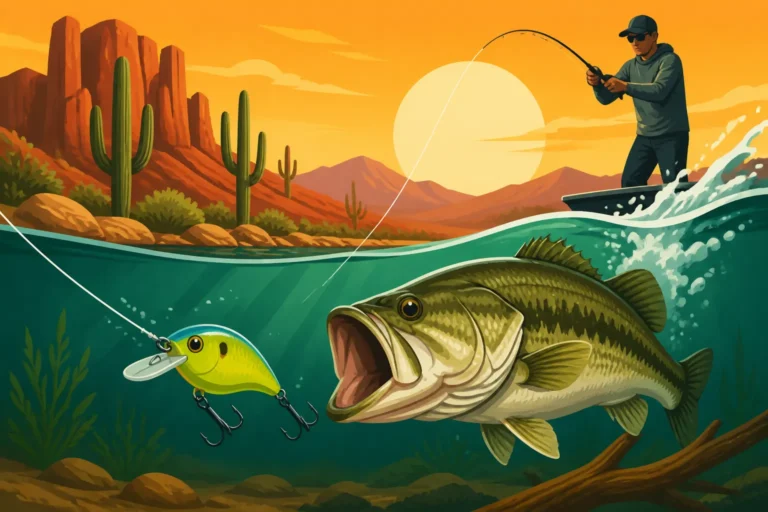
When most folks think of bass fishing, they’re picturing the largemouth bass. These feisty green giants are the predominant species in many of Arizona’s warm water lakes and reservoirs, from Lake Pleasant to Roosevelt Lake. They absolutely thrive in environments with plenty of cover – think submerged timber, cattail edges, brush piles, boat docks, and rocky shorelines with overhangs. They love ambush points, lurking in the shadows, waiting for an unsuspecting baitfish or crawfish to swim by. This predatory instinct makes them a thrilling target, but also means you need to get your lure into their strike zone effectively.
These fish are aggressive eaters, especially during feeding windows. Their behavior is heavily influenced by water temperature and available forage. In the cooler months, they might hug deeper structure, while warmer water sends them shallower, often right up against the bank or into thick vegetation. Understanding their seasonal movements is key to consistent catches; otherwise, you'll be casting to empty water. For an even deeper dive into these impressive fish, check out our Largemouth Bass Fishing Guide for Arizona.
Imagine you're casting near a patch of partially submerged mesquite trees on Bartlett Lake, a common sight on many of Arizona's desert reservoirs. That gnarly tangle of branches provides both shade and a perfect hiding spot for a largemouth, but it's also a magnet for snags. You'll need to use weedless presentations, like a Texas-rigged worm, to get your lure in there without constantly snagging and frustratingly retying, which is a common challenge for anglers new to these tough desert lakes. Patience and precision are your best friends in these tight quarters. Learning to "feel" your way through the cover is a skill that takes time, but pays off with bigger fish.
Smallmouth Bass Rocky Ledges and Clear Waters
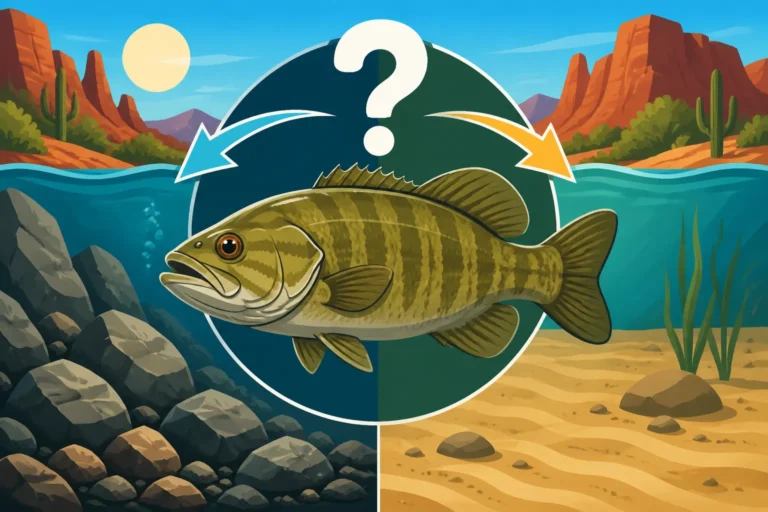
Smallmouth bass, often referred to as “bronze backs,” offer a completely different kind of fight compared to their largemouth cousins. These hard-fighting fish prefer clearer, cooler waters with rocky bottom structures, deep ledges, and sheer canyon walls. You’ll find them in places like Lake Powell, the lower stretches of the Colorado River, and certain clear-water reservoirs. They aren’t as much for heavy cover as largemouths, instead preferring to patrol open water near structure, ambushing prey that swims past. Their habitat choices mean different techniques are often required to tempt them.
Their diet consists heavily of crawfish and baitfish, and they are notorious for their powerful runs and aerial acrobatics once hooked. Many anglers find the smallmouth's fight to be even more exciting than the largemouth's due to their sheer tenacity. Fishing for smallmouth often means targeting steeper drops, submerged rock piles, and points that extend into deeper water. They can be a bit more finicky than largemouths, sometimes requiring a more subtle, finesse approach. If you're struggling to locate them, our Smallmouth Bass Fishing Guide for Arizona has even more detailed tips for these challenging fish.
Picture yourself on Lake Powell, staring down a massive red rock cliff face that plunges hundreds of feet into the clear, blue water. Somewhere along that wall, smallmouth bass are suspended, relating to tiny ledges or subtle depth changes that are invisible from the surface. You're not casting into weeds here; you're often dropping lures vertically or making precise casts to invisible underwater terrain, relying heavily on your electronics or detailed maps. The fight is intense, as they try to dive into rocks or throw the hook with violent head shakes, demanding a tight line and quick reflexes. Losing a big smallmouth to a broken line on a sharp rock is a common heartache, so choosing appropriate line is crucial.
Striped Bass The Open Water Predator
Striped bass are in a league of their own in Arizona. While largemouth and smallmouth are true “black bass,” stripers are an ocean-dwelling species that have adapted incredibly well to large freshwater impoundments like Lake Powell, Lake Mead, and Lake Havasu. These fish are schooling, open-water predators, constantly chasing massive schools of shad and other baitfish. They grow to impressive sizes and offer a brutal, sustained fight that can wear out even experienced anglers.
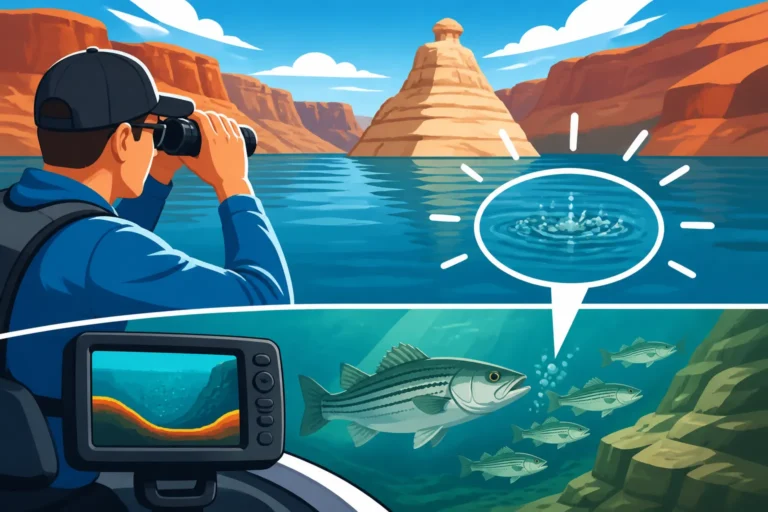
You won't typically find stripers lurking in thick cattails. Instead, they patrol vast expanses of open water, often suspending over deep channels or congregating around prominent points and humps. They are masters of the "boil," where entire schools erupt on the surface, pushing baitfish to the top in a frenzied feeding spree. Spotting a striper boil is one of the most exciting experiences in Arizona fishing, but they can be fleeting, disappearing as quickly as they appear. For more insights on these powerful fish, check out our Striped Bass Fishing Guide for Arizona.
Imagine the chaos of a striper boil on Lake Powell: hundreds of fish breaking the surface, water churning, gulls diving frantically. It's a short window of opportunity, and you need to be ready with a lure that mimics a fleeing shad, like a topwater plug or a swimbait. If you miss the boil, you're back to searching with your fish finder for submerged schools, often targeting them with deep-diving crankbaits or heavy spoons. They are nomadic and can cover vast distances in a single day, making them a true challenge to consistently locate. The sheer size and power of these fish means you need strong tackle, or face the disappointment of a snapped line.
Seasonal Strategies for Arizona Bass Fishing
Arizona’s climate dictates drastic changes in water temperatures throughout the year, profoundly influencing bass behavior. What works like magic in spring will likely fail miserably in the scorching summer, and vice-versa. Adapting your techniques to the season isn’t just a suggestion; it’s absolutely crucial for success. These fish are masters of survival, and they adjust their feeding patterns and locations with the sun. If you want to know more about the annual patterns, our guide on Arizona Fishing Seasons Explained is a great resource.
Spring Spawning Frenzy
Spring is arguably the most anticipated time for bass anglers in Arizona. As water temperatures begin to rise (typically hitting the mid-50s to mid-60s Fahrenheit), bass move from their deeper winter haunts into shallower, warmer coves and pockets to spawn. This pre-spawn and spawn period offers some of the most exciting and predictable fishing opportunities. The fish are aggressive, feeding heavily to build energy for the spawn, then guarding their nests fiercely. It’s a prime window where big bass are more accessible than almost any other time of year.
During the pre-spawn, bass are actively looking for food. Crankbaits, spinnerbaits, and jerkbaits worked along points and transition areas where bass move from deep to shallow can be incredibly effective. These moving baits appeal to aggressive, hungry fish. Once they move onto beds (often visible in clear water), sight fishing with soft plastics like Senkos or lizards can trigger a strike from a territorial bass guarding its eggs. Remember to respect the fish and release them quickly, especially during the spawn, to ensure future generations. Our Spring Bass Fishing Tactics in Arizona article has even more detail on this golden season.
You'll find anglers targeting areas with protected coves, sandy bottoms, and submerged brush piles on lakes like Saguaro Lake or Canyon Lake. A common scenario is slow-rolling a chartreuse spinnerbait over emerging grass beds, feeling for that tell-tale thump as a pre-spawn largemouth crushes it. The challenge is often finding those hidden grass lines. Or, if the water is clear enough, you might spot a big female on a bed, casting a weighted creature bait past her and dragging it into the nest to provoke a defensive strike. This can be a game of frustrating persistence, as some bed fish are more stubborn than others, but landing one is incredibly rewarding.
Summer Heat Tactics
Arizona summers are brutal, and the fish feel it too. As water temperatures soar into the 80s and even 90s, bass seek refuge in deeper, cooler water or dense, shaded cover. This means early mornings, late evenings, and night fishing often become the most productive times. During the heat of the day, bass become lethargic and less willing to chase fast-moving baits. They’re still feeding, but it’s a more deliberate affair, often requiring you to put the bait right on their nose.
Focus your efforts on deep structure like ledges, humps, creek channels, and submerged timber. Fish finders become indispensable for locating these offshore schools, as the fish are often invisible from the surface. Drop shot rigs, deep-diving crankbaits, and heavy jigs fished slowly are excellent choices, mimicking crawfish or baitfish struggling on the bottom. For topwater action, you'll need to be on the water literally at first light, or after sunset, when bass feel more comfortable venturing shallow. Our guide on Summer Bass Fishing Tactics in Arizona delves deeper into beating the heat.
Imagine the sun beating down on Lake Pleasant, the surface shimmering so brightly it's hard to see. Instead of casting to visible cover, you're glued to your fish finder, idling over a main lake point, looking for schools of bass suspended at 20-30 feet. Once you mark them, you might drop a jigging spoon or a heavy Carolina rig right into the school, waiting for a subtle bite that feels like nothing more than a slight pressure. Or, if you're night fishing, you're casting large dark-colored topwater lures or bladed jigs into shallow coves, listening for explosive strikes in the darkness, a truly thrilling experience that offers a break from the daytime heat.
Fall Feeding Feast
As the days shorten and cooler temperatures return, Arizona’s bass transition into an aggressive feeding mode, stocking up for the leaner winter months. This fall turnover period can be fantastic, as bass become more active and willing to chase a variety of baits. Baitfish, especially shad, will often school up in large numbers, and bass will follow them into shallower coves and creeks, making them easier to locate.
This is a prime time for power fishing techniques. Spinnerbaits, chatterbaits, lipless crankbaits, and jerkbaits can be deadly when fished around schooling bait and feeding bass. Look for bass pushing baitfish against shorelines, on main lake points, or around creek mouth entrances. The bite can be fast and furious, with multiple fish caught in short order, making for truly memorable days on the water. Read our Fall Bass Fishing Tactics in Arizona for detailed strategies for this productive season.
Consider yourself fishing on Roosevelt Lake during late fall. You might be working a chrome lipless crankbait over a flat where shad are congregating, feeling the distinct vibration as a school of bass moves in to feed. That jarring strike can come out of nowhere! Alternatively, you could be casting a chartreuse spinnerbait around the mouth of a tapering cove, mimicking a baitfish trying to escape. The bass are often less finicky now, so confidence in your chosen lure is key, and they'll readily chase down baits. The only frustration might be deciding which of the many active fish to target.
Winter Slow Downs
Winter in Arizona can be surprisingly good for bass fishing, especially in the central and southern desert lakes where water temperatures don’t drop drastically below the low 50s. However, bass metabolism slows down considerably, making them less active and requiring a much slower, more subtle approach. They’ll often group up in deeper water, seeking stable temperatures and less current. Finding these concentrated schools is often the biggest challenge.
Finesse techniques truly shine in winter. Drop shots, Ned rigs, shaky heads, and slow-rolled jigs become essential tools. Look for bass congregated on deep structure like submerged humps, channel swings, and rock piles, which offer stable thermal refuge. The bites can be extremely light, feeling like just a subtle "tick" or added weight on your line, often barely perceptible. Patience is a virtue, as you'll often need to soak your bait in the strike zone for extended periods, and setting the hook on those faint bites requires practice. Our Winter Bass Fishing Tactics in Arizona provides comprehensive details for cold-water success.
Picture yourself on Lake Havasu in January. You're slowly working a green pumpkin Ned rig along a steep bluff wall, letting it bounce gently off the rocks. You might not feel a violent strike, just a slight pressure, and then you set the hook on a surprisingly big smallmouth that was barely mouthing the bait. This kind of fishing can be tedious, but incredibly rewarding when you finally connect. Or, on a warmer winter day at Alamo Lake, you could be dragging a football jig through deep timber, hoping to entice a sluggish largemouth from its cold-water lair, where it's conserving energy.
Topwater Techniques for Explosive Bites
There’s nothing quite like a bass blowing up on a topwater lure. It’s visual, exciting, and highly addictive! While often associated with warmer weather, knowing when and how to present topwater baits can trigger some truly unforgettable strikes in Arizona’s lakes. The key is to understand when bass are looking up, which typically coincides with low light conditions or when they are actively feeding on surface bait. It’s a technique that demands patience for the pause, but delivers immense gratification when a fish finally explodes.
Walking Baits and Poppers
Walking baits, like a Heddon Super Spook or a Lucky Craft Sammy, are designed to “walk the dog” across the surface with a side-to-side sashay. This erratic action perfectly mimics a wounded baitfish, and bass absolutely cannot resist it. Poppers, such as a Rebel Pop-R or a Rapala Skitter Pop, create a “chug” and splash as you twitch them, imitating a struggling insect or a small fish feeding on the surface. Both are phenomenal for covering water and calling fish up from below.
The best times for these lures are usually dawn, dusk, and overcast days, or when bass are busting bait on the surface. Cast them near cover like lily pads, submerged timber, or rocky points, always looking for that ambush spot. For walking baits, a steady cadence of slack-line twitches is key to getting that signature "walk" – it takes practice to get the rhythm right, but it's essential. Poppers are more about controlled splashes and pauses. Don't be too quick to move them after a splash; sometimes the pause is what triggers the strike, as the bass takes time to commit. You can find a fantastic selection of these effective topwater lures on platforms like Amazon, making it easy to experiment.
Imagine the sun just barely peeking over the mountains at Lake Bartlett. You cast a bone-colored walking bait parallel to a shoreline lined with scattered rocks. You twitch, twitch, pause, twitch, and suddenly, the water explodes where your lure just was! A feisty largemouth has come up from the depths to annihilate your offering. For poppers, perhaps you're targeting small pockets of calm water near submerged brush on Canyon Lake, making a few chugs and then letting the ripples dissipate before twitching it again. The anticipation during the pause is almost as thrilling as the strike itself, and it can be frustrating if you move it too soon.
Frogs and Soft Plastic Toads
When the cover gets thick, really thick, traditional topwater lures just won’t cut it. That’s where frogs and soft plastic toads come into play. Lures like a Snag Proof Bobby’s Perfect Frog or a Zoom Horny Toad are designed to be completely weedless, allowing you to throw them into the nastiest lily pad fields, cattail patches, and matted vegetation without snagging. This is where big bass love to hide in the Arizona heat, seeking shade and ambush points.
The beauty of frog fishing is the ability to work these lures right over the top of heavy cover where other baits would get hung up instantly, saving you countless re-rigging headaches. The key is to make accurate casts, let the frog sit for a moment to draw attention, and then twitch it, hop it, or walk it across the surface, creating subtle disturbances. The strikes are often violent, sometimes pulling the lure and a huge chunk of vegetation under with the fish – it's an incredibly visual and exciting way to fish. Soft plastic toads, retrieved steadily, create a gurgling, buzzing action that can also be incredibly effective, especially over lighter mats.
Think of those dense, impenetrable stands of cattails around the upper end of Roosevelt Lake, almost like a solid green carpet. You're casting a weedless frog deep into that mat, knowing a big bass is probably lurking underneath. The lure slides effortlessly over the vegetation, and then suddenly, a gaping maw erupts from the cover, swallowing your frog and leaving a massive hole in the weeds. The challenge then becomes extracting the fish from the tangle, which is why strong braided line is non-negotiable for this technique; anything less and you'll be snapping off fish, a truly disheartening experience after such an explosive strike.
Subsurface Lures for All Depths
While topwater action is exhilarating, most bass fishing happens below the surface. Subsurface lures allow you to target bass at virtually any depth, from just a few feet down to 50 feet or more. Mastering these diverse presentations is fundamental to consistent bass fishing success in Arizona, especially when fish are holding deep or are less aggressive. The ability to switch between these techniques based on conditions and fish behavior is what separates good anglers from great ones.
Crankbaits and Lipless Crankbaits
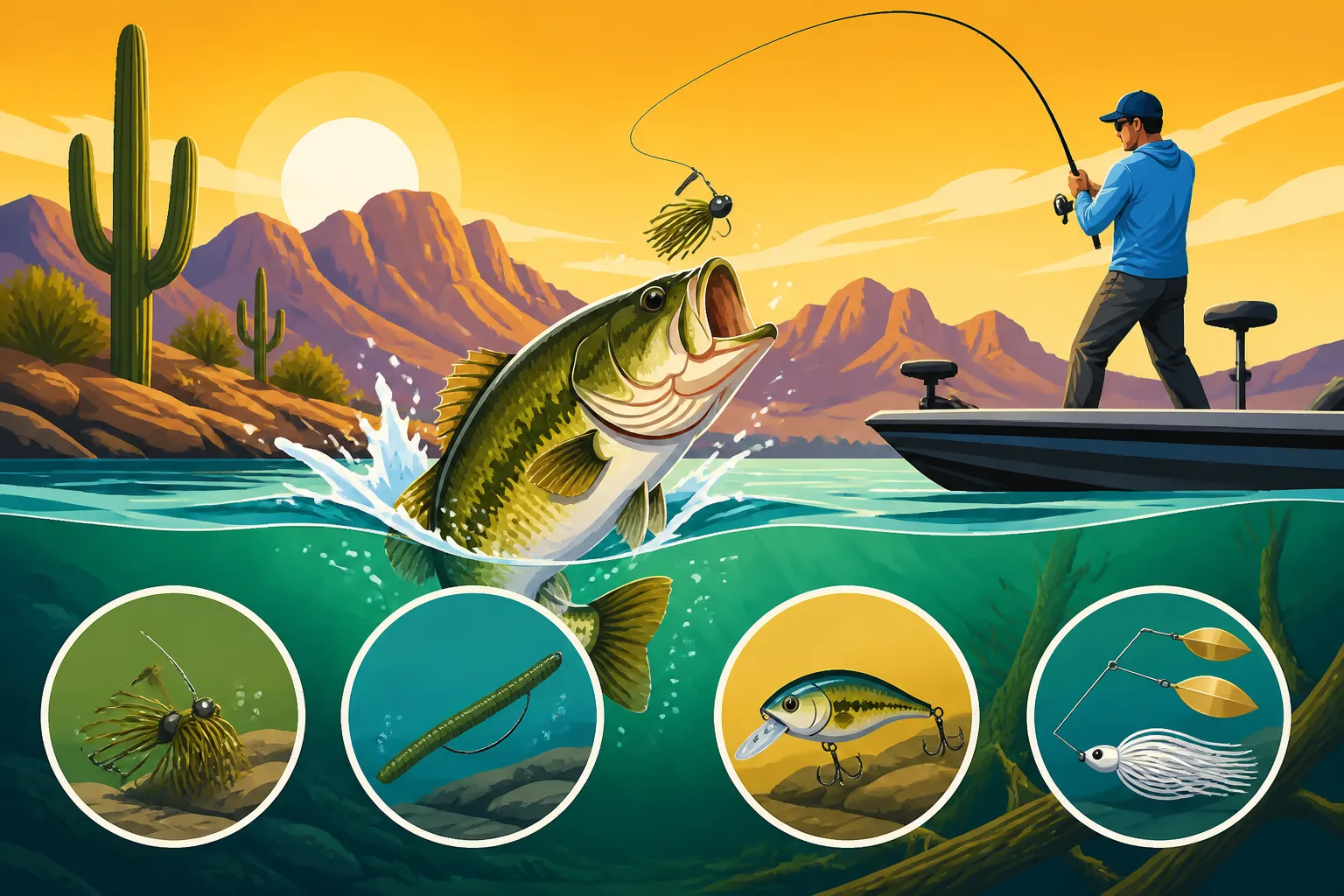
Crankbaits are fantastic search baits, allowing you to cover a lot of water quickly and probe different depth ranges. They come in myriad shapes, sizes, and diving depths, from shallow-running square bills for bouncing off cover to deep-diving models that can reach depths of 20 feet or more. Lipless crankbaits, like a Rat-L-Trap or a Bill Lewis Lures Rat-L-Trap, are versatile, sinking lures that can be burned through grass, ripped off the bottom, or even jigged vertically, making them adaptable to many situations.
The erratic wobbling action of a crankbait perfectly mimics a fleeing baitfish, triggering aggressive reaction strikes, often when the fish aren't actively feeding. For deeper models, it's all about making long casts and a steady retrieve, letting the lure dive to its maximum depth. Varying your retrieve speed and occasionally bumping the lure off bottom or submerged structure can be highly effective, as the deflection often triggers a strike. Lipless crankbaits excel when fish are schooling or when you need to cover large flats quickly, sending out strong vibrations that bass can feel from a distance. To learn more about using these effectively in deeper water, check out our guide on How to Fish a Crankbait Around Drop-Offs.
Consider fishing the rocky main lake points on Lake Pleasant. You might be launching a deep-diving crankbait, feeling it deflect off rocks and ledges as it plummets to 15-20 feet. That sudden deflection is often when a lurking largemouth or even a smallmouth will pounce, so be ready for a hard strike. For lipless crankbaits, imagine ripping one through the submerged hydrilla beds on Alamo Lake in the fall, waiting for that violent strike as a bass engulfs it. The frustration comes when you retrieve nothing but a wad of weeds, so finding that sweet spot just above the vegetation is key.
Jigs and Carolina Rigs
Jigs and Carolina rigs are absolute staples for bottom-oriented bass. Jigs, whether a football jig, a swim jig, or a flipping jig, are incredibly versatile. They can mimic crawfish, bluegill, or even small baitfish, making them deadly year-round. They are particularly effective when bass are relating to specific structure like rock piles, brush, or ledges. Carolina rigs, consisting of a sliding weight, a swivel, a leader, and a hook, present a soft plastic bait subtly above the bottom, making it float tantalizingly in front of the fish, often enticing those finicky bites.
Jigs are all about feel and precise presentation. You're pitching or casting them into cover, letting them sink, and then slowly hopping or dragging them along the bottom, feeling for subtle bites that can be incredibly hard to detect. The retrieve is deliberate, often with pauses. Carolina rigs are excellent for covering deeper, open water flats or humps, dragging your bait across the bottom to attract fish. They're particularly useful for detecting those light winter bites when bass are sluggish and less likely to chase a fast-moving lure. If you're looking for winter specific tips, our How to Fish a Jig for Winter Bass article is invaluable.
Picture yourself on Lake Roosevelt, slowly dragging a dark-colored football jig along a deep, rocky hump. You feel the distinct "tick" as it bounces off a rock, and then a softer "thump" as a bass mouths it – a difference that can be hard to discern for beginners. Or, on a vast flat on Lake Havasu, you're fan-casting a Carolina rig with a lizard imitation, slowly dragging it over the gravel bottom, the weight kicking up puffs of silt, drawing attention to your trailing bait. This method can be slow, sometimes testing your patience, but it often produces bigger, more lethargic fish that aren't interested in a fast meal.
Drop Shots and Ned Rigs
When the bite gets tough, or bass are highly pressured, finesse techniques like the drop shot and Ned rig can save the day. These rigs are designed to present small, subtle baits in a natural, enticing manner, often provoking bites from even the most finicky fish. They are indispensable for clear water, deep water, or when bass are simply not willing to chase larger, more aggressive lures, often meaning the difference between a skunk and a successful day.
A drop shot rig involves tying a hook directly to the main line, with a weight attached below it. This allows your bait (usually a small soft plastic worm or creature bait) to suspend at a specific depth, right in the bass's face, without the weight interfering with its action – a truly unique presentation. Ned rigs use a small mushroom-shaped jig head paired with a short, buoyant soft plastic bait, creating a subtle, stand-up presentation that mimics a bottom-feeding creature. Both are retrieved with very subtle twitches and long pauses, allowing the bait to work its magic. To master these finesse presentations, be sure to read our How to Rig a Drop Shot for Smallmouth Bass guide.
Imagine you're on a clear, still day at Lake Powell, and you've located a school of smallmouth suspended 30 feet down near a rocky ledge using your fish finder. A drop shot with a 4-inch worm can be lowered precisely into that strike zone, and with tiny twitches of the rod tip, you can make the worm dance without moving the weight from the fish's immediate vicinity. For a Ned rig, you might be targeting shallower, highly pressured bass in a community lake near Phoenix, casting a tiny green pumpkin bait near a dock and letting it slowly hop and quiver on the bottom. The bites on these rigs are often incredibly subtle, sometimes just a slight "mushy" feeling, making it frustrating to distinguish from bottom contact, but that sensitivity is key.
Soft Plastic Presentations for Finesse and Power
Soft plastics are arguably the most versatile category of bass lures, capable of mimicking everything from worms and crawfish to baitfish and frogs. Their adaptability, realism, and ability to be rigged in countless ways make them an indispensable tool for Arizona anglers, whether you’re power fishing heavy cover or finessing a subtle bite. Understanding the various rigging options is crucial for maximizing their potential across different scenarios.
Texas Rigging for Heavy Cover
The Texas rig is a legendary weedless presentation that allows you to fish soft plastic worms, creature baits, and craws in the thickest, nastiest cover imaginable without snagging. By burying the hook point into the body of the plastic, it becomes virtually impenetrable to weeds, brush, and timber. This is crucial for fishing Arizona’s brush-choked coves and submerged mesquite trees, areas where other lures would be instantly lost.
To rig it, you simply thread the soft plastic onto a worm hook, skin-hooking the point back into the plastic's body, ensuring it's completely weedless. A bullet weight is then slid onto your line above the hook, allowing the bait to penetrate cover efficiently. You can use varying weights depending on how fast you want your bait to fall and how dense the cover is. Pitching and flipping are the primary techniques, presenting your bait silently into tight spots. Once it sinks, slowly drag or hop it, feeling for the distinct thud of a bite. Strong braided line is highly recommended when fishing these challenging environments, as monofilament will simply snap in the heavy cover.
Envision yourself on Apache Lake, flipping a Texas-rigged creature bait into a dense stand of partially submerged palo verde branches. The weight carries your bait through the canopy, and you let it settle to the bottom. You then slowly lift and drop your rod, feeling every branch it contacts, until you feel that familiar "thump" of a bass taking it. The weedless nature of the rig means you can effectively fish where other anglers can't, often finding bigger, less pressured fish that have seen every other lure. The frustration of getting a jig hung up is replaced by the satisfaction of pulling a fish out of thick cover.
Weightless Wonders and Senkos
Sometimes, the most natural presentation is the most effective. Weightless soft plastics, particularly the iconic Yamamoto Senko, offer a unique, subtle fall that bass find irresistible. When rigged weightless, these baits shimmer and wobble tantalizingly as they sink, mimicking a dying baitfish or an easy meal, triggering strikes from even lethargic bass. This technique is fantastic for pressured fish, shallow water, or when bass are suspended and not actively chasing.
While the Senko is king, many other weightless worms, flukes, and soft jerkbaits can be fished effectively. Rigging can be as simple as wacky-rigging (hooked through the middle) or Texas-rigged without a weight. The key is to cast it out, let it sink on a semi-slack line, and watch for any line movement – that's often your bite. The slow, natural fall is the magic, so resist the urge to constantly twitch or retrieve too quickly; letting it sink unassisted is often when the magic happens.
Think about a calm, overcast morning on Saguaro Lake. You cast a weightless, wacky-rigged Senko near a dock post or a subtle grass line. It slowly quivers as it descends, and just as it's nearing the bottom, your line suddenly jumps sideways. You reel down and set the hook into a solid largemouth that simply couldn't resist the easy meal. These baits are particularly effective in clear water where bass rely heavily on sight, and the lack of flash or noise is a huge advantage. Many anglers swear by the natural action of these lures and keep a diverse selection from retailers like Amazon in their tackle box, ensuring they have the right color and size.
Swim Baits for Bigger Bites
When you’re looking for that trophy bass, especially a large largemouth or a monster striped bass, swimbaits are often the answer. These lures are designed to mimic large baitfish – shad, carp, trout – and are often quite realistic in appearance and action. While some can be pricey, they are highly effective at targeting bigger, more aggressive predators that are looking for a substantial meal rather than a small snack.
Swim baits come in various forms: hard-bodied jointed baits, soft plastic paddle tails, and even line-through designs. For black bass, smaller soft plastic swimbaits rigged on a jig head or a weighted swimbait hook are popular, offering a more versatile size. For stripers, larger hard-bodied swimbaits or larger paddle tails can be incredibly effective, especially when worked through areas where baitfish are abundant. The retrieve is usually a steady swim, allowing the bait's built-in action to do the work, though pauses and twitches can also trigger strikes. Our guide on How to Fish a Swimbait for Striped Bass offers excellent insights for striper anglers looking to land a trophy.
Imagine casting a 6-inch soft plastic swimbait with a paddle tail on a weighted hook near a submerged rock pile on Lake Roosevelt. You retrieve it steadily, feeling the tail kick and the rod pulse with life. Suddenly, your rod loads up as a truly massive largemouth, looking for a substantial meal, engulfs the bait, nearly ripping the rod from your hands. Or, when targeting stripers on Lake Powell, you might be throwing a larger hard-bodied swimbait into a "boil" or an area where your fish finder shows schools of shad, hoping to entice the biggest striper in the pack. The financial investment in these baits can be a frustration if you lose them, but the potential reward of a monster fish makes it worthwhile.
Live Bait and Specialized Approaches
While artificial lures are incredibly popular and effective, sometimes nothing beats the real thing. Live bait, when legal and appropriate, can be a game-changer, especially for targeting specific species or when the bite on artificials is tough. Beyond live bait, certain specialized approaches can unlock new opportunities in Arizona’s unique fishing environments, giving you an edge when traditional methods fail.
Shad and Minnows for Stripers
For striped bass, especially the bigger ones, live bait can be absolutely deadly. Threadfin shad and gizzard shad are the primary forage for stripers in many Arizona lakes like Lake Pleasant and Lake Powell. Catching your own live shad with a cast net can be an adventure in itself, requiring skill and timing, but it often pays off handsomely by providing the freshest, most enticing bait possible. Minnows can also be effective, particularly for smaller bass or when fished under a bobber in shallower areas, offering a subtle presentation.
Live shad can be fished in several ways: freelined with no weight (especially near boils or schooling fish where they're actively feeding), under a slip bobber to suspend them at a specific depth, or on a Carolina rig when fishing deeper structure near the bottom. The natural movement and scent of live bait are often irresistible to hungry stripers, and they can be the key to triggering bites when artificials are ignored. Make sure to check local regulations regarding live bait use and possession, as rules can vary by water body, and violating them can lead to hefty fines.
Picture yourself drifting over a deep channel on Lake Pleasant, a live shad hooked lightly through the nose, swimming naturally a few feet below the surface. Suddenly, your rod tip doubles over as a freight train of a striper smashes the bait, taking off on a blistering run that strips line from your reel. This can be one of the most effective ways to target large, suspended striped bass, especially when they're not actively boiling on the surface. The only drawback is the time and effort it takes to procure the bait, but for a trophy striper, it's often worth it.
Trolling Techniques for Open Water
Trolling is a highly effective method for covering vast expanses of open water, particularly for species like striped bass and even deeper-holding black bass. It involves dragging lures behind a moving boat, allowing you to present baits at specific depths over large areas and locate scattered schools of fish that would be impossible to find casting. This is especially useful on Arizona’s massive reservoirs where fish can be widely dispersed.
Different lures are effective for trolling, including deep-diving crankbaits, spoons, and swimbaits, all designed to mimic baitfish. For striped bass, trolling large plugs or spoons at depths where baitfish are concentrated can be incredibly productive, as it covers the water column efficiently. For black bass, especially suspended fish that are reluctant to move, slow trolling a deep-diving crankbait along a creek channel or a long point can entice strikes, presenting an easy meal. Pay close attention to your speed, lure depth, and the feedback from your fish finder to optimize your trolling pattern and avoid frustrating wasted time in unproductive water. Consider a quality fish finder from brands like Garmin or Humminbird, readily available on Amazon, to help locate those fish and perfect your trolling depth.
Imagine traversing the vast open waters of Lake Powell, two or three rods out the back, each with a different deep-diving crankbait set to different depths using lead core line or downriggers. Your fish finder shows a band of baitfish at 40 feet, and suddenly, one of your rods goes screaming as a striper hits the deepest lure. Trolling allows you to systematically search for active fish, often pinpointing exactly where they're holding and at what depth. It can be a slower, more patient approach than casting, but it consistently puts fish in the boat when other methods fail.
Essential Gear and Tackle for Arizona Bass
Having the right tools for the job makes all the difference, especially when facing the diverse and often challenging conditions of Arizona fishing. From rods and reels to the smallest hook, selecting appropriate gear will increase your effectiveness and your enjoyment on the water. Don’t skimp on the basics, as a snapped line, a cheap hook, or an ill-suited rod can cost you a trophy fish and lead to immense frustration.
Rod and Reel Selection
For bass fishing in Arizona, a versatile selection of rods and reels is invaluable. For most largemouth and smallmouth techniques, you’ll want a mix of spinning and baitcasting setups. Medium-heavy to heavy power baitcasting rods (6’6″ to 7’6″) are ideal for pitching jigs, flipping Texas rigs, throwing crankbaits, and working larger topwater lures. These provide the backbone needed to set hooks firmly and pull fish from heavy cover without breaking your gear.
Spinning setups (medium to medium-light power, 6'6" to 7'0") are perfect for finesse techniques like drop shots, Ned rigs, and weightless worms, where lighter lines and more subtle presentations are key to tricking wary fish. For striped bass, especially if you're targeting larger fish, a heavier action baitcasting or spinning rod (7' to 8') paired with a high-capacity reel is often necessary to handle their powerful, sustained runs. You can find excellent options for all these scenarios, from entry-level to advanced, on sites like Amazon, ensuring you're ready for any situation. Check out our Best Fishing Rods for Bass in Arizona and Best Fishing Reels for Beginner Anglers in Arizona for more in-depth recommendations.
Consider equipping yourself with a sturdy 7' medium-heavy baitcasting rod for your Texas rigs and jigs on Lake Roosevelt, giving you the power to horse fish out of dense timber without fear of breaking your rod. Simultaneously, have a 6'8" medium-light spinning rod rigged with a drop shot for when you need to switch to finesse for finicky smallmouth on Lake Powell. Having dedicated setups for different techniques saves time and improves your presentation, avoiding the frustration of constantly retying or using suboptimal gear.
Line Choices and Terminal Tackle
Your fishing line is the critical link between you and the fish, and choosing the right type and pound test for the situation is paramount. Braided line (20-65 lb test) is excellent for heavy cover applications like frogging and flipping due to its strength, sensitivity, and lack of stretch, which allows for powerful hooksets and cutting through weeds. Fluorocarbon line (8-20 lb test) is nearly invisible underwater, making it superb for clear water and finesse presentations, especially as a leader material where stealth is key. Monofilament (8-15 lb test) is a good all-around choice for many techniques, particularly for topwater and crankbaits where its stretch can be an advantage in absorbing hard strikes.
Terminal tackle includes hooks, weights, and swivels – the often-overlooked components that make or break your setup. Have a variety of hooks: wide gap worm hooks for Texas rigs, straight shank hooks for flipping, treble hooks for crankbaits, and small finesse hooks for drop shots. Weights should include bullet weights, slip sinkers, and drop shot weights in various sizes to adapt to different depths and currents. Don't forget sharp scissors or line cutters, and a good pair of pliers for removing hooks safely and unkinking split rings.
When fishing a Texas rig in thick brush, you'll want 40-50 lb braided line tied directly to a heavy-gauge worm hook for maximum strength and abrasion resistance. The braid will cut through weeds and give you the leverage to pull a big bass out without worrying about line breakage. Conversely, if you're drop-shotting for clear-water smallmouth, a 6-8 lb fluorocarbon leader on a spinning rod will offer the necessary invisibility and sensitivity for subtle bites. Always tie fresh knots and inspect your line regularly for abrasions, especially after fishing heavy cover; a weak spot in your line is a recipe for heartbreak.
Reading the Water and Environmental Factors
Beyond specific lures and seasonal timing, becoming a truly successful bass angler in Arizona requires developing an keen eye for “reading the water” and understanding how environmental factors influence fish behavior. This is where experience truly comes into play, turning good days into great ones, and tough days into manageable ones. It’s about being a detective, piecing together clues to find where the fish are hiding.
Interpreting Structure and Cover
Bass are inherently structure-oriented fish. They relate to changes in the lake bottom (structure) and physical objects (cover) for ambush points, protection, and feeding opportunities. Understanding the difference and how to find them is critical to consistently locating fish. Structure includes things like points, humps, ledges, creek channels, and natural contours of the lakebed – these are often invisible from above. Cover refers to objects like submerged timber, brush piles, rock formations, docks, lily pads, and cattails – often visible or easy to find.
A good fish finder is invaluable for identifying submerged structure, especially in deeper water where your eyes can't reach. Look for irregularities: where a flat transitions to a drop-off, a submerged roadbed, or a cluster of timber. On the surface, identify visible cover and mentally extend it underwater, imagining how it continues below the surface. Bass will often hold on the "edge" of structure or cover, ready to dart out and ambush prey, making these transition zones prime targets. Our How to Read a Fish Finder for Bass guide is a fantastic resource for improving your underwater interpretation skills and translating those sonar pings into fish-holding spots.
Imagine scanning Lake Pleasant with your fish finder and noticing a distinct old river channel winding through a main lake flat, something you'd never see with the naked eye. Bass often use these channels as highways and depth transitions, moving up and down the water column along their edges. You might then target the sharp bends or areas where the channel intersects a submerged hump, knowing these are high-percentage spots. Or, by observing a line of reeds on the shoreline of a smaller lake, you might infer that there's a drop-off or a distinct depth change right where those reeds stop, a prime ambush point for bass in shallower water.
Weather, Water Temperature, and Clarity
These three environmental factors are constantly changing and have a profound impact on bass activity, dictating everything from their mood to their location. Ignoring them is a recipe for a frustrating day of fishing.
* **Weather:** Stable weather patterns often lead to more consistent fishing. Cold fronts can shut down a bite, making fish lethargic and pushing them deeper, causing a dramatic shift in their behavior. Overcast days can extend the topwater bite and make bass more active in shallower water, as they feel less exposed. Wind can be a friend or foe; a light chop can break up the surface and make fish less wary, while heavy winds make boat control difficult and muddy the water, making fishing nearly impossible.
* **Water Temperature:** This is perhaps the single most important factor. Bass are cold-blooded, and their metabolism, feeding activity, and location are directly tied to water temperature. Too cold, they’re sluggish; too hot, they seek deep refuge. The “ideal” temperature range for active bass is roughly 60-75°F. You need a good thermometer, readily available from online retailers such as Amazon, to measure this accurately, as surface temperature can be misleading.
* **Water Clarity:** Clear water often means bass rely more on sight and can be more wary, necessitating finesse techniques and longer casts to avoid spooking them. Stained or murky water reduces visibility, making bass rely more on their lateral line (sensing vibrations) and scent. Here, louder, more vibrant lures like spinnerbaits and chatterbaits, or baits with scent, can be more effective, as they stand out more.
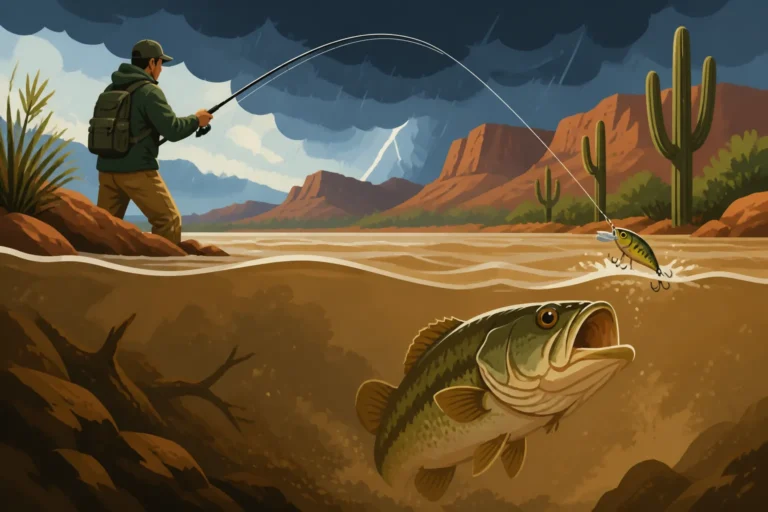
Consider a hot Arizona summer day at a community lake. The water might be gin clear, and the surface temperature stifling. You know bass will be deep or in heavy shade, trying to escape the heat. This situation calls for deep-diving crankbaits or drop shots fished slowly, often near aeration devices or submerged structure. Conversely, after a monsoon storm, the water might be muddy and stained. Now is the time for a vibrating jig or a dark-colored soft plastic, fished slowly and deliberately near newly submerged cover that provides ambush points in the cloudy water. Always remember to check Seasonal Movement Patterns of Arizona Bass to fine-tune your approach based on these factors, as fish react predictably to these changes.
Table: Arizona Bass Fishing Techniques at a Glance
| Technique/Lure Type | Best Season | Target Species | Key Habitat | Best Conditions |
|---|---|---|---|---|
| Walking Baits/Poppers | Spring, Fall, Summer | Largemouth, Striper | Shallow cover, Points | Dawn/Dusk, Overcast, Calm water |
| Frogs/Toads | Late Spring, Summer | Largemouth | Heavy vegetation, Mats | Sunny, Hot weather, Thick cover |
| Deep Diving Crankbaits | Spring, Fall, Summer | Largemouth, Smallmouth, Striper | Deep ledges, Humps, Channels | Any, good for searching, post-cold front |
| Lipless Crankbaits | Spring, Fall | Largemouth, Striper | Flats, Grass beds, Open water | Pre-spawn, Fall baitfish schooling |
| Jigs (Football/Flipping) | Year-round | Largemouth, Smallmouth | Brush, Rocks, Ledges | Any, especially effective on lethargic fish |
| Carolina Rig | Year-round | Largemouth, Smallmouth | Deep flats, Humps, Points | Searching deep water, windy conditions |
| Drop Shot | Year-round | Largemouth, Smallmouth | Deep structure, Clear water | Finesse, pressured fish, winter |
| Ned Rig | Year-round | Largemouth, Smallmouth | Shallow rocks, Docks, Clear water | Finesse, highly pressured fish, winter |
| Texas Rig | Year-round | Largemouth | Heavy cover, Brush piles | Pitching/Flipping, any depth with cover |
| Weightless Senko | Spring, Fall, Summer | Largemouth, Smallmouth | Docks, Shallow cover, Open pockets | Pressured fish, clear water, subtle presentation |
| Swim Baits | Year-round (size varies) | Largemouth, Striper | Open water, Structure, Baitfish | Targeting bigger fish, baitfish mimicry |
| Live Shad | Year-round | Striper | Open water, Deep channels, Boils | Tough bite, targeting large, suspended fish |
| Trolling | Year-round | Striper, Largemouth | Open water, Channels | Searching large areas, suspended fish |
Disclaimer
Always remember that fishing conditions can change rapidly, and it’s essential to consult the latest Arizona Game and Fish Department regulations before heading out. Safety should always be your top priority on the water, especially in Arizona’s extreme climate.