Do You Need a Net to Land Big Catfish?
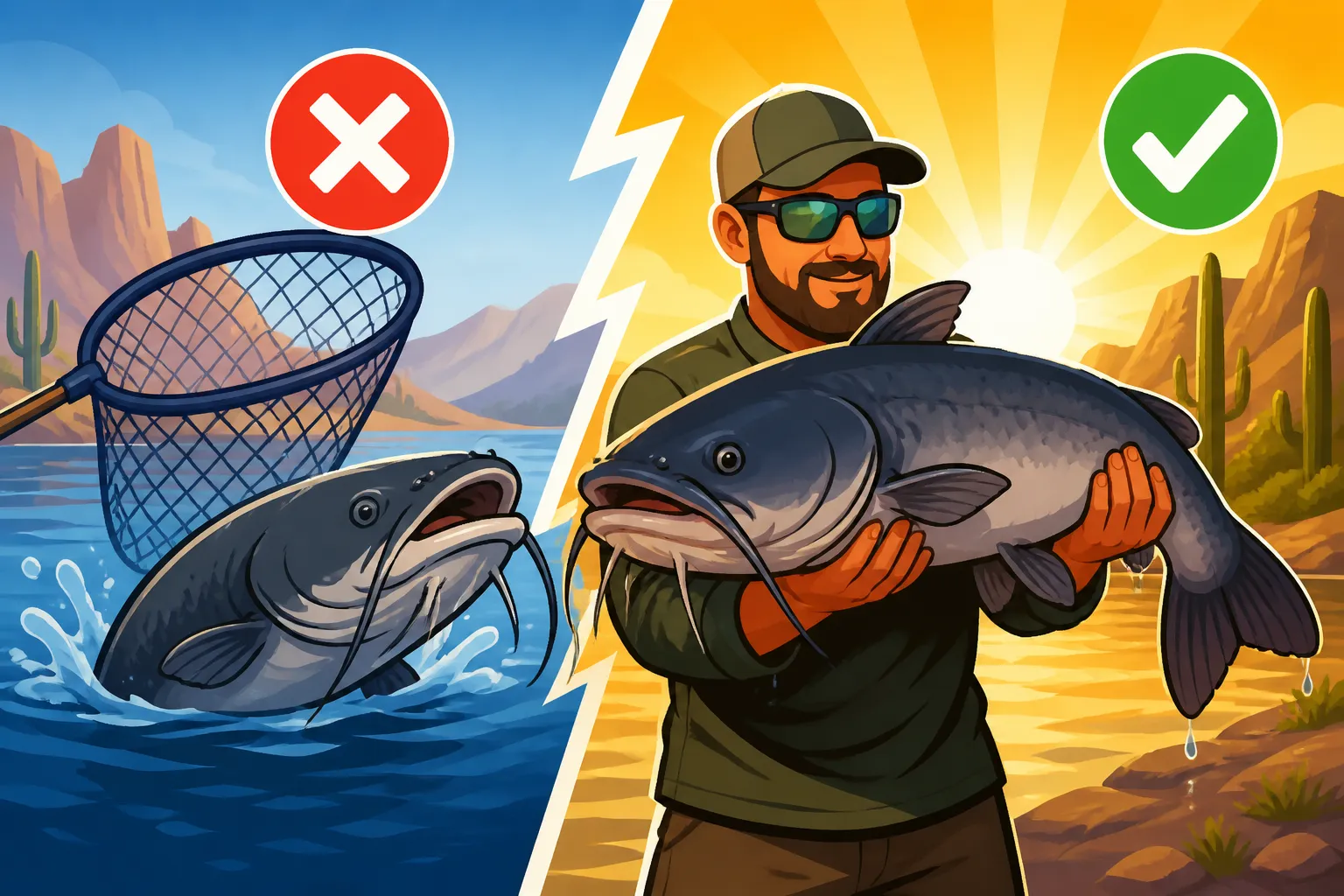
Oh, the age-old question that keeps many an Arizona angler up at night! You've hooked into something truly massive, a monster catfish that's pulling like a freight train, and suddenly you're faced with the frantic thought: "How am I actually going to get this beast out of the water?" It's a moment of truth for every angler, especially when you're battling one of our desert lake leviathans. This guide is going to dive deep into whether a net is truly essential for landing those impressive Arizona catfish, and how to approach the challenge safely and effectively, for both you and the fish.
The Reality of Landing Large Catfish Without a Net
Let's be real: when you're targeting big catfish in Arizona, whether it's a hefty channel cat from Bartlett Lake or a truly enormous flathead from the Colorado River, these aren't your average panfish. These are powerful, often slimy, and sometimes spiny creatures that require respect and a solid plan for landing. Trying to just muscle them ashore or into a boat can lead to frustration, lost fish, and even injury.
Why Catfish Present a Unique Challenge
Catfish are built for battle, and they don't give up easily. Unlike a bass that might jump, a catfish uses its sheer weight and power to pull, roll, and dig deep.
- Muscle and Weight: A big flathead or channel cat can weigh a significant amount, often pulling like a small truck. Trying to hoist a 20-pound-plus fish, especially when it's still thrashing, can be incredibly difficult and risky without proper leverage. You'll quickly realize that a fish in the water feels a lot lighter than a fish out of the water!
- Slippery as an Eel (Well, a Catfish!): Their skin is covered in a thick layer of protective slime. This makes them incredibly difficult to get a secure grip on, especially when they're wet and wiggling. Imagine trying to hold onto a greased pig – that's often what a large catfish feels like.
- Sharp Spines and Gill Plates: Catfish possess sharp, serrated spines on their dorsal and pectoral fins, which they can lock into place when threatened. These spines can inflict painful puncture wounds that are prone to infection if not treated properly. Their gill plates can also be surprisingly sharp and unforgiving. Reaching into the gills of a thrashing catfish to land it is asking for trouble.
- Powerful Head Shakes: Even when seemingly subdued, a large catfish can unleash a sudden, violent head shake that can easily dislodge hooks, snap lines, or send your rod flying. They have incredible strength in their jaws and neck muscles.
Risks to Both Angler and Fish
Attempting to land a large catfish without a net carries inherent risks for everyone involved. It's not just about losing the fish; it's about safety and responsible angling.
- For the Angler: The primary risks include injuries from spines or gill plates. A deep puncture wound can ruin your fishing trip and potentially lead to an infection requiring medical attention. Beyond physical injury, there's the heartbreak of losing a trophy fish right at the bank or boat. The line might snap, the hook might pull out, or the fish might simply slip from your grasp. It's a truly deflating experience to fight a big one for minutes only to see it swim away at the last second.
- For the Fish: If you're planning on practicing Catch and Release Rules for Arizona Anglers, improper landing techniques can cause significant stress and physical harm to the fish. Dragging a large fish onto abrasive ground like rocks or concrete can strip away its protective slime layer and damage its scales, making it vulnerable to disease. Excessive handling, especially out of water, can also damage internal organs or exhaust the fish to the point where it can't recover. A net, when used correctly, offers a much gentler way to temporarily secure the fish.
When a Landing Net Becomes Indispensable for Catfish
Given the challenges, it becomes clear that a landing net isn't just a convenience; it's often a crucial piece of equipment, particularly for larger catfish. Think of it as an extension of your fishing tackle, just as important as your Best Rod for Catfish or your Best Line for Catfish Fishing.
Protecting the Fish for Catch and Release
For many anglers, the thrill is in the catch, not necessarily keeping every fish. If you're passionate about preserving our Arizona fisheries, a net is a game-changer for catch and release.
- Minimizing Handling and Scale Damage: A well-designed landing net allows you to scoop the fish from the water quickly and efficiently, reducing the amount of time it struggles on your line. Once in the net, especially if it's a rubberized mesh net, the fish can be kept partially submerged, reducing stress. This minimal contact helps preserve their protective slime coat and delicate scales, which are vital for their health once released. You can then carefully unhook the fish while it's in the net, or quickly remove it for a photo before a swift release.
- Reduced Exhaustion: A prolonged fight combined with rough handling during landing can severely exhaust a fish. When you use a net, you can often land the fish more quickly and safely, allowing it to conserve energy. This is especially important in warm Arizona waters, where fish are already under environmental stress. A healthy, energetic release is key to a fish's survival.
Ensuring Angler Safety and Control
Beyond fish welfare, your own safety and the successful completion of the catch are paramount. A net offers a level of control you just can't get with bare hands, especially with larger, more feisty catfish.
- Preventing Fin Pricks and Slips: With a fish secured in a net, you minimize the chance of those nasty spine punctures. The net provides a barrier, allowing you to carefully position the fish to remove the hook without direct contact with its dangerous parts. It also prevents the fish from slipping out of your hands and flopping around, potentially damaging itself or causing you to lose your footing.
- Maintaining Control Over a Powerful Fish: A large catfish can often make a last-ditch surge right as it approaches the bank or boat. This is where many fish are lost. A net acts as a final barrier, capturing the fish before it can make that escape. It gives you a moment to compose yourself, get a firm grip on the net handle, and bring the fish safely out of the water without frantic fumbling.
Navigating Tricky Terrain and Solo Fishing
Not every fishing spot in Arizona offers a perfectly flat, easy-to-land bank. And let's face it, many of us enjoy the solitude of a solo fishing trip. In these scenarios, a net goes from useful to absolutely critical.
- Shore Fishing on High Banks or Rocky Areas: Picture yourself on the steep, rocky banks of Roosevelt Lake or the uneven terrain of the Salt River. Trying to lift a heavy, thrashing catfish up a bank or over jagged rocks without a net is incredibly difficult and hazardous. A long-handled net can reach down to the water, scoop the fish, and allow you to lift it to safer ground more easily. Dragging a fish up a rough bank can do immense damage to the fish and your gear.
- Fishing Alone: When you're fishing solo, there's no one else to lend a hand. If you hook into a really big one, you need to be self-sufficient in the landing process. A net allows you to control the fish with one hand while managing your rod with the other, making it a much more manageable solo endeavor. It truly levels the playing field when you don't have a buddy to help.
Choosing the Right Landing Net for Arizona Catfish
Just like you wouldn't use a fly rod for deep-sea fishing, you shouldn't use a flimsy trout net for a monster flathead. Selecting the proper landing net is essential for success and for the safety of both you and the fish.
Key Features for Catfish Nets
When shopping for a catfish net, keep these critical characteristics in mind. Many of these are available at local shops or online retailers like Bass Pro Shops or Amazon.
- Hoop Size: This is arguably the most important feature. You need a large hoop to accommodate the broad shoulders and thick bodies of big catfish. Look for nets with a hoop opening of at least 24-30 inches, or even larger for trophy hunters. A small hoop will only frustrate you as the fish tries to flop out.
- Netting Material: This is where things get specific for catfish and catch-and-release.
- Rubberized Mesh/Coated Netting: This is hands-down the best choice. The rubber coating protects the fish's slime coat and scales, and it's much less likely to tangle hooks. It's also easier to clean and doesn't absorb odors.
- Knotless Nylon: A decent second choice if rubber is out of budget. Knotless mesh is better than knotted, as knots can scrape fish.
- Knotted Nylon: Avoid this if possible, especially for catch-and-release. The knots can cause significant damage to the fish.
- Handle Length and Strength: Catfish can be heavy, so the handle needs to be robust and able to withstand significant weight and stress.
- Fixed Handles: Generally stronger and more durable for heavy lifting.
- Telescoping Handles: Offer versatility, allowing you to extend the reach for high banks or boat decks. Ensure the locking mechanism is sturdy and doesn't slip under pressure. A long handle is particularly useful for Shore Fishing Techniques for Beginners when you're working from a fixed position.
Net Types for Different Fishing Scenarios
Your fishing environment will dictate the best type of net for you.
- Boat Nets: These often feature shorter, sturdier handles (2-4 feet) or telescoping handles, designed for reaching over the gunwale of a boat. The hoop size should still be generous. If you're fishing from a larger vessel on Lake Pleasant Arizona Fishing Guide or Lake Powell Arizona Fishing Guide, a heavy-duty boat net is ideal.
- Shore Nets: For bank anglers, especially on those aforementioned high or rocky banks, a longer telescoping handle is a must. Look for handles that extend 6 feet or more to give you adequate reach. The stability of the handle is key here, as you'll be lifting the entire weight of the fish from a greater distance.
- Kayak Nets: Kayak anglers need a more compact net that's easy to store but still large enough for the fish. Many kayak-specific nets have shorter, fixed handles and a large hoop, often with a lanyard to prevent loss. They might be shaped differently to fit flat against the kayak. While a bit unwieldy for huge catfish, they are still better than no net at all.
Maintenance and Care for Your Catfish Net
A good net is an investment, and like any other piece of Best Fishing Gear Checklist for Desert Lakes, it needs care.
- Rinse After Use: Always rinse your net thoroughly with fresh water after each outing to remove slime, dirt, and any fish residue. This prevents odors and keeps the mesh clean.
- Air Dry Completely: Hang your net to air dry completely before storing it. Storing a wet net can lead to mildew, foul odors, and deterioration of the mesh.
- Check for Damage: Periodically inspect the mesh for tears, the hoop for bends, and the handle for any cracks or loose parts. Repair or replace as needed to ensure your net is ready for the next big catch.
Alternative and Supplementary Landing Techniques
While a net is highly recommended for large catfish, there are other methods, and sometimes they're used in conjunction with a net or when a net isn't available. However, these often come with more caveats and risks.
Hand Landing and Lip Grips: Pros and Cons
These methods require skill, confidence, and a good understanding of fish anatomy.
- Hand Landing (Gill Plate Grab): This involves reaching under the gill plate to grasp the fish. While effective for some species, it is highly discouraged for catfish due to their sharp gill rakers and pectoral spines. If you must attempt it, extreme caution is necessary, and it should only be done by experienced anglers with smaller fish. Even then, the risk of serious injury to both you and the fish is significant. It's far safer to avoid this method for any substantial catfish.
- Lip Grips/Fish Grips: These tools, often resembling pliers, clamp onto the fish's lower jaw. They can provide a secure hold on some fish, allowing you to lift them without touching the body.
- Pros: Keeps your hands away from spines and slime, can be very secure for lifting, and some models float.
- Cons: Can still cause jaw damage to the fish, especially if the fish is lifted vertically by the jaw alone without supporting its body. This is particularly true for heavy fish. Many catfish species also have very tough, bony mouths, and getting a secure grip can be difficult. They're generally better suited for bass or other species with more pronounced lower jaws. If you do use them, always support the fish's belly once out of the water to distribute its weight.
The Role of a Fishing Partner
Fishing with a friend or family member who can act as your "net man" or "gaff man" (though gaffs are generally discouraged for catch-and-release) dramatically improves your chances of a successful landing.
- Teamwork Makes the Dream Work: A partner can hold the net ready while you guide the fish towards it, ensuring the fish is properly oriented before the scoop. This coordination reduces stress on the fish and minimizes fumbling. It also allows one person to focus on the fight while the other prepares for the landing. This is a common strategy when targeting big Flathead Catfish Average Weight on the Colorado River or other large game fish.
- Assistance with Photography and Release: Once the fish is landed, a partner can assist with quick photos, safe hook removal, and a gentle release, further reducing the fish's time out of water. They can help ensure the fish is revived and swims away strongly.
Practical Tips for Using Your Catfish Net Effectively
Having the right net is only half the battle; knowing how to use it properly is just as important. Think of it like a dance between you, the fish, and the net.
The Art of Netting a Big Fish
It's not just about scooping; it's about strategy and precision.
- Lead the Fish Headfirst: Once the fish is subdued and near the boat or bank, guide it towards the net headfirst. Fish are generally easier to control when they're moving forward. Don't try to net a fish tail-first; they can kick out of the net much more easily.
- Submerge the Net Fully: Position the net fully underwater, allowing the fish to swim into it naturally. Trying to scoop the net under a fish that's still thrashing on the surface is a common mistake and often leads to missed opportunities.
- Scoop Up, Not Out: Once the fish is over the hoop, make a quick, upward scoop with the net to trap the fish securely. Lift the net straight up and bring it to a safe position, either into the boat or onto the bank. Avoid dragging the net sideways, as this can put undue stress on the net and potentially allow the fish to escape.
- Keep Tension on the Line (Until in the Net): Maintain light but constant tension on your fishing line until the fish is fully in the net. This helps guide the fish and prevents it from making a sudden, last-ditch run. Once the fish is in the net, you can relax the line.
Ethical Handling After the Catch
Whether you're keeping the fish for dinner or releasing it, proper handling is key.
- In the Net: Once in the net, keep the fish partially submerged if possible. This keeps it calm and reduces stress. Use this opportunity to remove the hook while the fish is still in the water, if you can do so safely.
- Quick Hook Removal: If you're releasing, unhook the fish as quickly and gently as possible. Pliers or a dehooking tool can be invaluable here. Consider using circle hooks for Bottom Fishing Techniques for Catfish, as they are designed to hook in the corner of the mouth, making removal easier and reducing gut hooks.
- Minimize Air Time: If you're taking a photo, do so quickly and efficiently. Support the fish horizontally with both hands, especially larger specimens, to avoid damaging its internal organs. Get your picture and return the fish to the water promptly.
- Revival: For released fish, gently hold the fish upright in the water, facing into any current. Move it back and forth slightly to push water over its gills until it regains its strength and swims away on its own.
Ultimately, while skilled anglers might occasionally manage to land smaller catfish without a net, for anything of significant size, or when practicing catch and release, a quality landing net is an invaluable tool. It protects both you and the fish, ensuring a safer, more successful, and more enjoyable Catfish Fishing Guide for Arizona experience. So, the next time you head out to chase those whiskered warriors, make sure a sturdy net is part of your essential gear.
| Net Feature | Importance for Catfish | Why It Matters |
|---|---|---|
| Hoop Size | Critical | Large, wide mouth (24-30+ inches) to encompass broad-shouldered fish. |
| Netting Material | High | Rubberized mesh or coated nylon is ideal to protect slime and prevent snags. |
| Handle Length | High | Long (6+ ft) for shore, moderate (2-4 ft) for boat, compact for kayak. |
| Handle Strength | Critical | Must be robust to lift heavy, thrashing fish without bending or breaking. |
| Knotless Mesh | High | Prevents scale damage and hook tangles; crucial for catch and release. |
| Deep Bag | High | Allows the entire fish to be submerged and prevents escapes. |
| Floating Handle | Moderate | A nice-to-have, especially for boat or kayak fishing, in case it goes overboard. |
Disclaimer
This article is for general informational purposes only and does not constitute professional advice. Laws, prices and regulations vary by location and change over time. Consult a qualified professional for guidance on your specific situation.