Is a Striped Bass the Same as a White Bass?
It’s a common scenario for anglers, especially those new to the vibrant fishing scene here in Arizona: you pull a beautiful, silvery fish from the water, marked with distinct dark stripes, and immediately think, "Is this a striped bass, or one of those white bass I've heard about?" This confusion is completely understandable, as both species belong to the Temperate Bass family and share striking resemblances. But while they might look like cousins at first glance, there are distinct differences between a striped bass and a white bass that are crucial for every Arizona angler to know, not just for identifying your catch, but for understanding regulations and honing your fishing strategy. This guide will help you confidently tell them apart, giving you the knowledge you need for a more successful and compliant fishing experience on our desert lakes.
The Core Differences: Striped Bass vs. White Bass
Let's dive right into what sets these two popular Arizona fish species apart. While they both have that classic "bass" shape and prominent horizontal stripes, looking closely at a few key features will make identification much clearer. It’s all in the details, and once you know what to look for, you’ll be able to distinguish them with confidence.
Size, Body Shape, and Coloration
Perhaps the most immediate and noticeable difference between striped bass and white bass often comes down to their sheer size. Striped bass are the heavyweights of the family. Here in Arizona, it’s not uncommon to catch stripers in the 5-10 pound range, and they can grow significantly larger, with some trophies exceeding 20 or even 30 pounds in waters like Lake Powell. Their bodies tend to be more elongated and torpedo-shaped, built for powerful, sustained swimming in open water. The stripes on a striped bass are typically very distinct, unbroken, and run straight along their silver-to-dark gray bodies. Sometimes, especially on larger fish, you might notice a subtle greenish or bluish tint on their backs.
White bass, on the other hand, are generally much smaller. A good-sized white bass in Arizona might be 1-2 pounds, with truly exceptional specimens reaching 3-4 pounds. Their body shape is usually deeper and more compressed laterally, giving them a stockier appearance compared to their striped cousins. The stripes on a white bass are also prominent, but a key distinguishing feature is that the lower stripes, particularly those below the lateral line, are often faint or broken. They might appear as dashed lines or a series of spots rather than solid, continuous stripes. Their coloration is typically a brighter, more silvery white, with a darker olive-green or grayish back.
To help visualize these key differences, let’s lay them out side-by-side:
| Feature | Striped Bass | White Bass |
|---|---|---|
| Average Size | 5-10 lbs (can reach 30+ lbs) | 1-2 lbs (rarely exceeds 4 lbs) |
| Body Shape | Elongated, torpedo-shaped | Deeper, more compressed/stocky |
| Stripe Pattern | Generally distinct, unbroken, straight | Lower stripes often broken or faint |
| Coloration | Silver to dark gray, sometimes greenish/bluish back | Brighter silvery-white, olive-green/gray back |
| Tooth Patch | Two distinct patches on tongue | One small, single patch on tongue |
Habitat and Behavior
Where you find these fish in Arizona’s diverse waters can also offer clues to their identity. Both are schooling fish, which means if you find one, you're likely to find more. However, their preferred niches often differ.
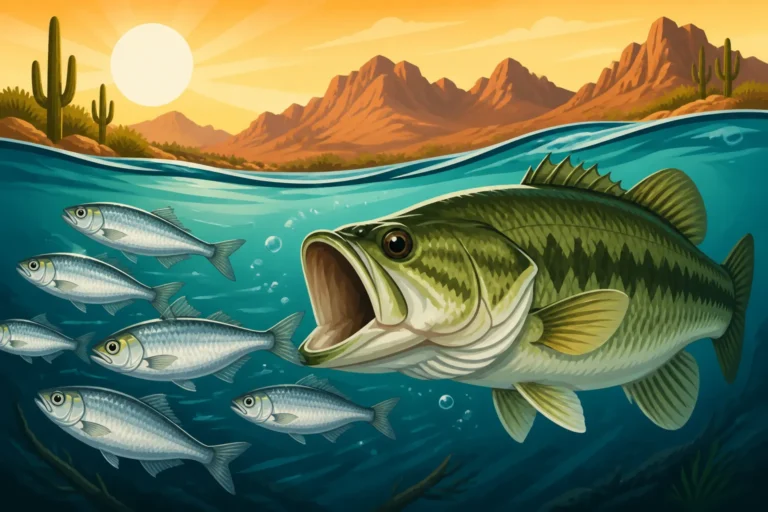
Striped bass are primarily open-water predators. They thrive in large, deep reservoirs like Lake Powell Arizona Fishing Guide and Lake Mead, where they can roam vast expanses, chasing schools of shad or other baitfish. You'll often find them suspended in the water column, especially over deep points, humps, or submerged timber, following their food sources. They are highly migratory within these large bodies of water, moving with the bait. This makes them a favorite target for anglers who enjoy trolling or chasing "boils" when the stripers push baitfish to the surface.
White bass are a bit more versatile in their habitat preferences, though they also love open water in reservoirs. They can be found in a wider range of Arizona lakes, often frequenting shallower areas, coves, and riverine sections leading into lakes, especially during spawning runs. While they do school, their schools might be tighter and more localized compared to the expansive movements of stripers. They are known for their aggressive feeding habits and can often be found chasing baitfish near the surface, much like stripers, but often in more confined spaces. Lake Pleasant Arizona Fishing Guide is an excellent example of a lake where white bass are abundant and provide fantastic fishing opportunities.
Diet and Feeding Habits
Both species are voracious predators, and their diets reflect their size and preferred habitats. Understanding what they eat can help you select the right lures and baits, and sometimes even give you a hint about which species you're encountering.
Striped bass, being larger, feed on larger baitfish. Their primary forage in Arizona reservoirs consists of shad – both gizzard shad and threadfin shad – as well as trout and even smaller bass. They are opportunistic feeders, and their powerful strikes are legendary. When they erupt into a "boil" on the surface, it's usually because they've corralled a school of baitfish and are feasting in a frenzy. This makes them susceptible to a wide range of artificial lures that imitate these baitfish, such as crankbaits, swimbaits, and topwater plugs. Knowing How to Fish for Striped Bass can dramatically increase your success.
White bass, while also primarily piscivores (fish-eaters), will generally target smaller prey due to their more modest size. Threadfin shad are a staple, but they also consume insects, crustaceans, and other small invertebrates. They are equally aggressive, often forming large schools that will chase down baitfish with relentless abandon. This aggressive nature makes them a blast to catch, as they'll readily strike at small spinners, spoons, jigs, and even tiny crankbaits. It’s a good idea to have a variety of these smaller lures in your tackle box; you can easily find a great selection online at Amazon for these feisty fish.
Why Identification Matters for Arizona Anglers
Beyond simply knowing what you caught, accurately distinguishing between a striped bass and a white bass has real-world implications for your fishing trip. Misidentification can lead to frustration, missed opportunities, or even costly legal issues. It’s not just academic; it’s practical.
Regulations and Limits
This is perhaps the most critical reason to know the difference. The Arizona Game and Fish Department (AZGFD) often has different daily bag and possession limits for striped bass and white bass. For example, some lakes might have a generous limit on striped bass to help manage their populations, while white bass might have a more restrictive limit or specific size slot rules. If you mistakenly keep a white bass, believing it's a striped bass, and exceed the white bass limit, you could face penalties. Similarly, if there's a specific size slot for one species that doesn't apply to the other, misunderstanding could lead to issues.
Always make it a habit to check the current Arizona Fishing Regulations Explained booklet or the AZGFD website before heading out. Bag and possession limits are clearly outlined, and understanding them is part of being a responsible angler. Imagine being stopped by a game warden after a fantastic day of fishing, only to find out you've inadvertently violated a regulation because you misidentified your catch. It’s a scenario no one wants, and a little knowledge goes a long way to prevent it. Specific rules regarding Fishing Bag and Possession Limits Explained are designed to protect fish populations and ensure sustainable angling for everyone.
Fishing Strategy and Gear
Knowing your target species directly influences how you fish and what gear you bring. If you're heading to Lake Powell specifically for trophy striped bass, you're likely to use heavier rods, reels with stronger drag systems, and larger lures designed to imitate bigger baitfish. You might focus on trolling deep water or watching for surface boils. Many anglers will head to Amazon to stock up on large swimbaits, heavy spoons, and robust tackle that can withstand the powerful runs of a big striper.
Conversely, if you're targeting white bass at a lake like Bartlett, you'll probably opt for lighter spinning gear, smaller lures, and focus on areas where white bass are known to congregate, such as humps, points, or creek channels. You might vertical jig with small spoons or cast smaller crankbaits. While both can be caught on similar baits at times, optimizing your setup for the specific species will undoubtedly increase your catch rate. For anglers just starting out, understanding the nuances of different fish species and their preferred tackle is a fundamental step in becoming a proficient angler. You might find a great all-around Best Fishing Rods for Bass in Arizona that works for both, but dedicated gear often shines.
Practical Tips for Identifying Your Catch
Even with a good understanding of the differences, sometimes a quick glance isn't enough. Here are some hands-on, definitive ways to tell if you've got a striped bass or a white bass on the end of your line. These visual cues are your best friends for accurate identification.
Key Visual Cues to Look For
The devil is in the details, and with striped and white bass, a few specific anatomical features can seal the deal.
-
Stripe Continuity: As mentioned, this is often the easiest first check. For a striped bass, most of the dark lateral stripes will be solid and unbroken, running from just behind the gill plate all the way to the tail. They might occasionally have one or two lower stripes that are slightly broken, but generally, they are continuous. For a white bass, look for clear breaks in the stripes, especially the ones below the lateral line. They often look like they've been drawn with a broken crayon, or appear as rows of dashes and spots. This is a very reliable indicator.
-
Body Proportions: Hold the fish up and observe its overall shape. A striped bass will typically appear more slender and streamlined for its length, with a noticeably larger, more powerful tail fin. Think of it as a sleek, muscular swimmer. A white bass will often seem deeper-bodied and more "compact" for its length, with a slightly smaller tail fin relative to its body. It's almost like comparing a torpedo to a thick football.
-
Tooth Patch on the Tongue: This is perhaps the most definitive way to tell them apart, and it requires a quick, gentle look inside the fish's mouth. Carefully open the mouth and look at the tongue. A striped bass will have two distinct, elongated patches of teeth on its tongue. These are quite prominent and easy to feel with a finger (carefully!). A white bass will only have a single, small, often oval-shaped patch of teeth in the center of its tongue, or sometimes no noticeable patch at all. This difference is consistent across all sizes and can’t be mistaken. Many anglers keep a small, soft-handled pair of pliers or a fish gripper handy, which makes this quick examination much easier and safer for both you and the fish.
-
Dorsal Fins: Take a look at the two dorsal fins on the fish's back. In both species, the first dorsal fin has spines, and the second has soft rays. The key difference lies in how separated they are. On a striped bass, the two dorsal fins are usually clearly separated by a noticeable gap. You can often fit a finger between them. On a white bass, the two dorsal fins are typically closer together, sometimes almost appearing to touch at their bases, with only a small, barely noticeable gap. This isn't always as obvious as the stripes or the tongue patch, but it can be another helpful clue.
When in Doubt: Conservation and Compliance
If, after all your careful examination, you're still not 100% sure what you've caught, especially if you suspect it might be a species with a more restrictive limit or protected status, it's always best to err on the side of caution. If releasing the fish is an option and doesn't violate any specific "must keep" regulations (which are rare for these species in Arizona but always worth verifying), then releasing it safely is the most responsible choice.
When in doubt about regulations, remember that the Arizona Game and Fish Department is your primary resource. They provide detailed information on their website and through their regulations booklets. It's far better to consult these resources or even ask a local tackle shop expert than to risk a violation. Responsible angling includes knowing and respecting the rules that help maintain our beautiful fisheries. Learning about Arizona Fishing Rules for Beginners can save a lot of headaches and ensure a smooth day on the water.
Where to Find Them in Arizona
Knowing the typical haunts of each species can also give you a strong indication of what you might catch, even before you make your first cast. While there can be overlap, certain lakes are renowned for one species over the other.
Prime Striped Bass Waters
Arizona is home to some truly epic striped bass fisheries, especially in its larger, deeper reservoirs that hold abundant baitfish populations. These are the lakes where you have the best chance of encountering those powerful, hard-fighting stripers.
- Lake Powell: Without a doubt, Lake Powell is the crown jewel for striped bass fishing in Arizona (and Utah). Its vast, canyon-filled expanse provides the perfect habitat for massive schools of stripers that grow large by feasting on the abundant shad. Anglers here chase boils, troll deep, and fish with cut bait for some truly incredible catches. Understanding the Best Season to Catch Striped Bass at Lake Powell can be a game-changer for your trip planning.
- Lake Mead: Another immense reservoir, Lake Mead, straddling the Arizona-Nevada border, also holds a significant population of striped bass. While it might not always have the headline-grabbing boils of Powell, trophy stripers are certainly present and actively pursued by anglers targeting deep-water structure and main lake points.
- Lake Havasu: Down on the Colorado River, Lake Havasu is well-known for its bass fishing, and that includes a healthy population of stripers. They thrive in the deeper channels and open water, providing exciting opportunities, especially around the shad spawns.
- Roosevelt Lake: While often lauded for its incredible largemouth bass fishing, Roosevelt Lake also boasts a good population of striped bass. They tend to stick to the deeper, main lake basin areas, particularly near the dam and in the open water where shad schools roam. They can provide an unexpected bonus to a bass fishing trip or be targeted specifically with the right techniques.
Prime White Bass Waters
While white bass might not reach the same colossal sizes as stripers, they are incredibly fun to catch and can provide fast action. They are particularly popular in some of Arizona's central reservoirs.
- Lake Pleasant: This is arguably the premier white bass fishery in Arizona. Lake Pleasant offers fantastic opportunities, particularly in the spring when white bass make their spawning runs up the Agua Fria arm and other feeder creeks. They are also abundant in the main lake, schooling up and chasing shad, providing explosive topwater action. Anglers specifically targeting these fish will find Lake Pleasant to be an exceptional destination. For more information on fishing this lake, check out White Bass Fishing at Lake Pleasant.
- Bartlett Lake: Another one of Arizona’s major reservoirs, Bartlett Lake also boasts a very healthy white bass population. Similar to Lake Pleasant, the white bass here are aggressive and plentiful, often found schooling in open water or along prominent points and submerged humps. They provide consistent action and are a great target for anglers looking for a high-volume catch day.
- Other Community Lakes and River Sections: While not as abundant as in Pleasant or Bartlett, white bass can sometimes be found in other larger lakes and even in some of the slower sections of rivers that feed into reservoirs. They are a resilient species and can adapt to various water conditions, though they generally prefer clear, open water with good forage.
By understanding the key differences in appearance, habitat, and behavior, you’ll be much better equipped to identify your catch accurately and adhere to all fishing regulations. This knowledge will also empower you to make more informed decisions about where to fish and what gear to use, leading to more productive and enjoyable days out on Arizona’s fantastic waterways. Tight lines!
Disclaimer
This article is for general informational purposes only and does not constitute professional advice. Laws, prices and regulations vary by location and change over time. Consult a qualified professional for guidance on your specific situation.