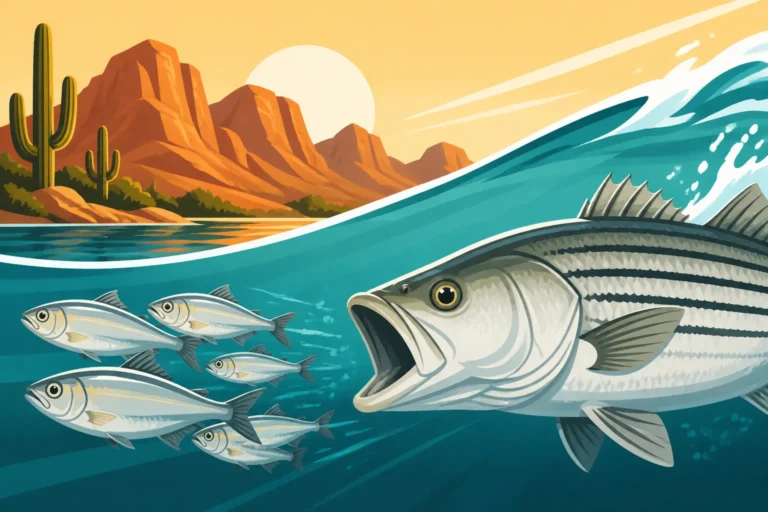
Arizona Striped Bass Record
Every angler dreams of landing that one fish that makes history, a true leviathan that tests their skill, patience, and equipment. For those of us who chase the thrill of big game in Arizona's lakes, the striped bass often holds that coveted spot, and hearing tales of monstrous stripers can be both inspiring and intimidating. This guide is dedicated to unraveling the specifics of the Arizona state record for striped bass, exploring where these giants lurk, and offering insights into how you might just land your own legendary catch.
The Allure of Arizona's Striped Bass
There's something uniquely captivating about the striped bass. Maybe it's their sheer power when hooked, the way they pull like a freight train, or perhaps it's their impressive size potential that draws so many dedicated anglers to pursue them in Arizona's vast reservoirs. They represent a significant challenge and an even bigger reward.
Why Stripers Captivate Anglers
Striped bass, often simply called "stripers," are a favorite target for many reasons. They're aggressive predators, which means they strike with ferocity, often leading to heart-pounding battles. Unlike some species that might nibble subtly, a striper hit is usually unmistakable and powerful. Their schooling behavior also means that when you find one, you've often found many, leading to exciting multi-fish catches. For those looking for a true fight, a striper pushing double-digit weights offers an unforgettable experience, testing every aspect of your angling prowess. The possibility of landing a truly massive fish keeps many coming back, year after year, hoping to best their personal record or even, perhaps, the state record.
Beyond the fight, stripers are also beautiful fish with their distinctive lateral stripes running down their silvery bodies. They are a testament to the thriving fisheries in Arizona's larger lakes, providing not just sport but also excellent table fare. Many anglers swear by the taste of fresh striper, making them a dual-purpose catch for both sport and sustenance. This combination of thrilling sport, good eating, and the constant chance of a trophy-sized catch makes them an enduring favorite across the state.
The Striped Bass in Arizona's Ecosystem
While striped bass are native to the Atlantic Ocean, they've adapted remarkably well to the freshwater environments of Arizona's large reservoirs, particularly those connected by the Colorado River system. They were initially introduced to help control forage fish populations and quickly established themselves, becoming a dominant predator. Lakes like Powell, Mead, and Mohave are now renowned for their thriving striper populations, providing incredible opportunities for anglers. These deep, clear bodies of water, often with abundant shad populations, create ideal conditions for stripers to grow to impressive sizes.
Their presence has, of course, reshaped the local ecosystems. As apex predators, they play a crucial role in maintaining balance within these impoundments. Understanding their feeding patterns and preferred habitats is key to successfully targeting them. They are opportunistic feeders, preying on whatever is available, but shad, especially threadfin and gizzard shad, form the bulk of their diet. This abundant food source is a major factor in why Arizona stripers can grow so large, so quickly. Anglers who mimic these natural prey items with their baits and lures often find the most success.
Understanding Striped Bass Growth
Striped bass are known for their rapid growth rates, especially when they have an ample food supply and stable environmental conditions. In Arizona's rich reservoirs, these conditions are often met, allowing stripers to reach impressive sizes. Their growth is directly tied to the availability of forage fish; the more shad present, the faster and larger the stripers tend to grow. This is particularly evident in lakes like Powell, where vast schools of threadfin shad provide an endless buffet.
Factors like water temperature also play a role. Stripers are active predators across a wide range of temperatures, but they tend to feed most aggressively during certain periods, often related to the movement of their prey. Cooler water in the spring and fall can lead to intense feeding frenzies as they prepare for spawning or winter. Their longevity, combined with a healthy diet, allows some individuals to become truly massive. While many stripers caught are in the 2-5 pound range, it's not uncommon to encounter fish weighing 10, 20, or even 30 pounds, especially in prime locations known for trophy potential. This understanding of their growth patterns helps explain why Arizona has produced such remarkable state records.
Deciphering the Arizona State Record for Striped Bass
Every state record tells a story of an exceptional fish and an angler who seized the moment. For striped bass in Arizona, the record is a testament to the incredible fishery that exists in our desert lakes, particularly in the vast expanse of Lake Powell. It’s a benchmark that fuels the dreams of countless fishermen and women.
The Current State Record Holder
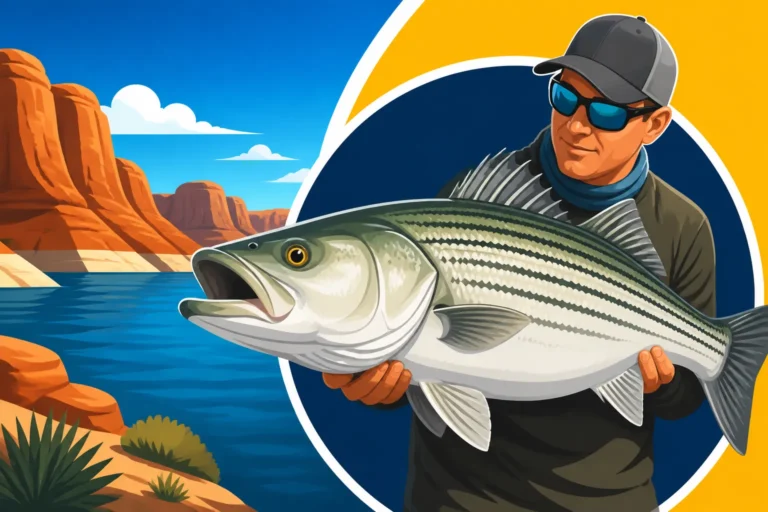
The current Arizona state record for striped bass is a truly monumental catch, a fish that stands as a testament to the giants swimming in our waters. This isn't just a big fish; it's a colossal one that has etched its place in Arizona fishing lore. The angler who reeled in this monster achieved what many only dream of, proving that with persistence, the right techniques, and a bit of luck, true trophies are within reach. It's the kind of catch that gets talked about around campfires and inspires countless expeditions.
Knowing the details of such a catch often ignites a competitive spirit in other anglers. It sets a tangible goal, a weight to aspire to, and a legendary fish to measure against. This record isn't just a number; it's a symbol of what the Arizona fishery is capable of producing, especially in its deeper, more productive waters. It showcases the health and vitality of the striped bass population in the state, offering hope and excitement to anyone casting a line for these powerful predators.
The Weight and Where It Was Caught
The Arizona state record striped bass weighed an incredible amount, a testament to its age and the abundant food sources in its habitat. While specific numerical weights can change with new records, this fish pushed the boundaries of what most anglers imagine catching. It was caught in the renowned waters of Lake Powell, a sprawling reservoir that straddles the Arizona-Utah border and is famous for its productive striper fishery. Lake Powell's immense size, countless canyons, and prolific threadfin shad populations create an ideal environment for striped bass to thrive and reach truly gargantuan proportions.
The fact that it came from Lake Powell isn't a surprise to seasoned striper anglers. This lake is legendary for its massive striped bass, offering both quantity and quality. The record fish was likely a mature individual that had spent many years gorging on shad, navigating the lake's vast underwater structures, and evading countless lures before its fateful encounter with the record-setting angler. Its capture highlights Lake Powell as a prime destination for anyone serious about hunting trophy striped bass in Arizona. Where Striped Bass Were First Stocked in Arizona is an interesting read for understanding the history of these fish in our waters.
The Story Behind the Catch
Every record-breaking fish has an amazing story, and the Arizona state record striped bass is no exception. While the exact details of such a monumental catch often become part of angling folklore, the general narrative usually involves immense effort, strategic planning, and a bit of serendipity. Imagine the thrill of the strike, the bending rod, the screaming reel, and the sheer power of a fish of that magnitude fighting for its life in the deep canyons of Lake Powell. It's a battle of wills that can last for what feels like an eternity.
Such a catch typically requires specialized heavy-duty gear, often purchased from reputable fishing suppliers found on platforms like Amazon, designed to handle extreme stress. The angler likely employed specific techniques, whether deep-trolling large swimbaits, presenting live bait in key locations, or perhaps capitalizing on a rare striper boil. The process of landing, documenting, and officially certifying a state record is also rigorous, involving precise measurements, certified scales, and official verification to ensure its legitimacy. This dedication to process ensures the integrity of the record and adds to the prestige of the achievement, making the story even more compelling for future generations of anglers.
Lake Powell: A Giant's Playground
When we talk about record-breaking striped bass in Arizona, one name consistently rises above the rest: Lake Powell. This vast, intricate reservoir is more than just a lake; it's an entire aquatic world, perfectly suited for growing some of the largest stripers found anywhere. Its unique geography and ecosystem create a veritable paradise for these powerful fish.
Why Striped Bass Grow So Large at Lake Powell
The primary reason Why Striped Bass Grow So Large at Lake Powell boils down to a perfect storm of environmental factors and an unbelievably rich food source. Lake Powell is an enormous body of water with incredible depth and an intricate network of canyons, offering vast amounts of diverse habitat for stripers to roam. But the real secret weapon is the abundance of threadfin shad. These small, silvery baitfish reproduce prolifically in Powell's warm, nutrient-rich waters, forming massive schools that act as an all-you-can-eat buffet for the predatory striped bass. With such a consistent and high-quality food source, stripers can grow quickly and maintain impressive sizes.
Furthermore, the sheer size of the lake means there's less fishing pressure concentrated on any single area, allowing some fish to grow older and larger without being caught. The deep, cool waters provide refuge during the scorching Arizona summers, and the complex underwater structures, ledges, and submerged timber offer excellent ambush points for stripers hunting schools of shad. All these elements combine to create a prime environment where striped bass not only survive but truly flourish, reaching weights and lengths that are exceptional for a landlocked fishery.
Prime Locations for Trophy Stripers
While Lake Powell is a vast expanse, certain areas are historically known for producing trophy-sized striped bass. These spots often feature specific characteristics that attract large schools of shad and, consequently, big stripers. Look for major channels, deep canyon walls, points, and humps where current or wind action concentrates baitfish. Areas with significant drop-offs or underwater structure also serve as excellent ambush points for these opportunistic predators. The Wahweap, Antelope Canyon, Padre Bay, and Good Hope Bay areas are frequently mentioned by anglers targeting larger fish.
However, the key is often finding the bait. If you locate large schools of shad on your fish finder, you can bet that stripers won't be far behind. Often, the biggest stripers are found deeper, away from the surface action of "boils" where smaller fish feed. They tend to be more solitary or in smaller packs, lurking near structure, waiting for an easy meal. Scouting these areas, especially during the Best Time of Year to Fish Lake Powell, with patience and the right electronics, is crucial for those hoping to connect with a true monster.
The Hunt for Records and How Big Do Striped Bass Get at Lake Powell
The quest for a new state record striped bass often leads anglers to ponder exactly How Big Do Striped Bass Get at Lake Powell. While the average striper caught might be in the 5 to 10-pound range, the potential for truly massive fish, exceeding 30, 40, or even 50 pounds, is always present. The record fish itself proves that Lake Powell harbors these giants. The hunt for such a fish isn't just about casting a line; it's a meticulous process of understanding fish behavior, water conditions, and bait movements. It's about spending countless hours on the water, meticulously exploring new spots, and refining techniques.
Anglers often invest heavily in specialized electronics to map underwater topography and locate deep schools of baitfish and the larger stripers that follow them. They study historical catch data, consult with local guides, and experiment with various lures and depths. This pursuit is as much a mental game as it is a physical one, demanding resilience and a deep passion for the sport. The possibility of hooking into a fish that could shatter the existing record is what keeps many dedicated anglers returning to Lake Powell, year after year, with unwavering determination.
Gear Up for a Record-Breaking Striper
Landing a state-record striped bass isn't just about finding the fish; it's also about having the right tools for the job. These powerful fish demand serious tackle, capable of withstanding incredible strain and turning the head of a true freshwater leviathan. Skimping on gear when chasing a record is a recipe for heartbreak.
Essential Rods and Reels for Big Stripers
When targeting trophy striped bass, you absolutely cannot rely on flimsy freshwater bass gear. You need robust, heavy-duty equipment designed to handle powerful runs and substantial weight. For rods, look for medium-heavy to heavy power rods, typically 7 to 8 feet in length, with a fast action. This combination provides the backbone necessary to leverage a large fish while maintaining enough sensitivity to detect subtle bites when deep-dropping or using lighter presentations. Many anglers prefer a good quality graphite or composite blank for durability and sensitivity. You can find excellent options on Amazon, often from brands known for their saltwater or muskie gear, which translates well to big stripers.
Pair these rods with equally sturdy spinning or baitcasting reels. For spinning reels, sizes in the 5000-8000 range are appropriate, offering high line capacity and smooth, powerful drag systems. For baitcasters, models designed for heavy cover or big game, with strong gears and a robust drag, are essential. Ensure your reel has a smooth, consistent drag, as a jerky drag can quickly lead to snapped lines or pulled hooks during a powerful striper run. Spool up with 30-65 pound test braided line, which offers superior strength-to-diameter ratio and sensitivity, often with a fluorocarbon leader for abrasion resistance and invisibility. How to Choose Line Weight for Striped Bass offers more detailed advice.
Baits and Lures That Attract Giants
Trophy striped bass often require larger, more substantial baits and lures to entice a strike. They are not shy, but they are also efficient predators, meaning they'll often ignore smaller offerings in favor of a more caloric meal. Live bait, particularly large threadfin or gizzard shad, or even smaller trout, are incredibly effective, especially when fished on a free-line or under a balloon in deeper water. These natural presentations often prove irresistible to even the most wary monster stripers.
For artificial lures, consider large swimbaits, both hard and soft plastic, mimicking the size and action of their primary forage. Crankbaits that can dive to significant depths are also excellent choices, especially when trolling along underwater ledges and humps. Topwater lures, specifically large poppers or walking baits, can be exhilarating during a surface boil, though these are more often effective for smaller, schooling fish rather than solitary giants. Jigs, especially those tipped with plastic trailers, can be deadly when fished vertically in deep water where stripers are suspended. The key is to match the hatch – use baits that resemble the size and color of the local baitfish population. For a general overview, check out our guide on Best Tackle for Desert Lake Fishing.
Best Tackle for Desert Lake Fishing for Trophy Fish
When outfitting yourself with the Best Tackle for Desert Lake Fishing with the specific goal of a trophy striper, it's about optimizing every component for power and durability. Beyond the rod, reel, and line, a few other items are non-negotiable. First, invest in quality terminal tackle: strong, sharp hooks (often 4/0 to 7/0 circle hooks for live bait, or heavy-duty trebles on lures), robust swivels, and strong split rings. Big stripers can bend cheap components, leading to lost fish. Secondly, a sturdy, long-handled landing net with a rubberized mesh is crucial. This not only helps land the fish safely but also protects its scales and slime coat if you plan on releasing it.
A good pair of fishing pliers, capable of cutting heavy braid and removing hooks, is also essential. For electronics, a reliable fish finder with good down-imaging and side-imaging capabilities is invaluable for locating schools of bait and deep-sitting stripers. Many anglers also find a quality trolling motor with GPS capabilities helpful for precise boat control when working structure or following schools. Don't forget sun protection, ample hydration, and a spacious cooler if you plan to keep your catch. Equipping yourself properly, sometimes with a quick order from Amazon for those specific accessories, ensures you’re prepared for the fight of a lifetime.
Mastering Techniques for Trophy Striped Bass
Catching a truly massive striped bass, one that might challenge the state record, requires more than just luck. It demands a sophisticated understanding of their behavior, their preferred habitats, and the most effective techniques to entice them. These aren't your average panfish; they're apex predators requiring specialized tactics.
Trolling and Live Bait Strategies
Two of the most consistently effective techniques for targeting trophy striped bass are trolling and using live bait. Trolling allows you to cover vast amounts of water, especially in large reservoirs like Lake Powell, and present lures at precise depths where big stripers are known to cruise. Using deep-diving crankbaits, large swimbaits, or umbrella rigs on planer boards or downriggers allows you to search out fish along ledges, humps, and submerged canyons. Vary your speed, direction, and lure depth until you find what triggers a strike. A good rule of thumb is to look for structure or baitfish on your fish finder, then troll your lures through or just above those zones.
Live bait is often the king for truly massive, wary stripers. Large threadfin or gizzard shad, bluegill, or even small trout (where legal and appropriate) can be deadly. These baits are typically fished on a strong circle hook, either free-lined with minimal weight, suspended under a balloon, or slowly drifted on a bottom rig. The key is to present the live bait naturally, allowing it to swim freely and entice a strike. Many anglers will anchor over a known deep-water point or submerged brush pile and present multiple live baits at varying depths, waiting for that tell-tale, slow pull that signifies a big striper has found your offering.
How to Fish During a Striper Boil
While trophy stripers often lurk in the depths, one of the most exciting and productive ways to catch numbers of stripers, and sometimes even a surprisingly large one, is during a "boil." A striper boil occurs when schools of striped bass aggressively push baitfish to the surface, causing the water to erupt in a chaotic feeding frenzy. Learning How to Fish During a Striper Boil is a thrilling experience. The sight of hundreds of stripers crashing the surface, with gulls circling overhead, is unforgettable.
When you encounter a boil, approach cautiously from upwind or upcurrent to avoid spooking the fish. Cast fast-moving topwater lures, spoons, or small swimbaits directly into the commotion. The key is to imitate a fleeing baitfish. These boils are often short-lived, so quick reactions are crucial. While many of the fish caught during boils tend to be smaller, aggressively feeding stripers, don't be surprised if a larger fish pushes through the chaos for an easy meal. This is also a fantastic opportunity for light tackle fun, but remember that even during a boil, larger fish might be lurking just beneath the surface action, waiting for injured baitfish to sink.
Deep Water Tactics for Elusive Stripers
The largest, most elusive striped bass often reside in deeper water, particularly during the hotter months or when surface activity is scarce. Mastering deep water tactics is crucial for consistent success with trophy-sized fish. This involves using heavy jigs, spoons, or live bait presented vertically directly beneath the boat. A high-quality fish finder is your best friend here, allowing you to locate suspended schools of stripers or large individual marks near deep structure. Look for them holding to underwater points, humps, ledges, or channels.
Techniques like "dead sticking" live bait (dropping it to the depth where fish are marked and holding it relatively still) or vertical jigging heavy spoons or soft plastic swimbaits are incredibly effective. Often, the biggest fish are not actively chasing, but rather ambushing prey from concealment. Patience is paramount, as bites can be subtle in deep water. Pay close attention to your line for any twitch or unusual movement. This methodical approach, often performed in areas like the deepest parts of Lake Pleasant or Roosevelt Lake, will often yield the most substantial rewards for anglers seeking true leviathans. Understanding Striped Bass Diet and Feeding Habits can further inform your bait choices for these deep water approaches.
The Path to Your Own Record
Dreaming of holding a new state record striped bass isn't just fantasy; it's an achievable goal with the right preparation, knowledge, and adherence to regulations. It's a journey that starts long before you ever cast a line.
Legal Requirements and Documentation
Before you even think about submitting a record, it's absolutely critical to understand and follow all local fishing regulations. This includes possessing a valid Arizona Fishing License Guide, adhering to Fishing Bag and Possession Limits Explained, and understanding any special rules for specific bodies of water. Ignorance of the law is no excuse, and a violation could disqualify your catch or, worse, lead to fines. Make sure your license is up-to-date and easily accessible, perhaps in a waterproof pouch you ordered from Amazon.
If you believe you've caught a record-breaking fish, immediate and precise documentation is paramount. This typically involves:
- Weighing the fish on a certified scale: Many bait shops or sporting goods stores have certified scales. Do not rely on uncertified bathroom scales.
- Taking clear, well-lit photographs: Document the fish from multiple angles, ideally with a ruler or measuring tape clearly visible next to it to show length. Include a photo of the entire fish and the angler.
- Having witnesses: If possible, have another licensed angler or credible individual witness the catch and weighing process.
- Preserving the fish: If you plan to keep the fish for consumption, keep it on ice to maintain its weight and condition until officially weighed. For catch-and-release, document quickly and release immediately.
- Contacting the Arizona Game and Fish Department (AZGFD): Immediately notify the AZGFD to understand their specific record submission procedures and requirements. They will guide you through the official process.
Tips for a Successful Record Attempt
Attempting to break a state record is a serious endeavor that requires a blend of skill, patience, and strategy. Here are some tips to increase your chances:
- Target known trophy waters: Focus your efforts on lakes like Powell that have a proven history of producing massive striped bass. Our Lake Powell Arizona Fishing Guide provides a good starting point.
- Fish during prime seasons: While big stripers can be caught year-round, certain seasons offer better odds. Spring and fall often see stripers more actively feeding across different depths.
- Go big or go home: Don't be afraid to use larger baits and lures. Trophy fish are not usually interested in small snacks; they want a substantial meal.
- Invest in top-tier gear: As discussed, powerful rods, reels with smooth drag, and heavy-duty line are non-negotiable. Your equipment needs to be able to withstand the fight of a lifetime.
- Study fish behavior: Understand the feeding patterns, seasonal movements, and preferred habitats of large stripers. This knowledge will guide your approach.
- Be patient and persistent: Record-breaking fish are rare. It might take many trips and countless hours on the water before you even get a bite from a potential record-setter. Don't get discouraged.
- Learn from experts: Read articles, watch videos, and consider hiring a local guide who specializes in trophy striped bass on your chosen lake. Their insights can be invaluable.
- Practice proper fish handling: If you're going for a record, you need to land the fish safely and efficiently without unduly stressing it, especially if you plan to release it after documentation.
Responsible Angling and Conservation
While chasing a state record is an exciting pursuit, it's crucial to remember our responsibility as anglers to the resource. Responsible angling and conservation practices ensure that healthy fisheries persist for future generations. This includes practicing catch and release for fish you don't intend to keep or for protected species, minimizing stress on the fish during handling, and being mindful of your impact on the environment. Always dispose of trash properly, avoid disturbing wildlife, and adhere to all boating and fishing regulations.
| Feature | Average Keeper Striper in Arizona | State Record Striped Bass (Example) |
|---|---|---|
| Weight Range | 2-10 lbs | 40+ lbs (Exact record varies) |
| Length Range | 18-28 inches | 45+ inches |
| Typical Habitat | Schools in open water/structure | Deeper structure, solitary/small groups |
| Common Baits/Lures | Spoons, smaller swimbaits, jigs | Large live bait, deep diving crankbaits, big swimbaits |
| Gear Required | Medium-heavy setup, 15-30lb line | Heavy duty setup, 30-65lb braid |
| Primary Location | Powell, Mead, Mohave, Pleasant | Lake Powell |
For stripers, in particular, which are an introduced species in Arizona, management efforts often focus on maintaining a healthy population balance within the reservoirs. Understanding and supporting these efforts, along with practicing ethical angling, contributes to a sustainable and thriving fishery. So, whether you're chasing the next state record or simply enjoying a day on the water, always remember to respect the fish, the environment, and the sport itself.
Disclaimer
This article is for general informational purposes only and does not constitute professional advice. Laws, prices and regulations vary by location and change over time. Consult a qualified professional for guidance on your specific situation.