Where Striped Bass Were First Stocked in Arizona
Many anglers in Arizona enjoy the thrill of battling a hard-fighting Striped Bass, but have you ever wondered how these ocean-going fish ended up thriving in our desert lakes? It’s a fascinating tale of deliberate conservation efforts and ecological adaptation that brought this popular sportfish to our inland waters. This guide dives deep into the history, detailing exactly where Striped Bass were first introduced in Arizona and how they came to dominate many of our premier reservoirs.
The Arrival of Striped Bass in Arizona Waters
The introduction of Striped Bass to Arizona's vast reservoir system wasn't an accident; it was a carefully planned endeavor by fisheries managers looking to expand sport fishing opportunities and utilize the abundant forage fish in these new, large impoundments. The concept was to replicate the success seen in other inland states where striped bass had been introduced, providing a powerful, fast-growing game fish.
This strategic move dramatically altered the fishing landscape of the state, bringing a new dynamic predator into ecosystems that were already changing due to the construction of massive dams. The vision was to create trophy fisheries, and in many ways, that vision was realized, leading to the incredible Striped Bass Fishing Guide for Arizona that anglers enjoy today.
Lake Mead: The Original Introduction Point
When it comes to the very first stocking of Striped Bass in Arizona, all roads lead to Lake Mead. In the mid-1950s, after careful consideration, the Arizona Game and Fish Department (AZGFD), in collaboration with Nevada, decided that Lake Mead presented an ideal environment for these anadromous fish, despite its freshwater nature. The sheer size of the reservoir, coupled with its vast populations of forage fish like Threadfin Shad, made it a prime candidate.
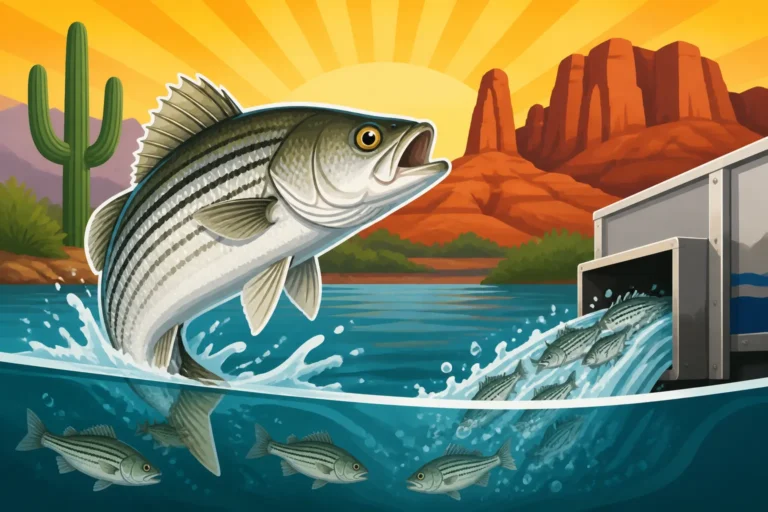
The initial stockings occurred in 1954 and 1955, primarily with juvenile fish sourced from California’s Salton Sea and other hatchery programs. These small but hardy striped bass were released directly into the immense waters of Lake Mead, representing a significant investment and a bold experiment in fisheries management for both Arizona and Nevada. The hope was that these fish would not only survive but thrive, establishing a self-sustaining population that would attract anglers for generations to come.
These early releases were pioneering. It was an ambitious project, introducing a species known for its migratory ocean habits into a completely landlocked, vast freshwater environment. The success of these initial efforts would lay the groundwork for understanding how Striped Bass could adapt and flourish in the unique conditions of the desert Southwest.
Early Stocking Efforts and Initial Success
Following the inaugural introductions in Lake Mead, it didn't take long for the Striped Bass to demonstrate their adaptability. The rich food base of Threadfin Shad proved to be exactly what they needed, providing an ample and readily available food source for rapid growth. Within a few years, anglers began reporting catches of these impressive fish, and by the early 1960s, a robust population had clearly established itself.
The Arizona Game and Fish Department, along with their counterparts in Nevada, monitored the burgeoning population closely. The fish were growing at an exceptional rate, quickly reaching sizes that made them a formidable sport fish. This initial success at Lake Mead spurred further interest and confirmed the potential of Striped Bass as a premier game fish for other large reservoirs in the region. It proved that these fish could not only survive but truly excel in these large, warm-water impoundments.
The positive feedback from anglers and the observed biological success validated the foresight of the fisheries managers. It was a clear indication that the investment in these stocking programs was paying off, transforming Lake Mead into a renowned destination for catching large, powerful striped bass. This success story fueled further discussions and plans for expanding the range of these popular fish.
Expanding the Striped Bass Footprint Beyond Lake Mead
With the undeniable success of Striped Bass in Lake Mead, it was only a matter of time before attention turned to other vast Arizona reservoirs that shared similar characteristics, particularly large forage bases and extensive open water. The interconnectedness of the Colorado River system also played a natural role in their spread.
Understanding the How Big Do Striped Bass Get at Lake Powell and other lakes became a popular topic as these fish continued to spread. Their explosive growth rates and fighting prowess made them an instant favorite among anglers. The quest for bigger and better fishing opportunities naturally led to their introduction into other significant bodies of water, further cementing their place in Arizona's fishing culture.
Lake Powell: The Second Major Stocking Destination
While Lake Mead was the first, Lake Powell quickly became the second major stronghold for Striped Bass in Arizona. The introduction to Lake Powell was a combination of deliberate stocking and natural migration. As the fish population in Lake Mead boomed, some striped bass naturally moved upstream through the Colorado River system, eventually finding their way into the newly formed Lake Powell after its impoundment in the early 1960s.
However, the AZGFD didn't rely solely on natural migration. Recognizing Lake Powell's immense potential—its deep canyons, expansive open water, and abundant shad—they began their own direct stocking efforts in the mid to late 1960s. These stockings, often involving thousands of fingerlings, were crucial in accelerating the establishment of a strong, self-sustaining population that would eventually become one of the most famous Striped Bass fisheries in the entire country.
Lake Powell's unique structure, with its myriad of side canyons and ledges, provided ideal habitat for these schooling predators. The abundant Threadfin Shad populations provided an inexhaustible food source, allowing the Striped Bass to grow to impressive sizes and form the epic "striper boils" that anglers now travel from around the world to experience. This expansion into Lake Powell solidified the Striped Bass as a cornerstone of Arizona's big-lake fishing scene.
Other Arizona Waters and Accidental Introductions
Beyond Lake Mead and Lake Powell, Striped Bass have also found their way into other Arizona waters, though often in smaller, less significant populations or through less direct means. The continuous flow of the Colorado River system is a major factor in the distribution of fish species. Downstream from Lake Mead, sections of the Colorado River, including Lake Havasu and the stretch near Yuma, have also seen Striped Bass presence, often due to natural migration from upstream populations.
There have been instances of accidental introductions or illegal stockings in other smaller reservoirs, although these generally haven't led to the same self-sustaining, trophy fisheries seen in the major impoundments. Fisheries management agencies actively discourage unauthorized stockings due to the potential ecological impacts on existing native fish populations and established ecosystems. For specific rules, anglers should always refer to the Arizona Fishing Regulations Explained before fishing.
While Lake Mead and Lake Powell remain the undisputed primary homes for Striped Bass in Arizona, the interconnectedness of the waterways means that a stray striper might be encountered in various parts of the Colorado River system, adding an unexpected thrill to an angler's day. These occasional sightings reinforce the widespread impact of those initial deliberate introductions.
The Impact and Legacy of Early Striped Bass Introductions
The decision to introduce Striped Bass into Arizona's waters was a monumental one, forever changing the state's aquatic ecosystems and its sport fishing culture. It wasn't just about adding another fish; it was about introducing a powerful, pelagic predator into environments that had, in some cases, never seen such a species before.
The success of these stockings is undeniable, creating world-class fisheries that draw thousands of anglers annually. However, like any large-scale ecological intervention, there have been both positive outcomes and significant management challenges that continue to shape how fisheries are managed today. Anglers often debate the Best Bass Fishing Lakes in Arizona, but the Striped Bass lakes hold a special place for many.
Ecological Changes and Management Challenges
The introduction of Striped Bass brought about significant ecological changes. They are highly efficient predators, and their voracious appetites, particularly for Threadfin Shad, can dramatically alter the forage base of a lake. While they were initially introduced partly to control abundant shad populations, their sheer numbers and growth rates meant constant monitoring was necessary to ensure a balanced ecosystem. In lakes where they became overpopulated, issues like stunted growth due to insufficient forage could arise.
Managing these large, mobile fish populations in vast reservoirs like Lake Powell and Lake Mead requires constant effort. Fisheries biologists routinely conduct surveys to assess population health, growth rates, and forage availability. Bag and possession limits, which you can read more about in Fishing Bag and Possession Limits Explained, are often implemented and adjusted to help manage population numbers and maintain a healthy fishery. Balancing the desire for trophy fish with the overall health of the ecosystem is a continuous tightrope walk for management agencies.
These challenges highlight the complex interplay of introducing non-native species, even when done with the best intentions. The long-term effects on the aquatic food web and potential competition with other sport fish or native species are ongoing considerations in fisheries management.
A New Era for Arizona Sport Fishing
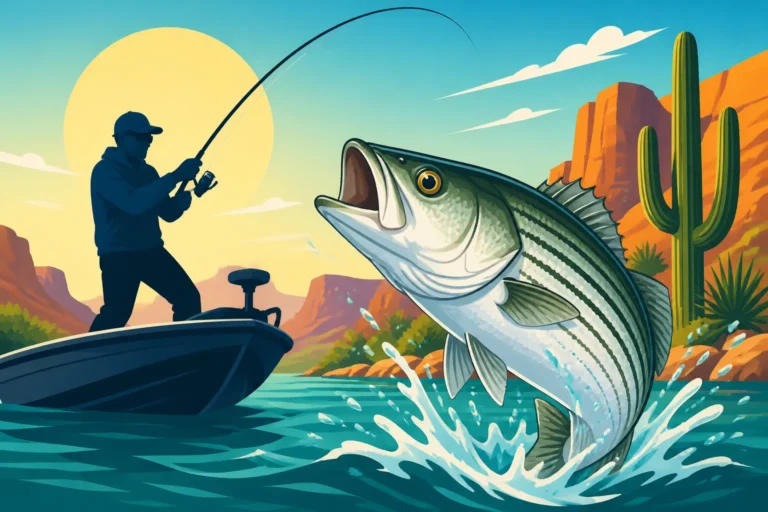
Without a doubt, the introduction of Striped Bass ushered in a new era for sport fishing in Arizona. They provided an entirely new angling experience, distinct from targeting largemouth bass, trout, or catfish. Their hard-fighting nature, schooling habits, and impressive size quickly made them a top target for many anglers seeking a powerful adversary. The phenomenon of "striper boils," where schools of striped bass aggressively feed on baitfish at the surface, became legendary, drawing anglers who wanted to experience this unique and exhilarating fishing spectacle.
The economic impact of these fisheries has also been substantial, boosting tourism and recreational spending around lakes like Powell and Mead. Boat rentals, guide services, tackle sales, and accommodations all benefit from the popularity of Striped Bass fishing. Anglers also gained opportunities to learn new techniques specifically tailored to these powerful fish, such as trolling with specific lures or targeting deep-water structure, expanding their skill sets.
The legacy of the initial Striped Bass stockings is profound. They transformed parts of Arizona into premier destinations for a type of fishing previously unimaginable in a desert state. It cemented the state's reputation not just for desert landscapes, but for world-class freshwater fishing, offering diverse experiences for every type of angler.
| Lake | Primary Stocking Period | Key Forage Species | Notable Feature |
|---|---|---|---|
| Lake Mead | Mid-1950s | Threadfin Shad, Gizzard Shad | Original introduction, large population |
| Lake Powell | Mid-1960s onwards | Threadfin Shad, Gizzard Shad | Famous for "striper boils," trophy fish |
| Lake Havasu | Via Colorado River | Threadfin Shad, Bluegill | Smaller, migratory populations |
Disclaimer
This article is for general informational purposes only and does not constitute professional advice. Laws, prices and regulations vary by location and change over time. Consult a qualified professional for guidance on your specific situation.