Best Season to Catch Striped Bass at Lake Powell
Many anglers dream of the thrill of battling a powerful striped bass, especially in the iconic waters of Lake Powell, but pinning down when to go for the best chance of success can feel like a guessing game. It's frustrating to plan a trip, only to find the fish are elusive or uncooperative. This comprehensive guide will cut through the uncertainty, revealing the prime seasons for targeting striped bass at Lake Powell and equipping you with the knowledge to make your next fishing adventure unforgettable.
The Allure of Lake Powell Striped Bass: Understanding Your Quarry
Lake Powell is truly a marvel, a vast reservoir carved into the red rock canyons of Arizona and Utah, and it's renowned as one of the best places in the Western U.S. to chase striped bass. These hard-fighting fish have adapted incredibly well to this unique environment, growing to impressive sizes and offering exhilarating angling opportunities. But to consistently catch them, you first need a solid grasp of what makes them tick throughout the year.
A Glimpse into Striped Bass Behavior
Striped bass, often called "stripers," are anadromous fish in their native habitats, meaning they typically spawn in freshwater rivers and spend most of their lives in saltwater. However, in landlocked impoundments like Lake Powell, they thrive exclusively in freshwater, adapting their natural instincts to the reservoir's conditions. They are aggressive, predatory fish that primarily feed on schools of baitfish, such as threadfin and gizzard shad, which are abundant in Lake Powell. Their constant search for food drives their movements and dictates where you'll find them. They are highly schooling fish, so when you find one, you're likely to find many more. Understanding their search for comfortable water temperatures and ample forage is key to unlocking their seasonal patterns.
Why Lake Powell is a Striped Bass Paradise
Lake Powell’s immense size, intricate canyon systems, and deep, clear waters create a perfect environment for striped bass to flourish. The extensive shoreline, diverse depths, and abundant baitfish populations mean stripers have plenty of room to roam and feed. The lake's unique structure, with its numerous coves, submerged canyon walls, and expansive main channels, offers a variety of habitats that stripers utilize throughout the year. This makes for a dynamic fishing experience, as you might be chasing surface boils one day and jigging deep ledges the next. The sheer volume of water and the healthy ecosystem support a robust population, which is why How Big Do Striped Bass Get at Lake Powell is a common question, with many anglers reporting impressive catches.
Spring: The Golden Window for Lake Powell Stripers
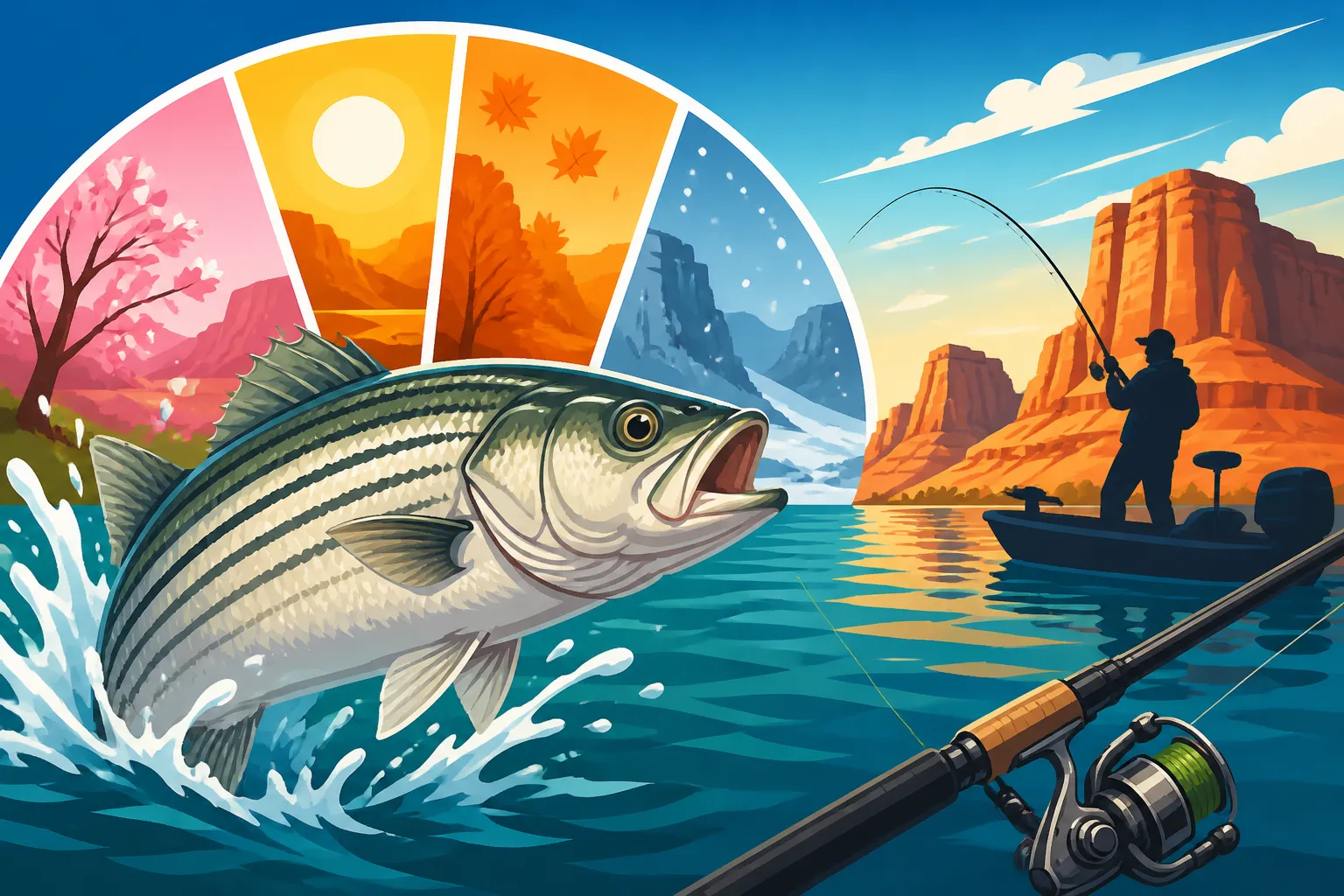
If you're looking for the absolute best season to catch striped bass at Lake Powell, hands down, it's spring. As the days lengthen and the water temperatures begin to climb from the chilly winter lows, the lake bursts with life, and the stripers become incredibly active. This is when the baitfish start to move into shallower coves to spawn, and the stripers follow, leading to some of the most consistent and exciting fishing of the year.
Pre-Spawn Feast: Shallow Water Opportunities
In early to mid-spring (typically March and April), as water temperatures creep into the upper 50s and low 60s Fahrenheit, striped bass move out of their deep winter haunts and begin to push into the major canyons and shallower coves. This is their pre-spawn feeding frenzy. They're gorging themselves on baitfish to build up energy for the upcoming spawning season, and they're often found patrolling points, submerged humps, and the backs of coves where shad are congregating.
During this time, casting reaction baits like crankbaits, jerkbaits, and swimbaits into these shallower areas can be incredibly effective. Look for areas with a good mix of rock and brush, as these offer ambush points for stripers. One fantastic approach is to troll shallow-running crankbaits in the mouths of major canyons or along main lake points. You'll often find schools of hungry stripers just under the surface or suspended at moderate depths. Many anglers stock up on these versatile lures, easily found on platforms like Amazon, to cover different depths and presentations during this active period.
Spawning Runs and Post-Spawn Recovery
By late spring (May and early June), as water temperatures reach the mid-60s to low 70s, the stripers initiate their spawning runs. Unlike their ocean-dwelling counterparts, Lake Powell stripers don't have true freshwater rivers to spawn in, so they perform "simulated" spawning runs in the main channels and large open areas of the lake. They broadcast their eggs in these open waters, which then drift and develop. While the actual spawning event can make them a bit less aggressive, the pre- and post-spawn periods are still highly productive.
After the simulated spawn, the stripers are often hungry and somewhat scattered. They'll start recovering their energy, often moving to slightly deeper edges of canyons or continuing to chase baitfish in coves. This post-spawn phase in late spring and early summer often brings some fantastic topwater action, especially during dawn and dusk. This is a critical period for understanding Seasonal Movement Patterns of Bass at Roosevelt Lake and how it applies to Lake Powell's stripers, as they are actively recuperating and feeding. The general advice for Best Time of Year to Fish Lake Powell almost always highlights spring as the top choice for consistent action.
Summer: The Excitement and Challenges of Striper Boils
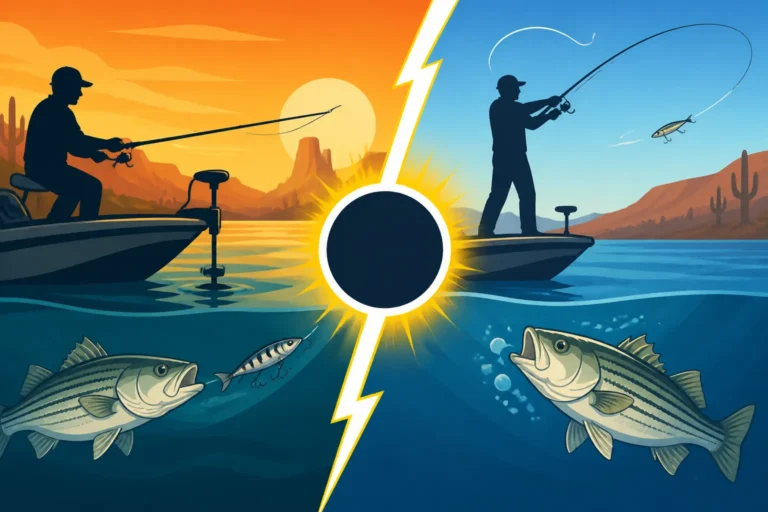
Summer at Lake Powell is a different beast entirely, known for its intense heat but also for one of the most exciting fishing phenomena: the striped bass boil. While the heat can be grueling, the opportunity to witness and participate in a full-blown striper boil is an unforgettable experience that draws anglers from all over.
Chasing Surface Boils: High-Energy Fishing
As surface water temperatures soar into the 80s during July, August, and even early September, threadfin shad will often gather near the surface. This is when stripers, driven by their insatiable appetites, will erupt into a feeding frenzy, pushing schools of shad to the surface. These "boils" appear as churning water, often with gulls diving down, indicating a chaotic scene of stripers gorging themselves. Locating and getting to a boil quickly is key, as they can be short-lived.
When you encounter a boil, cast fast-moving lures like Kastmasters, small spoons, or topwater poppers directly into the commotion. The action can be non-stop until the stripers push the baitfish deeper or the shad disperse. It's a high-adrenaline game, requiring quick thinking and even quicker casting. However, boils are not always predictable, and you might spend hours searching. Learning How to Find Striper Boils on Lake Powell often involves using binoculars, keeping an eye on bird activity, and employing a good fish finder to spot baitfish schools.
Navigating the Heat: Deep Water Tactics
When boils aren't happening, or when the midday sun makes surface activity unlikely, summer stripers often retreat to deeper, cooler waters. They'll suspend in the water column or hug structure like submerged canyon ledges and points, seeking refuge from the heat. This means you'll need to shift your tactics to target these deeper fish.
Trolling with downriggers or lead core line is an excellent way to present lures at specific depths where stripers are holding. Deep-diving crankbaits or swimbaits can be highly effective. Another popular and productive method is deep jigging with heavy spoons or weighted plastics. Look for schools of baitfish and stripers on your fish finder, often suspended at 40 to 80 feet, sometimes even deeper. Remember that summer days on Lake Powell are scorching, so having a high-quality cooler, perhaps one from brands available on Amazon, filled with ice and plenty of water is absolutely essential for both your catch and your well-being. Night fishing can also be productive during the summer, as stripers will move shallower under the cover of darkness.
Fall: Predictable Patterns as Temperatures Drop
As summer's intense heat gives way to cooler autumn temperatures, Lake Powell experiences another fantastic striper season. Fall fishing offers a more consistent and often predictable pattern than the sometimes-fickle summer boils, making it a favorite for many experienced anglers. The air is crisper, the crowds thin out, and the fish remain active, preparing for winter.
Following the Bait: Canyon and Main Channel Focus
In early fall (September and October), as the water cools into the 70s and then 60s, the baitfish, particularly shad, begin their migration from the backs of coves to the main lake channels and deeper canyon areas. The striped bass will follow these baitfish schools relentlessly. This is a prime time for Trolling Techniques for Striped Bass along major canyon walls and main lake points. Use a variety of lures, including spoons, crankbaits, and swimbaits, to see what the stripers are keying in on. Vary your trolling speed and depth until you find the sweet spot.
Fish finders become invaluable during this period, allowing you to locate dense schools of shad and the predatory stripers lurking beneath or within them. Focus your efforts in the lower ends of major canyons or where canyons meet the main channel. The fish are often more spread out than during intense summer boils but are typically easier to locate and stay on once you find them.
Transition to Deeper Structure: Adapting Your Approach
By late fall (November), as water temperatures continue to drop into the low 60s and 50s, stripers start to move towards their winter holding patterns in deeper water. While they'll still chase bait, they won't be as frenzied as in spring or early summer. This is a transition period where you'll find them at moderate to deep depths, often relating closely to significant underwater structure like ledges, submerged islands, and humps in the main lake.
This is an excellent time for vertical jigging with heavy spoons or large swimbaits, especially if you can mark fish on your electronics. Deep Water Structure Fishing Techniques become paramount. Look for fish suspended over deep water or hugging the bottom along steep drops. Sometimes, deadsticking a large swimbait or soft plastic near structure can entice a reluctant striper. Cut bait, particularly anchovies or shad, presented on a weighted rig, can also be highly effective for these deeper, less active fish. Check out guides on How to Fish Cut Bait for Striped Bass for detailed rigging tips.
Winter: Patience and Precision for Deepwater Giants
Winter fishing for striped bass at Lake Powell requires a significant shift in strategy, but it can be incredibly rewarding for those with patience and the right approach. While the overall numbers might be lower than in spring, winter often produces some of the largest stripers, as the biggest fish tend to be more resilient to cold and are still actively feeding, albeit at a slower pace. The lake is quiet, serene, and offers a different kind of beauty, with fewer boats and stunning, crisp canyon views.
Slow and Steady Wins the Race
As water temperatures plummet into the 40s and low 50s from December through February, striped bass move into their deepest winter sanctuaries. They become much less active, their metabolism slows down, and they school up tightly in very specific locations. You won't see surface boils, and aggressive casting techniques are usually ineffective. This is a game of finesse and precision.
Your fish finder is your absolute best friend in winter. You'll be looking for tight schools of stripers, often hunkered down in the deepest parts of the lake, sometimes 80 to 150 feet or more, usually around main lake channels, significant points, or the deep ends of major canyons. When you find them, vertical jigging with heavy spoons, blade baits, or large plastic grubs becomes the primary method. The key is to present your lure slowly, mimicking a stunned or dying baitfish. Often, the strike will be subtle, feeling like a slight weight or tap rather than an aggressive hit.
Prime Winter Haunts for Striped Bass
During the winter, stripers will congregate in key thermal refuges and areas where shad also seek deeper, more stable temperatures. Common locations include the deep basins of the main channel, particularly in the lower lake near the dam, and the deepest sections of major canyons like Padre Bay, Navajo Canyon, and Antelope Canyon. These areas provide the stable water temperatures and available forage that stripers need to survive the colder months.
Trolling very slowly with deep-diving lures or heavy spoons can also work, especially if you can precisely present your offering near a marked school of fish. Some anglers also find success using dead bait, such as anchovies or cut shad, dropped directly onto schools found with sonar. While winter fishing can be challenging, the rewards of catching a trophy striper in the tranquil solitude of Lake Powell make it a truly unique experience.
Seasonal Techniques and Essential Gear for Striped Bass
To truly maximize your success when targeting striped bass at Lake Powell, you need to match your techniques and gear to the specific season and conditions. This isn't a "one-size-fits-all" fishery, and adaptability is crucial.
Mastering Your Method: Lures, Bait, and Presentation
- Spring: For the aggressive pre-spawn fish, focus on reaction baits. Crankbaits (like the popular Rat-L-Traps or Shad Raps), jerkbaits (such as a Lucky Craft Pointer), and swimbaits (soft plastics on weighted jig heads) are excellent choices. For post-spawn, topwater lures like poppers and walk-the-dog baits can be incredibly effective early and late in the day. Live bait, particularly shad or large minnows, can also be a killer tactic when fished suspended under a bobber or on a Carolina rig.
- Summer: When boils are happening, small, fast-moving metal lures like Kastmasters or ½ to 1-ounce spoons, and topwater poppers are king. For deep-water stripers, heavy spoons (like the Hopkins Shorty or similar), blade baits, and deep-diving crankbaits are essential. Vertical jigging is paramount. If you're using bait, anchovies or cut shad fished on a weighted hook can tempt the deeper fish. Many anglers rely on specific lures for How to Fish a Swimbait for Striped Bass to entice these sometimes finicky fish.
- Fall: Trolling with deep-diving crankbaits, flutter spoons, and swimbaits remains highly effective as stripers follow baitfish. Vertical jigging with spoons or heavy plastics is also a strong choice when fish are located on sonar. How to Fish for Striped Bass often emphasizes using larger profile baits as fish grow throughout the year.
- Winter: Slow, vertical presentations are key. Heavy spoons (up to 2 oz or more), blade baits, and large soft plastic grubs on heavy jig heads are your best bets. Deadsticking, where you let the lure sit motionless or with minimal movement, can often trigger bites from lethargic fish. Live or cut bait can also be productive when dropped directly to marked schools.
Equipping for Success: Must-Have Gear
Beyond your rods and reels, which should be medium to medium-heavy setups capable of handling hard-fighting fish, there are some specific items that will greatly enhance your Lake Powell striper fishing experience:
- Reliable Fish Finder: This is non-negotiable, especially for summer deep water, fall transitions, and winter fishing. A good sonar unit helps you locate baitfish schools and the stripers feeding on them.
- Quality GPS: Lake Powell is vast and intricate. A reliable GPS will help you navigate the canyons, mark productive spots, and safely return to your launch point, especially if you're exploring for Best Fishing Lakes in Arizona.
- Plenty of Water & Sun Protection: The Arizona sun is no joke, even in cooler months. Stay hydrated, wear wide-brimmed hats, polarized sunglasses, and long-sleeved UPF clothing.
- Appropriate Tackle Storage: Given the variety of lures and baits you'll need, having a well-organized tackle box or bag is crucial. You can find excellent, durable tackle storage solutions on Amazon.
- Landing Net: Stripers are powerful fish. A sturdy, deep landing net will help you safely secure your catch, especially when fishing alone.
- Cooler with Ice: If you plan to keep your catch (and many do, as stripers are excellent table fare), a good cooler to keep your fish fresh in the desert heat is essential. Check out reviews for Best Coolers for Hot-Weather Fishing in Arizona before your trip.
Best Season to Catch Striped Bass at Lake Powell: A Summary Table
To help you quickly reference the prime conditions and techniques, here's a handy breakdown of the best seasons for chasing those elusive Lake Powell stripers:
| Season | Water Temperature Range | Typical Depths (Feet) | Key Behaviors | Primary Techniques | Recommended Baits/Lures |
|---|---|---|---|---|---|
| Spring | 55-70°F | 10-60 | Pre-spawn feeding frenzy, shallow pursuit of shad. | Casting, shallow trolling, live bait. | Crankbaits, jerkbaits, swimbaits, topwater, live shad/minnows. |
| Summer | 75-85°F | 0-15 (boils), 40-100+ (deep) | Surface boils, deep water suspension to escape heat. | Chasing boils, deep jigging, deep trolling, night fishing. | Spoons, poppers, Kastmasters, deep crankbaits, cut bait. |
| Fall | 60-75°F | 30-80 | Following migrating baitfish, feeding aggressively. | Deep trolling, vertical jigging, casting. | Large swimbaits, spoons, deep crankbaits, soft plastics. |
| Winter | 45-55°F | 80-150+ | Deep schooling, lethargic feeding. | Slow vertical jigging, deadsticking, slow trolling. | Heavy spoons, blade baits, large grubs, cut bait. |
While spring stands out as the most consistent and exciting time for many anglers, each season at Lake Powell offers its own unique challenges and rewards when targeting striped bass. By understanding their seasonal patterns and adapting your approach, you can have a successful and memorable fishing trip any time of the year.
Disclaimer
Fishing conditions and regulations in Arizona can change. Always consult the latest Arizona Game and Fish Department regulations before heading out on the water. This guide is for informational purposes only and does not guarantee fishing success.