Best Hook Size for Catfish Bait
It's incredibly frustrating when you're out on one of Arizona's beautiful lakes or rivers, the anticipation is high, and you feel that tell-tale tug on your line, only to reel in… nothing. Or worse, you hook a fish, but it gets away right at the boat, leaving you wondering if it was your technique or, perhaps, something more fundamental. One of the most overlooked yet critical aspects of successful catfish angling in our desert state is choosing the right hook size. This guide will walk you through everything you need to know to ensure your hooks are perfectly matched for Arizona's diverse catfish population, helping you land more fish and minimize harm.
Why Hook Size Truly Matters for Catfish in Arizona
You might think a hook is just a hook, but for catfish, especially in environments as varied as Arizona's desert lakes and powerful rivers, the size and style of your hook can make all the difference between a triumphant catch and a disappointing tale of the one that got away. It's not just about what you can hook; it's about how effectively and ethically you can do it.
The Frustration of Missed Bites and Gut Hooks
We've all been there. You set your line, bait it up with some smelly concoction, and wait. The rod tip dips, then dances, maybe even gets pulled hard! You grab it, reel down, set the hook… and feel absolutely nothing. Or perhaps you feel weight, but it’s a momentary connection before the line goes slack. This often comes down to an ill-fitting hook. A hook that’s too small for the bait might get swallowed entirely, but the barb doesn't find purchase, or the fish just "lips" the bait without the hook reaching its mouth. It’s a disheartening experience that can lead to many lost opportunities.
Even more concerning, sometimes a smaller hook does connect, but it ends up deep in the fish's throat or stomach – what we call a "gut hook." This is especially problematic if you're practicing Catch and Release Rules for Arizona Anglers. A deeply hooked fish has a much lower chance of survival, and as responsible anglers, we want to minimize stress and injury to the fish we pursue. Properly sized hooks, particularly certain styles we'll discuss, significantly reduce the risk of gut hooking, making for healthier fish and a cleaner release. It's about respecting the fish and the resource.
Matching the Mouth: Different Catfish, Different Hooks
Arizona is home to a few prominent catfish species, and they each have unique characteristics, especially when it comes to their mouths and feeding habits. Understanding these differences is key to selecting the perfect hook.
- Channel Catfish: These are likely the most common and widespread catfish in Arizona. They have a moderately sized, somewhat round mouth and are opportunistic feeders, often slurping up baits. They are frequently found in urban waters and larger reservoirs alike.
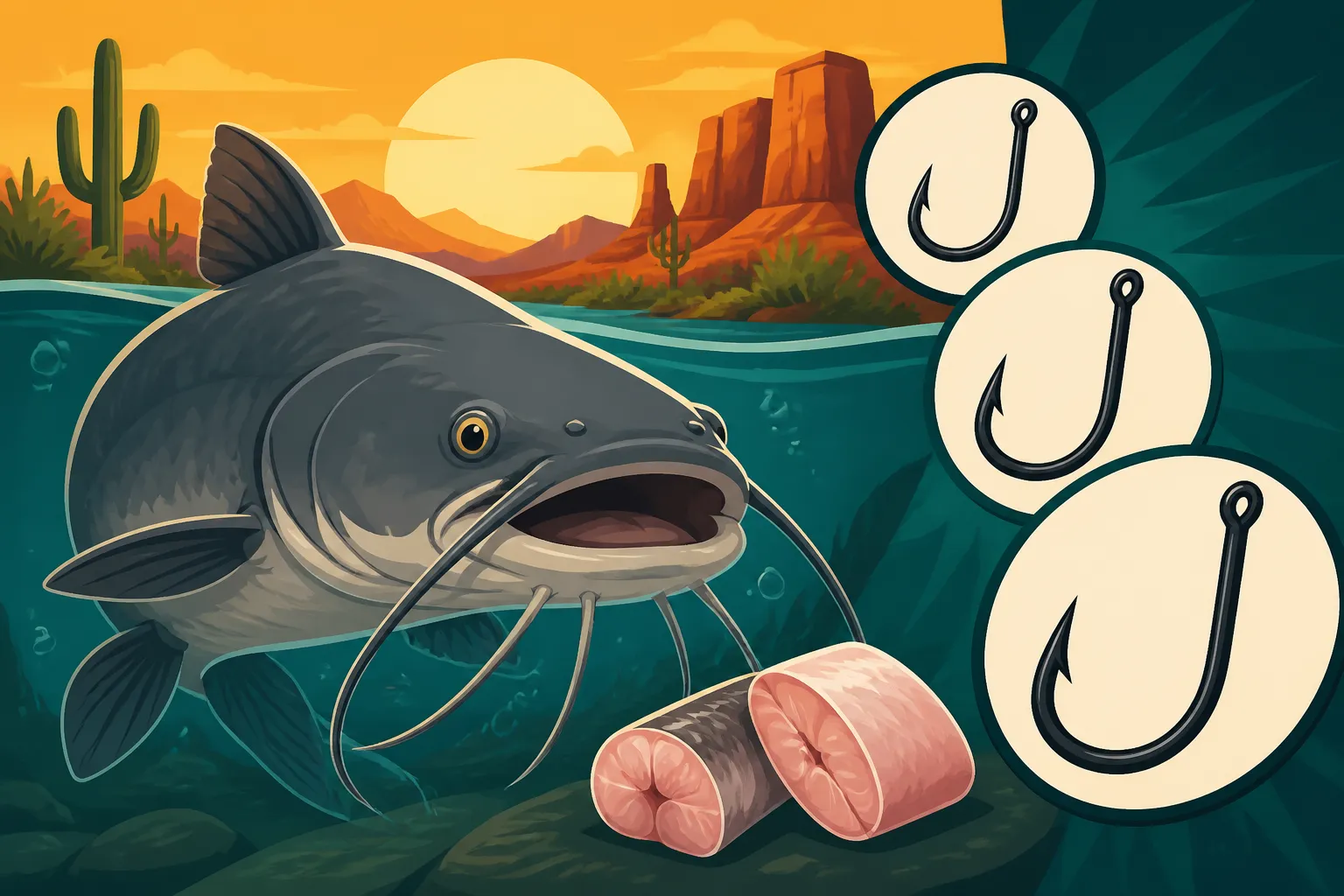
- Flathead Catfish: These are the true giants of Arizona's catfish world. They possess a massive, wide, and flattened head with an equally large mouth. Flatheads are aggressive predators that prefer live bait and will engulf their prey whole. You'll find them in the larger, warmer waters like the Colorado River and major reservoirs.
- Bullhead Catfish: Smaller than their channel and flathead cousins, bullheads have a relatively small mouth. They're often found in community lakes and ponds, scavenging for whatever they can find on the bottom.
Imagine trying to catch a big, wide-mouthed flathead with a tiny hook designed for a small bullhead – it just won't work effectively. The hook would either be lost in the vastness of its mouth or too weak to handle the power of a large flathead. Conversely, a massive hook meant for a flathead would totally overpower a small bullhead, making it difficult for the fish to even get it into its mouth. It’s a delicate balance, and we'll dive into the specifics of finding that balance. For a deeper dive into these species, check out our Catfish Fishing Guide for Arizona.
Deciphering Catfish Hook Sizes: A Practical Guide
The world of fishing hook sizes can be a bit like learning a new language, especially with the way numbers flip around. But once you understand the system, choosing the right hook becomes second nature.
Understanding the Hook Sizing System (Numbers vs. Aughts)
Fishing hooks use a two-part sizing system, and this is where many anglers get confused. Don't worry, it's simpler than it seems:
- Numbered Hooks (e.g., #10, #8, #6, #2, #1): For these hooks, the smaller the number, the larger the hook. So, a #1 hook is significantly larger than a #10 hook. These typically cover the smaller to medium range of hooks, suitable for panfish, smaller trout, and yes, sometimes smaller catfish.
- "Aught" Hooks (e.g., 1/0, 2/0, 3/0, 4/0, 5/0, 10/0): This is where the numbers start to represent increasing size. The larger the number before the "/0" (pronounced "aught"), the larger the hook. So, a 10/0 hook is massive, while a 1/0 hook is on the smaller end of the aught scale. These are generally reserved for larger game fish, including our big catfish.
Think of it this way: numbered hooks are like clothing sizes for children, where smaller numbers mean smaller clothes. Aught hooks are like adult clothing sizes, where larger numbers mean larger clothes. The point where they meet is usually around the #1 or #1/0 mark, where a #1 is essentially the next size up from a #2, and a 1/0 is the next size up from a #1. It's the transition point between the two scales.
The Best Hook Sizes for Arizona's Common Catfish Species
Now that we've demystified the sizing system, let's get down to brass tacks for the catfish you're most likely to encounter in Arizona. Remember, these are general guidelines, and your specific bait choice will also influence the optimal hook size.
Channel Catfish
For your average channel cat, especially those found in Arizona's Community Park Lakes in Phoenix or Tempe Town Lake Arizona Fishing Guide, you'll typically be looking at hooks in the #4 to 3/0 range.
- Smaller Channel Cats (1-3 lbs): A #4 to #1 hook works wonderfully, particularly if you're using smaller baits like cut pieces of hot dog, corn, or small worms. These hooks are big enough to get good penetration but small enough to fit comfortably in their mouths.
- Medium Channel Cats (3-8 lbs): Step up to a 1/0 or 2/0 hook. This provides better leverage and holding power for a more substantial fish, especially when you're using larger chunks of cut bait, chicken livers, or stink baits.
- Larger Channel Cats (8+ lbs): For those bigger "river monster" channels, a 3/0 hook is a solid choice. It gives you the backbone to handle their power and the gap to accommodate a generous bait offering.
Flathead Catfish
When you're chasing the behemoths, like those found in the Colorado River Fishing Guide in Arizona, you need serious hardware. Flatheads have huge mouths and swallow their prey, so you need a hook that can stand up to their power and fit a substantial live bait.
- Medium Flatheads (5-20 lbs): Start with hooks in the 4/0 to 6/0 range. You'll likely be using live bluegill, sunfish, or carp as bait, and these hooks provide enough gap to present the bait naturally while leaving the hook point exposed.
- Large Flatheads (20+ lbs): For the true trophy flatheads, you'll want to go big and strong. Hooks from 7/0 up to 10/0 are not uncommon. These massive hooks are designed to withstand incredible force and securely hold powerful fish. Think about the size of the bait – often a 6-8 inch live carp or similar large offering – and the hook needs to match that. Our Flathead Catfish Average Weight on the Colorado River post gives you an idea of what kind of giants you might encounter.
Bullhead Catfish
Bullheads are smaller and less aggressive than channel or flathead catfish. They are often targeted by younger anglers or those looking for consistent action in smaller ponds.
- Any Size Bullhead: Generally, a #8 to #2 hook is ideal. Their mouths are relatively small, so anything larger will be difficult for them to ingest. Small pieces of worm, corn, or prepared bait work well with these sizes.
Here's a quick reference table to help you out:
| Catfish Species | Common Weight Range (lbs) | Recommended Hook Size | Typical Baits |
|---|---|---|---|
| Bullhead Catfish | 0.5 – 2 | #8 to #2 | Worms, corn, small prepared baits |
| Channel Catfish | 1 – 10 | #4 to 3/0 | Cut bait, chicken liver, stink bait |
| Flathead Catfish | 5 – 50+ | 4/0 to 10/0 | Live bluegill, carp, large cut bait |
Hook Styles and Considerations Beyond Size
While hook size is paramount, the style and construction of the hook are equally important. These factors influence how easily a fish takes the bait, how effectively the hook sets, and how securely it holds the fish.
Circle Hooks vs. J-Hooks for Catfish
This is perhaps the most debated topic among catfish anglers, and for good reason! Both have their place, but one offers significant advantages, especially for conservation.
- J-Hooks: These are the traditional "J" shaped hooks. They require you to "set the hook" manually when you feel a bite.
- Pros: Excellent for active fishing where you're holding the rod and want immediate feedback. They can offer a very solid hookset when done correctly.
- Cons: Prone to gut hooking, especially if the fish has time to swallow the bait before you set the hook. This is detrimental for fish you plan to release. For Arizona Fishing Regulations Explained, ethical angling is always encouraged.
- Circle Hooks: These hooks have a distinctive shape where the point is curved inward, pointing towards the shank. The magic of a circle hook is that you don't set it. Instead, you let the fish take the bait and then simply reel tight. As the fish swims away, the hook slides out of its throat and pivots, catching securely in the corner of its mouth.
- Pros: Dramatically reduces gut hooking, leading to higher survival rates for released fish. They offer a very strong, consistent hookset right in the jaw. Many seasoned catfish anglers swear by them for their effectiveness and ethical benefits.
- Cons: Takes some getting used to; the urge to "set the hook" must be resisted. Not ideal for actively working a lure, but perfect for stationary bait fishing.
**For catfish in Arizona, especially if you plan to practice catch and release, circle hooks are highly recommended. They are safer for the fish and often result in more consistent hookups in the lip or jaw.
Strength, Gap, and Shank Length
Beyond size and style, a hook's physical attributes play a crucial role.
- Strength: Look for hooks labeled "heavy duty" or "extra strong," especially if you're targeting large flatheads or channel cats on the Colorado River Fishing Guide in Arizona. Thicker wire gauges prevent hooks from bending out under pressure, which is critical when a big fish makes a powerful run. You don't want a trophy fish bending your hook straight!
- Gap: This is the distance between the hook point and the shank. A wide gap is essential for bulky baits like cut shad, chicken livers, or live bluegill. The gap needs to be large enough to allow the bait to sit naturally while still leaving plenty of exposed hook point for a solid hookset. Too small a gap and your bait will mask the point, leading to missed fish.
- Shank Length: This is the length of the hook from the eye to the bend.
- Short Shank: Often preferred for large, bulky baits and for circle hooks, as it helps the hook pivot correctly.
- Long Shank: Can be useful for smaller-mouthed fish like bullheads, making it easier to remove the hook, or when using long, thin baits like worms. However, for larger catfish, a shorter shank with a wide gap is usually more effective.
Matching Hook to Bait: A Critical Step
The size and type of bait you use have a direct impact on the effective hook size. Even if you've chosen a hook appropriate for the catfish's mouth, if your bait overwhelms it, you're in for trouble.
- Cut Bait (shad, carp, hot dogs): When using chunks of cut bait, you need a hook with a wide enough gap to pass through the meat and still have the point exposed. For medium channel cats with a 1/0 or 2/0 circle hook, a 1-inch cube of cut bait should leave plenty of hook point visible. For larger flathead baits, such as a large piece of carp belly, you'll need a 6/0 or larger hook.
- Stink Bait or Dough Bait: These sticky, moldable baits can easily hide a hook. Use a hook that allows the bait to be molded around it, but not over the point and barb. Smaller treble hooks (yes, trebles can be used for these baits, but circle hooks are better for single hook regulations and fish safety) or a single worm hook with a spring retainer can work.
- Worms (nightcrawlers, red wigglers): For smaller channel cats or bullheads, a #6 or #4 hook might be perfect for threading on a nightcrawler. You want enough worm to entice the fish but not so much that it completely covers the hook.
- Live Bait (bluegill, sunfish, shad): When fishing for flatheads with live bait, the hook must be proportionate to the baitfish. A 6-inch bluegill on a 2/0 hook is a recipe for disaster. The hook needs to be large enough to hold the bait securely (often hooked through the back or lips) while ensuring the point is well-exposed to snag the predatory flathead. This is where 5/0 to 10/0 hooks really shine. For more ideas on what to use, check out Best Bait for Catfish in Arizona.
Real-World Scenarios and Expert Tips for Arizona Anglers
Let's put this knowledge into some common Arizona fishing situations. Knowing the theory is great, but applying it on the water is where it counts.
Fishing the Mighty Colorado River for Flatheads
Imagine you're targeting those legendary flatheads below Laguna Dam or fishing the expansive waters near Willow Beach, a known hotspot for big fish. These are powerful, large-mouthed predators that demand respect and robust tackle. You've heard the stories of How Big Do Flathead Catfish Get on the Colorado River, and you're ready for the challenge.
For this scenario, your hook size decision is paramount. You'll likely be using large live bait – perhaps a 6-inch bluegill or a substantial carp minnow. This means you need a hook that's not only strong but also has a very wide gap to accommodate the bait and still get a solid hookup. I'd recommend starting with 5/0 to 8/0 heavy-duty circle hooks. If you're really going for a monster, don't be afraid to go up to a 10/0. Hooking your live bait through the back, just behind the dorsal fin, allows it to swim naturally while keeping the hook point clear. This setup, combined with heavy line and a stout rod, will give you the best chance to land one of these river giants. Don't forget to review our How to Fight a Big Flathead Catfish guide for when you hook into one!
Community Lakes and Channel Cats: A Family Affair
Now, let's shift gears to a more relaxed outing – maybe a family trip to a Community Lake Locations in Phoenix or a local park pond. Here, the goal is often consistent action, and channel catfish are the primary target. These lakes are stocked regularly as part of the Arizona Game and Fish Department's community fishing program, making them excellent spots for beginners and kids.
For these situations, you're probably using smaller, easily accessible baits like chicken livers, hot dogs, or stink bait. You'll want a hook that's versatile enough for a range of channel cat sizes, from pan-sized eaters to the occasional larger specimen. A #2 to 2/0 circle hook is a fantastic choice here. The smaller end of that range (#2 or #1) is great for smaller channel cats and even sunfish that might bite, while the 1/0 or 2/0 will handle the larger channel cats without being overly cumbersome. The circle hook minimizes gut hooking, which is especially important if you have kids fishing who might not always set the hook perfectly. It also ensures healthy releases for any fish not destined for the cooler. Consider using Bottom Fishing Techniques for Catfish for these spots.
Where to Stock Up on Your Catfish Hooks
Once you've got a good handle on hook sizes and styles, you'll need to know where to find them. Luckily, there are plenty of options available for Arizona anglers.
Many local tackle shops around Arizona, especially those near popular fishing destinations, will carry a good selection of catfish hooks. However, for the widest variety and often competitive pricing, you might turn to larger retailers. Stores like Bass Pro Shops typically have entire aisles dedicated to hooks, organized by type, size, and brand. This gives you the opportunity to physically compare different sizes and examine the hook strength firsthand, which can be incredibly helpful when you're still learning what works best for your specific needs. You can pick up a few different sizes of circle hooks, for instance, to experiment with what works best for the various baits you plan to use and the size of catfish you're targeting.
Online retailers like Amazon are also a treasure trove for fishing gear, including a massive selection of catfish hooks. You can find bulk packs of your favorite sizes, specialized hook designs, and brands that might not be available locally. When shopping online, pay close attention to the product descriptions for details on hook wire strength (e.g., 1X strong, 2X strong) and materials. Reading reviews from other anglers can also give you valuable insights into the real-world performance of different hooks. Just remember to account for shipping times if you need them for an upcoming trip! Having a well-stocked tackle box is essential, and knowing where to source your hooks is a big part of that.
Disclaimer
This article is for general informational purposes only and does not constitute professional advice. Laws, prices and regulations vary by location and change over time. Consult a qualified professional for guidance on your specific situation.