Is a Baitcasting Reel Better for Heavy Lures?
Anyone who's spent a sweltering Arizona day trying to sling a big swimbait across a wide-open lake knows the frustration: your arm gets tired, your casts aren't going where you want them, and your gear just doesn't feel up to the task. It’s a common dilemma for anglers looking to target bigger fish with larger presentations. This guide dives deep into the world of baitcasting reels, exploring why they are often the superior choice for handling heavy lures, especially when you’re chasing those trophy catches in the Grand Canyon State's expansive waters.
Understanding the Mechanics of Baitcasting Reels
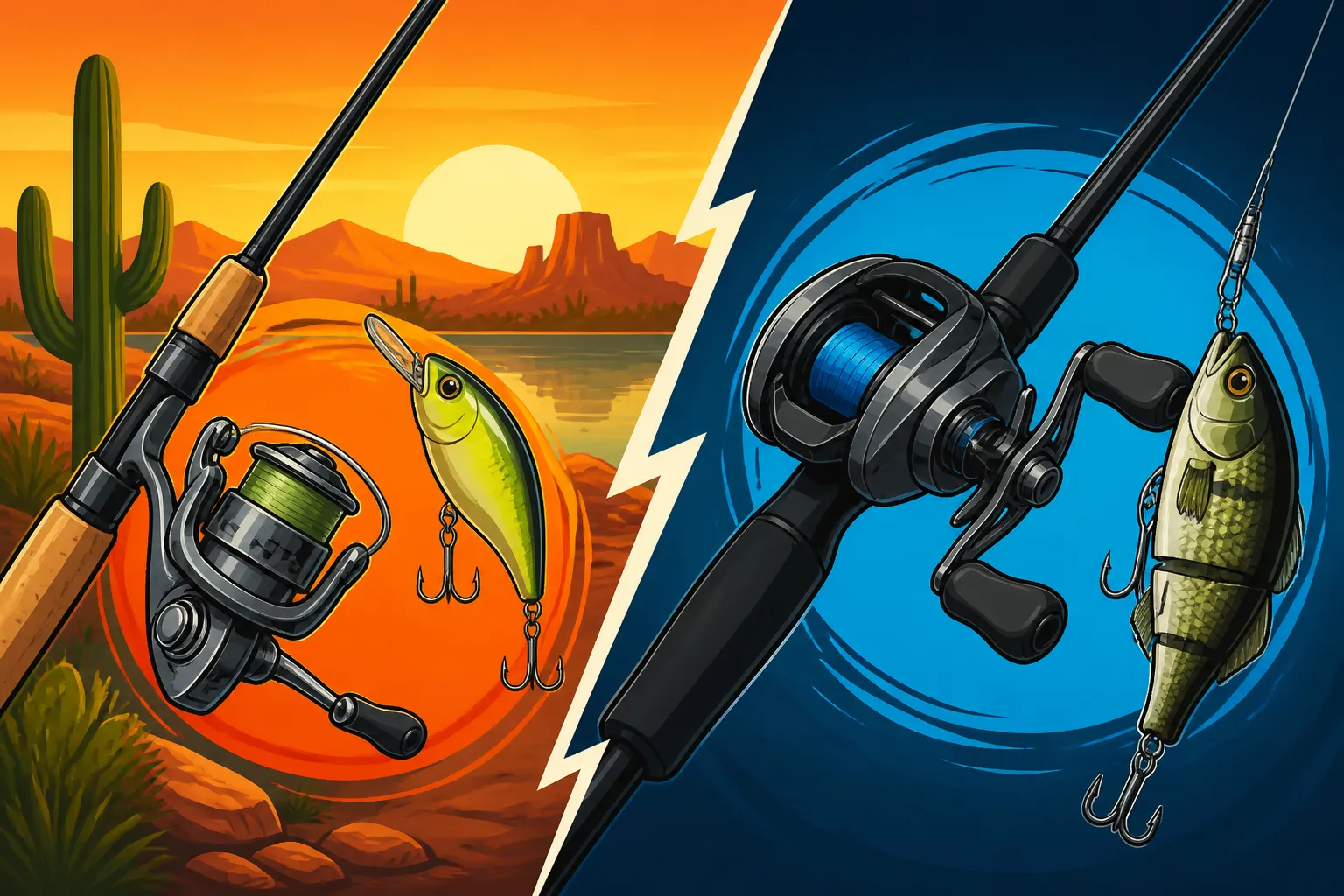
Before we jump into why a baitcaster excels with heavy lures, let's unpack what makes these reels tick. Unlike a spinning reel where the spool is stationary and line peels off, a baitcasting reel's spool actually rotates as the line goes out and comes in. This fundamental difference is key to its power, precision, and ability to handle heavier applications.
The Direct Drive System Advantage
Imagine the force required to launch a half-ounce crankbait versus a three-ounce swimbait. A spinning reel, while versatile, has a rotor and bail system that can introduce friction and potential points of failure under extreme load. Baitcasting reels, on the other hand, boast a direct drive system. The line comes directly off the spool, which spins freely on its axis. This minimizes line twist and reduces the amount of stress placed on the reel's internal components during heavy retrieves and powerful hooksets. When you're wrestling a big largemouth bass out of thick cover at Lake Pleasant, that direct power transfer makes a monumental difference. It feels like an extension of your arm, giving you incredible control over both the cast and the fight.
Superior Line Management and Braking Systems
One of the initial hurdles for many anglers learning a baitcaster is managing the spool, specifically avoiding backlashes. However, modern baitcasting reels come equipped with sophisticated braking systems (centrifugal or magnetic, or a combination of both) that help control spool rotation during the cast. This control is paramount when you're launching a weighty lure. A heavy lure carries significant momentum, and without proper spool control, you'd have a bird's nest of line every time. These braking systems, combined with a good thumb on the spool, allow for much more precise and longer casts with heavy baits compared to a spinning reel. Furthermore, baitcasters often accommodate heavier diameter lines, like a robust fluorocarbon or braided line, which is crucial when fishing with substantial lures and targeting hard-fighting fish. For more on line choices, check out our guide on Best Line for Bass Fishing.
What Constitutes a "Heavy Lure" in Arizona Fishing?
When we talk about "heavy lures," we're not just talking about your average worm or jig. These are baits designed to make a big impression, cover a lot of water, or dive deep quickly. Understanding what these lures are and why they're heavy helps clarify why specific gear is needed.
The Categories of Hefty Baits
In Arizona's diverse fisheries, heavy lures come in many forms, each designed for a specific purpose. You'll find anglers throwing massive swimbaits, sometimes weighing several ounces, to imitate the bigger baitfish that predatory species like largemouth bass and striped bass feed on. Think about those big gizzard shad in Roosevelt Lake or the abundant threadfin shad in Lake Powell – a sizeable swimbait is often the ticket to imitating them. Then there are deep-diving crankbaits, built with large bills to plummet quickly to depths of 15-20 feet or more, necessary for targeting fish holding on deep structure. Jigs, especially those designed for punching through heavy vegetation or fishing deep ledges, can also be quite weighty. Lastly, large spoons or umbrella rigs (Alabama Rigs), often used for tempting big striped bass or schooling bass, can collectively weigh a significant amount, putting considerable strain on tackle not designed for the job.
Why Weight Matters for Presentation and Performance
The weight of a lure isn't arbitrary; it serves a crucial function. Heavy lures cast farther, allowing you to cover more water in vast reservoirs like Lake Havasu or Alamo Lake. Their weight helps them cut through wind, which is a common factor on Arizona's open bodies of water. More importantly, heavy lures achieve greater depths faster. If you're trying to fish a thermocline or target suspended fish over deep water, a heavy lure gets into the strike zone efficiently. For example, a heavy jig will maintain contact with the bottom in deep water, where a lighter jig might get swept away by current or take too long to sink. Without the right reel, trying to manage these heavy baits becomes a frustrating exercise in compromised casting distance, inaccurate presentations, and unnecessary fatigue.
Why Baitcasting Reels Excel with Heavy Lures
The pairing of a baitcasting reel with heavy lures is a match made in angling heaven. It's not just a preference; it's a matter of physics and practical application, especially when you're looking for that edge in Best Bass Fishing Techniques for Arizona Lakes or How to Fish for Striped Bass.
Superior Casting Control and Distance
When you're launching a heavy lure, you need maximum control to avoid a bird's nest and to achieve accuracy. A baitcaster's directly spooling line and adjustable braking system allow for unparalleled control during the cast. You can precisely "feather" the spool with your thumb, fine-tuning the cast for distance or accuracy, even in windy conditions. With practice, anglers can accurately place heavy jigs right next to submerged timber or skip a heavy swimbait under docks – maneuvers that are far more challenging with a spinning reel. The heavy mass of the lure also helps to pull the line cleanly off the baitcaster's spool, minimizing friction and leading to truly impressive casting distances, which is essential when fishing vast expanses of water common in Arizona.
Increased Power and Torque for Retrieval
Heavy lures often create a lot of resistance in the water. Think about reeling in a large deep-diving crankbait that’s pulling hard against the water, or a bulky swimbait that’s mimicking a struggling baitfish. A baitcasting reel’s robust gearing system is designed to provide greater torque and cranking power, making the retrieval of these resistance-heavy lures much less fatiguing. This isn't just about comfort; it's about efficiency. You can maintain a consistent retrieve speed, which is often crucial for enticing strikes, without feeling like you're fighting your own gear. The higher gear ratios available in many baitcasting reels also mean you can retrieve line faster, allowing you to quickly cover water or bring a fish in before it buries itself in cover. This power translates directly into better fish-fighting capabilities, giving you the upper hand against powerful fish like trophy largemouth or hard-pulling stripers. Our Best Fishing Rods for Bass in Arizona article has more on matching your rod to your reel and technique.
Durability and Strength for Big Fish
Let’s be honest, Arizona fishing can be tough on gear. The desert heat, the rocky shores, and the powerful fish that inhabit our lakes demand tackle that can stand up to the challenge. Baitcasting reels are built with stronger frames and more robust internal components specifically because they are intended for heavier lines and more demanding applications. The direct line path reduces stress on the reel, and the gears are typically larger and more resilient, designed to handle the immense pressure exerted by a powerful fish fighting against a heavy lure. If you're consistently throwing big baits and hooking into species like the formidable flathead catfish or large Largemouth Bass Fishing Guide for Arizona, that extra durability is not just a luxury; it’s a necessity to prevent premature gear failure and ensure you land that fish of a lifetime.
Situational Considerations and Alternatives
While baitcasting reels are undeniably excellent for heavy lures, it's important to understand that no single piece of gear is a universal solution for every angling situation. There are nuances, and sometimes, other setups might still have a place or you might need to build up your skill.
When a Spinning Reel Might Still Be Used (with caveats)
For anglers who are truly just starting out, or those who find baitcasters intimidating, a heavy-duty spinning reel can technically cast some heavier lures. However, there are significant trade-offs. You'll likely experience reduced casting distance, less accuracy, and more strain on the reel's internal components, leading to faster wear and tear. A very stiff, heavy-action spinning rod paired with a large spinning reel (like a 4000 or 5000 series) could manage a 1-ounce spoon or a smaller swimbait, but it won't offer the same level of control or power as a comparable baitcasting setup. For lighter presentations or finesse fishing, spinning reels remain king. If you're thinking about starting your fishing journey, you might want to look at Best Fishing Reels for Beginner Anglers in Arizona before committing to heavy lures.
The Learning Curve of Baitcasting Reels
It's no secret: baitcasting reels have a steeper learning curve than spinning reels. The dreaded "bird's nest" or backlash is a rite of passage for almost every baitcaster user. However, with modern reels, the learning process has become much more forgiving. Starting with heavier lures, surprisingly, can sometimes be easier to learn on, as their weight helps pull the line smoothly from the spool. Proper thumb control, adjusting the spool tension knob, and setting the braking system correctly are key. A few hours of practice in an open field or local park can save you a lot of headaches on the water. Don't be discouraged; the rewards in terms of control, power, and casting distance are well worth the initial effort. Many anglers find their first baitcaster at places like Bass Pro Shops or even online at Amazon, where they can find a good entry-level model.
Matching the Rod to the Reel and Lure
The reel is only half the equation. For a truly effective heavy-lure setup, you need to pair your baitcasting reel with the right rod. Look for a rod with a "heavy" or "extra-heavy" power rating and a "fast" or "moderate-fast" action. This provides the backbone needed to load up and launch heavy lures, and the sensitivity to detect bites while still having the power to drive hooks home. A longer rod (7 feet to 8 feet+) will also significantly aid in casting distance with heavier baits. The synergy between a perfectly matched rod and reel is what unlocks the full potential of fishing heavy lures. For a comprehensive look at what you need, refer to Essential Tackle Box Setup for Arizona Beginners and Best Tackle for Desert Lake Fishing.
Conclusion: The Uncontested Champion for Heavy Lures
When the goal is to cast heavy lures effectively, accurately, and with the power needed to battle big fish in Arizona's diverse waters, the baitcasting reel stands as the uncontested champion. Its direct drive, robust construction, superior braking systems, and ergonomic design make it uniquely suited for the task. While there's a learning curve, the investment in time pays dividends in control, distance, and the sheer joy of confidently slinging those big baits. So, if you're serious about chasing trophy bass with magnum crankbaits, or targeting monster striped bass with hefty swimbaits, it's time to embrace the baitcaster. It truly is a game-changer for heavy lure applications.
Disclaimer
This article is for general informational purposes only and does not constitute professional advice. Laws, prices and regulations vary by location and change over time. Consult a qualified professional for guidance on your specific situation.