Difference Between a Channel Cat and a Blue Catfish
It's an age-old question that many Arizona anglers grapple with, especially when you've got a big whiskered critter on the end of your line: "Is this a Channel Cat or a Blue Catfish?" Distinguishing between these two popular species can be surprisingly tricky, even for seasoned pros, and knowing the difference can actually impact your fishing strategy, not to mention your bragging rights! This guide is here to help you confidently identify the subtle (and sometimes not-so-subtle) features that set these two fantastic game fish apart, so you'll never have to wonder again.
Key Physical Characteristics for Identification
When you've just hauled a chunky catfish out of the water, the first thing you want to do is figure out what you've got. While both Channel Cats and Blue Cats share that classic catfish silhouette, there are some distinct features in their appearance that are your best clues. Forget just looking at the size; a small Blue Cat can look a lot like a large Channel Cat if you don't know what to examine closely.
Tail Fin Shape: The Ultimate Identifier
This is often the most reliable giveaway, hands down. The shape of the caudal fin, or tail fin, is a dead giveaway that almost never lies. Once you get a feel for it, you'll be able to tell the difference almost instantly.
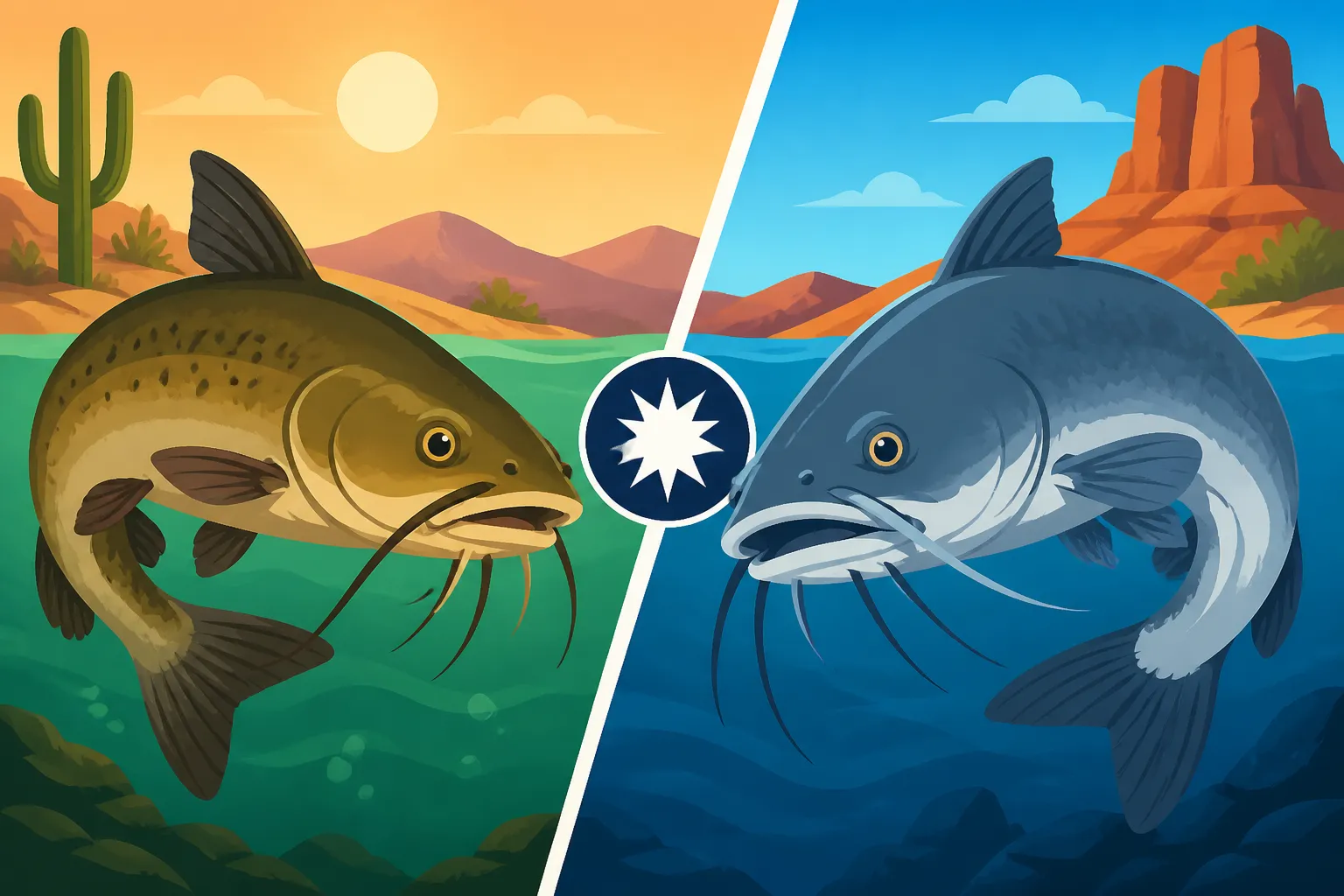
A Channel Catfish will almost always have a deeply forked tail. Think of it like a swallow's tail or a pair of scissors spread wide. The two lobes of the tail are distinct and separate, giving it a classic V-shape. This deeply forked tail is one of their most defining characteristics, so much so that if you see a deeply forked tail, you can be pretty confident it's a Channel Cat. This fin shape helps them maneuver quickly in currents and gives them bursts of speed when chasing prey. When you're reeling one in, you might notice this tail shape contributes to their strong, darting runs.
In contrast, a Blue Catfish possesses a tail that is either straight or only slightly notched. It's much less pronounced than the Channel Cat's fork, sometimes almost appearing straight across or only gently curved inward. Imagine a very shallow crescent moon or even a square end with slightly rounded corners. This difference is consistent across all sizes of Blue Cats. If you're looking for Channel Catfish vs Flathead Catfish Identification, you'll find even more variation in tail shapes, highlighting how important this feature is. When a Blue Catfish is fighting on your line, their less-forked tail might give them a powerful, steady pull rather than the erratic darts of a Channel Cat.
Body Shape and Coloration: More Subtle Cues
Beyond the tail, the overall body shape and color patterns offer secondary, but still very useful, hints. These can vary more based on the fish's age, diet, and the water it lives in, but they're still worth paying attention to.
Channel Catfish typically have a more slender, elongated body compared to the bulkier Blue Cat. Their coloration tends to be olive-brown or gray on the back, fading to silvery-white on the belly. The most iconic feature for many is the presence of dark spots on their sides, especially on younger fish. These spots can be quite prominent in smaller Channel Cats, but they often fade or disappear entirely as the fish gets older and larger. So, if you catch a small catfish with distinct spots, it's almost certainly a Channel Cat. You might notice these spots blending into a more uniform gray as they mature, particularly in very large specimens. Catfish Fishing Guide for Arizona can help you understand more about where these fish thrive.
Blue Catfish, on the other hand, usually have a more robust and stocky build, especially around the shoulders, and they can grow significantly larger than Channel Cats. Their name comes from their distinct steel-blue or slate-gray coloration on their backs, which transitions to a paler, silvery-white on their bellies. Crucially, Blue Catfish never have spots. If you catch a large, silvery-blue catfish without any spots, you're likely looking at a Blue Cat. They also tend to have a noticeable "hump" or elevated dorsal profile just behind their head, especially as they get bigger. This solid, unspotted blue-gray appearance is a reliable indicator, even if the tail isn't immediately clear.
Head and Mouth Structure: Another Layer of Detail
Once you've checked the tail and body, take a moment to look at the head and mouth. There are subtle differences here too that can help confirm your identification.
For Channel Catfish, the head is typically smaller and more rounded in proportion to their body. Their mouth is usually subterminal, meaning it's located slightly underneath the snout. While they do have barbels (whiskers), they tend to be of a moderate length. When you open their mouth, you'll find a patch of teeth. These aren't sharp, individual teeth like a bass, but rather a rough, sandpaper-like pad of small, conical teeth designed for gripping prey. This mouth structure is efficient for scavenging on the bottom or ambushing smaller fish. Catfish Diet and Feeding Habits can shed more light on what they typically consume.
Blue Catfish are characterized by a larger, more prominent head, often with a steeper, more pronounced slope from their dorsal fin to their snout. Their mouth is terminal, meaning it's positioned at the very front of their head, giving them a more direct, predatory appearance. This mouth is generally larger than a Channel Cat's, reflecting their preference for larger prey as they grow. They also have longer barbels compared to Channel Cats. Inside their mouth, they also possess toothpads, but these can feel a bit more developed due to their larger size and more predatory nature. The structure of their mouth and head really emphasizes their role as efficient predators in larger river systems and reservoirs.
Habitat, Size, and Behavioral Differences in Arizona
Beyond their looks, understanding where these fish live, how big they get, and how they behave can further solidify your identification and even inform your angling strategy. Arizona's waters offer homes to both, but they often prefer slightly different environments.
Preferred Habitats in Arizona Waters
Both species are found in Arizona, but their natural tendencies lead them to thrive in different types of aquatic environments. Knowing these preferences can give you a clue before you even cast your line.
Channel Catfish are incredibly adaptable and can be found in a wide variety of waters across Arizona, from our larger reservoirs like Lake Pleasant and Roosevelt Lake to rivers like the Salt and Verde, and even many of the urban community fishing lakes. They tolerate a broader range of water conditions, including warmer, shallower areas, and water with moderate current. They often hang around submerged structures like brush piles, rock formations, and ledges. You'll find them cruising the shallower flats at night or holding tight to cover during the day. This adaptability is part of why they're such a popular and widely stocked fish here. When you're exploring Best Fishing Lakes in Arizona or Best Urban Fishing Lakes in Arizona, you're almost guaranteed to encounter Channel Cats.
Blue Catfish, while present, are less widespread in Arizona compared to Channel Cats. They generally prefer larger, deeper, and often more turbid (cloudy) river systems and reservoirs with strong currents. Think big waters like the lower Colorado River, particularly stretches below dams where there's constant flow, and some of our really massive reservoirs. They are more pelagic (open water) than Channel Cats and tend to stay in deeper channels, humps, and current breaks. They are less common in smaller impoundments or slower-moving rivers. Their presence in Arizona waters is often linked to specific stockings or introductions in large bodies of water that mimic their natural riverine habitats.
Growth Potential and Arizona Records
Size is often the most exciting difference for anglers, and here, Blue Catfish truly steal the show. While a big Channel Cat is impressive, Blue Cats can reach gargantuan proportions.
Channel Catfish are excellent eating fish and reach a respectable size. In Arizona, a "big" Channel Cat might be anywhere from 5 to 15 pounds, with some reaching over 20 pounds. The state record Channel Catfish is truly a monster, pushing well over 30 pounds, but catches of that caliber are rare and exceptional. Most anglers target them in the 1 to 5-pound range, which makes for fantastic sport and delicious table fare. They grow relatively quickly when food is abundant but don't possess the inherent genetic potential for extreme size that Blue Cats do. When you're checking out Channel Catfish Average Weight in Arizona, you'll see that consistently catching fish over 10 pounds is a great achievement.
Blue Catfish are the undisputed giants of the catfish world. They can grow to absolutely enormous sizes, routinely reaching weights of 50, 60, or even over 100 pounds in prime habitats. While Arizona's Blue Cat population might not produce world records as consistently as some other states, a Blue Catfish in Arizona could easily dwarf our state record Channel Cat. If you hook into something that feels like you've snagged a small car, and it's pulling like a freight train, there's a good chance it's a big Blue Cat. Their sheer power and size make them a coveted trophy fish for many anglers. Knowing How to Fight a Big Flathead Catfish can give you some transferable skills for battling large Blue Cats, even though they're different species.
Dietary Preferences and Fishing Implications
Their differing habitats and growth potential also lead to some distinctions in what they eat, and therefore, what baits and techniques might be most effective.
Channel Catfish are opportunistic omnivores and scavengers. They'll eat almost anything from dead baitfish, cut bait, worms, insects, and crustaceans to prepared stink baits and even some plant matter. This makes them relatively easy to catch for beginners and experienced anglers alike, as they aren't particularly picky. They rely heavily on their sense of smell, especially in murky waters, which is why strong-smelling baits like chicken livers, blood baits, or commercial stink baits are often so effective. You can target them with simple bottom rigs, slip sinkers, or even bobbers near structure or along channel edges. For Best Bait for Catfish in Arizona, you'll see a wide array of options that work well for Channel Cats.
Blue Catfish, especially larger ones, tend to be much more piscivorous, meaning they primarily eat other fish. While they will scavenge, their diet leans heavily towards live or freshly cut baitfish. Shad, carp, sunfish, and even smaller game fish make up a significant portion of their meals. This means that while stink baits might work for smaller Blue Cats, targeting trophy-sized Blues usually requires fresh, oily cut bait or live bait presentations. Techniques often involve anchoring in deep channels or river bends and deploying multiple heavy rods with robust rigs. Anglers might use large chunks of carp or shad, hoping to entice one of these leviathans. Understanding this dietary preference is crucial if you're serious about landing a truly massive catfish.
Comparing Channel Catfish and Blue Catfish at a Glance
To make it super easy to remember, here's a quick comparison of the most important identification points. Keep this in mind next time you're on the water, whether you're bank fishing a community lake or cruising the depths of Lake Pleasant!
| Feature | Channel Catfish | Blue Catfish |
|---|---|---|
| Tail Fin | Deeply forked, distinct V-shape | Straight or very slightly notched, almost blunt |
| Body Coloration | Olive-brown to gray, often with dark spots (especially smaller fish) | Steel-blue or slate-gray, no spots |
| Body Shape | More slender and elongated | More robust, stocky, often with a "hump" behind head |
| Head Shape | Smaller, more rounded proportionately | Larger, more pronounced, often with a steeper slope |
| Mouth Position | Subterminal (slightly underneath snout) | Terminal (at the very front of the head) |
| Growth Potential | Medium-large (commonly 1-15 lbs, rarely 20+ lbs) | Large to enormous (commonly 10-50+ lbs, potential for 100+ lbs) |
| Typical Habitat | Wide variety of waters, moderate current, shallower areas, structure | Larger rivers & reservoirs, deep channels, strong currents, more open water |
| Primary Diet | Omnivorous, scavengers (worms, cut bait, stink bait, insects, small fish) | Piscivorous (primarily fish, fresh cut bait, live bait) |
Fishing Strategies for Each Species
Knowing the difference isn't just about identification; it's about becoming a more effective angler. Tailoring your approach to each species can significantly increase your success rate and help you land more of what you're targeting.
Targeting Channel Catfish: The Adaptable Angler's Friend
Because of their widespread distribution and varied diet, Channel Catfish are often considered the most accessible catfish for anglers in Arizona. They’re a fantastic target for a fun family outing or a relaxing afternoon by the water.
When you're after Channel Cats, don't overthink your setup. A medium-action spinning rod and reel combo, spooled with 10-15 pound monofilament or fluorocarbon line, is usually more than enough. You'll want to use a simple bottom rig – a slip sinker above a swivel, leading to an 8-12 inch leader and a 1/0 to 4/0 circle or J-hook. For bait, the world is your oyster! Chicken livers, nightcrawlers, shrimp, hot dogs, and various prepared stink baits are all highly effective. You can find a huge variety of these commercial baits and accessories on platforms like Amazon. Fish around submerged brush, fallen trees, rocky points, or channel edges, especially during low light hours like dawn, dusk, or even at night. Is Night Fishing Better for Catfish in Arizona? often points to increased activity during cooler, darker hours. These fish are aggressive feeders and will readily take a well-presented bait.
Pursuing Blue Catfish: Hunting the Riverine Giants
Blue Catfish, especially the bigger ones, require a bit more dedication and specialized tackle. If you're looking for a true battle and a potential trophy, Blue Cats are your quarry.
For Blue Catfish, you'll need heavier gear. Think heavy-action rods, robust baitcasting reels with a strong drag system, and braided line in the 30-80 pound test range, depending on the size of fish you expect to encounter. You'll still use a bottom rig, but scale up your components: larger slip sinkers (2-8 ounces or more, depending on current), heavy-duty swivels, and stout hooks in the 5/0 to 10/0 range. Your best baits will be fresh cut bait – shad, carp, sunfish, or even tilapia. Cut them into chunks or strips that give off plenty of scent. Live bait, like bluegill or small carp, can also be deadly. Target deeper river channels, main lake basins, sharp drop-offs, and areas with strong current where baitfish congregate. Be prepared for a powerful fight; a big Blue Cat can test your tackle and your stamina. You might even find specialized big-catfish rods and reels on Amazon specifically designed to handle these brutes.
Final Thoughts on Catfish in Arizona
Arizona's waters offer incredible opportunities for catfish enthusiasts. Whether you're chasing the plentiful and feisty Channel Cats or hoping to tangle with a monster Blue Cat, knowing the nuances between these two species will undoubtedly make you a more informed and successful angler. It's truly amazing how a few key visual cues can unlock a deeper understanding of these fascinating fish and guide your entire fishing adventure.
Remember, identifying your catch correctly isn't just a fun exercise; it also helps you understand the health of our fisheries and contribute to local conservation efforts if you're reporting catches or participating in surveys. So next time you feel that unmistakable tug on your line, take a moment, examine your catch, and confidently say, "Yep, that's a…"
Disclaimer
This article is for general informational purposes only and does not constitute professional advice. Laws, prices and regulations vary by location and change over time. Consult a qualified professional for guidance on your specific situation.