Do Fish Move Deeper in Cold Winter Water?
It's a question that plagues many an Arizona angler as the cooler months roll in: do fish truly move deeper in the cold winter water? You've spent countless hours in the spring, summer, and fall fishing the shallows, chasing surface activity, and working those obvious shoreline features. But when winter arrives, and that morning chill sets in, the lakes can feel like barren landscapes, leaving you wondering if your favorite spots are just empty. The short answer is yes, generally speaking, fish in Arizona's lakes and reservoirs absolutely tend to move deeper when water temperatures drop, and understanding why and how to adapt your tactics is crucial for winter success. This guide will help you decode winter fish behavior and equip you with the knowledge to keep those lines tight, even when the air is crisp.
The Cold Truth: Why Fish Seek Deeper Water in Winter
When the calendar flips to winter, even in sunny Arizona, the water temperature in our lakes and reservoirs begins its annual descent. This isn't just a minor shift; it triggers a profound physiological response in most warm-water fish species, and even affects the cold-water species like trout. Fish are cold-blooded creatures, meaning their body temperature mirrors their environment. As the water cools, their metabolism slows down significantly. This isn't a bad thing; it's a survival mechanism, allowing them to conserve energy when food sources might be scarcer and their bodies require less fuel.
Thermal Stratification and Stability
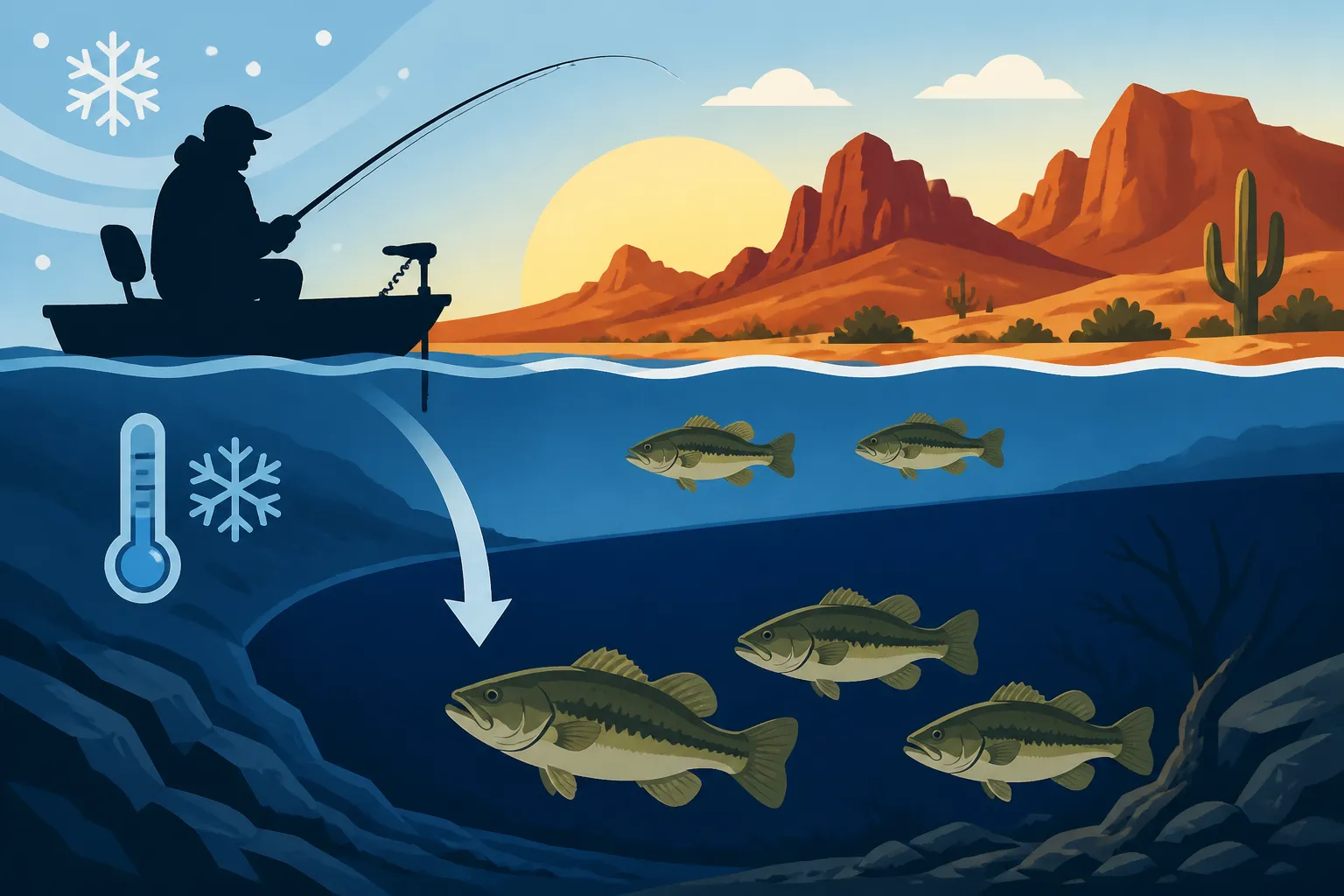
One of the primary reasons fish head for deeper water is to find thermal stability. During the hot Arizona summer, lakes are typically stratified, with a warm upper layer (epilimnion), a rapidly changing middle layer (thermocline), and a colder, deeper layer (hypolimnion). As winter approaches and air temperatures cool, the surface water loses heat, becomes denser, and sinks. This process, known as "turnover" in some lakes, or simply a gradual cooling and mixing, eventually leads to the lake's temperature becoming more uniform from top to bottom, or at least a much slower rate of temperature change in deeper zones.
Fish, especially bass, crappie, and catfish, will seek out these deeper zones because they offer more consistent, albeit colder, temperatures. The very bottom of the lake, or deep humps and ledges, might be a few degrees warmer than the surface on a truly frigid day, or simply offer a more stable environment where temperature fluctuations are minimal. This stability is key for their slowed metabolism, preventing their bodies from constantly adjusting to varying temperatures, which would expend precious energy. Think of it like finding a cozy, insulated spot to hunker down when the outside world is volatile.
Forage and Protection in the Depths
It's not just about temperature; food and safety play huge roles, too. As surface water cools, many of the smaller baitfish, like shad and sunfish, also start to move into deeper, more stable environments. They're seeking refuge from the cold, and often congregating around submerged structures, deep points, or channel edges where they can find cover. When the baitfish go deep, the predatory game fish follow. If you can locate schools of bait on your fish finder, you can bet the bass, crappie, or striped bass won't be far behind.
Deeper water also offers an element of protection. In the clear, crisp waters often associated with winter in Arizona, especially after the heavy recreation season has passed, the shallower areas can become quite exposed. Deeper haunts provide better cover from predators (like eagles and ospreys) and also from the prying eyes of anglers. Fish feel less vulnerable in the lower light penetration of the depths, allowing them to conserve energy and feel more secure. This is particularly true in heavily pressured lakes where fish have learned to be wary of shallow-water activity.
Factors Beyond Temperature Influencing Fish Depth
While cold water is a major driver, it's not the only factor determining where fish will hold in Arizona lakes during winter. Understanding these additional influences can help you fine-tune your approach and increase your chances of finding those elusive winter bites. It's rarely as simple as "just fish deep," because "deep" can mean different things depending on the lake, the day, and even the time of day.
Light Penetration and Overcast Conditions
During winter, especially on clear, sunny Arizona days, sunlight can penetrate quite deeply into the water column. However, fish often prefer areas where they can escape intense direct light, particularly if they are already feeling sluggish from the cold. On bright, bluebird days, fish may hold slightly deeper than on overcast days. Overcast conditions can sometimes coax fish up higher in the water column, even if it's still deep relative to their summer haunts. The diffused light makes them feel more comfortable and less exposed.
Think about those days when a cold front moves through. Often, the fishing is tough after the front passes, typically under high pressure and bright skies. The fish might be deep and lethargic. But right before a front, or on a cloudy, mild winter day, they might be more active and willing to move up a bit to feed. It’s all about comfort and minimizing energy expenditure.
Dissolved Oxygen Levels
While less of an issue in the cooler winter months than in scorching summers, dissolved oxygen (DO) levels can still play a subtle role. In general, colder water holds more oxygen than warmer water. So, in winter, oxygen isn't usually the limiting factor it can be when a lake is thermally stratified and warm on top. However, if a lake has a significant amount of decaying organic matter at the bottom, very deep pockets could potentially have slightly lower oxygen. This is rare in well-oxygenated Arizona reservoirs, but it's a factor to be aware of, particularly in smaller, shallower impoundments or stagnant coves. Most often, the fish are perfectly happy with the DO levels at depth in winter.
Structure and Cover
This is arguably one of the most critical factors. Fish, especially bass and crappie, are inherently drawn to structure and cover regardless of the season. In winter, these features become even more important as aggregation points. Deep timber, rock piles, ledges, humps, submerged roadbeds, creek channels, and even old bridge pilings all provide crucial ambush points and safety zones in deeper water. Deep Water Structure Fishing Techniques is a great resource to explore this further.
Finding these deep-water structures is paramount. It’s not enough to simply find a deep part of the lake; you need to find the best deep part of the lake. These structural elements break up current, provide shelter, and concentrate baitfish, which in turn concentrates the game fish. If you're out on the water, spend time mapping out these features with your electronics. You'll often find that even if fish are deep, they're not just suspended aimlessly; they are relating to specific contours, edges, or cover elements within that deeper zone. This is where your investment in a quality fish finder, perhaps one you picked up on Amazon, really pays off.
Strategies for Finding and Catching Deep Winter Fish
Now that we understand why fish go deep in winter, let's talk about how to actually find and catch them. Winter fishing in Arizona requires a significant adjustment in tactics and a boatload of patience. Forget the fast, aggressive presentations of summer; winter fishing is a game of slow, subtle, and precise movements.
Relying on Electronics: Your Best Friend in the Depths
You simply cannot effectively fish deep in winter without good electronics. A quality fish finder, especially one with side-imaging or down-imaging capabilities, is invaluable. This is not just for marking fish, but for identifying the key structures and contours they will be holding on. Start by scanning likely deep areas: points that drop off quickly, creek channel bends, submerged humps, and the deepest parts of coves. How to Read a Fish Finder for Structure provides excellent advice on interpreting what you see.
Look for schools of baitfish, often appearing as clouds or dense balls on your screen. If you find bait, the predators are likely nearby. You might see larger arcs or blobs underneath or around these bait schools. Don't just motor over a spot and leave; take your time to thoroughly scan the area from multiple angles, understanding the bottom composition and any hidden cover. Marking waypoints on your GPS is also critical once you've identified a promising area. Many anglers find great deals on reliable models from brands like Lowrance or Humminbird on Amazon before hitting the water.
Slow and Steady: Presentation is Key
When fish are cold and their metabolism is slow, they aren't going to chase down a fast-moving lure. Your presentation needs to be excruciatingly slow and deliberate. Think finesse.
- Jigging Spoons: These are fantastic for deep winter fishing. Drop them down to the desired depth, let them hit bottom, and then impart a subtle lift and fall. The flash and flutter can entice a lethargic fish. Vary your retrieve, but keep it slow.
- Drop Shot Rigs: The drop shot allows your bait to suspend directly in the strike zone, off the bottom, where deep-holding fish can see it without moving much. A small worm or minnow imitation on a light line with a heavier weight is a deadly combination.
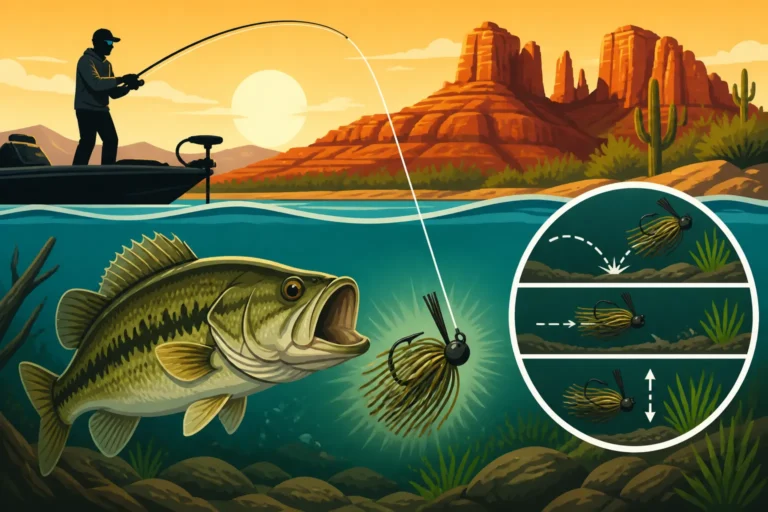
- Jigs with Soft Plastics: A football jig or a stand-up head jig tipped with a small craw or creature bait, dragged very slowly along the bottom, can be incredibly effective. The goal is to imitate a crawfish or other bottom-dwelling prey that's barely moving.
- Blade Baits: Like jigging spoons, blade baits (e.g., something from a brand like Heddon or Damiki) offer flash and vibration on the retrieve. A slow lift and fall can be irresistible.
- Deep Cranking: While often a faster presentation, sometimes a deep-diving crankbait, worked extremely slowly and paused frequently, can trigger a reaction strike, especially if bounced off deep rocks or timber. Look for models that dive to your target depth, and consider shopping for a good variety on Amazon to cover different depth ranges.
For any of these techniques, pay close attention to your line. Bites can be incredibly subtle – sometimes just a slight "mushy" feeling, a tic, or your line just stopping. Use sensitive rods (often graphite, which you can find good values for on Amazon) and high-visibility braided line with a fluorocarbon leader to detect these faint strikes. Winter Bass Fishing Tactics in Arizona goes into even more detail on these specific approaches.
Focus on the Right Times and Conditions
While fish are generally deeper in winter, there are still optimal times and conditions to target them.
- Midday Warm-Up: On sunny winter days, the warmest part of the day (often mid-morning to late afternoon) can sometimes see fish, particularly bass, move slightly shallower along deep points or sun-drenched rock walls for brief feeding windows. These are usually still deep relative to summer, but perhaps from 30 feet up to 15-20 feet.
- Stable Weather: Avoid fishing immediately after a severe cold front, as fish tend to be incredibly inactive. Stable weather patterns, even if cold, generally offer better fishing.
- Overcast Days: As mentioned, cloudy or overcast days can be more productive, as the diffused light makes fish feel more comfortable moving around.
- Early Winter vs. Late Winter: In early winter, fish might still be transitioning and be found a bit shallower. By late winter, when water temperatures are at their coldest, they'll often be at their deepest.
- Community Lakes: Even in Arizona's Community Fishing Program Rules lakes, which are typically shallower, fish will seek the deepest holes and channel areas when winter hits. Don't assume "shallow lake" means they won't go deep; they'll use whatever depth is available.
It's also worth noting that some species, like trout in stocked lakes, might behave a little differently. Stocked trout are often acclimated to colder temperatures and may be found cruising shallower zones or near the bottom in shallower lakes where they are stocked. However, even they will seek stable, deeper water when extreme cold fronts hit. Ice-Free Winter Fishing Techniques can provide more general guidance for navigating the colder months.
Species-Specific Winter Behavior in Arizona
Different fish species in Arizona react to cold water in their own unique ways, though the general principle of seeking deeper, more stable water holds true for most.
Largemouth and Smallmouth Bass
Both largemouth and smallmouth bass in Arizona will move deep in winter. Largemouth often relate to deep timber, brush piles, and submerged vegetation edges, particularly in the lower ends of the reservoirs. Smallmouth, being more rock-oriented, will hug deep rock ledges, bluff walls, and prominent humps. You might find schools of smallmouth suspended over deep structure, ready to ambush baitfish. Their metabolism slows drastically, so expect extremely subtle bites and a need for slow, precise presentations. Seasonal Movement Patterns of Bass at Roosevelt Lake highlights how these fish react to seasonal changes.
Striped Bass
Striped bass, particularly in massive impoundments like Lake Powell or Lake Pleasant, will often follow shad into very deep water during winter. They might suspend over vast open water or congregate around deep points and channels. Finding these schools requires diligent use of your fish finder. Once located, vertical jigging with spoons or blade baits, or slow-trolling umbrella rigs or swimbaits at the depth of the fish, can be effective. Stripers can be quite active even in cold water if they locate a bait ball, making them a fun winter target.
Catfish (Channel and Flathead)
Catfish, both channel and flathead, are also deep-water dwellers in winter. They will often settle into deep channels, holes, and along river bends, particularly flatheads who prefer to ambush prey from cover. Channel catfish might school up in deep pockets. Their feeding activity slows considerably, but they can still be caught on cut bait, stink baits (for channels), or live bait (for flatheads), presented directly on the bottom with a slip sinker rig. The key is patience, letting the bait sit for extended periods in known catfish haunts.
Crappie
Crappie are notorious for schooling up in winter. They'll often suspend around deep timber, brush piles, or under boat docks in large schools. Finding one crappie often means finding dozens. Small jigs, tipped with a minnow or a soft plastic body, fished vertically right in the middle of the school, are incredibly effective. A sensitive rod is essential to detect their light bites. How to Fish a Brush Pile for Crappie has valuable tips for targeting these popular panfish.
Winter Fishing Strategy Table
To summarize some of the key considerations for deep winter fishing in Arizona:
| Factor | Summer/Fall Approach | Winter Approach (General) | Arizona Specifics |
|---|---|---|---|
| Fish Depth | Shallow to mid-depth, surface activity | Deeper, often near bottom or suspended over structure | Relates to stable temperatures and baitfish migration |
| Metabolism | High, aggressive feeding | Low, lethargic | Requires slow, subtle presentations |
| Lure Speed | Fast, erratic, power fishing | Very slow, finesse, subtle | Smaller baits, less movement, longer pauses |
| Bait Choice | Larger, reaction baits, topwaters | Smaller, soft plastics, jigs, live bait | Mimic slow-moving prey; often specific colors (natural/dark) |
| Electronics Use | Good to have, mainly for structure | Essential for finding fish and identifying structure | Crucial for identifying deep channels, humps, and bait schools |
| Patience | Moderate to high | Extreme | Longer soak times, fewer bites but potentially larger fish |
| Key Structure | Grass lines, shallow cover, docks | Deep ledges, humps, creek channels, vertical timber | Focus on significant depth changes and submerged features |
Final Thoughts on Cold Water Fishing
Fishing in Arizona during the colder months, when fish move deeper, certainly presents a different set of challenges than the more active seasons. It demands patience, a keen understanding of fish behavior, and a willingness to embrace slower, more methodical tactics. However, for those who adapt, winter can offer some of the most rewarding fishing experiences, often producing larger, healthier fish. Don't let the chilly air keep you indoors. Bundle up, grab your sensitive rods and your reliable fish finder (maybe after checking out some options on Amazon), and head out to explore the depths. You might be surprised at what you find lurking in the cold, clear waters of an Arizona winter lake.
Disclaimer
This article is for general informational purposes only and does not constitute professional advice. Laws, prices and regulations vary by location and change over time. Consult a qualified professional for guidance on your specific situation.