Can You Catch Bass on Topwater Lures in Winter?
There's nothing quite like the explosive thrill of a topwater strike. That heart-stopping moment when a bass demolishes your lure right on the surface is what many anglers live for. But when winter rolls around, with its chillier temperatures and shorter days, most of us put away our poppers and walk-the-dogs, assuming the topwater bite is completely dead. In Arizona, however, our unique desert climate can sometimes throw us a curveball. This guide dives deep into whether you can realistically expect to catch bass on topwater lures in the Arizona winter, exploring the rare exceptions and, more importantly, the proven methods for cold-weather success when surface action just isn't happening.
The Cold Reality: Why Winter Topwater is Generally a No-Go
Let's be real here: for most of the country, and for a good portion of Arizona during its coldest stretches, thinking about topwater in winter is like hoping for a blizzard in July. The natural instincts of bass and the physics of cold water just don't align with aggressive surface feeding.
Bass Metabolism and Water Temperature
Think of bass like us: when it's cold, we slow down. We want to conserve energy, stay warm, and not exert ourselves more than necessary. Bass are cold-blooded creatures, meaning their body temperature directly mirrors the water temperature around them. As water temperatures drop, their metabolism slows significantly. This means:
- Slower Digestion: They don't need to eat as often because their food takes longer to process.
- Reduced Activity: They move less, hold tight to cover or structure, and aren't keen on chasing fast-moving prey.
- Energy Conservation: Expending bursts of energy to chase a surface lure just isn't worth the caloric cost in cold water, especially if that lure is moving quickly or erratically. They're looking for an easy meal, not a high-speed chase.
Most topwater bites rely on a bass's willingness to rocket up from below and engulf a lure. In cold water, that vertical movement against their natural inclination to stay deep and conserve energy is extremely rare.
Prey Behavior in Winter
Another critical factor is what bass eat and where that food hides during winter. The vibrant insect life and active baitfish that provide prime topwater opportunities in spring, summer, and fall are largely absent or dormant at the surface in winter.
- Baitfish Go Deep: Threadfin shad, bluegill, and other forage species seek the warmest, most stable water they can find, which is usually deeper in the water column. They school up tightly, offering less individual opportunity for a bass to pick off a straggler at the surface.
- Insect Activity Dwindles: Dragonflies, mayflies, and other insects that provide surface meals for bass virtually disappear once temperatures drop. There's simply nothing naturally occurring at the surface to entice a bass to look up.
- Crawfish Retreat: While not surface dwellers, crawfish are a primary food source for bass. In winter, they burrow down into the mud or hide deep in rocky crevices, making them a bottom-oriented meal.
Without natural prey sources at the surface, bass have no biological reason to look upwards, further diminishing the chances of a topwater strike. This fundamental shift in the entire ecosystem makes winter topwater a challenging proposition.
Arizona's Anomalies: When Topwater Might Just Work
Now, before you completely dismiss the idea, remember this is Arizona. Our "winter" isn't always like the snow-covered landscapes of other states. We have unique conditions that, on rare occasions, can create a fleeting window for a very specific kind of topwater bite. It's not common, but it's not entirely impossible either. For more context on the general conditions, check out our Arizona Fishing Seasons Explained guide.
Unseasonably Warm Winter Days
This is the golden ticket, and it's something we do experience in the desert. Imagine a string of several bright, sunny days in December or January where air temperatures soar into the 60s or even low 70s. While the deeper water remains cold, the very top layer of shallow water in specific areas can warm up by a few degrees. This might not sound like much, but those crucial degrees can slightly elevate the metabolic rate of bass, making them just a tiny bit more active.
- The "False Spring" Effect: These warm spells can mimic a mini-spring, even if briefly. Bass, especially those shallow-oriented fish, might sense this slight change and move up in the water column for a short feeding window, particularly during the warmest part of the day.
- Look for Sustained Warmth: One warm day won't cut it. You need a consecutive string of 3-5 unseasonably warm days to see any real impact on the shallow water temperatures. Even then, the effect is localized and short-lived.
Shallow, Dark-Bottomed Coves
Not all areas of a lake warm up equally. In Arizona's desert reservoirs like Lake Pleasant, Roosevelt Lake, or Canyon Lake, look for specific environments that act like natural solar collectors.
- Dark Substrates: Coves with dark, rocky bottoms or muddy flats absorb sunlight more efficiently than sandy or lighter-colored areas. These spots can warm up faster and retain heat better.
- Protected from Wind: Coves that are sheltered from prevailing winds will also experience less surface cooling and more consistent warming. Wind can churn the surface, mixing warmer water with colder deeper water.
- Sun-Drenched Banks: Steep, south-facing rock walls or banks that receive direct sunlight for much of the day can radiate heat into the adjacent water, creating a very narrow, warmer strip where bass might lurk.
These microclimates are where your slim chances for a winter topwater bite lie. It's a game of finding the warmest water, even if it's only a degree or two warmer than the rest of the lake.
Specific Lake Types and Microclimates
While you're not going to be throwing poppers in the White Mountains in January, Arizona's diverse geography means some lakes offer a better shot than others.
- Desert Lakes are Key: The lower elevation desert lakes (like Lake Havasu, Roosevelt, Pleasant, Apache, Canyon, Saguaro, Bartlett) are your best bet. Their average winter temperatures are significantly higher than the high-country lakes.
- Large Shallow Flats: Lakes with extensive shallow flats or large coves, particularly those with plenty of submerged brush or rock piles, give bass more options to move shallow when conditions briefly allow. For information on specific lakes, check out our Lake Pleasant Arizona Fishing Guide or Roosevelt Lake Arizona Fishing Guide.
- Community Fishing Program Waters: Some urban ponds, part of the Arizona Community Fishing Program Rules, are smaller and can warm up a bit faster on those intense sunny days, though the bass in these waters might be less prone to chasing topwater due to heavy fishing pressure.
Remember, even in these ideal "winter" scenarios, the bite will be fickle, short-lived, and require extreme patience and precision.
Strategies for the Unlikely Winter Topwater Bite
Okay, so you've found that rare warm spell, you're on a sun-drenched, dark-bottomed cove in a desert lake. Now what? You can't just throw your summer frog and expect magic. A winter topwater bite, if it happens, demands a completely different approach.
Timing is Everything
This is not an all-day affair. Your window of opportunity will be incredibly narrow.
- Midday to Late Afternoon: Forget dawn and dusk. In winter, you need the sun to have done its work. The warmest water temperatures will occur between 1 PM and 4 PM, after several hours of direct sunlight. This is when any shallow-water bass might briefly become active enough to consider a surface strike.
- Post-Frontal Conditions: Avoid fishing immediately after a cold front. The high pressure and clear skies that often follow a front can make bass incredibly lethargic, even if the air temperatures are rising. You want stable, rising temperatures for multiple days.
- Look for Subtle Signs: Keep an eye out for any surface activity – even a small swirl, a dimple, or a baitfish flicking near the surface. These can be indicators of slightly warmer water and increased activity.
Lure Choice and Presentation
This is where finesse meets topwater. Forget aggressive, splashy lures.
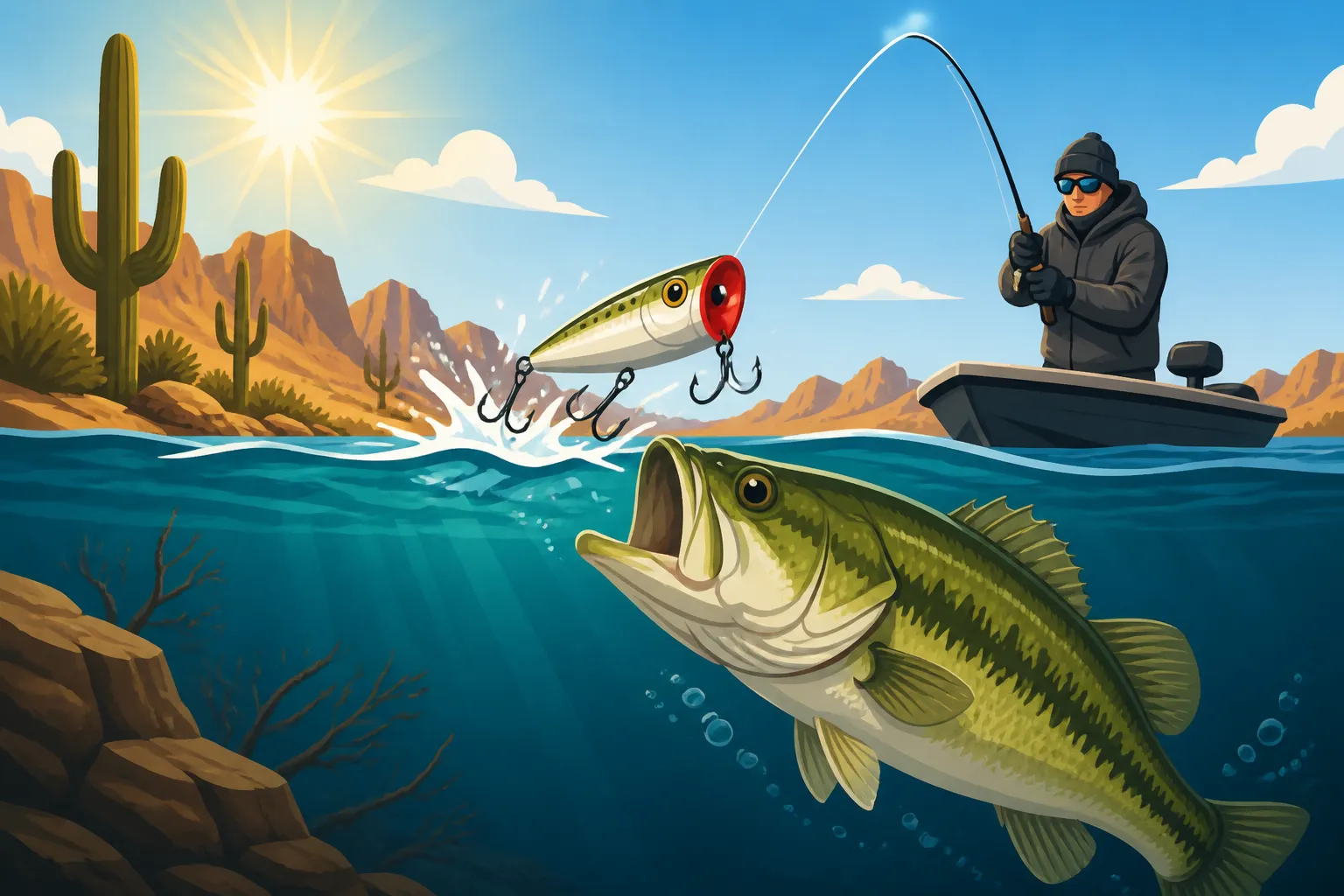
- Smaller, Subtler Lures: Think small poppers, walking baits, or even prop baits that create a minimal disturbance. A Heddon Zara Puppy, a small Rebel Pop-R, or a tiny prop bait might be more effective than larger, more common summer topwaters. The idea is to mimic a weak, struggling baitfish or insect that presents an easy meal. You might find a good selection of these specific winter topwater lures on platforms like Amazon.
- Extremely Slow Retrieves: This is the most crucial element. Cast your lure, let it sit for a very long time – sometimes 10, 15, or even 30 seconds after it lands. Then, give it a very subtle twitch, just enough to make a ripple or a slight gurgle. Let it sit again, often even longer. The retrieve should be agonizingly slow, mimicking a dying or stunned creature.
- Target Precise Spots: Don't cast blindly. Aim for specific pieces of cover – a submerged log, a dark rock, a patch of emergent weeds, or the edge of a shallow flat. These are the ambush points where a bass might be waiting, willing to strike without moving far.
- Walk the Dog, Very Slowly: If using a walking bait, make the "walk" incredibly subtle and elongated. The lure should glide rather than dart. Pause frequently.
It requires immense patience and faith in your technique, but if a bass is going to hit a topwater in winter, it will be an opportunistic, slow, and deliberate strike.
Where to Focus Your Efforts
Even in warm coves, not every spot is created equal.
- Shallow Flats with Structure: Look for large, shallow flats that taper gently. Any submerged brush piles, rock gardens, or old roadbeds on these flats will be prime targets. Bass will relate to this structure, moving up onto the shallower parts of the flat when the sun is highest.
- Sun-Exposed Rock Banks: As mentioned, these banks absorb and radiate heat. Cast parallel to them, letting your lure sit right against the rock edge where the warmest water might be.
- Transition Zones: Where shallow water drops off into slightly deeper water. Bass might hold on the edge of the drop-off and move up onto the flat to feed when conditions are optimal. Use your fish finder to locate these subtle depth changes. You can find excellent, portable Best Fish Finders for Bass Fishing in Arizona devices on Amazon that are perfect for smaller boats or even shore fishing.
Remember, a "successful" winter topwater day might mean one or two bites, but those will be truly memorable given the conditions.
Realistic Winter Bass Tactics: When Topwater Isn't an Option
Let's face it: the vast majority of your winter fishing days in Arizona will not yield a topwater bite. Don't be discouraged! There are incredibly effective, and often more consistent, ways to catch bass in cold water. Knowing these techniques will make your winter fishing much more productive. For general advice on Winter Bass Fishing Tactics in Arizona, we have a full guide.
Slow and Low: The Winter Mantra
When bass are lethargic and hunkered down, you need to bring the bait directly to them and present it in a way that requires minimal effort for the bass to eat.
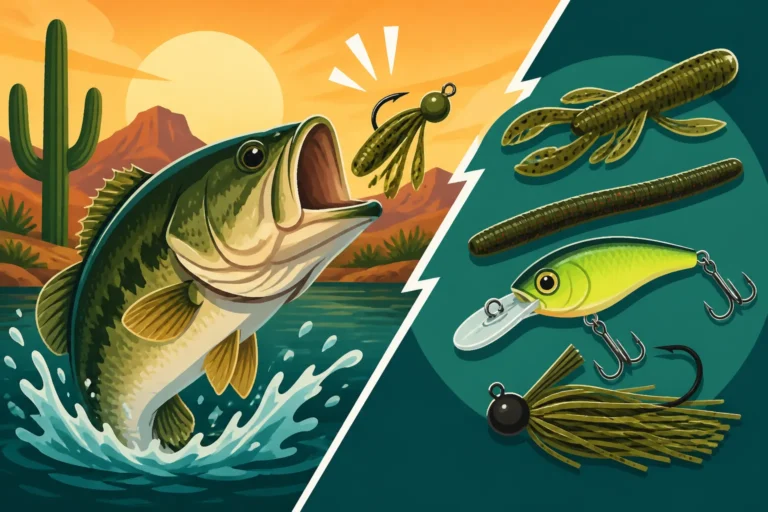
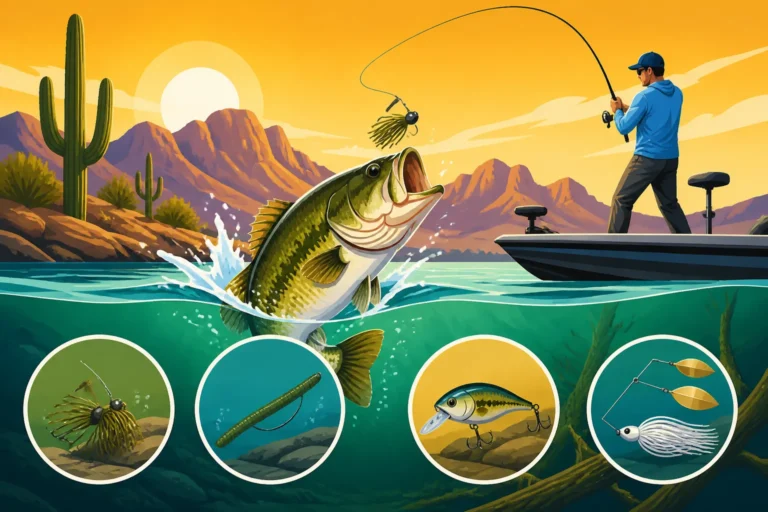
- Jigs: Flipping jigs, football jigs, or casting jigs are absolute cold-water killers. They imitate crawfish or baitfish on the bottom. Fish them extremely slowly, hopping or dragging them along structure. Pay attention to our guide on Best Lures for Largemouth Bass in Arizona Lakes.
- Drop Shots: This finesse technique keeps your bait suspended just above the bottom, right in the bass's strike zone. It's deadly for reluctant bass. Use small worms or creature baits, and barely move your rod tip.
- Shaky Heads: Another finesse technique, a shaky head jig with a worm offers a subtle, enticing presentation on the bottom. Shake your rod tip gently to impart action.
- Deep Crankbaits: For covering water and finding active fish, deep-diving crankbaits can be highly effective. Look for baits that dive to the depth where you're marking fish, and retrieve them slowly, letting them "thump" off deep structure like ledges, points, and humps. You can find a wide variety of effective deep-diving crankbaits on Amazon.
- Spoons: Jigging spoons are fantastic for vertical presentations over deep-holding bass, especially suspended schools of baitfish with bass underneath. Drop them down, lift, and let them flutter.
Suspending Jerkbaits
This is one of the most classic and effective cold-water techniques for bass. Suspending jerkbaits perfectly mimic a dying baitfish that stays in the strike zone for extended periods.
- The Pause is Key: Cast your jerkbait, give it a few quick twitches, and then pause. A long pause – 5, 10, even 20 seconds – is often when the bass will strike. They watch the bait, then slowly approach and inhale it.
- Target Depth: Choose jerkbaits that suspend at the depth where you expect bass to be, typically 5-15 feet in winter.
- Color Selection: Natural baitfish patterns (shad, minnow) are usually most effective in clear winter water.
Live Bait: The Ultimate Slow Presentation
When all else fails, live bait is often the most convincing option for lethargic winter bass.
- Shad or Minnows: If legal in your specific lake (always check Arizona Fishing Regulations Explained), a live shad or minnow rigged on a Carolina rig or under a slip bobber can be irresistible. Bass see natural movement and scent, triggering a strike even when they're not actively feeding.
- Nightcrawlers: For smaller bass or panfish that might also be active, a simple nightcrawler on a small hook can be effective, especially in community lakes.
- Patience is a Virtue: With live bait, you still need to be patient. Bass might take their time to mouth the bait before fully committing.
Focus on Water Temperature
Always carry a good water thermometer, especially when fishing in Arizona's winter. Finding even a slight temperature increase (1-2 degrees) can make all the difference. Best Time of Day to Fish for Bass in Winter often aligns with the warmest water temps.
- Sun-Exposed Areas: Prioritize areas that get maximum sun exposure.
- Depth Changes: Observe where the water temperature changes with depth. Bass will often hold at a specific depth where they find their preferred temperature range.
- Follow the Warmth: On particularly warm winter days, bass might move up to slightly shallower, warmer water for a brief period, then retreat to deeper, more stable temperatures as the day cools or if a cold front moves in.
By understanding the science behind bass behavior in cold water and adapting your tactics accordingly, you can still have incredibly rewarding fishing trips in Arizona throughout the winter, even if you're not getting those spectacular topwater blow-ups as often as you might in warmer months.
Comparing Winter Bass Strategies
Here's a quick look at the contrasting approaches for winter bass fishing in Arizona:
| Factor | Winter Topwater (Rare Opportunity) | Typical Winter Subsurface (Consistent) |
|---|---|---|
| Water Temp | Surface layer slightly warmed (60s air temp needed) | Cold, stable temps (40s-50s) throughout most of water column |
| Bass Activity | Brief, opportunistic, slow movement | Lethargic, deep-holding, energy conservation |
| Target Depth | Very shallow, sun-warmed coves | Deep structure, ledges, humps, drop-offs (15-40+ ft) |
| Time of Day | Midday to late afternoon (warmest part of day) | Midday often best, but can be all day deep |
| Lure Types | Small poppers, subtle walking baits, prop baits | Jigs, drop shots, shaky heads, suspending jerkbaits, deep crankbaits, spoons |
| Retrieve | Extremely slow, long pauses, minimal action | Very slow, subtle, bottom contact or suspended |
| Success Rate | Very low, highly dependent on specific conditions | Moderate to high, consistent with proper technique |
| Key Skill | Patience, observation, precise casting | Finesse, patience, reading electronics, understanding structure |
Conclusion
So, can you catch bass on topwater lures in winter in Arizona? The short answer is: rarely, and only under very specific, fleeting conditions. Our desert winters, while mild compared to many places, still cause bass metabolism to slow down significantly, pushing them deeper and making them far less likely to chase a surface meal.
However, on those glorious, unseasonably warm winter days, particularly in sun-drenched, shallow coves of our desert lakes, a bass might just be coaxed into an opportunistic strike with a small, subtly presented topwater lure. But remember, this is the exception, not the rule.
For consistent winter bass fishing success in Arizona, your best bet will always be to embrace the "slow and low" approach. Finesse techniques like drop-shotting, shaky heads, jigs, and the classic suspending jerkbait will put more bass in your boat or on your bank. Focus on deeper structure, fish during the warmest parts of the day, and pay close attention to water temperature. By understanding both the slim possibilities of topwater and the high probability of subsurface success, you can enjoy productive and exciting bass fishing throughout the Arizona winter season.
Disclaimer
This article is for general informational purposes only and does not constitute professional advice. Laws, prices and regulations vary by location and change over time. Consult a qualified professional for guidance on your specific situation.