How to Fish a Jig for Winter Bass
Fishing for bass in Arizona during the cooler winter months can be a real head-scratcher. The scorching summer sun gives way to crisp mornings and chilly afternoons, and suddenly, your usual go-to lures just aren't cutting it. It's frustrating to hit the water feeling optimistic only to find the bass have seemingly vanished. But trust me, they haven't disappeared; they've just changed their habits. This comprehensive guide will walk you through the precise art of fishing a jig for winter bass in Arizona, helping you unlock consistent bites when other anglers are struggling.
Why Jigs Are Your Secret Weapon for Arizona Winter Bass
When the desert air cools down, the entire aquatic ecosystem shifts. Bass become less aggressive, and their feeding windows shrink. This is where a jig truly shines, offering a versatile, subtle presentation that can coax even the most lethargic winter bass into biting. It's not about speed and flash; it's about finesse and persistence.
The Cold-Water Bass Metabolism Shift
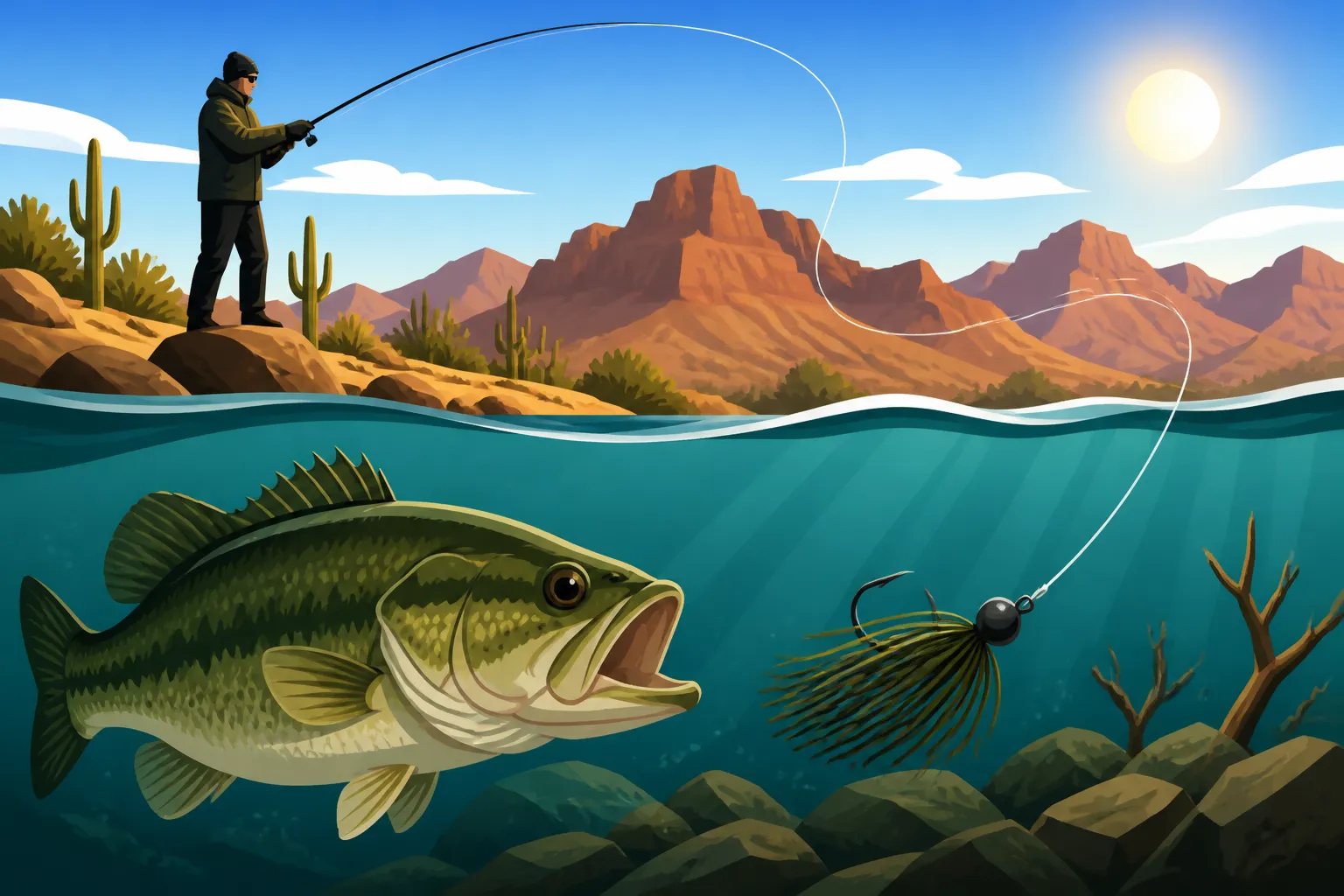
Just like us, bass get a bit sluggish when the temperatures drop. Their metabolism slows down considerably, meaning they don't need to eat as often or expend as much energy chasing prey. They’re looking for an easy, high-protein meal that doesn't require a lot of effort to catch. This is a crucial piece of the puzzle for understanding why jigs are so effective. A jig, especially when fished slowly and deliberately, perfectly imitates a crawfish or a stunned baitfish that's easy pickings. It's not about triggering a chase, but about presenting a meal that's too good to pass up right in front of their nose. You'll find that bass often just inhale the jig without a strong strike, a clear sign of their reduced aggression.
Mimicking Natural Winter Forage
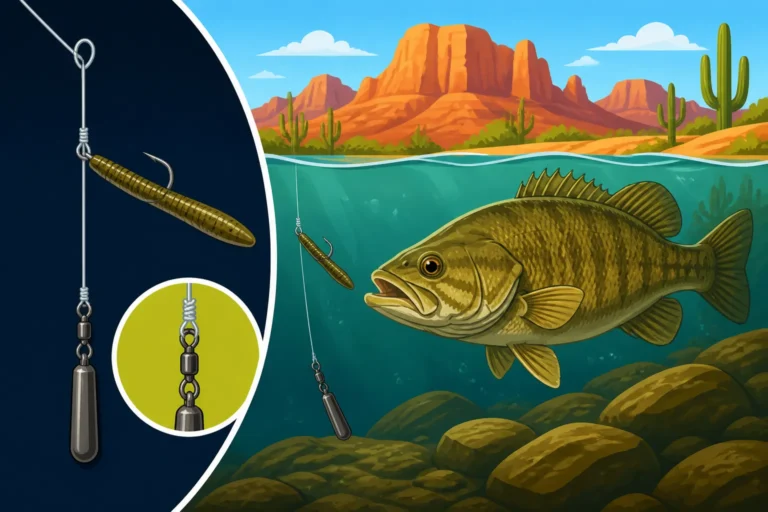
In Arizona's desert lakes, crawfish are a year-round staple for bass, and they're especially vulnerable in winter. As water temperatures drop, crawfish become less active and often seek refuge in deeper rock piles, crevices, and submerged timber. A jig with its compact profile and various soft plastic trailers can perfectly mimic a crawfish scuttling along the bottom or slowly waving its claws. Darker colors like brown, green pumpkin, and black/blue are fantastic choices, as they imitate common crawfish patterns. Additionally, jigs can be worked to mimic dying or stunned baitfish, which are also easy targets for sluggish bass. Think about how a dying shad might flutter downwards – a jig falling through the water column can replicate that perfectly. Understanding what bass are eating and how their prey behaves in cold water is key to selecting the right jig and presentation. For more on what bass eat throughout the year, check out our guide on "Seasonal Movement Patterns of Bass in Desert Reservoirs".
Deciphering Winter Bass Behavior and Location
Finding winter bass in Arizona often means adjusting your typical summertime search patterns. They’ll be much more concentrated, seeking out specific conditions that offer both comfort and ambush opportunities. This usually means deeper water with access to structure.
Deep Water Structure and Cover
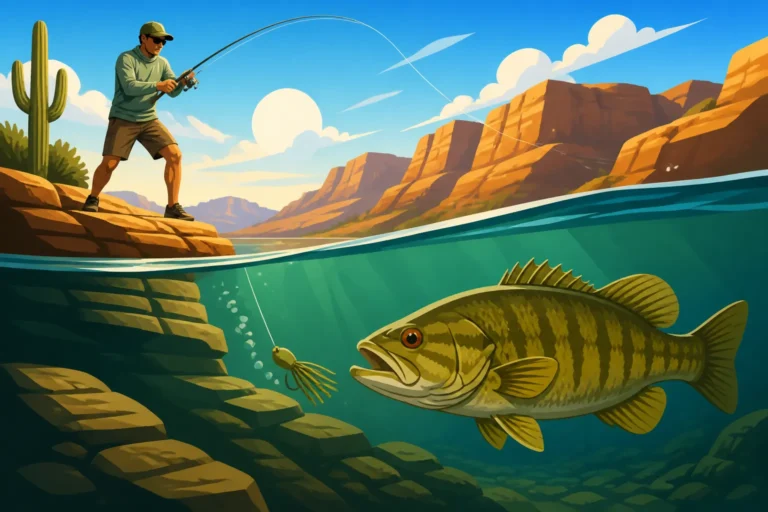
As the water cools, bass migrate away from shallow banks and coves, heading for the comfort of deeper, more stable temperatures. This means you'll be focusing your efforts on prominent underwater structures like main lake points, channel swings, bluff walls, deep humps, submerged timber, and rock piles. These areas provide vertical relief and access to various depths, allowing bass to move up and down in the water column as conditions change throughout the day.
For instance, on sprawling lakes like Lake Pleasant or Roosevelt Lake, you'll want to target the deep ends of long points that drop into the main river channel, or the submerged creek beds that wind through the lake. Look for areas where the depth changes quickly – a sharp drop-off from 20 to 40 feet can be a magnet for winter bass. They'll often sit on the edges of these drop-offs, tucked into crevices or behind submerged brush, waiting for an easy meal to drift by. A good fish finder is invaluable here to pinpoint these subtle depth changes and hidden structures. You'll want to learn "How to Read a Fish Finder for Structure".
Thermal Stratification and Optimal Depths
While Arizona's desert lakes might not stratify as intensely as some northern lakes, there's still a noticeable difference in water temperature at various depths during winter. The surface water might be quite chilly, but deeper down, the water often stabilizes at a more comfortable temperature for bass. This is often referred to as the "thermocline" in warmer months, but in winter, it's more about finding the most stable and comfortable water.
Winter bass will often position themselves just above or within the warmest available water column, which usually hovers between 45-55 degrees Fahrenheit. This might mean they're in 25 feet of water on a cloudy day, but shift to 40 feet if the sun has been beating down for several days. Pay close attention to your depth finder's temperature readings if available, or just experiment with different depths until you find where the fish are holding. The key is to understand that they're trying to conserve energy, so they'll seek out the path of least resistance. Our guide on "Winter Bass Fishing Tactics in Arizona". dives deeper into these seasonal nuances.
Best Time of Day for a Winter Bite
Forget those early morning summer bites. In winter, the best fishing often happens during the warmest part of the day, typically from late morning to mid-afternoon. As the sun climbs higher, it can warm the surface water, even if just by a few degrees. This slight increase in temperature can be enough to trigger a short feeding window for bass.
Imagine fishing at Apache Lake in January. You might arrive as the sun is just hitting the water, and the air is still biting cold. The bass will likely be holding tight to deep cover. But as noon approaches and the sun bathes a south-facing bluff wall, you might notice a subtle increase in activity. This is your prime window. The bite will still be subtle, but those few hours when the sun is highest can be incredibly productive. It's often during this period that bass will move slightly shallower along a deep structure, from 40 feet to 25 or 30 feet, before retreating as the sun dips. For more detailed insights, check out our piece on the "Best Time of Day to Fish for Bass in Winter".
Essential Gear for Successful Winter Jig Fishing
Having the right equipment makes a huge difference when you're trying to detect those incredibly subtle winter bites. It's not just about the jig; it's about the entire system working together to give you maximum sensitivity and control.
Rods, Reels, and Line: The Right Setup
For winter jig fishing, sensitivity is paramount. You need to feel every little tick, bump, or slight weight change.
- Rods: A medium-heavy to heavy power casting rod, typically 7 to 7.6 feet long, is ideal. Look for a rod with a fast or extra-fast action, meaning the tip is very sensitive but the backbone is strong. This allows you to feel light bites and get a solid hookset, even in deep water. Graphite rods excel in sensitivity. My personal preference for Arizona's bigger bass is a 7'3" medium-heavy rod with a fast tip. Brands like Amazon offer a wide selection, from budget-friendly options to high-performance rods like those from St. Croix or G. Loomis. For a full breakdown, explore "Best Fishing Rods for Bass in Arizona".
- Reels: A baitcasting reel with a moderate gear ratio (around 6.2:1 to 7.1:1) is perfect. The moderate ratio gives you good torque for retrieving heavy jigs and fighting big fish, while still allowing for efficient line pickup. A smooth, reliable drag system is also critical for handling powerful winter bass.
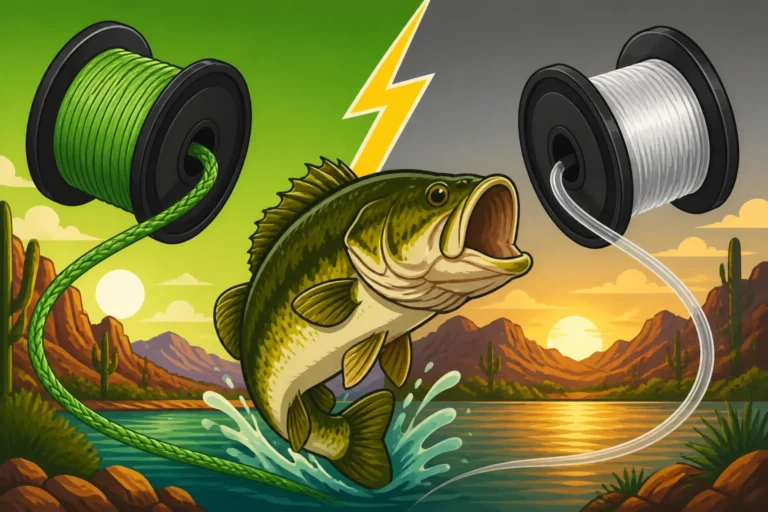
- Line: This is perhaps the most critical component for sensitivity. I highly recommend using fluorocarbon line for your main line. Fluorocarbon has very little stretch, is virtually invisible underwater, and sinks, which helps keep your jig on the bottom. Start with 12-17 lb test for most applications. If you're fishing extremely heavy cover, you might consider braided line (30-50 lb test) with a short (10-15 ft) fluorocarbon leader. The braid provides maximum sensitivity, while the fluoro leader maintains stealth. However, the stretch of straight fluorocarbon can often be beneficial for not ripping the hook out on those softer winter bites. Our article on "Best Line for Bass Fishing". offers more details.
Choosing the Perfect Winter Jigs
The variety of jigs out there can be overwhelming, but for winter bass in Arizona, you can narrow it down significantly.
- Jig Type: Football jigs and arkie-style jigs are superstars in winter. Football jigs, with their wider head, are excellent for rocky bottoms and gravel, as they resist snagging and present a wider profile. Arkie jigs are more versatile, working well in rocks, wood, and even weeds. Compact pitching jigs are also great for getting into tight cover.
- Weight: Common weights range from 3/8 oz to 3/4 oz. In deeper water (25+ feet) or windy conditions, a 1/2 oz or 3/4 oz jig helps maintain bottom contact and feel. In shallower situations or calm conditions, a 3/8 oz or 1/4 oz might be enough. The key is to use the lightest jig you can while still maintaining good bottom contact.
- Colors: Natural and dark colors are typically best in winter. Green pumpkin, brown, black, and black/blue are go-to choices. Sometimes, a touch of purple or red can add an enticing accent. Consider the water clarity: in clear lakes like Canyon Lake, more natural tones often shine. In slightly stained water, a black/blue combination can provide better contrast.
- Trailers: A jig without a trailer is like a burger without a patty – it's just not complete! Your trailer is what adds bulk, action, and attraction. Crawfish-imitating soft plastics (like a chunk or creature bait) are fantastic. They provide a subtle, lifelike action that mimics a defensive craw. Soft plastic "flappers" or small swimming chunks can also work wonders, providing just enough movement to entice a bite without being overly aggressive. My personal favorite is a small, compact craw imitation in a matching color. You can find a vast selection of these jigs and trailers on Amazon, often with detailed reviews to guide your choice.
Here's a quick reference table for winter jig selection:
| Scenario | Jig Type | Weight | Colors | Trailer Style |
|---|---|---|---|---|
| Deep Rock/Gravel (25-50ft) | Football Jig | 1/2 oz – 3/4 oz | Green Pumpkin, Brown | Crawfish Imitation |
| Deep Wood/Brush (20-40ft) | Arkie Jig | 3/8 oz – 1/2 oz | Black/Blue, Green Pumpkin | Chunk, Creature Bait |
| Steep Bluffs/Walls | Football/Arkie Jig | 1/2 oz – 5/8 oz | Green Pumpkin, Brown, Black | Crawfish, Flapper |
| Light Cover/Shallow Edges | Arkie Jig | 1/4 oz – 3/8 oz | Natural, Green Pumpkin | Small Craw, Compact |
Must-Have Accessories for Cold-Weather Comfort
Don't let the Arizona winter fool you; it can get genuinely cold, especially on the water. Being comfortable means staying focused, and staying focused means more bites.
- Warm Clothing Layers: Dress in layers! A good base layer, insulating mid-layers, and a waterproof/windproof outer shell are essential. Think thermal underwear, fleece, and a good quality jacket.
- Insulated Gloves: Your hands are your connection to the rod, so keeping them warm and nimble is crucial. Fingerless gloves or convertible mittens can be great, allowing you dexterity when needed.
- Warm Hat: A significant amount of body heat is lost through your head. A good beanie or insulated hat is a must.
- Hot Beverages: A thermos with hot coffee, tea, or cocoa can be a morale booster and help keep you warm from the inside out.
- Portable Heater (for boats): If you're fishing from a boat, a small, safe portable heater can make a huge difference on those frigid mornings. Just ensure proper ventilation.
Mastering Winter Jig Presentation and Retrieve
Once you've found where the bass are holding and geared up correctly, it's all about how you present that jig. This isn't your fast-paced summer power fishing. This is slow, deliberate, and highly sensitive work.
The Slow and Deliberate Approach
Remember that sluggish metabolism? It dictates your retrieve speed. Think snail's pace, not speed demon. You want your jig to spend as much time as possible in the strike zone, looking like an easy meal.
- Cast with Purpose: Make accurate casts to your targeted structure. If you're fishing a deep point, cast past the target and work your jig down the slope. If it's submerged brush, try to land your jig softly near the cover without spooking any lurking fish.
- Maintain Bottom Contact: This is critical. You want to feel your jig bumping and grinding along the bottom. If you can't feel it, you're either using too light a jig, the current is too strong, or your line is too slack. Let the jig sink on a controlled slack line. You should still be able to watch your line for subtle jumps or twitches that indicate a bite on the fall.
- Slow, Dragging Retrieve: The primary retrieve for winter jig fishing is often a slow drag. Cast out, let your jig sink to the bottom, and then slowly drag it with your rod tip. Think of it as pulling the jig rather than hopping it aggressively. A tiny hop or two is fine, but the emphasis is on the smooth, slow drag. Then, let it rest for a few seconds. That pause is often when the bass decide to pick it up.
Key Jigging Techniques for Finicky Bass
While the slow drag is foundational, there are a few variations and subtleties that can trigger more bites.
- The "Shake and Bake": After a long drag, pause the jig on the bottom. Instead of moving it, gently shake your rod tip to make the trailer quiver without moving the jig itself much. This subtle action can be incredibly enticing to a bass that's inspecting the lure. This works wonders when bass are tucked tight to cover or feeling particularly lethargic.
- Short Hops and Falls: Instead of a long drag, try short, deliberate hops. Lift your rod tip just enough to feel the jig hop off the bottom, then let it fall back down on a controlled slack line. Many bites occur on the fall, so pay close attention. This is especially effective when working over rocky bottoms or around brush piles.
- Dead Sticking: Sometimes, doing absolutely nothing is the best approach. After a drag or a hop, let the jig sit motionless on the bottom for an extended period – sometimes 10-20 seconds or even longer. This "dead stick" technique is incredibly effective for extremely cold or highly pressured fish. The jig looks like a crawfish that's either dead or completely stationary, making it an irresistible, no-effort meal.
- Vertical Jigging: If you've located a school of bass directly beneath your boat on your fish finder, vertical jigging is an excellent option. Drop the jig straight down to their depth, and then use short lifts and drops of your rod tip to impart action. This is a very precise way to target fish that are holding tight to structure. For these kinds of precise presentations and understanding fish behavior in deeper water, consult our "Deep Water Structure Fishing Techniques".
Reading the Bite and Setting the Hook
Winter bass bites on a jig are notoriously subtle. Forget about aggressive rod-bending strikes. You're looking for far more delicate indications.
- The "Mushroom": This is a classic winter jig bite. You'll feel a slight mushy or spongy sensation, like your line suddenly picked up a wet rag. It's not a hard hit, but a distinct change in the weight or feel of your line.
- The "Tick": Sometimes, you'll feel a very faint tick or tap. It might be so subtle you almost miss it, feeling more like a slight vibration than a full-on strike.
- Line Movement: Often, you won't feel anything at all with your rod. Instead, you'll see your line suddenly jump, twitch, or subtly move sideways. This is why watching your line carefully is crucial. If your line goes slack when it shouldn't, or starts to move horizontally when you're dragging, set the hook!
- Setting the Hook: When you detect a bite, it’s not a gentle sweep. You need a strong, upward, or sideways hookset to drive the hook home. With that heavy wire hook and often a substantial bass, you want to make sure you penetrate firmly. Don't hesitate; if you feel anything out of the ordinary, set the hook! It's better to set on a snag than miss a fish.
Mastering winter jig fishing in Arizona takes patience and practice, but the rewards are well worth it. There’s nothing quite like landing a fat, healthy bass when most other anglers have given up for the season. Keep these techniques in mind, stay warm, and enjoy the unique challenge and satisfaction of cold-weather bass fishing! For a broader understanding of bass species, check out our comprehensive "Largemouth Bass Fishing Guide for Arizona".
Disclaimer
Fishing involves inherent risks, including injury and drowning. Always prioritize safety, wear appropriate personal flotation devices, and be aware of your surroundings. Regulations and conditions can change, so always consult the latest Arizona Game and Fish Department guidelines before heading out. This guide is for informational purposes only and does not guarantee fishing success.