Is a Bass Boat Overkill for Community Lakes?
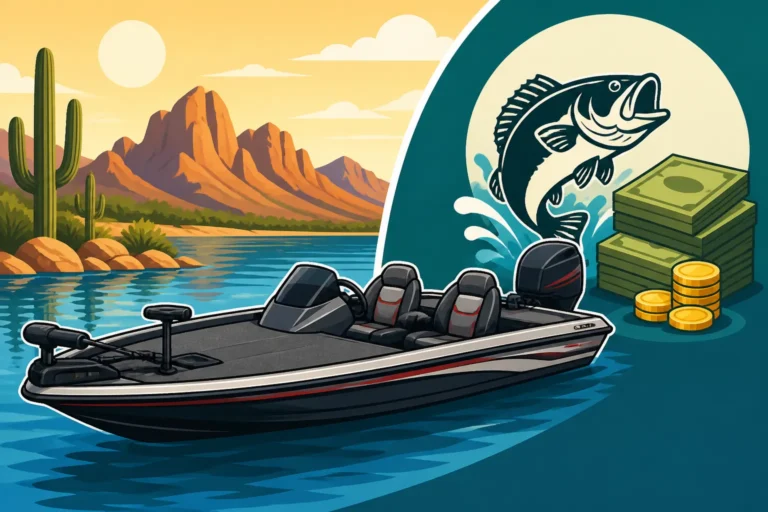
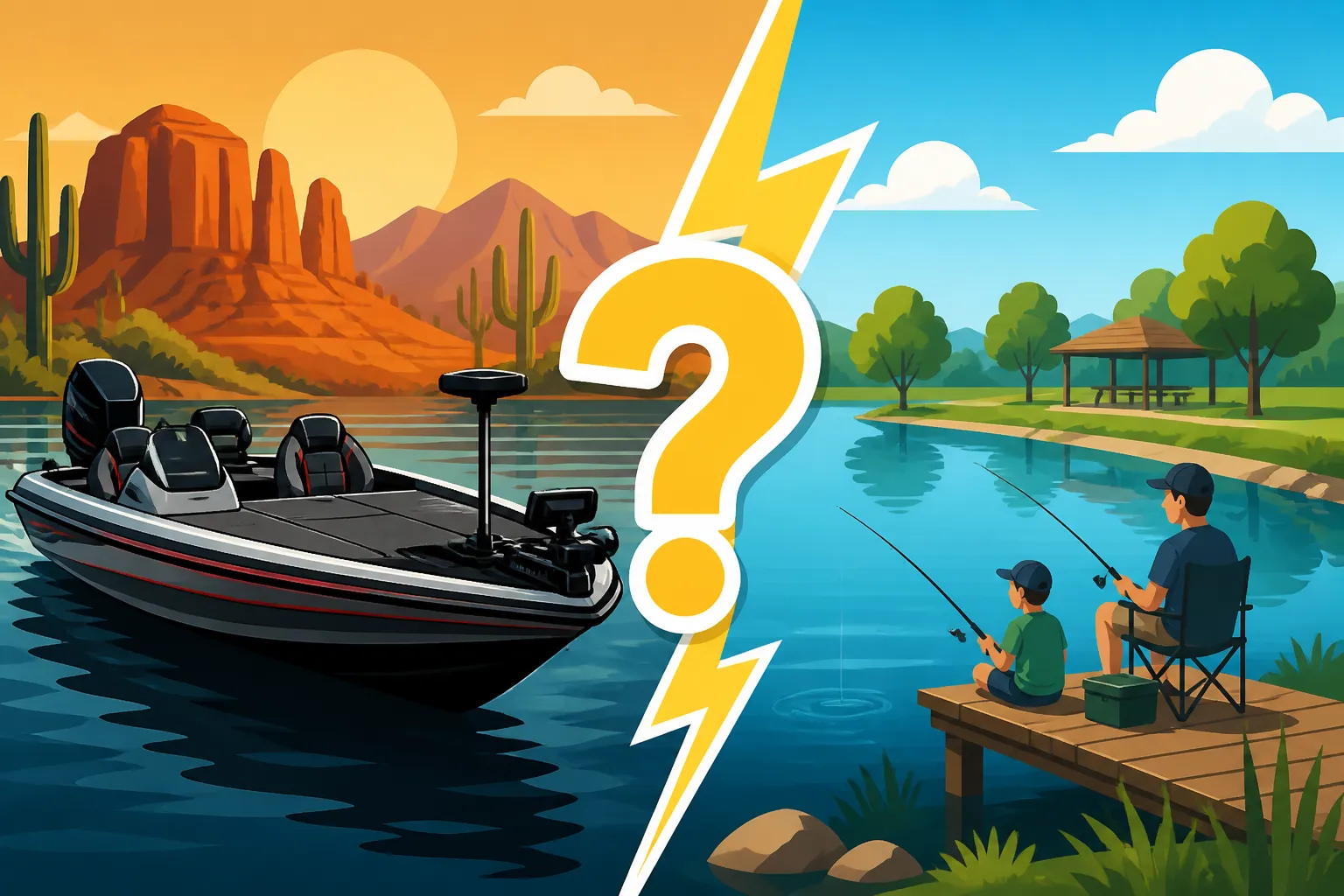
The thought of buying a sleek, powerful bass boat can get any angler's heart pumping, but then you look at your local community lake in Arizona – often smaller, shallower, and sometimes bustling with families – and a question inevitably pops into your mind: Is a bass boat just too much? It's a valid concern; you want to make a smart investment that actually fits your fishing needs, not just a dream. This guide is here to help you navigate that exact dilemma, comparing the realities of bass boats with the unique characteristics of Arizona's community fishing waters.
Understanding Arizona's Community Lakes
Arizona's community lakes are truly unique. Unlike the vast, rugged reservoirs like Roosevelt Lake or Lake Powell, these urban and suburban fishing spots are designed for accessibility and local enjoyment. They're often smaller, shallower, and have specific rules and characteristics that might not align perfectly with the traditional bass boat experience.
Size and Scope of Urban Fisheries
When we talk about "community lakes" in Arizona, we're usually referring to the smaller, often man-made ponds and lakes managed by the Arizona Game and Fish Department's Community Fishing Program. Think places like Chaparral Park Lake in Scottsdale, Cortez Lake in Phoenix, or Silverbell Lake in Tucson. These aren't sprawling bodies of water where you need to cover miles to find fish. They are often just a few acres, designed for easy bank access and family-friendly fishing.
Imagine pulling up to a lake that's only 5-10 acres large. You can literally see across it. The idea of firing up a 200+ horsepower outboard engine and roaring across such a small expanse feels a bit… much, doesn't it? These lakes are meant for a slower pace, for anglers enjoying a quiet morning or an evening with their kids. Community Park Lakes in Phoenix and Community Park Lakes in Tucson are prime examples.
Fish Species and Fishing Style
Community lakes are primarily stocked with a rotating menu of species, designed to provide consistent catch rates for a wide range of anglers. While you might find largemouth bass, you'll also encounter plenty of rainbow trout (especially in cooler months), channel catfish, and various sunfish like bluegill. The fishing style tends to be more relaxed, often focused on bait fishing from the bank or using lighter tackle from a small boat or float tube.
For bass, the fish populations are often sustained by stocking programs, and while there are some impressive catches, they aren't typically the trophy bass havens that the major reservoirs are known for. Chasing bass on these lakes is often about finesse and understanding how fish react to constant pressure, rather than covering vast amounts of water with high-speed trolling. If you're looking for dedicated Largemouth Bass Fishing Guide for Arizona, you'd likely be thinking of bigger venues.
Accessibility and Regulations
One of the biggest advantages of community lakes is their accessibility. Many have paved parking, easy walking paths, and accessible fishing piers. Boat ramps, if they exist at all, are typically simple concrete slabs designed for smaller craft. You won't find the elaborate launch facilities you'd see at Lake Pleasant or Lake Havasu. Furthermore, some community lakes have specific rules about boat size, motor type, or even prohibit gas motors altogether to maintain a peaceful environment and ensure safety for all users. These rules can vary significantly from one community lake to another, so it's always critical to check the local signage or the Arizona Game and Fish Department's guidelines for that specific body of water.
Why a Bass Boat Might Be Overkill
Let's be honest, bass boats are awesome. They're built for speed, stability, and dedicated fishing performance. But sometimes, what makes them great for big water also makes them less-than-ideal for smaller, more intimate settings like community lakes.
Size, Speed, and Maneuverability Concerns
A typical bass boat is a substantial piece of equipment. We're talking 18 to 22 feet long, often with a powerful outboard engine. On a 5-acre lake, turning around can feel like parallel parking a semi-truck in a compact spot. The speed capabilities, which are fantastic for getting to your spot quickly on a 20,000-acre reservoir, are completely wasted on a small pond where you can practically cast across to the other side.
Imagine trying to navigate a tight cove, or getting close to a lily pad patch, in a boat designed for wide-open water. The sheer footprint of the boat, combined with its high freeboard (the height of the boat's side above the water), can make maneuvering in shallow, confined spaces quite clumsy. Your goal is to get to the fish, not to feel like you're piloting a battleship in a bathtub.
Draft and Shallow Water Access
Bass boats are generally designed to plane out quickly and run efficiently in deeper water. While many modern designs have relatively shallow drafts, they still require a certain depth, especially around launch ramps and when navigating very shallow margins. Community lakes often have gradual shorelines that can become quite shallow, particularly during periods of lower water. Trying to launch or retrieve a large bass boat in these conditions can be a real headache, potentially even damaging your prop or lower unit if you're not careful.
Many community lakes also feature extensive aquatic vegetation along the edges or in shallower sections. While bass love this cover, getting a large, heavy boat with a powerful propeller through dense weed beds can be challenging and frustrating, not to mention potentially harmful to the fragile lake ecosystem. You want something that can glide over or through, not plow.
Cost and Practicality for Limited Use
Let's not shy away from the elephant in the room: bass boats are a significant investment. We're talking about a purchase that easily runs into the tens of thousands, if not more, plus ongoing costs for maintenance, fuel, insurance, and storage. If the only place you plan to fish is a small handful of local community lakes, that investment starts to look less and less practical.
Think about it: are you really getting the full value out of all that horsepower, the elaborate livewell systems, and the sophisticated electronics if you're only using them in waters where a simple jon boat or even a kayak would suffice? It's like buying a Formula 1 race car for trips to the grocery store. It might be cool, but it's probably not the most efficient or practical choice. For many beginners, starting with something simpler and more cost-effective can be a much better entry point into the hobby. Cost of a Basic Fishing Setup for Beginners might be a good comparison point.
When a Bass Boat Might Still Be Useful (Or Not As Overkill As It Seems)
Now, before you completely write off the bass boat, let's consider some scenarios where its capabilities might not be entirely wasted, even when community lakes are part of your fishing routine. It’s all about perspective and how you plan to use it.
Multi-Purpose Anglers with Diverse Interests
If your fishing adventures aren't exclusively limited to community lakes, a bass boat can become a much more justifiable investment. Many Arizona anglers enjoy the accessibility of local ponds for quick trips but also venture out to the big reservoirs for serious bass, crappie, or striped bass pursuits. Imagine weekend trips to Lake Havasu for some big largemouth, or exploring the vast canyons of Lake Powell for stripers and smallmouth. Lake Powell Arizona Fishing Guide or Roosevelt Lake Arizona Fishing Guide offer completely different experiences than your local park pond.
In this scenario, the bass boat becomes your versatile workhorse. You might use it for a few hours at a community lake during the week, then hitch it up on Friday evening for a full weekend on a major reservoir. For this type of angler, the "overkill" aspect for community lakes is simply a trade-off for having the right tool for those bigger, more ambitious fishing trips.
Competitive Anglers Training on Local Waters
Competitive bass fishing is a serious sport, and dedicated anglers often need to stay sharp even when they can't make it to a tournament-grade lake. Community lakes, despite their size, can offer valuable opportunities for practicing casting accuracy, testing new lures, experimenting with different retrieve speeds, and refining presentation techniques.
While you won't be using the full speed of your bass boat, you'll benefit from the dedicated casting platforms, ample tackle storage, and advanced electronics (like powerful fish finders and trolling motors) that allow for precise boat positioning. These features help mimic tournament conditions, even on a smaller scale. So, if you're a serious bass angler who routinely competes or aims to, then your bass boat might serve a vital training function, even on what appears to be an "overkill" venue. How to Read a Fish Finder for Bass becomes relevant even in a small pond.
The "I Already Own One" Scenario
Finally, there's the pragmatic reality for those who already own a bass boat. Maybe you've recently moved to an area where community lakes are the most accessible option, or your fishing priorities have shifted. You've got the boat, and selling it isn't practical or desirable. In this case, you adapt.
You'll likely use your trolling motor more than your main engine, focusing on quiet, precise maneuvering. You'll appreciate the storage for all your gear and the comfortable casting decks. Yes, it might feel a bit large for the water, but you're making the most of what you have. It becomes less about whether it's overkill and more about how to best use your existing equipment in a new context. You might find yourself doing more Shore Fishing Techniques for Beginners if launching the boat becomes too much hassle.
Alternative Boat Options for Community Lakes
If a full-sized bass boat feels like too much, or you're just starting out, there are fantastic alternative boat options that are perfectly suited for Arizona's community lakes, offering portability, practicality, and cost-effectiveness.
Kayaks and Canoes: Lightweight and Versatile
Kayaks and canoes are incredibly popular choices for community lakes, and for good reason. They are lightweight, easy to transport (many can fit on a car roof rack or in the back of a truck), and can be launched from almost any shoreline without the need for a formal ramp. They are also stealthy, allowing you to approach fish without spooking them with a loud motor.
For fishing, sit-on-top kayaks, like those from Bass Pro Shops' Ascend line or various models found on Amazon, are particularly favored. They offer a stable platform, often have rod holders and storage areas, and allow you to easily move around. The cost of entry is significantly lower than a bass boat, making them ideal for budget-conscious anglers. Plus, the exercise is a bonus! If you're considering this route, checking out Best Kayaks for Fishing in Arizona would be a great next step.
Jon Boats: Simple, Durable, and Practical
The humble jon boat is a classic for a reason. These flat-bottomed, aluminum boats are incredibly stable, durable, and highly practical for smaller waters. They come in various sizes, typically from 10 to 16 feet, and can be easily powered by small electric trolling motors, or even small outboards where allowed. Their shallow draft makes them perfect for navigating skinny water and getting into tight spots where bass like to hide.
Jon boats are typically very affordable, both to purchase and to maintain. They offer plenty of open space for tackle boxes, coolers, and multiple anglers. While not as fast or decked out as a bass boat, for the purpose of fishing a community lake, a jon boat with a good Best Trolling Motors for Small Boats and a few basic accessories can be incredibly effective.
Inflatable Boats and Pontoon Boats: Portable Fun
Inflatable boats and small personal pontoon boats offer another layer of versatility. Modern inflatable fishing boats are surprisingly durable and stable, capable of holding multiple people and a fair amount of gear. They can be deflated and stored compactly, making them excellent for those with limited storage space or who want to transport their boat in a car trunk.
Personal pontoon boats (often single-person or small two-person versions) are also fantastic for community lakes, providing a very stable, elevated fishing platform. They excel in shallow water and offer great visibility. While they aren't speed demons, they are comfortable and allow for precise angling. Again, brands like those available through Bass Pro Shops or on Amazon offer a wide range of options in this category.
| Boat Type | Pros | Cons | Suitability for Community Lakes |
|---|---|---|---|
| Bass Boat | Speed, stability, ample storage, advanced electronics, dedicated fishing platforms | Large, expensive, deep draft, overkill for small waters, launch limitations, maintenance | Generally overkill, but useful for multi-purpose anglers or those who already own one. |
| Kayak/Canoe | Portable, quiet, affordable, shallow draft, easy launch anywhere, exercise | Limited storage, slower, less stable (for standing), single/double occupancy | Excellent choice, highly recommended for accessibility and stealth. |
| Jon Boat | Stable, durable, affordable, shallow draft, customizable, easy to power with electric motor | Lacks speed, less comfortable than bass boat, basic amenities, can be heavy to transport | Great practical choice, perfect blend of space and maneuverability. |
| Inflatable Boat | Portable, lightweight, compact storage, affordable | Puncture risk (minimal with modern designs), slower, less rigid deck | Good for occasional use, highly portable, easy to store. |
| Personal Pontoon | Very stable, elevated fishing platform, excellent visibility, comfortable | Slower, less portable than kayak, limited storage for larger gear | Excellent for relaxed, stable fishing, especially in shallow water. |
Making Your Decision: Factors to Consider
Choosing the right vessel for your fishing adventures, especially when community lakes are in the mix, comes down to a few key considerations that go beyond just the boat itself.
Your Primary Fishing Goals
Are you an occasional angler looking to enjoy a peaceful afternoon, perhaps introducing a child to fishing? Or are you a hardcore bass enthusiast who will spend countless hours perfecting your technique across diverse water bodies? If your main goal is simply to catch some stocked trout or panfish with the family, a high-performance bass boat is simply not necessary. A kayak, canoe, or jon boat will serve you perfectly and be far more enjoyable and practical for the small, often crowded spaces.
However, if community lakes are merely a convenient pit stop on your way to chasing trophy bass on the big reservoirs, then the versatility of a bass boat might justify its presence, even if it feels oversized for local ponds. Be honest with yourself about where and how you most often fish. For specific guidance on different species, you might consult resources like Best Bass Fishing Lakes in Arizona or Best Trout Fishing Spots in Arizona.
Budget and Storage Limitations
The financial commitment for a bass boat is substantial, not just for the purchase price but for all the associated costs. Consider if that budget could be better allocated to a smaller, more versatile boat and high-quality fishing gear. You could outfit a fantastic kayak or jon boat with excellent rods, reels, and tackle for a fraction of the cost of a new bass boat.
Then there's storage. Do you have a large garage or a dedicated space to keep a full-sized bass boat on its trailer? Or would a boat that can be stored vertically, on a rack, or even deflated be a better fit for your living situation? Many people underestimate the logistical challenge of owning a large boat, especially in urban environments.
Transport and Ease of Use
How easily can you get your boat to the water? A bass boat requires a truck or a powerful SUV capable of towing it, and then the skill to back it down a ramp. If your community lake only has rudimentary launch areas, or if you prefer a quick, hassle-free setup, a smaller, lighter boat that can be hand-launched or launched with minimal effort is a huge advantage.
Imagine pulling up to a community lake, quickly unloading a kayak, and being on the water in minutes versus spending time backing a trailer, parking, and then dealing with the potentially busy ramp. The convenience factor often heavily sways the decision towards smaller craft for frequent community lake visits.
Ultimately, is a bass boat overkill for community lakes in Arizona? For many, yes, it absolutely can be. The practicalities of size, speed, and cost often outweigh the benefits for smaller, urban fisheries. However, for a select group of multi-purpose or competitive anglers, a bass boat can still find its place, albeit with some adaptation. For most, exploring the fantastic world of kayaks, jon boats, and other smaller craft will provide a more enjoyable, practical, and effective fishing experience on these beloved local waters.
Disclaimer
This article is for general informational purposes only and does not constitute professional advice. Laws, prices and regulations vary by location and change over time. Consult a qualified professional for guidance on your specific situation.