How to Beat the Heat Fishing in Arizona Summer
Oh, the Arizona summer. Just thinking about stepping out to fish when the mercury is flirting with 110 degrees is enough to make many anglers pack it in until October. It's a real struggle; you want to be out on the water, feeling that tug, but the oppressive heat can quickly turn a dream day into a dangerous ordeal. This guide is all about giving you the battle plan, the gear, and the savvy to not just survive, but actually thrive while fishing in Arizona's scorching summer, keeping both you and your catch safe.
The Brutal Reality of Arizona's Summer Heat for Anglers
Let's be honest, fishing in Arizona during July or August isn't for the faint of heart. It's a completely different ballgame compared to those pleasant spring or fall days. The sun beats down with an intensity that can feel relentless, turning everything it touches into a searing hot plate. This isn't just uncomfortable; it's genuinely dangerous, and underestimating it can lead to serious health issues or even ruin an expensive trip. Understanding exactly what you're up against is the first step in formulating a successful strategy.
Understanding the Arizona Summer Environment
When we talk about "Arizona summer," we're not just talking about "warm." We're talking about extreme, sustained heat that can often reach triple digits for weeks on end, especially in the lower deserts around Phoenix, Tucson, and along the Colorado River. Even higher elevation spots, while cooler, can still hit the high 80s or 90s with intense UV exposure. The water itself, especially in our desert lakes, can heat up considerably, sometimes reaching into the high 80s or even 90s, which dramatically impacts fish behavior and oxygen levels. The air is dry, constantly sucking moisture from your body, and the sun's rays are amplified by the clear desert sky and reflection off the water. This combination creates a perfect storm for dehydration and heat-related illnesses if you're not prepared. You also need to be mindful of local regulations, so make sure you're up to date with the Arizona Fishing Regulations Explained before you head out.
How Heat Affects You and the Fish
For us anglers, the immediate effects are clear: sweating, fatigue, and the constant urge to find shade. But the risks run deeper. Heat exhaustion and heatstroke are very real threats, creeping up on you silently. Your body works overtime to cool itself, depleting electrolytes and fluids at an alarming rate. Even mild dehydration can impair judgment, reaction time, and overall enjoyment.
For the fish, the story is just as critical, if not more so for their survival. As water temperatures climb, oxygen levels drop. Many popular sport fish, like bass and trout, become stressed. They'll seek deeper, cooler water or dense cover to escape the heat, changing their feeding patterns dramatically. Catching a fish in warm water can put immense stress on it, and if you're planning on catch and release, an extended fight or improper handling can be a death sentence, even if the fish swims away initially. This is particularly important if you're targeting species like those found in a Largemouth Bass Fishing Guide for Arizona or when practicing Catch and Release Rules for Arizona Anglers.
Essential Gear and Personal Preparation for Hot Weather Fishing
Beating the Arizona summer heat isn't just about showing up; it's about showing up prepared. Think of yourself as an athlete training for a marathon in a desert oven. Your gear, your hydration strategy, and your clothing choices are your first line of defense. This isn't where you want to cut corners or leave things to chance.
Dressing for Success Against the Sun
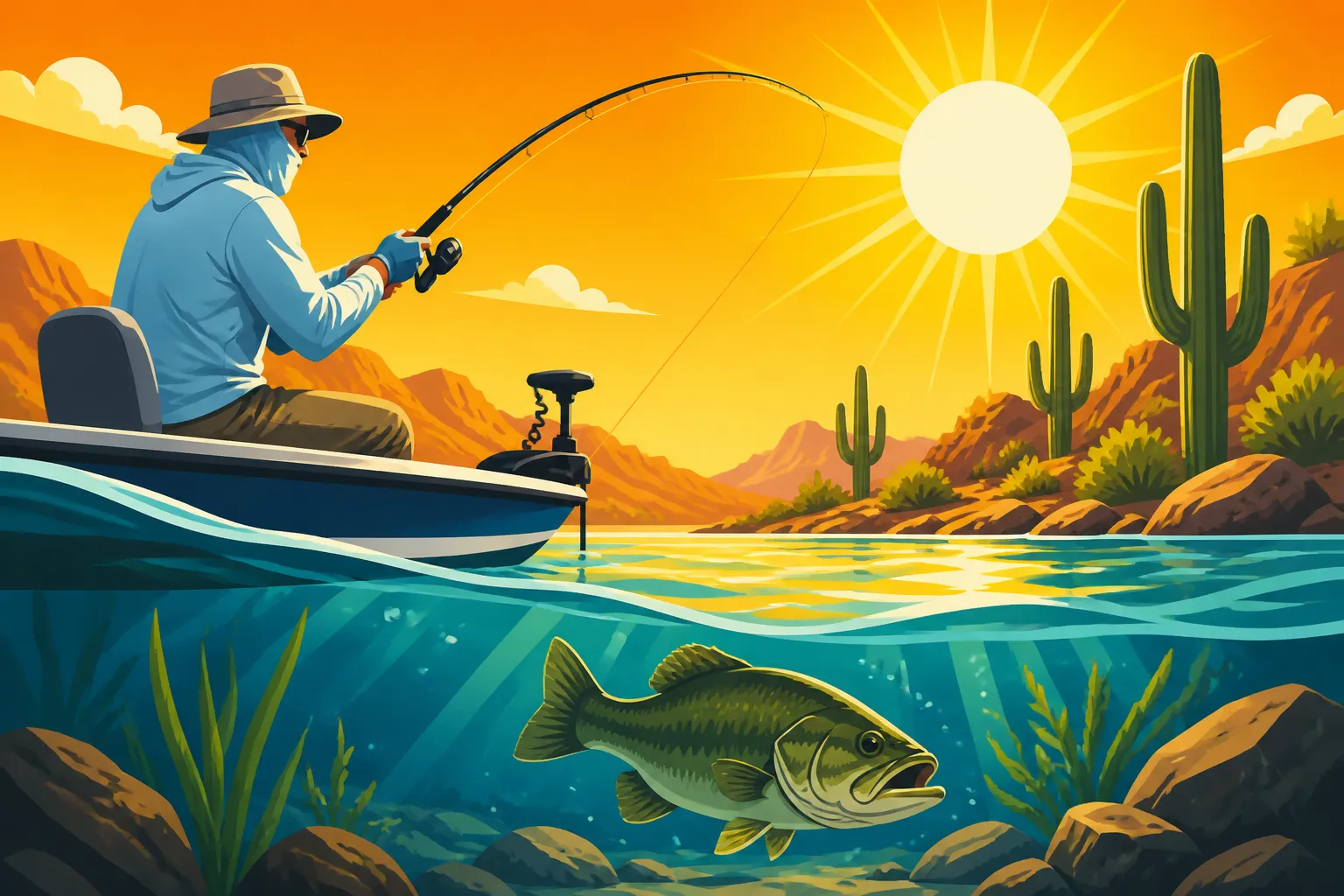
What you wear directly impacts how well your body can regulate its temperature. Forget the cotton t-shirt and shorts; they'll get wet with sweat, cling uncomfortably, and offer minimal sun protection. Instead, prioritize lightweight, breathable, and moisture-wicking fabrics that offer high UPF (Ultraviolet Protection Factor) ratings.
- Long-Sleeved Shirts and Pants: This might sound counterintuitive in extreme heat, but long sleeves and pants provide crucial physical barriers against the sun's relentless UV rays. Look for shirts specifically designed for fishing, often made from polyester or nylon blends, with UPF 30-50+. Brands like Columbia PFG or Simms offer excellent options.
- Wide-Brimmed Hat: A simple baseball cap won't cut it. You need a wide-brimmed hat that shades your face, ears, and neck. The larger the brim, the better. Look for hats with mesh panels for ventilation.
- Neck Gaiter/Buff: This versatile piece of cloth can protect your neck and lower face from sunburn, and you can wet it down for evaporative cooling.
- Gloves: Fishing gloves, often fingerless, can protect the tops of your hands from constant sun exposure and improve grip on wet rods.
- Polarized Sunglasses: Absolutely non-negotiable. They protect your eyes from harmful UV rays and, importantly, reduce glare on the water, helping you spot structure or even fish. Check out some options on Amazon for great deals on polarized lenses. Many resources discuss the importance of Best Sun Protection for Desert Fishing.
Hydration and Nutrition: Your Lifeline
You cannot overstate the importance of hydration. You will sweat, and you will sweat a lot. Water alone isn't always enough, as you'll also lose essential electrolytes.
- Water, and Lots of It: Bring significantly more water than you think you'll need. A good rule of thumb is at least one gallon per person per day, maybe more if you're particularly active or prone to sweating. Freeze some bottles overnight to keep your cooler cold longer and provide icy water throughout the day.
- Electrolyte Drinks: Supplement your water intake with sports drinks or electrolyte tablets (like Nuun or Liquid IV) to replenish lost salts and minerals. Alternating between plain water and electrolyte drinks is often the best strategy.
- Coolers and Ice: Invest in a good quality cooler. Brands like Yeti, RTIC, or Engel are popular for their ice retention, which is crucial in Arizona's heat. Pack it to the brim with ice to keep your drinks, snacks, and any kept fish cold. Remember, keeping your catch fresh is key, so check out guides on Best Coolers to Keep Fish Fresh.
- Snacks: Opt for light, easily digestible snacks that provide energy without making you feel sluggish. Think fruits (apples, oranges), granola bars, or trail mix. Avoid heavy, greasy foods.
Emergency and Safety Preparedness
Even with the best planning, things can go wrong. Being prepared for emergencies is just as important as planning your cast.
- First-Aid Kit: A basic first-aid kit is essential. Include items for cuts, scrapes, blisters, and pain relief. Also, pack over-the-counter electrolyte supplements or rehydration salts.
- Sunscreen: Even with protective clothing, exposed skin (face, neck) needs sunscreen. Opt for waterproof, broad-spectrum SPF 30+ or higher. Reapply frequently.
- Cooling Towels: These can be a godsend. Wet them, wring them out, and drape them around your neck for instant evaporative cooling. You can find excellent multi-packs on Amazon.
- Communication: Ensure your phone is fully charged and consider carrying a portable charger. Let someone know where you're going and when you expect to return, especially if you're heading to more remote areas.
- Shade: If fishing from a boat, a bimini top offers invaluable relief from direct sun. For bank anglers, seek natural shade from trees or bring a portable umbrella or pop-up canopy.
Table: Recognizing Heat-Related Illnesses
| Symptom | Heat Exhaustion | Heatstroke (Emergency!) | Action |
|---|---|---|---|
| Body Temperature | Normal or slightly elevated | ≥ 104°F (40°C) | Move to shade/cooler area immediately. |
| Skin | Cool, clammy, pale, heavy sweating | Hot, red, dry OR very profuse sweating (can be misleading) | Call 911 immediately. |
| Mental State | Alert, but may feel weak, dizzy, irritable | Confusion, disorientation, irrational behavior, seizures, unconsciousness | Lay person down, elevate feet slightly. Remove excess clothing. |
| Other Symptoms | Headache, nausea, vomiting, muscle cramps, fatigue | Throbbing headache, rapid/strong pulse, shallow breathing, no sweating (sometimes) | Apply cool, wet cloths to skin (neck, armpits, groin). Spray with water if available. Fan to promote cooling. Give sips of water if conscious and able to swallow. Do NOT give fluids if unconscious. |
Remember: Heatstroke is a medical emergency. Act quickly.
Strategic Fishing Approaches to Outsmart the Arizona Summer Sun
It's not just about what you wear or drink; it's also about how you adapt your actual fishing strategy to the extreme conditions. Fish don't just stop existing, but they certainly change their routines, and so should you. This involves altering your timing, targeting, and techniques. For more specific insights on location, explore a guide like Best Fishing Lakes in Arizona.
Timing Your Trips Wisely
This is perhaps the single most impactful adjustment you can make. Trying to fish at midday in August is a recipe for misery and often poor fishing.
- Early Mornings: The golden hour (or two) after sunrise offers the coolest temperatures of the day and often the most active feeding windows for many species before the sun gets too high and intense. Bass, especially, will often hit topwater lures during this period.
- Late Evenings/Night Fishing: As the sun sets, temperatures begin to drop, and many predatory fish become more active, moving into shallower water to feed. Catfish are notorious for being night owls, and fishing for them after dark can be incredibly productive and much more comfortable. Consider exploring Catfish Night Fishing Techniques for detailed strategies. Even bass and stripers can be caught under the stars.
- Avoid Midday: Plain and simple, stay off the water from roughly 10 AM to 4 PM, especially in the lower deserts. Use this time for lunch, napping, or rigging tackle in an air-conditioned space.
For a deeper dive into optimal timing, consult resources like Best Time of Day to Fish in Arizona Heat.
Targeting the Right Species and Locations
Different fish species react differently to the heat, and their preferred habitats shift.
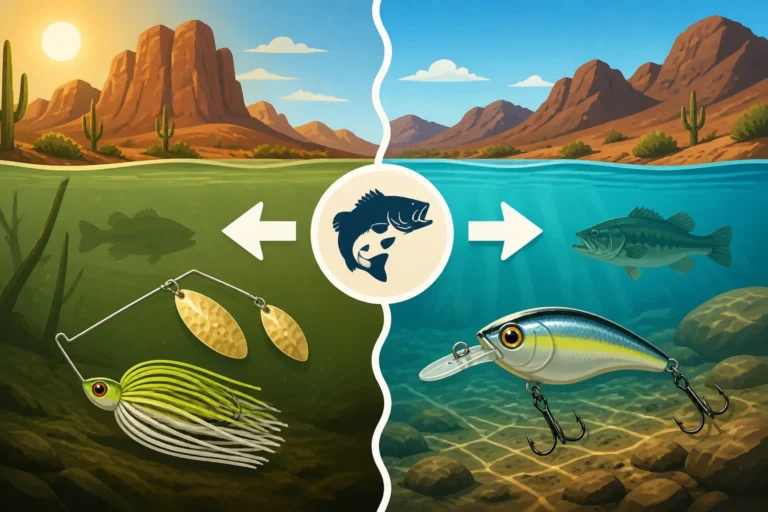
- Deep Water: As surface temperatures rise, fish seek refuge in deeper, cooler water where oxygen levels might also be more stable. This means targeting drop-offs, submerged structure, ledges, and channels. Your fish finder becomes an indispensable tool for locating these deeper haunts.
- Shade and Cover: Any available shade or cover will hold fish. Look for submerged timber, brush piles, rock ledges, docks, and even the shadows cast by cliffs or bridges. These spots offer both thermal refuge and ambush points.
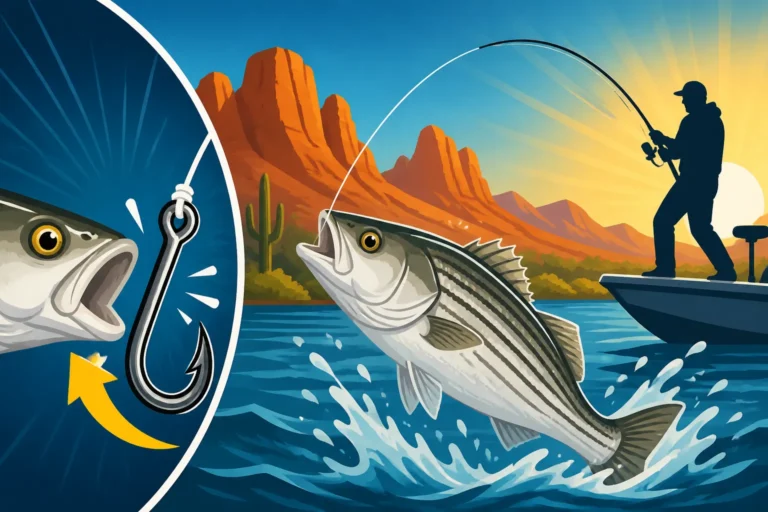
- Species Selection: While bass can be caught, remember the stress factor. Consider targeting species that are more tolerant of warm water, like catfish, or focus on deeper-dwelling striped bass. How to Fish for Striped Bass offers great insights. In northern Arizona, trout might still be found in cooler, spring-fed streams or deeper lakes, but even they will be lethargic in surface waters.
- Community Fishing Lakes: Many of Arizona's urban community lakes are stocked with warm-water species like catfish and sunfish, and even some winter trout stockings might have residual fish. These lakes can still provide action, especially in early mornings or evenings, and are often easily accessible for short trips.
Adjusting Your Techniques and Lures
Your usual go-to presentations might not be as effective when fish are sluggish and hunkered down.
- Slow and Deep: Fish metabolism slows down in warm water, so they're less likely to chase fast-moving baits. Employ slower retrieves, pause your lures for longer, and fish baits that get down to them. Jigs, Carolina rigs, and drop shots are excellent choices for presenting baits effectively in deeper water.
- Live Bait: When fish are finicky, live bait is often the most convincing option. Nightcrawlers, cut bait, or live minnows (check local regulations on minnow use) can entice strikes from sluggish fish.
- Scent and Action: Add scent attractants to your artificial lures to give them an extra edge. Lures with subtle, natural actions rather than aggressive, erratic movements might also prove more successful.
- Boat Positioning: If fishing from a boat, position yourself to cast into shaded areas or along deep structure without spooking the fish. An effective trolling motor or precise anchoring can make a huge difference.
Navigating Fishing Regulations and Conservation During Summer
Fishing in Arizona isn't just about catching fish; it's also about doing so responsibly and legally. The Arizona Game and Fish Department (AZGFD) has specific guidelines, and hot weather adds an extra layer of responsibility, particularly regarding fish health. A thorough read of the Arizona Fishing License Guide is always a good starting point.
License Requirements and Updated Regulations
Before you even think about casting a line, ensure your Arizona fishing license is current. The state offers various licenses, from short-term to annual options, and the rules apply year-round. You can find information on How to Buy an Arizona Fishing License Online or locate Finding Arizona Fishing License Dealers Near You. It's also crucial to remember that some waters, especially those in the Community Fishing Program or on tribal lands, might have additional permit requirements or specific regulations. Always check the current AZGFD fishing regulations booklet, available online or at license dealers, as rules can change seasonally or by specific body of water.
Special Considerations for Fish Health in Warm Water
This is where responsible angling truly shines, especially if you practice catch and release. Warm water puts immense stress on fish, and minimizing their handling time and ensuring a strong release greatly increases their survival chances.
- Minimize Fight Time: Use appropriate tackle that allows you to land fish quickly without overtiring them. A prolonged fight in warm water can exhaust a fish to the point of no return.
- Handle with Care: Keep the fish in the water as much as possible. If you must remove it, do so quickly, support its entire body horizontally, and avoid touching its gills or eyes. Wet your hands before handling to protect the fish's slime coat.
- Quick Release: Have your camera ready, snap a quick photo if you desire, and then release the fish promptly. Observe the fish as it swims away to ensure it's healthy. If it struggles, gently hold it upright in the water, facing into any current, until it regains strength and swims off on its own.
- Avoid Deep Hooking: If a fish is deep-hooked, especially with treble hooks, it's often best to cut the line as close to the hook as possible rather than trying to remove it, which can cause more damage.
- Consider Keeping Some Fish: For species that are plentiful and tolerant of warm water (like certain panfish or catfish) and within legal limits, sometimes harvesting a few for the dinner table is a more ethical choice than releasing a highly stressed fish that may not survive.
Environmental Awareness and Courtesy
Fishing in the Arizona summer also means being extra mindful of your surroundings and fellow outdoor enthusiasts.
- Pack It In, Pack It Out: Leave no trace. All your trash, including fishing line, bait containers, and empty water bottles, needs to come back out with you.
- Respect Other Users: Arizona lakes and rivers are popular for many activities—boating, swimming, kayaking, and paddleboarding. Be courteous, maintain safe distances, and share the space.
- Wildlife: Be aware of local wildlife. Desert creatures are also seeking refuge from the heat, and you might encounter them near water sources. Give them space and never approach or feed them.
- Fire Safety: Summer is high fire season in Arizona. Be extremely cautious with anything that could spark a fire, including campfires (if permitted), cigarettes, or even hot vehicle catalytic converters.
By adopting these strategies and taking all necessary precautions, you can enjoy some truly memorable fishing experiences, even when Arizona is at its hottest. It demands respect, preparation, and smart decisions, but the rewards of a summer sunrise bite are absolutely worth it.
Disclaimer
The information provided in this guide is for general informational purposes only and does not constitute professional advice. Always prioritize your safety, adhere to all local, state, and federal regulations, and consult with medical professionals for health-related concerns. Fishing conditions and regulations in Arizona can change, so always check the latest official Arizona Game and Fish Department guidelines before your trip.