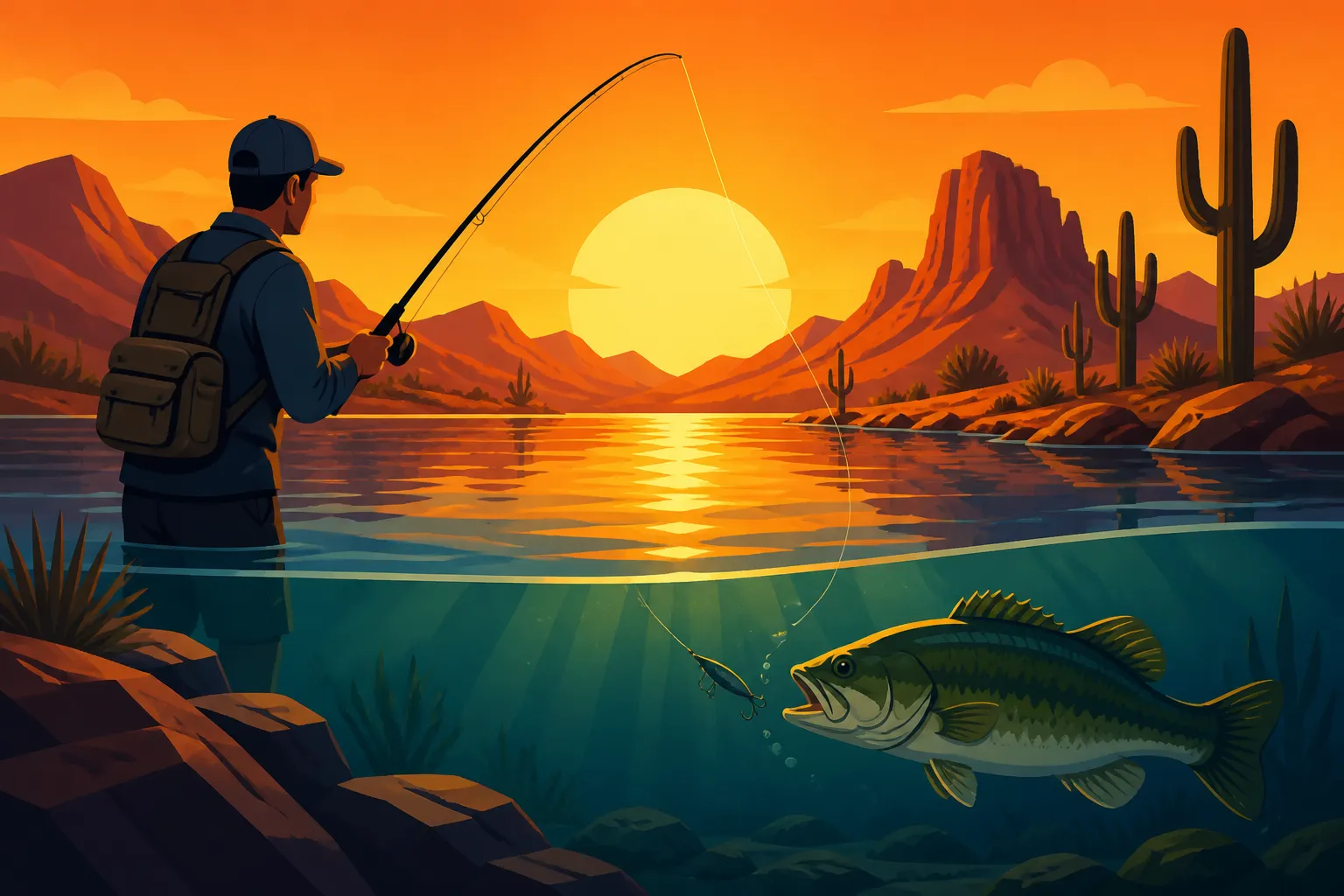
Evening Fishing Strategy in Arizona Heat
There's nothing quite like the relentless Arizona sun, beating down on the water, making you wonder if any fish in their right mind would dare to stir. Many anglers pack up their gear as the temperatures soar, convinced that productive fishing is a lost cause until fall. But for those in the know, the arrival of evening brings a whole new world of opportunity, transforming sizzling lakes and rivers into prime fishing grounds. This guide will help you embrace the twilight hours, offering strategies to turn Arizona's heat into your advantage for a successful evening on the water.
Why Evening Fishing is Your Best Bet in Arizona's Heat
When the sun finally dips below the horizon in Arizona, it’s not just a beautiful spectacle; it's a signal for a massive shift in fish behavior. The oppressive heat that defines our daytime hours can make fish lethargic and send them deep, seeking cooler, oxygenated water. But as the desert cools and the light fades, a new energy pulses through the aquatic ecosystem. This transition makes evening and night fishing not just an alternative, but often a superior strategy for catching a variety of species.
Cooler Temperatures and Increased Fish Activity
Think about it from a fish's perspective. During the day, particularly in summer, surface water temperatures in many Arizona lakes can easily climb into the 90s. This heat stresses fish, reduces their metabolism, and often pushes them to suspend in deeper, cooler thermoclines or huddle around submerged springs and structure. As dusk approaches and the sun's direct assault subsides, air temperatures drop, and with them, the surface water begins to cool. This slight temperature drop is enough to trigger a feeding frenzy. Fish that were sluggish and hiding all day suddenly become more active, venturing into shallower waters where they can find an easier meal. This is especially true for species like bass, which will cruise the banks, and catfish, which are naturally nocturnal hunters.
Low Light Advantages for Ambush Predators
The fading light offers a distinct advantage to ambush predators. Largemouth bass, for instance, are highly visual hunters, but in low light, their lateral line system, which detects vibrations, becomes incredibly effective. Baitfish, often silhouetted against the lingering light or the moon, become easier targets. This reduced visibility also makes your presence as an angler less noticeable. Fish are less likely to be spooked by shadows or sudden movements, allowing you to approach prime fishing areas with greater stealth. It’s a bit like us feeling braver in the dark – fish feel safer and more confident to hunt without the glaring sun revealing their every move to eagles or other predators. This shift in comfort level means they might hit lures more aggressively than they would under bright conditions.
Reduced Pressure and Peaceful Angling
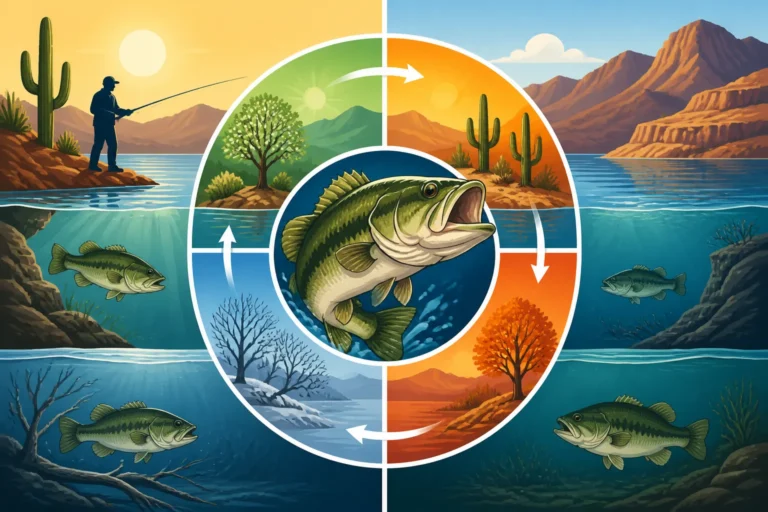
Let's be real, daytime fishing on popular Arizona lakes can be a bit of a circus, especially on weekends. Boats whizzing by, jet skis carving up the water, and dozens of anglers crowding the best spots can make for a frustrating experience. Evening fishing often means a significant reduction in this pressure. The recreational boaters and swimmers usually head in as night falls, leaving the water to a dedicated few. This can translate to less competition for prime fishing real estate and a more tranquil, enjoyable experience. Imagine the serene quiet of a desert lake under a star-filled sky, the only sounds being the gentle lapping of water against your boat or the splash of a fish hitting your lure. It's a different world out there, offering a peaceful solitude that's hard to find during the day. For a deeper dive into how changing conditions affect fish, you might find our guide on Seasonal Movement Patterns of Arizona Bass incredibly helpful.
Preparing for Your Evening Expedition
Dusk might be beautiful, but it also brings challenges that daylight doesn't. Preparing correctly is not just about comfort; it's about safety and maximizing your chances of success. You'll need to think about lighting, bug protection, proper gear, and, most importantly, knowing your chosen fishing spot inside and out.
Essential Gear for Nighttime Safety and Visibility
First and foremost, light is your friend. A reliable headlamp is absolutely crucial, freeing up your hands for tying knots, unhooking fish, and navigating. Look for one with different brightness settings and, ideally, a red light option to preserve your night vision. You can find excellent, durable headlamps on platforms like Amazon, often with waterproof ratings. If you're fishing from a boat, navigation lights are legally required and absolutely essential for safety. Beyond that, consider a powerful spotlight for identifying buoys, submerged hazards, or shorelines.
Insect repellent is non-negotiable in the Arizona evening. Mosquitoes and other biting insects come alive as the sun goes down, especially near water. A strong repellent, perhaps even some citronella candles if you're shore fishing from a fixed spot, can make a huge difference in your comfort. Long sleeves and pants, even if it's still warm, offer an additional layer of protection against bugs and cooler evening air. A good first-aid kit is also a must, as slips, falls, or hook mishaps are harder to deal with in the dark. Always let someone know where you're going and when you expect to return, especially if you're fishing alone. Safety is always paramount when enjoying the outdoors after dark, and you can learn more about it in our Night Fishing Techniques and Safety guide.
Selecting the Right Baits and Lures for Low Light
Fish rely more on their other senses in low light, so your bait and lure choices should reflect that. Think about offerings that create a strong vibration, produce sound, or offer a distinct silhouette.
- For Bass: Dark-colored topwater lures (poppers, walking baits) can be absolutely deadly at dusk and into the early night. Their silhouette against the sky and the commotion they create on the surface drive bass wild. As it gets darker, switch to slow-rolling spinnerbaits with large thumping blades, dark-colored jigs with bulky trailers, or soft plastics like worms and creature baits fished slowly along the bottom or near structure. The key is to impart action that creates a disturbance.
- For Catfish: Catfish are masters of the night and rely heavily on scent. Cut bait (like shad or carp), chicken livers, and stink baits are all prime choices. Consider using glow-in-the-dark sinkers or bobbers to help you see your line and detect bites. For more specifics on what works, check out our piece on What Catfish Eat at Night.
- For Striped Bass: During the cooler evening hours, stripers will often move shallower to chase baitfish. Large swimbaits, stickbaits, or even trolling deep-diving crankbaits can be effective. If you encounter a "boil" (stripers actively feeding on the surface), casting topwater lures or Kastmasters into the fray can lead to explosive strikes.
| Gear Category | Essential Items | Why You Need It |
|---|---|---|
| Lighting | Headlamp (with red light option), powerful spotlight, boat navigation lights | Hands-free vision, preserving night vision, identifying hazards, legal compliance |
| Insect Protection | High-DEET insect repellent, long-sleeved shirt, long pants | Prevent mosquito and biting insect attacks, skin protection |
| Safety & Navigation | First-aid kit, fully charged phone, GPS device or marked map, whistle | Emergency preparedness, communication, avoiding getting lost, signaling for help |
| Comfort | Cooler with water/snacks, light jacket/sweatshirt, comfortable shoes | Hydration, sustenance, adapting to temperature drops, stable footing |
| Tackle | Dark-colored lures, scent-enhanced baits, glow-in-the-dark bobbers/sinkers | Attract fish in low visibility, detect subtle bites, maximize effectiveness |
Knowing Your Location in the Dark
This is paramount. If you're venturing out onto a lake or river after dark, you absolutely need to be familiar with the area in daylight. Submerged rocks, shallow bars, stumps, and other hazards can be invisible in the dark. Use a GPS device to mark your favorite fishing spots and potential dangers during the day. If you're fishing from shore, walk the bank during the day to identify safe access points, clear casting lanes, and potential snags. Never assume a spot is safe at night just because it looked fine during the day. It's often best to stick to familiar waters, especially when starting with evening fishing. Knowing your local waterways will also help you identify the Best Fishing Lakes in Arizona for evening action.
Top Techniques for Arizona Evening Angling
With the sun gone and the water cooling, different fish species adopt various behaviors. Tailoring your techniques to these shifts is key to a successful evening on an Arizona lake or river.
Bass Fishing After Dark
Evening and night are prime times for targeting bass, especially largemouth. They move out of their deep-water sanctuaries and cruise the shallower flats, points, and coves, looking for an easy meal.
- Topwater Commotion: As dusk settles and into the first hour or two of darkness, topwater lures are incredibly effective. Walk-the-dog baits, poppers, and even buzzbaits create a silhouette and disturbance on the surface that drives bass crazy. Cast them near cover like submerged brush, docks, or rocky banks, and work them slowly. The key is to let the sound and vibration do the attracting; a bass might strike purely on instinct. A common mistake is retrieving too fast – slow down your presentation dramatically.
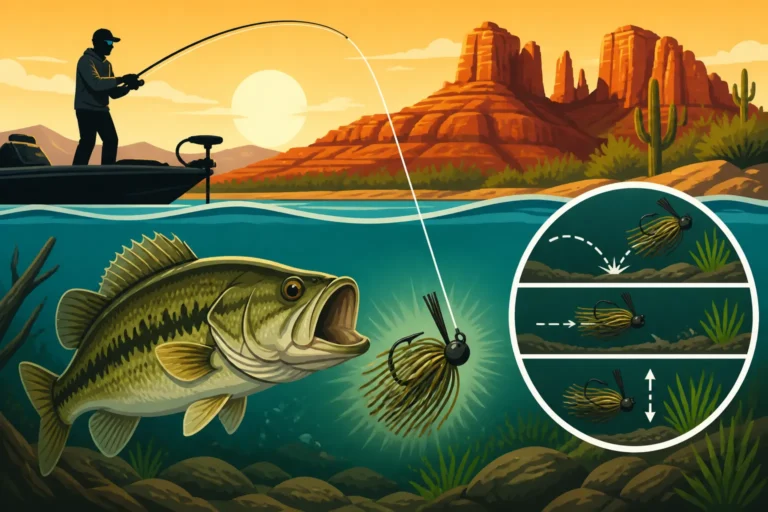
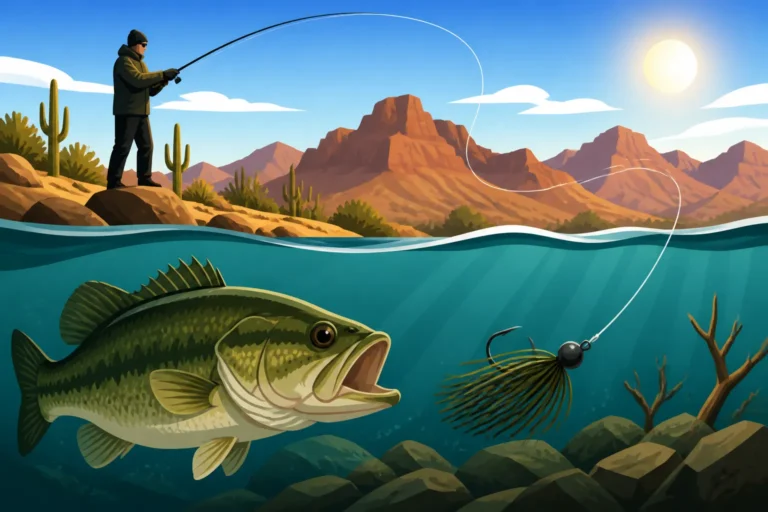
- Slow-Rolling Spinnerbaits and Jigs: Once the stars are out, bass tend to move a bit deeper, but still relatively shallow. A slow-rolled spinnerbait with a large Colorado or Indiana blade (for maximum thump) in dark colors (black, blue, purple) can be irresistible. Cast it out and retrieve it just fast enough to keep the blades turning, letting it bump off structure. Similarly, a heavy, dark-colored jig and pig combo fished slowly along the bottom or dragged through brush piles can entice big bites. The added bulk and vibration of the jig's skirt and trailer imitate a crawfish or a large baitfish. You can find a vast selection of these lures on Amazon, perfect for building your night-fishing arsenal.
- Soft Plastics: Texas-rigged worms or creature baits, again in dark colors, are excellent for probing cover and structure. Fish them slowly, feeling for subtle taps or the sensation of your line going slack. The lack of visual input means you'll need to be hyper-attuned to your line and rod tip for bite detection. This technique is particularly effective in warmer water during summer evenings when bass might still be a little deeper than prime topwater zones. For more on specific lure choices, consult our guide to the Best Lures for Largemouth Bass in Arizona Lakes.
Catfish: The Night Shift Masters
Catfish are arguably the easiest and most consistent target for evening and night fishing in Arizona. They are primarily nocturnal hunters, using their keen sense of smell and touch to locate food in the dark.
- Scent is King: Forget flashy lures; catfish want smell. Cut bait, like shad, carp, or even hot dogs, allowed to sit on the bottom, releases a scent trail that catfish can follow from a distance. Chicken livers are another classic, though they can be messy and tend to fall off the hook easily. Punch baits and pre-made stink baits are also highly effective. For rigging, a simple Carolina rig or a three-way swivel rig with a bell sinker works wonders, keeping your bait near the bottom where catfish feed.
- Patience and Detection: Catfish bites can range from a gentle tap to a rod-bending thud. Use stout rods and reels, as Arizona catfish, especially flatheads, can grow to impressive sizes. Pay close attention to your rod tip or use a sensitive bite alarm or bell. If you're fishing with a bobber, consider adding a small glow stick to it so you can see it move in the dark. They are often found in deeper holes during the day, but at night, they will patrol shallower flats, channel edges, and creek mouths looking for food. Our article on Best Catfish Fishing Spots in Arizona provides great locations for these nocturnal feeders.
Striped Bass: Chasing the Twilight Boil
Striped bass are open-water predators found in larger Arizona lakes like Lake Powell and Lake Pleasant. While they can be caught throughout the day, the low light of evening often brings them closer to the surface, especially when they are actively feeding on schools of shad.
- Look for the Action: Keep an eye (and ear) out for "boils" – frantic surface activity where stripers are herding and attacking baitfish. These usually occur at dawn and dusk, but can extend well into the evening, particularly under a bright moon. Cast a fast-retrieving spoon, a heavy topwater plug, or a large swimbait into the chaos.
- Trolling and Jigging: If boils aren't evident, stripers can still be found deeper, especially around submerged humps, points, and drop-offs. Trolling with deep-diving crankbaits or umbrella rigs can cover a lot of water. Vertical jigging with heavy spoons or blade baits directly over schooling fish (if you have a fish finder) can also be highly effective. Stripers are strong fighters, so ensure you have appropriate gear with robust line and drag settings. For those specifically interested in the bigger picture, our comprehensive How to Fish for Striped Bass guide covers many techniques that translate well to evening hours.
Common Challenges and How to Overcome Them
Evening fishing, while rewarding, isn't without its unique hurdles. The darkness itself, coupled with Arizona's distinct environment, presents a few challenges that experienced anglers learn to manage.
Navigating in Low Visibility
This is probably the biggest concern for most anglers venturing out after dark. The familiar landmarks disappear, and the water becomes a black mirror, hiding potential dangers.
- Know Your Water: We can't stress this enough. Ideally, scout your fishing location extensively during daylight hours. Mark waypoints for boat ramps, submerged hazards, channels, and your prime fishing spots on a reliable GPS unit. Many modern fish finders also double as GPS plotters, allowing you to save these critical points.
- Slow and Steady: If you're in a boat, operate at a significantly reduced speed. Even with a powerful spotlight, your reaction time is much slower in the dark. Avoid making sudden, sharp turns. If you're unfamiliar with an area, err on the side of caution or avoid it entirely after sunset. Always keep a lookout for other boaters, even though traffic is generally lighter.
- Shoreline Awareness: For bank anglers, identify your path to and from the water in daylight. Clear away any tripping hazards like loose rocks, branches, or uneven ground. A headlamp is essential for walking, and avoid venturing too close to steep or unstable banks.
Battling the Bugs
While the heat might subside, the insects often thrive in the cooler, humid evening air near the water. Mosquitoes, gnats, and other biting bugs can quickly turn a peaceful outing into an itchy nightmare.
- Repellent Power: Invest in a high-quality insect repellent containing DEET or Picaridin. Apply it generously to exposed skin. Many anglers also find success with permethrin-treated clothing, which repels insects on contact. You can easily find these effective repellents and treated clothing options on Amazon.
- Cover Up: Even if it’s still warm, consider wearing long sleeves and pants made of lightweight, breathable fabric. This provides a physical barrier against bites. A wide-brimmed hat can also help keep bugs away from your face and neck.
- Strategic Location: If possible, choose fishing spots with a bit of a breeze, as this can help keep mosquitoes at bay. Avoid heavily vegetated, stagnant areas if the bugs are particularly bad.
Handling Unexpected Weather Changes
Arizona's evenings, especially during monsoon season, can bring sudden and dramatic weather shifts. A calm evening can quickly turn into a windy, stormy affair.
- Check the Forecast: Always, always, always check the weather forecast before heading out for an evening trip. Pay attention to wind predictions and any chance of thunderstorms. Even if the forecast looks clear, be prepared for sudden changes.
- Monitor Conditions: Keep an eye on the sky. Dark, ominous clouds building on the horizon, sudden drops in temperature, or an increase in wind speed are all signs that a storm might be brewing. If you hear thunder, it's time to pack up and seek shelter immediately.
- Safety First: If you're in a boat, know your route back to the ramp. If a storm hits, find a safe cove or protected shoreline to ride it out if you can't get back quickly. High winds can make navigation dangerous, especially in the dark. For advice on dealing with the more dramatic weather patterns, our Arizona Monsoon Season Fishing Guide offers critical insights.
Embracing evening fishing in Arizona isn't just about escaping the heat; it's about tapping into a different rhythm of the lake, a time when fish are often more cooperative and the world feels a little more magical. With the right preparation and techniques, you'll discover a whole new dimension to angling in the Grand Canyon State.
Disclaimer
This article is for general informational purposes only and does not constitute professional advice. Laws, prices and regulations vary by location and change over time. Consult a qualified professional for guidance on your specific situation.