What Catfish Eat at Night
If you've ever found yourself staring out at the inky blackness of an Arizona lake or river, wondering why you can't seem to hook a catfish during the day, you're not alone. Many anglers feel the frustration of a quiet rod under the scorching sun, only to hear tales of massive catfish being pulled from the very same waters once darkness falls. This guide will dive deep into the nocturnal world of Arizona catfish, revealing their preferred nighttime diet and arming you with the knowledge to make your moonlit fishing trips a roaring success.
Why Night Fishing for Catfish is So Effective in Arizona
Arizona's daytime temperatures, especially in the warmer months, can be brutal. This isn't just uncomfortable for us anglers; it's also tough on many fish species, including catfish. During the day, the shallows can become extremely warm, depleting oxygen levels and making catfish sluggish and less inclined to feed. They'll often retreat to deeper, cooler waters or seek refuge in dense cover, conserving energy and waiting for more favorable conditions.
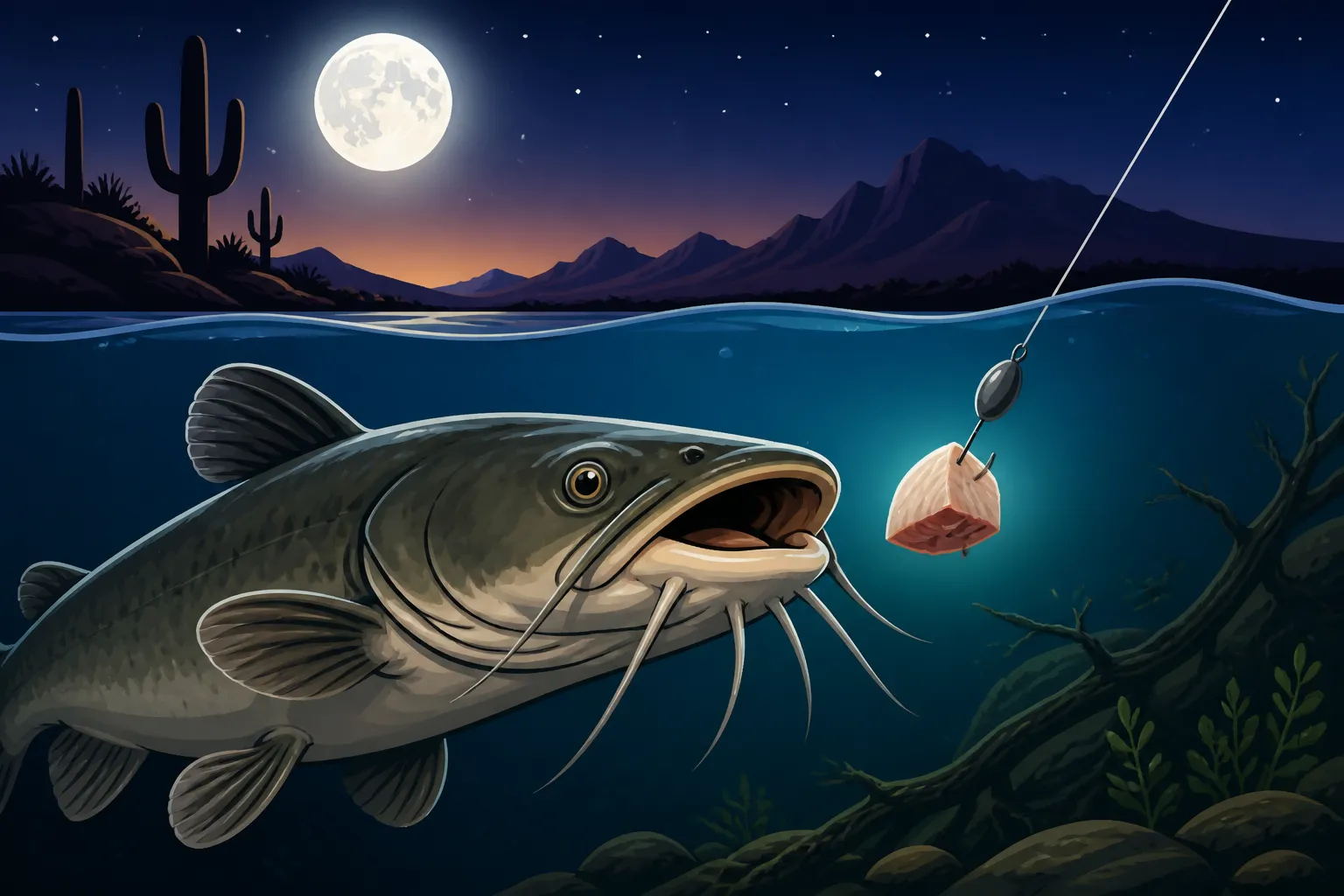
As the sun dips below the horizon, everything changes. The water temperature begins to drop, oxygen levels stabilize, and the entire aquatic ecosystem seems to come alive. Catfish, being primarily nocturnal hunters, seize this opportunity. Their superior senses – particularly their keen sense of smell and touch, aided by those distinctive whiskers (barbels) – are perfectly adapted for navigating and hunting in the dark. This gives them a significant advantage over many prey species that rely more on sight. For an in-depth look at these fascinating creatures, check out our Catfish Fishing Guide for Arizona.
Imagine a flathead catfish, a true ambush predator, lurking near a submerged log in the depths of Roosevelt Lake. All day, it's been still, barely moving. But as twilight fades, its sensory organs kick into high gear. It can detect the subtle vibrations of a small fish swimming nearby or the scent trail of decaying organic matter drifting through the water. This shift in activity makes night fishing not just productive, but often the most productive time for targeting these whiskered giants.
The Catfish Nighttime Menu: What They're Really Looking For
When the lights go out, catfish aren't just looking for anything; they're looking for specific types of sustenance that cater to their predatory instincts and scavenger tendencies. Their diet can be quite varied, which is why having a diverse bait selection can often lead to more success. Understanding their natural prey during these dark hours is key.
Live and Fresh Cut Bait
Many of Arizona's catfish, especially the larger flatheads and substantial channel catfish, are opportunistic predators. At night, smaller fish become more active, moving out from cover to feed, and are therefore more vulnerable. This is prime time for a catfish to ambush a meal.
Consider the active night patterns of small shad, bluegill, or carp in an Arizona lake like Lake Pleasant. These forage fish might be moving into shallower coves or flats under the cover of darkness, making them easy targets for a hungry catfish. A live bluegill or a freshly cut piece of carp or shad, presented on a stout hook, perfectly mimics this natural food source. The scent of fresh blood and guts from cut bait travels far in the water, acting like a beacon to catfish that are cruising the depths. For those looking to master their nighttime tactics, our Catfish Night Fishing Techniques article offers a wealth of strategies. When preparing your cut bait, a sharp fillet knife is crucial, and you can find many reliable options on Amazon for quick delivery.
Decaying Organic Matter and Invertebrates
Channel catfish, in particular, are well-known scavengers. While they will certainly eat live fish, they aren't above feasting on dead or dying organisms. At night, the metabolic activity of bacteria and other decomposers increases, releasing more potent scents into the water from decaying plants and animals. This makes bottom-dwelling invertebrates and any carrion highly appealing.
Think about the bottom of a lake or river, where leaves, insect larvae, and even dead minnows settle. Catfish, with their excellent sense of smell, can detect these decomposing particles from a considerable distance. This is where baits like chicken livers, nightcrawlers, or even prepared stink baits really shine. These baits emit strong odors that mimic the decomposition process, drawing catfish in from far and wide. The beauty of these baits is their accessibility; you can often find large tubs of prepared catfish bait or worms at local tackle shops or even online. For anglers curious about the overall dining habits of these fish, our Catfish Diet and Feeding Habits guide provides additional context.
The Role of Crustaceans
Crayfish are a natural and highly prized food source for many fish species, including catfish, and they are particularly active at night. These freshwater crustaceans often emerge from their hiding spots under rocks and logs after dark to forage, making them prime targets.
In Arizona's diverse waterways, from the rocky shores of Canyon Lake to the calmer stretches of the Colorado River, crayfish can be abundant. A catfish that encounters a struggling or exposed crayfish won't hesitate. Using a whole, live crayfish or a piece of its tail can be incredibly effective. The hard shell and meaty interior make it a substantial meal, and its natural scent is irresistible. Remember, when rigging live bait, always use hooks that allow for natural movement to entice those big catfish. You can find specialized catfish hooks and heavy-duty lines, essential for landing bigger fish, available from various sellers on Amazon.
| Bait Type | What it Mimics | Best For | Pros | Cons |
|---|---|---|---|---|
| Live Bluegill/Shad | Smaller forage fish | Flatheads, large Channels | Highly natural, triggers predatory instincts | Requires effort to catch/keep alive, may attract other predators |
| Cut Bait (Shad, Carp) | Injured/dead forage fish | Flatheads, Channels | Strong scent trail, easy to procure | Can be messy, attracts smaller "bait stealers" |
| Chicken Livers | Decaying organic matter, carrion | Channel Catfish | Very potent scent, readily available | Falls off hook easily, messy |
| Nightcrawlers | Worms, invertebrates | Channel Catfish, smaller Catfish | Easy to rig, natural food source | Smaller bites, may attract smaller fish |
| Prepared Stink Bait | Extreme decomposition scent | Channel Catfish | Ultra-strong odor, designed for catfish | Unpleasant to handle, less selective |
| Live Crayfish | Active crustaceans | Flatheads, large Channels | Natural, robust bait, excellent for bigger fish | Can be hard to find/keep alive, more expensive |
Choosing Your Bait for Arizona Night Catfishing
With a better understanding of what catfish eat at night, the next step is selecting the right bait for your specific outing. This isn't a one-size-fits-all situation; what works at one lake might be less effective at another, or for a different species of catfish.
Matching the Hatch (or the Smell)
The "matching the hatch" principle isn't just for fly fishing. If you know what forage fish are abundant in your chosen Arizona waterway, mimicking that can be a game-changer. For example, if you're fishing a lake known for its healthy shad population, using fresh cut shad is likely to be a top producer. For specific advice on what works best, our Best Bait for Catfish in Arizona article has some great suggestions.
Conversely, if you're primarily targeting channel catfish, especially in smaller ponds or slow-moving river sections, their scavenging nature means strong-smelling baits like chicken livers or commercial stink baits will often outperform live bait. These baits capitalize on the catfish's incredible olfactory senses, drawing them in even in murky or low-visibility conditions.
Flathead vs. Channel Catfish Preferences
It’s crucial to distinguish between the two most commonly targeted catfish species in Arizona: the channel catfish and the flathead catfish. Their dietary preferences, especially at night, differ significantly.
Flathead Catfish, the true leviathans of Arizona's waters, are almost exclusively piscivorous (fish-eating) as adults. They prefer live bait. A large, lively bluegill, green sunfish, or even a small carp can be the ticket to hooking a trophy flathead. They are ambush predators that rely on sensing the struggling movements of their prey in the dark. If you're after a monster, focus on presenting robust, living fish baits near known flathead haunts like submerged timber or rocky ledges. Curious about how big they get? Check out Flathead Catfish Average Weight on the Colorado River.
Channel Catfish, on the other hand, are much more eclectic eaters. While they will readily consume live bait, they are notorious for their love of strong-smelling, decaying fare. Chicken livers, nightcrawlers, shrimp, hot dogs, and various prepared "stink baits" are all highly effective for channels. These baits appeal to their scavenging nature and their exceptional sense of smell, which guides them through the dark to a potential meal. For a deeper dive into their characteristics, read Channel Catfish vs Flathead Catfish Identification.
Tips for Successful Night Catfishing in Arizona
Night fishing for catfish isn't just about bait; it's about strategy, safety, and a bit of common sense. The Arizona nights, while cooler, still demand respect, and being prepared can make all the difference between a frustrating outing and a memorable one.
Essential Gear for Nighttime Angling
Fishing in the dark requires some specialized gear. A reliable headlamp (and spare batteries!) is non-negotiable. You'll need it for tying knots, rebaiting hooks, and safely navigating your fishing spot. Many anglers find lamps with red light options useful, as red light is less disruptive to your night vision and often less startling to fish. A sturdy rod holder is also a lifesaver, allowing you to set multiple lines and relax while waiting for a bite, without worrying about your rod getting pulled into the water by a hard-hitting catfish.
Gloves can be a good idea for handling fish, especially catfish with their sharp pectoral and dorsal fins. A good pair of long-nosed pliers for hook removal is also essential. Remember to bring a good cooler with plenty of ice to keep your catch fresh through the night, especially in Arizona's persistent warmth. For a comprehensive list of what to pack, our Night Fishing Techniques and Safety guide covers safety essentials too. If you're gearing up, Amazon offers a wide selection of fishing headlamps and robust rod holders designed for bank fishing.
Picking Your Spot and Presentation
Catfish, particularly flatheads, will often move into shallower areas at night, or at least closer to the banks, to hunt for food that might be harder to find in the deeper, darker reaches during the day. Look for structural elements like submerged trees, rocky points, deep holes near creek channels, or any areas with current if you're on a river. These are natural ambush points or places where food might accumulate.
When presenting your bait, remember that catfish often feed on or near the bottom. A simple Carolina rig or a slip-sinker rig is highly effective. This allows your bait to rest on the bottom while the line runs freely through the sinker, providing minimal resistance when a catfish takes the bait. For flatheads and large live bait, consider using a larger hook and heavier leader line to prevent break-offs. Speaking of gear, selecting the right rod and reel can be vital for tackling larger catfish; consider checking out our article on Best Rod for Catfish for recommendations.
Patience and Persistence
Night fishing, by its very nature, requires patience. Bites might be less frequent but often more deliberate. Set up your gear, cast your lines, and then settle in. Listen to the sounds of the night, enjoy the tranquility, and be ready to spring into action when that rod doubles over or your bell starts ringing. Catfish often mouth the bait before fully committing, so don't be too quick to set the hook on every tap. Give them a moment to truly take the bait before a strong, decisive hookset. This method is particularly effective when using some of the heavier duty fishing lines discussed in Best Line for Catfish Fishing.
Always tell someone where you're going and when you expect to return, especially when fishing alone at night. Keep your area clean, pack out everything you pack in, and respect the quiet of the night. With the right knowledge of their nocturnal dining habits and proper preparation, you'll be well on your way to catching some impressive Arizona catfish after dark.
Disclaimer
This article is for general informational purposes only and does not constitute professional advice. Laws, prices and regulations vary by location and change over time. Consult a qualified professional for guidance on your specific situation.