Best Kayak Length for River Fishing
Deciding on the perfect kayak for river fishing in Arizona can feel like a real puzzle. You've got everything from serene, slow-moving stretches of the Salt River to the more dynamic flows and occasional rapids of other waterways, and trying to figure out if a short, nimble boat or a long, stable one is best for your specific adventures can be truly frustrating. This guide will walk you through the nuances of kayak length, helping you understand how it impacts your fishing experience on Arizona's diverse rivers, so you can make an informed choice and spend more time catching fish.
Understanding Arizona's Diverse River Environments
Arizona's rivers aren't a one-size-fits-all kind of place, and neither are the kayaks you'd use on them. From the high-country streams with their tight bends and rocky obstacles to the wider, often slower-moving desert rivers, each environment presents its own set of challenges and opportunities for anglers. Understanding these differences is the first step in choosing a kayak that will perform for you.
High-Country Streams and Smaller Rivers
Picture yourself on a cool, crisp morning, navigating a smaller stream like a stretch of the Verde River up north, or maybe one of the creeks in the White Mountains. These waters often feature narrower channels, quicker currents, and more frequent obstacles like submerged rocks, fallen trees, or tight turns. You're not usually covering vast distances here; instead, the focus is on precise boat control, quick maneuvers, and the ability to stop and fish a small eddy or undercut bank. Fishing in these areas often involves shorter casts, sight fishing, and a need to maintain position against the current without getting swept downstream or pinned against an obstruction. It's an intimate fishing experience that demands a kayak that feels like an extension of your body, allowing you to react instantly to the river's demands.
Larger Rivers and Desert Flowages
Now, let's think about the broader, often slower-moving sections of the Salt River or the vast expanse of the Colorado River, especially downstream from major dams. These are different beasts entirely. Here, you might be covering longer distances, needing to paddle through open stretches to get to your fishing spots, or perhaps dealing with wide, wind-swept areas. While there might be occasional riffles or even some mild rapids depending on the exact stretch and water release, the dominant characteristic is often more open water, longer drifts, and less immediate need for hairpin turns. In these environments, stability is still key, but so is tracking – the kayak's ability to hold a straight line without constantly correcting your paddle strokes. You might be targeting larger species or doing more trolling, which requires a boat that can maintain a consistent path and provide a stable platform for casting across wider areas. You might also want to explore Best Fishing Lakes in Arizona for even larger bodies of water where longer kayaks excel.
How Kayak Length Influences Performance on the Water
The length of your kayak is one of the most significant factors determining how it will handle on the water. It’s a fundamental design choice that impacts speed, maneuverability, and stability, all of which are critical for effective river fishing. There’s a direct trade-off at play, and understanding this relationship will guide you to the right balance for your specific needs.
Maneuverability and Tight Spaces
Shorter kayaks, typically those under 11-12 feet, are the undisputed champions of maneuverability. Think of a nimble sports car. They turn on a dime, pivot easily, and can navigate tight spaces with grace. On smaller, winding Arizona rivers with lots of obstacles, this agility is invaluable. You can quickly change direction to avoid a submerged log, spin around to cast at a rising fish behind you, or precisely position yourself in a small eddy. The less kayak you have trailing behind you, the easier it is to control its movement in a dynamic river current.
However, this nimbleness comes with a trade-off. Shorter kayaks tend to sacrifice some tracking ability, meaning they might wander a bit more as you paddle, requiring more corrective strokes. They also generally aren't as fast, as their shorter waterline creates more drag. For a quick float trip on a moderately flowing river or when you're targeting small pockets, a shorter, more maneuverable kayak can be your best friend, allowing you to quickly react and place your casts exactly where you want them. This is often an excellent choice for navigating the upper reaches of rivers where the water is narrower and swifter.
Speed, Tracking, and Open Water
When you step up to a longer kayak, typically 12 feet and above, you're gaining speed and tracking performance. These boats are the cruisers of the kayak world. A longer waterline means less friction and more efficient glide through the water. If your river fishing adventures often involve covering significant distances on wider stretches, like parts of the Colorado River Fishing Guide in Arizona or the lower Salt River, a longer kayak will save you effort and get you to your spots faster.
More importantly for many anglers, longer kayaks track significantly better. They hold a straight line with minimal effort, which is fantastic when you're paddling against a light breeze, fighting a mild current, or simply trying to cover ground without constantly correcting your course. This superior tracking also makes them ideal for trolling, as you can maintain a consistent lure presentation. The downside, of course, is that they are less nimble. Turning a longer kayak requires more space and more effort. Attempting to navigate a tight, obstacle-filled stream in a 14-foot kayak can feel like trying to parallel park a limousine in a compact car space. You'll find yourself making broader turns and needing more planning for quick direction changes. For serious Striped Bass Fishing Guide for Arizona on wide-open waters where covering distance is key, the benefits of a longer kayak often outweigh the maneuverability concerns.
Matching Kayak Length to Your River Fishing Style
Beyond the river itself, your personal fishing style plays a huge role in determining the ideal kayak length. Are you a minimalist, a gear junkie, a fly-fisher, or a bait caster? Each approach leans towards a different type of vessel.
Aggressive Angling and Navigating Rapids
For those who love to push the limits a bit, perhaps tackling sections of the river with mild rapids or very swift currents, a shorter kayak (under 11 feet) is usually the way to go. These kayaks are inherently more reactive and forgiving in turbulent water. Their compact size makes them less likely to get hung up on rocks and easier to control when momentum is high. If you find yourself frequently paddling through Class I or II rapids to get to your favorite fishing holes, or if you simply prefer a boat that can spin on a dime to hit every small pocket of water, a shorter kayak offers the best control.
However, be prepared for less storage space and potentially a wetter ride in chop. You'll also likely be limited to single-rod setups or minimalist gear to maintain that agility. The focus here is on the thrill of the ride and the quick, precise fishing opportunities that these dynamic waters provide. Remember to always prioritize safety when venturing into moving water; understanding Boating Safety Gear Requirements in Arizona is crucial, and wearing a PFD is non-negotiable.
Leisurely Floats and Bank Fishing Access
If your idea of river fishing is a relaxed float, casting to accessible banks, and perhaps enjoying a picnic lunch on a sandy bar, then a medium-length kayak (11-12.5 feet) often hits the sweet spot. These kayaks offer a good balance of maneuverability for gentle bends and decent tracking for longer straightaways. They usually provide enough storage for a cooler, tackle box, and a few rods without feeling overly cumbersome.
This length range is incredibly versatile for many of Arizona's more accessible river sections, such as the slower parts of the Verde or Salt rivers. You get enough stability for comfortable casting and re-baiting, and enough room to stretch out a bit. They are also often easier to launch and retrieve than longer boats, especially if you're accessing the river from less-developed put-in points where you might have to carry your kayak a bit. This range is excellent for beginners too, offering a predictable ride without being too sluggish or twitchy.
Covering Distances and Trolling
For serious anglers who want to cover miles of water, particularly on larger rivers like the Colorado, or those who enjoy trolling for species like striped bass or walleye (if you're fortunate enough to find them in certain Arizona waters), a longer kayak (13 feet and up) is typically superior. The enhanced tracking of these boats allows you to maintain a steady course with less effort, which is vital for efficient trolling or simply getting from Point A to Point B across a large reservoir that flows into a river system.
Longer kayaks also tend to have significantly more storage capacity, which is a huge plus if you're bringing multiple rods, extensive tackle, a cooler, and maybe even a fish finder. The added length often translates to greater overall stability, particularly side-to-side stability, which is comforting when you're casting aggressively or standing to sight fish in open water. While they're not ideal for tight, technical waters, for the wide-open expanse, speed, and gear capacity they offer, longer kayaks are unmatched. If you plan on long expeditions, consider exploring Best Kayaks for Fishing in Arizona for models specifically designed for extended trips.
Practical Considerations Beyond Length
While kayak length is a primary concern, it's far from the only factor. Real-world fishing means dealing with transport, storage, and the practicalities of getting your gear to and from the water. Ignoring these details can quickly turn a dream fishing trip into a logistical nightmare.
Transport and Storage Challenges
Let's be honest, a 14-foot kayak is a lot harder to transport than a 10-foot one. Consider your vehicle: Do you have a roof rack sturdy enough for a long, heavy boat? Can you lift it onto your car by yourself? Longer kayaks often require two people to load comfortably, especially after a long day on the water. Hauling a long kayak down a rough dirt road to a remote river access point can also be challenging.
Then there's storage. Do you have a garage or shed long enough to keep it safe and out of the sun? Arizona's intense heat can be brutal on kayaks, leading to warping or degradation if not stored properly. A shorter kayak is simply easier to manage in all these scenarios. If you're short on space or often fish alone, opting for a slightly shorter kayak that still meets your fishing needs might be a wise compromise. You might also want to look into inflatable kayaks if storage is a major concern, though they have their own set of pros and cons for river fishing.
Kayak Features and Angler Comfort
Beyond length, think about the specific features that will enhance your river fishing.
- Stability: A wider kayak generally offers more initial stability, which is great for casting or standing up. However, length also contributes to secondary stability (how resistant it is to tipping once it starts to lean). A stable platform is crucial for Beginner Fishing Techniques for Arizona Desert Lakes and experienced anglers alike.
- Seating: River fishing can involve long hours. A comfortable, adjustable seat that provides good back support is paramount. Many modern fishing kayaks come with stadium-style seating that can be raised for better visibility or lowered for stability.
- Storage and Rigging: How much gear do you need? Look for kayaks with ample deck space, storage hatches, and rigging options for rod holders, fish finders, and other accessories. Some kayaks come pre-rigged, while others offer a blank slate for customization. Brands like Bass Pro Shops often have a wide selection of rigged fishing kayaks, and you can always find various accessories on Amazon to personalize your setup.
- Weight Capacity: Don't forget to factor in your body weight plus all your gear, including a cooler full of water (essential for Arizona's heat!) and any fish you plan to keep. Exceeding the weight capacity will negatively impact performance and safety.
Budget and Resale Value
Kayak prices can vary wildly depending on length, material, and features. Longer, more specialized fishing kayaks tend to be more expensive. It's worth setting a budget and sticking to it. Consider the long-term value as well. A popular, versatile length might hold its resale value better if you decide to upgrade down the line. Keep an eye on sales at larger outdoor retailers like Bass Pro Shops, or check out used options online. Remember that initial cost is only part of the equation; factor in accessories, a PFD, paddle, and transport gear. For instance, knowing the Cost to Register a Boat in Arizona can help you budget for additional expenses.
Here's a quick comparison to help visualize the trade-offs:
| Kayak Length Category | Typical Length Range | Best For | Pros | Cons | Ideal Arizona River Type |
|---|---|---|---|---|---|
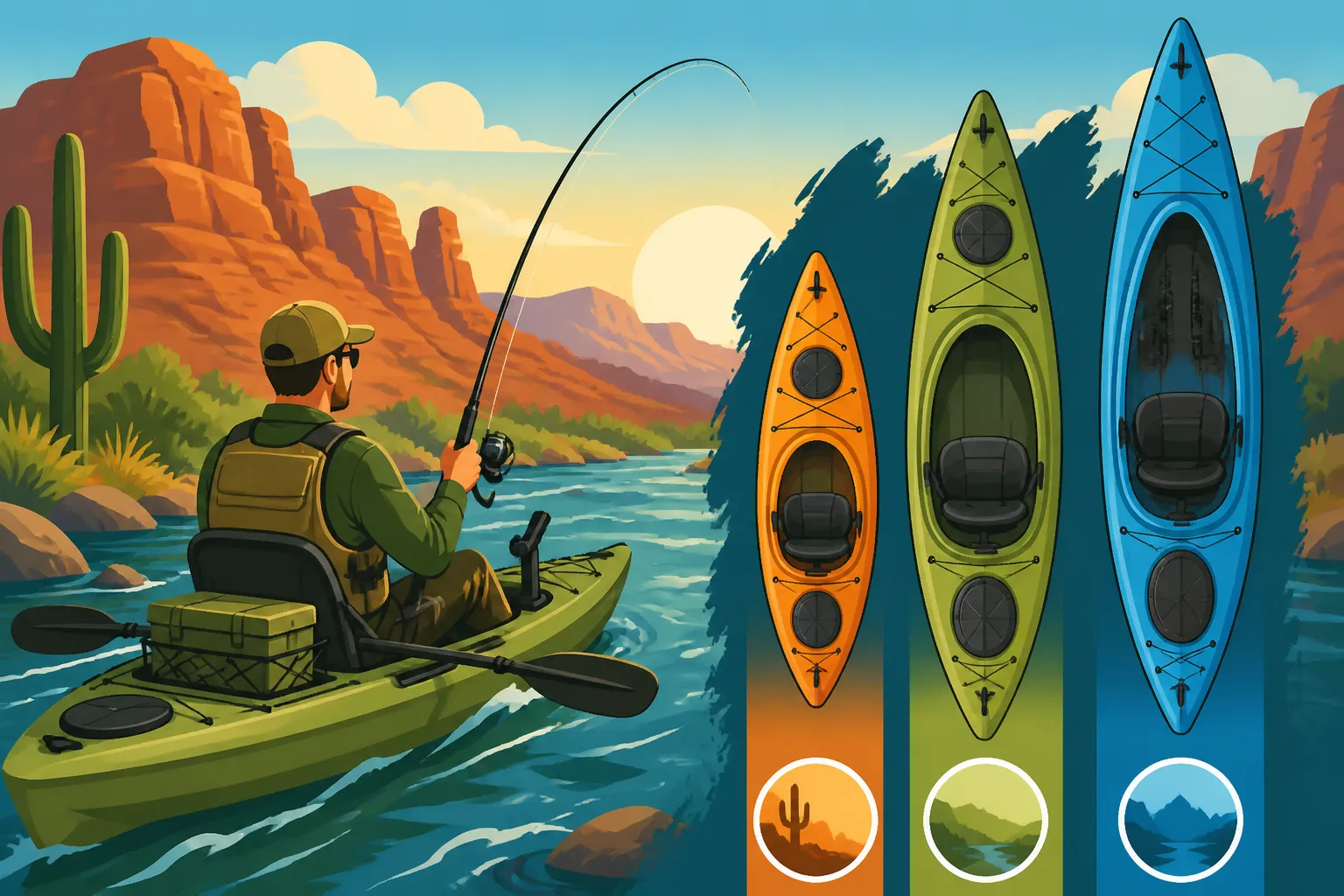
| Short Recreational | 8 – 10 feet | Tight, winding streams, quick maneuvers | Highly maneuverable, easy to transport/store, lightweight | Slower, poor tracking, limited storage, wetter ride | Small high-country streams, very winding lower flowages |
| Medium Fishing | 11 – 12.5 feet | Balanced river fishing, general versatility | Good balance of maneuverability & tracking, decent storage | Not fastest or most nimble, can be heavy for one person | Most sections of Salt River, Verde River, moderate flows |
| Long Fishing | 13+ feet | Covering distances, trolling, open water | Excellent tracking, faster, high stability, abundant storage | Less maneuverable, heavier, harder to transport/store | Wide sections of Colorado River, lower Salt River |
Final Thoughts on Your River Fishing Kayak Choice
Ultimately, the best kayak length for river fishing in Arizona is a personal decision, deeply tied to the specific rivers you frequent, your fishing style, and your logistical capabilities. If you're primarily exploring those winding, intimate high-country streams or tight desert canyons with numerous obstacles, a shorter, more agile kayak is often the superior choice. Its ability to turn quickly and navigate complex water will make your experience far more enjoyable and productive. You'll be able to hit those small eddies and cast into tight cover that a longer boat would struggle to reach.
However, if your adventures lean towards wider, more open stretches of the Salt River Arizona Fishing Guide or the vast flows of the Colorado River, where covering distance and maintaining a straight course are paramount, a longer kayak will serve you better. The added speed and superior tracking will reduce fatigue and allow for more efficient trolling or travel to distant honey holes. Its increased storage capacity also means you can bring more gear for those longer excursions.
My best advice? Try before you buy if at all possible. Many outdoor outfitters in Arizona offer kayak rentals, and some even have demo days. Take different lengths out on the type of water you plan to fish. Paddle them, cast from them, and see how they feel. This hands-on experience is invaluable. Remember to also consider essential gear like paddles, life jackets, and safety equipment, which are just as important as the kayak itself. Whatever you choose, get out there and enjoy the incredible river fishing Arizona has to offer!
Disclaimer
This article is for general informational purposes only and does not constitute professional advice. Laws, prices and regulations vary by location and change over time. Consult a qualified professional for guidance on your specific situation.