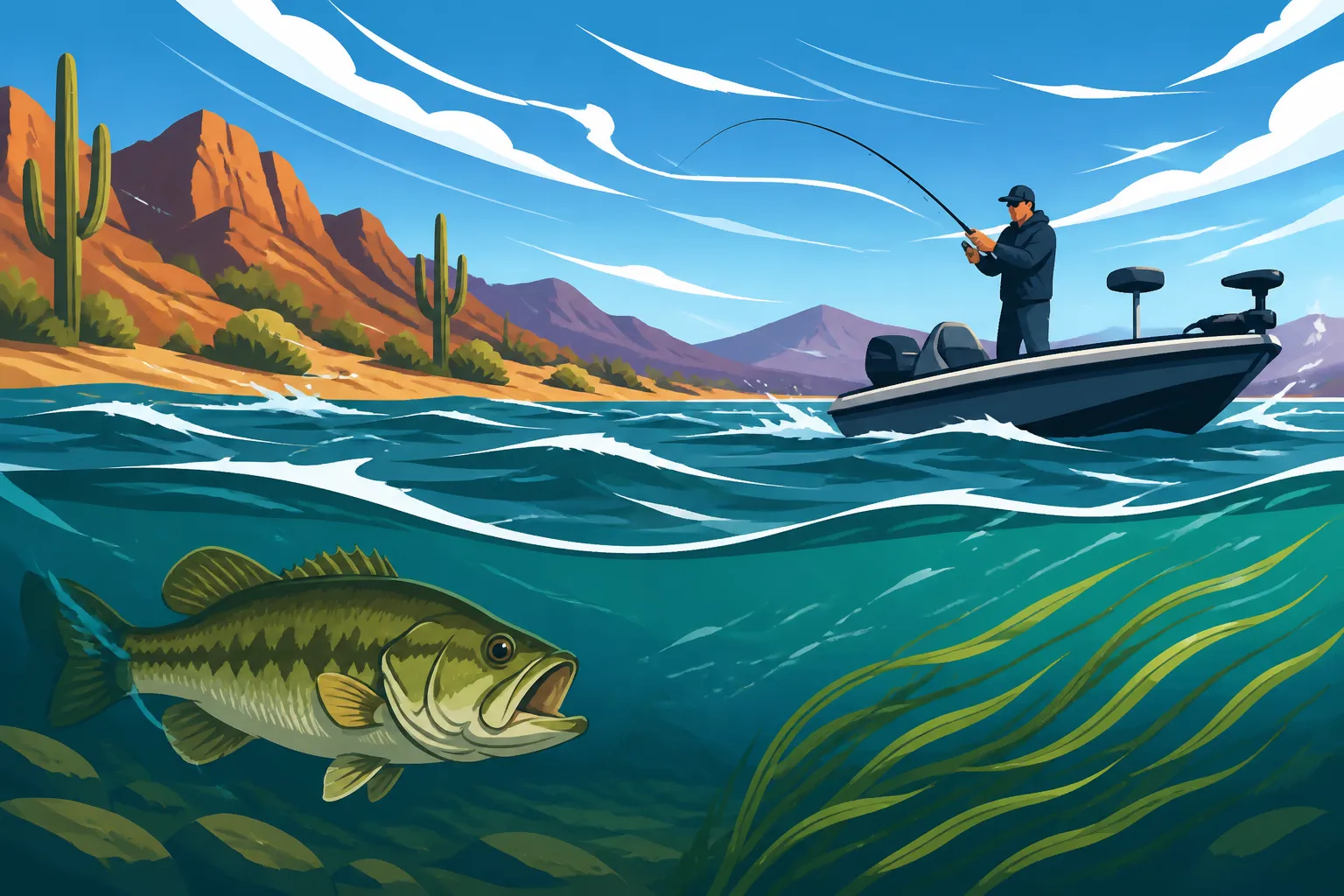
How Wind Affects Bass Fishing on Open Lakes
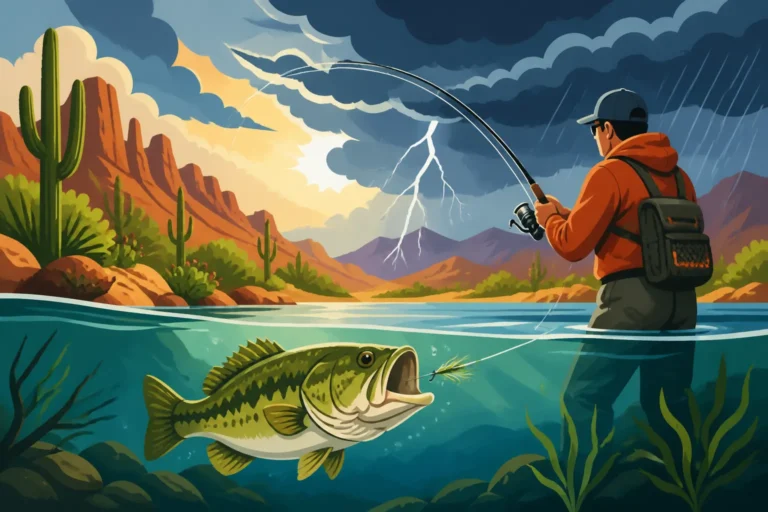
There's nothing quite like a peaceful morning on a glassy Arizona lake, but let's be real, those days are rare, especially on our vast open reservoirs. More often than not, you're faced with a persistent breeze or even a full-on howling wind that can make fishing feel less like a relaxing pastime and more like a wrestling match. It's frustrating when you can't feel your bite, or your boat keeps drifting off your spot, but understanding how wind actually influences bass behavior can turn a challenging day into a productive one. This guide will dive deep into the science and strategy behind wind-affected bass fishing on Arizona's open lakes, helping you learn to read the conditions and adapt your approach for more successful outings.
The Dynamics of Wind and Bass Behavior on Open Lakes
Wind isn't just a surface disturbance; it's a powerful force that reshapes entire ecosystems, particularly in large, open bodies of water like Lake Pleasant, Roosevelt Lake, or Lake Powell. For bass anglers, recognizing how this force impacts their quarry is the first step toward turning a blustery day into a banner day. Many anglers see wind as a hindrance, but really, it's often a catalyst for increased bass activity.
Wind-Driven Food Chains and Oxygenation
One of the most significant ways wind affects bass fishing is by stirring up the water and creating current, even in seemingly still lakes. This movement oxygenates the water, especially the shallower areas, which can invigorate baitfish and, consequently, the bass that feed on them. Imagine a hot Arizona summer day; still, stagnant water holds less oxygen. A good breeze can literally breathe new life into an area.
Furthermore, wind pushes microscopic organisms and detritus, creating a "current" that can concentrate baitfish. These small fish, like shad or minnows, are often pushed into wind-blown coves or along main lake points where the wind is funneling. And where the baitfish go, the bass often follow. It's like a natural conveyor belt delivering dinner right to the bass's doorstep. This effect is especially pronounced on large, open reservoirs where vast expanses of water allow the wind to truly build momentum. You'll often find that the "dirty side" of the lake, where the wind has pushed a lot of surface debris and murkiness, is exactly where the bass are stacking up, ambushing unsuspecting prey.
Wind as a Natural Cover and Ambush Point
Beyond just oxygen and baitfish, wind also provides crucial cover for bass. On bright, sunny days in clear Arizona lakes, bass can be skittish and hard to approach. The choppy surface created by wind disperses light, making it harder for bass to see predators (including you!) from above. This allows them to move into shallower water with more confidence, or hold tighter to structure without feeling as exposed.
Think about it: in calm conditions, a bass might stick to deep brush piles or submerged rock formations. But when the wind kicks up a chop, that same bass might venture out to the windward side of a point or a shallow flat, knowing it has the broken surface to hide its movements. This makes them more aggressive and less hesitant to strike. The sound and vibration of the waves also help mask your presence, allowing for a more stealthy approach even in broad daylight. Many experienced anglers actually seek out windy conditions, especially during bright midday hours, because it can turn a slow bite into a hot one by making the bass feel more secure.
Understanding Different Wind Conditions and Their Impact
Not all wind is created equal when it comes to bass fishing. The speed, consistency, and direction of the wind can drastically alter how bass behave and, therefore, how you should approach them. Learning to differentiate between these conditions is key to developing a versatile windy-day strategy.
Light Breeze: Subtle Shifts and Confident Bites
A light breeze, say 5-10 mph, is often the ideal scenario for many anglers. It's enough to create a slight chop on the water, providing that much-needed surface disturbance that makes bass feel more comfortable and active. This gentle ripple diffuses light penetration, making the water less intimidating for bass to venture into shallower feeding grounds. The subtle current it generates also helps concentrate baitfish without making boat control impossible.
In these conditions, bass are typically more spread out but actively feeding. They might be relating to points, coves, or brush lines that are gently impacted by the wind. It’s a great time to throw moving baits like spinnerbaits, crankbaits, or even topwater lures that can be worked along these wind-kissed areas. The slight chop also makes your line harder for fish to detect. You might find bass holding on the windward side of structures like standing timber or rock piles, waiting for bait to be delivered to them. This is where you can often capitalize on a bass's increased confidence without battling the elements too hard yourself. Remember to consider how you might need to adjust your Best Rods for Bass in Arizona to handle the slight resistance of the wind on your cast.
Strong Winds and Gusts: When to Hold 'Em or Fold 'Em
When the wind really picks up – think 15-25 mph with stronger gusts – it presents both challenges and opportunities. Boat control becomes a major factor, and casting accurately can feel like a Herculean task. However, strong winds can also trigger some of the most aggressive bass bites you'll ever encounter.
The key here is understanding that bass will often move to the lee side (sheltered side) of structures or deeper pockets to escape the direct force of the wind, but they'll still be looking for feeding opportunities on the wind-blown side of those same structures. For example, if the wind is blowing directly into a main lake point, the bass might position themselves just behind the point, out of the direct current, but facing the oncoming waves, ready to ambush disoriented baitfish being pushed their way.
You'll need heavier baits that can cut through the wind and get down quickly. Jigs, Carolina rigs, and deep-diving crankbaits become your best friends. These conditions are also where you might find "wind lanes" – lines of foam and debris on the surface where baitfish and bass are concentrated. If you're fishing from a kayak, knowing Kayak Fishing Techniques for Desert Lakes in these conditions is absolutely critical for both safety and success. Always prioritize safety, and if the wind is too strong to safely manage your boat or casting, it's better to find a more protected area or call it a day.
| Wind Condition | Bass Behavior | Recommended Lures | Key Strategy | Safety Considerations |
|---|---|---|---|---|
| Light Breeze (5-10 mph) | More active, confident, spread out. | Spinnerbaits, small crankbaits, topwater (poppers/walkers). | Focus on wind-blown points, coves, shallow flats. | Minimal, standard precautions. |
| Moderate Wind (10-15 mph) | Aggressive, ambushing baitfish, often concentrating. | Medium crankbaits, jigs, Texas rigs, swimbaits. | Target windward side of structure; look for foam lines. | Secure loose gear; watch boat drift. |
| Strong Wind (>15 mph) | Seeking partial shelter, highly aggressive feeders. | Heavy jigs, deep crankbaits, Carolina rigs, heavy swimbaits. | Fish lee side of primary wind-blown structures, deep edges. | Life jackets essential, anchor systems, potential for large waves. |
This table provides a general overview. Always adapt to specific lake conditions and fish behavior.
Practical Strategies for Fishing in Windy Conditions
Okay, so we know why wind matters. Now, let's talk about how to turn that knowledge into more fish in the boat. Adapting your techniques and choosing the right gear are paramount when the wind is trying to steal your cast and your sanity.
Locating Bass in Wind-Blown Areas
The first thing to understand is that bass will relate to wind-blown areas, but not necessarily directly in the strongest wind. They're often on the "edge" of it. Look for areas where the wind is pushing water and baitfish but also offers them some sort of current break or ambush point. This could be a main lake point, a bluff wall, a channel swing, or even a large brush pile on the windward side of a cove. The idea is that they want the food delivery system the wind creates, but they don't want to fight the full force of it themselves.
Focus on primary and secondary points that face the wind. Bass will often hold on the backside (lee side) of these points, in the slightly calmer water, picking off baitfish that are swept around the corner. On large, open lakes that are popular for Best Bass Fishing Lakes in Arizona, you'll see this pattern emerge repeatedly. Also, don't overlook sheltered pockets or coves downwind from a main lake point; sometimes, a strong wind can push a massive amount of bait into these areas, and the bass will follow. Using a quality fish finder, which you can find a wide selection of on Amazon, can help you locate these subtle current breaks and bait concentrations even when the surface is chaotic.
Lure Selection and Presentation for Wind
When the wind is howling, your light topwater popper is likely going to spend more time flying through the air than sitting on the water. This is where lure choice really comes into play. You need baits that cast well into or across the wind and that maintain their action in choppy water.
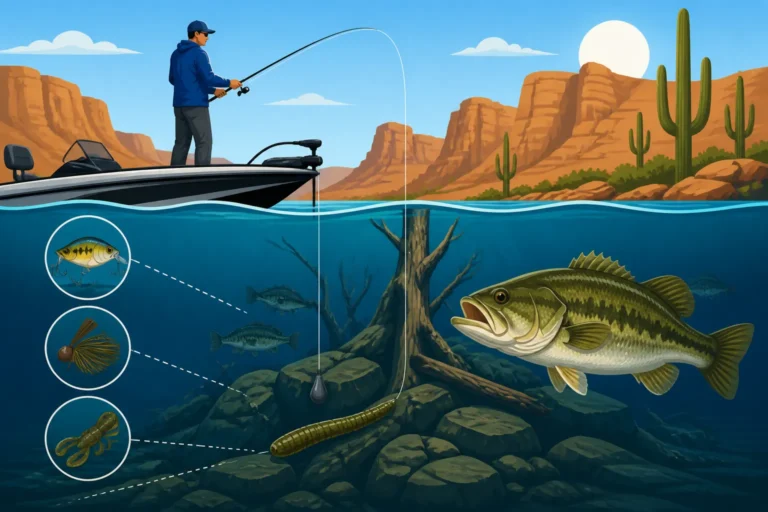
- Moving Baits: Spinnerbaits and bladed jigs (Chatterbaits) are fantastic in windy conditions. Their thumping vibration cuts through the chop and allows bass to locate them by their lateral line, even in stained water. They're also relatively heavy, allowing for longer casts. Crankbaits, especially those with a tight wobble, can also be very effective. For Crankbait Fishing Techniques for Bass, consider models with larger bills that dive quickly and track true even when retrieving against wind.
- Bottom Baits: Jigs and Texas-rigged plastics are excellent when you need to get down to the bass. Their compact nature makes them easier to cast in wind, and once they're on the bottom, they're less affected by surface turbulence. This is particularly effective for Winter Bass Fishing Tactics in Arizona when bass are often deeper.
- Line Choice: Consider using braided line on your spinning or baitcasting reels. Braid has less stretch and a thinner diameter for its breaking strength, which means it cuts through the wind better and gives you a more direct connection to your lure, allowing you to feel subtle bites even when your boat is bouncing. You can find excellent braided lines on Amazon to spool up your reels before your next windy adventure. Read up on Best Line for Bass Fishing for more in-depth insights into choosing the right line for various conditions.
Boat Control and Casting Techniques
This is arguably the toughest part of fishing in the wind. Maintaining boat position is crucial for effective lure presentation.
- Anchoring/Spot-Lock: If you have an electric trolling motor with a "spot-lock" or "anchor" feature, this is your golden ticket. It will hold your boat precisely on your target, freeing you up to cast and focus on your retrieve. If you don't have one, traditional anchors can work in shallower water, but can be a hassle to constantly retrieve and reset.
- Drifting: Sometimes, instead of fighting the wind, you work with it. Position your boat upwind of an area you want to fish and let the wind slowly push you over it. Make long casts ahead of your drift, letting your lure work naturally with the water movement. This can be especially effective for covering large flats or finding scattered fish.
- Casting: Avoid sidearm casts directly into strong wind; your lure will sail uncontrollably. Instead, try a lower, pendulum-style cast or a roll cast to keep your lure close to the water, minimizing its exposure to the wind's force. When casting with the wind, you can make incredibly long casts, allowing you to cover more water efficiently. This is a skill that takes practice, but mastering it will put more fish in your boat on breezy days. When trying out Topwater Fishing Techniques for Bass, remember that wind can either help propel your cast or make delicate presentations impossible, so adapt your casting accordingly.
Safety and Preparedness for Windy Days
While embracing the wind can lead to great fishing, it's absolutely vital to prioritize safety. Arizona's open lakes can go from calm to dangerous quickly, and being unprepared is never an option.
Essential Safety Gear and Boating Practices
Wind, especially on large bodies of water, can whip up significant waves in a very short amount of time. What starts as a pleasant breeze can turn into whitecaps that are challenging and even dangerous for smaller boats. Always check the weather forecast before heading out, paying close attention to wind predictions and potential for sudden storms. Our Arizona Monsoon Season Fishing Guide delves into the specific dangers of summer storms, which often bring intense wind.
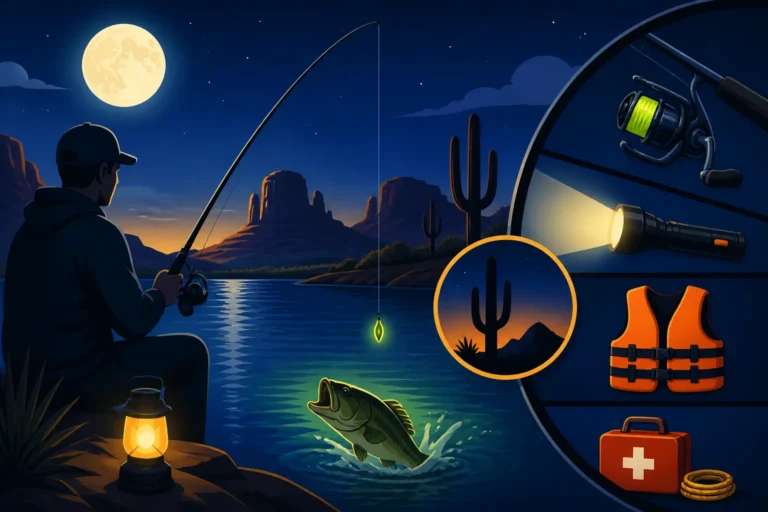
Make sure your boat is in good working order, with all necessary Boating Safety Gear Requirements in Arizona on board. This includes properly fitting life jackets for everyone, a whistle or horn, a fire extinguisher, and visual distress signals. If you're using a smaller craft like a kayak or canoe, be acutely aware of its limitations in choppy water. Waves can easily swamp open boats, and even stable fishing kayaks can become difficult to paddle or control. Consider bringing an extra paddle or a small emergency anchor. It's also wise to let someone know your float plan – where you're going and when you expect to return. In a true emergency, a cell phone might not have service, so a marine radio or a personal locator beacon (PLB) can be a lifesaver. You can find various safety gear options on Amazon, from life jackets to emergency signal kits.
Adapting Your Apparel and Equipment
Windy days often mean cooler temperatures, even in Arizona, due to evaporative cooling. Dress in layers to stay comfortable. A good windbreaker or waterproof jacket is essential, as is a warm hat. Even if it's sunny, the constant wind can dehydrate you faster than you realize, so bring plenty of water.
Beyond clothing, ensure your fishing gear is secure. Loose rods, tackle boxes, and even small items can easily be blown overboard. Use bungee cords or rod straps to keep everything in place. If you're fishing from the bank, especially in exposed areas, the wind can make casting a real challenge. You might need to adjust your Shore Fishing Techniques for Beginners to compensate for the added drag on your line. A sturdy rod holder can prevent your rod from being pulled into the water if you set it down. Remember, the goal is to enjoy your time on the water, and being properly prepared for windy conditions is a big part of that.
Disclaimer
This article is for general informational purposes only and does not constitute professional advice. Laws, prices and regulations vary by location and change over time. Consult a qualified professional for guidance on your specific situation.