Do You Need Polarized Sunglasses for Sight Fishing?
Oh, the sheer frustration of being out on a beautiful Arizona lake or river, knowing the fish are there, perhaps even seeing a flicker of movement, but being utterly blinded by the sun's glare reflecting off the water's surface. It's like trying to peer into a secret world through a frosted window! This guide is here to shed light on that exact problem and explain how one simple piece of gear – polarized sunglasses – can transform your ability to spot those elusive fish and truly elevate your sight fishing game in the Grand Canyon State.
The Frustration of Glare on Arizona Waters
Let's face it, Arizona is a land of abundant sunshine. While we love those clear blue skies, they come with a significant challenge for anglers: relentless glare. You've been there, right? Standing on the bank of Lake Pleasant, squinting into the sun-drenched water, convinced there's a nice bass hugging that submerged brush pile, but all you see is a shimmering, blinding sheet of light. It's incredibly disheartening when you know the fish are there, but the water itself is actively working against you. This isn't just a minor annoyance; it can be the difference between a productive day of sight fishing and going home empty-handed, wondering what you missed.
Understanding Surface Glare
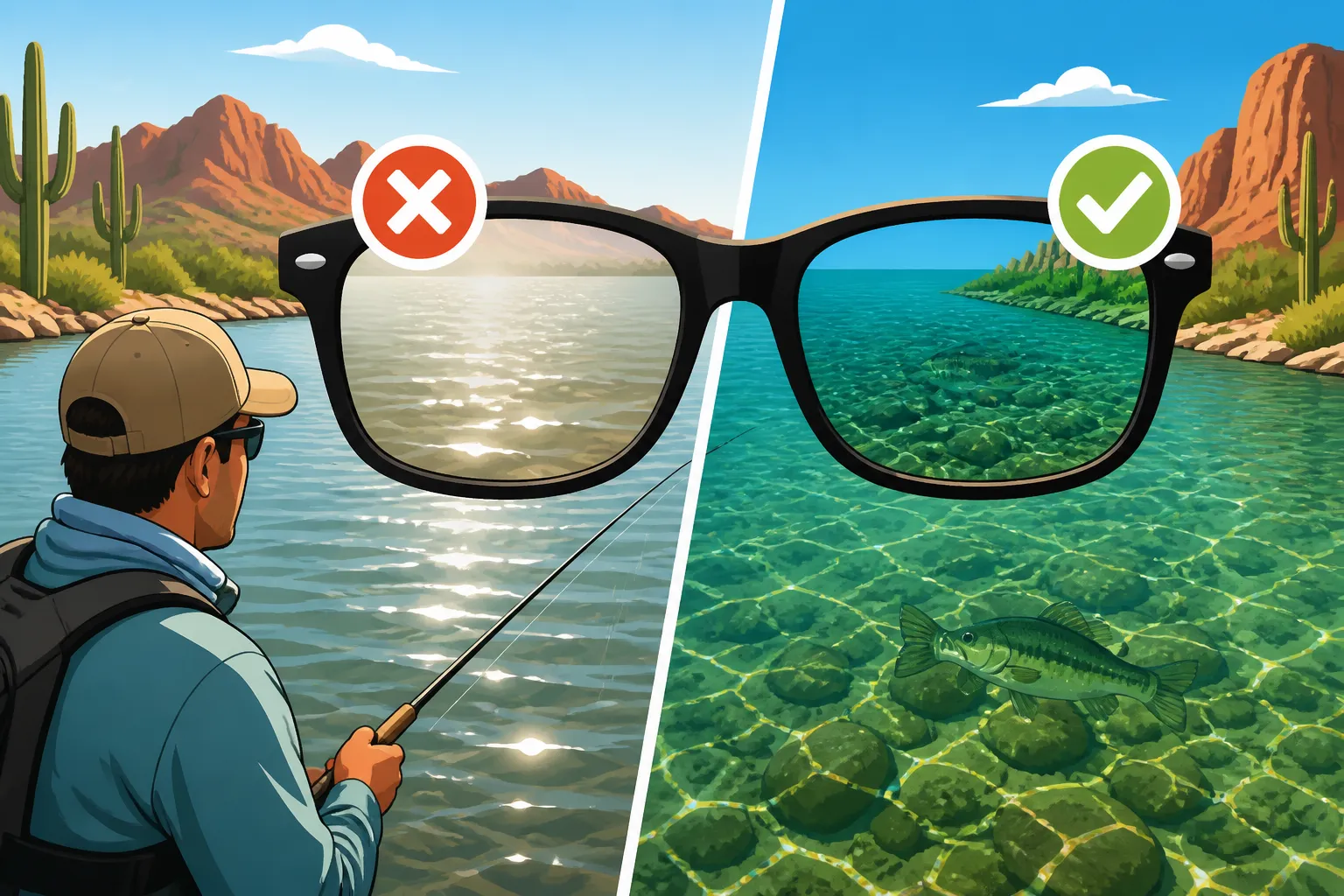
Surface glare happens when sunlight hits the water and reflects directly back into your eyes. Think of it like a mirror. When the sun is high or at a certain angle, that reflection can be incredibly intense. This isn't just the bright spot where the sun is reflecting directly; it's a broad sheen that covers much of the water, especially on open lakes. The light waves reflecting off the horizontal surface of the water become predominantly horizontally oriented. Our eyes, unfortunately, aren't designed to filter out these specific horizontal light waves, leading to that blinding effect that obscures everything beneath the surface. It washes out color, diminishes contrast, and basically creates a wall between you and the fish you're trying to locate.
Why Arizona Fishing is Prone to Glare
Our state’s natural beauty, with its clear waters and wide-open desert landscapes, ironically makes us particularly susceptible to glare. Unlike areas with dense forest canopies that provide natural shade, many of Arizona's most popular fishing spots, such as Roosevelt Lake, Lake Havasu, or even smaller community fishing ponds, are exposed to direct sunlight for most of the day. The desert air is often dry and clear, meaning less atmospheric haze to diffuse sunlight. Furthermore, many of our lakes have surprisingly clear water, especially in the cooler months or deeper sections. While clear water sounds great for fishing, it also means that the sun's rays penetrate deeply, and the resulting reflections are often more intense. Imagine trying to spot a cruising Largemouth Bass Fishing Guide for Arizona in the shallows of Saguaro Lake on a bright, cloudless afternoon – the glare can make it feel impossible.
How Polarized Sunglasses Work Their Magic
So, you're battling the glare, squinting, and maybe even getting a headache from the strain. This is where polarized sunglasses step in as an absolute game-changer. They aren't just tinted lenses; they're specifically engineered to combat that annoying surface glare, giving you an almost supernatural ability to see into the water. For any serious angler in Arizona, or even a casual one who just wants to improve their chances, understanding how these glasses work is key to appreciating their value.
The Science Behind Glare Reduction
The magic of polarized sunglasses lies in a special filter embedded within the lenses. This filter is made of tiny, vertically aligned molecules. When light hits a horizontal surface like water, it vibrates horizontally. The polarized filter acts like a Venetian blind, blocking those horizontally vibrating light waves that cause glare, while allowing vertically vibrating light waves (which carry useful visual information) to pass through. It's a selective filtering process. Without getting too bogged down in physics, think of it this way: normal sunglasses just dim all light, like turning down the brightness on a TV. Polarized sunglasses intelligently turn down only the glare, allowing you to see past the surface shimmer and into the aquatic world below.
The Visual Advantage for Anglers
The moment you put on a good pair of polarized sunglasses, it's often an immediate "aha!" moment. Suddenly, that blinding white sheen on the water's surface disappears, and you can actually see into the depths. You'll notice subtle changes in water color, dark patches that indicate submerged vegetation, or the faint outline of a rock pile you never knew was there. For bass anglers, this means spotting that Smallmouth Bass Fishing Guide for Arizona tucked tight against a canyon wall at Lake Powell. For trout enthusiasts on the Lower Salt River, it means seeing the dark shapes of fish holding in riffles and runs. This improved visibility isn't just about seeing fish; it's about understanding the underwater environment, which is crucial for effective angling. The ability to distinguish structure, transitions in bottom composition, and even the shadow of a passing cloud, all become clearer and more defined, giving you a significant edge.
The Tangible Benefits for Sight Fishing
Beyond just reducing glare, polarized sunglasses offer concrete advantages that directly impact your success, especially when you're trying to hunt fish by sight. In Arizona's often clear waters, where fish can be spooky and conditions can change rapidly, every advantage counts.
Spotting Fish Before They Spot You
This is arguably the most critical benefit for sight fishing. Many fish, especially wary species like largemouth and smallmouth bass, are incredibly sensitive to movement above the water. If you can spot them first, you have the opportunity to make a more accurate and stealthy cast. Imagine cruising the flats at Bartlett Lake. With polarized lenses, you might pick out the subtle twitch of a bass's tail fin or the darker shadow of its body camouflaged against the bottom, long before it bolts away. Without them, you'd likely spook the fish by casting blindly or walking too close. This ability to spot fish, assess their behavior, and present a lure without alerting them is a cornerstone of effective sight fishing techniques, particularly in clear, shallow waters. It allows for a more targeted approach, rather than simply casting to likely spots and hoping for a bite.
Identifying Underwater Structure and Cover
Fish are almost always associated with structure or cover. It provides them with ambush points, protection from predators, and relief from direct sunlight. Polarized sunglasses dramatically improve your ability to identify these crucial elements. What might look like featureless water to the naked eye could reveal a submerged timber field at Roosevelt Lake, a rocky drop-off at Canyon Lake, or even a subtle weed line where crappie are holding. Being able to visually pinpoint these underwater features allows you to present your bait or lure precisely where the fish are most likely to be. Instead of making speculative casts, you're making educated ones, significantly increasing your chances of a strike. Understanding Deep Water Structure Fishing Techniques becomes much easier when you can actually see the contours and features you're trying to fish. This visual reconnaissance helps you build a mental map of the fishing grounds and fish more efficiently.
Enhanced Safety and Comfort on the Water
While catching more fish is a primary goal, your comfort and safety on the water are just as important, especially under the intense Arizona sun. Prolonged exposure to glare can cause eye strain, fatigue, and headaches, which can quickly turn an enjoyable day into a miserable one. Polarized sunglasses not only reduce this strain but also offer crucial UV protection, shielding your eyes from harmful rays that can cause long-term damage. Beyond personal comfort, clear vision is vital for safety, particularly if you're navigating by boat or kayak. Being able to see submerged hazards like rocks, stumps, or sandbars improves your situational awareness and helps prevent accidents. When you're comfortable and your eyes are protected, you can focus better on the fishing itself, leading to a more pleasant and productive experience. They are truly an essential part of your Boating Safety Gear Requirements in Arizona and overall well-being.
Choosing the Right Pair: What to Look For
Okay, so you're convinced that polarized sunglasses are a must-have for your Arizona fishing adventures. But with so many options out there, how do you choose the right pair? It's not just about picking the coolest looking frames; there are specific features that can make a real difference in performance and comfort on the water.
Lens Colors and Their Applications
The color of your polarized lenses isn't just a fashion statement; it's crucial for different light conditions and environments. Here's a quick breakdown to help you decide:
| Lens Color | Ideal Conditions | Best For | Notes |
|---|---|---|---|
| Grey/Smoke | Bright, sunny days, offshore, open water | General purpose, deep water, bright sun | Reduces overall brightness without altering colors significantly. |
| Brown/Copper | Variable light, partly cloudy, inshore, rivers | Shallow water, sight fishing, enhancing contrast | Excellent for seeing fish and structure in varying light. |
| Amber/Yellow | Low light, cloudy, dawn/dusk, murky water | Enhancing contrast in dim conditions | Brightens vision, great for early mornings or late evenings. |
| Green Mirror | Medium to bright light, general fishing | Versatile, good for a mix of conditions | Often a brown/copper base with a mirror coating; enhances contrast. |
| Blue Mirror | Extremely bright light, open water, saltwater | Offshore, very sunny conditions | Often a grey base with a mirror coating; maximum glare reduction. |
For most Arizona sight fishing scenarios, especially in our clear desert lakes, brown or copper lenses are often a fantastic choice. They enhance contrast, making it easier to pick out subtle details against the bottom. If you frequently fish during dawn or dusk, or on overcast days, an amber or yellow lens can be incredibly beneficial. Meanwhile, on those scorching, cloudless Arizona afternoons, grey or blue mirror lenses offer superior comfort and glare protection. Think about where and when you fish most often, and pick a lens color that matches those conditions.
Frame Styles and Fit for Anglers
The frames are more than just what holds the lenses; they contribute significantly to comfort, coverage, and durability.
- Coverage: Look for frames that wrap around your face to block light from the sides and top. This peripheral coverage is vital to prevent glare from sneaking in and defeating the purpose of your polarized lenses. Wide temples can also help.
- Comfort: You'll be wearing these for hours, so comfort is paramount. Lightweight materials, soft nose pads, and flexible temples that don't pinch behind your ears are key. Some frames even feature hydrophilic rubber on the nose and temples, which actually grips better when wet or sweaty – a huge plus in the Arizona heat!
- Durability: Fishing gear takes a beating. Opt for sturdy materials that can withstand drops, bumps, and exposure to sun and water. Many brands offer frames made from robust nylon or other high-performance plastics.
- Ventilation: In our warm climate, fogging can be an issue. Some frames incorporate small vents or a design that allows for airflow to prevent your lenses from fogging up when you're working hard.
Considering these factors ensures your sunglasses not only perform well but also feel good throughout your entire Best Time of Day to Fish in Arizona Heat outing.
Where to Find Quality Polarized Sunglasses
When it comes to purchasing polarized sunglasses, you have a plethora of options, ranging from budget-friendly choices to premium, high-performance brands. The key is to find a balance between quality and your personal needs. Many anglers start by checking out outdoor retailers like Bass Pro Shops, where you can often try on various styles and lens colors to see what feels best and offers the most clarity. They usually have knowledgeable staff who can guide you through the features of different models. You can also find a vast selection online through platforms like Amazon, which offers the convenience of home delivery and a wide range of price points. Just be sure to read reviews and confirm that the lenses are indeed polarized, as some regular tinted glasses can be mistakenly marketed. Invest in a reputable brand; while the initial cost might be higher, the enhanced visibility, eye protection, and comfort are well worth it for any serious Arizona angler.
In conclusion, while you technically can go fishing without polarized sunglasses, if you're serious about sight fishing in Arizona's sunny and often clear waters, they are absolutely essential. They are more than just an accessory; they are a critical tool that gives you a distinct advantage, allowing you to see deeper, spot more fish, and fish more effectively and comfortably. So, next time you're gearing up for a trip to the Best Fishing Lakes in Arizona or exploring the Salt River Arizona Fishing Guide, make sure a quality pair of polarized sunglasses is at the top of your Fishing Gear Checklist for Desert Lakes. You'll be amazed at what you've been missing.
Disclaimer
This article is for general informational purposes only and does not constitute professional advice. Laws, prices and regulations vary by location and change over time. Consult a qualified professional for guidance on your specific situation.