Is a Circle Hook Required for Bait Fishing in Arizona?
It's easy to get tangled up in all the rules and regulations when you're just trying to enjoy a peaceful day out on the water, especially if you're new to Arizona fishing or coming from another state with different laws. One question that pops up a lot, particularly for those who love bait fishing, is whether you have to use circle hooks. This guide will untangle that knot of confusion, helping you understand when they're required, why they're beneficial, and how to stay on the right side of the law while keeping your fishing ethical.
The General Rule: Are Circle Hooks Required in Arizona?
Let's cut right to the chase because I know you're looking for a clear answer. For the vast majority of recreational bait fishing across Arizona's incredible lakes, rivers, and community ponds, no, a circle hook is not universally required by the Arizona Game and Fish Department (AZGFD). Many anglers continue to use J-hooks or other traditional hook styles with bait, and that's perfectly legal in most general fishing scenarios. It's a common misconception, especially with the growing popularity and proven benefits of circle hooks, that they are mandatory everywhere. However, the regulations are nuanced, and it’s critical to understand where the general rule applies and where exceptions might exist.
Standard Regulations for Most Waters
In most of Arizona's popular fishing destinations, from the vast expanse of Lake Pleasant to the cooler waters of the White Mountains, anglers casting a line with worms, corn, or cut bait aren't bound by a statewide circle hook mandate. This means if you're chasing catfish at Bartlett Lake or trying for trout in an urban pond, you generally have the flexibility to choose your hook style. This freedom of choice allows experienced anglers to stick with what they know and beginners to experiment with different setups to find what works best for them. However, even without a requirement, it's worth considering the advantages of circle hooks, which we'll delve into shortly. The key is to always have a copy of the current AZGFD fishing regulations on hand, whether it's the physical booklet or the digital version, because local rules can and do change. Arizona Fishing Regulations Explained is a great resource to learn more.
The "Why" Behind Circle Hooks
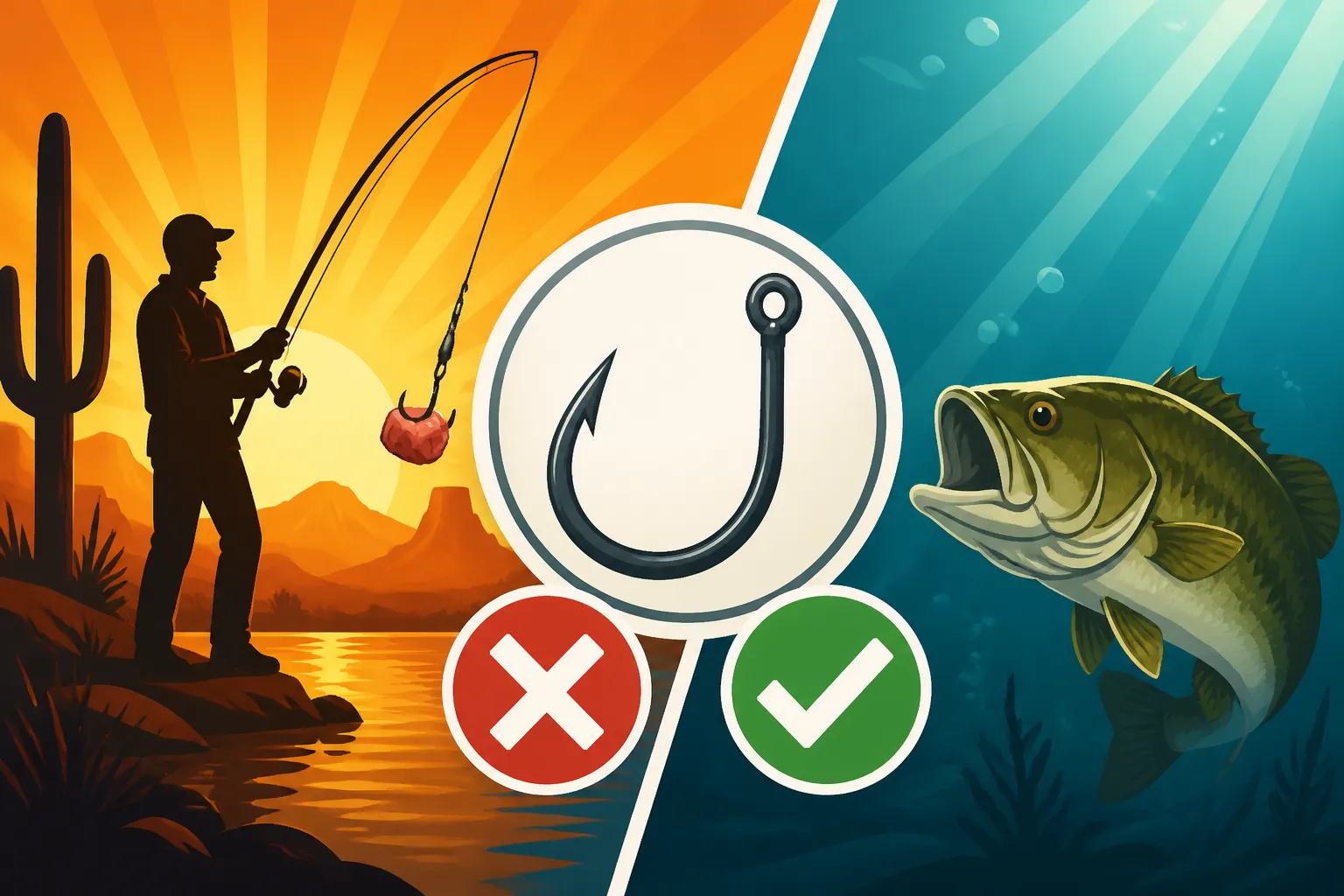
So, if they're not always required, why do so many anglers and conservation groups advocate for circle hooks? The "why" is deeply rooted in fish conservation and improving the survival rates of released fish. A traditional J-hook often results in "gut hooking," where the fish swallows the bait and the hook becomes lodged deep in its esophagus or stomach. This is particularly problematic in catch-and-release situations, as it significantly reduces the fish's chances of survival after being unhooked.
Circle hooks, on the other hand, are designed to naturally slide into the corner of a fish's mouth as the line tightens and the fish turns away. This unique design almost always results in a jaw hook-up, which is far less damaging and makes for a quicker, cleaner release. For species like bass and trout, which are often targeted for catch-and-release, this distinction can be the difference between a thriving population and a struggling one. It’s about being responsible stewards of our aquatic resources, ensuring that future generations can enjoy the same incredible fishing opportunities we do today.
Checking the Latest Regulations
It cannot be stressed enough: fishing regulations are dynamic. They are reviewed and updated by the Arizona Game and Fish Department periodically to protect fish populations, manage specific fisheries, and adapt to changing environmental conditions. While the general rule is no universal circle hook requirement, there could be specific, localized exceptions that you absolutely need to know about.
Imagine you're planning a trip to a remote stream in the White Mountains, or maybe you're targeting a sensitive native species in a specific part of the Colorado River. These are precisely the types of situations where special regulations, including hook types, might come into play. Always consult the most current official Arizona Game and Fish Department fishing regulations before you head out. Don't rely on old pamphlets, forum posts from a few years ago, or what your buddy told you last season. You can find these regulations online on the AZGFD website, or pick up a printed copy at most license dealers, including many Bass Pro Shops locations or local tackle stores. This simple act of checking can save you from potential fines and, more importantly, ensures you're fishing in a way that helps conserve Arizona's precious fish populations. Arizona Fishing Rules for Beginners offers even more foundational advice.
Specific Waters Where Circle Hooks Are Mandated (or Highly Recommended)
While the blanket rule across Arizona doesn't mandate circle hooks, there are indeed specific situations and locations where they become either a legal requirement or an incredibly strong recommendation due to conservation efforts. These aren't widespread, but they are crucial to understand for responsible angling. Ignoring these specific rules can lead to citations and penalties, which nobody wants when they're trying to enjoy nature.
Special Regulation Waters
Arizona is home to a diverse array of aquatic environments, and some of these are designated as "special regulation waters." These areas often host sensitive or endangered fish species, or they are managed intensely for specific types of recreational fishing, such as trophy trout programs or native fish restoration efforts. In these particular spots, the AZGFD may implement stricter rules regarding bait, tackle, and even hook types, all designed to minimize harm to fish, particularly those intended for release.
For instance, certain designated catch-and-release only sections of rivers or specific lakes might explicitly state that only artificial lures with single barbless hooks, or specifically, circle hooks with natural bait, are permitted. These rules are put in place for a good reason, aiming to maximize the survival rate of every fish caught and released. It’s always important to pay close attention to any signage at the access points of these waters and to cross-reference with the latest AZGFD regulations booklet. This proactive approach ensures you're not inadvertently violating rules meant to protect our fisheries.
Native Fish Conservation Areas
Arizona is a beautiful state, but its native fish populations face significant challenges, largely due to habitat loss and the introduction of non-native species. As a result, certain areas are designated as critical habitats for native fish protection. In these sensitive ecosystems, you might encounter regulations that specifically require circle hooks when using natural bait. The rationale is clear: native species often have different feeding behaviors or more delicate mouth structures, making them especially vulnerable to deep hooking by traditional J-hooks.
Consider areas where species like Apache Trout or Gila Trout are being protected and restored. While these might often be fly-fishing or artificial lure-only zones, if bait fishing is allowed, a circle hook requirement would be a logical conservation measure. The goal here is to ensure that if a protected native fish accidentally takes your bait, it can be released with the highest possible chance of survival. This contributes directly to the recovery and long-term health of these unique Arizona fish. Understanding Native Fish Protection Rules in Arizona is essential for any angler exploring these delicate areas.
Tournament Rules and Specific Permits
Beyond the general AZGFD regulations, you might encounter circle hook requirements in other contexts. Fishing tournaments, for example, especially those with a strong emphasis on catch-and-release or those targeting specific species like bass or crappie, frequently include circle hook mandates in their rules. Tournament organizers often go above and beyond standard regulations to promote ethical angling and maintain high fish survival rates, which is good for the sport and the fish.
Similarly, if you're participating in a specific research project, a special guided trip on certain waters, or if you obtain a unique permit for a particular fishing activity, those permits may come with their own set of conditions, which could include hook type. This is less common for the average recreational angler but is a good reminder that fishing isn't always a one-size-fits-all regulatory landscape. Always read the fine print on any tournament entry forms or special permits to avoid surprises. Fishing Tournament Permit Rules in Arizona would provide more specific information if you're considering competitive angling.
Understanding Circle Hooks: Benefits and Usage
Even when they're not explicitly required, understanding the mechanics and advantages of circle hooks can genuinely improve your fishing experience, both in terms of success and ethical angling. Many experienced anglers, myself included, have adopted them as a preferred hook type for bait fishing, appreciating their effectiveness and contribution to conservation.
How Circle Hooks Work
The design of a circle hook is its genius. Unlike a J-hook, where the point and barb are parallel to the shank, a circle hook's point is angled inward, pointing back towards the shank. When a fish takes bait on a circle hook, it often swallows the bait whole. As the fish swims away and the line tightens, the hook naturally rotates out of the fish's throat or stomach. Because of its inward-pointing design, the hook can't catch anywhere until it reaches the mouth, where it then snags securely in the corner of the jaw.
The key to successfully using a circle hook is not to set the hook with a strong upward sweep of the rod, as you would with a J-hook. Instead, you simply let the fish take the bait, let the line come tight, and then begin to reel steadily. The hook will do its job and set itself. This can take some getting used to, as the instinct to "set the hook" is deeply ingrained in many anglers. But once you trust the circle hook, you'll find it incredibly efficient and effective.
Advantages for Anglers and Fish
The benefits of circle hooks are truly a win-win for both anglers and the fish we pursue. For the fish, as mentioned, the primary advantage is significantly reduced internal injury. A jaw hook-up heals much faster and is far less likely to result in mortality compared to a gut hook. This is especially vital for catch-and-release fishing, ensuring that those trophy bass or a native trout can swim away healthy and continue to grow. This leads to healthier fish populations overall, which means better fishing for everyone in the long run. Catch and Release Rules for Arizona Anglers really highlight the importance of these practices.
For anglers, circle hooks offer several compelling advantages:
- Higher Landing Rates: Because they consistently hook fish in the strong, bony part of the jaw, circle hooks tend to hold better, reducing the chance of a fish throwing the hook during the fight.
- Easier Hook Removal: A hook in the corner of the mouth is much simpler to remove than one deep in the gullet, often requiring minimal tools and less stress on the fish.
- Less Bait Loss (Sometimes): While not always the case, the unique design can sometimes keep bait on the hook better, especially with softer baits.
- Reduced Bycatch Mortality: If you're targeting one species but accidentally catch another that you intend to release, the circle hook increases that fish's survival odds.
Choosing and Rigging Circle Hooks
Choosing the right circle hook involves a few considerations, much like any other tackle. Size is paramount and should match the size of your bait and the mouth size of the target species. A hook that's too large for your bait will look unnatural, while one too small might not hold effectively. The material and sharpness are also important – look for high-carbon steel hooks that are chemically sharpened for better penetration. You can find a wide variety of circle hooks at retailers like Bass Pro Shops or through online stores like Amazon.
Here's a quick guide to common circle hook rigging:
| Bait Type | Common Rigging Method | Notes |
|---|---|---|
| Worms/Nightcrawlers | Threaded onto the hook or "wacky rigged" | For smaller worms, thread the hook through once or twice. For larger nightcrawlers, you can wacky rig by hooking through the middle, letting both ends dangle naturally. Avoid over-threading. |
| Cut Bait (e.g., Shad, Mackerel) | Through the skin and out the flesh | Hook through the tougher skin of the cut bait and bring the point out through the flesh. Ensure the hook point is exposed. |
| Live Minnows/Baitfish | Through the lips or back (carefully) | Hook gently through both lips, or carefully through the back (above the lateral line, avoiding the spine) to allow natural movement. The key is minimal obstruction to the hook gap. |
| Shrimp | Through the tail or body | Hook through the tail section for durability, or through the main body, ensuring the point is exposed. |
| Marshmallows/Corn | Through one side and out the other (exposed) | Simple rigging, just ensure the hook point is completely clear of the bait. |
When rigging, always make sure the hook gap is clear. The design of the circle hook relies on its point being able to rotate freely and catch the jaw. If the bait is too bulky and obstructs the hook point, it won't work effectively. Many anglers use a snell knot or a Palomar knot to attach circle hooks to their line, ensuring a strong connection that maintains the hook's orientation. Pairing them with the Best Line for Catfish Fishing or Best Line for Trout Fishing can make a real difference.
Staying Compliant and Fishing Responsibly in Arizona
Ultimately, enjoying Arizona's fantastic fishing opportunities responsibly means understanding and adhering to the rules, and beyond that, embracing ethical practices that benefit our natural environment.
The Importance of the AZGFD Regulations
I've said it before, and I'll say it again: the Arizona Game and Fish Department's official regulations booklet is your Bible. It's not just a suggestion; it's the law. These regulations cover everything from license requirements and bag limits to specific gear restrictions and seasonal closures. Changes happen, and they're there to protect fish and ensure fair chase. So, before every fishing trip, especially if you're exploring a new body of water or haven't fished in a while, give those regulations a thorough read.
You can usually find the most up-to-date information on the AZGFD website, where they often have a downloadable PDF version. Local sporting goods stores, bait shops, and even some general stores that sell fishing licenses (like many major retailers) often have printed copies available. Don't risk a Fishing Violation Fines and Penalties in Arizona by being unaware. Knowledge is power, and in this case, it keeps you legal and helps maintain healthy fish populations.
Best Practices for Ethical Angling
Beyond what's strictly required by law, ethical angling involves a mindset of respect for the fish and their habitat. Using circle hooks when bait fishing, even where not mandated, is a prime example of a best practice that goes a long way. But it doesn't stop there.
Consider these ethical angling principles:
- Minimize Stress: Handle fish gently, especially those you intend to release. Keep them in the water as much as possible, use wet hands to avoid removing their protective slime layer, and release them quickly.
- Proper Gear: Use appropriately sized tackle for the fish you're targeting. Overpowering tackle can exhaust a fish to the point of no return, while gear that's too light can prolong the fight excessively, causing unnecessary stress.
- Selective Harvest: Only keep what you will eat, and be mindful of slot limits and trophy regulations. Sometimes, letting a larger fish go means it can continue to spawn and contribute to the population.
- Leave No Trace: Pack out everything you pack in. This includes fishing line, bait containers, and any other trash. Our beautiful Arizona lakes and rivers deserve to remain pristine.
- Know Your Species: Be able to identify the fish you're catching, especially if there are specific regulations for certain species or if native fish might be present. Check out the Fish Species Guide for Arizona Lakes to brush up on your identification skills.
By adopting these practices, you're not just fishing; you're actively participating in the conservation of Arizona's aquatic ecosystems, ensuring that the joy of fishing can be experienced for generations to come.
Where to Buy Compliant Gear
Finding the right gear, including compliant hooks, is easier than ever. Most well-stocked outdoor retailers will carry a range of circle hooks in various sizes and styles.
- Large Retailers: Stores like Bass Pro Shops are excellent resources. They typically have extensive fishing departments with knowledgeable staff who can help you pick out the right hooks for your target species and fishing style. They'll also have the current AZGFD regulations available.
- Online Stores: Websites like Amazon offer an enormous selection of circle hooks from numerous brands. This can be convenient, but always double-check product descriptions to ensure you're getting the right size and type. It's also a great place to find items for your Essential Tackle Box Setup for Arizona Beginners.
- Local Bait and Tackle Shops: Don't forget your local, independent bait and tackle shops. These often have the most up-to-date local knowledge about what's working and any specific nuances for nearby waters. They are invaluable community resources.
When purchasing, look for hooks that are labeled as "non-offset" if you're fishing in a situation where that might be a requirement (though less common in Arizona, it's a good habit). Always aim for sharp hooks, as they penetrate more easily and cause less damage. Your Best Fishing Rods for Bass in Arizona and Best Fishing Reels for Beginner Anglers in Arizona are only as good as the hook on the end of the line!
Disclaimer
This article is for general informational purposes only and does not constitute professional advice. Laws, prices and regulations vary by location and change over time. Consult a qualified professional for guidance on your specific situation.