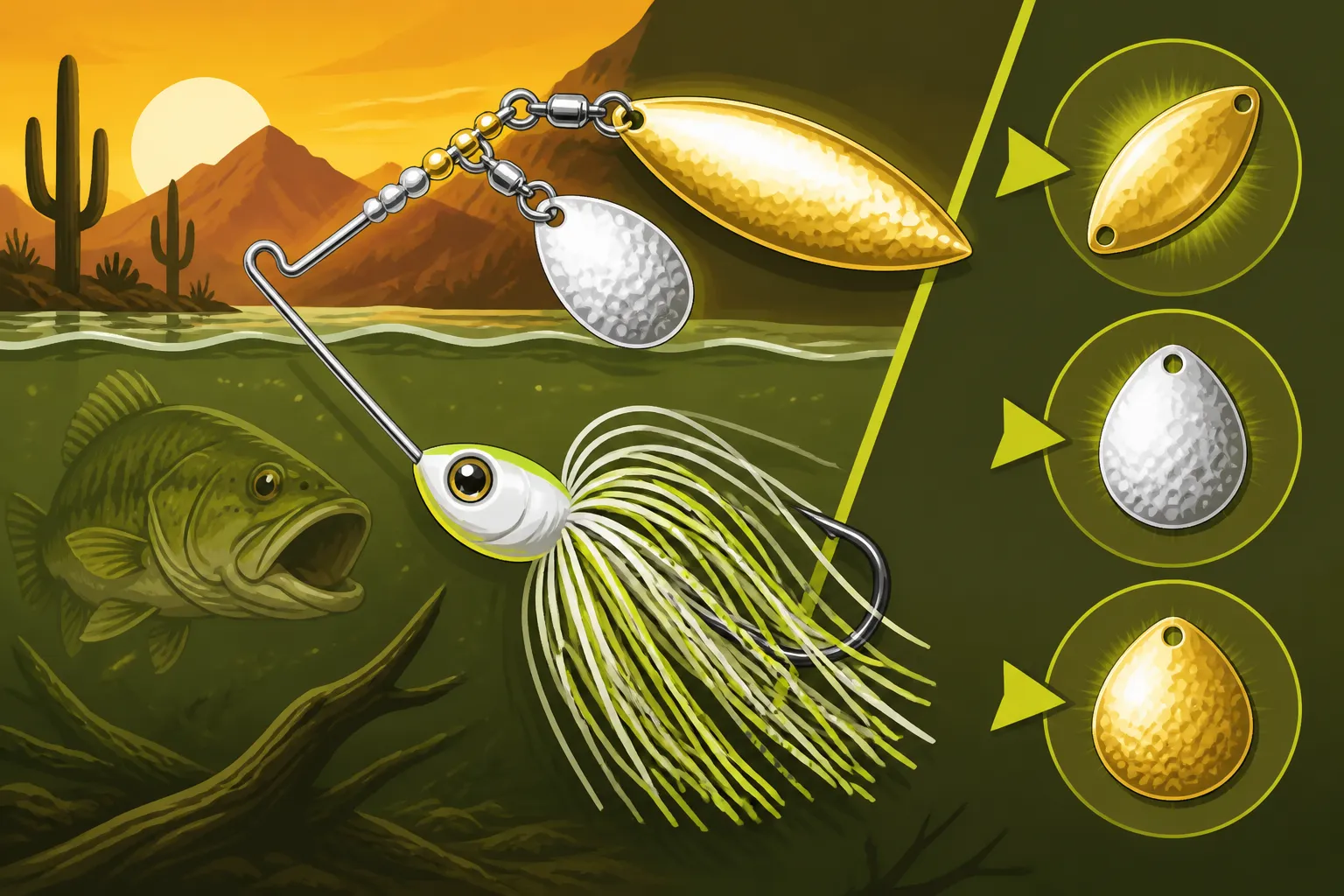
Best Spinnerbait Blade Style for Murky Water
Navigating Arizona's lakes and rivers can sometimes feel like a treasure hunt, especially when the water clarity isn't on your side. We've all been there: you pull up to your favorite fishing spot, full of anticipation, only to find the water churned up and murky from recent rains or heavy boat traffic. It's frustrating when your usual clear-water tactics fall flat because the fish just can't see your presentation. But don't throw in the towel! This guide is all about equipping you with the knowledge to select the absolute best spinnerbait blade styles for those challenging murky water conditions, helping you coax those hidden bass into striking.
Understanding Murky Water Conditions and Their Impact on Fishing
When the water turns murky, it's not just an aesthetic change; it profoundly impacts how fish feed and perceive their environment. Instead of relying on sight, which is severely limited, fish primarily use their other senses—their lateral line to detect vibrations and their sense of smell to track down prey. This shift in perception is why your go-to clear-water lures, which often prioritize visual appeal, suddenly become less effective.
What Makes Water Murky in Arizona?
Arizona's desert environment, while stunning, also contributes to specific murky water scenarios. First, our intense monsoon season can dump significant amounts of rain in a short period, sending runoff full of silt and sediment cascading into lakes and rivers. This creates a cloudy, often reddish-brown tint that drastically reduces visibility. Imagine fishing after a heavy storm has pushed a flash flood into the lower Salt River – that water isn't going to be crystal clear.
Secondly, high winds, which are common across our larger reservoirs like Lake Pleasant or Roosevelt Lake, can churn up shallow areas, suspending bottom sediments and making the water cloudy. Even heavy recreational boating traffic, especially on weekends, can contribute to localized murkiness as props stir up the lakebed in popular coves or near launch ramps. Each of these scenarios presents a challenge, but also an opportunity if you know how to adapt your tackle. For more general advice on dealing with post-rain conditions, check out our guide on How to Fish Muddy Water After a Monsoon.
How Fish Adapt to Low Visibility
In murky water, fish don't stop feeding; they simply change their hunting strategies. Bass, for instance, become more reliant on their lateral line system, a sensory organ that detects pressure changes and vibrations in the water. They're feeling for movement rather than seeing it. This means lures that displace a lot of water and create strong vibrations become king. Think of it like trying to find your keys in a dark room—you're going to reach out and feel around rather than relying on your eyes.
Their sense of smell can also become more pronounced. While spinnerbaits aren't primarily scent lures, the strong vibrations they emit can trigger a predatory response even when a fish is just vaguely aware of something moving nearby. This is a critical distinction from clear-water fishing, where the subtle flash and realistic profile of a lure might be enough. In low visibility, you need to shout, not whisper, to get their attention.
Spinnerbait Components: The Blades
Spinnerbaits are fantastic tools for covering water and triggering reaction strikes, but their effectiveness in varying conditions often boils down to one key component: the blades. These aren't just for show; they're engineered to create specific actions, flashes, and vibrations in the water, each designed to appeal to fish in different scenarios. Understanding how different blade styles function is the first step toward mastering murky water fishing.
The Role of Spinnerbait Blades
At its core, a spinnerbait blade has two main jobs: creating flash and creating vibration. In clear water, the flash—the way light reflects off the blade—is crucial for attracting fish from a distance and mimicking the shimmer of baitfish scales. However, in murky water, that visual flash is significantly diminished. Light penetrates poorly, and even a bright, shiny blade loses much of its appeal.
This is where vibration takes center stage. As the spinnerbait is retrieved through the water, the blades rotate, wobble, or flutter, displacing water and sending out pressure waves. These vibrations travel through the water and are picked up by a fish's lateral line. Think of it as a sonar ping, alerting the fish to the presence of potential prey. Different blade styles excel at creating different types and intensities of vibration, which is exactly what we'll leverage for murky water. For a broader look at what lures work best, consider our article on Best Baits and Lures for Arizona Fishing.
Common Blade Styles and Their Characteristics
There are three primary blade styles you'll encounter on spinnerbaits, each with its own unique characteristics:
- Willowleaf Blades: These are long, narrow, and often resemble the leaf of a willow tree. They are designed for maximum flash and minimal drag. They spin close to the spinnerbait's body, creating a tight, subtle vibration and allowing for faster retrieves. They're excellent in clear water or when fish are highly active and chasing bait.
- Colorado Blades: These blades are round or teardrop-shaped and cup deeply, creating significant water resistance and a wide, thumping vibration. They spin slower and generate a powerful thump, displacing a lot of water. They also create a substantial lift, making them useful for slower retrieves or keeping the bait higher in the water column.
- Indiana Blades: A hybrid between the willowleaf and Colorado, the Indiana blade is wider than a willowleaf but not as round as a Colorado. It offers a balance of flash and vibration, providing a medium thump and a decent amount of lift. It's often considered a good all-around choice when you're unsure which blade to pick.
When you're trying to figure out How Water Clarity Affects Lure Choice, knowing these basic blade characteristics is fundamental to making the right decision on the water.
Top Blade Styles for Murky Water
When the water is dirty, our goal shifts from visual appeal to sensory appeal. We want blades that make a racket, sending out strong vibrations and thumps that fish can feel even when they can't see much. This means prioritizing blades that displace a lot of water and create a noticeable "thump."
Colorado Blades: The Murky Water Champion
Without a doubt, the Colorado blade is the king of murky water spinnerbait fishing. Its distinct, round shape and deep cup are specifically designed to push a maximum amount of water. As it spins, it creates a powerful, wide vibration that thumps through the water, generating strong pressure waves that fish easily detect with their lateral line.
Think about it this way: in low visibility, you don't want a whisper; you want a shout. A Colorado blade doesn't just shimmer; it vibrates with purpose. This strong vibration can call fish in from a greater distance, making it indispensable when visibility is only a few inches. The slower rotation of Colorado blades also means you can retrieve your spinnerbait at a slower pace while still maintaining that crucial blade action, which is often beneficial in murky water where fish might be less aggressive or slower to react. If you're heading out after a big storm, stocking up on Colorado-bladed spinnerbaits from places like Bass Pro Shops or even finding a variety pack on Amazon could make a huge difference.
Indiana Blades: The Versatile Runner-Up
While Colorado blades are the top choice, Indiana blades offer a fantastic compromise, making them a strong second option for murky water, especially when the water isn't completely opaque. They have a wider profile than a willowleaf but aren't as cupped as a Colorado, providing a good balance of flash and vibration.
An Indiana blade spins faster than a Colorado but still creates a more pronounced thump than a willowleaf. This versatility means it can be effective in slightly stained to moderately murky conditions. If you're fishing a lake that's a bit turbid but not totally chocolate milk, an Indiana blade might be the perfect choice. It gives you some of that vital vibration without sacrificing all the flash, which can be useful if there are moments of slightly better visibility. They also allow for a bit faster retrieve than a Colorado, which can be helpful if you need to cover water more efficiently.
Rigging and Techniques for Murky Water Spinnerbait Fishing
Choosing the right blade style is only half the battle. How you rig and retrieve your spinnerbait in murky conditions is equally important. Everything from your line choice to your retrieve speed can influence how well your lure is detected and how effectively you convert bites into hooked fish.
Maximizing Vibration and Profile
When fishing murky water, your primary goal is to make your spinnerbait as "loud" and noticeable as possible. This means thinking beyond just the blades.
- Trailer Choice: Adding a plastic trailer to your spinnerbait's hook can significantly enhance its profile and add extra vibration. Paddle tail swimbaits, grubs, or even a simple piece of plastic craw can flap and wiggle, contributing to the overall disturbance in the water. These soft plastic additions create more bulk and movement, making the spinnerbait appear larger and more enticing to fish relying on their lateral line.
- Skirt Colors: While visual appeal is diminished, some color can still make a difference. Opt for highly contrasting or fluorescent colors for your spinnerbait skirt. Chartreuse, white, black, and bright orange are excellent choices. These colors stand out more in low light conditions, offering a faint visual cue even through the murk. Sometimes, even a subtle glow can be enough to trigger a strike when paired with strong vibrations. For insights into general bass fishing strategies, consider our guide on Best Bass Fishing Techniques for Arizona Lakes.
Retrieval Speed and Presentation
Your retrieve speed and presentation methods need to adapt to the lower visibility and the fish's sensory focus.
- Slow and Steady: Forget fast burning retrieves. In murky water, fish need more time to locate your lure. A slow, steady retrieve is usually best. This allows the Colorado or Indiana blades to really churn water and send out those strong vibrations. It also gives the fish more time to home in on the source of the commotion.
- "Wobble" Retrieves: Experiment with slightly inconsistent retrieves. Instead of a purely steady retrieve, try short pauses or subtle jerks of the rod tip. This can cause the spinnerbait to momentarily flutter or change its vibration pattern, often mimicking an injured baitfish and triggering a reaction strike from a hesitant bass.
- Contact Points: Focus your casts on likely ambush points where bass might be hiding, such as submerged timber, rock piles, or weed lines. Even if they can't see your lure from a distance, casting directly into their living room increases the chances they'll feel it passing by. Remember, they're not actively chasing across open water in these conditions; they're waiting for prey to come to them.
Why Blade Selection Matters: Sound, Vibration, and Flash
Understanding the physics behind why certain blade styles work better in murky water can really elevate your fishing game. It's not just about what you can see; it's about what the fish can perceive. Each blade style has a unique signature in the water, and matching that signature to the conditions is key.
The Science of Vibration and Sound
As mentioned earlier, vibration is paramount in murky water. Colorado blades, due to their large, cupped surface area, create the most significant water displacement and thus the strongest vibrations. This translates to a deep, thumping sound signature that travels effectively through turbid water. It's like a loud drum beat that calls out to bass from a distance.
Think about how sound travels through different mediums. In water, it travels much faster and further than in air. The vibrations created by the blade are essentially low-frequency sound waves that travel through the water, picked up by the fish's sensitive lateral line. This system acts as a "remote touch" sense, allowing fish to detect movement and pressure changes in their environment, even in complete darkness or zero visibility. When bass are in a low-visibility hunting mode, they are honed in on these signals. Many anglers find their favorite murky water spinnerbaits, often with large Colorado blades, at retailers like Bass Pro Shops or even online through Amazon, where a wide selection of colors and weights are usually available.
Flash and Visual Contrast
While flash is less important in murky water than vibration, it's not entirely irrelevant. Some light can still penetrate, and even a faint shimmer or a contrasting color can provide a minimal visual cue. This is where blade color becomes important. Rather than polished silver or gold, which rely on bright reflections, consider painted blades in duller finishes like white, chartreuse, or even matte black. These colors create stronger visual contrast against the murky background, offering a better silhouette for fish to discern if they get close enough for a fleeting glimpse.
Additionally, the slow, wide rotation of Colorado blades, even if not highly reflective, can still create a subtle pulsing visual effect that complements the strong vibrations. It's a combination of feeling and seeing, however slight, that ultimately convinces a wary bass to strike.
Choosing the Right Spinnerbait for Arizona's Murky Waters
Putting all this knowledge together means making informed decisions before you even cast. From the specific blade combination to the weight and color, every choice can impact your success.
Blade Combinations and Sizes
While a single Colorado blade is excellent, many spinnerbaits feature tandem blade setups. A common and highly effective combination for murky water is a large Colorado blade paired with a smaller Colorado or Indiana blade. This setup maximizes vibration and lift. The larger front blade pushes a significant amount of water, and the smaller trailing blade adds more flash and vibration.
| Blade Combination | Primary Vibration | Flash | Retrieve Speed | Best For |
|---|---|---|---|---|
| Single Colorado | Very High | Low | Slow | Extremely murky water, low light, deep retrieves, slow fish. Creates a strong thumping vibration. |
| Tandem Colorado | High | Medium | Slow-Medium | Moderately to very murky water, covers more water than single. Dual thumping action, increased profile. |
| Colorado/Indiana | Medium-High | Medium | Medium | Stained water, varying clarity, all-around murky conditions. Good balance of vibration and flash, versatile. |
| Willowleaf/Colorado | Medium | High | Medium-Fast | Slightly stained water, transitional conditions, when fish might be seeing a bit better but still need vibration. Combines flash with a noticeable thump. |
| Tandem Willowleaf | Low | Very High | Fast | Clear water, high sun, active fish chasing bait. Not ideal for murky water, as it prioritizes flash over vibration. |
The size of your blades also matters. Larger blades will generally create more vibration, which is a good thing in murky water. Don't be afraid to go with larger, #4 or #5 size Colorado blades, especially on a bait with a heavier head, to really move some water and ensure your spinnerbait is felt.
Weight and Head Design Considerations
The weight of your spinnerbait is crucial for controlling depth and retrieve speed. In murky water, you often want to keep your lure in the strike zone longer. Heavier spinnerbaits (3/8 oz, 1/2 oz, or even 3/4 oz) help you cast further, penetrate wind, and maintain depth in windy conditions or current. They also allow for a slower retrieve without the bait rising too quickly, which is often a disadvantage of lighter spinnerbaits in these conditions.
The head design of the spinnerbait also plays a role. Bullet-shaped heads cut through the water cleanly, while blunter, heavier heads can create more vibration at the point of entry and during the retrieve. For general gear advice, our guide on Best Fishing Rods for Bass in Arizona offers insights into matching your rod to your lure. Many anglers will also find valuable resources in Essential Tackle Box Setup for Arizona Beginners for building their foundational fishing arsenal.
Color Choices for Maximum Visibility
As touched upon earlier, while "visibility" is low for the fish, certain colors simply stand out better. Bright, opaque colors that contrast sharply with the dark, murky water are your best bet.
- Chartreuse: This neon yellow-green color is a proven murky water winner. It creates a stark contrast and is one of the most visible colors in low light and turbid conditions.
- White: A clean, crisp white can also be highly effective. It stands out like a beacon against a dark background, especially if there's any ambient light.
- Black/Blue: Don't overlook dark colors, particularly black or black and blue. These colors create a strong silhouette against a lighter sky, and sometimes a dark profile is exactly what a bass is looking for in stained water.
- Orange: Bright orange can also be a good choice, particularly in water with a brownish tint, as it provides a strong contrast.
Experiment with different skirt colors and even painted blade colors (like painted chartreuse or white blades) to see what the fish prefer on any given day. Remember, the goal is to create as much sensory appeal as possible, combining potent vibration with the most effective visual contrast the conditions allow. If you’re looking to improve your spring fishing, many of these principles apply to Spring Bass Fishing Tactics in Arizona as well, especially during periods of runoff.
Concluding Thoughts on Murky Water Mastery
Fishing murky water with spinnerbaits is less about what the fish can see, and much more about what they can feel and sense. By understanding the importance of strong vibrations and how different blade styles contribute to that, you can transform a frustrating day into a rewarding one. Prioritizing Colorado blades for their powerful thumping action, or opting for the versatile Indiana blade when conditions aren't quite as extreme, will significantly improve your chances.
Remember to slow down your retrieve, add trailers for extra bulk and movement, and choose high-contrast colors for your skirts. Arizona's waters, whether it's the large expanses of Seasonal Movement Patterns of Bass at Roosevelt Lake or a community lake after a summer storm, will inevitably present murky conditions. With the right spinnerbait blade style and a confident presentation, you'll be well on your way to hooking up with more bass, even when the visibility is at its worst.
Disclaimer
This article is for general informational purposes only and does not constitute professional advice. Laws, prices and regulations vary by location and change over time. Consult a qualified professional for guidance on your specific situation.