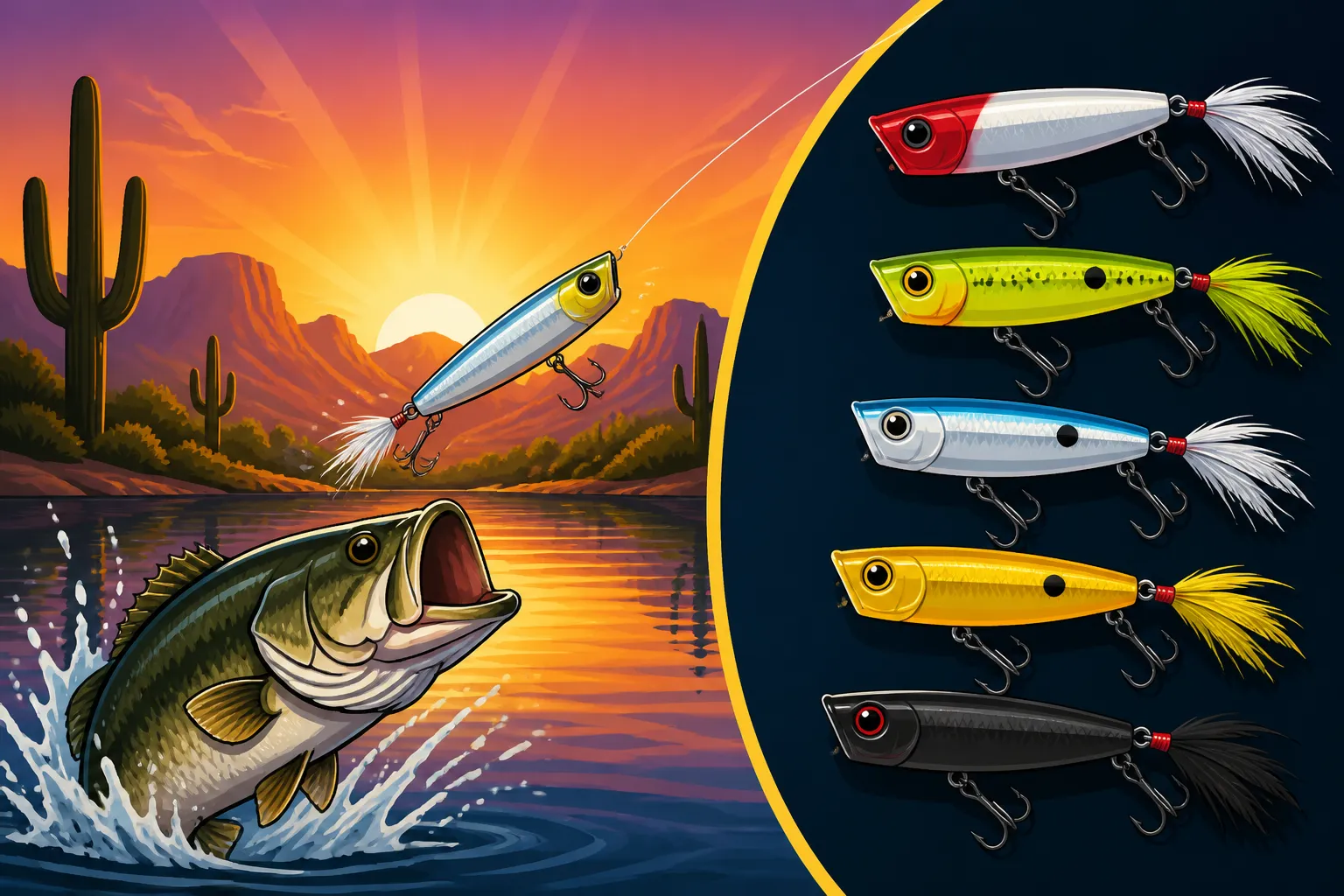
Best Topwater Lure Color for Dawn Fishing
Oh, the magic of dawn on an Arizona lake! There's truly nothing quite like it. That quiet hush, the cool air just before the sun crests the horizon, and the anticipation of that explosive topwater strike – it’s what we live for, isn't it? But then you open your tackle box, stare at a rainbow of topwater lures, and a nagging question pops up: which color is going to cut through that pre-dawn gloom and get those bass to commit? It's a common dilemma, and picking the right hue for those low-light conditions can feel like a guessing game. This guide is here to unravel that mystery, helping you understand the science and the practical application behind choosing the best topwater lure colors for your early morning fishing adventures in Arizona.
Understanding Light and Fish Vision at Dawn
Before we even talk about specific colors, it’s crucial to understand why color matters so much, especially when the light is barely kissing the horizon. Fish don't see the world quite like we do, and the shifting light conditions at dawn dramatically impact what they can perceive underwater. It's not just about what looks good to us on the surface; it's about what stands out, or blends in, in the fish's world.
The Science of Low Light Perception for Fish
Think about how your own vision changes from pitch-black night to the first faint glow of morning. You're not seeing vibrant colors right away; you're seeing shapes and contrasts. Fish are similar, but with some key differences in their ocular structure. Many predatory fish, like the bass we love to chase, rely heavily on detecting movement and silhouette in low light. Their eyes are incredibly sensitive to changes in light intensity, and they often have a broader spectrum of rod cells compared to cone cells, meaning they're built for detecting light and motion, not necessarily distinguishing fine color variations in the dimmest conditions. As the sun begins to creep up, however, those cones start to kick in, and true color perception becomes more relevant. This transition from deep shadow to breaking light is exactly why your color choice is so critical at dawn.
How Water Clarity and Sky Conditions Affect Lure Visibility
It's not just the time of day, but also what's going on above and below the water. On a crystal-clear Arizona lake like Canyon Lake, light penetrates deeper, and colors might become visible earlier. In murkier water, say after a recent monsoon rain on the lower Salt River, light struggles to penetrate, and visibility is severely reduced. Overcast skies keep things dimmer longer, emphasizing contrast, while a clear sky can bring brighter light levels more quickly.
Consider also the surface ripple. A calm, glassy lake surface reflects the sky beautifully, almost like a mirror, which can make a dark lure stand out like a beacon against the lighter sky reflection. A choppy surface, on the other hand, breaks up that reflection, scattering light and making it harder for fish to focus on a consistent silhouette. It's a complex interplay, but knowing these factors helps you make an educated guess rather than just pulling a lure out of a hat. When you're standing on the bank, observing these elements before your first cast can give you a significant edge in your decision-making.
Top Topwater Lure Colors for Early Morning Success
Alright, let's get down to brass tacks: what colors should you be tying on when that alarm goes off before the roosters even think about crowing? While there's no single magic bullet, certain colors consistently outperform others in those delicate dawn hours, primarily due to how they interact with low light and the fish's perception.
Black and Dark Colors: Maximizing Silhouette
When the sky is still dark, or even just transitioning from dark blue to purple, black is often your best friend. Why? Because black creates the most defined silhouette against the lighter sky above, making it incredibly easy for a fish to spot from below. Imagine a dark duck paddling across a twilight pond – it's a clear, unmistakable shape. That's the effect you're going for. Dark-colored topwater lures like black frogs, black walking baits, or dark buzzbaits can be absolutely deadly in the deepest pre-dawn hours.
This principle holds true even if the water itself is a bit stained. The contrast remains the key. Many experienced anglers swear by black topwaters for the first 30-45 minutes of light, especially on lakes known for big bass. The fish don't need to see the intricate details; they just need to see something that looks like an easy meal passing overhead. On a calm morning, a black Zara Spook or a dark-colored popping frog can generate some truly violent strikes, as the fish ambush what they perceive as a struggling critter on the surface. You can often find a good selection of these dark patterns at retailers like Bass Pro Shops or by browsing online on Amazon.
White and Silver: Mimicking Prey and Reflecting Light
As the light begins to increase, but before the sun is fully up, white and silver lures start to shine, literally. These colors are excellent for mimicking common baitfish like shad, which are often schooling near the surface in low light conditions. White and silver also have the advantage of reflecting ambient light, even if it's minimal, which can make them shimmer and flash in a way that catches a fish's eye. This can be particularly effective on clearer lakes where baitfish schools are prevalent.
A white or silver popper, a chrome walking bait, or a white buzzbait can be fantastic choices once you start seeing a bit more color in the sky. The subtle flash can imitate a fleeing baitfish perfectly. On days with a slight chop, the way these colors interact with the broken surface light can create an irresistible glimmer. If you’re fishing a lake like Lake Pleasant or Roosevelt Lake where shad are a primary forage, a white or silver topwater can be incredibly effective, especially as the fish start to rise from deeper water to feed. Best Lures for Largemouth Bass in Arizona Lakes can often include these lighter topwater options too.
Natural or Transparent Colors: When Fish Get Picky
Sometimes, the bass just aren't as aggressive as you'd like, or perhaps the light is transitioning quickly, and they're starting to get a better look at your offering. This is when more natural or even transparent colors can become effective. Think bone, clear with some glitter, or subtle greens and browns. These colors often work best in slightly clearer water where fish have better visibility and might be more wary of an unnaturally bright or dark presentation.
A bone-colored walking bait or a clear popper with some internal flash can be a great transition lure as the sun begins to peek over the horizon. These lures don't create an overpowering silhouette, but they offer enough visual interest to draw strikes from fish that might be shy of bolder colors. The idea here is to present something that looks more like a natural insect, frog, or small baitfish in a way that doesn't scream "artificial." This subtly can often fool highly pressured fish, or those that are in a neutral mood.
Beyond Color: Other Factors for Dawn Topwater Success
While color is a huge piece of the puzzle, it's never the only piece. To truly dominate the dawn bite, you need to consider how your lure's action, size, and your retrieve speed all play into the overall presentation. Remember, you're trying to convince a fish that your lure is a living, breathing, vulnerable meal.
Lure Action and Noise: Calling Them In
In low light, fish rely heavily on their lateral line system to detect vibrations and movement in the water. This means the action and noise your topwater lure creates can be just as important as its color. Poppers create a distinct "chug" and splash, simulating a feeding fish or a struggling creature. Walking baits, like a Zara Spook, create a side-to-side "walk-the-dog" action that mimics a frantic baitfish. Buzzbaits create a constant gurgling and sputtering sound.
- Poppers: Excellent for drawing fish from a distance, especially in calm conditions. The splash and pop can really grab their attention in the dim light. Experiment with pauses; sometimes they want a long, agonizing pause after a good chug.
- Walkers: The rhythmic side-to-side glide of a walking bait is incredibly enticing. It's a more subtle presentation than a popper but can be irresistible to bass looking for an easy meal. The key is to find that cadence.
- Buzzbaits: These are noise machines, perfect for covering water quickly and drawing aggressive reaction strikes. The blade churning on the surface sends out strong vibrations. A squeaky buzzbait is often considered a hot ticket item.
The key is to match the action and noise level to the conditions and the fish's mood. On a super calm morning, a subtle walk or soft pop might be better. If there's a slight ripple or the fish seem active, a louder presentation might be needed to get their attention. Check out resources on Topwater Fishing Techniques for Bass to really hone your presentation.
Lure Size and Profile: Matching the Hatch
Just like with color, lure size and profile are important for mimicking the natural prey available in the lake you're fishing. If bass are feeding on small shad or insects, a massive popper might be ignored. If they're keying in on larger bluegill or frogs, a small walking bait might not cut it.
- Baitfish Imitations: If you know there's a strong shad or minnow presence, go with a slender topwater like a prop bait or a walking stick bait. Sizes between 3-5 inches are usually good.
- Frog Imitations: If you're fishing around thick vegetation, lily pads, or reeds (common in some parts of Roosevelt Lake or specific coves on other desert lakes), a hollow-bodied frog is essential. Their soft body allows them to slide over cover without snagging.
- Insect/Small Prey Imitations: Tiny poppers or small prop baits can imitate injured insects or baby frogs, especially effective on calmer waters or when fish are being particularly picky.
Always observe your surroundings. Are there baitfish schooling? Do you see frogs jumping? Are there any insects skittering across the surface? These clues will guide you to the right size and profile.
Retrieve Speed and Cadence: Finding the Sweet Spot
Even with the perfect color, action, and size, if your retrieve is off, you might miss out. Dawn fishing often calls for a slower, more deliberate retrieve. Fish are still waking up, and while they might be aggressive, they're not necessarily going to chase down a lure speeding across the surface. A slower retrieve allows them more time to track the lure and commit to the strike.
- Pause and Go: This is a classic topwater retrieve for a reason. Cast your lure, let it sit for a few seconds (sometimes up to 10-15 seconds!), then give it a twitch or two, pause again. That initial splash-down and subsequent stillness often triggers a predatory response. The pause mimics a vulnerable, resting prey item.
- Steady Walk/Pop: If fish are more active, a steady "walk-the-dog" or consistent popping retrieve can be effective. The key is to maintain a rhythm that looks natural and enticing, without being too fast or erratic.
- Experiment: Don't be afraid to mix it up! Start slow, and if that's not working, try speeding it up a bit, or changing your cadence of twitches and pauses. The fish will tell you what they want. Sometimes, that subtle change is all it takes to turn a follow into a strike. This applies across all species and conditions, from Spring Bass Fishing Tactics in Arizona to winter.
Putting It All Together: Your Dawn Fishing Strategy
So, you've absorbed all this wisdom – now what? The goal isn't just to know the rules, but to adapt them to the ever-changing conditions you face on the water. Every dawn is a little different, and flexibility is key.
Scouting and Observing: The First Steps
Before you even make your first cast, take a moment. Look at the sky. Is it completely dark, or is there a faint glow? Is it cloudy or clear? How clear is the water you're fishing? Is there any ripple on the surface? Are there any visible baitfish schools or signs of activity? These observations are your first clues.
- Darkest Hours (Pre-Dawn): Start with black or very dark topwater lures. Focus on areas where fish might be ambushing, like shallow points, cover, or drop-offs near the bank. A black buzzbait for covering water quickly or a black hollow-bodied frog over sparse cover can be excellent choices.
- First Light (Twilight): As the sky gets lighter, transition to white, chrome, or even bone colors. Pay attention to shad schools if they're present. This is a prime time for walking baits and poppers. Consider lures that have a bit of flash.
- Sunrise (Sun on the Water): Once the sun hits the water, fish might become more wary. This is when natural colors, more subtle presentations, or lures that allow for longer pauses can shine. Don't be afraid to try prop baits or smaller poppers.
Always have a few options ready. It’s not uncommon to start with a dark lure, and then switch to a lighter one as the sun gets higher.
Essential Gear for Dawn Topwater Action
Having the right tools for the job makes all the difference. For topwater fishing, particularly with heavier baits like walking baits or frogs, a medium-heavy to heavy action rod is usually preferred. This gives you the backbone to cast heavier lures and, more importantly, to get a solid hookset when a fish blows up on your bait. A faster gear ratio reel helps you pick up slack quickly after a strike, and 30-50 lb braided line is almost a must for its sensitivity, casting distance, and strength, especially around cover.
| Condition | Recommended Lure Colors | Lure Types | Retrieve Style | Notes |
|---|---|---|---|---|
| Deep Pre-Dawn Darkness | Black, Dark Blue, Dark Purple | Buzzbaits, Hollow Frogs | Steady & Fast, or Stop-Go | Maximize silhouette; cover water. |
| First Faint Light (Twilight) | White, Chrome, Bone | Walking Baits, Poppers | Walk-the-Dog, Pop & Pause | Mimic baitfish flash; adapt to increasing light. |
| Sunrise (Sun Breaking) | Natural (Bone, Clear/Glitter) | Poppers, Prop Baits | Long Pauses, Subtle Twitches | For wary fish; match natural prey; clearer water. |
| Overcast/Cloudy Dawn | Darker colors, but also White | Buzzbaits, Poppers | Varies, often more aggressive | Low light persists, but contrast still important. |
| Clear Water Conditions | Natural, White, Chrome | Walking Baits, Poppers | Slower, More Realistic | Fish can see better, require more natural looks. |
| Stained Water Conditions | Black, White (High Contrast) | Buzzbaits, Poppers | Louder, More Vibrations | Focus on noise and strong silhouette. |
A good pair of polarized sunglasses, even in low light, can help you spot subtle movements or approaching fish. And always, always bring plenty of water, even at dawn in Arizona – that sun comes up quick! Learning about Best Fishing Rods for Bass in Arizona and Best Fishing Reels for Beginner Anglers in Arizona can help you get started with the right equipment.
Adapt and Overcome: The Angler's Mindset
Fishing is rarely about following a rigid set of rules; it's about observation, adaptation, and a bit of intuition. If you start with a black buzzbait for the first 15 minutes and nothing's biting, don't be afraid to switch to a white walking bait. If you're getting follows but no strikes, slow your retrieve down, add longer pauses, or try a lure with a slightly different action.
The dawn bite is fleeting, but it's often the most productive time of day for topwater action. By understanding how light influences fish vision, and by having a strategic approach to color, action, and retrieve, you can significantly increase your chances of experiencing those heart-stopping strikes that make getting up before the sun so utterly worth it. So tie on that perfect dawn color, cast with confidence, and enjoy the show!
Disclaimer
This article is for general informational purposes only and does not constitute professional advice. Laws, prices and regulations vary by location and change over time. Consult a qualified professional for guidance on your specific situation.