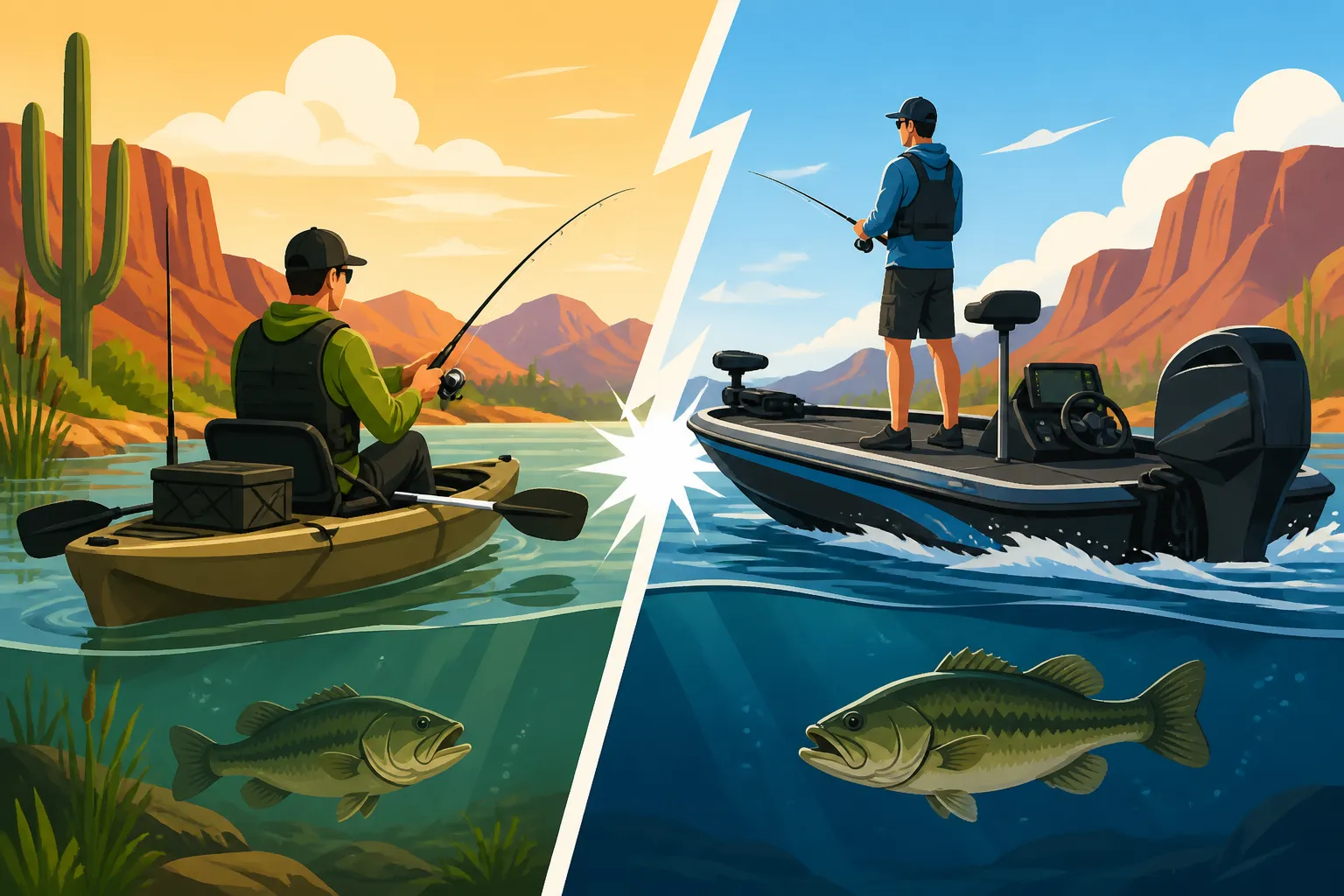
Is a Kayak Better Than a Boat for Bass Fishing?
Choosing the right vessel for bass fishing in Arizona can feel like an overwhelming decision. Do you go for the nimble, quiet approach of a kayak, or the power and comfort of a traditional fishing boat? Many anglers struggle with this exact question, especially with Arizona's diverse and sometimes challenging waters, from vast desert reservoirs to smaller, intimate community lakes. This guide is here to untangle that dilemma, offering an in-depth look at the strengths and weaknesses of both options to help you determine which one will put more bass in your boat – or kayak!
The Allure of Kayak Fishing for Arizona Bass
There's something incredibly appealing about sliding into a kayak and paddling out onto a glassy Arizona lake at dawn. It's a minimalist approach that brings you closer to the water and, often, closer to the fish. For many, kayak fishing isn't just a method; it's a lifestyle.
Stealth and Access in Tight Spots
One of the undeniable superpowers of a fishing kayak is its stealth. Unlike a large bass boat with a noisy outboard, a kayak glides through the water with minimal disturbance. This quiet approach allows you to sneak into prime bass territory without alerting wary fish to your presence. Imagine slowly paddling up to a brush pile in a quiet cove on Apache Lake, or navigating the intricate flooded timber of Roosevelt Lake, dropping your lure precisely where you know those big bass are hiding, undisturbed.
Kayaks truly shine in areas where traditional boats simply can't go. Think about those shallow backwaters, narrow channels, or rocky coves that are too tight or too shallow for a prop to run safely. These are often untouched havens for big bass. With a kayak, you can slip right in, whether it’s a tight corner of Canyon Lake or a secluded stretch of the Salt River. This unparalleled access means you can explore fishing spots that receive far less pressure, often leading to more productive days on the water. It’s all about getting to where the fish feel safest and most comfortable. If you're looking to refine your approach, check out our guide on Kayak Fishing Techniques for Desert Lakes.
Cost-Effectiveness and Maintenance
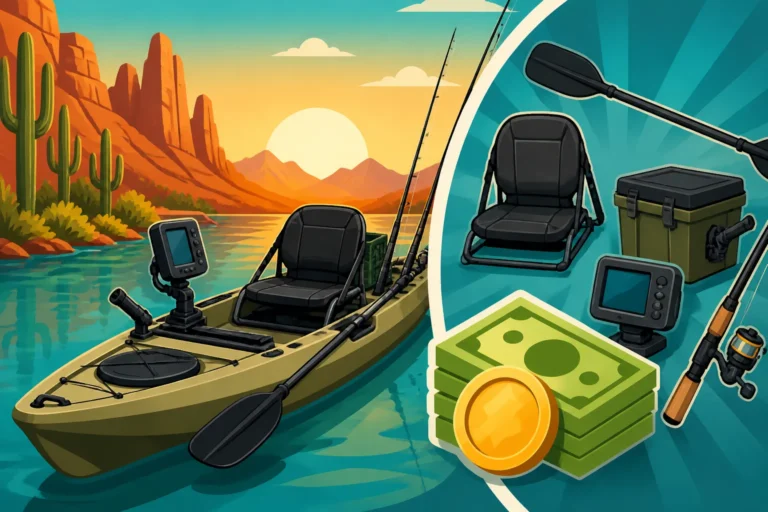
Let's be real: fishing can be an expensive hobby, and a traditional bass boat represents a significant financial commitment from day one. This is where kayaks really stand out. The initial purchase price for a quality fishing kayak is typically a fraction of what you'd spend on even a used bass boat, making it a much more accessible entry point for many anglers. You can find excellent, feature-rich kayaks that won't break the bank, allowing you to invest more in tackle, rods, and reels.
Beyond the initial cost, the ongoing expenses for a kayak are dramatically lower. You won't have fuel bills, costly engine maintenance, or the need for boat insurance (though always consider personal liability). Storage is also a breeze; most kayaks can be stored in a garage, backyard, or even a patio, eliminating marina fees or the need for a dedicated storage unit. Transportation is simpler too – a roof rack or a small utility trailer is usually all you need, versus a heavy-duty truck and a large trailer for a boat. This ease of ownership reduces stress and keeps more money in your pocket, allowing you to fish more often.
The Intimate Angling Experience
For many, kayak fishing offers a deeper, more personal connection to the outdoors. You're low to the water, feeling every ripple and hearing every splash. It's a truly immersive experience that grounds you in nature. There’s a quiet satisfaction that comes from paddling your own vessel to a remote fishing spot, relying on your own strength and skill. It’s a workout, too, providing both physical and mental benefits.
This intimate experience extends to the fight with a fish. Being so close to the water, every head shake, every run feels amplified. A five-pound bass can feel like a monster when you're eye-level with the water. This raw, direct interaction with the fish and the environment is a major draw for kayak anglers. It's less about the speed and amenities and more about the journey, the challenge, and the quiet contemplation that comes with being on the water. It forces you to simplify your approach, focusing on core angling skills rather than advanced electronics, though many modern kayaks can accommodate a full suite of gear.
The Power and Comfort of Traditional Fishing Boats
While kayaks offer a unique experience, there's no denying the advantages that a traditional fishing boat brings to the table, especially when tackling Arizona's larger impoundments or when conditions get a bit rough. These vessels are designed for serious fishing, offering capabilities that kayaks simply can't match.
Speed, Range, and Covering Water
One of the biggest advantages of a traditional fishing boat, particularly a dedicated bass boat, is its speed. Arizona's major bass fisheries, like Lake Pleasant, Roosevelt Lake, and Lake Havasu, are enormous. Covering vast distances quickly to hit multiple spots, chase schooling fish, or escape a sudden weather change is where a powerboat shines. Imagine getting word of a hot bite on the other side of a massive lake; with a bass boat, you can be there in minutes, not hours.
This speed translates directly into more fishing time and the ability to explore a much wider range of territory in a single outing. You can easily run from the main lake points to a distant creek arm, or follow a striper boil across a mile of water. This capability is invaluable when fish are scattered or when you're trying to pattern them across different types of structure. For anglers who like to move fast and cover a lot of ground, a traditional boat is an essential tool. It maximizes your efficiency and increases your chances of encountering active fish. Many seasoned anglers on these large bodies of water rely on their boat's range to consistently find fish.
Space, Stability, and Advanced Electronics
Step onto the deck of a bass boat, and the difference in space and stability is immediately apparent. There's ample room for multiple anglers to cast simultaneously without tangling lines, and plenty of storage for all your rods, tackle boxes, and gear. The wider, flatter decks provide a stable platform for standing and making long, accurate casts, which can be a game-changer for certain techniques or when targeting specific cover. If you plan on bringing family or friends, a boat offers a much more comfortable and spacious experience.
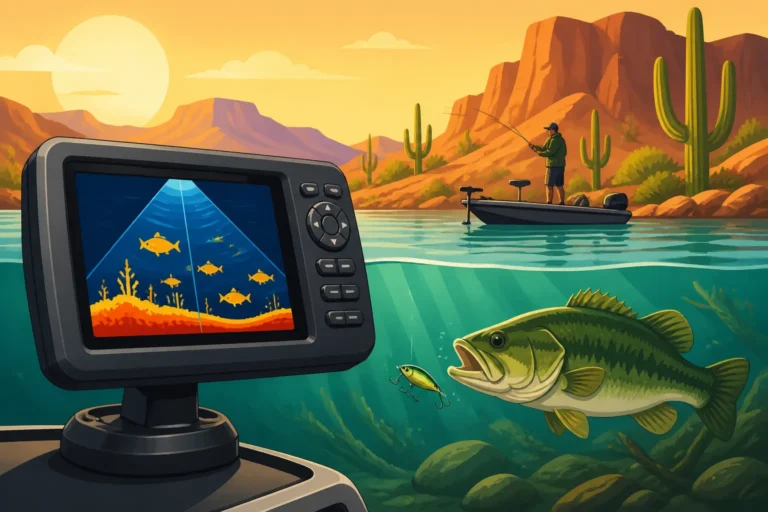
Modern fishing boats also integrate advanced electronics seamlessly. Think about large, high-definition fish finders with side-imaging, down-imaging, and even forward-facing sonar. These tools provide an unparalleled view of the underwater world, allowing you to pinpoint structure, baitfish schools, and even individual bass. Combine this with powerful GPS-enabled trolling motors that can hold your boat in place or follow a contour line automatically, and you have a precision fishing machine. These technological advantages give anglers a significant edge in finding and catching fish, especially in deep or complex Arizona waters. For an overview of essential tech, check out Best Fish Finders for Bass Fishing in Arizona.
Weather Resilience and Safety on Open Water
Arizona's weather, while often beautiful, can be unpredictable. Sudden winds can whip up large waves on our open desert lakes, turning a calm morning into a choppy, white-capped challenge. Monsoon storms can roll in quickly, bringing heavy rain, lightning, and strong gusts. In these conditions, a traditional boat offers a much greater margin of safety and comfort. Larger hulls are designed to handle rough water, providing a more stable and less jarring ride.
The power of an outboard motor allows you to quickly get back to safety if a storm develops or if you find yourself in dangerous chop. Kayaks, while incredibly versatile, are much more susceptible to wind and waves, making long crossings on big lakes potentially hazardous. A boat provides more shelter from the elements, whether it's scorching sun or a sudden downpour. For those who prioritize safety, comfort, and the ability to fish in a wider range of conditions on Arizona's expansive lakes, a traditional boat is the clear choice. Always be mindful of Boating Safety Gear Requirements in Arizona no matter what vessel you choose.
Key Considerations for Arizona Bass Anglers
The choice between a kayak and a traditional boat isn't about which is inherently "better" but which is better for you. It boils down to your personal fishing habits, the waters you frequent, and your practical circumstances.
Your Primary Fishing Locations and Target Species
Think about where you actually spend most of your time fishing in Arizona. Are you a regular at the smaller, intimate community lakes around Phoenix or Tucson, or do you prefer the vastness of Lake Powell, Roosevelt, or Lake Havasu? For smaller waters, river sections, or tight coves, a kayak offers unmatched stealth and access. You can quietly paddle into areas that boats can't reach, often finding unpressured bass.
However, if your passion lies in chasing trophy largemouth or smallmouth across massive reservoirs, or if you also target hard-fighting striped bass that roam open water, the speed and range of a traditional boat become incredibly valuable. On lakes like Lake Pleasant, where fish can school over deep open water, a powerful fish finder and a fast boat are often key to success. Consider if you're solely a bass angler, or if you like to diversify and target other species. Best Bass Fishing Lakes in Arizona can give you an idea of the varied opportunities here. For epic multi-day adventures, a larger boat is often essential to effectively explore places like Lake Powell Arizona Fishing Guide.
Budget, Transport, and Storage Realities
Let's get down to the practicalities. Money and logistics play a huge role in this decision. As we discussed, the upfront cost of a kayak is significantly less than a boat. Beyond that, consider the ongoing expenses. Do you have the budget for fuel, maintenance, insurance, and potential storage fees that come with a boat? A kayak often just requires a state registration if it's motorized, but manual kayaks usually need no registration at all, and have minimal upkeep costs.
Then there's the transport and storage. Do you own a truck capable of towing a full-sized bass boat and trailer, or do you have easy access to a boat launch? Or would the simplicity of tossing a kayak on a roof rack or sliding it into the back of a pickup suit your lifestyle better? Storage space at home is another factor. A boat typically requires a dedicated spot, whether it's a large garage, a driveway, or paid storage. A kayak is far more compact and versatile in terms of storage. Be realistic about what you can afford and practically manage. For a full breakdown, compare the Cost of a Basic Fishing Setup for Beginners with the Cost of a Bass Boat for Lake Fishing.
Solo Adventures vs. Fishing with Companions
Your preferred fishing company also weighs heavily on this choice. If you're primarily a solo angler, enjoying the peace and solitude of the water by yourself, a kayak is often an ideal companion. Modern fishing kayaks are increasingly designed with solo anglers in mind, offering stability, storage, and even pedal drives for hands-free propulsion.
However, if you love to share the experience, teach your kids, or regularly fish with a buddy or your partner, a traditional boat offers far more comfort and convenience. Trying to fit two or more people, plus all their gear, into a kayak (even a tandem one) can be a cramped and less enjoyable experience, especially for a full day of fishing. A boat allows everyone to have their space, move around, and enjoy the amenities. If family outings are a priority, a boat provides a much better platform for creating those lasting memories on the water.
Making the Right Choice: Kayak vs. Boat
Ultimately, there's no universally "correct" answer to whether a kayak is better than a boat for bass fishing. It's a deeply personal decision that hinges on your unique circumstances, aspirations, and what brings you the most joy on the water.
The Hybrid Approach
It might surprise you, but many dedicated anglers eventually adopt a hybrid approach. They might own a kayak for quick, local trips to community ponds or smaller rivers, and then share a larger boat with a friend or use a guide service for those big lake adventures. Or perhaps they start with a kayak and, as their passion grows and circumstances change, eventually invest in a boat.
Having both allows you to choose the perfect tool for the job. A kayak for sneaking into quiet coves on Saguaro Lake, and a boat for covering miles of open water on Lake Mead. Don't feel pressured to pick one and stick with it forever. Your fishing journey evolves, and your gear can too. This flexibility ensures you're always ready for whatever Arizona's diverse fisheries throw your way.
Test Driving and Research
Before making any significant investment, whether it's a new fishing kayak or a used bass boat, do your homework. The best way to know what feels right is to try it out. If possible, borrow a friend's kayak or boat, or consider renting one for a day. Many outdoor retailers, like Bass Pro Shops, have knowledgeable staff who can walk you through different options and even host demo days. Checking online reviews on platforms like Amazon can also give you insights into specific models and features from other anglers.
Talk to other anglers at local boat ramps or fishing forums. Ask them about their experiences, both good and bad, with kayaks and boats on Arizona waters. Their real-world perspectives can be incredibly valuable in guiding your decision. Don't rush into a purchase; take your time, gather information, and make an informed choice that you'll be happy with for years to come. Remember, the right Essential Tackle Box Setup for Arizona Beginners is vital, no matter your vessel.
Ultimately, It's About Your Fishing Style
At the end of the day, the "best" option is the one that gets you out on the water more often, allows you to fish effectively, and, most importantly, enhances your enjoyment of the sport. If the thought of a quiet paddle and an intimate connection with nature thrills you, a kayak might be your perfect match. If you dream of zipping across vast lakes, covering ground, and utilizing the latest technology, a traditional boat is likely calling your name.
There’s no shame in either choice. What matters is that you find a vessel that aligns with your personal fishing style, your budget, and your physical capabilities. Both kayaks and boats offer fantastic opportunities to pursue bass in Arizona. Choose the one that fills you with anticipation for your next angling adventure, and you can't go wrong. We have detailed guides on Best Boats for Arizona Lakes and Best Kayaks for Fishing in Arizona if you need more specifics on models.
| Feature | Fishing Kayak | Traditional Fishing Boat (Bass Boat/Runabout) |
|---|---|---|
| Initial Cost | Generally much lower | Significantly higher |
| Running Costs | Very low (no fuel, minimal maintenance) | High (fuel, engine maintenance, winterization) |
| Stealth | Excellent (paddled/pedaled, quiet) | Moderate (electric trolling motor is quiet, outboard is noisy) |
| Access | Exceptional (shallow, tight, remote areas) | Good (can struggle in very shallow or tight spots) |
| Speed/Range | Limited (human-powered or small electric motor) | High (fast outboard engines, covers large distances quickly) |
| Stability | Good for fishing, but can be less stable than boat | Excellent (wide, flat decks for standing and casting) |
| Space/Comfort | Limited (typically 1-2 anglers, less gear room) | Ample (multiple anglers, abundant gear storage, seating) |
| Electronics | Can be fitted, but smaller screens/batteries | Designed for large, multi-function displays, powerful sonar |
| Weather Resil. | Moderate (susceptible to wind/waves, less shelter) | High (handles chop well, more protection from elements) |
| Transport | Roof rack, truck bed, small trailer | Truck and large trailer required |
| Storage | Garage, shed, backyard (more compact) | Dedicated garage, driveway space, or paid storage |
| Experience | Intimate, physical, close to water | Powerful, efficient, comfortable, technology-driven |
Disclaimer
This article is for general informational purposes only and does not constitute professional advice. Laws, prices and regulations vary by location and change over time. Consult a qualified professional for guidance on your specific situation.