Redear Sunfish Identification in Arizona
It can be incredibly frustrating to be out on the water, reeling in what you think might be a trophy sunfish, only to second-guess yourself the moment it’s in your hand. Arizona's diverse waterways host several species of sunfish, and honestly, they can look pretty similar at first glance! This guide is here to cut through that confusion, helping you confidently identify the Redear Sunfish, often affectionately called a "shellcracker," so you know exactly what you've got on your line.
Decoding the Redear: Key Physical Traits for Identification
When you're trying to figure out if you've landed a Redear Sunfish, you'll want to pay close attention to a few standout physical characteristics. These aren't just subtle nuances; they're the biological clues that set them apart from their sunfish cousins in Arizona's lakes and ponds. Getting to know these features will make you a much more confident angler and ensure you're following local regulations.
The Distinctive Opercular Flap Markings
The absolute hallmark of the Redear Sunfish, and the feature that gives them their name, is the marking on their opercular flap—that stiff plate covering the gills. For a Redear, this flap will typically have a very distinct, vibrant red or orange spot right on its posterior margin. Think of it as a little dash of sunset painted on their "ear." This spot is usually much more pronounced and brighter on males, especially during spawning season, and can appear as a lighter orange or yellow on females.
This isn't just a faint blush; it's a clear, noticeable splash of color. When you pull one out of the water, tilt its head slightly to get a good look at that gill cover. If you see that unmistakable red or orange, you're almost certainly holding a Redear. Other sunfish species might have some coloration on their opercular flap, but it won't be this specific, vivid red or orange dot right on the edge. This small detail is your primary identifier and learning to spot it will instantly elevate your sunfish identification game.
Body Shape and Coloration Cues
Beyond the "red ear," Redear Sunfish possess a body shape and general coloration that, while shared with some other sunfish, still offers helpful clues. They tend to have a deep, compressed body, meaning they are relatively tall but thin from side to side. This is a common panfish trait, making them look somewhat like a disc or plate. Their backs are usually a greenish-gold or olive color, gradually fading to lighter, often yellowish-green sides. The belly area will typically be a bright yellow or white.
Sometimes, you might notice very faint, irregular vertical bars on their sides, but these are often much less prominent than those found on, say, a Bluegill, and can even be absent. The overall appearance is often cleaner and less mottled than some of their relatives. They generally don't have the striking blue lines or spots on their faces that you might see on a Green Sunfish or Pumpkinseed. Observing these overall patterns, in conjunction with the opercular spot, helps build a comprehensive picture for identification.
Redear Sunfish vs. Common Arizona Lookalikes
Identifying a Redear Sunfish often comes down to effectively distinguishing it from other sunfish species that share Arizona's waters. Anglers frequently confuse Redears with Bluegill and Green Sunfish, as they inhabit similar areas and have a somewhat similar general appearance. Knowing the key differences is crucial for accurate identification, and understanding these distinctions will greatly enhance your Panfish and Sunfish Guide for Arizona knowledge.
Differentiating from Bluegill
The Bluegill is perhaps the most common sunfish in Arizona, and they frequently co-exist with Redear Sunfish. While both have that characteristic "panfish" shape, there are clear distinctions. The primary difference lies in that opercular flap we talked about. A Bluegill's opercular flap will be entirely black, or at least a very dark black, often with a hint of an orange margin, but it will not have the distinct red or orange spot directly on the margin that the Redear boasts. That solid black "ear" is the Bluegill's tell-tale sign.
Furthermore, Bluegill often exhibit distinct vertical bars on their sides, which are usually more pronounced than the faint ones sometimes seen on Redears. They also typically have a prominent black spot at the base of their dorsal fin, a feature largely absent in Redears. Their overall color can also be more bluish or purplish, especially on their operculum and chin, which gives them their name. When comparing the two, remember: solid black ear and dorsal fin spot for the Bluegill; red or orange spot on the opercular margin for the Redear. If you want a deeper dive, check out our guide on Bluegill vs Sunfish Identification.
Distinguishing from Green Sunfish
Green Sunfish are another widespread species in Arizona and can sometimes be confused with Redears, though they tend to have a more robust, almost bass-like body and a larger mouth. The opercular flap on a Green Sunfish will usually have a white, yellow, or orange margin, but again, it will lack that distinct, vivid red spot right on the edge that characterizes the Redear. Instead, the Green Sunfish often has irridescent blue-green spots on its body, particularly along its cheeks and lower jaw.
Their coloration is generally a darker olive-green, sometimes with a brassy sheen, and they often have a more mottled or blotchy pattern on their sides. The mouth of a Green Sunfish is also notably larger than that of a Redear, often extending back past the front of the eye, which is a key indicator. Redear Sunfish have a relatively small, upturned mouth. If you’re ever unsure, remember to look for the combination of a larger mouth, distinct blue-green spots on the face, and the absence of that unmistakable red spot on the gill flap. For more specific details on this cousin, consult our Green Sunfish Identification in Arizona article.
Other Less Common Lookalikes
While Bluegill and Green Sunfish are the most common mix-ups, you might occasionally encounter other sunfish species or hybrids that can make identification tricky. Warmouth, for example, have a larger mouth, more robust body, and often distinct dark streaks radiating from their eye, giving them a "bass-like" appearance rather than the cleaner look of a Redear. Hybrid sunfish, which are crosses between different sunfish species (often Bluegill and Green Sunfish), can possess a confusing mix of traits. In these cases, look for the strongest presence of the Redear's signature red/orange opercular spot. If it's vague or absent, it's likely not a pure Redear.
The table below provides a quick visual comparison of these common sunfish species in Arizona based on their key identification features:
| Feature | Redear Sunfish (Shellcracker) | Bluegill | Green Sunfish |
|---|---|---|---|
| Opercular Flap (Ear) | Distinct red or orange spot on the posterior margin | Solid black, sometimes with orange margin | White, yellow, or orange margin, no red spot |
| Body Coloration | Greenish-gold/olive back, lighter sides, yellow belly | Olive-green back, bluish sides, yellow belly | Dark olive-green/brassy, mottled sides |
| Body Markings | Faint or absent vertical bars | Distinct vertical bars (often 6-8) | Often iridescent blue-green spots on cheeks |
| Dorsal Fin Spot | Absent or very subtle | Prominent black spot at base | Absent |
| Mouth Size | Small, upturned | Small | Larger, extends past front of eye |
| Pectoral Fins | Long, pointed | Long, pointed | Shorter, rounded |
Habitat and Behavior: Angler's Aid to Identification
Understanding where and how Redear Sunfish typically live and behave can be just as helpful for identification as their physical traits. Knowing their preferred haunts and feeding habits often increases your chances of encountering them, and by extension, correctly identifying them in their natural environment. This environmental context complements the visual cues, giving you a more complete picture.
Preferred Aquatic Environments in Arizona
Redear Sunfish thrive in warm, clear waters, which makes many of Arizona's desert lakes and community ponds ideal for them. They generally prefer habitats with abundant submerged vegetation, brush piles, or areas with rocky bottoms and shell beds. Unlike some other sunfish that might frequent open water more, Redears are often found closer to the bottom, especially near these structures. They love to sift through the sediment or root around dense weeds in search of their favorite snacks.
You'll often find them in impoundments, reservoirs, and slow-moving river backwaters across the state. Lakes like Roosevelt, Bartlett, and Alamo are known for good Redear populations, as are many of the Best Urban Fishing Lakes in Arizona managed by the Arizona Game and Fish Department's Community Fishing Program. If you're fishing these types of locations and targeting panfish near structure or on the bottom, your chances of hooking into a Redear are significantly higher, which then gives you the opportunity to apply those visual identification skills.
Diet and Feeding Habits: The "Shellcracker" Lifestyle
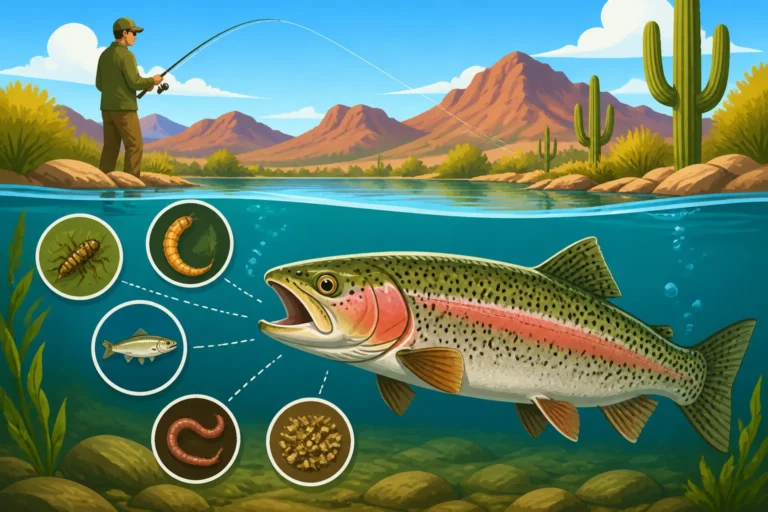
The nickname "shellcracker" isn't just for show; it's a direct reference to the Redear's primary diet and specialized anatomy. Redear Sunfish primarily feed on snails, mussels, and other invertebrates with hard shells. They have unique crushing plates (pharyngeal teeth) in their throats that allow them to easily crack open these tough meals. This bottom-feeding habit means they spend a lot of their time foraging along the lakebed or within dense vegetation where these organisms reside.
Because of this, anglers often find success targeting Redears with small baits presented on or near the bottom. Worms, grubs, and small pieces of shrimp are often irresistible to them. You won't typically find them chasing fast-moving lures high in the water column like a bass might. Understanding this "shellcracker" lifestyle influences not only where you'll find them but also the most effective Best Baits and Lures for Arizona Fishing for catching them. If you're consistently catching fish on the bottom with natural baits, and they have that distinctive red ear, you've likely found a Redear hotspot.
Why Correct Identification Matters for Arizona Anglers
Beyond the simple satisfaction of knowing what you've caught, accurately identifying Redear Sunfish and other species in Arizona has some genuinely practical implications. It affects everything from following the rules to improving your fishing success and even contributing to conservation efforts. Don't underestimate the importance of taking that extra moment to confirm your catch!
Adhering to Fishing Regulations and Limits
One of the most critical reasons for correct fish identification is to ensure you're complying with Arizona's fishing regulations. While panfish often fall under general bag and possession limits, there can be specific rules for certain species or in particular bodies of water. For instance, knowing if you have a Redear versus a protected native species (unlikely for sunfish but important for others) is crucial. Misidentification could lead to accidental violations, which nobody wants.
Arizona Game and Fish Department publishes clear guidelines, and sometimes, those guidelines might differentiate between types of sunfish for management purposes or even just for record-keeping. Always make sure to check the latest Arizona Fishing Regulations Explained or specific rules for the lake you're fishing. Being able to confidently say, "Yes, this is a Redear," means you can accurately count your catch against the legal limits, helping to ensure healthy fish populations for everyone. You can often find the official regulations booklet at local tackle shops or sporting goods stores, or even purchase a handy field guide from Amazon to keep in your tackle box.
Improving Your Fishing Strategy and Success
Knowing what you're catching isn't just about rules; it's about becoming a better angler. When you can reliably identify a Redear Sunfish, you begin to understand why you caught it where you did, and what it was likely eating. This knowledge then allows you to refine your tactics, choose more effective baits, and target areas where Redears are more likely to be found. For example, if you're consistently catching Redears on a specific spot with a certain bait, you know you've found a "shellcracker" honey hole.
This understanding translates directly to improved fishing success. If you're struggling to catch fish, and you realize you're using techniques more suited for bass or trout, knowing how to identify a Redear might prompt you to switch to a small hook, a bit of worm, and fish the bottom near vegetation. This strategic adjustment can turn a slow day into a productive one. Consider adding a good panfish specific tackle kit, which you can find on Amazon, to ensure you're always prepared for these adaptable fish.
Contribution to Conservation and Angler Education
Finally, accurate identification contributes to the broader understanding and conservation of Arizona's aquatic ecosystems. When anglers accurately report their catches, whether informally or through creel surveys, it provides valuable data to fisheries biologists about fish populations, distribution, and health. Knowing the difference between species helps paint a clearer picture of what's thriving and what might need more attention.
For new anglers, especially kids, learning to identify fish is a foundational part of fishing. Redear Sunfish are often one of the Best Fish Species for Beginners to Target in Arizona due to their willingness to bite and their relatively common presence. Teaching them how to spot that distinctive red ear not only educates them but also fosters a deeper appreciation for the fish and the natural world. It helps pass on a culture of informed, responsible angling, ensuring that future generations can also enjoy the simple pleasure of reeling in a feisty Redear. If you're looking for educational tools for younger anglers, many excellent beginner's guides and kits are available through retailers like Amazon.
Disclaimer
This article is for general informational purposes only and does not constitute professional advice. Laws, prices and regulations vary by location and change over time. Consult a qualified professional for guidance on your specific situation.