Why Striped Bass Grow So Large at Lake Powell
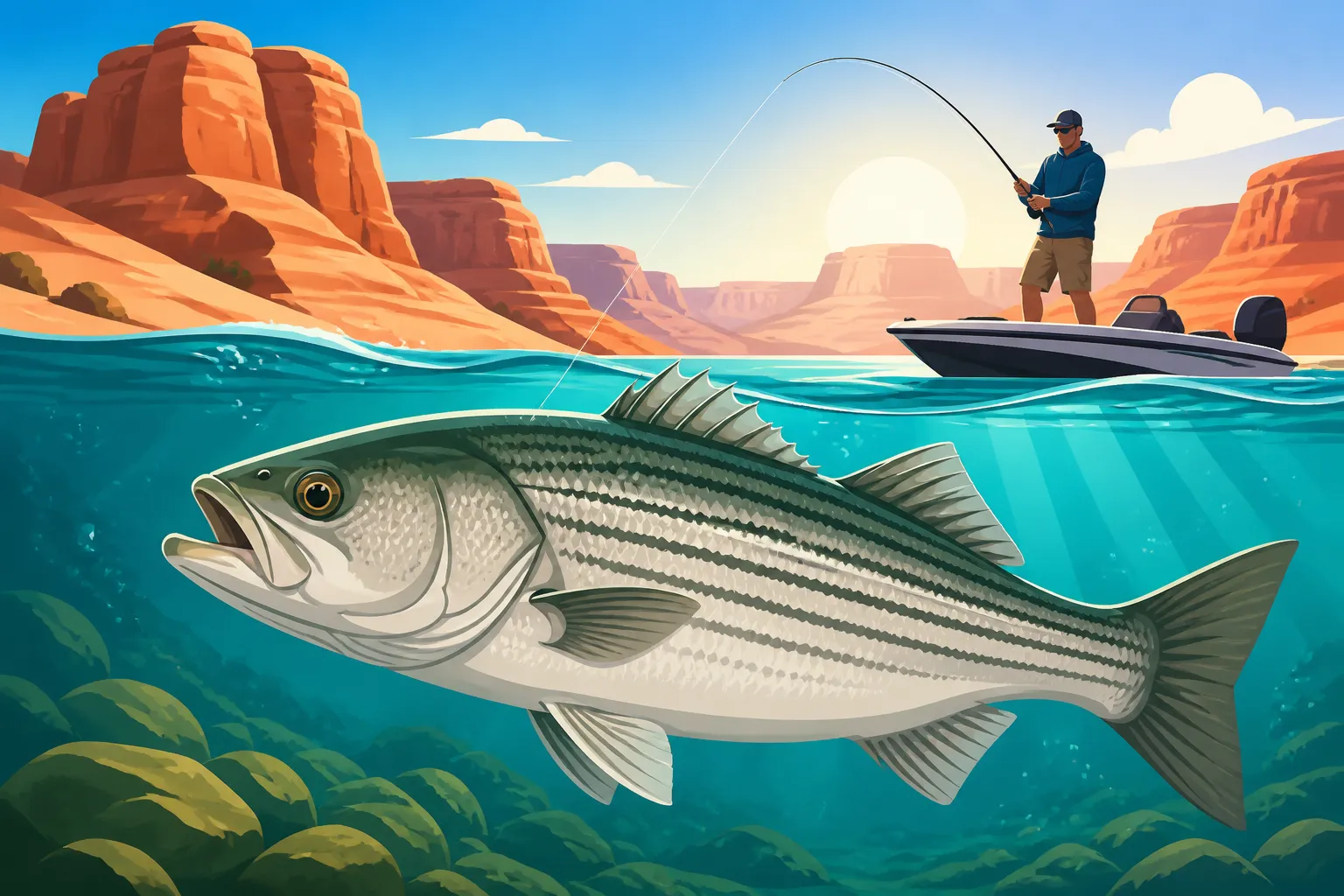
Many anglers, especially those new to Arizona, often wonder why the striped bass caught in Lake Powell seem to reach such truly impressive sizes compared to stripers found elsewhere. It's not just a rumor; the stripers in Lake Powell really do get big, and consistently so. This guide will delve into the unique combination of factors, from the lake's vast ecosystem to its rich food sources and even the lifecycle of the fish themselves, that contribute to the colossal growth of Lake Powell's striped bass, helping you understand this remarkable fishery.
Lake Powell's Unique Ecosystem: A Striped Bass Paradise
Lake Powell isn't just a big body of water; it's a dynamic, almost ocean-like environment that provides an ideal, albeit unusual, habitat for a fish species renowned for its size and predatory nature. Imagine a vast, sprawling aquatic landscape carved into red rock canyons – that's Lake Powell, and it's fundamentally different from most other Arizona lakes. This unique setting is the primary reason why striped bass here aren't just surviving, but absolutely thriving and reaching sizes that make other anglers green with envy.
Vastness and Diverse Habitat
First and foremost, the sheer scale of Lake Powell cannot be overstated. With nearly 2,000 miles of shoreline when full, and countless coves, canyons, and open water expanses, it offers an incredible amount of diverse habitat. For striped bass, which are pelagic (meaning they prefer open water) but also utilize structure, this means endless opportunities. They can roam vast distances chasing baitfish schools in the main channels, or they can ambush prey around the submerged canyons, rock formations, and even fallen timber in the countless side arms. This immense territory allows for less competition in any single spot and provides ample room for individual fish to grow without excessive territorial stress. Unlike smaller reservoirs where fish might be confined to more limited areas, Lake Powell's expansive nature gives these stripers room to become true giants. The deep waters also offer thermal refuge during the peak of summer and stable conditions during colder months, reducing environmental stress that might otherwise hinder growth.
Abundant Forage Base
The primary fuel for Lake Powell's monster stripers is a super-abundant, protein-rich forage base, predominantly made up of threadfin shad. These small, schooling baitfish are like the high-octane fuel for the striped bass engine. Threadfin shad reproduce rapidly and in massive numbers, especially during warmer months, providing an almost continuous supply of food. When you have literally billions of easily catchable, calorie-dense baitfish swimming around, a predatory fish like the striped bass can eat to its heart's content. This isn't just about survival; it's about excess. The stripers don't just find enough to live; they find more than enough to pack on serious weight and length. It's a classic predator-prey dynamic, but on an epic scale, and Striped Bass Diet and Feeding Habits explores this in greater detail.
Let's look at the key forage:
| Forage Species | Description | Impact on Striper Growth |
|---|---|---|
| Threadfin Shad | Small, silvery, schooling baitfish, primary food source. | High abundance, rich in fat and protein, easily consumed. |
| Gizzard Shad | Larger than threadfin, can grow too big for smaller stripers, but a meal for bigger ones. | Provides larger, more substantial meals for mature stripers. |
| Other Small Fish | Less common, but includes various sunfish, small carp, etc. | Supplemental food, especially when shad numbers fluctuate. |
| Crayfish | Bottom dwellers, occasionally consumed, especially by younger stripers. | Minor dietary component, adds variety. |
The relationship between the striper and its primary food source, the threadfin shad, is critical. The abundance of these shad, which thrive in Lake Powell's warmer waters and nutrient cycling, means that stripers spend less energy hunting for food and more energy converting that food into muscle and fat. This constant, high-quality food supply is arguably the single most important factor in why How Big Do Striped Bass Get at Lake Powell is such an exciting question for anglers.
Optimal Water Conditions
Lake Powell's water conditions are also remarkably conducive to growing large striped bass. The lake is a deep, clear, and relatively warm reservoir, receiving its waters primarily from the Colorado River. The depth allows for stratified layers, meaning there are cooler, oxygenated waters available even in the scorching Arizona summer, providing refuge for fish. While clear water can sometimes make fishing challenging, it also means healthy light penetration for the plankton and algae that form the base of the food chain for the shad. The sheer volume of water helps maintain stable temperatures and oxygen levels, which are crucial for the metabolic processes that support rapid growth in fish. A stable environment with plenty of space and abundant food means less stress, and less stress generally translates to bigger fish.
The "Boom and Bust" Cycle and Striped Bass Growth
The ecosystem of Lake Powell isn't static; it's a dynamic environment that experiences natural fluctuations, often described as "boom and bust" cycles. These cycles, particularly concerning the striped bass population and their primary food source, play a significant role in determining how large individual fish can grow. It's a natural selection process on a grand scale, where the conditions either favor explosive growth or create intense competition.
Spawning Success and Population Density
Striped bass are highly prolific spawners, and in favorable conditions, they can produce massive year classes. Lake Powell, with its riverine inflows from the Colorado and San Juan rivers, provides the necessary flowing water for successful striped bass reproduction. When water levels are high and inflow is consistent, more stripers can successfully spawn, leading to a "boom" in the population. However, an abundance of small, newly hatched stripers can quickly lead to overpopulation. Think of it like a giant all-you-can-eat buffet where suddenly too many diners show up. While initially there's plenty of food, if the number of fish far outstrips the available forage, growth rates will slow down dramatically. Smaller, stressed fish are more susceptible to disease and have less energy for growth. On the flip side, when spawning success is moderate, or if a large year class has been thinned out, individual fish have more access to food and can put on size much faster, leading to larger average sizes for the remaining population. This delicate balance of population density is crucial.
Forage Fluctuations and Cannibalism
The "boom and bust" cycle is most evident in the relationship between striped bass and their main prey, the threadfin shad. When shad populations are booming, stripers grow fat and happy. However, shad populations can crash due to various factors like extreme temperature swings, disease, or simply being overeaten by a massive striper population. When the primary forage base dwindles, things get desperate for the striped bass. This is where cannibalism comes into play. Larger stripers, facing a scarcity of shad, will turn on their smaller brethren. While it sounds grim, this natural culling mechanism actually contributes to the average size of the surviving fish. The weaker, smaller fish are eliminated, leaving more food for the stronger, larger, more aggressive individuals. This brutal but effective natural selection means that the stripers that survive these "bust" periods are often the ones with the best genetics for growth, the most efficient hunters, or simply the luckiest. This means that if you're out fishing and How to Fish for Striped Bass becomes a priority, consider the impact of these cycles on fish behavior.
Natural Selection and Survival of the Fittest
Ultimately, the boom and bust cycles act as a powerful form of natural selection. Only the fittest, most adaptable striped bass will survive the periods of intense competition and dwindling food supplies. These are the fish that are genetically predisposed to grow larger, more efficiently convert food into energy, and are better at finding and ambushing prey. When conditions improve again, these survivors, now larger and more experienced, are perfectly positioned to capitalize on the renewed abundance of forage. They quickly put on even more weight, contributing to the legend of Lake Powell's giant stripers. This ongoing process ensures that the fish you're likely to encounter are often the most robust and impressive specimens. Understanding these cycles can also inform your fishing strategy, as Best Season to Catch Striped Bass at Lake Powell often aligns with periods of renewed forage abundance following a "bust."
Management Strategies and Angler Impact
While Lake Powell's natural environment provides a strong foundation for large striped bass, human intervention and the actions of anglers also play a role in shaping the fishery. The management of this vast reservoir, coupled with the cumulative impact of fishing pressure, directly influences the size and health of the striper population. It's a complex interplay between nature and human stewardship.
Stocking Programs and Genetic Factors
Unlike some fisheries that rely heavily on continuous stocking, Lake Powell's striped bass population is largely self-sustaining. The fish reproduce naturally within the river arms of the lake. However, there have been periods of stocking in the past to establish or augment the population, particularly in its early days as a reservoir. While current management focuses more on monitoring and regulating harvest, the historical genetic makeup of the stocked fish, combined with decades of natural selection within the unique Lake Powell environment, has likely contributed to a population with strong growth potential. Genetically robust fish, given ample food and space, will naturally grow larger. Management agencies continuously monitor the health and growth rates of the fish, which helps them understand the dynamics of the population and inform future decisions, even if current efforts are less about stocking and more about habitat protection and angler education.
Fishing Pressure and Regulation
Fishing pressure is a double-edged sword when it comes to fish size. On one hand, high angler pressure can thin out populations, reducing competition for food among the remaining fish and potentially leading to larger average sizes. This is especially true for prolific species like striped bass where overpopulation can stunt growth. Many anglers actually view Lake Powell's striped bass as a "catch and keep" fishery, where removing fish is encouraged to maintain a healthy balance with the forage base. There are often very liberal bag and possession limits for striped bass, sometimes with no limit at all, precisely to encourage harvest and prevent overpopulation which would lead to smaller, less healthy fish. These regulations, or lack thereof, are a deliberate strategy to allow for the impressive growth we see. However, excessive or unregulated pressure could also selectively remove the largest fish, potentially impacting the genetic pool over very long periods. The current approach, however, seems to strike a balance that favors the production of trophy-sized fish. You can learn more about specific rules in the Arizona Fishing Regulations Explained guide.
The Role of Anglers in Population Control
Anglers are perhaps the most direct form of population control for striped bass in Lake Powell. Because stripers are not native to Lake Powell and can have significant impacts on other fish species (like native species, although the large game fish present are also introduced), managing their numbers through angler harvest is encouraged. This active participation by anglers directly translates to less competition for food among the remaining stripers, allowing those fish to grow bigger and faster. When a "boom" cycle leads to an explosion of smaller stripers, anglers who target these fish are helping to ensure that the larger, more desirable fish have enough to eat. It’s a unique scenario where catching and keeping fish is not just a recreational activity, but also an important part of the ecological management of the lake. Finding the right gear for these big fish is important, and many anglers find great options on sites like Amazon, especially for heavy-duty rods and reels capable of handling the fight.
Beyond the Science: Why Lake Powell Captivates Anglers
While the scientific and ecological reasons behind the enormous size of Lake Powell's striped bass are fascinating, there's an undeniable allure that goes beyond mere biology. For many anglers, the pursuit of these colossal fish is about more than just numbers and conditions; it's about the entire experience, the challenge, and the unforgettable moments that only this unique fishery can offer.
The Thrill of the Fight
Catching a truly large striped bass from Lake Powell is an experience that stays with an angler forever. These fish are powerful, aggressive, and known for their brutal, drag-screaming runs. When a 20-pound-plus striper hits your line, it's not a gentle tap; it's a jolt that can rip the rod from your hands if you're not ready. The fight is often a test of endurance, both for the angler and their gear. Imagine the excitement of a full-blown "striper boil" where hundreds of stripers churn the surface, crashing into schools of shad. Casting into that chaos and feeling that explosive strike is pure adrenaline. The sheer power of these fish, fueled by their robust growth, makes every catch a memorable battle. Anglers often come to Lake Powell specifically for this intense challenge, honing their Trolling Techniques for Striped Bass or learning How to Find Striper Boils on Lake Powell.
Scenic Beauty and Unique Fishing Experience
Beyond the fish themselves, Lake Powell offers a fishing experience unlike almost any other. The lake is nestled within the stunning Glen Canyon National Recreation Area, a landscape of towering sandstone cliffs, intricate slot canyons, and crystal-clear blue waters. Fishing here isn't just about the tug on the line; it's about being surrounded by unparalleled natural beauty. Imagine reeling in a massive striper with a backdrop of a thousand-foot red rock wall, or watching the sunrise paint the canyon walls in hues of orange and purple as you cast your line. The solitude, the grandeur of the landscape, and the sheer vastness of the lake create an immersive outdoor adventure. Whether you're navigating a houseboat through a remote canyon, casting from a small boat, or even shore fishing in accessible areas, the scenic beauty amplifies the joy of every catch. This blend of incredible fishing and breathtaking scenery is why Lake Powell Arizona Fishing Guide is such a popular search and why so many return year after year.
Disclaimer
This article is for general informational purposes only and does not constitute professional advice. Laws, prices and regulations vary by location and change over time. Consult a qualified professional for guidance on your specific situation.