Endangered Fish Species in Arizona Rivers
It's incredibly frustrating to want to explore Arizona's beautiful rivers and lakes with your fishing rod, only to feel unsure about the rules and, more importantly, how to protect the incredible, yet vulnerable, native fish that call these waters home. Nobody wants to accidentally harm a protected species or unwittingly break a regulation. This guide is here to shed light on the truly unique and often endangered fish species that inhabit Arizona's rivers, helping you understand their importance, how to identify them, and how to fish responsibly to ensure their survival for generations to come.
Understanding Arizona's Unique Aquatic Ecosystems
Arizona might be famous for its vast deserts, but beneath the scorching sun and towering saguaros lies a network of rivers and streams that support a surprisingly diverse, albeit fragile, aquatic ecosystem. These waters are a lifeline, not just for the plants and animals living in them, but for all life in this arid state. Understanding the delicate balance in these systems is the first step toward becoming a truly responsible angler.
The Desert Paradox: Water in an Arid Land
Imagine a landscape where water is gold, and every drop counts. That's Arizona. Our rivers, like the Colorado, Gila, Salt, and Verde, carve through canyons and deserts, creating ribbon-like oases that are biodiversity hotspots. Many of these waterways are intermittent, flowing strongly during certain seasons and shrinking to isolated pools during dry spells. This natural variability has shaped fish evolution, leading to species that are incredibly resilient but also highly specialized and vulnerable to changes in their environment. The fish here have adapted over millennia to extreme temperatures, fluctuating water levels, and unique food sources, making them distinct from fish found in more temperate climates.
Native vs. Non-Native Species Dynamics
One of the biggest challenges facing Arizona's native fish is the introduction of non-native, or invasive, species. Think about it: our native fish evolved in relative isolation, without the pressures of larger, more aggressive predators or competitors. When fish like bass, catfish, and various panfish were introduced—often for sport fishing or as bait—they immediately began to outcompete native species for food and habitat. Even worse, many non-native fish are voracious predators of the smaller, slower-moving native fish and their eggs. This imbalance has pushed many native species to the brink, forcing them into ever-smaller, more isolated pockets of their historical range. Understanding the difference between what's native and what's introduced is crucial for conservation.
The Importance of Riverine Habitats
Arizona's rivers aren't just channels for water; they are complex habitats with varying flows, depths, substrates, and riparian vegetation. Each of these elements plays a critical role in the life cycles of native fish. For example, slow-moving backwaters and side channels provide essential nursery areas for young fish, protecting them from strong currents and predators. Clean, gravelly bottoms are vital for spawning, while deep pools offer refuge during hot summers or low-water periods. Dams, diversions, and channelization—modifications made to control water for human use—have significantly altered these natural riverine processes, fragmenting habitats and isolating fish populations. Restoring these natural river processes and connectivity is often a key part of saving these species. You can learn more about some of these fascinating creatures in our Native Fish Species of Arizona guide.
Key Endangered Fish Species in Arizona Rivers
When you're out fishing, it's not just about what you can catch, but also what you might encounter. Arizona is home to several fish species that are federally or state-listed as endangered or threatened. Knowing who they are and what they look like is crucial for their survival and for you to stay within the bounds of the Arizona Fishing Regulations Explained.
Razorback Sucker: A Resilient Survivor
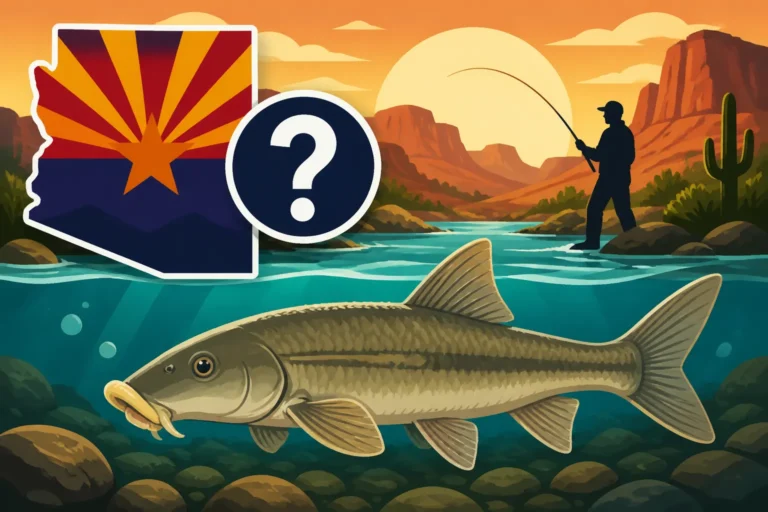
The Razorback Sucker is one of Arizona's most iconic and, sadly, most imperiled native fish. It's a large, long-lived fish, named for the prominent sharp-edged keel on its back, right behind its head. Adults can grow quite large, sometimes exceeding three feet in length and living for over 40 years! They are bottom-feeders, cruising river and lakebeds for insects, algae, and detritus. Historically, they were found throughout the Colorado River Basin, including the lower Gila and Salt Rivers. Today, their populations are severely fragmented, mainly due to habitat loss and predation by non-native fish. Most remaining wild populations are found in managed areas or large reservoirs where recovery efforts are intense. You can find more specific information on the Razorback Sucker Status in Arizona Rivers.
These fascinating fish play a vital role in maintaining the health of river ecosystems by cycling nutrients from the bottom sediments. Anglers might occasionally hook a razorback sucker, especially in larger impoundments of the Colorado River system. If you do, its unique dorsal keel and large, leathery mouth will be immediate identifiers. Handling them with care and releasing them quickly is paramount, as harming them carries significant penalties. This species is often confused with other suckers, so careful identification is key.
Colorado Pikeminnow: The Giant of the Colorado
Imagine a minnow that can grow up to six feet long and weigh nearly 100 pounds! That's the Colorado Pikeminnow, the largest native minnow in North America and a true apex predator of the historical Colorado River system. With a torpedo-shaped body, a large mouth, and powerful fins, these fish are built for fast-flowing river currents. They were once abundant, migrating hundreds of miles each year to spawn. Their historical range covered the entire Colorado River Basin and its major tributaries, including parts of the Gila River.
Today, the Colorado Pikeminnow is critically endangered, primarily due to the construction of large dams that block their migratory routes and alter natural river flows, as well as predation and competition from non-native species. Encountering a wild pikeminnow is incredibly rare, but if you do, their massive size and predatory appearance will distinguish them. Like the razorback sucker, strict catch-and-release rules apply, and any accidental catch must be handled with extreme care. More details on the state of this species can be found in Colorado Pikeminnow Status in Arizona.
Bonytail Chub: Small but Mighty
The Bonytail Chub, while much smaller than the pikeminnow or razorback sucker, is no less important to Arizona's aquatic heritage. These slender, cigar-shaped fish typically grow to about 12-18 inches long and are characterized by their smooth, scale-less-looking bodies and large eyes. They are adapted to warm, turbid, backwater habitats of the mainstream rivers, feeding on insects, algae, and plant matter. Historically, they were found in slow-moving sections of the Colorado River and its major tributaries throughout Arizona.
The bonytail chub has suffered catastrophic declines, primarily due to habitat degradation, alteration of river flows, and the introduction of non-native fish. They are considered one of the most endangered fish species in North America, with wild populations surviving only in a few isolated areas, often in recovery efforts within large reservoirs like Lake Mohave, where they are carefully monitored. If you happen to catch one, perhaps while fishing for smaller panfish in a backwater slough, its sleek body and large eyes should prompt immediate, gentle release. You can delve deeper into their situation with Bonytail Chub Conservation Status.
Gila Topminnow: Tiny but Crucial
Don't let the Gila Topminnow's small size fool you; these tiny fish, usually less than two inches long, are incredibly significant. They are one of the few native fish in Arizona that give birth to live young, rather than laying eggs. Gila topminnows typically inhabit very shallow, slow-moving waters like springs, cienegas, and small desert streams, often near the surface where they feed on mosquito larvae and other small invertebrates. They were once widespread throughout the Gila River system and its tributaries.
Their populations have plummeted drastically due to habitat loss from water diversions, groundwater pumping, and severe predation from introduced mosquitofish. The Gila topminnow now occupies less than 5% of its historic range. Because of their small size and specific habitat, it's unlikely an angler would target them, but if you're exploring small, secluded springs or creeks, be aware of their presence. They play a critical role in mosquito control and are a foundational species in their niche habitats. Protecting these tiny streams is paramount to their survival.
Apache Trout: Arizona's Native Gem
The Apache Trout is not just an endangered species; it's Arizona's state fish and a true symbol of our high country waters. These stunning trout, characterized by their golden-yellow body, dark spots, and a distinctive dark stripe through the eye, are native only to the White Mountains region of eastern Arizona. They thrive in cold, clear mountain streams and small lakes, often feeding on insects. Historically, they occupied a much wider range of high-elevation streams.
Their decline is largely attributed to habitat degradation from logging and grazing, as well as hybridization and competition with introduced non-native trout, particularly rainbow and brown trout. Aggressive conservation efforts, including barrier construction to prevent hybridization, removal of non-native fish, and reintroduction programs, have brought them back from the brink of extinction. While still listed as threatened, they are now found in a number of designated streams and lakes, offering limited, strictly regulated angling opportunities in specific areas. Anglers interested in targeting these beautiful fish must adhere to very specific rules, often requiring special permits or catch-and-release only. This dedication reflects the importance of Apache Trout Conservation in Arizona.
Why Are These Fish Endangered? Threats and Challenges
The plight of Arizona's native fish isn't a simple story; it's a complex tapestry woven with environmental changes, historical human impact, and ongoing challenges. Understanding these threats is crucial for any angler who truly wants to make a difference.
Habitat Loss and Alteration
Imagine your home being completely changed or even taken away. That's what has happened to many native fish due to habitat loss and alteration. The construction of massive dams, like Glen Canyon Dam and Hoover Dam on the Colorado River, and numerous smaller dams on other rivers, has profoundly changed Arizona's aquatic landscape. Rivers that once flowed freely, carrying sediment and flooding seasonally, are now controlled, creating deep, cold reservoirs or stretches of river with unnaturally stable flows. These altered conditions are often unsuitable for fish that evolved to thrive in warm, turbid, dynamic river environments.
Furthermore, water diversions for agriculture, municipal use, and industry have dewatered many historical river sections, turning perennial streams into intermittent ones or drying them up entirely. Urban development and agricultural expansion have also led to the destruction of riparian areas – the vegetated zones along riverbanks – which are critical for water quality, shade, and bank stability. Without the right habitat, even a species that can withstand other pressures simply cannot survive. This issue directly affects where you might find fish and what species you're likely to encounter when exploring Best Fishing Lakes in Arizona or our desert rivers.
Non-Native Species Competition and Predation
While habitat loss sets the stage, non-native species often deliver the final blow. Over the past century, many fish species have been introduced to Arizona's waters, primarily for sport fishing (like various bass species) or as bait (like minnows and shad). These introduced species often thrive at the expense of native fish. For instance, predatory fish like largemouth bass and channel catfish feast on native fish, especially vulnerable juveniles. Larger, more aggressive non-native species also outcompete native fish for food and prime habitat.
Even smaller, non-predatory invaders can be a problem. Tilapia, often introduced to control aquatic vegetation, can outcompete native species for food resources and alter habitats by their feeding behaviors. Another critical example is the mosquitofish, introduced globally for mosquito control, which directly preys on the young of native fish like the Gila topminnow and can transmit diseases. It's a tough battle for our native species when they're facing opponents they never evolved to handle.
Water Management and Climate Change Impacts
Arizona's prosperity is deeply tied to its water resources, and intricate water management systems are essential for sustaining our growing population and agriculture. However, this management often comes at a cost to natural river systems. Decisions about reservoir releases, groundwater pumping, and water diversions directly impact the volume, temperature, and flow characteristics of rivers, which can be detrimental to native fish that require specific conditions for spawning, feeding, and survival. Prolonged drought, a recurring challenge in Arizona, exacerbates these issues, reducing available habitat and concentrating fish, making them more vulnerable to predation and disease.
Looking ahead, climate change presents an even greater threat. Rising global temperatures mean warmer waters, which can stress cold-water native species like the Apache Trout, and lead to more frequent and intense droughts, further diminishing precious water resources. Increased frequency of extreme weather events, such as flash floods and intense monsoons, can also scour stream beds, destroying delicate spawning areas and washing away young fish. These factors underscore the urgent need for sustainable water practices and proactive conservation strategies to ensure the long-term viability of Arizona's unique aquatic biodiversity.
Angler's Role in Conservation: Responsible Fishing Practices
As anglers, we have a unique connection to Arizona's waterways and a crucial role to play in protecting its endangered fish. Our actions, big or small, can significantly impact the survival of these sensitive species. Becoming a responsible angler goes beyond just knowing the rules; it's about adopting practices that prioritize conservation.
Proper Identification and Handling Techniques
The first step to protecting endangered fish is knowing what they look like. Before you head out, familiarize yourself with the appearance of species like the Razorback Sucker, Colorado Pikeminnow, Bonytail Chub, and Apache Trout. Carry a copy of the Arizona Game and Fish Department (AZGFD) fishing regulations booklet or have a reliable fish identification app on your phone – some fishing apps available on platforms like Amazon can be very helpful. If you accidentally catch a fish that looks like an endangered species, don't panic. The key is to handle it minimally and release it quickly.
- Handle with care: Use wet hands when touching the fish to protect its slime coat, which is vital for disease resistance. Avoid touching its eyes or gills.
- Keep it in the water: Whenever possible, unhook the fish while it's still in the water. If you must remove it, do so for the shortest time possible – literally seconds – for identification and hook removal.
- Use appropriate tools: Barbless hooks can make hook removal much easier and less damaging. Long-nosed pliers or hemostats are essential tools for quickly and safely removing hooks from a fish's mouth. These tools are readily available online, including on Amazon.
- Support its weight: If you need to lift a large fish for a photo (though for endangered species, a photo is often secondary to immediate release), support its entire body horizontally, rather than holding it vertically by the jaw, which can damage its internal organs.
Catch and Release Best Practices
For many native and endangered fish, catch and release isn't just a suggestion; it's mandatory. Even if you catch a game fish you intend to keep, practicing proper catch and release for undersized or unwanted species minimizes stress and injury. Our guide to Catch and Release Rules for Arizona Anglers provides even more detail on this critical topic.
- Minimize fight time: Use tackle that is appropriate for the size of fish you expect to catch. Overly light tackle can lead to prolonged fights that exhaust the fish, making it less likely to survive after release.
- Quick hook removal: As mentioned, barbless hooks and a good pair of pliers are your best friends. If the fish is deeply hooked, especially in the gills or gut, it might be best to cut the line as close to the hook as possible, rather than trying to remove it, which could cause more damage.
- Revive the fish: If a fish appears lethargic after release, hold it gently upright in the water, facing into a gentle current, until it can swim away on its own. Never just toss a tired fish back into the current.
- Avoid prime spawning areas: Be extra cautious in areas known to be spawning grounds for native fish, especially during their spawning seasons. Disturbing these areas or stressing fish during this vulnerable time can have a disproportionately negative impact on populations.
Understanding and Following Regulations
The Arizona Game and Fish Department (AZGFD) meticulously sets fishing regulations to protect all fish species, especially those that are threatened or endangered. These rules are not arbitrary; they are based on scientific research and conservation needs.
- Read the regulations: Before every fishing trip, especially to a new body of water, read the current AZGFD fishing regulations booklet. Regulations can change, and specific rules often apply to particular lakes or river sections, particularly those that are home to endangered species or are part of recovery programs.
- Know bag and possession limits: Even for common species, there are limits. Adhering to these helps maintain healthy populations. For endangered species, the limit is always zero – they must be immediately released unharmed.
- Special regulation waters: Some waters are designated as "special regulation waters" due to the presence of sensitive species or ongoing recovery efforts. These areas may have unique rules regarding bait, tackle, or seasons. Be sure to check for these designations, which are detailed in the AZGFD regulations. Our article on Special Regulation Waters in Arizona can help you prepare.
- Understand bait restrictions: Certain baits, especially live bait, can be vectors for disease or introduce non-native species if they escape. Be aware of any bait restrictions in sensitive areas. For instance, using live baitfish might be prohibited in areas trying to protect small native minnows.
Legal Protections and Conservation Efforts
Protecting Arizona's endangered fish isn't just a noble goal; it's a legal mandate backed by robust conservation efforts. Both federal and state agencies work tirelessly with local communities and other partners to ensure these unique species have a fighting chance at survival.
Federal and State Protections
Arizona's endangered fish are protected under both federal and state laws, most notably the Endangered Species Act (ESA) at the federal level. The ESA is one of the world's most comprehensive wildlife protection laws, providing a framework to conserve imperiled species and their ecosystems. Listing a species under the ESA triggers a cascade of protections, including prohibitions against harming, possessing, selling, or transporting the species, as well as requirements for federal agencies to ensure their actions do not jeopardize listed species or their critical habitats.
At the state level, the Arizona Game and Fish Department (AZGFD) plays a critical role. They conduct surveys, monitor populations, enforce regulations, and implement recovery plans. The state also has its own endangered species list, which may include species that are not yet federally listed but are of concern within Arizona. Violating these protections can lead to severe fines and penalties, highlighting the seriousness of keeping protected fish. Our guide, Penalty for Keeping a Protected Fish in Arizona, details these consequences. It's a clear message: these fish are incredibly valuable, and their survival is a priority.
Restoration Programs and Hatchery Efforts
Bringing a species back from the brink often requires intensive, hands-on intervention. For many of Arizona's endangered fish, this means a combination of habitat restoration and propagation in hatcheries. Habitat restoration can involve removing non-native vegetation, stabilizing stream banks, re-establishing natural flow regimes, and constructing fish passages around barriers. The goal is to recreate the natural, healthy habitats where these fish once thrived. This can be complex, often requiring the cooperation of multiple landowners and agencies across entire river basins.
Hatchery programs are also vital. For species like the Apache Trout, Razorback Sucker, and Bonytail Chub, state and federal hatcheries raise thousands of fish in controlled environments, protecting them from predators and environmental fluctuations during their most vulnerable life stages. These hatchery-reared fish are then carefully released into suitable, protected habitats to bolster wild populations. This approach helps to prevent extinction while scientists work on addressing the underlying causes of decline in the wild.
Collaborative Conservation Initiatives
The sheer scale of the conservation challenges for Arizona's riverine fish means no single entity can tackle it alone. Success hinges on robust collaborative efforts involving federal agencies (like the U.S. Fish and Wildlife Service, Bureau of Reclamation), state agencies (AZGFD), tribal nations (many native fish inhabit tribal lands, requiring special permits like Tribal Land Fishing Permits in Arizona), universities, non-profit organizations, and local communities. These partnerships pool resources, share expertise, and coordinate efforts across jurisdictions.
For example, the multi-state Upper Colorado River Endangered Fish Recovery Program is a significant, long-term effort involving numerous partners to recover the Colorado Pikeminnow, Razorback Sucker, Bonytail Chub, and Humpback Chub. These initiatives focus on research, habitat restoration, flow management, non-native species control, and public outreach. Anglers can contribute by participating in volunteer events, reporting observations, and supporting conservation organizations. Every individual who cares about Arizona's unique aquatic heritage plays a role in these collective endeavors.
What to Do If You Catch an Endangered Species
It can be a heart-stopping moment: you're reeling in a fish, and as it gets closer, you realize it doesn't look like any of the common species you're used to catching. It looks… different. And then it hits you: could this be one of Arizona's endangered native fish? Knowing exactly what to do in this scenario is critical, not just for the fish's survival, but for your peace of mind and legal compliance.
Immediate Action and Release Protocol
If you believe you've accidentally caught an endangered or protected fish, the absolute most important thing to remember is immediate, gentle release. Every second that fish is out of the water or being handled unnecessarily increases its stress and reduces its chances of survival.
- Don't panic: Stay calm. You haven't done anything wrong as long as you release it immediately.
- Keep it wet: Do everything you can to keep the fish in the water, or at least minimally expose it to air. If you need to unhook it, cradle it gently in the water.
- Unhook quickly and gently: If you have long-nosed pliers or hemostats (which you should always carry!), use them to quickly remove the hook. If the hook is deeply swallowed or impossible to remove without tearing tissue, cut the line as close to the hook as possible. The hook will often corrode and fall out over time, causing less damage than a struggle to remove it. Remember, tools for safe hook removal are widely available, and a quick search on Amazon will show you many options.
- No photos, no glory: Resist the urge to take a photo. While documentation might seem helpful, the stress and time out of water are not worth it for a highly vulnerable species. The fish's life is the priority.
- Revive if necessary: If the fish seems lethargic or unresponsive, gently hold it upright in the water, facing into any natural current, until it regains its strength and can swim away on its own. It's okay to hold it for several minutes if needed.
- Wash your hands: After handling any fish, it's a good practice to wash or sanitize your hands to prevent the spread of aquatic invasive species or diseases.
Reporting and Documentation
While immediate release is paramount, reporting an accidental catch can provide valuable data for conservation managers, especially if you're fishing in a new area or catch something truly unusual.
- Note the location: Mentally (or physically, if safe to do so after release) note the exact location where you caught the fish. GPS coordinates from your phone or fish finder are ideal.
- Estimate size: Try to estimate the fish's length and approximate weight while it's in the water, without handling it excessively.
- Contact AZGFD: Once you're off the water, consider contacting the Arizona Game and Fish Department (AZGFD) to report your encounter. They will be interested in the species (your best guess), location, and any distinguishing features. This information helps them monitor populations and understand species distribution. They are not looking to penalize responsible anglers who promptly release protected fish. You can also ask, "Can You Keep a Native Fish You Accidentally Catch in Arizona?" for clarity on regulations.
- Do not keep it: Under no circumstances should you keep the fish, even if you intend to report it. Keeping a protected species, even accidentally, can lead to severe legal consequences.
Avoiding Future Incidents
The best way to handle catching an endangered species is to avoid it in the first place. Proactive measures can help you fish responsibly and minimize your impact on these delicate populations.
- Research your fishing spot: Before heading out, research the specific body of water you plan to fish. Check the AZGFD regulations for that area to see if any endangered species are known to inhabit it and if there are specific rules (e.g., tackle restrictions, bait restrictions).
- Learn fish identification: Continuously educate yourself on fish identification, especially for native and endangered species in Arizona. The more you know, the less likely you are to make a mistake. There are many field guides and online resources available.
- Use appropriate tackle: If you know you're fishing in an area with endangered fish, consider using tackle that minimizes harm. For example, using barbless hooks is a simple, effective measure. Avoiding excessively large or small hooks that might be easily swallowed by protected species is also a good idea.
- Fish mindfully: Pay attention to what you're catching. If you start consistently catching non-target species, especially those that resemble protected fish, consider changing your location, depth, or bait to target your intended species more selectively.
| Species | Identification Features | Primary River Habitat | Key Threat |
|---|---|---|---|
| Razorback Sucker | Large, prominent keel (razorback) behind head, leathery mouth, typically large size. | Colorado River, Gila River Basin | Dams, non-native predation |
| Colorado Pikeminnow | Large minnow (up to 6 ft), torpedo-shaped body, large mouth, powerful fins. | Colorado River Basin | Dams (migration blockage), non-native predation |
| Bonytail Chub | Slender, cigar-shaped, smooth-looking body, large eyes, typically 12-18 inches. | Colorado River Basin | Habitat degradation, non-native competition |
| Gila Topminnow | Very small (under 2 inches), dark spots, gives live birth. | Small streams, springs, cienegas | Habitat loss, mosquitofish predation |
| Apache Trout | Golden-yellow body, dark spots, dark stripe through eye, native to White Mountains. | High-elevation mountain streams | Hybridization with non-native trout, habitat degradation |
Disclaimer
This article is for general informational purposes only and does not constitute professional advice. Laws, prices and regulations vary by location and change over time. Consult a qualified professional for guidance on your specific situation.