Crappie Diet and Feeding Habits
Trying to consistently catch crappie in Arizona's diverse waters can feel like a guessing game, especially when you're not sure what they're actually munching on at any given time. These panfish, known for their delectable fillets, are often misunderstood when it comes to their diet and feeding behaviors. This guide will take a deep dive into what crappie eat, how their preferences change with the seasons and environment, and how understanding these habits can dramatically improve your success on the water.
Understanding Crappie as Opportunistic Predators
Crappie are fascinating fish because, while they are panfish, they are also quite predatory. They don't have large, gaping mouths like a largemouth bass, but their mouths are perfectly designed for gulping down smaller prey. This makes them incredibly opportunistic feeders, meaning they'll eat whatever is most abundant and easiest to catch in their immediate environment. They're not particularly picky, but they do have favorites, and those favorites often dictate where you'll find them and what baits will work best.
The Role of Forage Fish in Crappie Diet
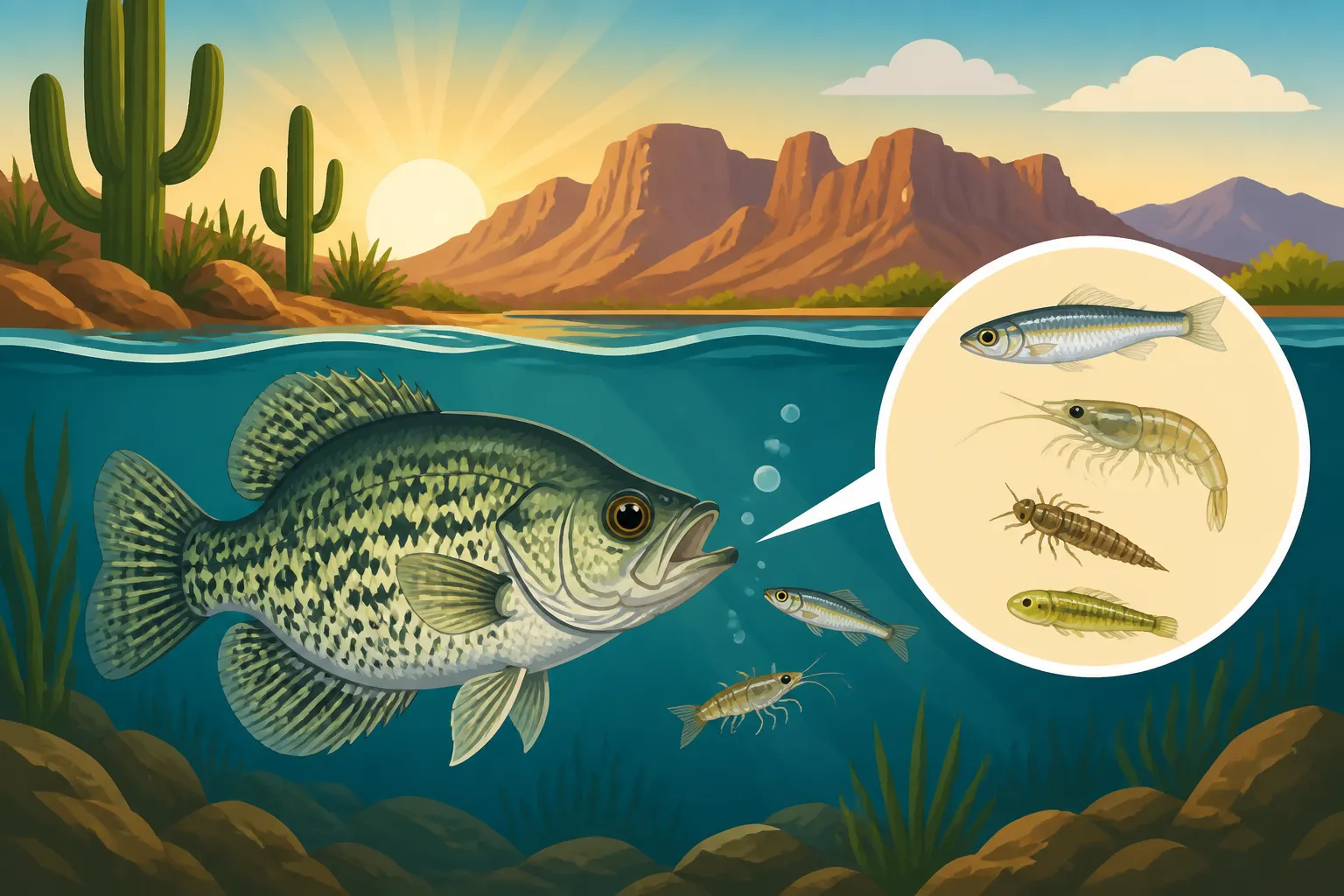
Forage fish are absolutely critical to the diet of crappie, especially as they grow larger. We're talking about the smaller, often schooling fish that crappie can easily ambush and swallow whole. In many Arizona lakes, threadfin shad are the undisputed kings of the forage base for crappie. These small, silvery fish school in open water and near structure, providing a constant food source. Crappie will often position themselves on the edges of brush piles, submerged timber, or weed lines, waiting for schools of shad to pass by.
It's not just shad, though. Young sunfish, small minnows, and even the fry of other species like bass or catfish can end up on a crappie's menu. Observing the presence of these baitfish in a particular area is often your first clue that crappie are likely nearby and feeding. If you see baitfish flicking on the surface, or spot them on your fish finder, it’s a good indication that the crappie might be in a feeding mood.
Invertebrates: A Staple for Smaller Crappie
While larger crappie definitely lean towards a fish-heavy diet, smaller crappie, and even larger ones when forage fish are scarce, rely heavily on invertebrates. Think about all the tiny critters crawling around in the water: insect larvae, zooplankton, small crustaceans, and even tiny aquatic worms. These are foundational food sources, especially for juvenile crappie. They provide essential nutrients and energy as the fish grow.
Many insect larvae, such as mayfly nymphs, caddisfly larvae, and mosquito larvae, are abundant in shallower, vegetated areas of Arizona's lakes and ponds. Crappie will meticulously pick these off plants or from the bottom. Zooplankton, microscopic organisms that drift in the water column, are also a crucial food source, particularly for very young crappie and during specific times of the year when they are highly concentrated. This explains why crappie will often suspend in open water, filtering these tiny morsels. Understanding these feeding patterns is key to honing your Crappie Fishing Guide for Arizona strategy.
Primary Food Sources for Arizona Crappie
Arizona's waters, from the vast reservoirs to the smaller urban ponds, offer a diverse buffet for crappie. Knowing what's on that menu locally can give you a significant edge. It's not always about matching the hatch with exact replicas, but understanding the general size, shape, and movement of what they're truly keying in on.
Threadfin Shad
Threadfin shad are perhaps the most vital food source for crappie in many of Arizona's larger impoundments like Roosevelt Lake, Apache Lake, and Lake Pleasant. These small, schooling fish are abundant and provide a high-protein, easily digestible meal for crappie. Crappie will actively pursue shad, often ambushing them from cover or driving them to the surface during feeding frenzies, sometimes called "crappie boils" though less dramatic than striper boils.
When crappie are feeding on shad, imitating these baitfish with lures becomes paramount. Small swimbaits, jerkbaits, and even simply white or silver jigs are often very effective. The key is to mimic the flickering, darting motion of a dying or disoriented shad. Pay attention to the size of the shad you might see jumping or caught in your net; crappie will typically prefer something that matches that profile.
Small Minnows and Sunfish Fry
Beyond threadfin shad, crappie will readily consume other small minnows and the fry (baby fish) of various species, including sunfish, bass, and even their own young. These smaller fish are often found in the same areas where crappie like to hide: around docks, submerged brush, weed beds, and fallen trees. They provide an easy meal for crappie patrolling these structures.
When crappie are keyed into these food sources, presentation is everything. Live minnows, fished under a bobber or on a small jig head, are notoriously effective. For artificials, tiny crankbaits, finesse worms, and small tube jigs can often entice a bite by mimicking a struggling minnow. Using ultra-light tackle can enhance your ability to present these delicate baits naturally. Many anglers find it convenient to buy live minnows or appropriate small lures from reliable online retailers like Amazon before heading out on their trip, ensuring they have the right tools for the job.
Aquatic Insects and Larvae
Even though crappie grow to be formidable predators, they never truly abandon their love for aquatic insects and their larvae. These often form a significant part of their diet, particularly in spring and fall, and in waters where forage fish might be less abundant. Think about the countless nymphs and larvae that cling to underwater vegetation, logs, and rocky bottoms.
Crappie will often cruise these areas, picking off larvae one by one. This feeding behavior lends itself well to techniques like tight-lining small jigs or using tiny artificial flies. Micro jigs, sometimes as small as 1/32 or 1/64 ounce, tipped with a small plastic grub or even a wax worm, can be deadly when crappie are focused on these smaller food items. During a strong insect hatch, you might even see crappie rising to the surface to snatch adult insects that have fallen into the water. For more on specific tactics, you might want to read up on Crappie Spawning Season Tactics which often involves fishing around vegetation where these insects thrive.
Seasonal and Environmental Influences on Crappie Feeding
Crappie, like most fish, are creatures of habit and opportunity, but their habits are largely dictated by the changing seasons and the unique environmental conditions of Arizona. What they eat, and how aggressively they pursue it, can shift dramatically from a cool spring morning to a scorching summer afternoon. Understanding these patterns is critical for consistent success.
Spring Feeding Frenzy
Ah, spring in Arizona! After the cooler winter months, crappie metabolism ramps up with the rising water temperatures. This is often heralded as one of the best times to target crappie, as they enter a pre-spawn and spawning phase where they need a lot of energy. Their feeding habits become much more aggressive. During the spring, crappie are often found in shallower waters, especially around submerged brush, weed beds, and timber, preparing to spawn.
Their diet at this time typically consists of a mix of small baitfish and larger invertebrates. They'll readily hit live minnows and jigs that imitate those minnows. The warmer water means increased activity for both crappie and their prey, making them easier to locate and entice. Focus on brush piles in 5-15 feet of water, especially those that receive good sunlight exposure. This is a prime time to use your fish finder to locate schools of crappie holding tight to cover, as detailed in How to Fish a Brush Pile for Crappie.
Summer Slowdown and Nighttime Feasts
Arizona summers bring intense heat, and this drastically affects crappie behavior. As surface water temperatures soar, crappie often retreat to deeper, cooler water. Their metabolism can slow down, and they might become more lethargic during the brightest, hottest parts of the day. Feeding activity often shifts to early mornings, late evenings, and, most notably, nighttime.
During these cooler periods, crappie will often move up from the deep to feed on baitfish that are also seeking cooler, more comfortable zones. Night fishing for crappie under lights, which attract zooplankton and then baitfish, is a hugely popular and effective strategy during the summer months. Their diet might still be heavy on baitfish, but they can be pickier about presentation due to the heat. Often, a slow, subtle presentation is more effective.
Fall Fattening Up
As Arizona's intense summer heat gives way to cooler autumn temperatures, crappie experience a resurgence in feeding activity. This is the "fall fattening" period, where they actively forage to build up reserves for the upcoming winter. They'll become more aggressive, similar to spring, and can be found in a wider range of depths. Baitfish like shad are still a primary target, but they might also opportunistically feed on larger insects before they disappear.
Crappie in the fall often move back to areas of submerged timber, rock piles, and points, where baitfish are congregating. They can be found suspending in the water column or hugging structure. Both live bait and artificial lures, especially small crankbaits and jigs, can be very productive. This is an excellent time to cover water and search for active schools, as they're often willing to chase a lure.
Winter Deep Dive
Winter in Arizona is typically mild, but water temperatures do drop, and crappie behavior changes again. They tend to move to deeper water, often suspending over deep channels or congregating around significant submerged structure like old creek beds, deep brush piles, or standing timber. Their metabolism slows considerably, and their feeding becomes less frequent and more subtle.
During winter, crappie are usually not actively chasing prey. Instead, they prefer easy meals presented right in front of them. This means slowing down your presentation is key. Small jigs, tipped with a minnow or a soft plastic, fished vertically right in their strike zone, are often the most effective. Locating these deep-water schools with a good fish finder is paramount. Understanding the nuances of Winter Bass Fishing Tactics in Arizona can also provide some transferable insights, as bass too will seek deeper, more stable temperatures.
How Water Conditions Affect Crappie Foraging
Water conditions are arguably one of the most significant factors influencing crappie diet and feeding habits in Arizona. From clarity to temperature and even current, these elements dictate where crappie will be, how active they are, and what they'll be willing to eat. Ignoring these factors is like trying to find a needle in a haystack blindfolded.
Water Clarity and Its Impact
The clarity of the water directly affects crappie's hunting strategy. In clear water, crappie rely heavily on their eyesight to locate prey. They can be more selective, and sometimes, more skittish. This means lighter line, more natural lure colors (like clear, white, or light greens), and a more subtle presentation are usually best. Live minnows can be particularly effective in clear water because their natural movement is so enticing. If the water is gin-clear, crappie might hold deeper or tighter to cover to ambush prey without being easily seen themselves.
Conversely, in stained or murky water, crappie still use their sight but also rely more on their lateral line system to detect vibrations. This opens the door for lures with more action or sound, and brighter, more contrasting colors (like chartreuse, orange, or black). While the clarity itself might make them less wary, the reduced visibility also means they need to be closer to their prey to detect it. This often means fishing tighter to structure or in shallower areas where light penetration is still decent. If you're struggling to identify Black Crappie vs White Crappie Identification, remember their habits might differ slightly depending on water clarity preference.
Water Temperature and Metabolism
Water temperature is perhaps the single most important environmental factor influencing crappie activity and feeding. Crappie are cold-blooded, meaning their body temperature mirrors the water temperature, which in turn controls their metabolism. In colder water (below 50-55°F), their metabolism slows down dramatically. They become less active, require less food, and move much slower. During these periods, you need to present baits very slowly, often directly to their face, and choose smaller, less energetic offerings.
As water temperatures rise into their optimal range (60-75°F), crappie metabolism speeds up. They become much more active, needing to feed more frequently to sustain their energy levels. This is when they're most likely to chase down baitfish and hit a variety of lures with enthusiasm. If temperatures climb too high (above 80°F), especially in shallower water, crappie can become stressed. They'll retreat to deeper, cooler water, and their feeding might slow down again, often shifting to nocturnal activity. Knowing the best time of year to fish, like consulting Arizona Fishing Seasons Explained, can give you clues about temperature.
Current and Oxygen Levels
Current, whether from river flow, dam releases, or even strong winds, can also significantly impact crappie feeding. Moderate current can be beneficial, as it often positions baitfish in predictable ambush points for crappie. Current also carries food past stationary fish, making them more likely to feed without expending too much energy. Crappie will often face into the current, waiting for an easy meal to drift by.
Oxygen levels, while often related to temperature, also play a role. Well-oxygenated water is crucial for active fish. In Arizona's hot summers, deeper, cooler water often holds higher oxygen levels, making those zones more appealing to crappie. However, stagnant, hot shallow water can become deoxygenated, forcing fish to move or become lethargic. Areas with fresh inflow or gentle current, which circulate oxygenated water, can be hotspots for feeding crappie.
Gear and Tactics Based on Crappie Diet
Once you understand what crappie are eating and when, the next logical step is to adjust your gear and tactics to match. It's not enough to just throw a line in the water; becoming a successful crappie angler means presenting offerings that appeal directly to their current dietary preferences.
Matching the Hatch with Lures
"Matching the hatch" is a term often used in fly fishing, but it applies perfectly to crappie fishing as well. If crappie are feeding on small baitfish, you want lures that mimic those baitfish in size, shape, and color. Small soft plastic swimbaits, grubs, and curly-tail jigs in white, silver, or light green can be incredibly effective. Consider the overall profile; if the baitfish are slender, choose a slender lure. If they're a bit more chunky, go for a wider profile.
When crappie are focusing on insects or tiny invertebrates, scale down your offerings even further. Micro jigs (1/32 or 1/64 ounce) with tiny plastic bodies, or even bare jig heads tipped with a wax worm or mealworm, become deadly. The key here is presenting a small, subtle meal that doesn't overwhelm them. Using a variety pack of jigs and plastics can help you experiment until you find what they're truly after. You can find excellent selections of these small jigs and plastics on Amazon, allowing you to stock up for different scenarios.
Live Bait: The Ultimate Match
There's a reason live bait is so popular for crappie: it's the ultimate "match the hatch." A live minnow, shiner, or even a small worm perfectly replicates what crappie naturally eat. The natural movement, scent, and appearance of live bait are often irresistible, especially when crappie are finicky or their metabolism is slow.
The most common live bait for crappie is the humble minnow. Fished under a bobber near structure, or tight-lined on a jig head, a live minnow is a crappie magnet. Other effective live baits include small red worms or crickets, particularly when crappie are focused on insects or in heavily vegetated areas. When using live bait, make sure to use small, sharp hooks that don't hinder the bait's natural movement and are appropriate for the crappie's delicate mouth. For specific recommendations, check out Best Bait for Crappie in Arizona.
Presentation is Key
Regardless of whether you're using artificial lures or live bait, the way you present your offering is paramount to success, and it should always be informed by crappie feeding habits. If crappie are aggressively chasing shad, a fast retrieve or a quick jigging motion might be best. If they're slowly picking off insect larvae from vegetation, a slow, subtle twitch-and-pause or a vertical presentation will be more effective.
Consider the depth crappie are holding. If they're suspending over a deep channel, a slow troll with small crankbaits or vertically jigged minnows might be the ticket. If they're tight to a brush pile, dropping a jig or minnow right into the branches is crucial. Anglers often use sensitive rods and light line to detect the subtle bites of crappie, which can feel like little more than a "tick" when they're not feeding aggressively. Remember, crappie often "suck in" their food, so a gentle take is common.
| Primary Crappie Food Source | Best Artificial Lure Match | Recommended Live Bait | Common Feeding Location |
|---|---|---|---|
| Threadfin Shad | Small swimbaits, curly-tail grubs (white, silver, chartreuse) | Live minnows (shiners, fatheads) | Open water, edges of structure, suspended |
| Insect Larvae/Nymphs | Micro jigs (1/32-1/64 oz) with tiny plastic bodies | Wax worms, mealworms, small red worms | Vegetated areas, submerged wood, bottom |
| Small Minnows/Fry | Tiny tube jigs, finesse worms, micro jerkbaits | Live minnows | Around docks, brush, weed beds, shallow cover |
| Zooplankton | Tiny hair jigs, clear/white micro plastics | N/A (lights attract them) | Open water, suspended in thermocline |
Common Misconceptions About Crappie Feeding
Even experienced anglers can sometimes fall victim to common myths or misunderstandings when it comes to crappie. Dispelling these can lead to more consistent catches and a deeper appreciation for these fantastic panfish.
"Crappie Only Eat Minnows"
This is perhaps the most widespread misconception about crappie. While live minnows are undoubtedly a highly effective bait, suggesting that crappie only eat minnows drastically limits an angler's potential. As we've discussed, crappie are opportunistic and will consume a wide array of food sources, from microscopic zooplankton to insect larvae and even smaller fish.
This myth often leads anglers to overlook productive artificial lures or other live baits. In reality, there are many days when a crappie will prefer a small jig, a plastic grub, or even a tiny spoon over a live minnow, especially when they are actively pursuing schools of shad or feeding on a specific insect hatch. Experimentation is always key. Don't be afraid to try something different, especially if the minnows aren't producing. A simple multi-compartment tackle box, readily available from retailers like Amazon, allows you to carry a diverse selection of baits and lures.
"Crappie Are Always in the Same Spot"
Another common belief is that crappie will stick to the same brush pile or dock piling all season long. While crappie do relate to structure, their movement and feeding locations are highly dynamic, dictated by seasonal changes, water temperature, forage availability, and even pressure from other anglers.
Crappie will move shallower during the spawn, deeper in the summer, and can suspend in open water or hug the bottom depending on the specific lake conditions and food sources. They follow their food. If the baitfish move, the crappie will follow. If a thermocline sets up at a certain depth, crappie will often position themselves just above or within it. Successful crappie fishing requires constant adaptation and a willingness to search for active fish rather than assuming they'll always be in a familiar spot. Exploring Seasonal Movement Patterns of Crappie in Spring or other similar resources can help you break this habit.
"Crappie Don't Bite in Hot Weather"
While it's true that crappie can become lethargic during the intense heat of an Arizona summer day, saying they "don't bite" at all is misleading. Their feeding habits simply shift. Instead of actively chasing prey during midday, they often become nocturnal feeders or concentrate their activity during the cooler low-light periods of dawn and dusk.
Night fishing for crappie, especially under submersible lights that attract bait, can be incredibly productive during the summer. They might also suspend deeper in the water column during the day, requiring a different approach to presentation. So, don't write off summer fishing; just change your tactics and timing. Embrace the cool evening breeze and the tranquility of a summer night on the lake, and you might find the crappie bite to be surprisingly strong.
Disclaimer
This article is for general informational purposes only and does not constitute professional advice. Laws, prices and regulations vary by location and change over time. Consult a qualified professional for guidance on your specific situation.