How Big Do Smallmouth Bass Get at Lake Powell
If you've ever cast a line into the vast, canyon-laden waters of Lake Powell, you know there's a certain magic to it. But for many anglers, especially those dreaming of a trophy catch, the burning question is always: just how big do those smallmouth bass actually get in this incredible Arizona fishery? It's not always easy to know what to expect, and misinformation can lead to either unrealistic hopes or overlooking true potential. This guide will dive deep into the world of Lake Powell's smallmouth bass, setting realistic expectations, exploring their growth factors, and helping you understand the real opportunities for a memorable catch.
The Lure of Lake Powell Smallmouth: Setting Expectations
Lake Powell is truly a marvel, with its intricate canyons, clear waters, and abundant fish populations. Among the most revered species for sport anglers here is the smallmouth bass, known for its tenacious fight and acrobatic jumps. But what defines a "big" smallmouth here? Is it a fish that tips the scales at five pounds, or something even more monumental? Understanding the potential size helps you appreciate every catch and target your efforts effectively. It's a different game than chasing largemouth in a muddy farm pond, that's for sure!
Average Size Versus Trophy Potential
Let's be real, most of the smallmouth bass you'll encounter on Lake Powell are going to be in the 1 to 3-pound range. These are still incredibly fun fish to catch, offering spirited battles that can make your heart pound. They're healthy, aggressive, and numerous, making for a fantastic day on the water, especially for those looking for consistent action. You'll often find yourself reeling in several fish of this size from a single cove or point. Don't underestimate the joy of these "average" fish; they provide the bulk of the angling experience and are perfect for honing your skills.
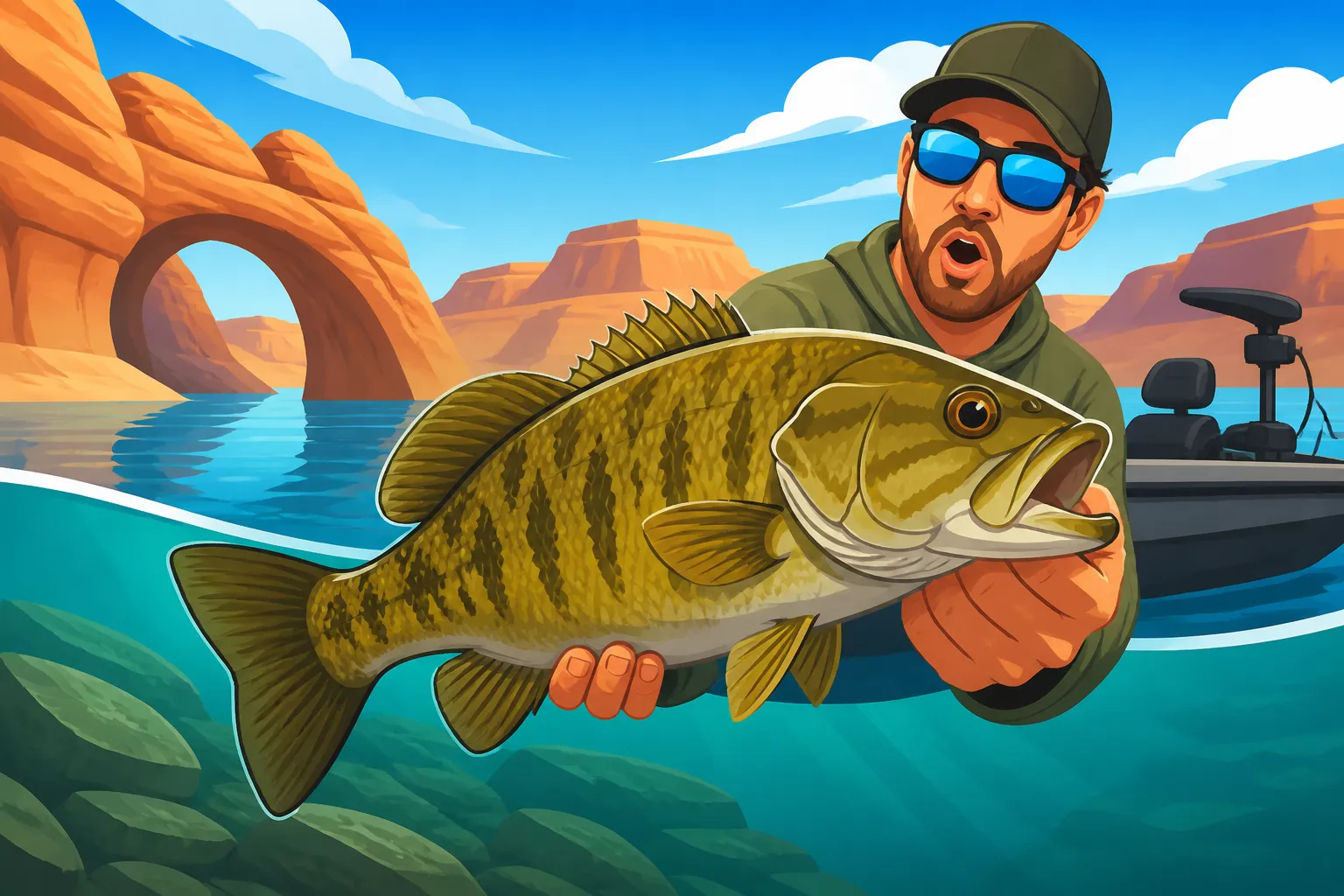
However, Lake Powell absolutely holds true trophy potential. A smallmouth bass pushing 4 pounds is considered an excellent catch, and anything over 5 pounds is truly in the trophy category for this lake, and frankly, for most places. Anglers occasionally pull out fish nearing the state record, sometimes even eclipsing it! These aren't everyday occurrences, but the potential is always there, lurking in the deep, rocky crevices. It's that elusive chance at a true giant that keeps many of us coming back. For more on these feisty fighters, check out our Smallmouth Bass Fishing Guide for Arizona.
Why Lake Powell is Special for Smallmouth
Lake Powell isn't just another reservoir; it's a unique environment that allows smallmouth bass to thrive and grow to impressive sizes. The sheer vastness of the lake, with its thousands of miles of shoreline, countless coves, and deep canyon structures, provides an incredible diversity of habitat. Smallmouth bass are notorious for preferring clear, rocky environments, and Lake Powell delivers this in spades. The endless rock formations, ledges, and sheer cliffs are ideal hunting grounds, offering plenty of ambush points and protection.
Beyond the structure, the lake boasts an excellent forage base. Smallmouth bass are opportunistic predators, and Lake Powell offers a smorgasbord of food. Crayfish are a huge component of their diet, and the rocky bottom of Powell is crawling with them. Shad, particularly threadfin shad, also provide a rich food source, especially in the more open water areas and larger bays. This abundance of high-protein food, coupled with the long growing season that Arizona offers, means smallmouth bass have every opportunity to bulk up. It's a perfect storm for growing big, healthy fish that are eager to bite. If you're planning a trip, our Lake Powell Arizona Fishing Guide has even more insights into what makes this place so incredible.
Understanding Smallmouth Bass Growth Factors
So, what exactly dictates whether a smallmouth bass stays a feisty little football or grows into a true behemoth? It's a complex interplay of several environmental and biological factors, all working together within the Lake Powell ecosystem. Understanding these elements can not only satisfy your curiosity but also help you strategize your fishing efforts to target bigger fish. It's like being a detective, piecing together the clues to find the biggest ones out there.
Diet and Forage Abundance
The old adage "you are what you eat" holds incredibly true for fish, especially predatory species like smallmouth bass. At Lake Powell, a consistent and protein-rich diet is paramount for achieving larger sizes. As mentioned, crayfish are a primary food source, often found scrambling amongst the rocks and gravel beds that smallmouth love. When you're fishing areas with abundant crayfish, you're likely in a prime spot for larger bass, as they don't have to expend as much energy to find a meal.
In addition to crayfish, threadfin shad are a crucial part of the smallmouth diet, particularly for the bigger fish. Shad are schooling baitfish that provide an easy, high-calorie meal, allowing bass to grow quickly. You'll often find larger bass keying in on these schools, especially in open water or around main lake points. The availability of these two primary food sources, combined with other smaller forage items like insect larvae and smaller fish, directly correlates to how much energy a smallmouth can put into growth rather than just survival. Having quality forage year-round is a huge boon for growing massive smallmouth.
Water Temperature and Seasonality
Arizona's climate, even in the higher elevation desert, means a long growing season, which benefits smallmouth bass immensely. Unlike colder northern waters where bass might only grow for a few months of the year, Lake Powell offers an extended period of ideal water temperatures for active feeding and metabolism. This means more time to eat and more time to put on weight. The prime feeding windows, particularly in spring and fall, see water temperatures in that sweet spot where bass are incredibly active, aggressively chasing down prey to pack on calories.
However, even in Arizona, extremes exist. During the peak of summer, surface temperatures can become quite warm, pushing the larger smallmouth into deeper, cooler water. While they'll still feed, their activity might slow down compared to the vibrant spring. Conversely, during the brief colder months, their metabolism will slow significantly, and they won't grow as much. Knowing the Best Time of Year to Fish Lake Powell for smallmouth often means timing your trip to these optimal feeding windows when the water temperatures are just right.
Habitat and Structure Influence
Smallmouth bass are intrinsically linked to their habitat, and Lake Powell's unique geology provides an abundance of ideal structure. They are masters of using rocky cover, ledges, and steep drop-offs to ambush prey and protect themselves. Deeper rock piles, submerged timber, and the intricate canyon walls offer both protection and hunting grounds. Larger smallmouth, in particular, tend to gravitate towards more substantial and often deeper structure, where they can find bigger forage and feel more secure.
Think about the sheer cliffs and submerged canyons that characterize Lake Powell. These aren't just pretty backdrops; they are prime real estate for big smallmouth. The structure provides cooler water in summer, protection from strong currents, and endless nooks and crannies for crayfish to hide and for shad to school. Anglers who learn to "read" the structure – understanding how depth, rock type, and available cover combine – will consistently find larger fish. Understanding Smallmouth Bass Habitat in Arizona Lakes is crucial for pinpointing where these bigger fish are likely to be hiding.
Lake Powell's Smallmouth Bass Records and Realities
Every angler dreams of catching a record-breaking fish. While state records are certainly rare, they do happen, and Lake Powell has contributed its fair share of impressive smallmouth catches to the record books over the years. It’s important to distinguish between the official state record and what constitutes a truly exceptional catch within Lake Powell itself. Sometimes the real story lies in the daily battles, not just the monumental ones.
Arizona State Record vs. Lake-Specific Giants
The Arizona state record for smallmouth bass is a formidable benchmark, often hovering in the 7-pound range or even slightly above, which is an absolute giant for this species. These fish are typically caught in deep, clear waters, often on large baits or during specific seasonal patterns when they're at their heaviest. Catching a fish that challenges this record is truly a once-in-a-lifetime event for most anglers. While not specific to Lake Powell, the lake certainly has the genetics and forage to produce fish of this caliber, and it's always a top contender for producing such giants. Keep an eye on the official Arizona Game and Fish Department records for the latest benchmarks.
Within Lake Powell itself, a "giant" smallmouth is usually considered anything over 5 pounds. While they don't get the same kind of publicity as a state record, these are truly magnificent fish that command respect. Anglers who regularly fish the lake often talk about the "Powell 5-pounder" as the holy grail. These fish are old, wise, and incredibly powerful. Landing one requires skill, patience, and often a bit of luck. It's these lake-specific giants that truly define the trophy potential of Lake Powell, and they are what dedicated smallmouth anglers are constantly chasing. To see the current benchmarks, you can always check out the official Arizona Smallmouth Bass Record details.
Angler Stories and Common Catches
Talk to any seasoned Lake Powell smallmouth angler, and you'll hear tales of epic battles. While the 1 to 3-pound fish are the bread and butter, filling stringers and providing constant action, the stories that linger are always about the bigger ones. You'll hear about "football" smallmouth that looked like they swallowed a softball, or fish that broke off after a spectacular aerial display. These stories are a testament to the healthy, vibrant fishery that Lake Powell represents. Most anglers will have days where they catch dozens of these smaller, energetic bass, keeping their rods bent and spirits high.
Then there are the days when everything aligns. The weather is perfect, the water temperature is right, and you've found a honey hole. On these rare occasions, you might encounter a string of 3 to 4-pound smallmouth, sometimes even a 5-pounder mixed in. These are the days that make the long drives and early mornings worth it. Remember, consistency in catching the "average" fish is key to eventually running into those special, larger ones. The more time you spend on the water, the higher your chances of writing your own big-fish story.
Strategies for Targeting Larger Smallmouth
If your goal is to land one of Lake Powell's impressive smallmouth bass, you can't just throw out any old lure and hope for the best. Big fish didn't get big by being careless; they're often smarter, more cautious, and have very specific preferences. Therefore, a targeted approach with the right lures, techniques, and an understanding of where and when these larger fish feed, is crucial. It's about being intentional with every cast.
Effective Lures and Techniques
When it comes to tempting bigger smallmouth at Lake Powell, you often need to "match the hatch" or present something that looks like a substantial meal. Larger smallmouth are less interested in chasing down tiny morsels; they want something that provides a good caloric return for their effort. For this reason, crayfish imitations are incredibly effective. Jigs with creature baits in natural browns, greens, and oranges are absolute killers. Think about a football jig dragged slowly along a rocky bottom – it perfectly mimics a crayfish scurrying away.
Another go-to for bigger smallmouth are swimbaits and jerkbaits, particularly those imitating threadfin shad. When bass are feeding on schools of shad in open water or around main lake points, a larger jerkbait twitched erratically can trigger aggressive strikes. Topwater lures, especially walk-the-dog style baits, can also be dynamite during low-light conditions when big smallmouth are feeding on the surface. For deeper fish, drop shot techniques with larger soft plastics are deadly. Many anglers swear by specific brands found easily on platforms like Amazon, offering a wide array of colors and sizes. Our Drop Shot Techniques for Smallmouth Bass guide goes into more detail on this method. You might also find success with Jig Fishing Techniques for Bass when targeting those deeper structures where big smallmouth reside.
Key Fishing Spots and Times
Finding those bigger smallmouth often means looking beyond the obvious. While smaller fish might be abundant in the backs of coves, the true giants often hold to main lake points, deep ledges, and sheer rock walls that drop into significant depths. These areas offer quick access to deep water for security and cooler temperatures, as well as proximity to schooling baitfish or prime crayfish habitat. Focus your efforts on areas with prominent rock formations, submerged timber, or where canyons pinch down, creating current or funneling bait.
Timing is also everything. Early mornings and late evenings, when the sun is low and the water is cooler, are prime feeding times for larger smallmouth, especially during the warmer months. Overcast days can extend these windows, allowing bigger fish to roam shallower. In the scorching Arizona summer, bigger bass will often go deep during the day, so vertical presentations or fishing at night can be incredibly effective. Pay attention to changes in barometric pressure, as these can also influence fish activity. Remember, the deeper you go, the more specialized your tackle might need to be – think about heavier jig heads or deeper diving crankbaits, which you can often browse and purchase on Amazon.
Comparing Lake Powell Smallmouth to Other Bass Species
It's easy to lump all bass into one category, but anyone who's spent time on Lake Powell knows that smallmouth bass offer a unique experience. They differ significantly from their largemouth cousins and even the formidable striped bass that also call Powell home. Understanding these differences can enhance your appreciation for each catch and help you tailor your approach to what you're hoping to find at the end of your line.
Size Comparison with Largemouth and Striped Bass
When discussing size, it's important to recognize that smallmouth bass, on average, don't reach the gargantuan weights that some largemouth or striped bass can achieve. While a 5-pound smallmouth is a true trophy, a 5-pound largemouth, while respectable, isn't quite the same caliber. Lake Powell's largemouth bass can certainly get bigger, with some pushing into the double digits. However, largemouth fishing is often more spot-specific, focused on vegetation or specific cover. For general information, our Largemouth Bass Fishing Guide for Arizona can shed more light.
Then there are striped bass. Oh boy, the stripers! Lake Powell is famous for its striped bass, which can grow into absolute monsters, easily exceeding 20 pounds, with some even pushing past 30. These are fish that can spool a reel and tow a boat. While they offer an incredible fight due to their sheer power and size, it's a different kind of fight than the smallmouth. Smallmouth are known for their aerial acrobatics and bulldogging tactics, whereas stripers are more of a brute force battle. For the full picture on these behemoths, check out our Striped Bass Fishing Guide for Arizona. Each species offers a distinct challenge and reward.
Unique Fight of the Smallmouth
What smallmouth bass might lack in sheer top-end weight compared to a record largemouth or a huge striped bass, they more than make up for in their fighting spirit. A 3-pound Lake Powell smallmouth will fight harder, jump higher, and make more blistering runs than almost any other fish of its size. They are known for their incredible stamina and acrobatic displays. When hooked, they often make powerful, head-shaking runs, trying to throw the hook, and frequently leap completely out of the water, shaking their heads violently. It’s an exhilarating experience that leaves your arms aching and your adrenaline pumping.
Many anglers prefer the fight of a smallmouth specifically because of this dynamic, unpredictable battle. It's not just a heavy tug; it's a test of skill and reaction, requiring you to anticipate their moves and maintain constant pressure. This makes even the "average" sized smallmouth an absolute blast to catch on appropriate tackle. You'll want a rod and reel combo that can handle these sudden bursts of energy. If you're looking for recommendations on the right gear to handle these feisty fish, consider browsing options for Best Fishing Rods for Bass in Arizona or Best Tackle for Desert Lake Fishing which are often available from retailers like Amazon.
Essential Gear for Chasing Lake Powell Smallmouth
Having the right gear makes a world of difference when you're targeting smallmouth bass, especially the bigger ones, in a place like Lake Powell. The vastness of the lake and the fighting power of these fish demand reliable equipment. You don't want to lose that trophy fish because your line snapped or your reel jammed! Preparing your tackle box and boat (if you have one) is part of the adventure.
Rods, Reels, and Line Choices
For Lake Powell smallmouth, a versatile spinning setup is often preferred, especially for beginners or those who like a wide range of lure presentations. A medium-light to medium power rod, typically 6'6" to 7' in length, with a fast action tip is ideal. This combination provides enough backbone for strong hooksets and fighting powerful fish, while the sensitive tip allows for detecting subtle bites. Pair this with a 2500 or 3000 series spinning reel, known for its smooth drag and reliable performance. If you're into baitcasting, a similar power and length rod with a high-speed reel works wonders for quickly picking up slack.
When it comes to line, a good quality 8 to 12-pound fluorocarbon or monofilament line is generally sufficient. Fluorocarbon is often preferred for its low visibility in clear water and excellent sensitivity, especially when fishing jigs or drop shots. Braided line can also be effective, particularly with a fluorocarbon leader, offering incredible strength and casting distance. Remember, the clear waters of Lake Powell mean fish can be line-shy, so presentation is key. Many anglers find great deals and selection on specific lines and reels on Amazon.
Tackle Box Essentials for Lake Powell
Your tackle box should be stocked with a variety of lures to cover different depths and conditions, keeping in mind the smallmouth's primary forage. Here's a quick rundown of what you'll want to have on hand:
| Lure Type | Description | Target Use |
|---|---|---|
| Jigs | Football, swim, or finesse jigs with creature baits | Rocky bottoms, deep structure, crayfish imitation |
| Jerkbaits | Suspending or slow-floating models (3-5 inches) | Open water, main lake points, shad imitation |
| Crankbaits | Medium to deep diving, natural colors | Covering water, targeting ledges and drop-offs |
| Soft Plastics | Tubes, Senkos, grubs, drop shot worms | Versatile, finesse presentations, rocky areas |
| Topwater Lures | Walk-the-dog, poppers | Low-light conditions, shallow feeding fish |
| Spinnerbaits | Single or tandem blades | Covering water, stained conditions, active fish |
Don't forget essential terminal tackle like wide gap hooks (for soft plastics), various weights (bullet, drop shot, split shot), swivels, and a good pair of pliers for removing hooks. Having a selection of colors that mimic crayfish (browns, greens, orange) and shad (silver, white, bluegill patterns) will serve you well. Our Essential Tackle Box Setup for Arizona Beginners has a great starting point, and you can easily expand it with specialized lures found on Amazon.
Table: Smallmouth Bass Size & Characteristics at Lake Powell
To give you a clearer picture, here's a table summarizing what you might expect when targeting smallmouth bass at Lake Powell:
| Characteristic | Average Lake Powell Smallmouth | Trophy Lake Powell Smallmouth | Arizona State Record Potential |
|---|---|---|---|
| Weight Range | 1 – 3 pounds | 4 – 6 pounds | 7+ pounds |
| Length Range | 12 – 16 inches | 18 – 22 inches | 22+ inches |
| Likely Habitat | Rocky points, coves, ledges | Deeper ledges, main lake points, submerged structure | Deep, clear water, specific structures |
| Common Forage | Crayfish, small shad, insects | Crayfish, larger shad, small fish | Abundant large forage, specific prey |
| Fight Style | Aggressive runs, aerial jumps | Powerful, sustained runs, higher jumps | Extreme power, endurance, multiple jumps |
| Frequency of Catch | High | Moderate to Low | Extremely Rare |
Conclusion
Lake Powell truly offers an incredible smallmouth bass fishing experience, with opportunities ranging from non-stop action with feisty 1-3 pounders to the tantalizing chance of hooking a true trophy pushing 5 pounds or more. Their growth is fueled by an abundance of forage, especially crayfish and shad, and supported by the lake's extensive rocky habitats and long Arizona growing seasons. While the state record might be an elusive dream, the lake-specific giants are definitely within reach for dedicated anglers who understand their habits and employ the right techniques and gear. So, pack your bags, stock your tackle box, and get ready to experience the thrill of battling Lake Powell's phenomenal smallmouth bass – every fish, regardless of size, offers a memorable fight.
Disclaimer
This article is for general informational purposes only and does not constitute professional advice. Laws, prices and regulations vary by location and change over time. Consult a qualified professional for guidance on your specific situation.