Do Fish Bite Less During a Full Moon?
There's nothing quite as frustrating as heading out to your favorite Arizona fishing spot, feeling optimistic, only to find the fish have developed lockjaw. Many anglers, seasoned veterans and eager newcomers alike, have scratched their heads, wondering if some unseen force is at play. One of the most common questions that comes up around the campfire, especially when the bites are slow, is whether the moon phase, particularly a full moon, actually makes fish bite less. It's a persistent theory that can leave you wondering if your efforts are doomed before you even cast. This guide will dive deep into this age-old question, exploring the folklore, the science, and most importantly, what practical steps you can take to still find success on Arizona's beautiful waters, no matter what the moon is doing.
Understanding the Age-Old Angler Debate: Moon Phases and Fish Behavior
The idea that the moon influences fish isn't new; it's a belief that spans cultures and generations of anglers. You'll hear stories from old-timers swearing by certain moon phases and avoiding others like the plague. It’s an intriguing concept, linking the celestial dance above to the mysterious world beneath the water's surface. But what's really behind these persistent theories, and how much stock should we put in them when planning our next fishing trip to Lake Pleasant or the Colorado River?
The Folklore and Science Behind Moon Phase Theories
For centuries, people have observed the moon's powerful influence on Earth, most notably with ocean tides. It’s natural, then, to extend this observation to other natural phenomena, including animal behavior. When it comes to fishing, the "full moon makes fish bite less" theory often stems from the idea that the brighter nights allow fish, particularly nocturnal feeders, to gorge themselves under the moonlight. If they've been feasting all night, the logic goes, they'll be less hungry and less active during the day. Conversely, a new moon (dark nights) might push fish to feed more aggressively during daylight hours.
While many anglers swear by these solunar tables, which predict feeding times based on moon and sun positions, scientific studies have yielded mixed results. Some research suggests a correlation between moon phases and certain fish behaviors, while others find no significant link, or that other environmental factors are far more dominant. It's a complex puzzle, and what works in one body of water for one species might not hold true everywhere. For instance, the specific conditions of Arizona's desert lakes, with their often crystal-clear waters, might amplify or diminish certain lunar effects compared to murkier, tidal waters elsewhere.
How Lunar Cycles Potentially Influence Aquatic Environments
Beyond just anecdotal evidence, there are a few scientific principles that might explain why moon phases could theoretically impact fish.
Firstly, gravitational pull. While less pronounced in landlocked lakes than in oceans, the moon's gravity still exerts a subtle pull on large bodies of water, potentially influencing minor water movements or currents. These minute changes might affect plankton or baitfish distribution, which in turn could influence larger predatory fish. However, for most of Arizona's reservoirs, factors like wind, inflow, and outflow have a far more significant impact on water movement.
Secondly, and perhaps more importantly for clear Arizona lakes, is light penetration. During a full moon, nights are significantly brighter. This increased ambient light can extend the "daytime" for fish that prefer to feed visually. Many species, especially those with good eyesight like bass and trout, can utilize this extra light to hunt effectively at night. If they're actively feeding through the night, their daytime feeding windows might shift or become less intense. Imagine having a massive midnight buffet; you're probably not going to be ravenous for breakfast the next morning! This is a core idea behind the full moon theory. This increased light can affect how you approach your tackle and bait choices, which we'll discuss later, especially when you're targeting species like the Rainbow Trout.
Deciphering the Full Moon Effect on Arizona's Waters
When we talk about the full moon's impact, it's not a universal switch that turns off all fish activity. Instead, it's about subtle shifts in behavior and opportunities. Arizona's desert lakes and cooler mountain streams present unique challenges and opportunities that can interact with lunar cycles in interesting ways. Understanding these nuances can help you adapt your strategy rather than simply giving up.
Increased Nocturnal Activity and Its Daytime Impact
The most commonly accepted theory for why a full moon might affect daytime fishing is indeed the increased nocturnal activity. With the desert sky ablaze under a bright full moon, predator fish in clear lakes like Canyon Lake or Saguaro Lake have an extended period of good visibility to hunt. Bass, striped bass, and even larger catfish can become highly active during these bright nights, making the most of the low-light conditions to ambush prey.
If they've been actively feeding all night, come sunrise, these fish might retreat to deeper, shadier areas or become less aggressive in their feeding. Their metabolism doesn't stop, but the urgency to feed might decrease. This means instead of chasing down fast-moving baits, they might prefer a slower, more subtle presentation, or simply hold tight to structure, waiting for an easy meal to pass by. Anglers often find success by targeting the hours immediately around dawn and dusk during a full moon, as these low-light transitions can still trigger a bite before or after the main nocturnal feeding spree.
The Role of Water Clarity and Light Penetration
Arizona's waters, especially many of its popular lakes, are renowned for their incredible clarity. While this offers stunning views, it also means that lunar light can penetrate deeper and spread further. In murky or heavily stained waters, a full moon's light might have a minimal impact beyond the very surface. But in a clear desert lake, that moonlight can illuminate structure and baitfish far below, effectively extending the "hunting hours" for visually oriented predators.
This enhanced light penetration might mean fish are less reliant on daytime for feeding. Consider a place like Lake Powell, with its deep, clear canyons. A full moon could allow smallmouth bass to navigate and hunt efficiently in conditions that would typically be too dark. This is why adapting your fishing techniques for Arizona's desert lakes becomes so crucial. If the fish are seeing your lures more clearly at night, you might need to adjust your daytime presentation to be more enticing, perhaps by opting for natural colors or slower retrieves. You can learn more about how water clarity affects lure choice in various conditions.
Practical Adjustments for Fishing During a Full Moon
Okay, so the full moon might influence fish behavior. What does an Arizona angler do about it? The key isn't to avoid fishing entirely but to adapt your approach. Think of it as another puzzle piece in the complex equation of fishing success, alongside factors like temperature, weather, and the specific habits of the fish you're targeting.
Timing Your Trips for Optimal Bites
Given the potential for increased nocturnal feeding during a full moon, your daytime strategy needs to shift. The absolute best times to hit the water are often around dawn and dusk. These are transitional periods when light levels are changing rapidly, and fish that have been active at night might still be finishing their meals, or fish that prefer daylight might be starting theirs. The hour before sunrise and the hour after sunset can be incredibly productive.
Another strategy, especially in warmer months, is to embrace night fishing. If the fish are feeding under the moonlight, why not join them? Catfish are notorious for being night owls, and a full moon can make for incredible night fishing for them. Even bass and striped bass can be caught after dark, especially if you focus on areas with artificial lights (like docks or marinas) or use glowing baits. If you're looking for more general guidance, check out our guide on when to fish Arizona lakes by month to help plan your trips around other seasonal factors.
Lure and Bait Selection Strategies
When the fish might be less aggressive or more wary due to nighttime feeding, your bait and lure choices matter even more.
- Go Natural or Subtle: During the day, fish might be less inclined to chase brightly colored, aggressive lures if they're not actively hunting. Consider more natural colors – greens, browns, clear with flecks – that mimic the local baitfish and crawfish. Think about using finesse techniques like a shaky head or a drop shot with smaller worms.
- Slow Down Your Presentation: Instead of burning a crankbait, try a slower retrieve with a jig. Let a worm or a soft plastic sink slowly, giving the fish ample time to inspect it. Sometimes, a subtle twitch is all it takes to trigger a bite from a hesitant fish. If you're into Jig Fishing Techniques for Bass, this is a prime time to experiment with slower movements.
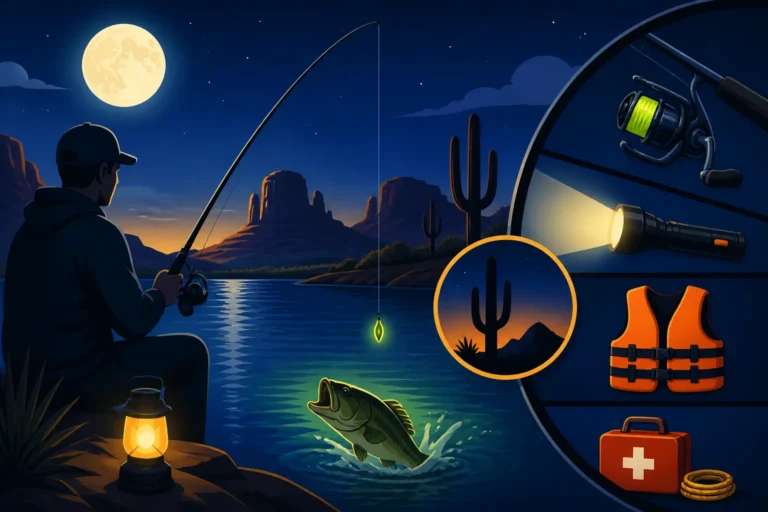
- Embrace the Night (with the right gear): If you decide to go night fishing, switch to lures with rattles, glow-in-the-dark features, or those that create strong vibrations. Dark-colored baits (black, dark blue) can create a better silhouette against the bright moonlight. Many specialized night fishing lures and lights are available on platforms like Amazon, offering everything from glow-in-the-dark spoons to illuminated bobbers.
- Live Bait Advantage: Live bait, like minnows, worms, or shad, is often irresistible to fish, regardless of their feeding mood. A lively minnow might entice a passive bass when artificial lures fail. For Bottom Fishing Techniques for Catfish, nightcrawlers or cut bait are always a solid choice, especially under a moonlit sky.
Choosing the Right Spots
Fish behavior changes with light and feeding patterns, and so should your location strategy.
- Deep Water and Shade: During peak daylight hours under a full moon, fish might retreat to deeper water or seek out the shadiest spots they can find. Look for submerged timber, deep ledges, brush piles, or the shady sides of steep cliffs and canyons. These areas offer refuge from the bright light and often hold cooler water.
- Structure is Key: Even if fish aren't actively chasing, they'll still relate to structure. Target points, humps, creek channels, and areas with underwater vegetation. They might be "holding" on these structures, waiting for an easy meal.
- Points of Transition: Focus on areas where deep water meets shallow, or where different types of habitat converge. These transition zones are often ambush points for predators.
- Nocturnal Hotspots: At night, look for areas where baitfish might congregate under the moonlight or near artificial light sources. Marinas, lighted docks, and coves where baitfish push up to the surface can be excellent for night fishing.
Here's a quick summary of adjustments for full moon fishing:
| Aspect | Full Moon Daytime Strategy | Full Moon Nighttime Strategy |
|---|---|---|
| Timing | Focus on dawn and dusk, avoid midday brightest hours. | Prime time, especially for nocturnal feeders. |
| Lure Color | Natural, muted, clear, green, brown. | Dark silhouettes (black, dark blue), glow-in-the-dark. |
| Lure Action | Slow, subtle, finesse presentations (worms, jigs). | Vibrating, rattling, noisy lures. |
| Bait | Live bait (worms, minnows) often more effective. | Live bait, cut bait (for catfish), scented baits. |
| Location (Day) | Deep water, heavy shade, submerged structure, ledges. | N/A |
| Location (Night) | N/A | Near artificial lights, baitfish schools, shallow flats. |
| Technique | Finesse fishing, slow retrieves, bottom bouncing. | Casting & retrieving, trolling (for stripers), still fishing. |
Beyond the Moon: Other Factors That Heavily Influence Fishing Success
While the moon phase is a fascinating topic, it's crucial to remember that it's just one piece of a much larger puzzle. Many other environmental and behavioral factors typically have a far more significant and immediate impact on whether the fish are biting. Getting caught up solely on the moon's influence can distract from paying attention to these other critical elements that often dictate success on Arizona's diverse fishing grounds.
Weather, Water Temperature, and Barometric Pressure
These three factors are often far more influential than the moon phase. Fish are cold-blooded creatures, and their metabolism and activity levels are directly tied to water temperature. Each species has an optimal temperature range for feeding and comfort. Too hot or too cold, and they become lethargic. You can explore Best Time of Day to Fish in Arizona Heat to understand how these factors play out in our unique climate.
Weather patterns like fronts moving through can dramatically change fish behavior. A stable, overcast day after a few days of consistent weather can be fantastic, while a rapidly changing cold front can shut fish down. Barometric pressure is another huge one, often correlating with frontal systems. A stable or slowly falling barometer often signals active feeding, while a rapidly dropping or rising barometer can make fish uncomfortable and less willing to bite. Many anglers meticulously track this more than the moon. Learn more about How Barometric Pressure Affects Bass Fishing for a deeper dive.
Forage Availability and Spawning Cycles
Fish need to eat, and if there's an abundance of natural forage – be it shad, crawfish, or smaller panfish – they might be less interested in your offerings. Conversely, if natural food sources are scarce, they'll be more opportunistic. Understanding the forage base in a particular lake (like the Threadfin Shad in many Arizona reservoirs) is paramount.
Spawning cycles are also huge game-changers. During the spawn, many fish species, especially bass, become highly aggressive but not necessarily because they're hungry. They're protecting beds or seeking mates. Once the spawn is over, they might enter a post-spawn lull, where they're recovering and less active. Knowing the general Arizona Fishing Seasons Explained and the typical spawning times for species like bass or crappie can give you a massive advantage. Our guide on Seasonal Movement Patterns of Arizona Bass can also help you track these crucial changes throughout the year.
Angler Skill and Local Knowledge
Ultimately, perhaps the most critical factor is the angler themselves. Skill, persistence, and local knowledge often trump any lunar cycle or challenging weather condition. An experienced angler who understands fish behavior, knows the specific contours of a lake, and has a proven repertoire of techniques will almost always out-fish someone relying solely on solunar tables.
Spending time on the water, observing patterns, experimenting with different baits, and learning from other successful anglers in Arizona are invaluable. Understanding Best Bass Fishing Techniques for Arizona Lakes or Best Trout Fishing Techniques for Arizona Waters will equip you with the fundamental skills to adapt to various conditions, including a full moon. Don't let the moon deter you; instead, see it as an opportunity to sharpen your skills, try new strategies, and discover how truly adaptable Arizona's fish can be. Even when the bite is tough, a good angler with good local information – whether it's knowing the best spots at Roosevelt Lake or understanding how to fish Arizona's desert lakes – can still find success.
Disclaimer
This article is for general informational purposes only and does not constitute professional advice. Laws, prices and regulations vary by location and change over time. Consult a qualified professional for guidance on your specific situation.