How to Set Up a Bottom Rig for Catfish
You've been out on the water, you've got your favorite catfish bait, you're patiently waiting, and… nothing. Or maybe you get a nibble, but the fish just isn't committing. A common culprit? Your bait isn't sitting right where those whiskered beauties are looking for it. This guide is going to walk you through exactly how to set up a dependable bottom rig for catfish, ensuring your bait is perfectly presented for those hungry Arizona monsters lurking below.
Why a Bottom Rig is Your Catfish Secret Weapon in Arizona
Catfish are fascinating creatures, and understanding their behavior is key to consistently hooking up. Unlike some other species that might chase down a flashy lure or suspend themselves in the water column, catfish, particularly the big ones we love to target here in Arizona, are often found hugging the bottom. They're opportunistic scavengers and predators that rely heavily on their sense of smell and touch to find food. This is precisely why a well-executed bottom rig isn't just a good idea—it's often essential.
Understanding Catfish Behavior and Habitat
When you think about Arizona's diverse waterways, from the vast expanses of Lake Pleasant to the currents of the Colorado River, catfish have adapted to thrive in a variety of environments. Whether it's the feisty Channel Catfish, the powerful Flathead Catfish, or even the occasional Blue Catfish, they all share a common trait: a preference for foraging on or near the lakebed or river bottom. They love to hang out in deeper pockets, tucked away near submerged timber, rock piles, or along channel drop-offs where current brings them easy meals. These are often cooler, darker areas, especially during the scorching Arizona summers, making them prime real estate for a hungry cat.
Imagine your bait gently wafting just above a muddy bottom where a Channel Catfish is nosing around for grub, or resting solidly beside a snag where a Flathead is patiently ambushing its next meal. This direct presentation is what a bottom rig excels at. It gets your offering right into their living room, so to speak, rather than dangling somewhere above their heads. If you're looking for more comprehensive details on these amazing fish, check out our full Catfish Fishing Guide for Arizona.
Common Frustrations with Other Rigs
Many anglers, especially those new to catfishing, might start with what they know. Maybe you've tried a bobber rig, hoping to keep your bait visible. But have you ever cast out, waited patiently, and then reeled in to find your bait hasn't even settled where the fish are? That's a classic bobber rig issue for bottom-dwelling catfish. While bobbers have their place, they often keep your bait too high in the water column for consistent catfish bites.
Then there are rigs that are simply too light. You might be using a setup designed for crappie or smaller panfish, and while you might catch a small catfish on it, it's not going to hold up to the powerful run of a respectable channel cat or the sheer brute force of a large flathead. Even a standard Carolina rig, which is a fantastic bottom-fishing setup, can sometimes get snagged easily in Arizona's notoriously rocky lakebeds if you're not using the right sinker or a longer leader. The frustrations can mount quickly, leading to lost tackle and, more importantly, lost opportunities to land those impressive Arizona catfish. A dedicated bottom rig setup helps mitigate these problems by being specifically tailored to the catfish's habits and the unique underwater terrain.
Essential Components of a Robust Catfish Bottom Rig
Building an effective bottom rig isn't just about throwing a hook and a weight on your line. It's about carefully selecting each component to create a system that is strong, reliable, and perfectly suited to target powerful catfish in various Arizona environments.
Rod, Reel, and Line Selection for Arizona Catfish
First things first, let's talk about the backbone of your setup: the rod and reel. For catfish, you'll want something with some serious backbone. A medium-heavy to heavy action rod, typically in the 7 to 9-foot range, is ideal. This length gives you the leverage needed to cast heavier baits and sinkers, and more importantly, the power to turn a big cat away from snags and guide it to your net. Shorter rods might feel sporty, but they can leave you under-gunned against a twenty-pound flathead.
When it comes to reels, a sturdy baitcasting reel is often preferred by seasoned catfishermen because of its raw power, superior casting distance with heavier weights, and robust drag system. However, a large, well-built spinning reel with a smooth, reliable drag can also do the trick, especially for those who prefer the simplicity of spinning gear. Just make sure it's rated for heavier line. Speaking of line, you'll generally want to spool up with 20-30 pound test monofilament or braided line. Monofilament offers a bit of stretch, which can be forgiving when a cat makes a sudden surge, and it's fairly abrasion-resistant. Braided line, on the other hand, provides incredible sensitivity, allowing you to feel even the slightest tap, and it has no stretch, offering direct pulling power. Many anglers opt for braid as their main line and then add a monofilament or fluorocarbon leader. For more details on choosing the right rod, check out our guide on the Best Rod for Catfish, and for line, dive into Best Line for Catfish Fishing.
The Stars of the Show: Hooks, Sinkers, and Swivels
These are the unsung heroes of your bottom rig, each playing a critical role in bait presentation and hook-setting success.
- Hooks: For catfishing, circle hooks are overwhelmingly popular and for good reason. Styles like the octopus circle hook are designed to set themselves in the corner of the fish's mouth as it tries to swim away, leading to fewer gut-hooked fish and higher landing rates. This is not only better for catch-and-release but also ensures a clean hookset if you plan to keep your catch. Sizes typically range from 4/0 to 8/0, depending on your bait size and the size of the catfish you're targeting. For smaller channel cats and worms, a 4/0 might be fine, but for cut bait targeting flatheads, you'll want to go larger.
- Sinkers: The type and weight of your sinker are crucial for getting your bait to the bottom and keeping it there, especially in current. Egg sinkers are a common choice for a slip-sinker rig because they allow your line to run freely through them. This means a biting catfish can pull line without feeling the weight of the sinker, giving them time to fully take the bait. For strong currents, like those found on the Colorado River, flat sinkers or pyramid sinkers are excellent as they dig into the bottom and resist rolling. Weights can vary dramatically from 1/2 ounce for calm, shallow community ponds to 3 ounces or more for deep reservoirs or heavy river currents. You can find a wide variety of these essential components, from durable hooks to heavy-duty sinkers, available on Amazon, often in bulk packs that offer great value.
- Swivels: A good quality barrel swivel is your best friend when preventing line twist. This is especially important when using baits that might spin in the current or when dealing with powerful fish that roll during a fight. The swivel connects your main line to your leader, creating a secure junction while allowing independent movement.
- Leader Material: Your leader should be made of a material that offers good abrasion resistance. Heavier monofilament or fluorocarbon (usually 15-40 pound test, a few pounds heavier than your main line) in lengths from 12 to 24 inches is common. Fluorocarbon is nearly invisible underwater, which can be an advantage in clearer lakes, and it's also highly abrasion-resistant against rocks and catfish teeth.
Best Baits for Arizona Catfish
Once you've got your rig components, you need the irresistible aroma to call those catfish in. Arizona catfish aren't picky, but certain baits consistently outperform others on a bottom rig.
- Stink Baits (Prepared Baits): These are a classic for Channel Catfish. Brands offer a huge array of "stink baits" or "dough baits" that are designed to emit a potent scent trail. They come in various forms, from punch baits that you dip a treble hook into, to dip baits that cling to specially designed worms or sponges. The strong, often pungent, odor attracts catfish from a distance, making them perfect for a stationary bottom rig.
- Cut Bait: This is a fantastic all-around option, especially for larger Channel Cats and Flatheads. Fresh cut bait, like mackerel, shad, or even smaller panfish (where legal to use as bait), offers a natural scent and oil trail that catfish can't resist. Cut it into chunks or strips; the key is to expose the flesh for maximum scent dispersion.
- Worms: Good old nightcrawlers are always a reliable choice, particularly for smaller Channel Catfish and for getting a bite when other baits fail. Thread them onto your hook to create a wriggly, enticing presentation.
- Live Bait: For trophy Flathead Catfish, live bait is often the king. Small sunfish, bluegill, or carp (again, check local regulations for legal baitfish) hooked through the back or lip on a sturdy circle hook can be irresistible to a big Flathead. A bottom rig keeps this bait active and swimming in the strike zone without it drifting away.
The beauty of a bottom rig is its versatility in presenting these various baits effectively. It ensures that whatever you choose, it's sitting right where those Arizona catfish are most likely to find it. Our guide on the Best Bait for Catfish in Arizona offers even more specifics.
Step-by-Step: Assembling Your Arizona Catfish Bottom Rig
Now that we know why a bottom rig is so effective and what components you'll need, let's get down to the brass tacks of actually putting one together. There are a few variations, but we'll focus on the most common and effective ones for Arizona catfishing.
The Classic Slip Sinker Rig (Carolina Rig Variant)
This is arguably the most popular and versatile bottom rig for catfish, and for good reason. It allows the fish to pick up the bait without immediately feeling the resistance of your sinker, leading to more confident bites.
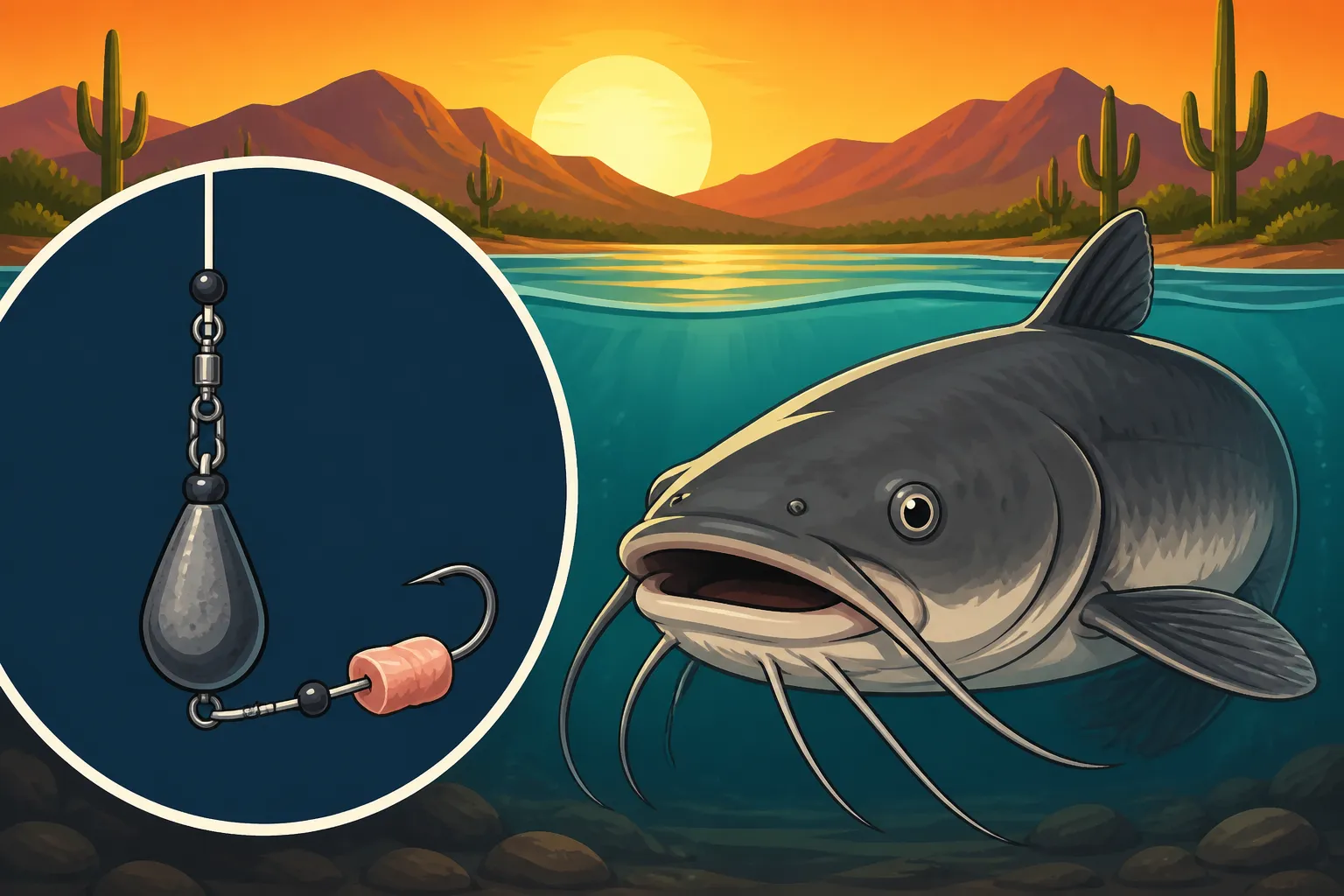
- Thread Your Sinker: Take your main fishing line (the line coming from your reel) and thread it through the eye of your chosen egg sinker. Make sure the wide end of the sinker's hole faces your rod tip. The sinker should slide freely on your main line.
- Add a Bead (Optional but Recommended): After the sinker, you can slide a small plastic or glass bead onto your main line. This bead acts as a buffer, protecting your knot from the constant banging of the sinker, especially during casting and retrieval. This is a small step that can save you a lot of frustration from worn knots.
- Tie on a Swivel: Next, tie a strong barrel swivel to the end of your main line. Use a reliable knot like a Palomar knot or an improved clinch knot. This swivel is crucial; it stops your sinker from sliding all the way down to your hook and prevents line twist.
- Attach Your Leader: Cut a section of heavier monofilament or fluorocarbon line for your leader, typically 12 to 24 inches long. Tie one end of this leader to the other eye of the barrel swivel, again using a strong knot. The length of the leader can be adjusted – shorter leaders reduce snags, while longer ones allow your bait more natural movement.
- Tie on Your Hook: Finally, tie your chosen circle hook to the end of your leader. Ensure the hook is oriented correctly for optimal hook sets (point facing the shaft slightly inward).
The beauty of this "slip" action is that when a catfish mouths or takes your bait, the line can slide through the sinker. The fish feels minimal resistance, increasing the chance it will fully commit to the bait before you even realize you have a bite.
The Santee Cooper Rig (for slightly suspended baits)
Sometimes, the bottom is a bit too mucky, or there's too much submerged vegetation. In these scenarios, you want your bait just slightly off the bottom, hovering tantalizingly above the debris. That's where the Santee Cooper rig shines. It builds on the slip sinker rig by adding a small float to the leader.
- Start with the Slip Sinker Setup: Follow steps 1-3 from the Classic Slip Sinker Rig (main line, sinker, bead, swivel).
- Add the Leader and Float: Cut your leader line (12-24 inches). Before tying your hook, thread a small foam peg float or a small cylindrical bobber onto your leader. This float should be just buoyant enough to lift your bait a few inches off the bottom. You can use a toothpick or rubber bobber stopper to "peg" the float in place on your leader, usually 2-6 inches above where your hook will be.
- Tie on Your Hook: Attach your circle hook to the end of the leader, below the float.
This rig keeps your bait visible and off the bottom muck, making it highly effective when fishing over soft mud, slimy bottoms, or sparse submerged grass beds. It's also excellent for presenting cut bait or larger chunks of prepared bait without them sinking into the sediment. Many specific floats designed for this rig, along with various sinkers and swivels, can be found readily on Amazon, making it easy to assemble your ideal setup.
Tips for Success: Casting, Setting, and Retrieval
Putting the rig together is one thing, but fishing it effectively is another.
- Casting: With heavier sinkers and potentially large baits, a gentle, pendulum-style cast is often better than a powerful overhead heave, which can tear your bait off the hook. Aim for areas with structure, drop-offs, or known catfish holding spots.
- Baiting: Ensure your bait is securely attached to your hook. For cut bait, thread the hook through the tougher skin several times. For worms, bunch them up. For stink baits, ensure a good glob is on your dip worm or sponge.
- Rod Holders: When fishing a bottom rig, especially from the bank, reliable rod holders are almost mandatory. They keep your rod secure and positioned, making it easier to spot bites. You can find simple spike holders or more elaborate setups.
- Bite Detection: With a slip sinker, a catfish can often pick up the bait and move away without much initial resistance. You might see a slight slack in your line, a gentle tap, or a slow, steady bend in your rod. Don't immediately snatch the rod!
- Setting the Hook (Circle Hooks): This is crucial. With circle hooks, resist the urge to violently "set the hook" like you would with a J-hook. Instead, when you feel a steady pull or see your rod tip bend, simply pick up the rod, slowly reel down any slack, and apply gentle, steady pressure. The circle hook will do its job and rotate into the corner of the fish's mouth. Yanking can actually pull the hook out.
- Retrieval: When reeling in, do so steadily. If you've got a fish on, maintain constant pressure to keep the hook set. If you're snagged, try to pull from different angles to free it, or simply break it off if it's hopeless. For more in-depth advice on this, check out our guide on Bottom Fishing Techniques for Catfish.
| Component | Channel Catfish (Avg. 2-10 lbs) | Flathead Catfish (Avg. 10-50+ lbs) |
|---|---|---|
| Rod Action | Medium-Heavy | Heavy |
| Main Line | 15-25 lb Mono/Braid | 30-60 lb Braid |
| Leader | 20-30 lb Fluoro/Mono (12-18") | 40-80 lb Fluoro/Mono (18-24") |
| Hook Size | 4/0 – 6/0 Circle | 6/0 – 9/0 Circle |
| Sinker Weight | 1/2 oz – 1.5 oz (Egg or Bank) | 1 oz – 4 oz+ (Pyramid, Flat, Egg) |
| Preferred Bait | Stink Bait, Cut Bait, Worms | Live Bait (Bluegill, Carp), Large Cut Bait |
| Rig Type | Slip Sinker, Santee Cooper | Slip Sinker (heavy), Santee Cooper (heavy) |
Advanced Considerations for Arizona Catfishing
Once you've mastered the basic bottom rig, you'll start to notice that "one size fits all" doesn't quite apply to all of Arizona's diverse fishing environments. Adapting your rig to specific conditions can significantly improve your success rate.
Adapting to Different Arizona Waters
Arizona's fishing landscapes range from tranquil urban ponds to vast desert reservoirs and powerful rivers, each demanding slightly different approaches to your bottom rig.
- Rivers (e.g., Colorado River, Salt River): These waters present the challenge of current. To keep your bait firmly in the strike zone and prevent it from rolling downstream, you'll need heavier sinkers, often in the 2-4 ounce range or more. Pyramid sinkers or flat, no-roll sinkers are excellent choices here because they dig into the bottom and offer less resistance to the flow. You might also want a slightly shorter leader (12-18 inches) to keep your bait closer to the weight and reduce tangles in strong currents. Understanding how to fish the current seams and eddies is also key. For a deep dive into river fishing, explore our Colorado River Fishing Guide in Arizona or our insights into the Salt River Arizona Fishing Guide.
- Lakes and Large Reservoirs (e.g., Roosevelt Lake, Lake Pleasant, Bartlett Lake): In these expansive waters, current is usually less of a concern, so you can often get away with lighter sinkers (1/2 to 2 ounces) depending on depth and wind. Egg sinkers are very effective here as they allow the fish to run without feeling much resistance. Focus on casting to submerged structure like old creek beds, humps, points, and brush piles where catfish congregate. Vary your leader length (18-24 inches) to experiment with how far your bait drifts from the main line. Our detailed guides on Roosevelt Lake Arizona Fishing Guide, Lake Pleasant Arizona Fishing Guide, and Bartlett Lake Arizona Fishing Guide can help you pinpoint specific spots.
- Community Ponds and Urban Lakes: These smaller, often calmer waters require a lighter touch. You'll generally use smaller hooks (4/0-5/0), lighter line (10-15 pound test), and minimal weight (1/4 to 1/2 ounce egg sinkers). The goal is a more subtle presentation for the smaller, but often numerous, channel catfish found in these areas. Pay attention to aeration fountains, shaded areas, and deeper pockets.
Troubleshooting Common Bottom Rig Issues
Even with the perfect setup, you'll encounter challenges. Knowing how to troubleshoot them will save you time and tackle.
- Snags: This is perhaps the most common frustration with bottom rigs. If you're constantly getting snagged, consider a few adjustments. First, try a slightly shorter leader length to keep your hook closer to your sinker. Second, if you're using an egg sinker, consider using a break-away sinker or a simpler knot for the sinker line that's weaker than your main line, so if it snags, you only lose the weight, not the entire rig. Finally, adjust your casting. Sometimes moving just a few feet can mean the difference between snag city and clear bottom.
- Line Twist: If your line starts looking like a telephone cord, it's likely line twist. This can be caused by a spinning bait, a faulty swivel, or a fish that's rolling during the fight. Ensure your swivel is working freely. If using live bait, make sure it's hooked in a way that minimizes spinning. A good quality, strong swivel is worth the investment.
- Missed Bites: If you're getting taps but no hookups, several factors could be at play. Your hook might be too large for the fish you're targeting, preventing them from getting it fully in their mouth. Conversely, if you're targeting big fish with small hooks, they might spit it out. Ensure your bait is securely but not excessively covering the hook point, especially with circle hooks. Sometimes, simply waiting a few more seconds before reeling can make all the difference, allowing the fish to fully commit.
Night Fishing and Safety with Bottom Rigs
Catfish, especially the bigger ones, are often more active feeders during the cooler hours of the night, making night fishing an incredibly popular and productive strategy in Arizona. However, fishing in the dark comes with its own set of considerations.
- Enhanced Activity: Many species of catfish are nocturnal, using their superior sense of smell and touch to navigate and hunt in low light. This means your bottom rig, presenting a scented bait right on their path, can be incredibly effective after sundown. If you're interested in learning more, check out our article on Catfish Night Fishing Techniques.
- Visibility: You'll need good lighting. A reliable headlamp is essential for tying knots, baiting hooks, and unhooking fish. Glow sticks or clip-on LED lights attached to your rod tip can help you detect subtle bites in the dark. You can find excellent, durable headlamps and other night fishing essentials readily available on Amazon.
- Safety First: Fishing at night requires extra precautions. Be aware of your surroundings; unfamiliar terrain can be treacherous in the dark. Always let someone know where you're going and when you expect to return. Be extra careful when handling sharp hooks and knives in low light conditions. Keep your fishing area tidy to avoid tripping hazards. A thorough review of general Night Fishing Techniques and Safety is always a good idea before heading out.
Setting up a bottom rig for catfish in Arizona is a fundamental skill that, once mastered, will open up a world of exciting angling opportunities. By understanding the components, learning the assembly, and adapting your approach to different waters and conditions, you'll be well on your way to consistently landing those hard-fighting catfish that make Arizona fishing so rewarding. Tight lines, and happy catfishing!
Disclaimer
This article is for general informational purposes only and does not constitute professional advice. Laws, prices and regulations vary by location and change over time. Consult a qualified professional for guidance on your specific situation.