Canyon Ledge Fishing Techniques
Oh, the infamous canyon ledges of Arizona's big reservoirs! They can be some of the most frustrating, yet incredibly rewarding, places to fish. Many of us have spent countless hours staring at our fish finders, seeing promising marks suspended just off these vertical walls, only to struggle with getting our lures down there effectively, avoiding snags, and actually triggering a bite. This comprehensive guide is all about demystifying those challenging deep-water structures, equipping you with the specialized techniques and knowledge to confidently target and catch fish holding on those steep, rocky ledges across our beautiful desert lakes.
Understanding Arizona's Canyon Ledges: Why They Hold Fish
Arizona's major reservoirs, like Lake Powell, Roosevelt Lake, and Lake Pleasant, are not your typical shallow, grassy ponds. They were carved from rugged desert canyons, leaving behind dramatic underwater landscapes. These submerged cliff faces and deep ledges are more than just pretty scenery; they are vital fish highways and ambush points, offering unique challenges and incredible opportunities for savvy anglers.
The Unique Topography of Desert Reservoirs
When we talk about "canyon ledges" in Arizona, we're really talking about the remnants of ancient riverbeds and steep canyon walls that were submerged when these reservoirs were filled. Think of the Grand Canyon, but underwater. You'll find sharp drop-offs, sheer rock walls, subtle shelves, and pronounced ledges that can plunge from 10 feet to over 100 feet in a matter of yards. This extreme vertical relief is a stark contrast to many other fishing environments and requires a completely different approach. These submerged formations are often covered in broken rock, submerged brush, and sometimes even standing timber, creating a complex habitat that fish absolutely adore. Understanding this underwater topography is the first step to unlocking its secrets.
Why Fish Gravitate to Ledges
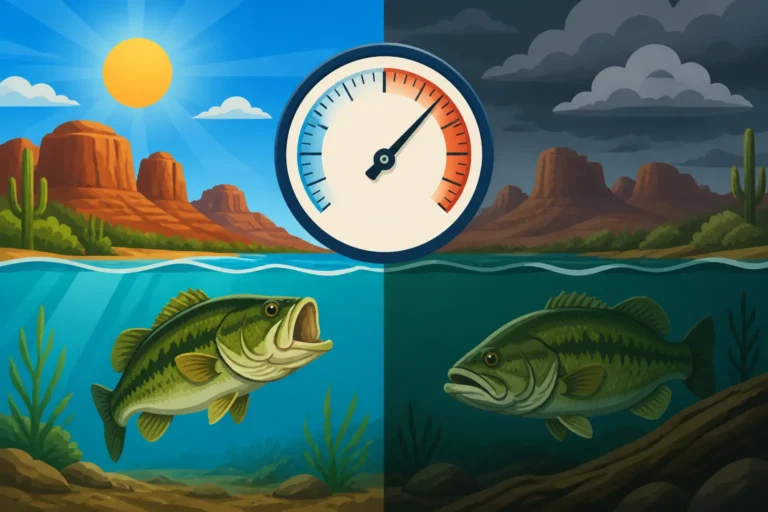
Fish, particularly predatory species like bass and stripers, are drawn to ledges for several key reasons. Firstly, ledges provide instant access to varying depths, allowing fish to quickly move up or down the water column to find their preferred temperature, oxygen levels, or light conditions. This is especially crucial in Arizona's extreme temperatures. In the scorching summer, fish can retreat to cooler, deeper water, only to ambush prey that ventures near the shallower lip of the ledge. Conversely, in winter, a deep ledge might offer warmer water than the exposed shallows. Secondly, these structures are fantastic ambush points. The irregular contours, overhangs, and cracks in the rock provide perfect cover for predators to hide and dart out at unsuspecting baitfish. Imagine a large mouth bass tucked into a crevice, waiting for a school of shad to swim by. Finally, ledges are often natural current breaks, even in reservoirs, which can concentrate baitfish and provide a resting spot for larger game fish without expending too much energy.
Identifying Productive Ledges
Not all ledges are created equal. Some are barren, while others teem with life. The key to finding productive ledges lies in combining your knowledge of fish behavior with your electronics. Look for ledges that have some sort of "feature" – a bend, a point, an outcropping, a submerged tree, or a transition where a hard rock bottom meets a softer mud or gravel flat. These irregularities break up the monotony of a straight wall and offer additional cover or food sources. Your fish finder is your best friend here. Pay close attention to depth changes, baitfish schools, and distinct arches that indicate larger fish holding tight to the structure. Areas where multiple ledges intersect or where a creek channel meets a main lake ledge are often exceptionally productive. For more insights on finding these hotspots, check out our guide on Deep Water Structure Fishing Techniques.
Essential Gear for Canyon Ledge Fishing
Fishing canyon ledges demands specialized tackle. Trying to use your standard shallow-water spinning setup will likely lead to frustration, lost lures, and missed opportunities. You need gear that can handle deep water, heavy cover, and strong fish.
Rods, Reels, and Line for Deep Water
When you're fishing ledges, you're often dealing with significant depth, heavy lures, and powerful fish that will try to bury themselves in the rocks. This means robust gear is essential.
- Rods: For vertical presentations like jigging or drop shotting, a sensitive, medium-heavy to heavy power casting rod, typically 7 to 7.5 feet long, is ideal. The sensitivity in the tip helps detect subtle bites in deep water, while the powerful backbone allows you to drive the hook home and pull fish away from snags. If you prefer spinning gear, a similar power rod with a fast action will serve you well. For casting heavy crankbaits or swimbaits along ledges, a longer, slightly more moderate action rod might be preferred for better casting distance and shock absorption. Brands like Shimano, Daiwa, or even more budget-friendly options found on Amazon often have suitable rods.
- Reels: For casting, a high-quality baitcasting reel with a smooth, strong drag system is paramount. Look for a gear ratio in the 6.1:1 to 7.3:1 range, offering a good balance of power for retrieving heavy lures and speed for taking up slack. For spinning, a sturdy 3000-4000 series reel with a smooth retrieve and ample line capacity will do the trick. A quality reel ensures you can consistently present your bait and have the stopping power when you hook into a big striper or a trophy bass.
- Line: This is arguably the most critical component for deep-water ledge fishing. Braided line, with its near-zero stretch and incredible sensitivity, is almost non-negotiable for your main line. It transmits even the lightest bite from 50+ feet down directly to your rod tip. Use 20-40lb test braided line. To minimize visibility to fish and offer some abrasion resistance near the lure, tie on a fluorocarbon leader of 12-20lb test, depending on the target species and water clarity. The length of your leader can vary from 3 to 10 feet. For more on line choices, consider exploring our guide on the Best Line for Bass Fishing.
Lures and Baits for Ledge Dwellers
The lures you choose for canyon ledge fishing need to get down deep quickly, imitate common baitfish, and stand up to potential snags.
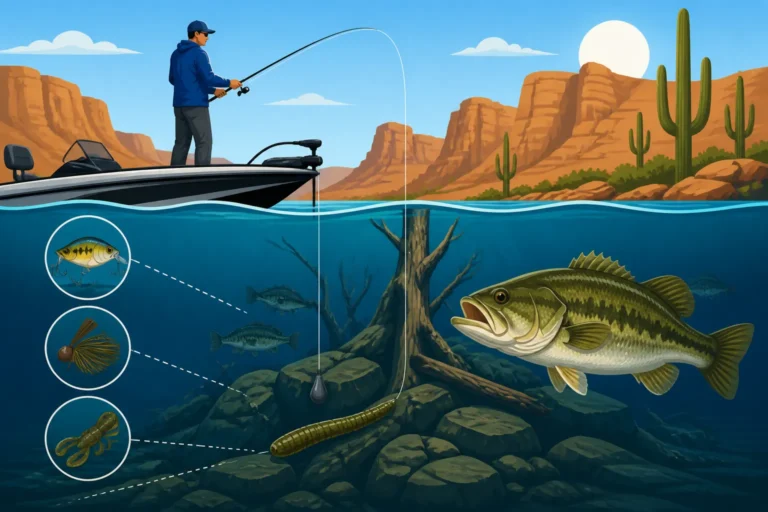
- Jigs: Heavy football jigs (3/4 oz to 1.5 oz) with bulky trailers are phenomenal for working the bottom of ledges. Their shape helps them "walk" over rocks with fewer snags, and they mimic crawfish or bottom-feeding baitfish. Structure jigs with weed guards are also excellent.
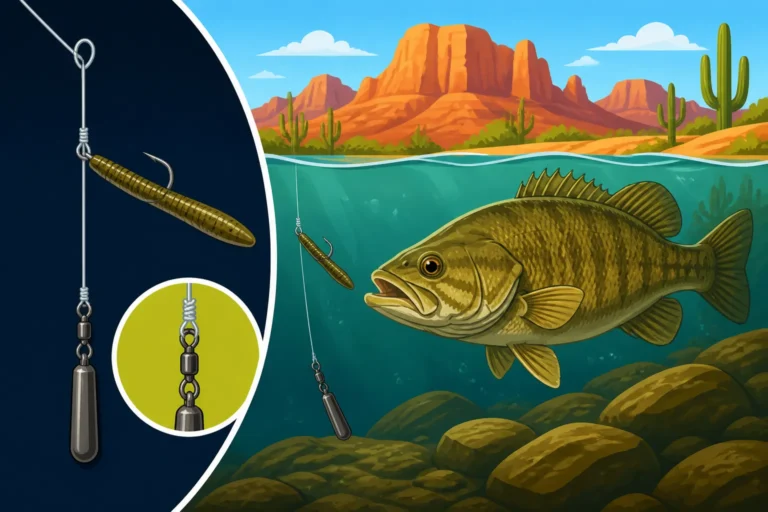
- Drop Shots: This technique shines on ledges, allowing you to present a soft plastic bait tantalizingly close to the fish without the weight sitting directly on the bottom. Use weights from 1/2 oz to 1 oz to ensure quick descent and bottom contact. Our guide on How to Fish a Drop Shot for Smallmouth Bass offers detailed rigging tips.
- Carolina Rigs: For covering broader sections of a ledge or targeting transition areas, a Carolina rig with a heavy bullet sinker (3/4 oz to 1.5 oz) and a soft plastic lizard, creature bait, or worm trailing behind is highly effective. The weight bounces along the bottom, creating a disturbance, while the bait swims naturally above it. You can learn more about this setup in our article How to Rig a Carolina Rig for Largemouth Bass.
- Deep-Diving Crankbaits: While challenging to fish on truly vertical ledges, crankbaits with massive diving lips can be deadly on more gradual ledges or flats adjacent to deep water. They often deflect off structure, triggering reaction strikes.
- Swimbaits: Heavy, soft plastic swimbaits, either line-through or rigged on heavy jig heads, are excellent for imitating larger baitfish like shad or trout that fish often chase along ledges.
- Live Bait: If regulations allow, live bait such as shad, minnows, or even crawfish, fished on a weighted Carolina rig or a three-way swivel setup, can be irresistible to deep-holding fish.
Remember, having a variety of these lures in different weights and colors will ensure you're prepared for whatever the fish and the ledge throw at you. A quick search on Amazon for "deep water bass jigs" or "heavy drop shot weights" will show you the array of options available.
Electronics: Your Eyes Underwater
In the world of canyon ledge fishing, your electronics are not just a luxury; they are an absolute necessity. You simply cannot effectively fish these deep, complex structures without a quality fish finder.
- Side Imaging/Down Imaging: These technologies are game-changers for ledge fishing. Side imaging allows you to "see" out to the sides of your boat, revealing entire ledges, points, and brush piles that you might otherwise miss directly beneath your transducer. Down imaging provides a clearer, photo-like view of what's directly below, helping you distinguish between rock, brush, and actual fish holding tight to the structure. This visual information helps you identify the most promising sections of a ledge before you even make a cast.
- 2D Sonar: While side and down imaging offer incredible detail, don't underestimate the power of traditional 2D sonar for marking fish arches and tracking your lure. Understanding how to interpret your 2D sonar is fundamental.
- GPS and Mapping: Integrated GPS with detailed lake maps (like Navionics or C-MAP) allows you to mark specific waypoints on productive ledges, track your drift lines, and navigate back to hotspots with precision. This is crucial when trying to repeatedly present a lure to a small, isolated piece of cover on a vast ledge. For more details on choosing the right unit, check out our guide on the Best Fish Finders for Bass Fishing in Arizona. Investing in a good fish finder from brands like Humminbird or Lowrance will pay dividends in your ledge fishing success.
Mastering Deep Water Presentations
Once you have the right gear, the next step is to master the techniques that allow you to effectively present your lures in deep water and along complex canyon ledges. This isn't about haphazard casting; it's about precision, feel, and understanding how your lure interacts with the bottom.
Vertical Jigging Strategies
Vertical jigging is one of the most direct and effective ways to target fish holding tight to ledges in deep water. It allows for precise lure placement and maximum control.
- Understanding the Drop: The key to successful vertical jigging is to get your lure down to the fish as quickly and efficiently as possible. This means using sufficient weight. Drop your jig directly over the marked fish or structure, allowing it to freefall on a semi-slack line. Keep a finger on the line to detect bites on the fall – sometimes fish will hit it before it even reaches the bottom!
- Working the Jig: Once your jig hits the bottom, engage your reel. The retrieve consists of a series of lifts and drops. Experiment with different actions:
- Short Hops: Lift your rod tip 6-12 inches, then let the jig fall back to the bottom on a controlled slack line. This mimics a crawfish or a stunned baitfish.
- Long Sweeps: Lift your rod tip higher, perhaps 2-3 feet, then slowly lower it, maintaining tension to feel for bites. This covers more vertical water column.
- Dead Sticking: Simply let the jig sit on the bottom, or just slightly above it, occasionally shaking the rod tip to impart subtle action. This can be deadly for lethargic fish.
- Bite Detection: Detecting bites in deep water on a jig can be tricky. Look for anything that feels "different" – a subtle tap, a sudden weightlessness, or simply feeling like your jig isn't falling properly. It often feels like a "thump" or a "mushy" sensation. When in doubt, set the hook!
Drop Shotting the Ledges
The drop shot rig is a finesse technique that has become a powerhouse for deep-water ledge fishing, particularly for smallmouth and largemouth bass. Its advantage lies in presenting a bait at a precise depth above the bottom, making it less prone to snags while still being in the fish's strike zone.
- Rigging for Ledges: Use a strong fluorocarbon leader (10-15 lb test) tied to your braid. The hook should be snelled directly to the main line, typically 12-24 inches above the weight. The weight itself should be heavy enough (1/2 oz to 1 oz) to maintain bottom contact in deep water and current. The exact distance from the weight to the hook dictates how high your bait will suspend off the bottom.
- Presentation: Drop your rig vertically over a marked fish or promising structure. Let it hit the bottom, then reel up any slack until your line is taut. Instead of moving the weight, impart action by gently shaking your rod tip. This makes the soft plastic bait quiver enticingly in the water column while the weight stays put.
- Working the Drop Shot:
- Spot Fishing: If you see fish on your electronics at a specific depth, try to position your bait just above them.
- Slow Drag: After working an area, slowly drag the weight a few feet along the bottom, then pause and shake again. This allows you to cover more ground along a ledge while keeping your bait in the zone.
- Subtle Twitch: Sometimes the most subtle twitch is all it takes. The goal is to make the bait look alive without moving it too far from the strike zone.
Carolina Rigging for Ledge Transitions
While drop shotting is great for vertical presentations, the Carolina rig excels at covering broader areas of a ledge and especially targeting those crucial transition zones where a ledge flattens out or changes composition.
- The Setup: A Carolina rig consists of a heavy bullet sinker (3/4 oz to 1.5 oz), followed by a bead (to protect the knot), a swivel, and then a 2-4 foot fluorocarbon leader tied to your hook and soft plastic bait. The longer leader allows the bait to drift naturally behind the weight.
- Fan Casting and Dragging: Unlike vertical jigging, the Carolina rig is often cast out and slowly dragged along the bottom. Make long casts parallel to the ledge or cast up onto a flat and drag it down the face of the ledge. The weight will bounce and tick along the bottom, stirring up sediment and attracting attention, while your bait follows just above it.
- Feeling the Bottom: Pay close attention to how the weight is feeling the bottom. You want to distinguish between rock, gravel, and mud, as these changes often indicate key feeding areas. A "thump-thump" might be rock, while a smoother drag might be mud. Any change in texture or a sudden pause could indicate a bite.
- Bait Choices: Lizards, creature baits, and straight-tail worms are classic Carolina rig baits. The key is to choose something that has good action and floats naturally behind the weight.
Crankbait and Swimbait Tactics
While often associated with shallower water, deep-diving crankbaits and heavy swimbaits can be incredibly effective on certain types of canyon ledges, particularly those with a more gradual slope or adjacent submerged points.
- Deep-Diving Crankbaits: These lures are designed to reach extreme depths, often 15-30 feet or more. The trick to fishing them on ledges is to cast them parallel to the ledge or onto a flat and crank them down until they "dive" into the structure. The deflection off the rocks often triggers an aggressive reaction strike.
- Key Technique: Focus on "bumping" the crankbait off the bottom and rocks. Let it hit, then pause for a second, allowing it to float up slightly before continuing your retrieve. This erratic action mimics a fleeing or injured baitfish.
- Challenges: Snagging is a real concern with deep-diving crankbaits on ledges. Use stout line and be prepared to lose a few. However, the reward can be enormous.
- Heavy Swimbaits: For larger, more aggressive predators like striped bass or trophy largemouth, a heavy swimbait (either a boot-tail soft plastic rigged on a heavy jig head or a hard-bodied swimbait) can be irresistible.
- Presentation: Cast the swimbait parallel to the ledge or over a prominent point. Allow it to sink to the desired depth (often using a count-down method), then begin a slow, steady retrieve. The goal is to imitate a large, confident baitfish swimming along the ledge.
- Targeting: Swimbaits are excellent for targeting fish that are suspending just off the ledge or actively chasing bait in the open water nearby. Vary your retrieve speed and add occasional twitches to mimic an injured baitfish. Many anglers find a good selection of quality swimbaits for diverse conditions when browsing on Amazon.
Strategic Approaches to Ledge Fishing
Beyond the specific techniques, there are overarching strategies that will significantly improve your success rate when fishing Arizona's canyon ledges. This includes understanding seasonal fish movements, precise boat control, and preparing for the inevitable challenges of fishing rocky, deep cover.
Seasonal Considerations and Fish Movement
Fish behavior on ledges is heavily influenced by the season and water temperature in Arizona's desert lakes. Understanding these patterns is key to being in the right place at the right time.
- Spring: As water temperatures begin to rise, fish will start to move shallower along ledges, especially those adjacent to spawning coves or flats. They might use ledges as staging areas before moving into extreme shallows to spawn. Look for them on the upper third of ledges.
- Summer: This is prime time for deep-water ledge fishing in Arizona. With surface temperatures soaring, fish retreat to the cooler, more stable temperatures of deep ledges. They will often suspend off the ledges during the day, following baitfish, or move onto the top of the ledge during lower light conditions to feed. This is when deep cranking, heavy jigging, and drop shotting truly shine.
- Fall: As water temperatures cool and baitfish schools migrate, fish will often move shallower again, chasing bait along ledges. They will be actively feeding, gorging themselves before winter. Ledges at creek mouths or those with direct access to vast flats become productive.
- Winter: Fish on ledges in winter often become lethargic but are still catchable. They tend to congregate in the deepest, most stable parts of the ledges or near deep creek channels. Vertical presentations with slow retrieves, like dead-sticking a jig or drop shot, are often most effective. For a deeper dive into how different times of the year affect fish, check out our article on Seasonal Movement Patterns of Arizona Bass.
Boat Positioning and Drift Control
Effective ledge fishing is almost impossible without precise boat control. You need to stay on top of the fish and your presentation, especially in windy conditions or areas with current.
- Using Your Trolling Motor: A powerful electric trolling motor with GPS-controlled spot-lock (like a Minn Kota Ultrex or a Garmin Force) is a game-changer. It allows you to hold your boat precisely over a marked waypoint or a productive section of a ledge, even in wind or chop.
- Drifting Parallel: For techniques like Carolina rigging or slow-rolling swimbaits, you often want to drift your boat parallel to the ledge. This allows you to cover a longer stretch of the productive structure. Pay attention to wind and current, and use your trolling motor to subtly adjust your drift path.
- Vertical Presentation: When vertical jigging or drop shotting, position your boat directly over the fish or the specific piece of structure you're targeting. This ensures your lure falls straight down and you maintain the most direct line to your bait for maximum sensitivity.
- Line Angle: Always be mindful of your line angle. If your boat is drifting too fast, your line will be at an angle, making it harder to detect bites and increasing the chances of snagging. Use your trolling motor to keep your line as vertical as possible for most deep-water presentations.
Dealing with Snags and Break-offs
Fishing rocky canyon ledges inevitably means dealing with snags. It's just part of the game. However, a few strategies can help minimize frustration and lost tackle.
- Expect It: Go into every ledge fishing trip knowing you're going to lose some lures. It mentally prepares you and makes it less aggravating when it happens.
- Strong Line: As mentioned, heavy braided main line with a robust fluorocarbon leader is your best defense. It gives you the power to pull free from many minor snags.
- Rod Action: A powerful rod also helps. When you feel a snag, try to keep a tight line and "pop" the rod tip sharply. Sometimes, this will dislodge the lure from a crevice.
- Weight Choice: For drop shots, use "snag-free" cylinder or pencil weights. If they get wedged, the thinner profile might slip out, or the line might break at the weight, saving your hook and fish.
- Lure Design: Choose jigs with good weed guards and football-shaped heads that roll over rocks rather than getting wedged in them.
- Lure Retrieval: When you feel your lure bumping against something, slow your retrieve or pause. Sometimes, just letting it sit can cause it to fall free.
- Go Get It (If Possible): If fishing from a boat with a trolling motor and calm conditions, you can sometimes motor directly over the snagged lure. A straight pull often frees it. Keep a good pair of pliers from Amazon handy for re-tying and cutting snagged line.
Targeting Specific Species on Canyon Ledges
Arizona's canyon ledges aren't just for one type of fish. Depending on the lake and the season, these deep structures can hold a variety of popular game fish. Tailoring your approach to the specific species you're targeting will make your efforts much more productive.
Largemouth and Smallmouth Bass Tactics
Bass absolutely love ledges, but their preferences can differ slightly. Both species will use ledges for ambush, feeding, and temperature regulation, especially in the larger Arizona reservoirs.
- Largemouth Bass: While often associated with shallower cover, big largemouth bass are frequent residents of deeper ledges, particularly those with brush, submerged trees, or prominent rock piles on top or along their face. They often prefer a more pronounced break or a flatter shelf adjacent to the deep drop.
- Techniques: Heavy jigs, Carolina rigs, and deep-diving crankbaits are highly effective for largemouth. They are more likely to strike an aggressive presentation. When fishing jigs, allow them to hit the bottom and then perform short hops or drags. For crankbaits, focus on deflecting them off the structure.
- Key Areas: Look for largemouth on ledges near creek channels, points that drop into deep water, or areas with a mix of rock and soft bottom. On Roosevelt Lake Arizona Fishing Guide, these kinds of ledges are often gold mines for big bass.
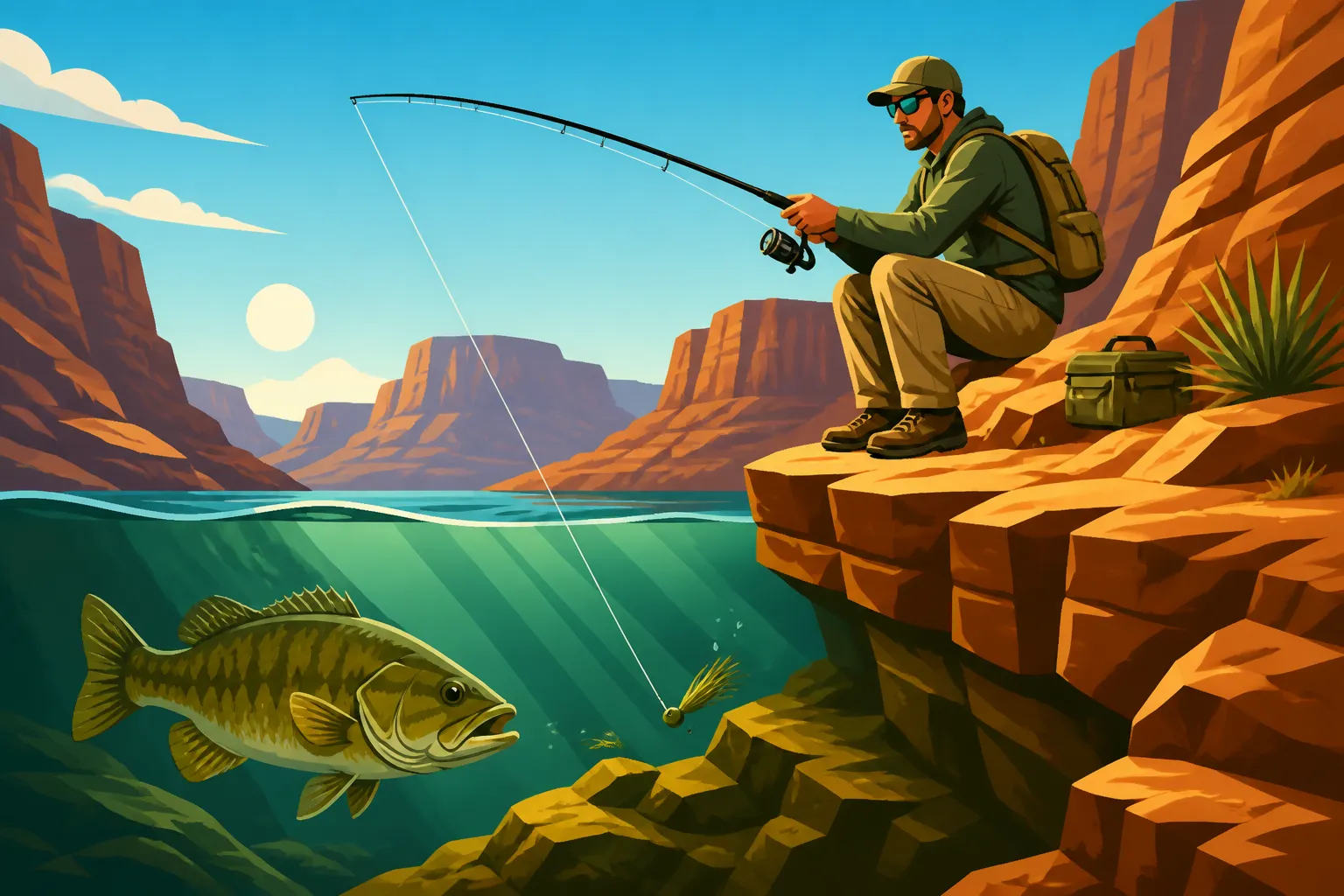
- Smallmouth Bass: Smallmouth are classic deep-water, rocky structure dwellers. They thrive on the sheer rock walls and broken shale of canyon ledges, often suspending in the water column or relating tightly to vertical cover. Lake Powell, with its extensive canyon systems, is famous for its smallmouth bass.
- Techniques: Drop shotting is often considered the king for smallmouth on ledges. The finesse presentation is incredibly effective for enticing these finicky eaters. Vertical jigging with smaller, more subtle jigs (e.g., tube jigs or football jigs with smaller trailers) also works wonders.
- Key Areas: Focus on vertical rock walls, sheer drop-offs, and deep points with clean, hard bottom. Smallmouth will often hold on specific shelves or irregularities in the rock face. For more detailed strategies, our Smallmouth Bass Fishing Guide for Arizona provides excellent insights.
Striped Bass Ambushing from Ledges
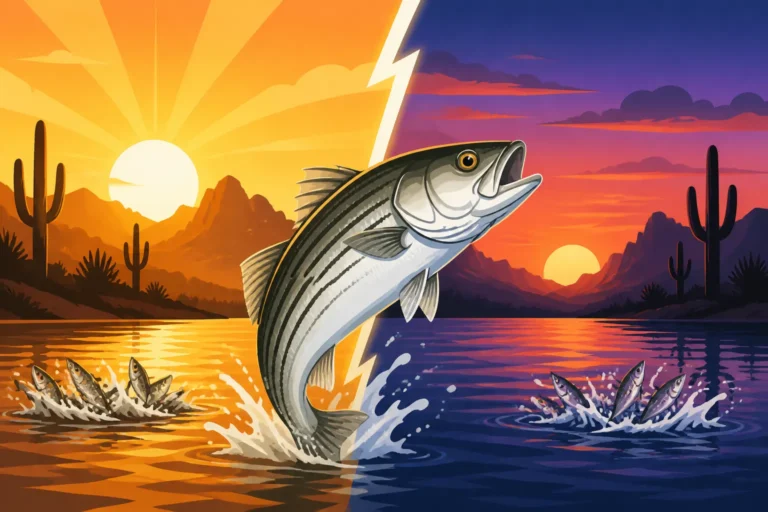
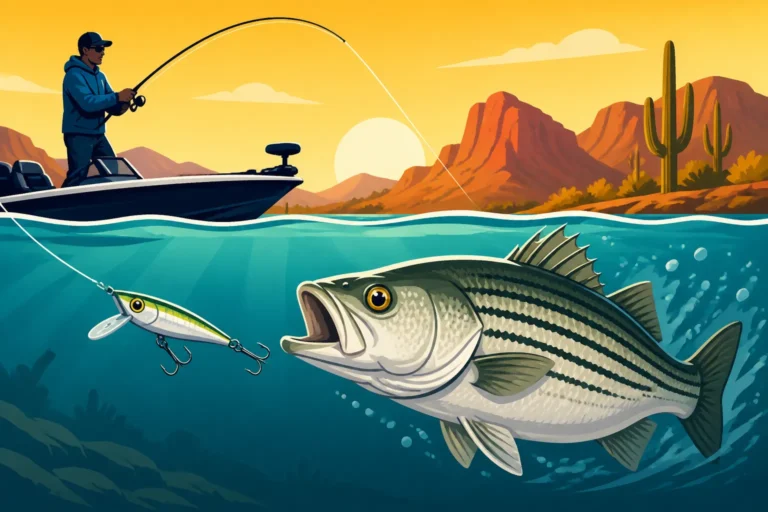
Striped bass are open-water predators, but they frequently use canyon ledges as ambush points, especially when large schools of baitfish, like shad, move into the area. In places like Lake Powell and Lake Pleasant, stripers can be found in incredible numbers around these deep structures.
- Behavior: Stripers on ledges are usually actively feeding or waiting to ambush. They might suspend in large schools just off the ledge, pushing baitfish against it, or patrol the top edges.
- Techniques:
- Live Bait: If legal, live shad or other baitfish presented on a three-way swivel rig or a weighted Carolina rig can be deadly.
- Slab Spoons/Heavy Jigs: For fish suspended off the ledges, vertical jigging with heavy slab spoons or metal jigs is incredibly effective. Drop them down to the marked depth and aggressively rip them up, letting them flutter back down.
- Swimbaits: Large, heavy swimbaits can imitate the larger baitfish stripers target. Cast them along the ledge and retrieve them steadily or with a slow, sweeping motion.
- Trolling: On very large ledges or submerged points, trolling deep-diving crankbaits or swimbaits parallel to the structure can also provoke strikes.
- Electronics are Key: Watch your fish finder for large schools of baitfish and aggressive arches that indicate feeding stripers. When you find a "boil" or a concentrated school, get your lure down there fast! Our Lake Pleasant Arizona Fishing Guide often highlights excellent striper opportunities around deep ledges.
Crappie and Catfish on Deep Structure
Don't overlook crappie and catfish when fishing canyon ledges. While perhaps not the primary targets for ledge techniques, they certainly inhabit these areas and can be caught with the right approach.
- Crappie: Crappie will use ledges, especially those with submerged brush, standing timber, or large rock piles, for cover and to ambush baitfish. They often hold in tight schools.
- Techniques: Smaller jigs (1/16 oz to 1/8 oz) on light line are usually best. Drop them vertically over crappie schools found on your electronics. A small soft plastic tube or curly-tail grub on a jig head is a classic crappie bait. A minnow under a slip bobber, set to the depth the crappie are holding, is also highly effective.
- Key Areas: Look for crappie on the deeper sections of ledges that still offer some form of vertical cover.
- Catfish (Channel and Flathead): Catfish are bottom dwellers and scavengers, making deep ledges excellent foraging grounds, especially those with some softer bottom or debris mixed with rock. Flathead catfish, in particular, love to hide in crevices and undercuts along ledges.
- Techniques: Bottom fishing with cut bait (shad, hot dogs, chicken livers) on a Carolina rig or a three-way swivel rig is highly effective. Use heavy weights to keep your bait on the bottom in deep water. Fishing at night can often be more productive for catfish on ledges.
- Key Areas: Look for catfish in the deepest, darkest sections of ledges, especially where there might be some debris or a transition to a softer, muddier bottom. They often relate to the deepest part of the creek channel edges.
| Technique | Primary Target Species | Ideal Ledge Type | Best Use Case | Pros | Cons |
|---|---|---|---|---|---|
| Vertical Jigging | Largemouth, Smallmouth, Striped Bass, Crappie | Steep, vertical, deep | Precise targeting of marked fish or structure | Max sensitivity, precise depth control | Limited coverage, high snag potential if not careful |
| Drop Shotting | Smallmouth, Largemouth, Panfish | Vertical, rocky, clean | Finesse presentation for finicky fish above snags | Minimizes snags, natural bait presentation | Can be slower to cover water |
| Carolina Rigging | Largemouth, Smallmouth, Catfish | Gradual slopes, transitions, debris | Covering larger areas, detecting bottom changes | Covers water, good feel of bottom | More prone to snags in heavy rock, less precise |
| Deep Crankbaits | Largemouth, Striped Bass | Gradual slopes, points | Reaction strikes, covering vast areas | Triggers aggressive bites, covers water | Very high snag rate, can be fatiguing |
| Heavy Swimbaits | Striped Bass, Largemouth | Open water near ledges, suspending fish | Imitating large baitfish for aggressive predators | Attracts big fish, versatile presentations | Can be expensive, requires active fish |
Fishing Arizona's canyon ledges is truly an adventure. It requires patience, the right gear, and an understanding of fish behavior in these unique environments. By mastering these techniques and adapting your approach, you'll unlock some of the most exciting and rewarding fishing experiences our desert lakes have to offer!
Disclaimer
Fishing involves inherent risks, including but not limited to adverse weather conditions, potential for injury, and wildlife encounters. Always prioritize safety, wear appropriate personal flotation devices when boating, and be aware of your surroundings. It is crucial to check and adhere to all current Arizona Game and Fish Department regulations regarding fishing licenses, bag limits, and specific water body rules before heading out. This guide provides general information and recommendations, and individual results may vary.