Is a Fishing Backpack Better Than a Tackle Box for Hiking?
When you're dreaming of that perfect Arizona fishing spot, often tucked away down a rugged trail or along a secluded riverbank, the reality of getting all your gear there can feel like a heavy burden. Hauling a bulky, clunky traditional tackle box while navigating uneven terrain, thorny bushes, or steep inclines can quickly turn an exciting adventure into a frustrating ordeal. This guide will dive deep into the age-old debate for the hiking angler: is a specialized fishing backpack truly a better companion than a standard tackle box when your fishing trip involves a significant hike? We'll explore the pros, cons, and practical considerations to help you decide which gear carrier best suits your wilderness angling ambitions.
The Traditional Tackle Box: Pros and Cons for the Trail
Ah, the classic tackle box! For many of us, it's the first piece of fishing gear we ever owned, a rite of passage filled with plastic worms and rusty hooks. There's a certain nostalgia and practical appeal to these faithful companions when you're fishing from a boat, a pier, or a short walk from your vehicle. However, when the path gets long, their charm can quickly fade.
Why We Love Tackle Boxes and Their Limitations
Traditional tackle boxes are kings of rigid organization. They often feature multiple trays that fan out, revealing a tidy display of lures, weights, and tools, all separated by adjustable dividers. This clear visibility means you can quickly spot that specific crankbait or jig you need without digging. For a day of leisurely fishing by the lake shore where your car is just a stone's throw away, or if you're out on a Best Boats for Arizona Lakes, a tackle box is incredibly efficient. You can open it up, lay everything out, and have a veritable smorgasbord of options at your fingertips.
But here’s where the "trail" part of our discussion comes in. Imagine clambering over rocks, pushing through thick mesquite, or scrambling down to a remote stretch of the Salt River, all while one hand is perpetually gripping a rigid handle. The weight shifts, the plastic digs into your side, and suddenly, that convenient organization feels like a cumbersome burden. The fixed shape makes them awkward to carry, especially with other hiking essentials like water bottles, snacks, or a first-aid kit. They weren't designed to move with your body over rough terrain, and that's their fundamental limitation for the hiking angler.
The Weight and Bulk Challenge on Hikes
One of the biggest frustrations for an angler wanting to hit a remote spot is the sheer weight and bulk of their gear. A fully loaded tackle box, especially one of the larger multi-tray models, can be surprisingly heavy. Add to that its boxy, inflexible shape, and you've got a recipe for an uncomfortable hike. It bounces against your leg, throws off your balance on tricky footpaths, and can even become an obstacle when you need to squeeze through tight spots.
Think about a hike to a remote section of Canyon Lake or a lesser-known cove on Lake Pleasant. You're not just carrying your tackle box; you've also got your fishing rod, perhaps a small cooler for water and snacks (crucial for Heat Safety Tips for Summer Fishing in Arizona), and maybe even a camera. Trying to juggle all these items with a rigid tackle box quickly highlights its unsuitability for anything beyond a short stroll. Your hands are occupied, limiting your ability to use trekking poles for stability or to free yourself up for scrambling. This constant struggle can detract from the joy of the hike itself and even make you question if that secluded fishing spot is truly worth the effort.
Organization and Accessibility When Stationary
While tackle boxes excel at stationary organization, their accessibility on the move is severely hampered. Once you reach your fishing spot, opening a tackle box and having all your gear spread out is fantastic. You can easily switch lures, tie new knots, and re-rig without much fuss. This clear, flat layout is where they truly shine, allowing for quick changes and easy inventory of your gear.
However, the moment you need to move from one casting point to another, even just a few yards, you're faced with closing it up, picking it up, and repeating the cycle. If you're doing a lot of "run and gun" fishing, moving along a riverbank or hopping between different coves, this can become incredibly tedious. The rigid compartments, while great for preventing tangles when open, aren't designed for quick, on-the-go access. Compare this to a backpack where you can often grab a tool or a smaller bait box without fully de-shouldering and unpacking everything. The convenience of the tackle box is inversely proportional to the amount of movement required between casts.
The Fishing Backpack: A Hiker-Angler's Best Friend?
Enter the fishing backpack. This ingenious piece of gear blends the best aspects of hiking backpacks with the specific needs of an angler. Designed with mobility and specialized storage in mind, it's built to accompany you comfortably on longer treks to those pristine, hard-to-reach fishing locations.
Designed for Mobility and Comfort
The primary advantage of a fishing backpack is its ergonomic design. Unlike a bulky tackle box, a good fishing backpack is designed to be worn on your back, distributing weight evenly across your shoulders and hips. Padded shoulder straps, sternum straps, and often a padded waist belt mean the weight sits comfortably, allowing you to move freely, maintain balance, and keep your hands free. This is a game-changer when you're navigating rough terrain, climbing over boulders, or using a Kayak Fishing Techniques for Desert Lakes where balance is key.
Many models, especially those from brands like Bass Pro Shops or found on Amazon, feature breathable back panels to reduce sweat and discomfort, a critical factor when hiking in Arizona's warmer climates. They hug your body, minimizing jostling and ensuring that your focus remains on the trail and the beauty around you, not on an uncomfortable load. This superior comfort means you can hike further and fish longer without feeling exhausted by your gear.
Integrated Storage and Specialized Features
Modern fishing backpacks aren't just glorified school bags. They come packed with angler-specific features that make them incredibly functional. You'll often find multiple compartments, internal dividers, and even specialized sleeves for items like fishing rods, keeping them secure and out of the way during your hike. Many include dedicated pockets for sunglasses, water bottles, and even insulated sections for snacks or extra bait.
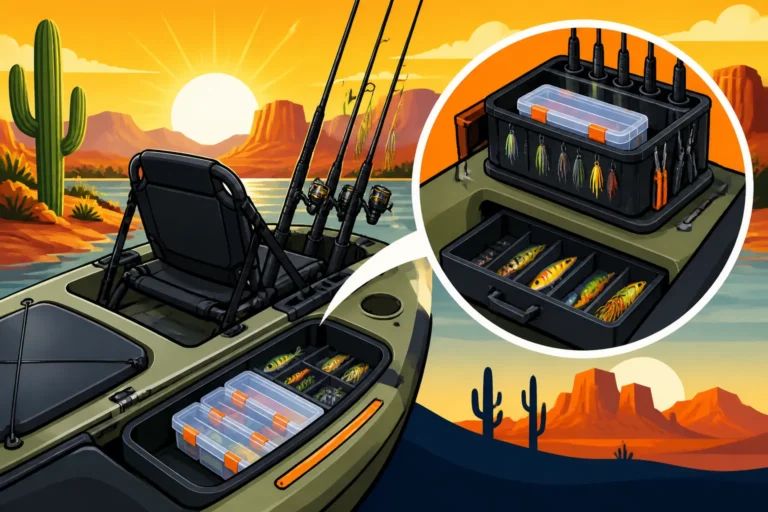
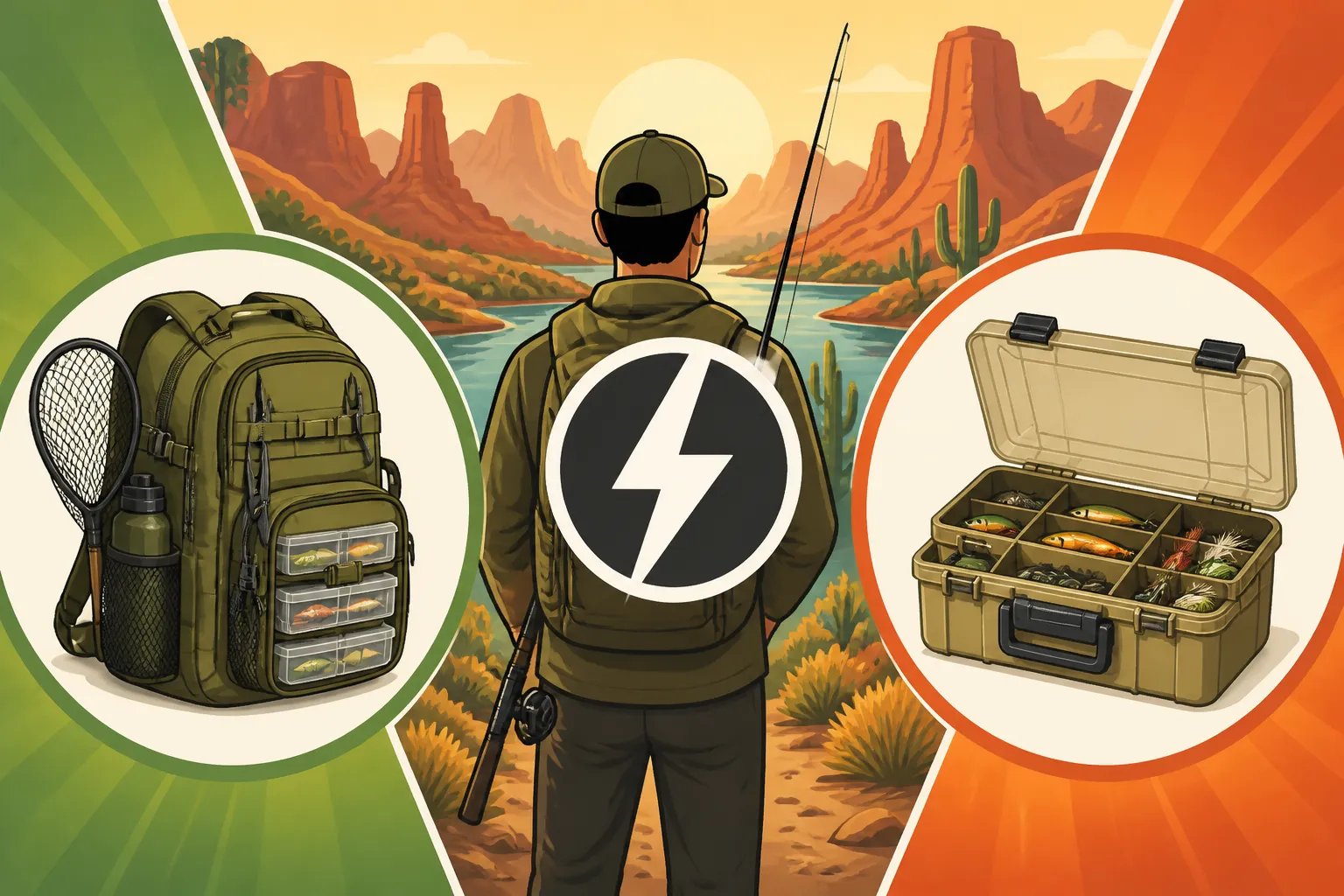
One of the most valuable features is the inclusion of tackle trays – often several, perfectly sized to slide into dedicated pockets. This means you still get the excellent organization of a tackle box, but it's integrated into a portable, hands-free system. You can carry multiple trays, each pre-loaded for different species or lure types, and swap them out as needed. Some backpacks even boast external loops and clips for attaching extra gear like nets, plier sheaths, or a small first aid kit, making them incredibly versatile. This thoughtful design allows you to bring a comprehensive Fishing Gear Checklist for Desert Lakes without feeling weighed down.
Capacity and Versatility for Longer Treks
For those embarking on longer treks or even overnight fishing-hiking expeditions, the capacity and versatility of a fishing backpack are unmatched. You can comfortably carry not only your essential fishing tackle but also hiking necessities like extra layers, a first-aid kit, a headlamp, and more substantial food and water supplies. Many backpacks offer various sizes, from compact day packs perfect for Shore Fishing Techniques for Beginners to larger models suitable for multi-day trips.
The ability to consolidate all your gear into one manageable unit frees up your hands for navigation, photography, or simply enjoying the scenery. This versatility makes the fishing backpack an ideal choice for exploring new fishing grounds, whether it's a hidden mountain stream or a secluded cove on a large reservoir. You're no longer limited by how much you can physically carry in your hands; instead, your range expands, opening up new possibilities for your Arizona Fishing Seasons Explained adventures.
Practical Considerations for Choosing Your Gear Carrier
Deciding between a fishing backpack and a tackle box isn't always a straightforward "one is better than the other" situation. It really boils down to your personal fishing style, the nature of your trips, and the specific challenges of the Arizona environment.
Type of Fishing Trip and Duration of Hike
Before you make a purchase, sit down and honestly evaluate the type of fishing trips you typically take.
- Short Walks/Vehicle Access: If your fishing spots are generally within a few hundred feet of your car, or you're always fishing from a boat, a traditional tackle box might still be perfectly fine. The convenience of its open layout and quick access to a wide array of tackle might outweigh the minor inconvenience of carrying it a short distance.
- Moderate Hikes (1-3 miles): This is where the fishing backpack really starts to shine. For accessing places like the more remote stretches of the Lower Salt River or less-traveled areas of local community lakes, the hands-free comfort of a backpack becomes invaluable. You'll appreciate being able to carry water, snacks, and your tackle without a hand being constantly occupied.
- Long Hikes/Backcountry/Multi-Day Trips: For serious backcountry anglers seeking solitude in the White Mountains or exploring distant arms of Lake Powell, a dedicated fishing backpack is non-negotiable. Its capacity for essential survival gear, food, water, and specialized fishing tackle makes it the only practical choice.
Consider the physical demands of your preferred fishing locations. Are there steep descents, rocky scrambles, or long stretches of uneven ground? These factors will heavily influence the comfort and practicality of your chosen gear carrier.
Gear Volume and Weight Distribution
Another critical factor is the sheer volume of gear you plan to carry. If you're a minimalist angler who only needs a few lures and a small reel, you might get away with a very compact shoulder bag or even a smaller, lightweight tackle box that clips to your belt. However, most anglers carry a variety of baits, tools, extra line, and essentials.
A fishing backpack excels at distributing this weight efficiently. With adjustable straps and sometimes internal frames, the weight is spread across your strongest muscle groups (shoulders and hips), reducing strain. A tackle box, by contrast, concentrates all its weight into a single, often awkward, point of contact with your hand or arm. This can lead to fatigue, muscle strain, and even make you feel off-balance, especially if you're carrying a Best Fishing Rods for Bass in Arizona in your other hand. For optimal comfort and safety on the trail, especially if your Essential Tackle Box Setup for Arizona Beginners is on the larger side, good weight distribution is paramount.
Water Resistance and Durability in Arizona's Environment
Arizona's environment presents unique challenges. While we don't often deal with constant rain, dust, intense sun, and occasional monsoon downpours are real concerns.
- Water Resistance: Many traditional tackle boxes offer decent water resistance due to their hard plastic shells. However, once opened, their contents are exposed. Fishing backpacks, especially those designed for outdoor use, often feature water-resistant fabrics, waterproof zippers, and sometimes even integrated rain covers. This is crucial for protecting your expensive tackle and electronics from unexpected sprinkles or splashes when wading or near the water. Look for materials like treated nylon or PVC, and reinforced stitching.
- Durability: Both tackle boxes and backpacks can be durable, but in different ways. A hard-sided tackle box can withstand bumps and drops, protecting fragile items inside. However, its hinges and latches can be weak points. Fishing backpacks are built to withstand abrasion from rubbing against rocks and branches, with reinforced stress points. They flex with impact rather than cracking. For long-term use in rugged Arizona terrain, a well-constructed fishing backpack will likely outlast a conventional tackle box when subjected to the rigors of hiking. You want something that can handle being tossed in a truck bed or dragged across a sandy bank.
| Feature | Traditional Tackle Box | Fishing Backpack |
|---|---|---|
| Mobility/Comfort | Poor for hiking; rigid, awkward, hands occupied | Excellent; ergonomic, hands-free, weight distributed |
| On-Trail Access | Requires stopping, setting down, opening | Some pockets accessible on the go, often quick-access |
| Stationary Access | Excellent; trays fan out, all items visible at once | Good; uses modular tackle trays, still organized |
| Weight Distro | Concentrated (single hand/arm) | Evenly distributed (shoulders, hips) |
| Capacity | Varies; typically focused on tackle, less for personal gear | High; tackle + hiking essentials (water, food, layers) |
| Durability | Hard shell protects contents from impact, latches can break | Tear-resistant fabrics, reinforced, flexible to impact |
| Water Resistance | Hard shells offer good sealed protection; exposed when open | Water-resistant fabrics, rain covers; can be less sealed overall |
| Versatility | Limited to tackle storage | Tackle, hiking, personal items; multi-purpose |
Making the Switch: Tips for a Seamless Transition
If you're leaning towards a fishing backpack, making the transition from a traditional tackle box doesn't have to be a drastic overhaul. It's more about thoughtful planning and adapting your organizational habits.
Downsizing and Essential Gear Selection
One of the best things about switching to a fishing backpack is that it encourages you to be more selective about what you carry. While a large tackle box might tempt you to bring every lure you own, a backpack nudges you towards efficiency. Before packing your new backpack, lay out all your tackle and consider what you truly need for your typical Arizona fishing adventure.
Think about the specific fish species you're targeting – are you after Largemouth Bass Fishing Guide for Arizona, Rainbow Trout Fishing Guide for Arizona, or perhaps Catfish Fishing Guide for Arizona? Tailor your lure and bait selection accordingly. Consolidate your tools; do you really need three pairs of pliers? Downsize your bulkier items into smaller, more travel-friendly containers. This minimalist approach not only makes your pack lighter but also makes it easier to find what you need when you're out on the water. Remember, lighter means further and more comfortable hiking.
Organizing a Fishing Backpack Effectively
Just like a tackle box, a fishing backpack requires strategic organization to be effective. Most come with several modular tackle trays. Dedicate each tray to a specific type of lure (e.g., one for crankbaits, one for soft plastics, one for terminal tackle). This maintains the "at-a-glance" convenience you get with a tackle box.
Utilize all the various pockets and compartments. Use smaller pouches or waterproof bags for soft plastics, hooks, weights, and other small items to prevent them from getting lost or mixed up. Keep frequently used items – like pliers, line cutters, and a measuring tape – in easily accessible external pockets. Store your snacks, water, and perhaps a Best Coolers for Hot-Weather Fishing in Arizona or an insulated water bottle in a separate, dedicated section. If your backpack has a main large compartment, consider using mesh bags or compression sacks to further organize clothing or larger items. A well-organized backpack means less time fumbling and more time fishing.
Where to Find Quality Fishing Backpacks and Tackle
When it comes to purchasing a quality fishing backpack, you have several excellent options. Retailers like Bass Pro Shops offer a wide range of fishing-specific backpacks, allowing you to see and feel the different models in person before committing. Their staff can also offer valuable advice based on your specific needs and the type of fishing you do in Arizona.
Online, platforms like Amazon provide an even broader selection, often with customer reviews that can give you insights into real-world performance. You can compare features, sizes, and brands from the comfort of your home. When shopping, pay close attention to the construction materials, the quality of zippers (YKK zippers are often a good sign), the comfort of the harness system, and the inclusion of modular tackle trays. Look for features like rod holders, hydration sleeves, and durable, water-resistant fabrics. Investing in a good quality fishing backpack is an investment in your comfort, efficiency, and ultimately, your enjoyment of those wild Arizona fishing spots. You might also find other Best Tackle Bag for Shore Fishing options if a full backpack isn't quite right for you.
Ultimately, the choice comes down to personal preference and the specific demands of your fishing excursions. For the angler who loves the challenge and serenity of reaching remote fishing locations on foot, a fishing backpack is almost always the superior choice, offering unparalleled comfort, organization, and versatility.
Disclaimer
This article is for general informational purposes only and does not constitute professional advice. Laws, prices and regulations vary by location and change over time. Consult a qualified professional for guidance on your specific situation.