Best Tackle for Fishing From a Pier
There’s something wonderfully inviting about pier fishing in Arizona. It offers a unique blend of accessibility and serenity, allowing you to cast a line without needing a boat or extensive backcountry gear. However, many new anglers, and even some seasoned ones, mistakenly think that any old rod and reel will do for pier fishing. The truth is, optimizing your tackle for the specific demands of pier angling can make a huge difference between a frustrating day of tangled lines and lost fish, and a memorable outing with a bending rod. This guide will walk you through the best tackle choices, from rods and reels to hooks and accessories, ensuring you're perfectly equipped for a successful day casting from an Arizona pier.
The Foundation: Rods, Reels, and Line for Pier Fishing
When you're perched on a pier, whether it's at Tempe Town Lake, Lake Pleasant, or one of the many community fishing lakes, your rod, reel, and line are your primary connection to the underwater world. Choosing the right setup here is crucial for casting distance, handling potential snags, and reeling in those stubborn fish.
Selecting the Ideal Rod
For pier fishing in Arizona, versatility is key. You're likely to encounter a variety of species, from feisty bass and channel catfish to panfish. A medium-heavy to heavy power spinning rod, typically in the 7 to 9-foot range, is often the sweet spot. The longer length offers several advantages. First, it allows for longer casts, helping you reach fish holding further out in the deeper water that many piers extend into. This is especially helpful if you're targeting species that tend to stay away from the immediate shore, like larger stripers or bass. Second, a longer rod gives you better leverage when fighting a fish, helping to steer it away from pier pilings or other underwater structures where it might try to break off.
The medium-heavy to heavy power provides enough backbone to cast heavier baits and sinkers, which are often necessary to get your offering down to the bottom or withstand stronger winds. It also gives you the strength needed to manage larger fish, such as a hefty catfish or a cruising striped bass, without feeling completely outmatched. For instance, if you're trying to land a good-sized channel cat at a Community Park Lakes in Phoenix, that extra power will be a blessing. You can find excellent options for these types of rods at places like Bass Pro Shops, where you can feel the different lengths and actions in person to find one that feels right for your casting style.
Pairing Your Rod with the Perfect Reel
A reliable spinning reel is almost universally recommended for pier fishing, especially for beginners. They are easier to use for casting than baitcasting reels and are generally more forgiving with line management. For a 7 to 9-foot medium-heavy rod, a spinning reel in the 3000 to 5000 size range is a solid choice. This size offers a good balance of line capacity and drag power, which are both critical for pier fishing.
Line capacity is important because you might need to make long casts, and you want enough line on the spool to handle a strong run from a bigger fish. Drag power, measured in pounds, dictates how much pressure you can put on a fish before the reel starts to release line. When a big fish makes a powerful run under the pier, a smooth, consistent drag system is your best friend. A reel with at least 10-15 pounds of drag will give you confidence when a stubborn fish tries to spool you. Look for reels known for their durability and smooth operation, as sand and saltwater (if you're fishing the Colorado River border areas) can be tough on gear.
Choosing the Right Fishing Line
The type and strength of your fishing line can significantly impact your pier fishing success. For most Arizona pier fishing, a monofilament line in the 10 to 20-pound test range is a great starting point. Monofilament offers a good balance of stretch, abrasion resistance, and knot strength. The stretch in mono can be beneficial, acting as a shock absorber during sudden strikes or runs, which is particularly helpful if you’re fishing with bait and waiting for a bite.
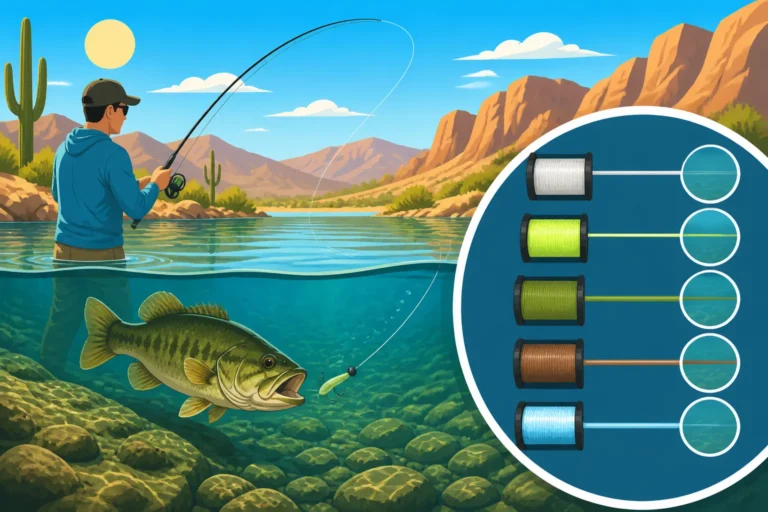
However, if you're looking for more sensitivity and power, braided line in the 20 to 40-pound test range is an excellent upgrade. Braid has virtually no stretch, allowing you to feel even the most subtle bites and set the hook more effectively, especially on longer casts. Its thinner diameter for a given breaking strength means you can spool more line on your reel, and it cuts through the water better, reducing drag from current or wind. The main drawback of braid is its visibility to fish and its lack of abrasion resistance against sharp pier pilings. To counter this, many anglers will tie on a monofilament or fluorocarbon leader of 15-25 pounds at the end of their braid. This leader provides the necessary invisibility and abrasion resistance while retaining the benefits of the braided main line. When considering your line options, think about the Best Line for Bass Fishing or Best Line for Catfish Fishing if you have specific target species in mind.
Terminal Tackle: Hooks, Sinkers, and Floats
Once you have your rod, reel, and line sorted, it's time to focus on the business end of your setup: your terminal tackle. These are the components directly involved in attracting and hooking a fish, and they need to be chosen carefully based on your target species and fishing conditions.
Hooks for Pier Prowess
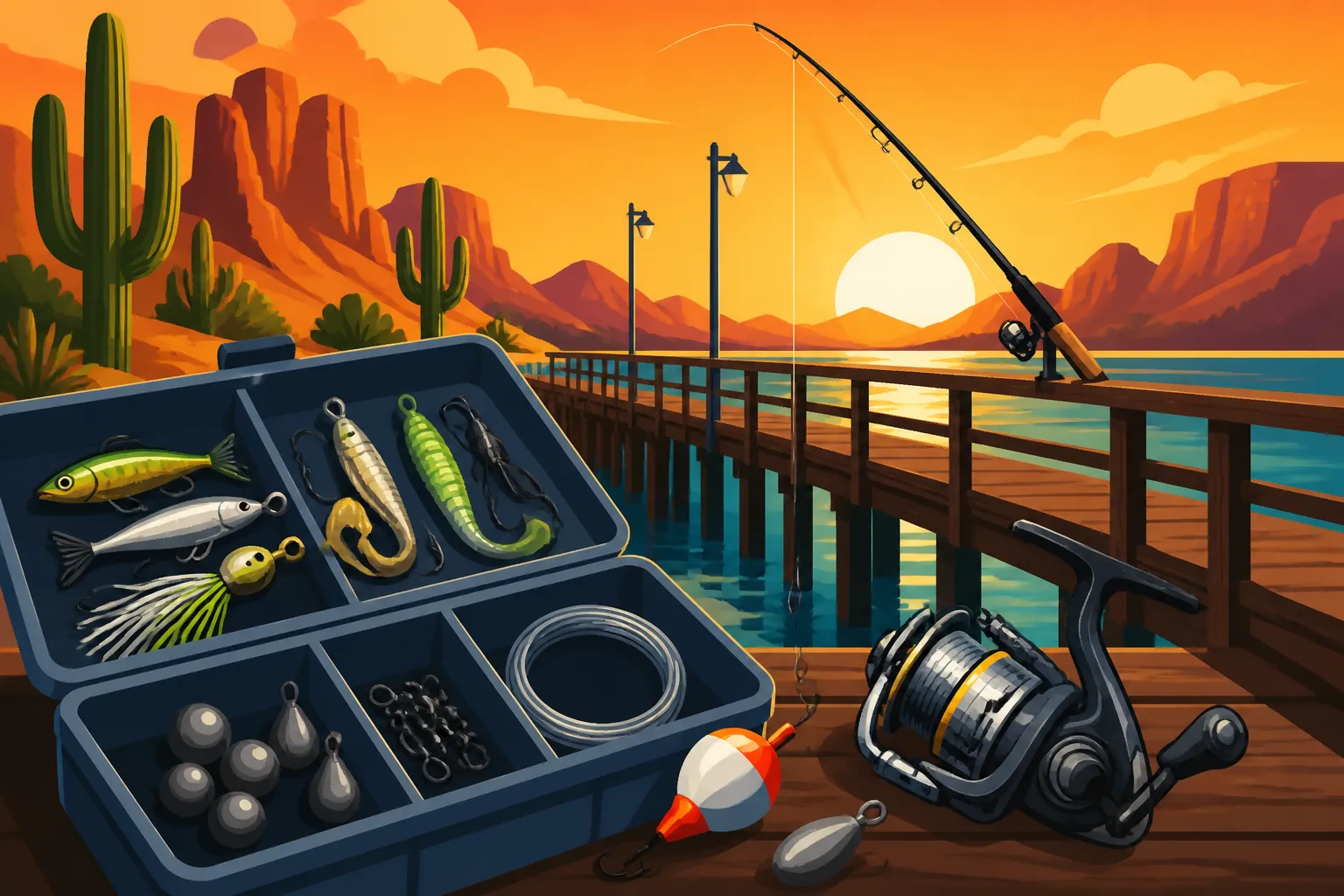
The type and size of hook you use will depend heavily on your chosen bait and the fish you hope to catch. For general pier fishing in Arizona, it’s wise to carry an assortment.
- Circle Hooks: These are fantastic for bait fishing, especially for species like catfish or larger panfish, and they are gaining popularity for their fish-friendly design. Circle hooks are designed to hook fish in the corner of the mouth, reducing gut-hooking and making catch-and-release much easier. When using a circle hook, resist the urge to "set" the hook aggressively. Instead, let the fish take the bait, then slowly reel in until the line comes tight and the hook finds its mark. Sizes from 2/0 to 6/0 are versatile for different bait sizes and fish species.
- J-Hooks: Traditional J-hooks are also perfectly viable. Sizes 1/0 to 4/0 are good for cut bait, worms, or even live minnows. If you're targeting smaller panfish like bluegill or sunfish, smaller sizes like #6 or #8 baitholder hooks work well with pieces of worm or corn. Ensure your hooks are sharp; dull hooks lead to missed bites. Investing in a quality hook sharpener is a small expense that pays dividends. You can find a wide range of hooks suitable for any Arizona species, from tiny panfish to large catfish, at Bass Pro Shops or online retailers like Amazon.
For more specific guidance, consider looking up Best Hooks for Live Bait Fishing to match your bait choice.
Sinkers to Stay Down
Getting your bait to the strike zone and keeping it there is the job of your sinker. Pier fishing often means dealing with current, deeper water, or windy conditions, all of which require appropriate weight.
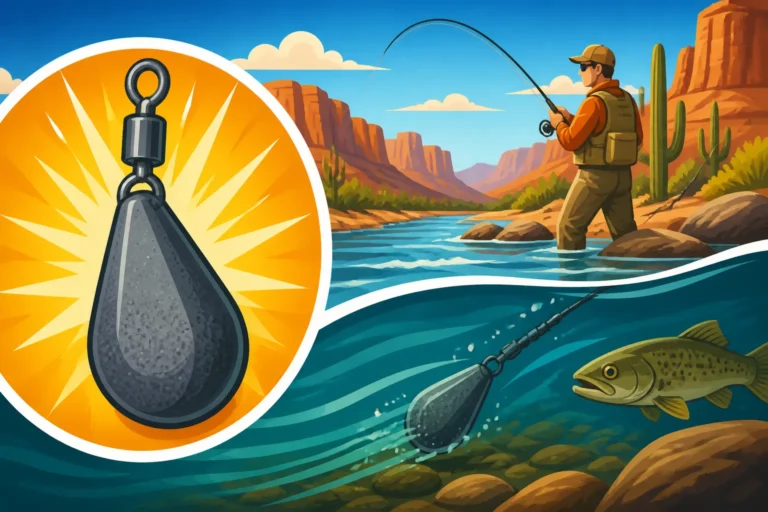
- Pyramid Sinkers: These are excellent for bottom fishing, especially in areas with current or strong winds, as their shape helps them dig into the sand or mud, preventing your bait from drifting. They are ideal when you want your bait to stay firmly in one spot, appealing to bottom dwellers like catfish or carp.
- Egg Sinkers: When rigged in a Carolina Rig style, egg sinkers allow your line to slide freely through them, providing a more natural presentation of your bait. This means the fish can pick up the bait and swim off without immediately feeling the weight of the sinker, giving them time to fully commit to the bite. This setup is great for bass and catfish alike, offering a more stealthy presentation.
- Split Shot: For lighter setups, especially when targeting panfish with a bobber, small split shot sinkers are perfect for adding just enough weight to cast your bait and keep it suspended at the desired depth. They are easy to crimp on and remove, making quick adjustments simple.
Carry an assortment of weights, from 1/4 ounce up to 2 ounces, to adapt to changing conditions and target depths.
Floats for Suspended Bait
While many pier anglers focus on bottom fishing, don't overlook the effectiveness of fishing suspended bait under a float (or bobber). This technique is fantastic for catching species that feed in the middle of the water column, such as crappie, trout, or even bass patrolling structure near the pier.
- Slip Bobbers: These are incredibly versatile. They allow you to easily adjust the depth of your bait by simply sliding a small stopper knot up or down your line. This means you can fish shallow near the surface or go deep, several feet below the bobber, to target different depths of the water column. They are particularly effective when targeting stocked trout in community lakes where the fish might be suspended at specific depths that change throughout the day.
- Fixed Bobbers: For shallower presentations, or when fishing for panfish in calmer waters, traditional fixed bobbers (clip-on or spring-style) work perfectly. They are simple to use and provide clear visual indication of a bite.
Matching your bobber size to the weight of your bait and sinker is important; it needs to be buoyant enough to hold everything up but not so large that it creates excessive resistance when a fish tries to pull it under. A Best Bobber Style for Windy Days might be a consideration depending on the pier location.
Essential Accessories for a Successful Pier Day
Beyond the rod, reel, line, and terminal tackle, a few key accessories can significantly enhance your pier fishing experience, making it more comfortable, efficient, and ultimately, more successful.
Tackle Storage and Organization
A disorganized tackle box can quickly ruin a fishing trip. You don't want to be fumbling for hooks or sinkers while a fish is biting.
- Tackle Bag or Backpack: For pier fishing, a tackle bag or a fishing backpack is often more practical than a bulky hard-sided tackle box. These are easier to carry, often have multiple compartments for organizing lure boxes, tools, and personal items, and can be worn on your back, leaving your hands free for carrying rods or bait. Look for options with plenty of pockets and durable zippers. Brands like those found on Amazon often have purpose-built fishing backpacks with features like rod holders and waterproof bottoms. A good Tackle Storage for Boats option might also work for piers if it's compact enough.
- Utility Boxes: Within your tackle bag, use small, clear utility boxes to organize hooks, sinkers, swivels, and lures by size and type. This keeps everything neat, prevents tangles, and allows you to quickly find what you need. Labeling them can be a huge time-saver.
Keeping your gear organized not only saves time but also prevents frustrating moments when you can't find that one specific hook you need.
Tools and Safety Gear
Don't underestimate the importance of a few simple tools and some basic safety items.
- Pliers/Forceps: A good pair of multi-purpose fishing pliers is indispensable. They're essential for cutting line, crimping split shot, and most importantly, safely removing hooks from fish. Long-nose pliers or specialized fishing forceps are particularly useful for reaching hooks deep inside a fish's mouth. This helps protect both you and the fish.
- Net or Gaff: Depending on the height of the pier and the size of the fish you expect to catch, a landing net with a long handle is a wise investment. Trying to swing a big fish up onto a pier can lead to lost fish, broken lines, or even injury. A collapsing net can be stored compactly and extended when needed. For larger fish, a gaff might be considered, but nets are generally safer and more common for recreational pier fishing.
- Sun Protection: Arizona sun is no joke, even in cooler months. A wide-brimmed hat, polarized sunglasses, and high-SPF sunscreen are non-negotiable. Polarized sunglasses not only protect your eyes but also help you see through the glare on the water's surface, potentially spotting fish or underwater structure.
- Hydration: Always bring plenty of water. Dehydration can sneak up on you, especially on those long, sunny Arizona days. A cooler with ice and extra drinks is always a good idea. Consider a Best Coolers for Hot-Weather Fishing in Arizona option if you plan to spend extended periods on the pier.
Comfort and Convenience Items
Pier fishing can be a relaxing affair, and a few comfort items can make a big difference.
- Folding Chair: A lightweight, portable folding chair or stool can save your legs and back, allowing you to relax and enjoy the wait between bites. Many piers don't have seating, so bringing your own is often necessary.
- Bait Bucket: If you're using live bait like worms or minnows, a small bait bucket with an aerator (for minnows) will keep your bait lively and effective. This is crucial, as fresh, active bait almost always outperforms stale or dead offerings.
- Rag or Towel: Fish slime, bait residue, and dirt are inevitable. A dedicated fishing rag or small towel keeps your hands and gear clean.
Think of your pier setup as a mini-camp; anything that makes your time more enjoyable and efficient is worth packing. For a comprehensive list of what to bring, check out a Fishing Gear Checklist for Desert Lakes.
Bait and Lures: What Works Best from a Pier
The ultimate goal of all this tackle is to present something enticing to the fish. The choice of bait or lure depends heavily on what species you're targeting and the conditions of the water you're fishing from the pier.
Natural Baits: The Tried and True
Natural baits are often the go-to for pier anglers because they appeal to a wide variety of fish and are generally very effective.
- Worms: Earthworms and nightcrawlers are universal fish attractors. They work for almost everything that swims in Arizona’s freshwaters – panfish, trout, bass, and especially catfish. They're easy to use, readily available, and fish find them irresistible. For species like bluegill or crappie, smaller pieces of worm on a small hook under a bobber can be incredibly effective.
- Cut Bait: For larger predatory fish like channel catfish, flathead catfish, or striped bass, cut bait is a top choice. Pieces of shad, carp, or even hot dogs (yes, seriously!) can be very potent. The scent trail from cut bait drifts with the current, attracting fish from a distance. Just be prepared for a strong fight if you hook into a big flathead.
- Live Minnows: If permitted at your specific pier (always check local regulations!), live minnows can be deadly for bass, crappie, and especially striped bass. Hook them lightly through the lips or dorsal fin and fish them under a bobber or on a Carolina rig. The natural swimming action is often more than game fish can resist. For more on this, consult a guide on Live Bait Rules for Arizona Lakes.
Remember that the presentation of your natural bait is almost as important as the bait itself. Make sure your bait looks natural and is free to move (if live) or release scent (if cut).
Artificial Lures: Active Angling
While bait fishing often involves a lot of waiting, artificial lures allow for a more active approach, letting you cast and retrieve, covering more water and enticing strikes.
- Spoons: Casting spoons are versatile lures that imitate baitfish. Their wobbling action and flash can attract a variety of predatory fish. Silver or gold spoons are classic choices. They work well for bass and can be very effective for striped bass, especially when cast into schools of feeding fish.
- Jigs: Jigs, whether soft plastic grub-tails on a jig head or bucktail jigs, are incredibly productive. They can be fished near the bottom, bounced along the structure, or retrieved in a swimming motion. For crappie, small 1/16 to 1/8 ounce jigs tipped with a grub are fantastic. Larger jigs with paddle-tail swimbaits can entice bigger bass and stripers. Experiment with colors; sometimes a subtle natural color is best, other times a vibrant chartreuse or white can trigger bites.
- Crankbaits and Swimbaits: If the pier extends into deeper water, casting medium to deep-diving crankbaits can be effective for bass. Larger swimbaits can also mimic the natural forage of striped bass, especially if you're fishing a lake known for them, like Lake Pleasant. Consider looking at Best Baits and Lures for Arizona Fishing for broader suggestions.
When using lures from a pier, experiment with different retrieve speeds and depths until you find what the fish are reacting to. The beauty of lures is their ability to actively seek out fish rather than passively waiting for them to come to you.
Maximizing Your Pier Fishing Experience
Pier fishing offers a fantastic entry point into the world of angling, and with the right tackle and approach, it can be incredibly rewarding. It's a great way to enjoy the outdoors, whether you're alone in quiet contemplation or sharing the experience with family and friends.
Understanding Your Location
While this guide focuses on tackle, remember that knowing the specific pier and its local fish population is half the battle. Researching the local species, common depths, and any specific regulations for that particular pier will help you refine your tackle choices even further. For instance, knowing if a pier is frequently stocked with trout will lead you to different bait and lure choices than if it’s known for trophy catfish. Resources like Best Fishing Piers in Arizona can help you scout out locations, and information about Arizona Fishing Regulations Explained is always a good read before heading out.
Patience and Persistence
Ultimately, fishing is about patience. Some days the fish bite readily, and other days they seem to vanish. Don't get discouraged. Experiment with different baits, depths, and retrieval methods. Talk to other anglers on the pier; they are often a wealth of local knowledge. With a properly chosen tackle setup and a good attitude, your next Arizona pier fishing adventure is sure to be a success.
Tackle Comparison for Arizona Pier Fishing
Here's a quick look at how different tackle elements compare for typical pier fishing scenarios:
| Tackle Element | Recommended Type for Pier | Key Benefit | Target Species & Use Case |
|---|---|---|---|
| Rod | Medium-Heavy Spinning (7-9 ft) | Versatility, casting distance, leverage | Bass, Catfish, Stripers; General purpose |
| Reel | Spinning (3000-5000 series) | Easy to use, good line capacity & drag | All species; All-around reliability |
| Main Line | Monofilament (10-20 lb) | Stretch, knot strength, easy for beginners | General bait fishing, forgiving |
| Braided Line (20-40 lb) | Sensitivity, power, thin diameter | Lure fishing, long casts, strong fish (with leader) | |
| Leader | Fluorocarbon (15-25 lb) | Invisibility, abrasion resistance | Paired with braid for stealth and durability |
| Hooks | Circle (2/0 – 6/0) | Fish-friendly, effective for bait | Catfish, larger panfish; Reduces gut-hooking |
| J-Hooks (#8 – 4/0) | Versatile, traditional for bait/lures | Panfish, Bass, Catfish; Various bait sizes | |
| Sinkers | Pyramid (1/2 – 2 oz) | Stays put in current, good for bottom | Catfish, Carp; Strong currents or wind |
| Egg (1/4 – 1 oz) | Natural bait presentation (Carolina Rig) | Bass, Catfish; More subtle approach | |
| Floats | Slip Bobber | Adjustable depth, sensitive bite indication | Crappie, Trout; Suspended bait |
| Fixed Bobber | Simple, good for shallow water | Panfish; Easy visual bite detection | |
| Bait | Worms, Cut Bait, Live Minnows | Universal attractors, strong scent/action | All species, dependent on specific target |
| Lures | Spoons, Jigs, Crankbaits | Active fishing, covers water, mimics bait | Bass, Stripers, Crappie; Active retrieval |
Disclaimer
This article is for general informational purposes only and does not constitute professional advice. Laws, prices and regulations vary by location and change over time. Consult a qualified professional for guidance on your specific situation.