Golden Trout Presence in Arizona
There’s something truly magical about the idea of casting your line into a pristine Arizona mountain stream or lake and pulling out a fish that looks like a living jewel – a golden trout. Many anglers, myself included, have daydreamed about encountering these stunning fish in our beautiful state. This guide will dive deep into whether that dream is a reality, exploring the actual presence of golden trout in Arizona, what makes them so unique, and what equally fantastic native species you might find instead.
The Allure of Golden Trout and Why Arizona Anglers Ask
For anglers, the golden trout isn't just another fish; it's a legendary catch, a symbol of pristine wilderness and challenging mountain fishing. The vibrant, almost otherworldly coloration sets it apart, making it a highly sought-after species by those who appreciate beauty as much as the fight. It's only natural that when folks are exploring new fishing grounds, like the diverse waters of Arizona, they wonder if this treasure might be lurking beneath the surface here too.
The Golden Trout Mystique: What Makes Them Special?
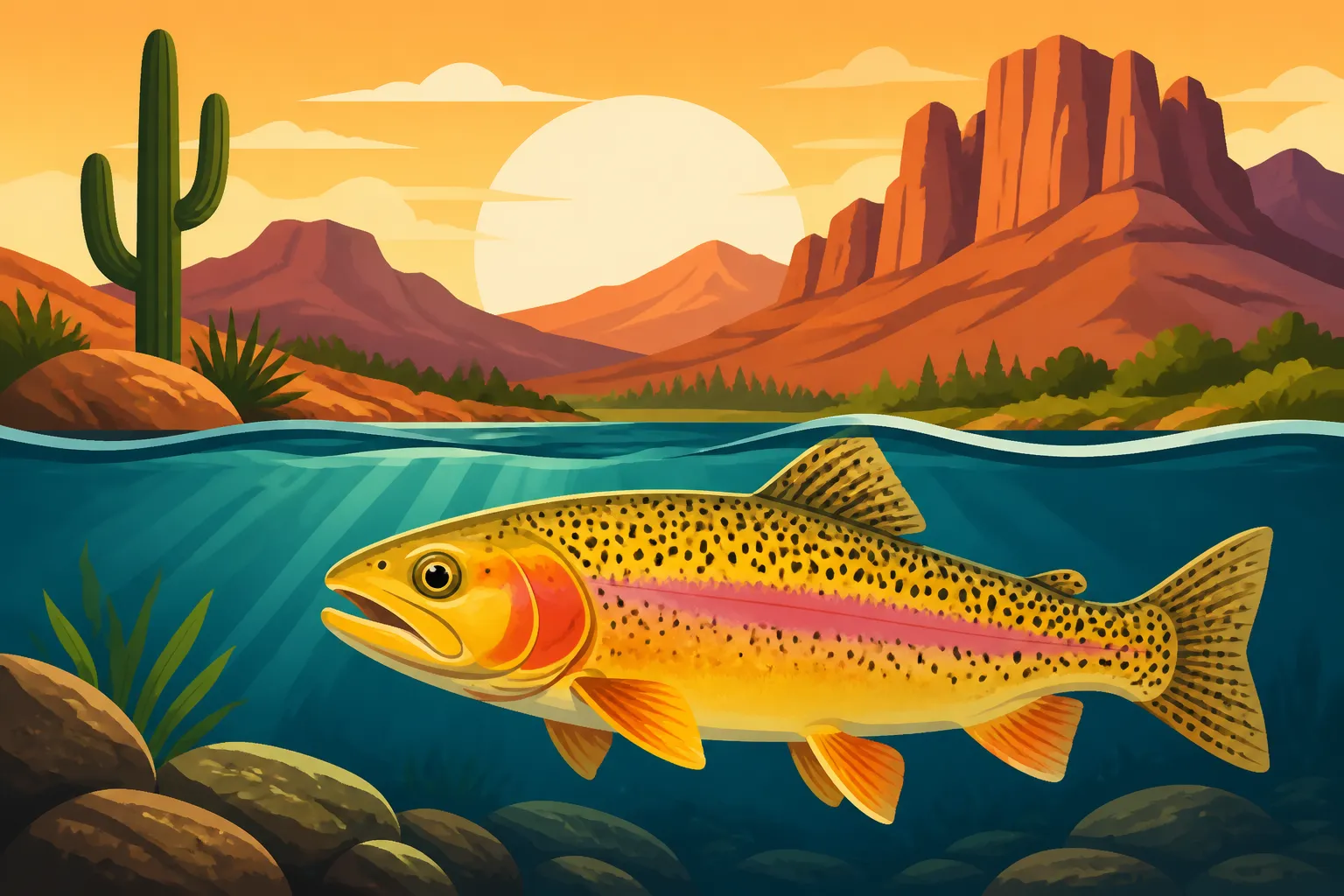
Imagine a fish that literally glows. That's the golden trout. Its scales shimmer with a brilliant, almost iridescent gold, often accented by a fiery red-orange lateral stripe and distinct, evenly spaced parr marks along its flanks that often persist into adulthood. Their belly is usually a deep, rich red, and their fins can be tipped with a pale or white edge, adding to their striking appearance. They are typically found in the high-elevation, crystal-clear streams and alpine lakes of their native range, living in some of the most breathtaking landscapes on earth.
Beyond their looks, golden trout are renowned for their hardiness and feisty nature on the line, especially given their often smaller size. Catching one isn't just about the fight; it's about the entire experience of being in a remote, wild place, surrounded by unparalleled natural beauty. This combination of stunning aesthetics and a challenging pursuit has cemented their place in the hearts of anglers worldwide, leading many to hope for a similar experience closer to home in Arizona.
Common Misconceptions: Why Anglers Might Hope to Find Them in Arizona
It's easy to see why an angler exploring Arizona's diverse waters might hope to stumble upon a golden trout. Our state boasts incredible mountain regions, particularly in the White Mountains and other high-elevation areas, that feel like they could support such a species. You find cold, clear streams, secluded lakes, and rugged terrain – all the hallmarks of classic trout habitat. When you catch a particularly vibrant rainbow trout, or perhaps even one of our native Apache or Gila trout, whose colors can sometimes lean towards gold or bronze, it's easy for the imagination to take hold.
Sometimes, it's simply a matter of mistaken identity. A rainbow trout, especially one feeding well in rich, cold water, can develop a stunning pink or red lateral band and a vibrant, healthy sheen that, under certain lighting conditions, might appear golden. Similarly, some strains of stocked trout might exhibit unusual coloration. Anglers, especially those less familiar with the subtle distinctions between trout species, might see a flash of gold and instantly think of the famous golden trout. Wishful thinking plays a part too; who wouldn't want to add such an iconic fish to their Arizona catch list?
The Scientific Reality: Golden Trout in Arizona Waters
Let's cut right to the chase for those who've been dreaming of that golden flash in an Arizona stream: finding a true golden trout in Arizona is, unfortunately, extremely unlikely, if not entirely impossible, through natural populations or official stocking programs. While Arizona has a rich history of trout fishing, the golden trout's story is deeply rooted elsewhere.
Are Golden Trout Native to Arizona?
The short answer is a resounding no. Golden trout (specifically Oncorhynchus mykiss aguabonita, a subspecies of rainbow trout) are strictly native to the high-alpine waters of the Sierra Nevada mountains in California. Their evolutionary history is tied to those specific watersheds, developing their unique characteristics in isolation over millennia. They are perfectly adapted to the incredibly harsh, nutrient-poor, yet pristine environments found at elevations often exceeding 10,000 feet in places like the Kern River and its tributaries.
Arizona's native trout species are entirely different. Our state is home to the stunning Apache trout and Gila trout, which are themselves incredibly unique and important species with their own distinct evolutionary paths. The presence of these native species actually plays a significant role in why you won't find golden trout here, which we'll discuss further in the conservation section. Understanding the native range helps us appreciate why certain species thrive where they do and why introducing non-native species can be so problematic.
Stocking Attempts and Current Status
Historically, there haven't been any significant, official, or successful stocking programs for true golden trout in Arizona waters by the Arizona Game and Fish Department (AZGFD). The focus of trout stocking in Arizona has consistently been on species like rainbow trout, which are hardy, adaptable, and provide excellent angling opportunities in a wide variety of habitats, from urban community ponds to high-country lakes and rivers. You can learn more about where and when these fish are released in our guide to Trout Stocking Season in Arizona.
Introducing a non-native species like the golden trout, especially one that is so specialized in its native habitat, would not only be a challenging endeavor with uncertain success but would also pose potential risks to Arizona's existing fisheries. These risks include competition with native fish, disease introduction, or even hybridization with other trout species, which can dilute the genetic purity of both populations. Given the strong emphasis on conserving Arizona's own imperiled native trout, introducing another non-native species, particularly one so similar to the rainbow trout, is not a priority.
Distinguishing True Golden Trout from Look-Alikes
This is where things can get tricky, and why many anglers might think they've seen a golden trout in Arizona. When you pull a fish from the water, especially if it's got vibrant colors, it's easy to jump to conclusions. However, there are some key characteristics that differentiate a true golden trout from the species you'll actually find in Arizona.
For instance, rainbow trout, our most commonly stocked trout, can display a remarkable array of colors depending on their diet, water conditions, and genetic strain. A healthy rainbow caught from clear, cold water in, say, Woods Canyon Lake or the Lower Salt River, can have brilliant pinks, purples, and even a yellowish sheen that might be mistaken for gold. Similarly, our native Apache and Gila trout, while unique, can also have golden-bronze hues.
Here’s a quick comparison to help you tell the difference:
| Feature | Golden Trout (California Native) | Rainbow Trout (Common in AZ) | Apache Trout (Native to AZ) | Gila Trout (Native to AZ) |
|---|---|---|---|---|
| Native Range | Sierra Nevada, California | Pacific Coast (widely stocked globally) | Eastern Arizona (White Mtns) | Gila River Basin (AZ/NM) |
| Typical Color | Brilliant gold, red lateral stripe, prominent parr marks, red belly | Silvery to greenish-yellow, pink/red lateral band, many dark spots | Golden-yellow, large irregular black spots, often dark eye stripe | Golden-bronze, small numerous dark spots, large mouth |
| Parr Marks | Typically remain prominent into adulthood | Fade or disappear in adults | May persist faintly, especially in younger fish | May persist faintly |
| Body Spots | Few to none below lateral line | Many small, dark spots all over body | Large, scattered black spots, extends below lateral line | Small, numerous, less distinct spots, concentrated on upper body |
| Dorsal Fin Tip | Often pale or white | Usually plain, sometimes dark | Often orange/yellow | Often orange/yellow |
| Arizona Status | Absent (no official populations) | Widespread (stocked) | Protected, managed (catch & release often required) | Protected, managed (catch & release often required) |
When you're out fishing, having a good field guide or a reliable app on your phone can really help with identification. Many anglers even carry waterproof fish identification cards, which you can easily find on Amazon, to quickly check features like spot patterns and fin coloration. It's a great habit to get into, especially if you're fishing in areas where native and protected species are present. For a broader overview of the species you might encounter, check out our Fish Species Guide for Arizona Lakes.
What You're Likely Catching (and Still Loving) in Arizona
While the golden trout might not be on the Arizona menu, don't despair! Our state offers some truly phenomenal trout fishing opportunities, featuring species that are beautiful, challenging, and often, critically important to conserve. The joy of fishing lies not just in a specific species, but in the experience of connecting with nature and the thrill of the catch.
Our Beautiful Native Trout: Apache and Gila Trout
Arizona is incredibly fortunate to be home to two magnificent native trout species: the Apache trout (Oncorhynchus apache) and the Gila trout (Oncorhynchus gilae). These aren't just any trout; they are unique to our region and represent a vital part of Arizona's natural heritage. Both are characterized by beautiful golden-yellow to bronze coloration, often with distinct black spots, and their own unique markings. Catching one is a truly special experience, representing a successful conservation story.
The Apache trout is the Arizona state fish, primarily found in the streams and rivers of the White Mountains. Their population has recovered significantly thanks to decades of dedicated conservation efforts. However, they remain a species of concern, and fishing for them often involves strict regulations, including catch-and-release only in many areas, to ensure their continued survival. You can learn more about these efforts in Apache Trout Conservation in Arizona and whether Is the Apache Trout Endangered?.
Gila trout are found in the Gila River basin, with populations spanning parts of Arizona and New Mexico. They tend to have a more bronze or coppery hue than Apache trout, with finer spots. Like Apache trout, they are a federally protected species, and fishing opportunities are carefully managed to protect their populations. Knowing the Gila Trout Range in Arizona can help you understand where to find these precious fish, and how to respect their habitat.
Targeting these native species requires a deep understanding of their habitat and behavior, and often calls for specific fishing techniques like Fly Fishing Techniques for Trout. It's an incredibly rewarding challenge, offering a connection to Arizona's wild heart that a golden trout simply can't provide here.
The Ubiquitous Rainbow Trout: Arizona's Stocked Workhorse
If there's one trout you are almost guaranteed to encounter in Arizona, it's the rainbow trout (Oncorhynchus mykiss). These adaptable and feisty fish are the backbone of Arizona's cold-water fisheries, stocked extensively by the AZGFD in lakes and streams across the state. They thrive in a wide range of temperatures and conditions, making them perfect for both high-country getaways and accessible urban fishing programs.
Rainbow trout in Arizona can be incredibly beautiful, especially those that have spent some time in the wild, feeding naturally. Their lateral band can blush a deep pink or red, their bodies can be silvery, olive, or even a yellowish-gold, and they are typically covered in small, dark spots. While they may not have the pure gold of their Californian cousins, a healthy Arizona rainbow trout is a stunning fish in its own right and provides endless angling fun. From the roaring waters of Lees Ferry to the calmer community ponds, you'll find them almost everywhere. Check out our Rainbow Trout Fishing Guide for Arizona for tips on targeting these fantastic fish.
Other Coldwater Species: Browns and Brookies
Beyond our natives and the ever-present rainbows, Arizona also has some limited populations of other coldwater trout species. Brown trout (Salmo trutta), known for their aggressive nature and beautiful spotted patterns, can be found in certain colder streams and lakes, often in higher elevations. They are less common than rainbows but provide a thrilling challenge for anglers who seek them out. Similarly, brook trout (Salvelinus fontinalis), with their distinctive worm-like markings and vibrant fin edges, exist in a few isolated, very cold headwater streams. These populations are usually small and quite sensitive, making them a special find for the dedicated angler. You can learn more about their presence in guides such as Brown Trout Presence in Arizona Streams and Brook Trout Presence in Arizona Streams.
Finding these other species often means exploring some of Arizona's more remote and pristine waters. You can find excellent suggestions and detailed information on where to find trout in our comprehensive guide to the Best Trout Fishing Spots in Arizona.
Conservation Priorities and the Future of Arizona's Fisheries
Understanding why golden trout aren't found in Arizona brings us to a crucial point: the importance of conservation. Arizona has a unique and precious aquatic ecosystem, and protecting it is a top priority for wildlife managers and responsible anglers alike.
Protecting Arizona's Unique Native Fish Heritage
Arizona's native fish, especially our trout species, are incredibly special. The Apache trout and Gila trout are living testament to the unique evolutionary history of our desert and mountain landscapes. Decades ago, both species faced severe declines due to habitat loss, competition with non-native species, and hybridization. It took immense effort and resources to bring them back from the brink.
Because of this, the Arizona Game and Fish Department is extremely cautious about introducing any non-native species that could potentially threaten our native fish populations or their delicate ecosystems. Every decision regarding stocking and fisheries management is made with the long-term health of our native aquatic life in mind. The goal isn't just to provide fishing opportunities, but to ensure these incredible species continue to thrive for generations to come. When considering the overall Native Fish Species of Arizona, it becomes clear why such stringent protective measures are necessary.
The Role of Responsible Angling
As anglers, we play a critical role in these conservation efforts. Our actions on the water directly impact the health of the fishery. This means understanding and adhering to Arizona Fishing Regulations Explained, which are designed to protect fish populations and ensure sustainable fishing. It means being able to accurately identify the fish we catch, especially when fishing in native trout waters where specific size or bag limits, or even catch-and-release rules, might apply to certain species.
Practicing responsible catch and release, minimizing stress on the fish, and properly handling them are all crucial, particularly for protected species like the Apache and Gila trout. Learning proper techniques, such as those found in Catch and Release Rules for Arizona Anglers, is vital. If you're unsure about a fish's identification, it's always best to err on the side of caution and release it gently. Investing in a good pair of polarized sunglasses, easily available on Amazon, can also help you see into the water to better identify fish before you cast or during the fight, allowing for more informed decisions. By doing our part, we help ensure that Arizona's fantastic native and stocked trout populations remain healthy and vibrant for everyone to enjoy.
Disclaimer
This article is for general informational purposes only and does not constitute professional advice. Laws, prices and regulations vary by location and change over time. Consult a qualified professional for guidance on your specific situation.