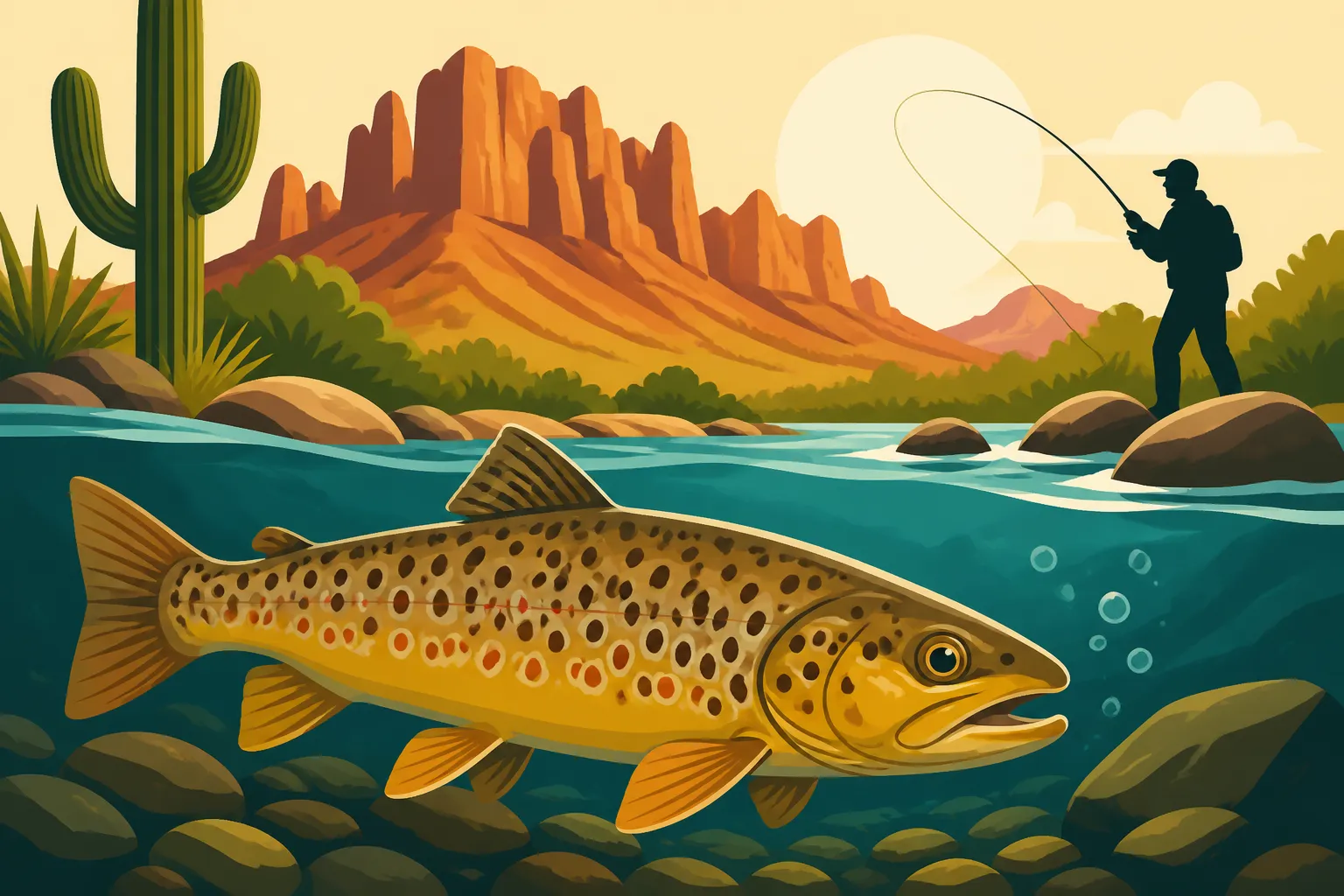
Brown Trout Presence in Arizona Streams
For many anglers in Arizona, the thought of landing a brown trout often feels like a distant dream, reserved for the high country of other states. It’s easy to wonder if these beautiful, wary fish truly thrive in our desert and mountain streams, or if they’re just a myth whispered around campfires. This comprehensive guide is here to shed light on the genuine presence of brown trout in Arizona's waters, help you understand where to find them, how to identify them, and the best ways to approach these cunning fish.
Understanding Brown Trout in Arizona's Waters
When you think of trout fishing in Arizona, your mind probably jumps to the regularly stocked rainbow trout that populate our urban lakes and mountain reservoirs. But for the dedicated angler, there’s a quiet allure to the brown trout – a species that often holds its own in colder, more remote stream systems. These aren't just fish that are periodically dumped from a truck; in many cases, we're talking about self-sustaining, wild populations that have adapted to their specific environments.
Arizona’s landscape, with its dramatic elevation changes, creates unique pockets of habitat suitable for brown trout. While much of the state is characterized by scorching desert, the high country offers surprisingly robust cold-water fisheries. These resilient fish manage to survive and even flourish in waterways where conditions are just right, providing a truly rewarding challenge for those willing to seek them out. It’s a testament to the diverse ecosystems we have here, often hidden in plain sight.
Where Brown Trout Call Home in Arizona
Brown trout in Arizona predominantly inhabit the state's higher elevation streams and rivers, particularly within the Mogollon Rim and White Mountains regions. These areas offer the consistent cold water temperatures that brown trout absolutely require, often maintained by snowmelt and natural springs. Think about destinations like the West Fork of the Black River, some stretches of the East Verde River, and certain tributaries within the Apache-Sitgreaves National Forests. While they might not be as widespread as rainbow trout, the populations that do exist are typically wild and incredibly robust.
These specific stream systems are characterized by their pristine, oxygen-rich water, often flowing through heavily shaded canyons or dense conifer forests. The stream beds are typically rocky, providing ample cover in the form of boulders, submerged logs, and undercut banks. These features are not just scenic; they are crucial components of brown trout habitat, offering shelter from predators and strong currents, as well as prime ambush points for insects and baitfish. Identifying these specific environmental cues is often your first step in locating a potential brown trout fishery.
The Elusive Nature of Arizona's Brown Trout
Unlike their rainbow trout cousins, which are frequently stocked and often less wary, brown trout are notoriously elusive and clever. They are master camouflagers, blending perfectly with their streambed surroundings, and possess an acute sense of their environment. This wariness is particularly true for wild brown trout in Arizona, which have adapted to survive in sometimes challenging conditions and often face less angling pressure than heavily stocked areas. They are not easily fooled by careless casting or unnatural presentations.
Their elusive nature stems from a combination of factors, including their nocturnal tendencies, predatory instincts, and preferred habitat. Brown trout are often most active during low-light conditions, such as dawn, dusk, or even at night, making them a challenge to target during traditional daytime fishing hours. They prefer deep pools, turbulent riffles, and structure-heavy areas where they can lie in wait, making pinpoint casting and a stealthy approach absolutely essential. Expect to work for every bite; these aren't the kind of fish that jump on every lure.
Distinguishing Brown Trout from Other Species
Arizona is home to several trout species, both native and introduced, which can sometimes make identification a bit tricky, especially for those new to trout fishing. While rainbow trout are the most common, you might also encounter brook trout in certain high-elevation waters, as well as native Apache and Gila trout. Knowing the distinct characteristics of brown trout will help you correctly identify your catch and ensure you're adhering to any specific regulations tied to each species.
Proper identification isn't just about curiosity; it's a critical part of responsible angling. Bag limits and size restrictions can vary significantly between species, and some native trout have strict catch-and-release rules to protect their fragile populations. Taking the time to learn the subtle differences can make you a more informed and ethical angler, contributing to the health of Arizona's diverse fisheries. This attention to detail reflects a true appreciation for the resources we're lucky enough to enjoy.
Key Identification Features
Brown trout are celebrated for their distinctive coloration and markings. Typically, they feature a brownish-golden to olive-green back, fading to lighter flanks and a yellowish or whitish belly. What truly sets them apart are the prominent dark spots, often ringed with a lighter halo, scattered across their back and sides. These spots can also extend onto their dorsal and adipose fins. Another key feature is the presence of reddish or orange spots, sometimes with a pale halo, primarily found on their sides. Their caudal fin (tail) is usually square or slightly emarginate (forked) and may have a few dark spots, but generally less pronounced than on a rainbow trout’s heavily spotted tail.
Compare this to a rainbow trout, which typically has a silvery body with a prominent pink or red stripe along its side, and numerous small, dark spots scattered across its entire body, including its head and tail. Brook trout, while also having spots, feature distinct wavy, worm-like patterns (vermiculations) on their backs, and their lower fins often have white leading edges, followed by black and then orange or red. Knowing these subtle yet consistent differences is vital when you're trying to figure out exactly what you've hooked in a shady mountain stream.
Habitat Clues for Identification
Beyond their physical appearance, the habitat where you find a trout can offer strong clues as to its identity. Brown trout, as we've discussed, prefer cold, clear, well-oxygenated streams with plenty of structure. If you’re fishing a remote, high-elevation stream that has a good mix of deep pools, fast riffles, and abundant cover like undercut banks and large rocks, and you hook a trout, there’s a higher probability it could be a wild brown. These are often the same types of waters where you might encounter native Apache or Gila trout, though those have even more specific and protected ranges.
In contrast, if you're fishing a wider river with moderate flows or a high-use urban lake that's regularly stocked, the trout you catch will almost certainly be a rainbow. While rainbows can also be found in wild stream settings, their prevalence in managed, accessible fisheries makes them the more common catch. Brook trout, while similar in habitat preference to browns, tend to favor even colder, smaller headwater streams. Understanding the typical "zip codes" for each species can dramatically narrow down your identification efforts, even before you get a good look at the fish.
| Feature | Brown Trout | Rainbow Trout |
|---|---|---|
| Coloration | Brownish-gold to olive back, lighter flanks, yellowish belly | Silvery body, often with a pink/red lateral stripe |
| Spots | Prominent dark spots, often with light halos; reddish/orange spots on sides | Numerous small, dark spots all over body and fins |
| Tail | Square or slightly emarginate, some spots | Heavily spotted, slightly forked |
| Habitat | Cold, clear, structured high-elevation streams | Wide range, commonly stocked lakes and rivers, also wild streams |
| Temperament | Wary, elusive, often predatory | Less wary, more eager to bite |
| Growth Potential | Can grow quite large in ideal conditions | Generally smaller in stocked settings, larger in wild rivers |
Strategies for Targeting Arizona Brown Trout
Catching brown trout in Arizona’s streams is a truly rewarding experience, precisely because of their cunning nature. It's not about brute force or flashy gear; it's about subtlety, patience, and understanding their behavior. Many anglers find the challenge of outsmarting a wild brown far more satisfying than reeling in a dozen stocked rainbows. If you're ready to embrace the pursuit, these strategies will give you a significant advantage. It takes a different mindset than just casting into an open lake.
You'll need to think like a hunter, observing the water carefully for signs of feeding or prime holding lies. Consider the angle of the sun, the clarity of the water, and any available cover both for yourself and for the fish. Stealth is paramount, as is a delicate presentation. Forget heavy lines and splashy casts; brown trout in clear, cold streams will spook at the slightest disturbance. This isn't just fishing; it's an art form that demands respect for the environment and its inhabitants.
Best Baits and Lures for Brown Trout
When targeting Arizona brown trout, especially in stream environments, subtlety and natural presentation are key. For spin fishermen, small spinners like Mepps Aglias or Panther Martins in sizes #0 to #2 are incredibly effective, especially in natural patterns like gold, silver, or black. Small, realistic crankbaits or jerkbaits that mimic minnows can also entice aggressive strikes from larger browns. Always opt for lures that are sized appropriately for the baitfish or insect life in the stream; a huge lure will often be ignored by stream trout. You can often find a wide variety of these proven trout lures on Amazon, making it easy to stock up before your next adventure.
Fly anglers will find success with a range of patterns, depending on the season and prevalent hatches. During active insect hatches, dry flies that match the emerging insects, such as Parachute Adams, Caddis, or Mayfly patterns, can be deadly. When fish are feeding below the surface, nymphs like Pheasant Tail, Hare's Ear, or Prince Nymphs, fished with a strike indicator or by high-sticking, are excellent choices. Streamers that imitate sculpins or small baitfish, stripped through deeper pools, can also provoke fierce strikes from larger, predatory browns. Don’t forget the timeless effectiveness of natural baits like small worms or salmon eggs, drifted naturally through prime holding water, especially after a rain. Make sure you check out Amazon for any specific patterns or brands you're looking for, especially if your local shop has a limited selection.
Preferred Fishing Techniques
Successful brown trout fishing in Arizona's streams hinges on a stealthy and precise approach. Whether you're fly fishing or spin fishing, keeping a low profile and avoiding sudden movements is crucial, as clear mountain waters offer little concealment. Approach pools and runs from downstream, casting upstream and allowing your lure or fly to drift naturally back towards you. This minimizes your presence and allows for a more natural presentation. For spin fishing, aim for precise casts into holding water—undercut banks, behind boulders, or at the head of a deep pool—and retrieve just fast enough to impart action without looking unnatural.
Fly fishing demands equally delicate presentations. Roll casts or mend casts are often necessary to keep your line off the water and avoid spooking fish. Pay close attention to your drift; any drag on your line can make your fly look unnatural, sending wary browns scurrying for cover. Best Trout Fishing Techniques for Arizona Waters provides even more detail on the nuances of presenting your offerings effectively. When wading, move slowly and deliberately, disturbing the water as little as possible. Remember, brown trout are easily startled, so quiet footsteps and soft splashes are your allies.
Optimal Seasons and Conditions
While brown trout can be caught year-round in Arizona's perennial streams, certain seasons and conditions offer better opportunities. Spring, as snowmelt begins to recede and water temperatures rise into the ideal range (typically 45-65°F), sees increased insect activity and more aggressive feeding. This is often an excellent time for both nymph and dry fly fishing. Similarly, the fall months, as water temperatures cool and brown trout become more active in preparation for spawning, can be incredibly productive. During this period, larger fish often become more territorial and willing to strike at larger streamers or minnow imitations.
Summertime fishing can be productive, but it requires targeting the coldest parts of the streams, often in shaded areas or during early morning and late evening hours when temperatures are lower. Avoid fishing during the hottest parts of the day when water temperatures might stress the fish. Cool-Water Trout Streams in Northern Arizona offers great insights into where to find these ideal conditions. Monsoon season can temporarily make stream fishing challenging due to high, muddy water, but fishing after the initial flush, once water levels stabilize and clarity improves, can sometimes be surprisingly good as fish feed on dislodged insects.
Conservation and Regulations for Brown Trout
Arizona’s wild brown trout populations are a precious resource, especially given the state's predominantly warm-water climate. Their presence in our streams is a testament to the health and biodiversity of these specific high-elevation ecosystems. As responsible anglers, it’s our duty to protect these fish and their habitats, ensuring that future generations can also experience the thrill of catching a wild Arizona brown. This means understanding and respecting the rules, but also practicing a deeper conservation ethic beyond just compliance.
Every choice we make on the water, from how we handle a fish to how we dispose of our trash, has an impact. These wild trout populations are often more vulnerable to environmental changes and fishing pressure than their stocked counterparts. Therefore, our approach to brown trout fishing needs to be mindful, focused on sustainability and minimal impact, so that these unique fisheries can continue to thrive.
Protecting Arizona's Wild Brown Trout Populations
The cornerstone of protecting wild brown trout is adhering to strict catch and release practices, especially for larger, older fish that are crucial for reproduction. When you do catch a brown trout, handle it with extreme care. Keep the fish in the water as much as possible, use wet hands to minimize the removal of its protective slime layer, and avoid squeezing it. If you plan to take a photo, do it quickly and get the fish back into the water as soon as possible. Barbless hooks are also highly recommended, as they greatly reduce stress and injury to the fish, allowing for a quicker and healthier release. Many anglers consider a pair of fishing pliers, readily available on Amazon, an essential tool for quick and easy hook removal when practicing catch and release.
Beyond handling, protecting their habitat is paramount. This means packing out all trash, staying on designated trails to prevent erosion, and being mindful of stream bank vegetation. Avoid wading unnecessarily through redds (spawning beds) if you can identify them, particularly during the fall spawning season. Recognizing that these trout are a natural, self-sustaining population, rather than a put-and-take fishery, changes our perspective and encourages a more conservation-minded approach.
Important Fishing Regulations to Know
Before heading out to chase brown trout in Arizona, it’s absolutely critical to familiarize yourself with the current fishing regulations set by the Arizona Game and Fish Department (AZGFD). Regulations can and do change, and they vary significantly depending on the specific body of water. Some streams might have general statewide trout limits, while others, particularly those with sensitive populations or special management objectives, may have very specific rules regarding bag limits, size restrictions, and even bait or lure restrictions (e.g., artificial lures and flies only, or single barbless hooks).
A valid Arizona Fishing License Guide is always required for anyone 10 years or older. You might also encounter specific areas that require an additional Trout Stamp Requirements in Arizona or a special permit, especially on tribal lands or within certain wilderness areas. Always check the latest AZGFD fishing regulations booklet or their website before your trip to ensure you are fully compliant. Ignorance of the rules is never an excuse, and violating regulations can lead to significant fines and penalties, which is the last thing any responsible angler wants. Understanding these rules is a vital step in enjoying Arizona's brown trout fisheries responsibly.
Disclaimer
This article is for general informational purposes only and does not constitute professional advice. Laws, prices and regulations vary by location and change over time. Consult a qualified professional for guidance on your specific situation.