Black Crappie vs White Crappie Identification
It can be incredibly frustrating when you're out on the water, reeling in what you think is a nice crappie, only to wonder if it's a black or white crappie. Distinguishing between these two popular panfish species is more than just academic curiosity; it can influence your fishing strategy, help you understand their preferred habitats, and even impact catch limits depending on specific regulations. This guide will walk you through the key differences between black crappie and white crappie, helping you identify them confidently so you can become a more knowledgeable and successful angler in Arizona's diverse waters.
Visual Differences The Most Obvious Clues
When you pull a crappie from the water, your first clues about its identity will almost always come from its appearance. While both species share a similar overall body shape, a closer look reveals several distinct features that set them apart. It's like trying to tell two siblings apart—they look alike at first glance, but once you know what to look for, the differences become obvious.
Coloration and Markings
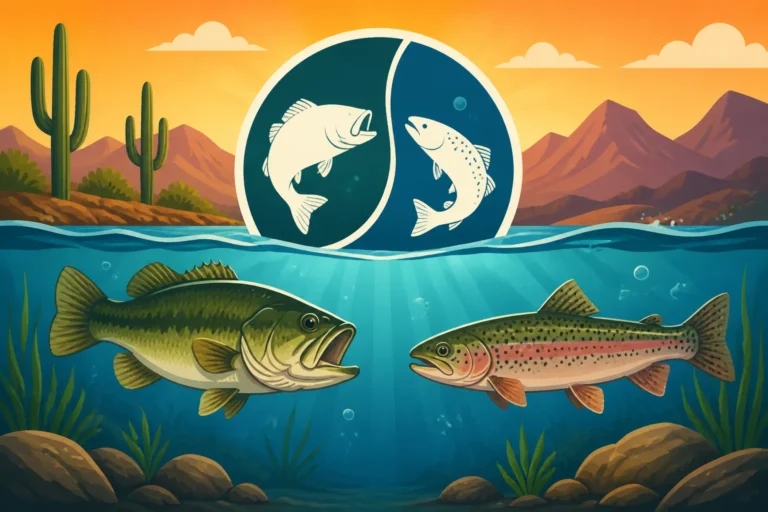
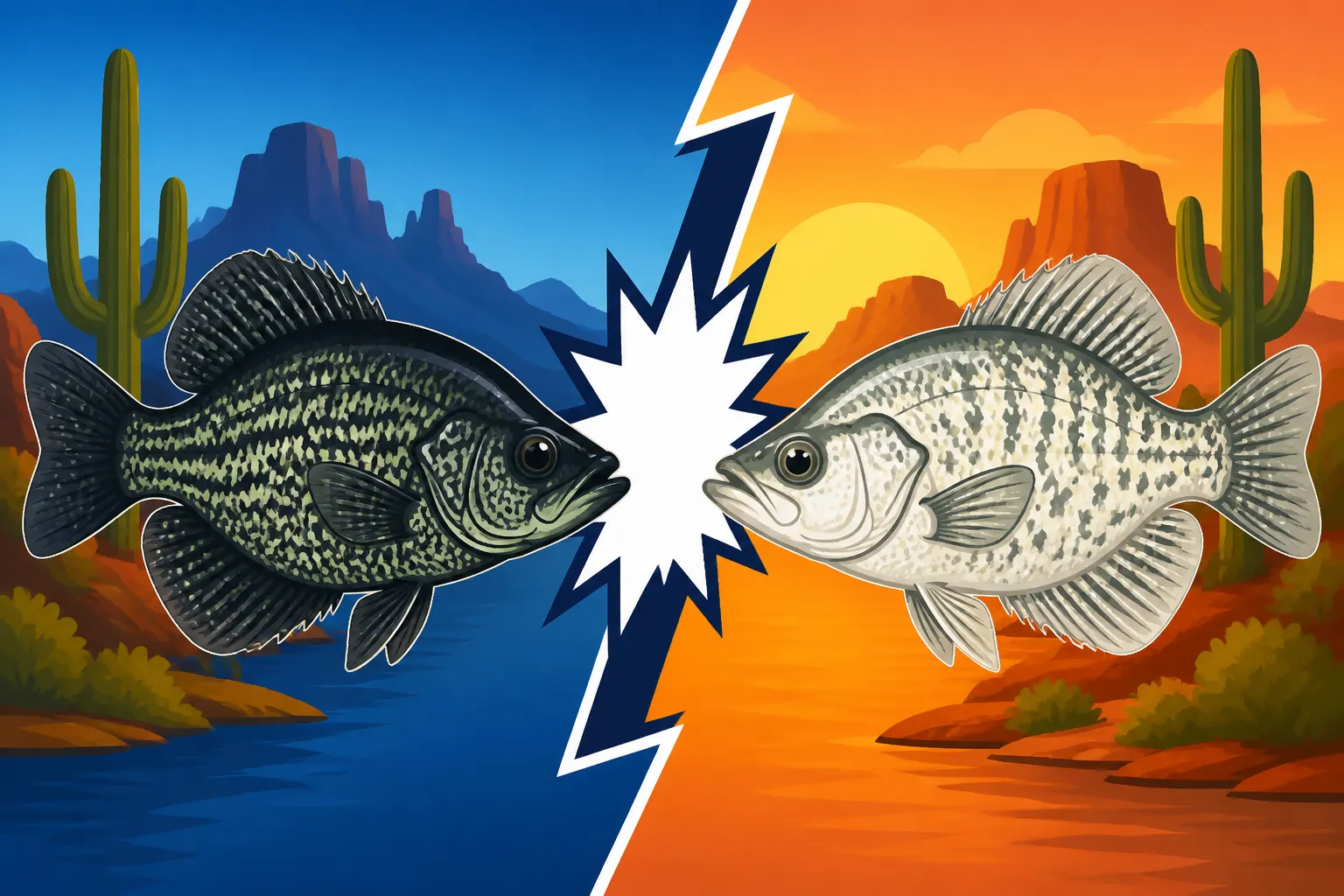
One of the most immediate indicators, though sometimes variable, is the pattern of their markings. Black crappie, as their name suggests, tend to have a more mottled, speckled appearance. Their dark spots are irregularly scattered across their body, giving them a somewhat "peppered" look. These spots don't typically form any distinct vertical bars. They can range in color from a silvery-green to a brassy yellow, often darker on the back and lighter on the belly, but always with that characteristic dappled pattern.
White crappie, on the other hand, usually exhibit a more organized pattern. They often have several distinct vertical bars or stripes running down their sides. These bars can be quite pronounced, especially when the fish is excited or stressed, or they might be fainter in clearer water. While they also have spots, these are generally less numerous and less scattered than those on a black crappie, tending to clump together to form those vertical bands. Their overall body color is often a lighter silver or white, making those darker bars stand out more clearly. Think of it like a zebra versus a leopard; different patterns, even if both are spotted or striped.
Dorsal Fin Spines and Body Shape
This is often the most reliable way to tell the two crappie species apart, even for a beginner. It's a definitive physical characteristic that doesn't change with mood or habitat. If you count the spines on the dorsal fin—that's the fin on the fish's back—you'll get your answer.
Black crappie consistently have 7 or 8 dorsal fin spines. This is a hard and fast rule. Carefully lift that fin (watch out, they're sharp!) and count them up. White crappie, by contrast, will always have 5 or 6 dorsal fin spines. That difference of just a couple of spines is the definitive characteristic that separates the species. Beyond the spines, there's a subtle difference in body shape. Black crappie tend to be a bit more "slab-sided" and rounder, almost disc-shaped, while white crappie are often more elongated, appearing a bit taller and thinner for their length. This can be harder to discern quickly, but combined with the spine count, it becomes clearer. If you're looking to upgrade your crappie gear, finding a good measuring tape on Amazon can help you quickly compare body length and depth for future reference.
Mouth and Jaw Structure
While less dramatic than fin spines or body markings, subtle differences in the mouth and jaw structure can also help with identification. Black crappie generally have a slightly larger mouth, and their upper jaw extends back to align roughly with the middle of the eye. This gives them a more "bass-like" appearance when viewed head-on.
White crappie tend to have a somewhat smaller mouth, with the upper jaw extending only to about the front of the eye. This can make them appear to have a more pointed or compressed head, especially when compared directly to a black crappie. For anglers who pay close attention to minute details, particularly those trying to identify smaller specimens where other features might be less pronounced, checking the jawline can offer an additional piece of the puzzle. These subtle variations influence how they feed, which we'll touch on later.
Habitat and Behavior Where and How They Live
Just as humans have different preferences for where they live and how they interact, black and white crappie also exhibit distinct preferences for their environment. Understanding these differences can be incredibly helpful when you're trying to locate a school of crappie, especially if you're targeting one species over the other. Knowing where they should be often narrows down the identification challenge.
Preferred Water Conditions
Black crappie generally prefer clearer, cooler water with abundant vegetation. They are often found in lakes, ponds, and slower-moving streams where aquatic plants provide both cover and food sources. Think of those pristine, lily-pad-laden coves or submerged weed beds in lakes like Canyon Lake or Saguaro Lake. They thrive in environments where sunlight can penetrate, allowing for healthy plant growth and a robust invertebrate population. If the water is particularly clear, their mottled camouflage helps them blend in perfectly.
White crappie, on the other hand, are often more tolerant of turbid (cloudy) water and warmer temperatures. They can thrive in murkier environments, such as those found in larger reservoirs like Roosevelt Lake or parts of the lower Colorado River, especially after significant runoff. While they also appreciate cover, they are less dependent on dense aquatic vegetation and can adapt to areas with more silt or clay bottoms. This adaptability means you might find white crappie in a wider range of conditions, making them a common target for Crappie Fishing Guide for Arizona in many of the state's diverse bodies of water.
Cover and Structure Preferences
Both crappie species are structure-oriented, meaning they like to hang out near submerged objects for protection, ambush points, and foraging opportunities. However, their specific preferences vary. Black crappie are typically found in or very close to dense cover. This includes thick stands of submerged weeds, brush piles, fallen trees, docks, and bridge pilings. They love to suspend right in the middle of it, making them challenging to extract sometimes. Think about fishing a tight brush pile or under a marina dock—that's prime black crappie territory.
White crappie are also attracted to structure, but they tend to prefer more open water structure, such as standing timber, deep humps, creek channels, and submerged roadbeds. They might be found around brush piles, but often slightly away from the densest part, using the structure as a reference point in more open water. This makes them a bit more accessible to anglers using trolling techniques or those targeting deeper structures. If you're wondering How to Fish a Brush Pile for Crappie, remember that a black crappie might be buried deeper in the tangle than a white crappie.
Schooling Habits
Crappie are well-known for their schooling behavior, which is fantastic news for anglers because once you find one, you've often found many! However, there are some subtle differences in how these schools typically form and behave. Black crappie often form tighter, more densely packed schools, especially when relating to specific cover. They might be piled up in a relatively small area, making them a prime target for vertical jigging or slow-trolling right over the top of the school. These schools can be harder to locate initially due to their preference for dense cover, but incredibly rewarding once found.
White crappie, while also schooling, often spread out a bit more, forming looser aggregations, particularly when suspended in open water or over large, subtle structures like old river channels. Their schools can cover a broader area, and they might be more prone to chasing baitfish in open water. This can make them ideal for trolling multiple lines or drifting with minnows. For anglers keeping an eye on their fish finder, white crappie schools might appear as a larger, more dispersed cloud, while black crappie schools might show up as a more concentrated blob directly within or against a piece of structure.
Diet and Feeding Habits What's on the Menu
Understanding what crappie eat and how they forage is fundamental to choosing the right baits and techniques. Both species are opportunistic feeders, but their preferred habitats and physical characteristics lead to some nuanced differences in their diets and feeding strategies. This knowledge will definitely improve your chances of catching them, whether you're using live bait or artificial lures.
Primary Food Sources
Black crappie, with their preference for clearer, vegetated waters, tend to have a diet heavily focused on smaller invertebrates and insects. They'll gorge themselves on zooplankton, insect larvae, small crustaceans, and even tiny aquatic worms found among the weeds. Of course, they're also big fans of small baitfish like threadfin shad or juvenile bluegill, especially as they grow larger. In a healthy, clear lake, you'll find them lurking, waiting to ambush anything that swims or crawls too close to their cover.
White crappie, being more adaptable to varied water conditions, have a slightly broader diet that often includes more baitfish. While they certainly eat invertebrates, their diet can lean more heavily towards small minnows and shad, particularly in lakes where these forage fish are abundant and form large schools. Their more elongated body shape and slightly different mouth structure might give them a slight edge when actively pursuing baitfish in open water. Knowing these general preferences can guide your choice of bait; if you're unsure, Best Bait for Crappie in Arizona provides excellent insights into both live and artificial options.
Seasonal Changes in Diet
Like most fish, crappie's diets shift with the seasons, largely dictated by water temperature, forage availability, and their own metabolic needs. In spring, as water temperatures rise and crappie move into shallower waters for spawning, both species become highly aggressive feeders. They'll actively pursue small minnows, jigs, and small crankbaits. This is a fantastic time for Crappie Spawning Season Tactics where they are focused on bulking up for the spawn.
During the hot Arizona summer, crappie often retreat to deeper, cooler waters, and their feeding can become more subdued during the brightest parts of the day. They might focus on deeper schools of shad or nocturnal insect hatches. As fall approaches and temperatures cool, crappie once again become very active, chasing baitfish in preparation for winter. In winter, their metabolism slows, and they'll feed less frequently, often preferring slow-moving baits or tiny jigs presented right in front of them in deep water. Understanding these seasonal shifts is crucial for consistent success.
Feeding Strategies
Because of their differing preferred habitats and mouth structures, black and white crappie employ slightly different feeding strategies. Black crappie are often ambush predators, lurking within dense cover and darting out to snatch unsuspecting prey. They use their mottled coloration to blend into the vegetation, waiting for a meal to swim by. This often means they respond well to baits presented slowly and precisely within structure.
White crappie can also ambush, especially when relating to specific cover. However, they are often more inclined to cruise open water in search of baitfish schools. You might find them suspended over deep structure or along channel edges, actively pursuing schools of shad. This behavior makes them more susceptible to trolling techniques, where baits are slowly pulled through potential feeding zones. If you're using a fish finder, noticing how the fish are positioned relative to structure can give you clues about their feeding strategy and ultimately, their species.
Spawning and Reproduction The Next Generation
The reproductive cycles of black and white crappie are quite similar, which makes sense given their close biological relationship. However, there are subtle differences in their timing and nesting habits that can be interesting for the dedicated angler, and sometimes even crucial for conservation. Understanding these aspects can also help you predict when and where to find them at their most aggressive.
Spawning Season and Water Temperature
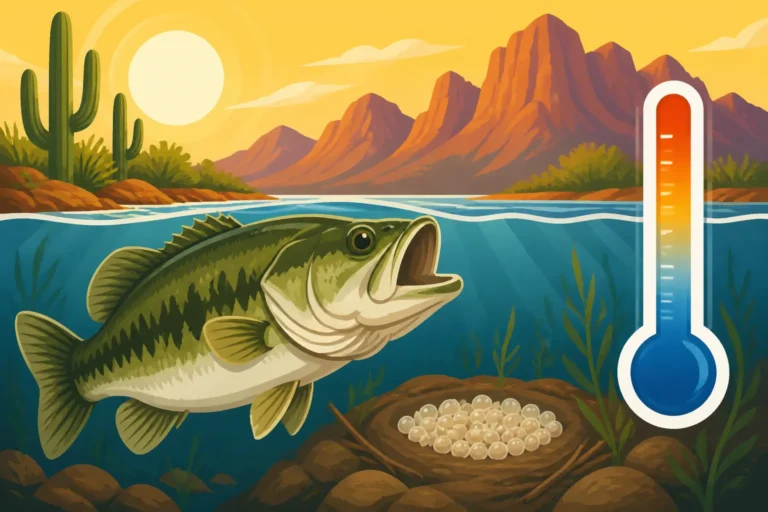
Both crappie species are spring spawners in Arizona, but white crappie generally begin their spawning rituals a little earlier and at slightly cooler water temperatures than black crappie. White crappie typically start spawning when water temperatures reach the low to mid-60s Fahrenheit (around 60-65°F). Black crappie, on the other hand, usually wait until the water warms up a bit more, preferring temperatures in the mid to high-60s (around 65-70°F).
This slight difference means that in some Arizona lakes, you might see the white crappie bite pick up first, followed closely by the black crappie a week or two later as the water continues to warm. Early spring can be an incredible time for crappie fishing as they become very active and move into shallower water, making them easier targets for anglers. These are the times when Crappie Spawning Season Tactics are absolutely essential for maximizing your catch.
Nesting Habits and Parental Care
Once the water temperature is right, both male crappie establish nests in shallow water, typically ranging from 1 to 6 feet deep, though they can go deeper in clear water. They prefer firm bottoms like sand or gravel, often near some form of cover like submerged logs, weed beds, or stumps. The male uses his tail to fan out a shallow depression, clearing away silt and debris to create a clean spot for the eggs.
Black crappie tend to build their nests closer to dense vegetation or submerged brush, reflecting their general preference for more covered habitats. White crappie, while still preferring cover, might choose slightly more open areas, such as points or along rip-rap, as long as there's some structure nearby. After the female lays her eggs and the male fertilizes them, the male guards the nest diligently, fanning the eggs to keep them oxygenated and protecting them from predators until they hatch. This protective behavior makes them quite aggressive and easier to catch during the spawn.
Hybridization Potential
Given their close genetic relationship and similar spawning habits, it's not uncommon for black and white crappie to hybridize, especially in environments where both species are present and suitable mates are scarce. Hybrid crappie can exhibit a mix of characteristics from both parents, making identification even more challenging. They might have an intermediate number of dorsal fin spines (e.g., 6 or 7) and a blend of the spotting and barring patterns.
While some anglers might find catching a hybrid crappie interesting, it's worth noting that hybrid crappie are typically sterile, meaning they cannot reproduce. This isn't usually a major concern for the overall population health in most Arizona lakes where both species thrive, but it's a fascinating biological phenomenon. For the average angler, encountering a hybrid simply adds another layer to the fun of crappie identification.
Fishing Techniques Targeting Each Crappie
Knowing the subtle differences between black and white crappie in terms of appearance, habitat, and diet can directly inform your fishing techniques. While many tactics will catch both, fine-tuning your approach can significantly increase your success when you're targeting one species specifically. Whether you're a seasoned crappie angler or just starting out, these tips can make a difference.
Lure and Bait Choices
Both crappie species are notoriously fond of small offerings. For live bait, live minnows are generally considered the gold standard and are effective for both black and white crappie. Smaller minnows are often preferred. For artificial lures, small jigs are king. Think 1/32 to 1/8 ounce jigs, often tipped with a soft plastic grub, tube, or curly-tail. Colors can vary, but chartreuse, white, pink, and various shades of green often perform well.
For black crappie, due to their preference for denser cover and slightly more invertebrate-heavy diet, tiny jigs or micro-plastics presented slowly and precisely into brush piles or submerged vegetation can be incredibly effective. Consider spider-rigging or using a slip bobber to suspend a minnow or jig right in their hiding spots. White crappie, especially when they're actively chasing baitfish in more open water, might respond better to slightly larger jigs, small spinnerbaits, or even tiny crankbaits trolled or cast along channel edges or over submerged humps. If you're stocking up on tackle, a good selection of small jigs and minnows from Amazon will cover most crappie scenarios.
Presentation Methods
The way you present your bait is just as important as the bait itself. For black crappie, stealth and precision are key. Because they often hold tight to cover, a quiet approach and accurate casts are vital. Vertical jigging directly into a brush pile, slowly lifting and dropping a jig or minnow, is a classic method. Another effective technique is using a slip bobber to suspend your bait at the exact depth where the crappie are holding within the cover. This allows you to present the bait for an extended period in the strike zone.
For white crappie, especially when they are suspended in open water or along channel edges, a more active presentation can be fruitful. Trolling with multiple rods at different depths and speeds is a very popular and effective method for covering water and finding active schools. Drifting with minnows under a bobber or slowly retrieving a jig along a drop-off can also be highly productive. Since white crappie are often more willing to chase, a slightly faster retrieve or a jig with more action can entice a strike. Knowing How to Rig a Live Minnow for Crappie correctly is paramount for either species.
Seasonal Tactics
As mentioned earlier, seasonal changes heavily influence crappie behavior, and thus, your tactics. In the spring, during the spawn, both species move shallow. This is the time for casting small jigs or minnows to visible cover like docks, lily pads, or flooded timber. They'll be aggressive and territorial, making them relatively easy to catch.
During summer, crappie retreat to deeper, cooler water. This means focusing on deep structure—creek channels, humps, standing timber—and often involves vertical presentations or slow trolling. In the fall, as temperatures cool, crappie become more active again, chasing baitfish in open water before settling back into deeper patterns for winter. During winter, they are often lethargic, requiring very slow, subtle presentations of tiny baits right in front of their faces. Understanding these seasonal movement patterns of crappie in stocked lakes can give you a significant advantage.
Arizona's Crappie Hotspots Where to Find Them
Arizona might be known for its desert landscape, but it boasts some truly fantastic crappie fishing. From vast reservoirs to urban ponds, there are opportunities to catch both black and white crappie if you know where to look. Each type of water body presents its own unique challenges and rewards.
Major Crappie Lakes
Arizona's large desert reservoirs are often crappie havens, providing extensive habitat for both species. Roosevelt Lake is arguably the state's most famous crappie fishery, often producing incredible numbers of white crappie, and some quality black crappie too. Its vast size, numerous coves, and varying depths offer plenty of structure. Best Season to Catch Crappie at Roosevelt Lake often centers around the spring spawn or fall feeding frenzies. You might find white crappie suspended over old creek channels and black crappie tucked into submerged brush.
Lake Pleasant, near Phoenix, is another prime spot, particularly known for its strong white crappie population. Its clear waters also hold black crappie, usually found deeper and closer to cover. Crappie Limit at Lake Pleasant often sees anglers filling their coolers during peak season. Other notable lakes include Apache Lake, Canyon Lake, and Saguaro Lake, all part of the Salt River chain, offering varied habitats from deep canyons to submerged timber, attracting good numbers of both species, though black crappie tend to be more dominant in the clearer, rockier canyon lakes.
Community Fishing Waters
Don't overlook Arizona's Community Fishing Program ponds and lakes! While often stocked with trout and catfish, many of these urban waters also hold resident populations of crappie, particularly black crappie, which thrive in their typically calmer, vegetated environments. These smaller lakes, like those in the Phoenix and Tucson areas, can offer surprisingly good crappie fishing, especially for beginners or those looking for a quick outing close to home.
While you might not catch trophy-sized fish, these community lakes are fantastic for introducing kids to crappie fishing. The key here is to find areas with submerged cover, like aeration bubblers, artificial habitat structures, or even just deeper pockets near banks. Small jigs and live minnows are typically the most productive baits in these waters. Always check local regulations for specific community lake rules regarding bait and limits.
River and Stream Opportunities
While less common than lake fishing, some of Arizona's rivers and larger streams, particularly sections of the Colorado River, can hold crappie. The lower Colorado River, especially in impoundments and backwaters, can provide good opportunities for white crappie. These areas often feature slower currents, back eddies, and submerged brush or timber where crappie can find refuge and food.
Fishing river systems requires a slightly different approach, as current can be a factor. Look for slack water areas, oxbows, and deep pools with plenty of cover. Using heavier jigs or bottom-rigged minnows might be necessary to combat the current. While not a primary crappie destination for many, dedicated anglers who explore these less-frequented spots can sometimes uncover hidden gems. However, for most, the large lakes remain the Best Crappie Fishing Spots in Arizona.
Disclaimer
This article is for general informational purposes only and does not constitute professional advice. Laws, prices and regulations vary by location and change over time. Consult a qualified professional for guidance on your specific situation.