Best Retrieve Speed for Crankbaits in Cold Water
Arizona might be known for its scorching summers, but when those winter chill sets in, especially in our higher elevation lakes or even during early mornings and late evenings at our desert reservoirs, fishing for bass with crankbaits can become a real head-scratcher. You might be throwing your favorite lures, but the fish just aren't reacting. The truth is, cold water completely changes the game for bass, and if your crankbait retrieve speed isn't adjusted, you're likely just giving them a show they're too sluggish to appreciate. This guide will dive deep into how to master your retrieve speed in chilly Arizona waters, helping you coax those lethargic lunkers into biting.
Why Cold Water Requires a Slower Crankbait Retrieve
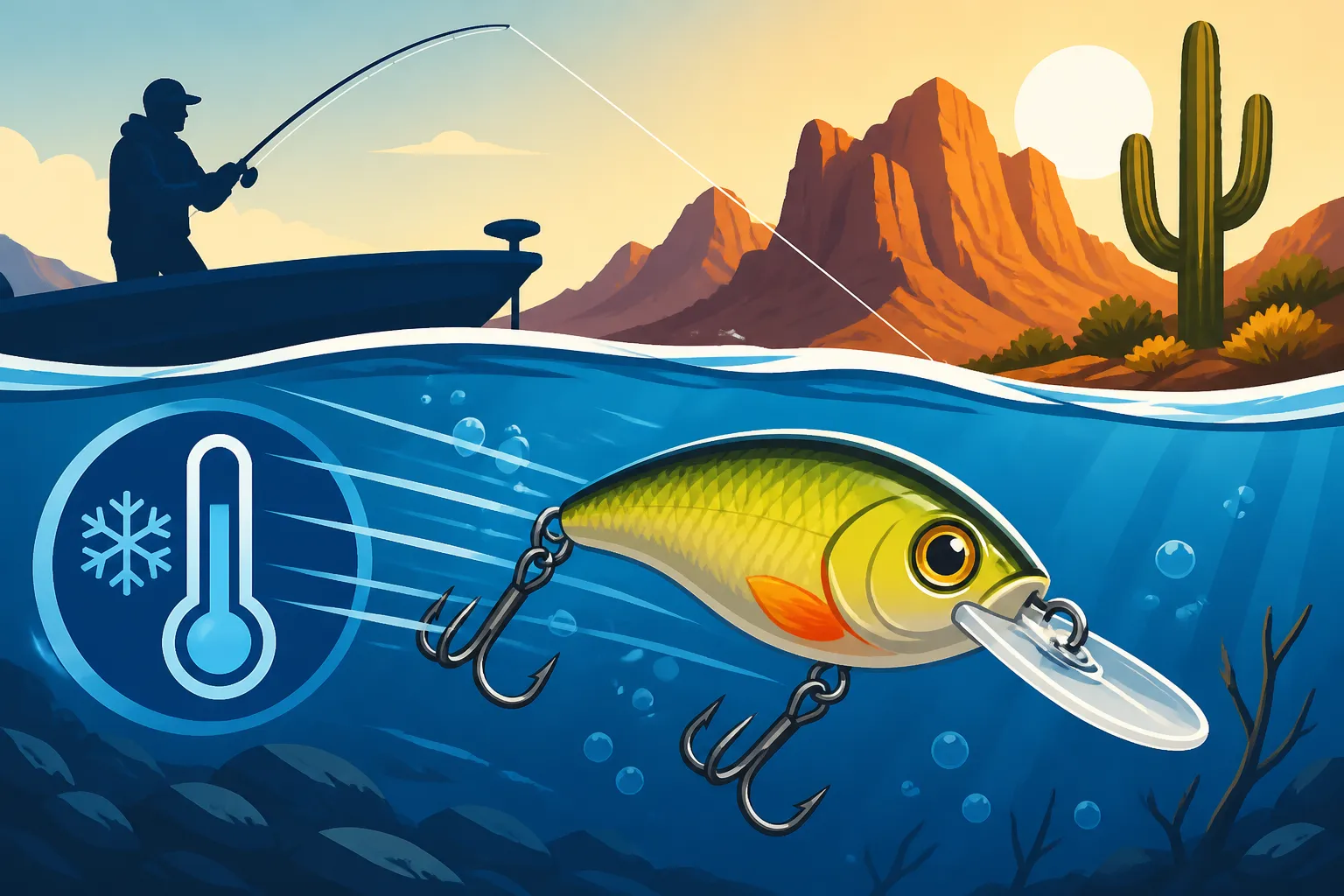
When the water temperature dips below, say, 55 degrees Fahrenheit, everything changes for our finned friends. Their metabolism slows down significantly, much like us wanting to stay bundled up under a blanket on a frosty morning rather than running a marathon. Fish become less active, their reaction times are delayed, and their need to chase down a meal becomes less urgent. This fundamental shift means your fast-moving crankbait presentation, which might be deadly in warmer months, is now largely ignored or, at best, seen as an annoyance.
Understanding Fish Metabolism in Cold Water
Think of bass in cold water as having a very slow internal clock. They're trying to conserve energy, and a quick, erratic meal isn't usually on their agenda. Their digestive process slows down, so they don't need to feed as frequently or aggressively. This metabolic slowdown isn't just about how often they eat, but also how they approach a meal. They're looking for an easy, high-calorie snack that doesn't require much effort to catch.
This translates directly to your lure presentation. A crankbait ripping through the water at top speed might flash by a cold-water bass, but its brain just can't process the information fast enough to react. Even if it sees it, the energy expenditure required to pursue and strike a fast lure often isn't worth it. They're in a "wait and ambush" mode, preferring a meal that practically floats right into their strike zone.
The Problem with High-Speed Presentations
A common mistake many anglers make is sticking to their warm-water habits. They'll cast a crankbait, reel it back at a steady, moderate pace, and wonder why they're not getting bites. The issue is that a lure moving too quickly doesn't give a cold-water bass enough time to commit. It needs to track the lure, position itself, and then decide to strike – all of which takes longer when its body functions are operating at a reduced capacity.
Furthermore, a fast-moving crankbait might generate too much flash or vibration, which can actually spook lethargic fish rather than entice them. While flash and vibration are often key attractants in warmer water, in cold conditions, an overly aggressive presentation can seem unnatural or even threatening to a fish trying to conserve energy and remain hidden. The goal is to present something that looks vulnerable, easy to catch, and non-threatening.
Mastering the "Slow Roll" Crankbait Technique
The "slow roll" is your best friend when crankbait fishing in cold water. It's exactly what it sounds like: retrieving your crankbait at the absolute slowest speed possible while still allowing the lure to perform its intended action, whether that's wobbling, diving, or deflecting. This technique is all about subtlety, patience, and giving the fish ample time to make a decision.
The Art of a Consistent Slow Retrieve
A consistent, slow retrieve is crucial. You want your crankbait to move like a wounded or dying baitfish, barely swimming along. This means turning your reel handle just enough to feel the lure working, maintaining that steady throb or wobble. It's not about speed, but about maintaining the action. On some days, even a super-slow, steady retrieve can be enough, particularly if the fish are positioned on specific structures like points or drop-offs.
Imagine you're trying to retrieve a deeper diving crankbait that really wants to pull hard, like some of the larger Rapalas or Strike King models. In cold water, you're fighting against the lure's natural tendency to swim fast. You need to dial back your retrieve until you feel just a faint vibration, signaling the lure is still working but barely moving. This takes practice, but once you get the feel for it, it becomes second nature. Many anglers find a wide selection of crankbaits suitable for this technique available on Amazon, allowing them to experiment with different models.
Incorporating Pauses and Twitches
While a steady slow roll is effective, adding pauses and subtle twitches can often be the trigger that convinces a hesitant bass to strike. The "stop-and-go" retrieve is incredibly potent in cold water. You'll cast your crankbait, reel it down to its desired depth with a slow retrieve, and then… stop. Let it suspend or slowly float up for a few seconds. This pause often mirrors a dying baitfish and can be irresistible to a following bass.
After a short pause, give your rod tip a slight twitch or resume your slow retrieve for a few turns before pausing again. These erratic movements, especially after a period of stillness, can mimic a struggling prey item perfectly. Many bass will hit the lure just as it begins to move again after a pause, or even while it's suspending motionless. This is particularly true when fishing around submerged timber or in deeper structures where fish are holding tight. Remember, patience is key here; don't rush the pauses.
Factors That Influence Your Cold Water Retrieve Speed
While a general "slow roll" is the rule, there's no single magic speed. Several factors will dictate just how slow you need to go, and knowing these can help you fine-tune your approach for specific conditions in Arizona's diverse waters. Whether you're targeting bass in the deeper canyons of Lake Powell or the relatively shallower expanses of Roosevelt Lake, these considerations are paramount.
Water Temperature Ranges
The exact water temperature is the biggest determinant of fish activity.
- Below 45°F: This is extreme cold. Fish are likely buried deep, nearly dormant. Your retrieve needs to be agonizingly slow, with very long pauses. Think of barely moving the lure, perhaps even crawling it along the bottom like a lipless crankbait or a flat-sided crankbait. Bites will be subtle, often just a "mushy" feeling on the line.
- 45-55°F: This is typical winter cold for many Arizona lakes. The slow roll with pauses and twitches will be highly effective here. Fish are still sluggish but will move for an easy meal. This is often the prime zone for deep-diving crankbaits or medium divers bumped off structure. For some specific insights on this, you might check out articles on Winter Bass Fishing Tactics in Arizona.
- 55-60°F: As the water warms into the upper 50s, fish activity picks up slightly. You can increase your retrieve speed a bit, perhaps moving from a dead slow roll to a steady, slightly faster retrieve with shorter pauses. Reaction bites become more common as bass are a bit more willing to chase. This temperature range is also often linked to Best Water Temperature for Bass Spawning, which can indicate increased activity.
Depth and Cover
Where the fish are holding makes a huge difference. If bass are hunkered down in deep channels or tight to vertical cover like submerged timber or rocky ledges, they're often less willing to chase. This calls for an even slower retrieve that keeps your crankbait in their strike zone for as long as possible. You're trying to put the lure right in front of their faces.
For example, if you're working a deep drop-off, a crankbait needs to stay at that specific depth. A faster retrieve might pull it away from the fish too quickly, or cause it to blow out of the productive zone. Conversely, if you're fishing shallower flats on an overcast day and the fish are roaming slightly more, you might get away with a slightly faster, but still controlled, retrieve. Understanding How to Fish a Crankbait Around Drop-Offs is vital here.
Water Clarity and Light Conditions
Clear, cold water in Arizona often means fish are more wary. They have better visibility and can inspect your lure more thoroughly. This usually warrants a slower, more natural presentation. Too much erratic movement or flash can be a turn-off. Conversely, in stained or muddy cold water, a slightly faster retrieve with more vibration might be necessary to help fish locate the lure by relying on their lateral line.
Light conditions also play a role. On bright, sunny days, bass might be more sensitive to light and hug tighter cover, requiring a very slow and precise approach. On overcast days, they might spread out a bit more and be slightly more active, allowing for a marginal increase in retrieve speed. The goal is always to match the pace to the fish's mood and ability to react.
Gear Considerations for Optimal Cold Water Crankbait Fishing
Your rod, reel, and line choices aren't just about personal preference; they directly impact your ability to execute the perfect cold-water retrieve. Having the right setup can make the difference between an exasperating day and a successful one, especially when bites are already tough to come by. Many anglers spend hours researching Best Fishing Rods for Bass in Arizona to find that perfect setup for different techniques.
Rod and Reel Setup for Slow Rolling
For cold water crankbait fishing, a medium-heavy power, moderate-fast action rod is often ideal. The moderate-fast action provides enough tip flexibility to cast crankbaits effectively and absorb some of the initial shock of a sluggish cold-water bite, but enough backbone to handle larger fish. A rod in the 7' to 7'6" range offers good casting distance and leverage. Graphite or a composite blend can work well, as they offer sensitivity to detect those subtle cold-water bites.
When it comes to the reel, a slower gear ratio baitcasting reel (around 5.X:1 or 6.X:1) is your best friend. This is crucial because it forces you to slow down. Even if your natural instinct is to crank faster, a low gear ratio reel will only bring in so much line per turn, making it easier to maintain that agonizingly slow retrieve. If you find yourself struggling to slow down enough, a lower gear ratio reel can be a game-changer. Looking for Best Fishing Reels for Beginner Anglers in Arizona might provide some excellent foundational knowledge, even for experienced anglers adapting to new techniques.
Line Choices and Their Impact
Line choice is more critical than you might think in cold water. Fluorocarbon line is a top choice for several reasons. First, its low stretch offers excellent sensitivity, allowing you to feel those subtle "tick" or "mushy" bites that are common in cold conditions. Second, fluorocarbon sinks, which helps your crankbait get to and stay at its desired depth, especially important when fishing deep structure. Third, its low visibility is an advantage in clearer, colder waters where fish can be more line-shy.
Monofilament can also be used, particularly if you want your crankbait to run a little shallower or have a bit more buoyancy, which can be useful for deflecting off cover without snagging. However, its stretch can sometimes hinder bite detection. Braided line, while super sensitive, often has too much buoyancy for consistent deep-diving crankbait action and can be highly visible in clear water, though a fluorocarbon leader can mitigate this. For general advice, consider exploring Best Line for Bass Fishing.
| Water Temperature Range | Recommended Retrieve Speed | Key Action | Gear Ratio Suggestion | Common Crankbait Styles |
|---|---|---|---|---|
| Below 45°F | Agonizingly Slow | Long Pauses, Bottom Crawl | 5.X:1 or lower | Flat-Sided, Lipless |
| 45-55°F | Very Slow | Slow Roll with Pauses, Occasional Twitches | 5.X:1 – 6.X:1 | Deep/Medium Divers, Flat-Sided |
| 55-60°F | Slow to Moderate | Steady Roll, Shorter Pauses, Deflections | 6.X:1 – 7.X:1 | Medium Divers, Squarebill |
| Above 60°F | Moderate to Fast | Erratic, Aggressive | 7.X:1 or higher | Squarebill, Lipless, Fast-Moving |
Crankbait Selection for Cold Water Success
While retrieve speed is the focus, the right crankbait can amplify your efforts. Flat-sided crankbaits are particularly effective in cold water. Their subtle, tight wobble is less aggressive than the wide, erratic action of some rounder-bodied baits, making them more appealing to lethargic fish. They also tend to have a slower "thump" which can be detected by the lateral line of cold-water bass without being overpowering. Brands like Storm, Bandit, and Rapala offer excellent flat-sided options.
Also, consider silent or "subtle rattle" crankbaits. While loud rattles can sometimes attract attention, in clear, cold water, they can also spook fish. A more subdued approach often yields better results. Deeper diving crankbaits are essential for reaching fish that have moved to Deep Water Structure at Roosevelt Lake or other reservoirs to escape the cold. Remember, even with the "best" lure, an incorrect retrieve speed will still lead to frustration. Don't be afraid to stock up on a few different styles and colors; Amazon is a great place to start your search for those specialized cold-water baits.
Ultimately, mastering the best retrieve speed for crankbaits in cold water comes down to patience, observation, and adaptability. Don't be afraid to slow down even more than you think you need to. Those subtle ticks and light thumps on your line might just be that trophy bass you've been after, slowly but surely making a meal out of your perfectly presented lure. Happy fishing, and stay warm out there!
Disclaimer
This article is for general informational purposes only and does not constitute professional advice. Laws, prices and regulations vary by location and change over time. Consult a qualified professional for guidance on your specific situation.