How Moon Phase Affects Night Catfishing
There's a persistent question that echoes around campfires and boat docks throughout Arizona: does the moon phase really matter when you're out there, rods bent, waiting for that tell-tale tug in the dead of night? Many seasoned anglers swear by it, while others shrug, but the truth is, the moon's subtle influence can indeed play a role in how successful your night catfishing adventures are. This guide will dive deep into how lunar cycles might affect those whiskered beauties, offering practical strategies to help you navigate Arizona's waters under any moon.
The Mystique of Moon Phases and Catfish Behavior
The moon has captivated humanity for millennia, influencing tides, cycles, and, some believe, the behavior of fish. For night catfishing enthusiasts in Arizona, understanding these lunar rhythms isn't just folklore; it can be a vital piece of the puzzle for a productive outing.
Unpacking Lunar Cycles and Their General Influence
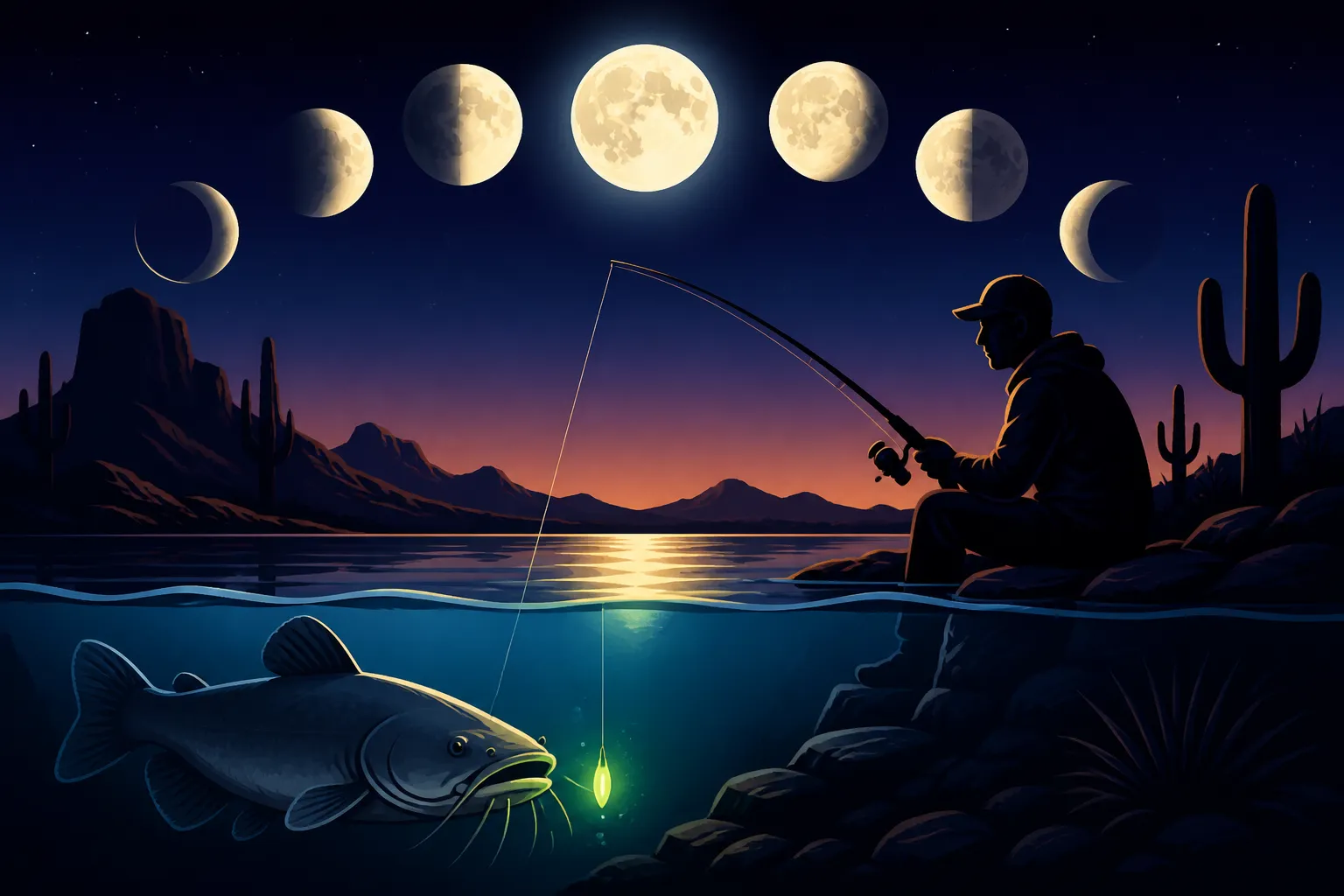
First, let's talk about what the moon phases actually are. They're simply how much of the moon's sunlit surface is visible from Earth, ranging from the completely dark new moon to the brilliant full moon, and everything in between. While the moon's gravitational pull most noticeably affects tides in vast oceans, its light—or lack thereof—is what many believe impacts freshwater fish like catfish. Catfish, with their incredible sense of smell and their keen lateral line system for detecting vibrations, are perfectly adapted to low-light conditions. Their eyes are also often well-suited for dim light. The amount of ambient light filtering through the water column, even on the darkest night, can be enough to alter their comfort levels and feeding patterns.
Think about it: just like humans, animals often feel more exposed when it's brighter. For a bottom-dwelling predator like a channel catfish or a flathead catfish, whose prime hunting time is often after sundown, a brightly lit night might mean they stick to deeper, darker cover, while a truly dark night encourages them to roam more freely. This isn't just about what they can see; it's about what they think other predators can see, or how much light penetrates their preferred feeding zones.
The Bright Side and Dark Side: Full Moon vs. New Moon
When it comes to night catfishing, the two extreme moon phases—the new moon and the full moon—generate the most discussion and often the most varied angler experiences.
The new moon phase is when the moon is least visible, creating the darkest nights. Many dedicated night anglers consider this to be prime time for catfishing. The theory is that with minimal light penetration, catfish feel less exposed and more comfortable moving into shallower areas to feed aggressively. They rely almost entirely on their superior sense of smell and their lateral line to locate prey, making them less wary of lines and shadows. On these truly dark nights, you might find that the bite is more consistent and that catfish are willing to take baits in areas they'd avoid during brighter conditions. This can make for some truly exciting fishing, where the mystery of what's on the end of your line is amplified by the pitch-black surroundings.
Conversely, the full moon phase, with its brilliant illumination, is often debated. Some anglers report that catfishing slows down considerably on these nights, hypothesizing that the increased light makes catfish more cautious, driving them into deeper, darker holes or under dense cover. They might still feed, but perhaps during shorter windows, or with less intensity. However, other experienced anglers swear by the full moon, claiming that the extra light allows catfish to see bait more easily, or that the increased activity of baitfish under the moonlight brings the catfish out to hunt. This contradiction often comes down to where and how you fish. On a bright full moon, catfish might indeed feed, but perhaps they're not as willing to chase, or they're holding in very specific, shaded areas that require different Bottom Fishing Techniques for Catfish than you'd use on a dark night. The question of "Do Fish Bite Less During a Full Moon?" is one that every angler wrestles with, and the answer often depends on adapting your approach.
Strategizing Your Night Catfishing Trips by Moon Phase in Arizona
Given the varied theories and experiences, the best approach is to adapt your strategy based on the moon phase. Arizona's desert lakes and rivers present unique challenges and opportunities, and being prepared for the prevailing light conditions can make a significant difference.
Tactics for Bright Moon Nights (Full or Near-Full)
When the moon is bright and casting shadows across the desert landscape, your catfishing strategy needs to adjust. Catfish might be a bit more hesitant to roam widely in shallower, exposed areas.
- Go Deep and Dark: Focus your efforts on deeper water, such as channel breaks, humps, submerged timber, or the deepest parts of coves. Catfish often retreat to these darker, cooler sanctuaries during periods of increased light. If you have a fish finder, use it to locate drop-offs and structure.
- Target Shadows and Cover: Cast your lines into the darkest shadows cast by cliffs, large trees, or artificial structures like docks and bridges. These areas offer catfish a sense of security while still allowing them access to potential feeding grounds. Overhanging vegetation can create excellent low-light ambush points even on bright nights.
- Emphasize Scent and Vibration: Even if they're relying more on sight in brighter conditions, catfish still have an incredible sense of smell and lateral line. Use highly odorous baits like potent cut bait, stink baits, or punch baits. Consider adding a rattle to your rig or periodically twitching your rod to create vibrations that draw them in. You can often find a wide selection of these specialized baits and rigs on Amazon if your local tackle shop is out.
- Consider Early Evening/Late Morning Bites: Sometimes, the transition periods around moonrise or moonset, or the hours just after sunset and just before sunrise, can be productive on a full moon as the light levels change.
Tactics for Dark Moon Nights (New or Near-New)
These are often considered the glory nights for Arizona catfishing. With minimal light, catfish tend to be more active and less wary, making them excellent targets.
- Explore Shallower Waters: Catfish will often venture into shallower flats, coves, and shorelines to forage for baitfish and invertebrates. Don't be afraid to cast closer to the bank, especially in areas with gradual slopes or submerged vegetation.
- Cover More Ground: Since catfish are likely more dispersed and actively hunting, you might have success by moving around more, making multiple casts in different areas, or slowly drifting. This active approach can help you locate the most aggressive fish.
- Use Visual Cues (Subtly): While scent is still king, a subtle glow-in-the-dark bobber or a small piece of reflective tape near your bait on a jig head can sometimes provide just enough visual attractant without being too intimidating. For more specific advice on tackling these fish, check out our guide on Catfish Night Fishing Techniques.
- Focus on Key Structure: Even in darkness, structure is key. Target submerged brush piles, rocky points, and channel edges that provide ambush points. The Best Catfish Fishing Spots in Arizona often have these features.
Transition Periods: Crescent and Gibbous Moons
The waxing and waning crescent and gibbous moons offer moderate light conditions, making them a blend of the two extremes.
- Observe and Adapt: These phases are excellent for experimentation. Start with a combination of tactics: fish both shallower and deeper, use both high-scent baits and perhaps something with a subtle visual cue. Pay close attention to when and where you get bites.
- Target Twilight Hours: The periods immediately following sunset and leading up to moonrise, or after moonset and before sunrise, can be particularly productive as light conditions are rapidly changing, which often triggers feeding activity.
- Consider Baitfish Movement: Observe if baitfish are active near the surface or along shorelines. Catfish will often follow their prey, and moderate moonlight can sometimes make baitfish more visible for catfish to hunt. Our article on Catfish Diet and Feeding Habits offers more insights into what these fish are looking for.
Beyond the Lunar Glow: Other Critical Factors for Arizona Night Catfishing Success
While the moon phase can certainly be a factor, it's never the only factor. Successful night catfishing in Arizona requires a holistic approach, considering everything from water conditions to your chosen gear.
Water Conditions: Temperature, Clarity, and Current
Arizona's intense daytime heat means that night fishing often coincides with optimal water temperatures for catfish, especially during the warmer months.
- Temperature: Catfish are warm-water species, but they still prefer comfortable temperatures. After a scorching Arizona day, the water cools down significantly at night, often reaching their preferred feeding zone. This drop in temperature, regardless of the moon, can stimulate activity.
- Clarity: Water clarity plays a huge role. In murky or stained water, the moon's light penetration is minimal anyway, making the moon phase less critical. Catfish will rely almost entirely on their other senses. In very clear water, however, a bright moon can indeed make fish more wary, and they'll likely stick to deeper, darker haunts.
- Current: Even in lakes, subtle currents exist due to wind or dam operations. In rivers like sections of the Colorado or Gila, current is a major factor. Catfish often position themselves in current breaks, waiting for food to be washed past them. The moon phase might influence how aggressively they feed, but current will dictate where they hold. Knowing the difference between a Channel Catfish vs Flathead Catfish Identification is helpful here, as Flatheads often prefer stronger currents and structure.
Location, Bait, and Gear: The Angler's Control
You have direct control over these elements, and they often outweigh the moon's influence if applied correctly.
- Choosing the Right Spot: Regardless of the moon, finding prime catfish habitat is paramount. Look for deep holes, submerged timber, rock piles, brush, drop-offs, and river bends. Areas where creeks or washes feed into a main body of water can also be hotspots, especially after rain, as they wash in food.
- Bait Selection: Freshness and potency are key. Cut bait from shad, bluegill, or carp is a perennial favorite for flatheads, while stink baits and punch baits excel for channel cats. Live bait, like small bluegill or carp, can also be highly effective, especially for larger flatheads. Make sure you have a variety. You can often stock up on essential hooks, weights, and bait preparation tools from an online retailer like Amazon.
- Essential Night Gear: Safety and efficiency demand proper gear. A powerful headlamp (and spare batteries!) is non-negotiable for tying knots, rebaiting, and navigating. Glow sticks for rod tips or bobbers help you see bites. Heavy-duty rods and reels are necessary for fighting big catfish, and a sturdy landing net or lip gripper is crucial for safely landing them. Check out our recommendations for an Essential Tackle Box Setup for Arizona Beginners. Don't forget bug spray and plenty of water, perhaps stored in one of the Best Coolers for Hot-Weather Fishing in Arizona, as even nights can be warm.
- Adhering to Regulations: Always be sure to check the Arizona Fishing Regulations Explained before heading out. Knowing bag limits, legal baits, and any special regulations for your chosen body of water is vital.
Patience, Observation, and Adaptability
Ultimately, catfishing, especially at night, is a game of patience and observation. The moon phase is a factor to consider, but it's not a magic bullet.
- Keep a Fishing Log: Over time, documenting your experiences—including moon phase, weather, water conditions, and success rates—will give you invaluable personal insights into how these factors interact on your favorite Arizona waters.
- Observe Your Surroundings: Pay attention to what the baitfish are doing, if any other wildlife is active, and how the water feels. These subtle cues can often tell you more than any lunar calendar.
- Be Flexible: Don't get locked into one strategy. If your usual full moon spot isn't producing, try moving to a different depth or structure. If the new moon bite isn't as hot as you expected in the shallows, don't be afraid to try a deeper presentation. Anglers who are willing to adapt are often the most successful.
Here's a quick overview of how moon phases can guide your night catfishing efforts:
| Moon Phase | Light Conditions | Catfish Behavior (Likely) | Suggested Strategy | Key Considerations |
|---|---|---|---|---|
| New Moon | Minimal to none (darkest nights) | More active, less wary, may move shallower to feed. | Fish shallower flats, coves; actively cover water; focus on strong scents. | Often considered prime catfishing nights. |
| Crescent Moons | Increasing/Decreasing moderate light | Intermediate activity; may start or stop feeding as light changes. | Target transition hours (dusk/dawn, moonrise/moonset); blend shallow/deep tactics; observe baitfish activity. | Good for experimentation and finding patterns. |
| Quarter Moons | Half-lit | Similar to crescent, perhaps slightly more cautious than new moon. | Similar to crescent moons; focus on structure and current breaks. | Moderate light offers a balance of conditions. |
| Gibbous Moons | Increasing/Decreasing bright light | Can be active but potentially more cautious than new moon; may favor deeper water. | Start deep and experiment shallower; use potent baits; focus on shadows and cover. | Can be good, but adaptation is key. |
| Full Moon | Brightest nights | Can be more cautious, retreat deeper, or actively feed in specific areas. | Focus on deep structure, heavy cover, darkest shadows; strong scent and vibration; consider early/late bite. | Most debated phase; requires careful observation and adaptation. |
Disclaimer
This article is for general informational purposes only and does not constitute professional advice. Laws, prices and regulations vary by location and change over time. Consult a qualified professional for guidance on your specific situation.