Do You Need Special Gear for Desert Heat Fishing?
Oh, the brutal Arizona summer! It’s a love-hate relationship for us anglers, isn't it? We crave those long days on the water, but the relentless sun and scorching temperatures can turn a dream fishing trip into a sweaty, uncomfortable, and even dangerous ordeal if you’re not prepared. Many folks wonder if their usual fishing setup from cooler climates will cut it here, or if they truly need something special. This guide is here to tell you that yes, a little specialized gear and a lot of smart preparation can make all the difference, transforming your desert fishing experience from a struggle to a success.
The Harsh Realities of Arizona's Desert Heat and Its Impact on Anglers and Gear
Fishing in Arizona isn't like fishing in, say, Minnesota in July. The sun isn't just bright; it feels like a laser beam. The air temperature doesn't just get warm; it becomes an oven. These aren't exaggerations, and they profoundly impact everything from how your body reacts to how your fishing line performs. Understanding these unique challenges is the first step to conquering them.
Understanding the Unique Challenges of Desert Fishing
Imagine stepping out of your air-conditioned car at Lake Pleasant or Roosevelt Lake when the thermometer already reads 105 degrees at 7 AM. That's a typical summer morning here. The water itself might feel warm to the touch, and everything metal on your boat or tackle box can become searing hot. This extreme heat doesn't just make you uncomfortable; it affects the fish, driving them deeper to seek cooler water, and it can literally melt or degrade your gear. Dehydration is a constant, insidious threat, and sunburn can become a serious burn in minutes, not hours. It's a true test of endurance and preparation.
The sheer intensity of the solar radiation is another factor often underestimated. We're talking about UV indexes that consistently hit "extreme" levels. This isn't just about getting a tan; it's about significant skin damage, eye strain, and a rapid depletion of your energy reserves. Without proper protection, a full day on the water can leave you feeling completely drained, suffering from headaches, and looking like a lobster, which is certainly not the memory you want to make.
Furthermore, the heat can also trigger monsoon storms, which, while offering a temporary cool-down, bring their own set of challenges, from sudden downpours to intense lightning. While we often focus on the heat itself, understanding the entire climate picture, including How to Fish During Arizona's Monsoon Season, is crucial for year-round safety and success. You're not just fighting the heat; you're often dealing with its unpredictable consequences.
Why Regular Gear Often Falls Short in Arizona Summers
Your favorite cotton t-shirt and baseball cap might be fine for a casual afternoon elsewhere, but they are utterly inadequate for a full day of Arizona desert fishing. Cotton absorbs sweat and stays wet, leading to chafing and actually making you feel hotter once it dries. A standard baseball cap leaves your ears and neck exposed to the brutal sun, which are prime areas for sunburn. It’s like bringing a spoon to a knife fight – you're just not equipped for the intensity.
Beyond personal comfort, the heat takes a toll on your actual fishing equipment. Monofilament fishing line can become brittle and lose strength under prolonged UV exposure, while fluorocarbon can become more prone to coil memory. Soft plastic baits, if left in direct sunlight or a hot tackle box, can literally melt into an unusable blob or fuse together, ruining your carefully curated collection. Even your expensive fishing reels can suffer, as lubricants can thin and components can expand, leading to decreased performance and premature wear.
Think about the electronics on your boat – your fish finder, GPS, and trolling motor batteries. All of these generate their own heat, and when combined with ambient air temperatures exceeding 110 degrees, they can overheat, malfunction, or have their battery life severely impacted. Protecting these investments requires more than just tucking them away; it often means providing shade or even active cooling. Simply put, gear not designed for extreme heat will degrade faster and perform poorly, leading to frustration and potentially missed opportunities on the water.
Essential Personal Gear for Angler Comfort and Safety in the Heat
When you're out on an Arizona lake, your personal safety and comfort come first. No fish is worth a trip to the emergency room for heatstroke or a severe sunburn. Investing in the right personal gear isn't a luxury; it's a necessity that allows you to enjoy your time without paying a steep physical price.
Sun Protection: Beyond Just Sunscreen
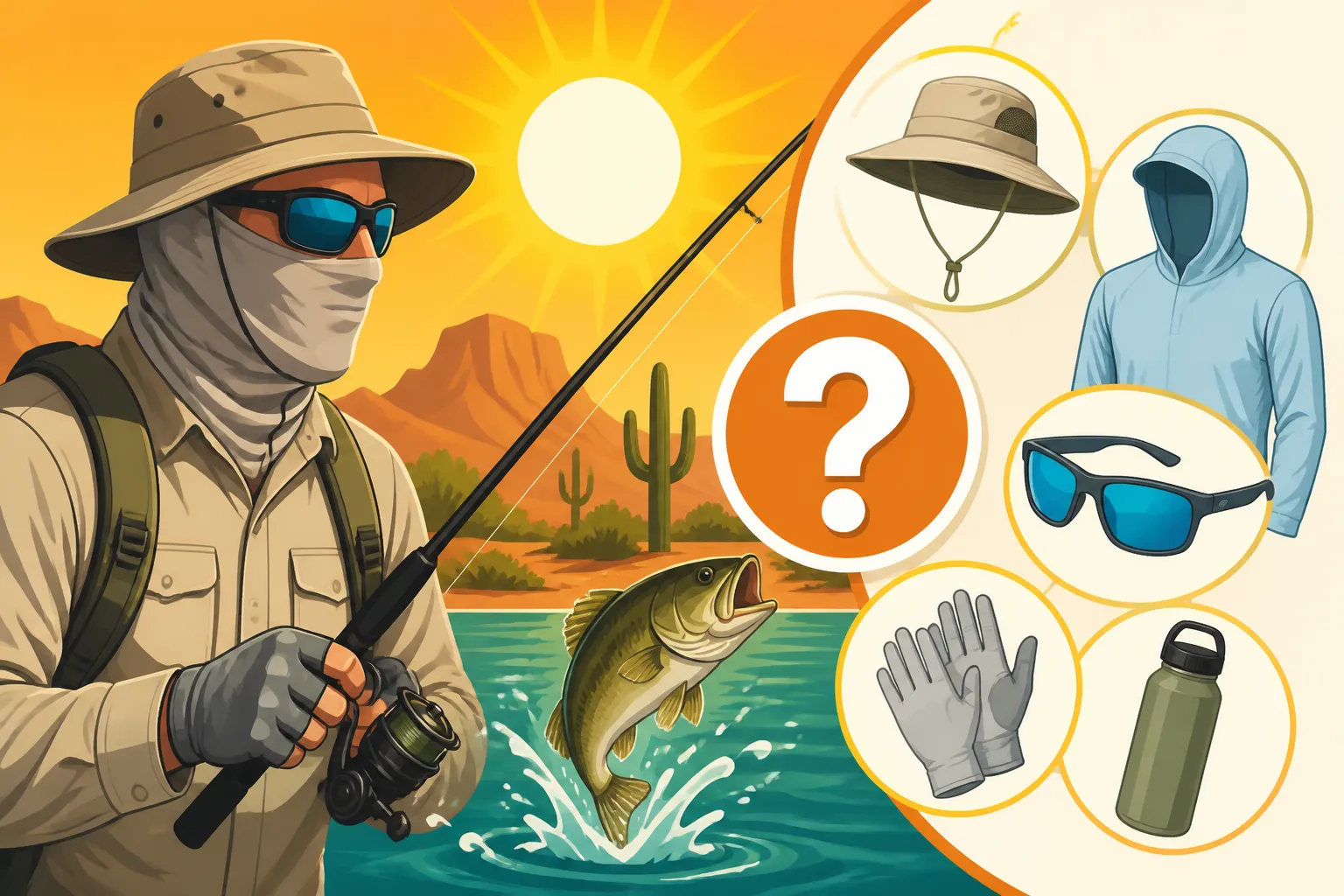
Alright, let's talk real sun protection. You might slather on SPF 50, but that’s just one layer of defense. For Arizona, you need a full arsenal. Start with long-sleeve shirts made from breathable, lightweight fabrics with a high UPF (Ultraviolet Protection Factor) rating, ideally UPF 30 or 50. These shirts actively block UV rays, wick away sweat, and keep you cooler than exposed skin. Many great options are available from outdoor retailers like Bass Pro Shops, which specifically cater to anglers with their sun-protective clothing lines. They are a game-changer; trust me, you'll feel the difference immediately.
Next up, headwear. A simple baseball cap just won't cut it. You need a wide-brimmed hat, something that shades your face, ears, and neck comprehensively. Look for hats with mesh vents for breathability and perhaps a chin strap for those breezy days on the water. Pair this with a good quality neck gaiter or a buff. These are incredibly versatile, offering sun protection for your neck and face, and can even be dipped in water to provide evaporative cooling. Sunglasses are non-negotiable – polarized lenses not only reduce glare, allowing you to see into the water better (crucial for Best Bass Fishing Techniques for Arizona Lakes), but they also protect your eyes from harmful UV rays. You can find excellent, affordable polarized options on Amazon, or invest in higher-end brands for superior clarity and durability. Don't forget your lips, either; use a lip balm with SPF.
Finally, while clothing does most of the heavy lifting, sunscreen is still essential for any exposed skin – hands, face (if your gaiter doesn't cover everything), and the backs of your ears. Reapply frequently, especially after sweating or if you get splashed. The idea is to create a physical barrier against the sun's relentless assault, minimizing skin exposure as much as possible. This multi-layered approach ensures that you're not just protected, but also as comfortable as possible under the intense desert sun.
Hydration and Cooling Systems
Staying hydrated in Arizona's dry heat is a full-time job. You're losing fluids constantly, even when you don't feel like you're sweating much due to the rapid evaporation. This is where personal hydration systems come into play. Forget small water bottles; you need capacity. Large, insulated water bottles or tumblers are excellent for keeping water ice-cold for hours. Brands like Hydro Flask or Stanley are popular choices, but many reliable alternatives exist. Better yet, consider a hydration pack (like those made by CamelBak) if you're shore fishing, hiking to a remote spot, or prefer hands-free access to water. These packs allow you to carry several liters of water, often with room for snacks and other small essentials.
Beyond just water, replenishing electrolytes is crucial to prevent cramping and fatigue. Sports drinks or electrolyte tablets can be incredibly beneficial, especially on long fishing days. Don't wait until you feel thirsty; sip water constantly throughout the day. It’s far easier to prevent dehydration than to recover from it. For an added cooling boost, those evaporative cooling towels are fantastic. Wet them, wring them out, and drape them around your neck or head. The relief they provide can be immediate and significant, helping to regulate your core body temperature.
Some anglers even bring small, battery-operated personal fans, especially on still days with no breeze. While they might seem like a luxury, a gentle breeze can make a significant difference in perceived comfort when temperatures are soaring. Remember, the goal is to keep your body from overheating, and a combination of internal hydration and external cooling methods will set you up for success. This preparation directly ties into Heat Safety Tips for Summer Fishing in Arizona, emphasizing that your well-being directly impacts your ability to fish effectively and safely.
Tackle and Equipment Considerations for Desert Heat
It's not just about you; your fishing gear takes a beating in the Arizona heat too. From the delicate mechanics of your reels to the integrity of your fishing line, every piece of equipment needs a little extra consideration and protection to ensure it performs when you need it most.
Protecting Your Rods, Reels, and Line
The intense heat can be surprisingly detrimental to your fishing rods and reels. Prolonged exposure to direct sunlight can cause certain rod blank materials to degrade over time, weakening their structure. More immediately, the heat can affect your reel. Lubricants and greases can thin out, reducing their effectiveness and increasing wear on internal components. Leaving a black reel baking in the sun for hours can cause its metal parts to expand, leading to sticky drags or a less smooth retrieve. Always try to keep your rods and reels in the shade when not in use, perhaps under a boat canopy or even covered with a towel.
Your fishing line is particularly vulnerable. Monofilament line, while affordable, can become stiff, brittle, and lose its tensile strength with excessive UV exposure and heat. Fluorocarbon line, though more UV-resistant, can still suffer from increased memory and coiling if it gets too hot, leading to more frustrating tangles. Braided line is generally the most resilient to UV and heat, but even it can fade and lose some structural integrity over extended periods. It's a good practice to store extra spools of line in a cool, dark place, and regularly inspect your working line for signs of damage or degradation. Considering the right line for the conditions is vital, so understanding options like Best Line for Bass Fishing can help you make informed choices that stand up to the desert.
When you're transporting your gear, especially after a long day of fishing, don't leave your rods and reels exposed in a hot car overnight. The trapped heat inside a vehicle can reach extreme levels, far exceeding ambient temperatures, and accelerate damage. Investing in rod sleeves and a padded reel case can offer a layer of protection against both physical bumps and heat exposure during transport and storage. Treating your gear with a little extra care in the desert heat will significantly prolong its lifespan and ensure reliable performance on the water.
Bait, Lure, and Livewell Management
Maintaining the quality and effectiveness of your bait and lures in the desert is another challenge. Live bait, like minnows or worms, will perish quickly if their water isn't kept cool and aerated. An insulated bait bucket with an aerator is non-negotiable. You might even need to add a frozen water bottle or a small ice pack to the bait water to keep temperatures down, especially if you're out for several hours. Without this, your bait will be sluggish or dead before you even cast.
Soft plastic lures are infamous for melting and deforming in extreme heat. Leaving a bag of worms or grubs on your boat deck or in a non-insulated tackle box on a summer day guarantees you’ll come back to a sticky, gooey mess. The best solution is to store soft plastics in dedicated lure boxes or bags, and keep those containers in a cooler, out of direct sunlight, or in a shaded compartment. This preserves their shape, color, and scent. Similarly, expensive hard baits can sometimes have their finishes or internal components compromised by extreme heat, so keeping them protected is wise. Best Baits and Lures for Arizona Fishing often touches on the durability of certain materials, but proper storage always helps.
For those with boats equipped with livewells, managing water temperature is paramount for the health of your catch. If the lake water itself is already warm, pumping it directly into a livewell won't keep your bass or crappie healthy. Many serious anglers will add frozen water bottles or block ice to their livewells to gradually lower the water temperature and add oxygen via aeration. This minimizes stress on the fish, increasing their chances of survival if you plan to release them or if you're in a tournament where fish health is critical. Neglecting livewell temperature can result in dead or stressed fish, which no angler wants.
Keeping Your Catch Fresh in Scorching Temperatures
If you're planning to keep fish for dinner, the Arizona heat presents a significant hurdle to maintaining their freshness and quality. A fish left exposed to the sun for even a short period will start to degrade rapidly, impacting its flavor and texture. Special care is needed from the moment you land your catch to ensure it makes it to your cooler in prime condition.
The Importance of a Good Cooler
This is where a high-quality cooler becomes your best friend. Forget the cheap, flimsy ones; for Arizona, you need something robust. Rotomolded coolers from brands like Yeti, RTIC, or Orca are designed to retain ice for days, even in extreme conditions. They feature thick insulation and airtight seals that are critical for battling the desert heat. But simply having a good cooler isn’t enough; proper use is key.
Always pre-chill your cooler before you head out. Fill it with ice and let it sit overnight, or at least for several hours, to bring down the internal temperature. This way, your fresh ice won't melt instantly trying to cool down a warm cooler. When you’re on the water, keep the cooler out of direct sunlight as much as possible, perhaps under a boat seat or draped with a wet towel for evaporative cooling. Pack it generously with ice, ideally a mix of block ice (which melts slower) and cubed ice (which chills faster and conforms around fish). A good cooler is an investment that pays off every time you bring home a delicious, fresh meal. For more insights on what to look for, check out Best Coolers for Hot-Weather Fishing in Arizona.
Field Dressing and Immediate Care
To truly maximize the freshness of your catch, quick and proper immediate care is vital. As soon as you decide to keep a fish, take steps to dispatch it humanely and quickly. This reduces stress hormones in the fish, which can negatively impact meat quality. Many experienced anglers immediately bleed their fish by cutting a gill arch or the throat. Bleeding helps improve the taste and appearance of the fillets, especially for species like catfish or bass.
After bleeding, immerse the fish immediately into an ice slurry – a mix of ice and a little water – in your pre-chilled cooler. The ice-cold water rapidly brings down the fish's core temperature, halting bacterial growth and preserving the texture of the meat. Don't just lay fish on top of ice; they need to be surrounded by it. If you have the means and space, a quick field dressing (gutting) can further enhance preservation, especially for smaller fish or if you plan to be out for a very long day. This immediate attention to detail in handling your catch is a hallmark of responsible angling, ensuring that the effort you put into catching it is rewarded with the best possible meal.
Ultimately, while the desert heat presents unique obstacles, it doesn't have to deter you from enjoying Arizona's fantastic fishing. With the right "special" gear and a mindset geared towards preparation, you can stay safe, comfortable, and successful on the water, no matter how high the mercury climbs.
| Gear Category | Essential Items for Desert Heat | Why It's Crucial |
|---|---|---|
| Personal Protection | UPF 30-50 Long-Sleeve Shirt, Wide-Brimmed Hat, Neck Gaiter | Blocks harmful UV rays, wicks sweat, prevents severe sunburn and heat exhaustion |
| Polarized Sunglasses | Reduces glare, protects eyes from UV, improves visibility into water | |
| High-SPF Sunscreen & Lip Balm | Protects exposed skin from intense solar radiation | |
| Hydration & Cooling | Large Insulated Water Bottles/Hydration Pack | Keeps water ice-cold for hours, ensures constant rehydration |
| Electrolyte Tablets/Drinks | Replenishes essential minerals lost through sweat, prevents cramping | |
| Cooling Towels | Provides immediate evaporative cooling for body temperature regulation | |
| Tackle Protection | Rod Sleeves & Reel Covers | Shields gear from direct sun, prevents physical damage |
| Insulated Tackle Boxes/Bags (for soft plastics) | Prevents soft plastic lures from melting or deforming | |
| Bait & Catch Care | Insulated Bait Bucket with Aerator & Ice Packs | Keeps live bait alive and healthy in hot conditions |
| High-Performance Rotomolded Cooler (pre-chilled) | Retains ice for days, critical for keeping beverages and catch ice-cold | |
| Block Ice / Frozen Water Bottles | Lasts longer than cubed ice, ideal for chilling coolers and livewells |
This article is for general informational purposes only and does not constitute professional advice. Laws, prices and regulations vary by location and change over time. Consult a qualified professional for guidance on your specific situation.