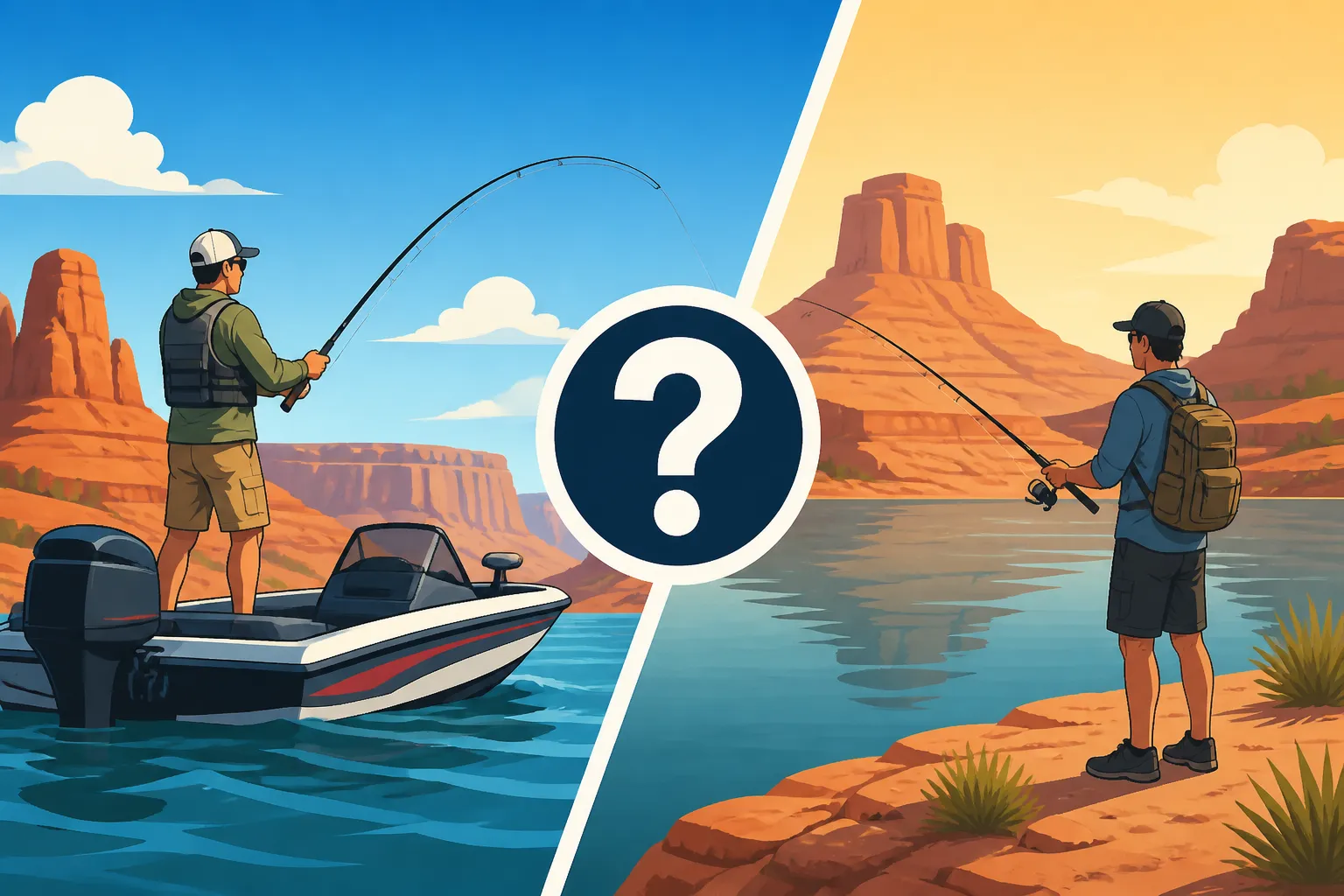
Do You Need a Boat to Fish Lake Powell Effectively?
The shimmering expanse of Lake Powell, with its iconic red rock canyons and crystal-clear waters, calls to many an angler. But if you don't own a boat, the sheer size and complexity of this reservoir can make you wonder if a truly productive fishing trip is even possible. This guide is dedicated to demystifying that challenge, exploring the realities of fishing Lake Powell without your own vessel and equipping you with strategies to make your angling dreams a reality, even from shore or a smaller craft.
The Sheer Scale of Lake Powell and Its Fishing Challenges
Lake Powell is more than just a large lake; it's a sprawling network of canyons, coves, and main channel areas that stretch for hundreds of miles. Understanding its immense size and unique geography is the first step in appreciating why boating is often seen as essential here, and how to work around that perception.
Understanding Lake Powell's Vastness
Imagine over 2,000 miles of shoreline when the lake is at full pool – that's longer than the entire West Coast of the continental United States! Lake Powell carves its way through sandstone formations, creating countless side canyons, deep channels, and hidden coves. The water depths can plunge hundreds of feet in an instant, and then shallow out to sandy beaches. This incredible variety of habitat supports diverse fish populations, but it also means that fish can be incredibly spread out. From the bustling marinas like Wahweap and Antelope Point near Page, Arizona, to the remote corners of the San Juan arm, the sheer distance makes it practically impossible to explore more than a tiny fraction of the lake from a fixed shore position. The ever-changing water levels also play a significant role, constantly altering shoreline access and fish patterns, which can be a real head-scratcher for those without mobile access.
The Boat Advantage for Access and Mobility
It's undeniable that a boat offers unparalleled advantages on a body of water like Lake Powell. For starters, it grants access to the vast majority of the lake's prime fishing real estate. You can reach those secluded coves where bass might be bedding, navigate to rocky points where smallmouth ambush baitfish, or chase after the exhilarating "boils" of striped bass that erupt in the open water. A boat allows you to cover miles of water quickly, follow schools of baitfish, and adapt to changing conditions and fish movements. For species like the powerful Striped Bass Fishing Guide for Arizona, which often school in open water and feed on shad, being able to quickly motor to the action is a game-changer. Without a boat, many of the most productive and talked-about spots become simply out of reach, forcing anglers to stick to the extremely limited shoreline access points.
Effective Strategies for Fishing Lake Powell Without a Boat
While a boat is certainly an advantage, it doesn't mean you're out of luck. With some smart planning, realistic expectations, and the right approach, you can absolutely enjoy successful fishing on Lake Powell. It just requires thinking a bit differently about how you approach the water.
Targeting Accessible Shoreline Spots
For the dedicated bank angler, certain areas around Lake Powell offer decent, albeit limited, access. Locations near the marinas, like the rocky points and small coves around Wahweap Marina or Antelope Point Marina, are your best bet. Lone Rock Beach, with its expansive sandy shoreline, also provides opportunities, though it can get very crowded.
When fishing from shore, your tactics need to be focused and patient. Forget about covering miles; instead, concentrate on thoroughly working the water directly in front of you. Cast parallel to the shore, looking for drop-offs, submerged rocks, or any structure that might hold fish. Using a variety of baits and lures, from power bait for trout (if stocked nearby) to cut anchovies or stink baits for Catfish Fishing Guide for Arizona, can increase your chances. Long-casting spoons, crankbaits, or soft plastics can help you reach a bit further out. Remember that Shore Fishing Techniques for Beginners often involve understanding the immediate environment and being observant for any signs of fish activity. The challenge here is the limited scope; you're relying on fish to come to you, rather than actively seeking them out. However, don't underestimate the thrill of landing a good fish from the bank at such a legendary location.
Utilizing Kayaks, Canoes, and Other Small Crafts
This is where the magic really starts to happen for the no-boat angler on Lake Powell. A kayak or canoe can be an absolute game-changer, bridging the gap between bank fishing and having a full-blown powerboat. These smaller crafts offer incredible stealth and allow you to access quiet, shallow coves that larger boats often can't reach. Imagine paddling silently into a narrow side canyon, casting jigs or topwater lures into untouched pockets where Largemouth Bass Fishing Guide for Arizona or Smallmouth Bass Fishing Guide for Arizona might be lurking.
While they don't offer the speed or range of a motorboat, kayaks and canoes provide significantly more mobility than shore fishing. You can hug the cliffs, explore submerged timber, and work your way along vast stretches of shoreline. However, safety is paramount. Lake Powell can get very windy, creating choppy conditions quickly. Always check the weather forecast, wear a personal flotation device (PFD), and be mindful of your range and capabilities. Bringing along Best Kayaks for Fishing in Arizona that are stable and designed for angling, equipped with appropriate Kayak Fishing Techniques for Desert Lakes gear like anchors and rod holders, will greatly enhance your experience. Launching from designated boat ramps or accessible beaches is crucial.
Hiring a Fishing Guide or Charter
For many, this is the definitive answer to the "Do you need a boat?" question. If you want to experience Lake Powell fishing at its absolute best, without the hassle and expense of owning or renting a boat, hiring a local fishing guide is the way to go. These seasoned professionals know the lake inside and out. They have the right boat, all the necessary gear, and crucially, they possess invaluable local knowledge about where the fish are biting, what baits they prefer, and how to adapt to the ever-changing conditions.
A guided trip eliminates the guesswork and maximizes your time on the water. Imagine being out on the water at dawn, chasing How to Fish for Striped Bass boils with an expert, or being taken to secret spots deep within the canyons that would be impossible to find on your own. Platforms like FishingBooker are incredibly helpful for connecting with reputable guides in the Lake Powell area. You can browse different trip types, read reviews, and find a captain whose expertise matches the species you're hoping to target. While it's an investment, the return in terms of experience, fish caught, and learning valuable techniques is often well worth it, especially for a bucket-list destination like Lake Powell. Many anglers consider a guided trip the best way to get a taste of the lake's potential without committing to boat ownership.
What Fish Species Can You Target Effectively Without a Boat?
Your chances of success from shore or a small craft are highly dependent on the species you're targeting. Some fish are more accessible, while others truly require the mobility a boat provides.
Shore-Accessible Species and Tactics
- Striped Bass: While the legendary "boils" usually require a boat to chase, stripers do move into shallower coves and can be caught from shore, especially early in the morning or late in the evening. During periods of active feeding, they might push baitfish right up against the banks. Using cut anchovies or sardine pieces on a bottom rig can be very effective, as can casting large spoons or swimbaits. Pay attention to any surface activity, especially in calmer water.
- Catfish: Channel catfish and flathead catfish are excellent targets for shore anglers. They often patrol shallower areas, especially at night, and are attracted to strong scents. A simple bottom rig with a weight, hook, and pungent bait like chicken liver, hot dogs, or commercial stink baits fished near drop-offs or submerged structure can yield great results. They are less dependent on wide-ranging movement and more on ambush, making them ideal for stationary fishing.
- Panfish (Bluegill, Crappie): These smaller, feisty fish are often found in the shallower, warmer coves, particularly where there's some vegetation or brush. They're perfect for beginners and kids. A light rod, a small hook, a bobber, and some worms or small jigs are all you need. They tend to school, so if you find one, you're likely to find more.
Limitations for Deeper-Water Species
While you might occasionally stumble upon a Largemouth Bass Fishing Guide for Arizona or Smallmouth Bass Fishing Guide for Arizona from shore, targeting these species effectively usually demands covering water and accessing specific habitat. Bass often relate to deeper rock piles, submerged brush, canyon ledges, or main lake points that are simply out of casting range from the bank. Best Time of Year to Fish Lake Powell for these species often involves specific depths and structures that are hard to reach without a boat or a very capable kayak equipped with a fish finder.
Similarly, chasing the vast schools of open-water striped bass, especially during their feeding frenzies or "boils," is primarily a boat-based activity. While a few stripers might stray close to shore, the main action is almost always far from land. Without the ability to quickly navigate to these events, you'll miss out on some of Lake Powell's most exciting fishing opportunities.
Here's a quick comparison of fishing methods on Lake Powell:
| Method | Pros | Cons | Primary Target Species (Effectiveness) |
|---|---|---|---|
| Shore Fishing | Most accessible, no additional cost for vessel, simple gear | Very limited access, low mobility, crowded spots, less effective for many species, difficult to find fish | Catfish (High), Striped Bass (Medium-Low), Panfish (Medium) |
| Kayak/Canoe | Increased access beyond shore, quiet, stealthy, cost-effective | Weather dependent (wind/waves), limited range/speed, physical exertion, safety considerations on vast water | Bass (Medium-High), Striped Bass (Medium), Panfish (High), Catfish (High) |
| Guided Trip | Maximum effectiveness, expert knowledge, all gear provided, safe, educational | Highest cost per trip | Striped Bass (High), Bass (High), Walleye (High – if targeted) |
Maximizing Your Boating-Free Lake Powell Experience
To ensure your trip is enjoyable and successful, a little preparation goes a long way, especially when you're not relying on a powerboat.
Essential Gear and Safety Tips for Shore Anglers
Fishing Lake Powell, even from shore, means dealing with the harsh Arizona desert environment. Sun protection is non-negotiable: wide-brimmed hats, long-sleeved UPF clothing, sunscreen, and polarized sunglasses are absolute must-haves. Dehydration is a real threat, so bring plenty of water, far more than you think you'll need.
For your tackle, choose sturdy rods and reels capable of handling larger fish and potential snags. A medium-heavy spinning or baitcasting combo with 10-20 lb test line is a good starting point. Bring an assortment of weights, hooks, and lures, including some heavier options for casting distance. A comfortable backpack to carry your gear, snacks, and water is essential, as you might need to hike a bit to find good spots. Always be aware of your surroundings; the terrain can be steep and uneven, and rattlesnakes are present. Check the local weather forecast diligently, particularly during monsoon season, as flash floods can occur in canyons, and sudden storms can create dangerous conditions on the water.
Planning and Research
Before you even leave home, do your homework! Research specific access points that allow shore fishing or easy kayak launching. Google Maps or satellite imagery can give you a good idea of the terrain. Check the National Park Service website for current lake levels, as they significantly impact shoreline access and conditions. Knowing the Arizona Fishing Season Dates and Limits and specific Lake Powell regulations is also critical.
Consider the time of year. For instance, the Best Time of Year to Fish Lake Powell for stripers might be in the summer during boils, but for bank fishing, spring or fall might offer more consistent action in accessible coves. Look for recent fishing reports or ask at local tackle shops in Page or Greenehaven about what's biting and where, especially for shore anglers. If considering a guided trip, use platforms like FishingBooker early to secure your spot, as popular guides book up quickly. Being prepared means less time wondering and more time casting, and it will vastly improve your chances of a memorable and productive trip to this magnificent Arizona fishing destination.
Disclaimer
Fishing conditions and regulations in Arizona can change. Always consult the latest Arizona Game and Fish Department regulations before heading out. The information provided in this guide is for general informational purposes only and does not constitute professional advice.