How to Fish Canyon Ledges for Smallmouth Bass
Let's face it, fishing in Arizona can sometimes feel like trying to find a needle in a haystack, especially when you're targeting smallmouth bass in those vast, canyon-laden reservoirs. It's a common frustration to stare at miles of seemingly featureless shoreline, wondering where these elusive bronze beauties might be hiding. This guide is here to unravel that mystery, focusing on the highly productive, yet often intimidating, world of canyon ledges and how to effectively fish them for smallmouth bass.
Understanding Arizona's Canyon Ledges and Smallmouth Bass Habitat
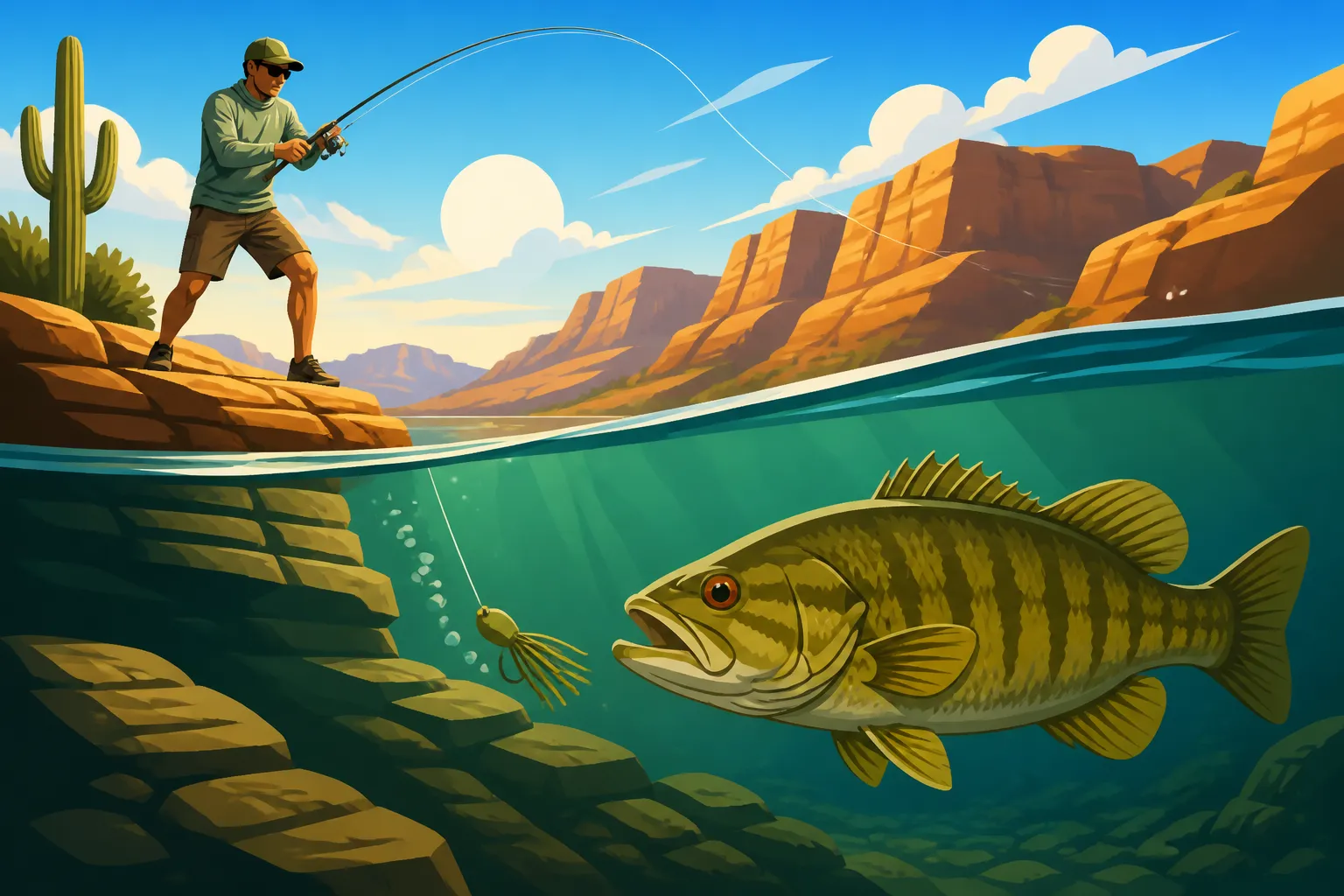
Arizona's larger reservoirs, particularly those carved out of ancient riverbeds like Lake Powell or sections of Roosevelt Lake and Apache Lake, are characterized by dramatic, sheer rock walls and underwater cliff faces. These aren't your typical gentle slopes; we're talking about sharp drop-offs, underwater shelves, and distinct ledges that plummet into incredible depths. For smallmouth bass, these canyon ledges aren't just scenery; they're prime real estate.
What Defines a Canyon Ledge for Smallmouth?
A canyon ledge, in fishing terms, is essentially an underwater shelf or flat extension that projects out from a steeper bank or cliff face before dropping off into deeper water. Think of it like a natural stair-step or balcony underwater. These ledges can vary wildly in size, from subtle protrusions a few feet wide to expansive underwater flats that stretch for dozens of yards. They are almost always rocky, often littered with rubble, boulders, and sometimes even submerged timber that has washed in and settled.
What makes these ledges so appealing to smallmouth bass? It's a combination of factors:
- Ambush Points: The sudden change in depth creates perfect ambush points. Smallmouth can hide on the deeper side of the ledge, darting up to capture unsuspecting baitfish swimming over the top.
- Cover and Structure: The rocky nature of ledges provides endless nooks and crannies for smallmouth to hide from predators, harsh sunlight, or strong currents. Any additional debris like brush piles or large boulders only enhances this cover.
- Access to Deep Water: Arizona summers get brutally hot, and smallmouth, like many other species, will seek refuge in cooler, deeper water. Ledges provide immediate access to those cooler depths while still allowing them to move up into shallower water to feed when conditions are right.
- Baitfish Highways: Baitfish, like shad or sunfish, often travel along these underwater contours, using them as migration routes. This makes ledges a natural buffet line for hungry smallmouth.
Identifying these ledges usually requires good electronics, like a reliable fish finder that can show you depth changes and contour lines. Look for areas where the contour lines on your map abruptly change from tightly packed to more spread out, indicating a shelf, before tightening up again for another steep drop.
Why Smallmouth Prefer Ledges Over Other Habitats
While largemouth bass often prefer the softer, vegetated banks and submerged timber common in shallower coves, smallmouth bass are rock specialists. Their streamlined bodies and powerful tails are perfectly adapted for navigating rocky environments.
Smallmouth bass thrive in clear water, which is often found in these deep canyon areas. They are highly visual predators, and the clearer water allows them to spot prey from a distance. The consistent rocky substrate of ledges provides them with ample crayfish and other invertebrates, a staple of their diet. Unlike largemouth, which might chase a frog across a lily pad, a smallmouth is more likely to be found meticulously scanning a rocky outcrop for a crawdad or a passing school of shad.
Think of Lake Powell or Lake Havasu – these bodies of water, with their vast stretches of rocky canyon, are legendary for their smallmouth fishing precisely because these fish are perfectly suited to the environment. Understanding this fundamental difference in habitat preference is key to consistently catching smallmouth on these challenging Arizona waters.
Essential Gear and Tackle for Canyon Ledge Fishing
Fishing canyon ledges effectively for smallmouth bass demands a precise approach, and that starts with having the right tools. Because smallmouth can be finicky and often suspend near the structure, finesse techniques are frequently the most productive. Your gear needs to be sensitive enough to detect subtle bites but robust enough to handle powerful fish fighting against sharp rocks.
Rods, Reels, and Line for Finesse Presentations
When tackling Arizona's canyon ledges, a versatile spinning setup is usually your best friend.
- Rods: Opt for a medium-light to medium power spinning rod, typically between 6'6" and 7'2" in length. The key is a fast or extra-fast action tip. This sensitive tip allows you to feel the most delicate bites – crucial when fishing deep or with light lures – while the backbone provides enough power to drive the hook home and fight a spirited smallmouth away from snags. Brands like St. Croix or Fenwick offer excellent options that provide the sensitivity you need without breaking the bank. For those looking at a new setup, considering a Best Rod and Reel Combo for Bass built for sensitivity can make a real difference.
- Reels: A high-quality spinning reel in the 2500-3000 size range is ideal. Look for a smooth drag system, which is paramount for fighting strong fish on lighter lines, and a good retrieve ratio for quick line pickup. Shimano and Daiwa consistently produce reels that meet these demands. You can often find fantastic deals on these reputable brands if you browse fishing gear on Amazon.
- Line: This is where things get a bit specialized. A common and highly effective setup for ledge fishing is to use braided main line with a fluorocarbon leader.
- Braided Main Line: Spool your reel with 10-20 lb test braided line. Braided line has virtually no stretch, which gives you incredible sensitivity, allowing you to feel every rock, bump, and nibble, even in deep water. The lack of stretch also helps with powerful hooksets.
- Fluorocarbon Leader: Tie a 6-10 lb test fluorocarbon leader, typically 6-10 feet long, to your braided main line using a strong knot like the FG knot or an Alberto knot. Fluorocarbon is nearly invisible underwater, which is a huge advantage in the clear waters where smallmouth thrive. It also has good abrasion resistance, offering some protection against sharp rocks. Choosing the best line for smallmouth bass involves balancing visibility, strength, and sensitivity.
Essential Lures and Terminal Tackle for Ledge Fishing
Your tackle box for canyon ledges should be stocked with a variety of lures designed to mimic common smallmouth forage and effectively work vertical structure.
- Drop Shot Rigs: This is arguably the most important technique for ledge smallmouth.
- Hooks: Use small, sharp hooks like a #1 or #2 octopus or specialized drop shot hooks.
- Weights: Cylindrical or tear-drop drop shot weights ranging from 1/4 oz to 1/2 oz are common. Heavier weights help maintain bottom contact in deeper water or current.
- Baits: Small soft plastics like Roboworms, Z-Man Trick ShotZ, or Strike King Dream Shot worms are deadly. Experiment with natural colors like green pumpkin, brown, or shad imitators.
- Ned Rigs: A finesse jig head (1/8 oz to 1/4 oz) paired with a small, buoyant soft plastic worm (like a Z-Man Finesse TRD) is incredibly effective. Its unique stand-up presentation on the bottom often triggers bites from hesitant fish.
- Jigs:
- Finesse Jigs: Small football jigs or arkie-style jigs (1/4 oz to 3/8 oz) with compact trailers (like a small craw or chunk) are excellent for crawling along rocky bottoms.
- Hair Jigs: Especially in cooler water, a simple hair jig can be incredibly effective when fished subtly.
- Crankbaits and Swimbaits (for active fish):
- Deep-Diving Crankbaits: For aggressive smallmouth, deep-diving crankbaits that can reach the depth of the ledge or slightly above it can be fantastic. Look for models that deflect well off rock.
- Small Swimbaits: Paddle-tail swimbaits on a jig head can imitate baitfish cruising over the ledge.
- Tubes: Tubes are classic smallmouth baits for a reason. Rigged internally with a tube jig head, they can be dragged, hopped, or shaken along the bottom, mimicking crayfish or gobies.
Don't forget essentials like a good pair of pliers for removing hooks, line cutters, and a small landing net – some of those Arizona smallmouth can be surprisingly big! Keeping your Essential Tackle Box Setup for Arizona Beginners optimized for these specific conditions will greatly improve your success.
Proven Techniques for Targeting Smallmouth Bass on Ledges
Now that you've got the gear, let's talk about how to present those lures to entice those clever smallmouth off their rocky perches. Consistency and patience are key, but knowing which techniques to employ and how to execute them can turn a slow day into a memorable one.
Mastering the Drop Shot Technique
The drop shot is a phenomenal technique for fishing canyon ledges because it allows your bait to hover precisely in the strike zone, often just above the bottom, without the weight dragging it down or getting constantly snagged. This is critical when you know fish are suspending slightly off the ledge.
Here's how to make it deadly:
- Rigging: Tie your hook directly to the fluorocarbon leader, leaving a long tag end (12-36 inches). Then, tie your drop shot weight to that tag end. This setup allows your soft plastic bait to be presented horizontally, looking incredibly natural. The length of the tag end dictates how high your bait sits above the bottom.
- Casting and Presentation: Cast your drop shot rig parallel to the ledge or directly over it, letting it sink to the bottom. Once it hits, keep a semi-slack line, allowing you to feel the weight hit the bottom. The magic happens with subtle movements. Lightly shake your rod tip, causing the bait to quiver enticingly while the weight remains on the bottom. Occasionally, lift your rod tip a foot or two and then let it fall back down, dragging the weight a short distance and re-positioning your bait.
- Feeling the Bite: Smallmouth bites on a drop shot can be incredibly subtle – sometimes just a slight "mushy" feeling, a light tap, or your line simply moving sideways. Because you're using braided line, you'll feel everything. Don't set the hook with a sweeping motion; instead, reel down until you feel pressure and then lift the rod straight up, applying steady pressure to drive the hook home. Many anglers consider this one of the most effective Drop Shot Techniques for Smallmouth Bass.
Working Jigs and Ned Rigs Along Contours
Jigs and Ned Rigs are excellent choices for a more bottom-oriented approach, mimicking crayfish or small baitfish foraging on the rocks.
- Ned Rigs: The Ned Rig is a finesse powerhouse for ledges. Cast it out, let it sink to the bottom, and then impart very subtle movements. You can drag it slowly, crawl it a few inches at a time, or give it short hops. The buoyant soft plastic standing upright off the jig head is irresistible to smallmouth. It's particularly effective when fish are sluggish or in highly pressured areas. Learning How to Fish a Ned Rig for Smallmouth Bass can dramatically increase your catch rate.
- Football Jigs and Finesse Jigs: These are perfect for "feeling" your way along a rocky ledge. Cast your jig, let it sink, and then slowly drag it along the bottom, feeling for changes in structure. When you feel it hit a rock, pause for a moment, then slightly lift your rod tip to pull it over the obstruction. As it falls back down the other side, that's often when a smallmouth will strike. The football head helps prevent snagging by allowing the jig to roll over rocks. Vary your retrieve speed and intensity; sometimes a steady drag is best, other times a series of hops can trigger a bite. These tactics are vital components of effective Jig Fishing Techniques for Bass.
Covering Water with Reaction Baits (When Appropriate)
While finesse is often the name of the game, don't overlook reaction baits if smallmouth are aggressive or actively feeding higher in the water column above the ledge.
- Crankbaits: Deep-diving crankbaits can be used to quickly ascertain if active fish are present. Look for models that dive to the depth of your ledge or slightly deeper, allowing them to "crash" into the rocks. The deflection off the structure often triggers a reaction strike. Focus on casting parallel to the ledge or at a slight angle, cranking it down quickly until it hits the rock, then varying your retrieve speed. Keep in mind that Crankbait Fishing Techniques for Bass often involve finding the right retrieve speed and depth for the conditions.
- Small Swimbaits: Small paddle-tail swimbaits, rigged on an appropriate jig head, can be reeled steadily over the top of ledges, mimicking baitfish. If you see baitfish flickering near the surface or on your fish finder, this can be a very productive way to cover water. This is particularly good for those looking into Best Lures for Largemouth Bass in Arizona Lakes and other aggressive fish.
Remember, the clearer the water, the more subtle you generally need to be. However, if conditions are cloudy or the fish are in a chasing mood, don't be afraid to experiment with more aggressive presentations. Use your fish finder to locate schools of baitfish or actual smallmouth holding near the ledges – this will guide your choice of technique and where to cast. If you're wondering How to Read a Fish Finder for Structure, there are many resources to help you interpret those tell-tale arches and bottom contours.
Seasonal Considerations and Best Times to Fish Ledges
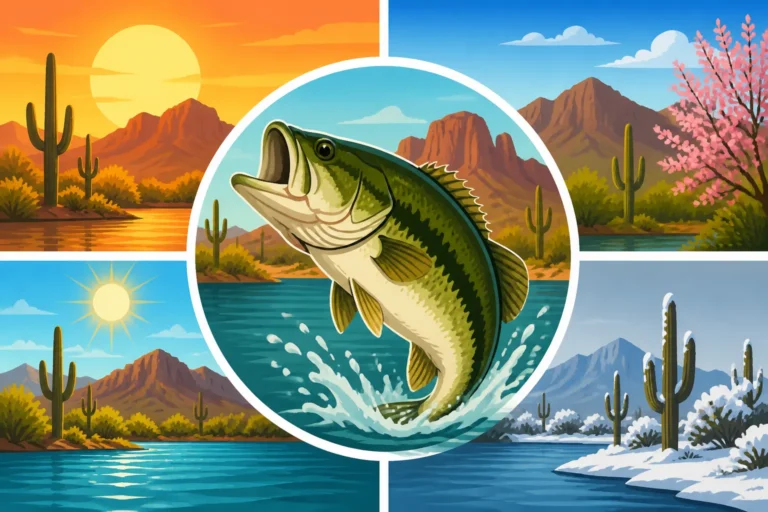
Arizona's diverse climate means that smallmouth bass behavior on canyon ledges will shift dramatically throughout the year. Understanding these seasonal movements is crucial for being in the right place at the right time with the right technique.
Spring: Pre-Spawn and Spawning Activities
As winter gives way to spring in Arizona, smallmouth bass start to move up from their deep wintering grounds. Water temperature is the primary driver here.
- Pre-Spawn (Water Temps 48-58°F): This is often one of the most exciting times to target smallmouth on ledges. Fish will congregate on ledges that are adjacent to shallower spawning flats or coves. They're feeding heavily, building energy for the spawn. During this phase, smallmouth are often very aggressive. Look for the upper sections of ledges and points leading into spawning bays.
- Techniques: Jigs, Ned Rigs, and even deep-diving crankbaits can be highly effective. The Spring Bass Fishing Tactics in Arizona often call for a mix of presentations.
- Spawning (Water Temps 58-68°F): Smallmouth will typically move onto shallower, rocky flats or small gravel pockets directly on or adjacent to the ledges to build nests. While it's possible to catch them during the spawn, many anglers prefer to let them be. If you do target them, finesse presentations like a drop shot or a weightless soft plastic are best, pitched accurately to visible beds. Be mindful of Best Water Temperature for Bass Spawning to understand their reproductive cycles.
Summer: Deep Water Retreat and Early Morning Bites
Arizona summers are famously hot, and surface water temperatures in reservoirs can soar. Smallmouth bass will generally retreat to the cooler, more stable temperatures found in deeper water, often holding tight to the ledges.
- Deep Ledges (Water Temps 70°F+): During the peak of summer, smallmouth will relate to the deepest parts of the ledges, sometimes 30-60 feet or even deeper, depending on the lake and clarity. They might suspend just off the ledge face or hug the bottom.
- Techniques: The drop shot becomes king here. Heavy drop shot weights (1/2 oz or more) help get your bait down quickly and keep it in contact with the bottom. Vertical jigging with spoons or small hair jigs can also be very effective for suspended fish.
- Early Morning/Late Evening: While fish are deep during the day, they might move up shallower on the ledges during the cooler hours of dawn and dusk to feed. This is your best chance for a more active bite with reaction baits. Consider your Best Time of Day to Fish in Arizona Heat carefully during these months.
- Internal Link: To truly maximize your summer efforts, study Summer Bass Fishing Tactics in Arizona.
Fall: Feeding Frenzy and Preparation for Winter
As temperatures begin to drop in the fall, smallmouth go on a major feeding binge to pack on weight for the upcoming winter. This is another prime time to fish ledges.
- Active Feeding (Water Temps 65-50°F): Smallmouth will be very active and often school up on ledges, chasing baitfish. They might be found shallower than in summer, but still relating to the deeper water access provided by the ledges.
- Techniques: All techniques can work now, from aggressive crankbaits and swimbaits to finesse jigs and drop shots. If you see baitfish schools on your electronics, position yourself to cast to them or to the ledges they're using.
- Internal Link: Fall Bass Fishing Tactics in Arizona will offer more specific guidance for this exciting season.
Winter: Deep and Sluggish
Arizona winters are mild compared to many places, but water temperatures still drop significantly, making smallmouth bass much less active.
- Deep Water (Water Temps Below 50°F): Smallmouth will be found in their deepest wintering haunts, often holding very tight to vertical structure on the deepest ledges. Bites will be extremely subtle.
- Techniques: Ultra-finesse is the rule. Slowly dragging Ned Rigs, patiently working a drop shot, or subtle hair jigs are your best bets. Fish slowly, deliberately, and pay close attention to your line for the slightest indication of a bite.
- Internal Link: For a complete understanding of how to fish during the colder months, refer to Winter Bass Fishing Tactics in Arizona.
Understanding these seasonal patterns and adjusting your approach accordingly will make you a much more successful smallmouth angler on Arizona's stunning canyon lakes. For a broader perspective on the year, checking Arizona Fishing Seasons Explained can help tie it all together.
Here's a quick comparison of effective ledge lures:
| Lure Type | Depth Range (Approx.) | Ideal Retrieve / Action | Best Conditions | Pros | Cons |
|---|---|---|---|---|---|
| Drop Shot | 10-60+ feet | Subtle shaking, slow drag, suspended presentation | Clear water, deep, sluggish fish | Highly versatile, precise depth control | Slower fishing, requires patience |
| Ned Rig | 5-30 feet | Slow drag, short hops, stand-up action | Finesse, pressured fish, rocky bottom | Very effective for subtle bites, weedless | Lightweight, hard to cast far in wind |
| Football Jig | 10-50 feet | Slow crawl, lift-and-fall, "feel" the bottom | Rocky bottoms, moderate to deep | Mimics crayfish, good feel for structure | Can get snagged, slower retrieve |
| Deep Crankbait | 10-25 feet | Fast retrieve, deflection off structure | Active fish, covering water, pre-spawn | Triggers reaction strikes, covers water quickly | Depth limitations, often snags on rocks |
| Small Swimbait | 5-30 feet | Steady retrieve, slow roll | Active fish, baitfish imitation | Natural look, versatile | Can be ignored by finicky fish |
Disclaimer
Fishing conditions and regulations in Arizona can change. Always consult the latest Arizona Game and Fish Department regulations before heading out. Be safe on the water, wear appropriate sun protection, and practice responsible angling to preserve our natural resources.