How to Fish Shad Imitations for Striped Bass
Trying to hook into a hard-fighting striped bass in Arizona's vast, shimmering lakes can feel like chasing a phantom, especially when they're feasting on schools of shad. It's incredibly frustrating when you know the fish are there, but your lures just aren't getting noticed. This guide is all about equipping you with the knowledge and techniques to effectively fish shad imitations, turning those elusive stripers into a much more frequent catch on your next Arizona fishing adventure.
Understanding Striped Bass Behavior and Forage
Striped bass are incredible predators, and understanding their diet and habits is the first step to consistently catching them in Arizona's desert reservoirs. They are opportunistic feeders, but they absolutely key in on one particular baitfish when it's available: threadfin shad. These small, silvery baitfish form massive schools, and when stripers find them, they often enter a feeding frenzy.
Why Shad Imitations are Crucial for Stripers
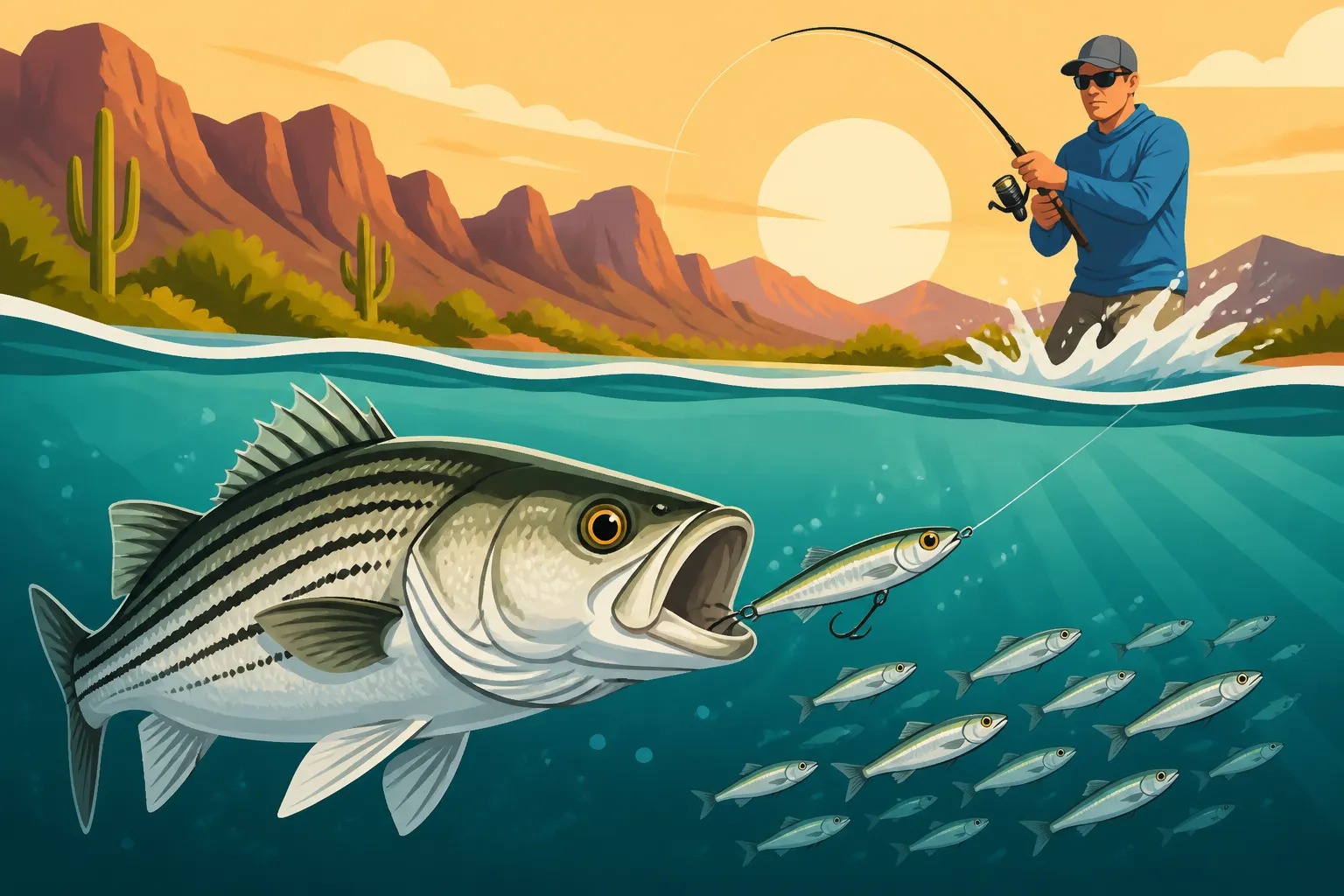
Think about it from the striper's perspective. When a school of thousands of shad swims by, why would they pick out your lone, oddly shaped lure if it doesn't look, move, or feel like what they're actively hunting? Shad are their primary forage in many Arizona lakes like Lake Powell, Lake Pleasant, and Lake Havasu. Mimicking these prevalent baitfish is not just a good idea; it's often essential for success, especially when the stripers are focused on a specific food source.
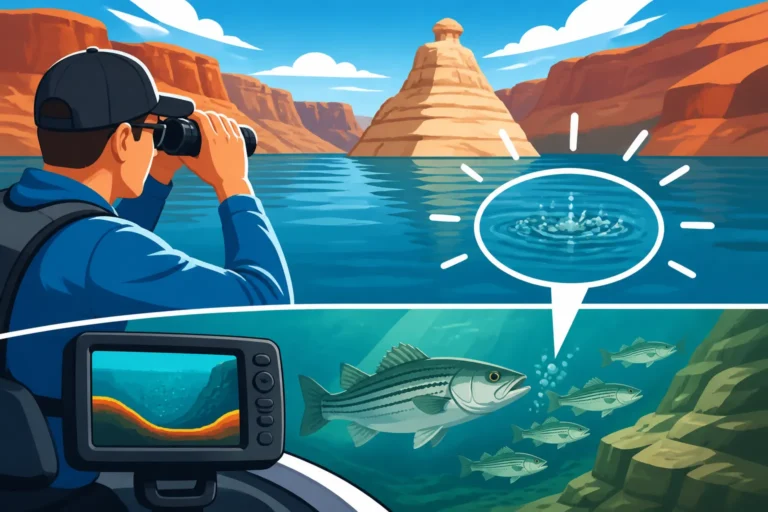
If you've ever watched a "boil" on Lake Powell, you've witnessed the raw power of stripers driving schools of shad to the surface. It's chaos, but it's also a clear signal: they are on the shad. Your job as an angler is to present something that perfectly blends into that chaotic scene. Without a convincing imitation, your chances plummet. This emphasis on matching the hatch is a cornerstone of effective striper fishing here in Arizona.
Seasonal Patterns and Shad Availability
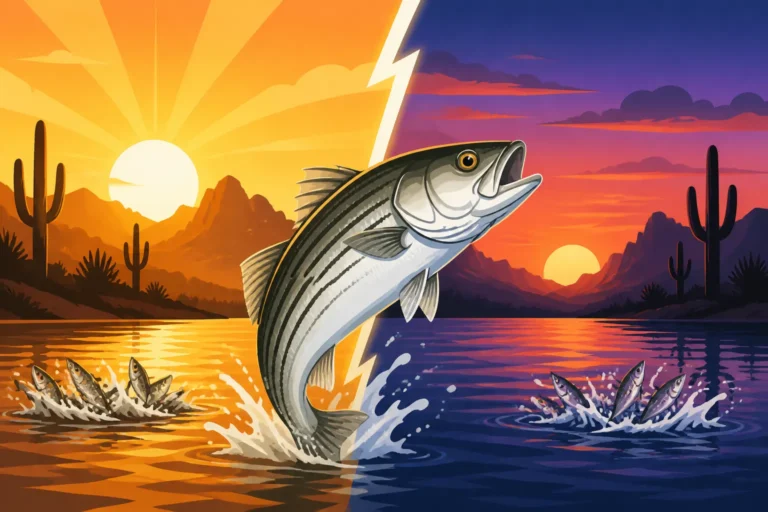
Striped bass behavior, and by extension, their reliance on shad, changes throughout the year. In the warmer months, shad populations explode, and stripers become incredibly active, often chasing schools into open water. This is when those famous "boils" occur, particularly in lakes like Lake Powell, where vast populations of both shad and stripers thrive. During these periods, finding the shad is synonymous with finding the stripers.
As temperatures cool in the fall and winter, shad tend to move deeper, seeking more stable water temperatures, and the stripers follow. This means your presentation with shad imitations will need to adapt. Instead of surface explosions, you might be targeting deep-water structure where shad are congregating. Knowing the seasonal movements of both the stripers and their forage is critical for angling success and helps you select the right lures and techniques. For more specific information on what to expect throughout the year, check out our guide on Best Season to Catch Striped Bass at Lake Powell.
Choosing the Right Shad Imitations
The market is flooded with lures, and it can be overwhelming to decide what to tie on. For striped bass in Arizona, the goal is always to closely match the size, profile, and action of a threadfin shad. This isn't about having the most expensive lure, but rather the most appropriate one.
Top Shad Imitation Lure Types
Different situations call for different shad imitations. Here’s a breakdown of the most effective types:
- Soft Plastic Swimbaits: These are arguably the most versatile and realistic shad imitations. They come in various sizes, from small 3-inch baits to larger 7-inch models, and can be rigged in multiple ways. The key is their paddle tail or boot tail, which creates a natural swimming action that perfectly mimics a fleeing shad. You can rig them on a lead head jig, an underspin jig, or even weightless for surface presentations. Brands like Keitech, Strike King, and Bass Pro Shops offer excellent options that closely resemble threadfin shad in both color and profile. These are especially deadly when stripers are actively chasing bait or when you need a subtle, natural presentation. If you're looking for specific colors or brands, check retailers like Amazon for a wide selection.
- Hard Body Swimbaits: These lures often consist of two or more jointed sections, giving them an incredibly lifelike swimming action. They are particularly effective when stripers are cruising slightly below the surface or in clear water where a more realistic profile can make a difference. While often pricier, their action can be irresistible. They typically cast well and can cover a lot of water.
- Crankbaits: Medium to deep-diving crankbaits that have a slender, shad-like profile are excellent for targeting stripers holding deeper in the water column or along submerged structure. The bill on the front dictates their diving depth, allowing you to present your imitation right where the fish are holding. Colors like chrome, white, or shad patterns with a hint of blue or green are often best. These are great for trolling or covering large areas by casting.
- Spoons: Metal spoons, especially Kastmasters or Hopkins Shorty spoons, are superb for vertical jigging or casting long distances into a striper boil. Their flash and erratic fall perfectly imitate a wounded or dying shad, which drives stripers wild. Silver and blue are classic, highly effective colors. Spoons are particularly useful when you need to get a lure down fast into a feeding frenzy.
- Topwater Lures: When stripers are busting the surface in a full-blown "boil," topwater lures like poppers, walking baits (e.g., Heddon Super Spook), or even pencil poppers can be absolutely explosive. While not always direct shad imitations in profile, their erratic action and commotion on the surface perfectly mimic the chaos of a feeding frenzy, drawing aggressive strikes. You'll want bright, visible colors for these, as the visual appeal is key in the frenzy.
Matching Size and Color to the Hatch
The golden rule here is "match the hatch." Pay attention to the size of the shad you see in the water (if any are jumping or are regurgitated by caught fish). If the shad are small, around 2-3 inches, you'll want to use smaller swimbaits or spoons. If the stripers are gorging on larger baitfish, size up your lures accordingly.
Color is also vital. Natural shad patterns (silver, white, clear with a hint of blue or green) are almost always a safe bet. However, don't be afraid to experiment. On cloudy days or in slightly stained water, a chartreuse or brighter colored shad imitation might stand out better. In exceptionally clear water, a translucent or more subdued pattern can be more effective. Finding the exact match can make all the difference, and a quick search on Amazon can reveal a multitude of options to stock your tackle box.
Effective Techniques for Fishing Shad Imitations
Having the right lure is only half the battle; knowing how to present it is what seals the deal. Striped bass are powerful and aggressive, but they can also be surprisingly picky. Your presentation needs to be dynamic and adaptable.
Casting and Retrieving for Active Stripers
When you spot stripers actively feeding on the surface, often referred to as a "boil" or "thrash," quick casting is paramount. Time is of the essence, as these frenzies can be short-lived.
- Fast Casting: Get your lure into the boil as quickly as possible. Often, stripers will move incredibly fast, and if your lure lands a few seconds too late, they might have already moved on. Practice quick, accurate casts.
- Erratic Retrieve: Once your shad imitation lands, retrieve it with varied speeds and jerks to mimic a panicked or wounded shad. This can be done with soft plastic swimbaits, spoons, or topwater lures. For soft plastics, a steady retrieve with occasional twitches of the rod tip can be incredibly effective. For spoons, a quick jigging motion as you retrieve often triggers strikes.
- Targeting the Edges: Don't just cast into the middle of the boil. Sometimes the biggest stripers lurk on the edges, ambushing shad that try to escape the main school. Cast past the boil and retrieve through its fringes.
- Utilizing Topwater: If fish are truly breaking the surface, nothing beats the excitement of a topwater strike. Cast a walking bait or popper into the fray and work it with a walk-the-dog or chugging motion. The commotion can draw strikes from aggressive fish that are keyed into the surface action. For more on this, check out our guide on How to Fish During a Striper Boil.
Trolling for Deeper or Dispersed Fish
Trolling is an incredibly effective method for covering large expanses of water and locating striped bass that aren't actively boiling. This is particularly useful in bigger lakes like Lake Pleasant or the vast open waters of Lake Powell when stripers are suspended or scattered.
- Crankbaits and Swimbaits: Deep-diving crankbaits that mimic shad are ideal for trolling. Experiment with different diving depths to find where the fish are holding. Jointed hard-body swimbaits can also be very effective.
- Speed and Depth Control: Pay close attention to your boat speed. A speed of 2-4 mph is a good starting point, but let the fish tell you what they prefer. Use a fish finder to monitor bait schools and striper marks, then adjust your lure depth using line length, lead core line, downriggers, or diving planes to put your imitation right in their strike zone. Vary your speed and make turns to create erratic action that can trigger a bite.
- Umbrella Rigs: For serious striper anglers, an umbrella rig, which mimics a small school of shad, can be deadly, especially when trolled. These rigs typically have multiple arms with swivels, allowing you to attach several smaller shad-imitating swimbaits. It’s like presenting a whole buffet of shad to a hungry striper.
Jigging and Vertical Presentations
When stripers are holding deep, often around submerged points, humps, or canyon walls, vertical jigging with shad imitations can be extremely effective. This is often the case during colder months or mid-day in summer when fish seek refuge in deeper, cooler water.
- Metal Spoons: As mentioned, Kastmasters and Hopkins spoons are fantastic for vertical jigging. Drop them to the desired depth, then quickly snap your rod tip up about 1-3 feet and let the spoon flutter back down on a semi-slack line. Most strikes occur on the fall.
- Soft Plastic Jigs: A heavy lead head jig paired with a substantial soft plastic swimbait can also be jigged vertically. The key is to impart a lifelike swimming motion as it falls and rises.
- Locating Structure: Use your fish finder to pinpoint schools of bait or individual striper marks around deep structure. Position your boat directly over them for the most accurate vertical presentation. This is where a good fish finder really shines, helping you target specific depths and structures where both stripers and shad are likely to be.
Table: Shad Imitation Lure Comparison
To help you decide which shad imitation might be best for your current fishing scenario, here's a quick comparison:
| Lure Type | Ideal Conditions | Key Action/Technique | Pros | Cons | Best for (AZ Lakes) |
|---|---|---|---|---|---|
| Soft Plastic Swimbait | Active boils, clear water, subtle presentation | Cast & retrieve (steady, erratic); jigging | Highly realistic, versatile, various sizes/colors | Can get torn up, requires jig head/rigging | Lake Powell, Lake Pleasant, Lake Havasu |
| Hard Body Swimbait | Clear water, cruising fish, moderate depths | Steady retrieve, slow roll, occasional twitch | Very lifelike action, good for larger fish | Can be expensive, less versatile in depth control | Lake Powell, Colorado River |
| Crankbait | Deeper water, trolling, covering large areas | Trolling, cast & retrieve (steady) | Excellent depth control, covers water efficiently | Action less subtle, can get snagged in heavy cover | Roosevelt Lake, Apache Lake, Lake Pleasant |
| Metal Spoon | Deep jigging, open water boils, long casts | Vertical jigging, quick cast & retrieve | Gets deep fast, high flash, good for aggressive fish | Less natural swimming action, can twist line | Lake Powell, Lake Pleasant |
| Topwater Lure | Active surface boils, low light, aggressive fish | Walk-the-dog, popping, chugging | Explosive strikes, high excitement, great visibility | Only effective during surface activity, specific conditions | Lake Powell (boils), Lake Pleasant (early/late) |
Finding Striped Bass Hotspots in Arizona
Knowing where to fish is just as important as knowing how to fish shad imitations. Arizona's desert lakes are vast, and stripers can be found throughout, but certain areas and conditions consistently produce better results.
Lake Powell: The Striper Mecca
Lake Powell is arguably the most famous striped bass fishery in Arizona, and for good reason. Its immense size, deep canyons, and abundant shad population create an ideal environment for these fish to thrive.
- Boils and Surface Activity: During the warmer months (late spring through early fall), look for surface boils in the main channel, large bays, and near prominent points. These are often indicated by diving birds like gulls or terns, which are also feeding on the pushed-up shad. Keep your eyes peeled and be ready to move quickly. For tips on how to effectively chase these, refer to How to Find Striper Boils on Lake Powell.
- Deep Water Structure: Outside of boil activity, stripers will often relate to deep submerged structure. Think about fishing ledges, humps, and points within the major canyons or main lake body. Your fish finder is your best friend here, helping you locate schools of shad and suspended stripers.
- Main Channel and River Arms: The main channel of Lake Powell and its major river arms (like the San Juan or Escalante arms) are highways for stripers and shad. Trolling through these areas, especially where there are significant depth changes, can be very productive.
Lake Pleasant: Phoenix's Striper Gem
Closer to the Phoenix metropolitan area, Lake Pleasant offers fantastic striped bass fishing, especially for those who enjoy boat fishing.
- Humbugs and Points: Lake Pleasant has numerous underwater humps and prominent points that hold both shad and stripers. Trolling crankbaits or deep-running swimbaits over these structures is a common and effective technique.
- The Northern End: The northern end of Lake Pleasant, where the Agua Fria River arm enters, often sees significant shad concentrations and subsequent striper activity, particularly in the spring and fall.
- Night Fishing: Stripers in Lake Pleasant are known to feed actively at night, especially during the warmer months. Using submersible lights to attract shad, and then fishing shad imitations (or even live shad if legal and available) under the lights, can be incredibly effective.
Other Arizona Striper Waters
While Powell and Pleasant are prime, other Arizona waters also offer excellent striper opportunities:
- Lake Havasu: Part of the Colorado River system, Lake Havasu is known for its clear water and strong populations of striped bass. Here, sight fishing with realistic shad imitations can be productive in cooler months, and trolling is popular year-round.
- Colorado River: The stretch of the Colorado River that forms Arizona's western border, particularly below major dams, can hold impressive striped bass. Trolling large shad imitations or casting into current seams are common tactics. Guided trips on the Colorado River often target these hard-fighting fish.
Using Electronics to Find Fish and Bait
A good fish finder is an invaluable tool for fishing shad imitations. It allows you to:
- Locate Bait Schools: Identify those dense clouds of shad, which are essentially neon signs pointing to where the stripers are likely to be feeding.
- Pinpoint Stripers: See individual striper marks or schools of stripers, helping you determine their depth and location relative to structure or bait.
- Understand Bottom Structure: Map out ledges, humps, and submerged points where stripers ambush shad.
Learning to read your fish finder effectively for bass and striper is a skill that will dramatically improve your success rate.
Gear Considerations for Shad Imitation Fishing
Beyond the lures themselves, having the right rod, reel, and line will enhance your ability to cast, retrieve, and ultimately land those powerful Arizona stripers.
Rod and Reel Setups
For casting shad imitations, you'll want a setup that offers good casting distance and sensitivity, but also enough backbone to handle a strong fighting fish.
- Medium-Heavy to Heavy Action Rod: A 7-foot to 7-foot 6-inch medium-heavy or heavy action casting rod is often ideal. This provides the power needed to cast heavier swimbaits and spoons, set the hook firmly, and battle a large striper. For lighter soft plastics or topwaters, a medium action rod might offer more finesse.
- High-Capacity Baitcasting Reel: Pair your rod with a durable baitcasting reel that has a smooth drag system and a decent line capacity. Stripers make powerful runs, and you'll need a reel that can handle it without seizing up. A reel with a retrieve ratio in the 6.1:1 to 7.1:1 range is versatile for many shad imitation techniques.
- Spinning Gear for Lighter Applications: For lighter shad imitations, especially if you're a beginner or prefer spinning gear, a medium to medium-heavy spinning rod (7-foot range) with a 3000-4000 series spinning reel can work wonders. This is particularly effective for casting smaller soft plastics or spoons.
Line Choices
Your fishing line is the crucial connection between you and the fish, so choose wisely.
- Braided Line: Many striper anglers prefer braided line (30-50 lb test) as their main line. It offers superior casting distance, incredible strength, and zero stretch, which translates to excellent sensitivity and powerful hook sets.
- Fluorocarbon Leader: Because braided line can be highly visible in clear Arizona waters, it's common practice to tie on a fluorocarbon leader (15-25 lb test, 2-6 feet long) to the end of your braid. Fluorocarbon is nearly invisible underwater and is abrasion-resistant, which is crucial around rocky structure.
- Monofilament: While less common for the main line, monofilament can be used, especially for trolling where its stretch can act as a shock absorber. However, for casting and jigging, braid with a fluorocarbon leader is generally preferred.
Essential Accessories
Don't forget the little things that make a big difference:
- Pliers: Essential for removing hooks, cutting line, and general rigging.
- Lip Grippers/Boga Grip: Stripers have strong jaws and can be difficult to handle safely, especially when they're feisty. A good set of lip grippers allows you to control the fish without harming yourself or the fish.
- Net: A large, sturdy landing net is crucial for bringing bigger stripers into the boat, reducing the chance of losing a fish at the last moment.
- Sun Protection: Arizona sun is no joke. Invest in polarized sunglasses to spot fish and structure, a wide-brimmed hat, and plenty of sunscreen. You can find quality polarized sunglasses and fishing hats easily on Amazon.
- Cooler: If you plan on keeping your catch, a good cooler with ice is essential to keep your striped bass fresh in the Arizona heat. Remember that fishing bag and possession limits explained for stripers still apply.
Fishing shad imitations for striped bass in Arizona is a thrilling and rewarding experience. By understanding striper behavior, selecting the right lures, mastering various techniques, and knowing where to find these incredible fish, you'll dramatically increase your chances of success. It takes practice and patience, but the fight of a big Arizona striper on the end of your line is an unforgettable reward.
Disclaimer
Fishing conditions and regulations in Arizona can change. Always consult the latest Arizona Game and Fish Department regulations before heading out on the water. This guide is for informational purposes only and does not supersede official rules or local advisories.