Best Lures for Smallmouth Bass at Lake Powell
Lake Powell is an absolute gem for anglers, but trying to figure out the best way to tackle its legendary smallmouth bass population can feel like searching for a needle in a vast, submerged haystack. Its complex canyon system, deep clear waters, and abundant structure make it both a paradise and a puzzle. This guide is dedicated to helping you unlock the secrets of Lake Powell's smallmouth, focusing specifically on the lures that consistently put fish in the boat and how to wield them like a seasoned pro.
Understanding Lake Powell Smallmouth Bass Behavior
Before we even talk about lures, it's crucial to understand the smallmouth bass themselves. These feisty, bronze-backed fighters behave differently than their largemouth cousins, and their preferences are heavily influenced by Lake Powell's unique environment. Knowing where they live and how they react to the changing seasons is your first step toward success.
Habitat and Structure Preferences
Smallmouth bass are structure fanatics, and Lake Powell offers an endless buffet of it. They generally prefer hard, rocky bottom structures over soft, muddy flats. Think steep canyon walls, rocky points, ledges, submerged rock piles, and massive boulder fields. These areas provide them with ambush points for prey, protection from predators, and access to varying depths depending on water temperature and light conditions. You'll often find them tucked into crevices, lurking behind submerged trees, or patrolling the edges of sharp drop-offs. In the warmer months, they might push deeper, following the cooler water and baitfish, while in spring, they'll often be shallower, getting ready to spawn. Identifying these key structural elements on your fish finder or by observing the shoreline will tell you where to focus your casts. For a deeper dive into where these fish hang out, check out our guide on the "Smallmouth Bass Habitat in Arizona Lakes".
Seasonal Movement and Feeding Patterns
Just like us, smallmouth bass change their routines with the seasons. Spring brings them into shallower waters, typically 10-25 feet, as they prepare for the spawn when water temperatures hit the mid-50s to low 60s Fahrenheit. During this time, they’re aggressive and territorial. Post-spawn, they might be a bit lethargic but quickly recover, moving to slightly deeper edges as the sun intensifies. Summer sees them often retreating to cooler, deeper water, sometimes 30-60 feet or more, particularly during the brutal Arizona heat, though early mornings and late evenings can bring them shallower to feed on baitfish.
As fall approaches and water temperatures begin to drop, smallmouth will often move shallower again, feeding ravenously to pack on weight for winter. This can be one of the best times for consistent action. Winter sees them much deeper, conserving energy, often concentrated on main lake points and deep structure, requiring slower presentations. Understanding these movements is key to choosing the right lure and presentation. For a comprehensive look at when to hit the water, consult our "Best Time of Year to Fish Lake Powell" guide.
Top Lure Categories for Lake Powell Smallmouth
Now for the exciting part! Lake Powell's smallmouth bass respond well to a variety of lure types. The trick is knowing which one to tie on and when, always keeping their natural forage in mind – primarily crayfish and shad, but also smaller fish.
Soft Plastics
Soft plastics are absolutely deadly for smallmouth bass on Lake Powell. Their versatility allows for a myriad of presentations, from finesse techniques to more aggressive retrieves.
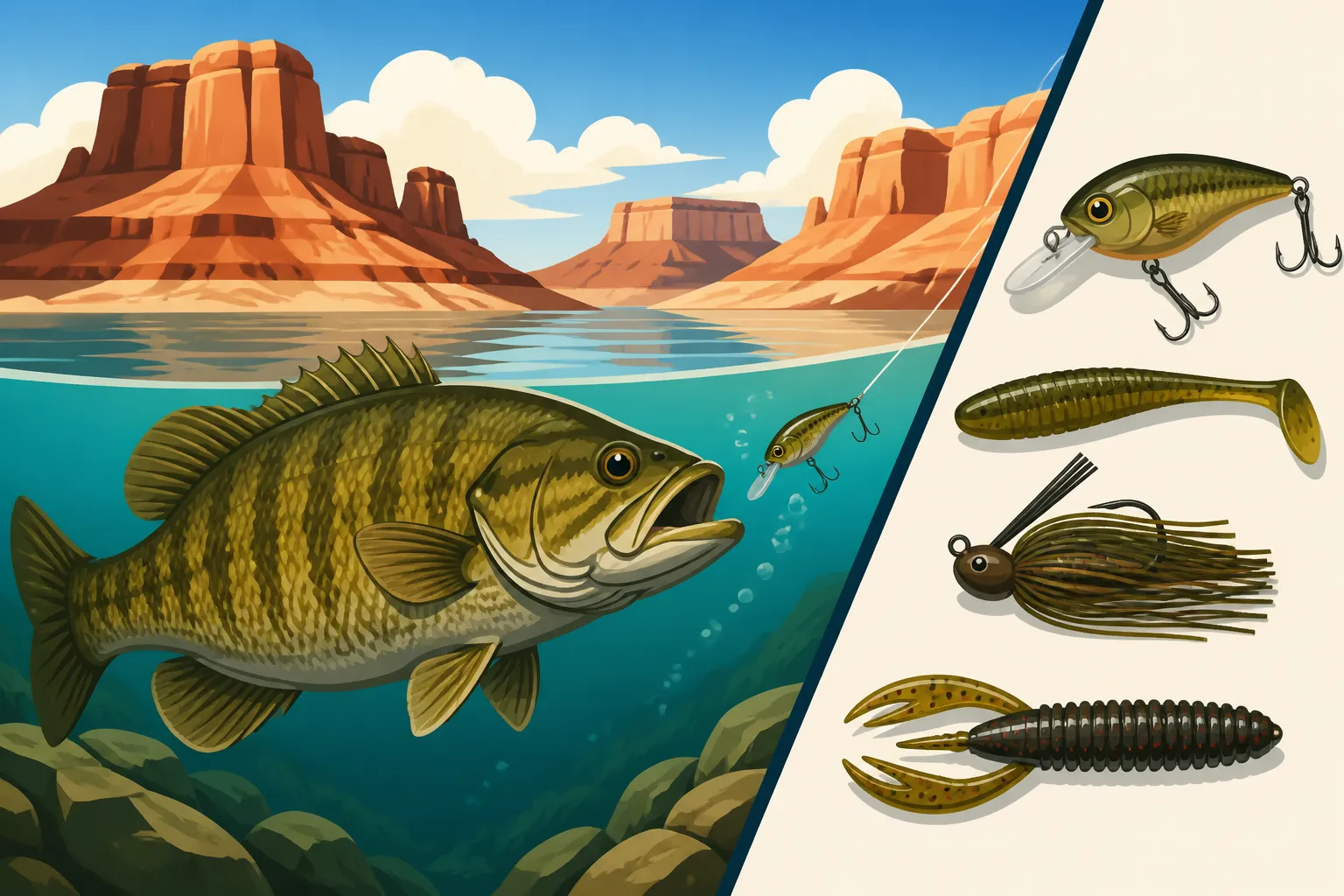
- Tubes: These are arguably one of the most consistent smallmouth lures, especially on rocky lakes like Powell. They perfectly mimic crawfish, which are a primary food source for smallmouth. Rig them with an internal jig head (1/8 to 3/8 ounce, depending on depth and wind) and drag, hop, or twitch them along rocky bottoms and ledges. Key colors include green pumpkin, watermelon, brown, and natural crawfish patterns. The trick is to let it sit and fall naturally into crevices, as that's often where the smallmouth are hiding. You can find excellent quality tube jigs on Amazon, making it easy to stock up before your trip.
- Grubs (Single-Tail and Double-Tail): Grubs are fantastic for a steady retrieve or when jigging vertically. A single-tail grub on a light jig head (1/8 to 1/4 ounce) is superb for swimming over points or slowly rolling down a rocky bank. Double-tail grubs, often called spider grubs or twin-tail grubs, offer more bulk and action, resembling larger crawfish or baitfish, and work well on football jigs dragged along the bottom. Natural colors like smoke, clear with glitter, and various shades of green and brown are usually best.
- Senkos (Wacky Rigged or Texas Rigged): While often associated with largemouth, a 3-5 inch Senko-style bait can be incredibly effective for smallmouth, particularly when they're lethargic or pressured. Wacky rigging them (hooked through the middle) provides an irresistible shimmy on the fall. Texas rigging allows you to work them through cover without snagging. The subtle action of a Senko, with minimal angler input, can often entice bites when nothing else will. Try green pumpkin, natural shad, or watermelon with red flake.
- Drop Shots: When smallmouth are deep or suspended, or when the bite is tough, the drop shot rig shines. This finesse technique presents a small soft plastic (often a fluke-style bait, worm, or minnow imitation) above a weight, keeping it tantalizingly in the strike zone. You can shake the bait without moving the weight, giving it a subtle, lifelike action. Smallmouth often can't resist a well-presented drop shot. Learn the intricacies of this presentation in our guide on "How to Fish a Drop Shot for Smallmouth Bass".
Hard Baits
Hard baits cover a wide range of applications, from aggressive search baits to subtle presentations, and are excellent for covering water.
- Crankbaits (Diving and Squarebill): Crankbaits are workhorses for smallmouth. Deep-diving crankbaits are essential for reaching fish holding on ledges, points, and humps in 15-30 feet of water. Choose baits that dive to your target depth and "grind" them into the rock structure; deflections often trigger strikes. Medium-diving crankbaits work well when fish are shallower, especially along rocky banks. Look for natural shad patterns, crawfish colors, or chartreuse for stained water (though Lake Powell is usually quite clear). Squarebill crankbaits, with their ability to deflect off cover without snagging, are fantastic for shallower, rockier areas, particularly in spring.
- Jerkbaits: Jerkbaits are phenomenal for smallmouth, especially in clear water and cooler temperatures. Their erratic darting action perfectly mimics a wounded baitfish, and the pause often seals the deal. Long pauses can be key, allowing the bait to suspend enticingly in front of a hesitant smallmouth. Stick with natural baitfish colors like silver, chrome, or clear with a slight tint. Brands like Rapala, Lucky Craft, and Megabass make excellent jerkbaits that are well-suited for Lake Powell's clear waters.
- Topwater Lures (Poppers, Walking Baits): Nothing beats the thrill of a topwater strike! When conditions are right – low light, calm water, and actively feeding fish – topwater lures can be incredibly effective. Poppers create a splash and gurgle, drawing attention from a distance, while walking baits (like a Zara Spook or a Heddon Super Spook) glide enticingly across the surface. Early mornings, late evenings, and overcast days are prime times. Try shad or perch patterns, or bright chrome.
Jigs and Spinnerbaits
These classic lures have their place in any smallmouth angler's tackle box, offering different profiles and actions to tempt these aggressive fish.
- Football Jigs: When smallmouth are hugging the bottom in deeper water, a football jig paired with a craw-style trailer is hard to beat. The football head design helps it crawl over rocky bottoms without getting snagged, and the bulk of the jig with its skirt and trailer creates a substantial profile mimicking a crawfish. Dragging, hopping, or slowly swimming these along ledges and humps can be incredibly effective. Look for green pumpkin, brown, or black and blue.
- Finesse Jigs: Smaller, lighter jigs (1/8 to 1/4 ounce) with a compact skirt and a small plastic trailer (like a grub or small craw) are perfect for a more subtle presentation. These shine in clear water, when the fish are pressured, or when you need a smaller profile to match smaller forage. They can be pitched into tight spots, worked vertically, or slowly dragged.
- Spinnerbaits: While often thought of for largemouth, spinnerbaits can be great search baits for smallmouth, especially on windy days or when covering large areas of shallower, rocky points. The flash and vibration can draw smallmouth from a distance. Opt for tandem willow leaf blades for maximum flash and a faster retrieve, or Colorado blades for more thumping vibration and a slower retrieve. White, chartreuse, and shad patterns are good starting points. They're especially effective when smallmouth are chasing baitfish.
Matching Lures to Conditions
Choosing the right lure is only half the battle; knowing how to present it effectively under varying conditions is what truly makes a difference on Lake Powell. The crystal-clear water and diverse structure demand thoughtful adjustments.
Water Clarity and Color Choices
Lake Powell is famously clear, often boasting visibility of 10-30 feet or more, especially in the main channel and canyon arms. In these conditions, natural colors are almost always your best bet. Think shades of green pumpkin, watermelon, brown, clear with glitter, and natural baitfish patterns like silver, chrome, or light blues. These colors blend in naturally with the environment and don't spook wary smallmouth. Flash is good, but sometimes too much brightness can be a deterrent in super clear water.
However, if you encounter areas that are stained from a recent rain runoff or a particular bloom, you might experiment with brighter colors. Chartreuse, white, or firetiger patterns can become more visible in murky water, helping fish locate your lure. Always carry a selection, but lean heavily on natural tones for most of your Lake Powell smallmouth endeavors.
Depth and Presentation
Lake Powell is deep, and smallmouth will use the entire water column. Your presentation needs to match the depth they're holding at.
- Shallow Water (0-15 feet): In spring, fall, or low light conditions, smallmouth often cruise the shallows. Topwater lures, squarebill crankbaits, spinnerbaits, and lighter Texas-rigged or wacky-rigged Senkos are excellent choices here. Focus on pitching and casting to visible structure like isolated boulders, submerged brush, or rocky points. A faster, more erratic retrieve can trigger reaction strikes from active fish.
- Mid-Depth (15-30 feet): This is a common depth range where smallmouth are found throughout much of the year. Medium to deep-diving crankbaits that make contact with the bottom or structure are key. Football jigs, grubs on jig heads, and jerkbaits with long pauses are also very effective. Experiment with retrieve speeds – sometimes a slow, steady retrieve is best, other times a stop-and-go retrieve will get their attention.
- Deep Water (30+ feet): During the heat of summer or the cold of winter, smallmouth often retreat to significant depths. This is where finesse techniques truly shine. Drop shot rigs with small worms or minnow imitations, heavy football jigs, and vertically jigged spoons or grubs are go-to options. Focus on using your fish finder to locate schools of baitfish or specific deep structure. The key here is a slower, more deliberate presentation, often with subtle movements to entice lethargic fish. Consider heavier line weights for fishing deep, as discussed in our "Best Line Weight for Smallmouth Bass" guide. Also, exploring "How to Fish Canyon Ledges for Smallmouth Bass" can give you an edge in these deep, rocky environments.
Weather and Time of Day
Weather patterns and the time of day can significantly influence smallmouth activity.
- Sunny, Calm Days: In clear Lake Powell, bright sun can push smallmouth deeper or make them relate tightly to shade-producing structure. This is often a good time for deep-water finesse techniques like the drop shot or football jigs. Early mornings and late evenings are prime for topwater or shallower presentations as the light is lower.
- Overcast or Windy Days: These conditions often make smallmouth more active and willing to roam shallower. The reduced light penetration makes them less wary, and the wind creates a "chop" on the water that breaks up their vision, allowing them to hunt more freely. This is a fantastic time for spinnerbaits, crankbaits, and jerkbaits, as the fish are often more aggressive. The wind can also concentrate baitfish, leading to feeding frenzies. Many anglers love to chase Lake Powell smallmouth during these conditions.
Essential Tips for Success at Lake Powell
Beyond specific lures and techniques, a few overarching strategies will significantly boost your smallmouth success on this incredible Arizona fishery.
Rod, Reel, and Line Setup
Having the right gear makes a huge difference, especially when you're battling feisty smallmouth in deep, clear water.
- Rods: For most smallmouth applications, a 6'6" to 7' medium-light to medium power spinning rod with a fast action is a versatile choice. This setup is perfect for throwing lighter soft plastics, drop shots, and smaller jerkbaits, offering enough backbone to set the hook and fight fish, while retaining sensitivity for subtle bites. If you're throwing heavier crankbaits or spinnerbaits, a 7' medium to medium-heavy casting rod can provide better control and power. You can find excellent selections of specific smallmouth bass rods on Amazon that cater to different fishing styles.
- Reels: Pair your spinning rods with a 2500 or 3000 series spinning reel, known for smooth drags and good line capacity. For casting rods, a low-profile baitcasting reel with a gear ratio around 6.4:1 to 7.1:1 is ideal for a variety of presentations.
- Line: In Lake Powell's ultra-clear water, fluorocarbon line is often a game-changer due to its low visibility and excellent sensitivity. A 6-10 lb test fluorocarbon main line or a braided main line (10-15 lb) with a fluorocarbon leader (6-10 lb) is a popular and effective setup. The braid offers superior casting distance and sensitivity, while the fluorocarbon leader keeps your presentation stealthy. Our guide to "Smallmouth Bass Fishing Guide for Arizona" offers more specific gear advice for the region.
Reading the Lake
Lake Powell is enormous and complex, so simply "going fishing" isn't enough. You need to actively "fish the lake" by understanding its nuances.
- Utilize Electronics: A good fish finder with side-imaging or down-imaging is invaluable on Lake Powell. Use it to locate submerged points, brush piles, rock slides, and schools of baitfish. Smallmouth will almost always be relating to some form of structure or bait. Don't just motor around; idle slowly over promising areas, marking waypoints on your GPS when you see something interesting.
- Target Key Structure: Focus on main lake points, especially those with steep drop-offs or secondary points within larger coves. Look for areas where the canyon walls transition from sheer rock to more broken rock or boulder fields. Submerged humps, islands, and creek channels can also be hot spots. Smallmouth love transition areas.
- Observe Your Surroundings: Pay attention to what the lake is telling you. Are there baitfish flickering on the surface? Are birds diving? These can indicate active feeding. Watch for subtle changes in current (especially on the main channel), water clarity, or temperature. Even a slight temperature change in a cove can hold fish. While you might be focused on smallmouth, don't forget Lake Powell is also home to stripers; sometimes finding baitfish concentrations can lead to both! Our comprehensive "Lake Powell Arizona Fishing Guide" details more on the lake's unique features.
Table of Best Lures for Lake Powell Smallmouth Bass
| Lure Type | Recommended Colors | Ideal Depth (feet) | Best Conditions | Key Presentation / Retrieve |
|---|---|---|---|---|
| Tube Jig | Green Pumpkin, Watermelon, Brown, Natural Craw | 10-40 | All-around, especially rocky structure, clear water | Drag, hop, twitch along bottom; let fall into crevices |
| Grub (Single/Twin) | Smoke, Green Pumpkin, Chartreuse, Clear/Glitter | 5-30 | Covering water, active fish, clear to slightly stained water | Steady retrieve, slow roll, vertical jig |
| Senko | Green Pumpkin, Watermelon/Red, Natural Shad | 5-25 | Finesse situations, pressured fish, slow bite, shallow to mid-depth | Wacky rig (fallow), Texas rig (through cover), subtle twitch |
| Drop Shot | Natural Shad, Green Pumpkin, Transparent W/Flake | 20-60+ | Deep water, suspended fish, tough bite, clear water finesse | Keep bait still above weight, subtle rod tip shakes |
| Deep-Diving Crankbait | Shad, Crawfish, Chrome, Natural Baitfish | 15-30+ | Actively feeding fish, covering main lake points, ledges | Fast retrieve, "grinding" off bottom or structure |
| Jerkbait | Silver, Chrome, Natural Shad, Perch | 5-20 | Cooler water, clear water, covering suspended fish | Erratic "twitch-twitch-pause" retrieve |
| Topwater (Popper/Walker) | Shad, Perch, Chrome, White | 0-10 | Low light (dawn/dusk), calm water, active shallow fish, overcast | Poppers: pop & pause; Walkers: walk-the-dog |
| Football Jig | Green Pumpkin, Brown, Black/Blue | 15-40 | Bottom fishing, rocky areas, mimicking crawfish | Drag, hop, or slow crawl along bottom |
| Spinnerbait | White, Chartreuse, Shad Pattern | 5-20 | Windy conditions, searching for active fish, shallower points | Steady retrieve, slow roll, deflecting off structure |
Disclaimer
Fishing conditions and regulations in Arizona, particularly at Lake Powell, can change. Always consult the latest Arizona Game and Fish Department regulations before heading out on your fishing trip. This guide is for informational purposes only and does not constitute professional advice.