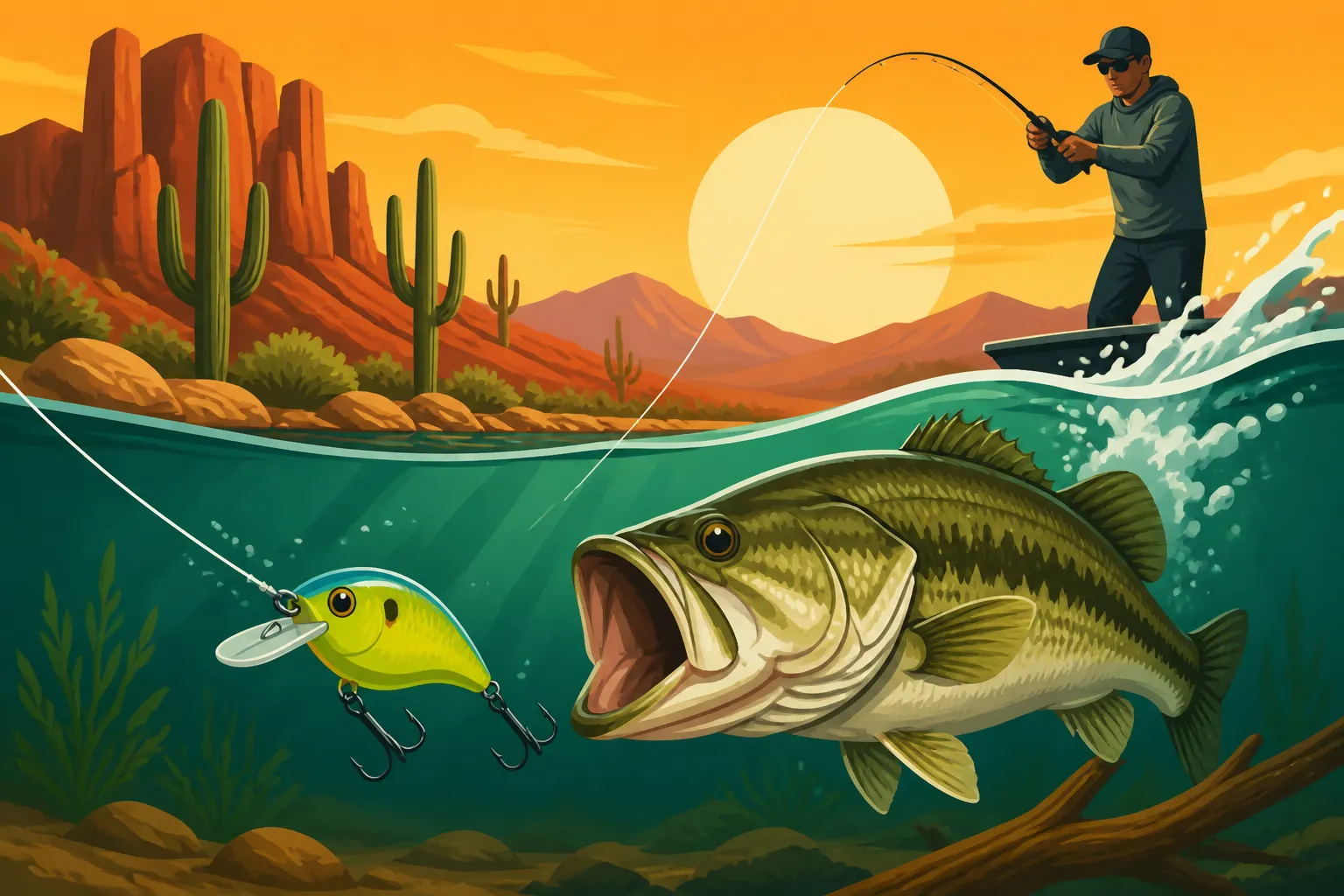
Crankbait Fishing Techniques for Bass
If you've spent any time chasing bass in Arizona, you know how frustrating it can be when they seem to vanish into thin air, ignoring everything you throw at them. The truth is, our desert lakes present unique challenges, but one technique consistently rises to the top for putting stubborn bass in the boat: crankbait fishing. This guide will dive deep into everything you need to know to master crankbaits and unlock incredible bass fishing success in the Grand Canyon State.
Understanding the Power of Crankbaits for Arizona Bass
There's something incredibly satisfying about feeling that tell-tale thump when a bass absolutely demolishes a crankbait. It's not just a lucky strike; it's the result of understanding how these lures work and how to present them effectively, especially in the often-clear, deep, and structure-rich waters we have here in Arizona.
Why Crankbaits Excel in Desert Lakes
Arizona's lakes, from the vast expanses of Lake Powell to the canyon-bound waters of Roosevelt Lake, offer diverse habitats for bass. What makes crankbaits so effective here? First, they are fantastic search baits. You can cover a lot of water quickly, probing different depths and contacting various types of structure like submerged humps, rock piles, or brush. Unlike slower presentations, a crankbait allows you to rapidly identify where the fish are holding, which is crucial in lakes where bass can be spread out or schooling.
Secondly, crankbaits perfectly mimic baitfish, which are a primary food source for both largemouth and smallmouth bass in our reservoirs. Species like threadfin shad and gizzard shad are abundant, and crankbaits' erratic swimming action, vibration, and flash closely replicate a distressed or fleeing baitfish. This natural presentation triggers an aggressive reaction strike, even from less-active bass. The unique diving capabilities of crankbaits also mean you can present them at specific depths, effectively targeting bass that might be suspended or holding tight to bottom structure, which is often the case in our deeper, clearer lakes.
The Anatomy of a Crankbait: What Makes it Tick
A crankbait might look like a simple piece of plastic or wood, but each component plays a critical role in its action and effectiveness. At its core, a crankbait consists of a body, a lip (also called a bill), hooks, and often rattles inside. The body dictates the lure's profile and size, influencing how it appears to bass. A fatter, more rounded body might imitate a bulkier shad, while a slender body could mimic a small minnow.
The lip is perhaps the most defining feature. Its size, shape, and angle determine how deep the crankbait dives and its retrieve action. A long, broad, and steeply angled lip will make the lure dive deeper and often produce a wider wobble. A shorter, more vertical lip will result in a shallower dive and a tighter, faster wiggle. Most crankbaits also incorporate internal weight systems, which can be fixed or free-moving. Free-moving weights not only add noise through rattles but also affect casting distance and how the lure balances in the water, especially when paused. The combination of these elements creates the unique "thump" and vibration that savvy anglers feel through their rods and that bass simply can't resist.
Diving Deeper: Crankbait Types and Their Applications
The world of crankbaits is vast, but understanding a few key categories will significantly boost your Arizona bass fishing game. Each type is designed for specific situations, depths, and actions.
- Shallow Divers (Squarebills and Flat-Sided Cranks): These lures typically dive from 1 to 6 feet deep. Squarebills are known for their ability to deflect off cover like rocks, laydowns, and stumps without snagging, making them perfect for fishing around shallow cover or rocky banks often found in lakes like Bartlett Lake or the upper reaches of Roosevelt. Their wide, erratic wobble is great for attracting aggressive bass. Flat-sided crankbaits, on the other hand, have a tighter wiggle and often excel in colder water or clearer conditions where bass might be more hesitant to strike an aggressive bait.
- Medium Divers: These are your workhorses, typically diving 6 to 12 feet. They're incredibly versatile and can be fished effectively along points, channel swings, and ledges. When bass are suspended or feeding in that middle water column, a medium diver is often the perfect choice. They come in various shapes and sizes, allowing you to match the local baitfish profile.
- Deep Divers: These are built for plumbing the depths, reaching 12 to 25+ feet. With their long, often slender bodies and massive bills, deep divers are crucial for targeting bass holding on deep structure like offshore humps, deep rock piles, or reservoir dams. Think of fishing the deep channels of Lake Pleasant or the main lake points of Lake Havasu with these. It takes a bit more effort to retrieve them, but the reward of a big bass from the depths is well worth it.
- Lipless Crankbaits: While technically crankbaits, these are a distinct category. Lacking a prominent bill, they sink on the retrieve and are known for their tight, high-vibration shimmy. They excel at covering vast amounts of shallow to medium-deep water, especially when fish are relating to grass or schooled up. They're also fantastic for "yo-yoing" or ripping off the bottom, triggering reaction strikes. You'll find these effective in the spring when bass are moving up shallow or in the fall when shad are schooling.
Choosing the right type depends on the depth you're targeting, the cover present, and the mood of the bass. Having a selection of each will ensure you're prepared for whatever Arizona's waters throw at you.
Essential Gear for Crankbait Success
To truly excel with crankbaits, having the right equipment is just as important as knowing the techniques. A poorly matched rod, reel, or line can turn an effective presentation into a frustrating mess, costing you fish and enjoyment.
Rod and Reel Combinations for Optimal Performance
When it comes to crankbait fishing, the rod is your direct connection to the lure and the fish. You'll generally want a rod with a moderate or moderate-fast action. This action allows the rod to load up more parabolically, absorbing the shock of a strike and helping to keep fish hooked when they make sudden runs. A fast-action rod, while great for jigging, can often pull the treble hooks free from a bass's mouth because it doesn't give as much. Rod length typically ranges from 6'6" to 7'6", with longer rods aiding in casting distance and line pickup. For heavier, deep-diving crankbaits, a longer, slightly heavier power (medium-heavy) rod is ideal, while medium-power rods are excellent for shallower and medium divers. Many anglers find specific "crankbait rods" that are designed with these exact characteristics in mind.
Matching your rod with the right reel is crucial. A baitcasting reel with a lower gear ratio is often preferred for crankbait fishing. Gear ratios between 5.1:1 and 6.4:1 are excellent because they provide more torque, making it easier to retrieve large, deep-diving crankbaits that create a lot of drag. This lower gear ratio also encourages a slower, more consistent retrieve, which is often key to getting strikes. You want a reel with a smooth drag system, as bass can make powerful runs, and a high-quality drag will prevent line breaks. Many excellent options from brands like Shimano or Abu Garcia are readily available on Amazon. If you're looking for an excellent starting point, check out our guide on the Best Fishing Rods for Bass in Arizona for specific recommendations.
Line Selection: Mono, Fluoro, or Braid?
The choice of fishing line has a significant impact on how your crankbait performs. Each type offers distinct advantages and disadvantages, and smart anglers often carry different setups to match conditions.
- Monofilament (Mono): This is a classic choice for crankbaits, primarily due to its stretch. The stretch acts as a shock absorber, much like a moderate action rod, which helps prevent hooks from pulling out, especially when fishing with treble hooks. It's also more forgiving when a bass surges at the boat. Mono is typically more buoyant than fluorocarbon, which can be an advantage for shallow-diving crankbaits that you want to keep running shallower. However, its stretch can reduce sensitivity, making it harder to feel subtle bites or distinguish between a bite and contact with cover.
- Fluorocarbon (Fluoro): Fluorocarbon is quickly becoming the go-to choice for many crankbait anglers, especially for medium and deep divers. Its low stretch offers much better sensitivity, allowing you to feel every bump, grind, and bite more distinctly. Fluoro is also nearly invisible underwater, which is a huge advantage in Arizona's often clear waters, and it sinks, helping deep divers reach their maximum depth. The main drawback is its stiffness and memory, which can lead to more tangles if not managed properly. For specific recommendations, our guide on the Best Line for Bass Fishing delves deeper into these options.
- Braided Line (Braid): Braid has virtually no stretch, offering maximum sensitivity and incredible strength for its diameter. While it's generally not recommended for tying directly to crankbaits due to its lack of stretch (which can lead to pulled hooks), it excels as a main line with a fluorocarbon leader. This combination gives you the best of both worlds: the strength and sensitivity of braid, plus the stealth and abrasion resistance of a fluoro leader. It's particularly useful when fishing around heavy cover where you need to muscle a fish out.
The typical line test for crankbait fishing ranges from 10 to 17 pounds, depending on the size of the crankbait and the cover you're fishing. Experimentation is key to finding what works best for your specific style and the conditions you face.
Essential Accessories for the Crankbait Angler
Beyond the rod, reel, and line, a few key accessories can make your crankbait fishing experience much more efficient and enjoyable. First and foremost, a good pair of needle-nose pliers or split ring pliers is indispensable. Crankbaits are notorious for having small, sharp treble hooks that can be tricky to remove from a fish's mouth, or even from your own finger. Pliers make hook removal safer and easier for both you and the fish.
Next, consider a hook sharpener. Those treble hooks dull quickly, especially when deflecting off rocks or banging into structure. A few quick passes with a sharpener can restore their piercing power, drastically improving your hook-up ratio. A tackle management system designed for crankbaits, such as those with individual compartments or hanging slots, is also incredibly helpful. This prevents hooks from tangling together and keeps your lures organized and easy to access. Brands like Plano and Bass Mafia offer excellent solutions that you can find on Amazon.
Finally, don't underestimate the importance of sun protection in Arizona. A wide-brimmed hat, polarized sunglasses (essential for spotting structure and seeing fish), and long-sleeved UPF clothing will protect you from our intense sun, allowing you to fish comfortably for longer periods. Staying hydrated with plenty of water is also non-negotiable, especially during the warmer months.
Mastering Crankbait Retrieve Techniques
Casting out a crankbait and reeling it straight back in can catch fish, but mastering different retrieve techniques is what truly separates successful crankbait anglers from the rest. It's all about making that lure dance and eliciting a strike.
The Classic Cast and Retrieve
The most fundamental crankbait technique is the straightforward cast and retrieve. While seemingly simple, there's nuance to it. After making a long, accurate cast, engage your reel and begin a steady, consistent retrieve. The key here is to maintain a speed that allows the crankbait to reach its designed running depth and exhibit its natural action. This is often described as "speed cranking." For many crankbaits, especially those with rattles, a consistent retrieve creates a rhythmic vibration and sound that fish can track.
Varying your retrieve speed can also be highly effective. Sometimes, a faster retrieve will trigger a reaction strike from aggressive bass, particularly in warmer water. Other times, a slightly slower, more deliberate retrieve might be necessary to entice lethargic fish. The best way to determine the optimal retrieve speed is to experiment. Pay attention to what the fish are telling you. If you're getting short strikes or no strikes, try speeding up or slowing down. The goal is to maximize the time your lure spends in the strike zone while giving it an enticing, consistent action.
The Stop-and-Go and Rip-Pause Techniques
When a steady retrieve isn't cutting it, adding pauses and sudden movements can be a game-changer. The "stop-and-go" technique involves reeling steadily for a few seconds, then abruptly pausing the retrieve for 1-3 seconds, and then resuming. During the pause, the crankbait often floats or slowly rises (depending on if it's a floating or suspending model), mimicking a dying baitfish. Many strikes occur precisely when the lure begins to move again after the pause. This erratic action can be incredibly effective when bass are slightly inactive or pressured.
The "rip-pause" technique takes this a step further, particularly with lipless crankbaits or squarebills. After casting, allow the lure to sink to your desired depth. Then, quickly "rip" your rod tip upwards, pulling the lure sharply through the water. Immediately drop your rod tip, creating slack and allowing the lure to fall or dart erratically. Reel in the slack and repeat. This technique is fantastic for ripping baits out of grass or off submerged brush, triggering aggressive reaction strikes from bass hiding in cover. It's especially potent during the Spring Bass Fishing Tactics in Arizona when fish are actively feeding. The sudden burst of speed followed by a vulnerable fall is often irresistible.
Contact Fishing: Bumping and Grinding Structure
This is where crankbaits truly shine and why they are so lethal for bass in Arizona. "Contact fishing" means actively bumping your crankbait into submerged rocks, timber, stumps, ledges, and other forms of hard structure. When a crankbait hits an obstruction, it deflects wildly, often tumbling or kicking out to the side before resuming its retrieve. This unpredictable, erratic movement perfectly mimics a fleeing or injured baitfish, triggering an instinctive reaction strike from bass that are often positioned right on or near that structure.
To execute this, cast your crankbait past the target structure. As you retrieve, feel your line for the tell-tale "thump" or "clunk" of the lure hitting something solid. When it does, don't stop reeling. Instead, try to "grind" it over or through the obstacle, letting it deflect. Pay close attention after each deflection, as this is often when a bass will pounce. This technique requires good line feel, which is where fluorocarbon line excels. It's incredibly effective when bass are holding tight to cover, which they frequently do in our clear, desert lakes. This approach is paramount to understanding How to Fish Deep Structure in Summer Heat when bass retreat to cooler, deeper hideouts.
Matching Crankbaits to Arizona's Diverse Conditions
Arizona's fishing conditions can vary wildly depending on the season, water body, and even time of day. Being able to adapt your crankbait selection and technique to these changing factors is what will make you consistently successful.
Seasonal Strategies: Spring, Summer, Fall, and Winter
- Spring: As water temperatures rise, bass become more active and begin to move shallow for spawning. This is prime time for shallow-diving crankbaits like squarebills and lipless crankbaits. Fish these around rocky banks, submerged brush, and points where bass will stage. A steady retrieve with occasional pauses can be deadly. As bass move to beds, some anglers will "wake" a shallow crankbait just under the surface to trigger protective strikes. For more depth on this, refer to Spring Bass Fishing Tactics in Arizona.
- Summer: The brutal Arizona summer heat forces bass deeper, often suspending or relating to deep structure and cooler thermoclines. This is when medium and deep-diving crankbaits become essential. Target main lake points, offshore humps, ledges, and channel swings. Focus on contact fishing, grinding your crankbait into deep rock piles or across ledges. Early mornings and late evenings can still produce shallow bites with squarebills, especially in areas with shade or current. Our guide on Summer Bass Fishing Tactics in Arizona has more detail.
- Fall: As temperatures cool, bass become highly active, feeding aggressively to build fat reserves for winter. This is arguably the best time for crankbaits across the board. Shad begin to school up, and bass will follow. Lipless crankbaits are phenomenal for covering vast amounts of water and locating these schooling fish. Medium and deep divers can be used to target bass on points and creek channels as they transition from summer haunts. Look for "bait balls" on your fish finder and throw a crankbait into the fray. Don't forget to consult Fall Bass Fishing Tactics in Arizona for detailed information.
- Winter: Bass activity slows significantly in winter, and they often congregate in deep, protected areas like creek channels, main lake points, and deep timber. Deep-diving crankbaits are still effective, but a slower, more methodical retrieve is usually necessary. Focus on making contact with structure and letting the lure sit for a moment before continuing the retrieve. Flat-sided crankbaits with their tighter wobble can also be very effective in colder, clearer water. The key is to slow down and be patient. Dive deeper into Winter Bass Fishing Tactics in Arizona for more tips.
Water Clarity and Color Choices
Water clarity is a massive factor in crankbait selection. Arizona lakes can range from crystal clear to murky, and your color choice should reflect that.
- Clear Water: In clear lakes like Canyon Lake or the upper reaches of Lake Powell, natural colors that mimic local baitfish are best. Shad patterns (silver, grey, white), sunfish patterns, and translucent colors work well. Chrome with a blue or black back is a perennial favorite. Less vibrant colors that blend in rather than stand out will often draw more strikes from wary bass. Fluorocarbon line is also a must here due to its low visibility.
- Stained to Murky Water: When the water has a bit of color, perhaps after a monsoon rain or in a dirtier lake section, brighter, more opaque colors become effective. Chartreuse, firetiger, red, and orange can be excellent choices. These colors create a stronger visual presence, making it easier for bass to see the lure in reduced visibility. Crankbaits with loud rattles also shine in these conditions, providing an auditory attractant.
It's also worth noting that crawfish patterns (red, brown, orange) are fantastic when bass are feeding on crawfish, especially around rocky banks in spring and fall. Always carry a variety of colors to adapt to changing conditions.
Depth Matters: Targeting Bass in Different Water Columns
Understanding how to control your crankbait's depth is fundamental to consistent success. Different crankbaits are designed to run at specific depths, but your line diameter, retrieve speed, and casting distance also play a role.
- Matching the Hatch (Depth-wise): If you know bass are holding in 10 feet of water, you want a crankbait that can consistently run at or slightly deeper than that depth. This allows you to make contact with the bottom or desired structure. For example, a crankbait rated to dive 12-15 feet would be perfect for probing a 10-foot deep ledge.
- Retrieve Speed: A faster retrieve will generally make a crankbait dive deeper and run more efficiently. Conversely, a slower retrieve might keep it slightly shallower. Experiment to find the "sweet spot" where your lure is running at its optimal depth and action.
- Line Diameter: Thinner lines (e.g., 10-12 lb test fluorocarbon) create less drag in the water, allowing a crankbait to dive deeper than thicker lines (e.g., 15-17 lb test monofilament). This is a subtle but important factor, especially when trying to eke out those extra few feet for a deep diver.
- Casting Distance: Longer casts allow the crankbait more time to achieve its maximum running depth. Shorter casts will keep it shallower. This is why a longer rod and properly spooled reel are beneficial, maximizing your effective fishing depth.
By paying close attention to these factors, you can precisely present your crankbait in the strike zone, whether bass are suspended, on the bottom, or relating to a specific piece of structure. Many of the techniques discussed in our Best Bass Fishing Techniques for Arizona Lakes article rely heavily on accurate depth control.
Advanced Crankbait Tactics for Tricky Bass
Sometimes, the standard techniques aren't enough. When bass are pressured, finicky, or just plain stubborn, it's time to pull out some advanced crankbait tactics to trigger those elusive bites.
Cranking Around Cover and Structure
Fishing crankbaits effectively around cover is an art form. The goal isn't just to retrieve the lure; it's to make it interact with the environment in a way that triggers a strike.
- Deflection is Key: We've touched on this, but it's worth emphasizing. When your crankbait hits a piece of cover – a rock, a stump, a tree limb – the sudden, unpredictable deflection is often what seals the deal. Instead of trying to avoid cover, actively seek it out. Cast so your crankbait will crash into it. Learn to feel the difference between hitting a snag and hitting cover that will allow your lure to deflect safely.
- "Waking" a Crankbait: For shallow-diving crankbaits (especially squarebills), you can fish them so shallow that they just "wake" or "bow" the surface of the water, creating a V-wake. This is incredibly effective during low light conditions or when bass are feeding on baitfish near the surface. It offers a subtle but enticing disturbance that often draws explosive topwater-like strikes.
- Parallel the Banks and Contours: Instead of casting directly at the bank, try casting parallel to it, especially along rocky shorelines, bluff walls, or riprap. This keeps your crankbait in the strike zone for a longer duration, presenting it to more potential fish holding along that specific depth contour. The same applies to submerged creek channels or ledges; try to run your crankbait along the edge of the contour line. This increases your chances of encountering bass that are using these features as ambush points.
Understanding Bass Behavior and Crankbait Triggers
To truly master crankbait fishing, you need to think like a bass. Understanding their general behaviors can help you anticipate where they'll be and what they'll respond to.
- Reaction Strikes: Bass are predatory fish, and they often strike out of instinct or annoyance rather than hunger. A crankbait's erratic action, sudden deflections, or rapid changes in speed can trigger these "reaction strikes," even if the fish isn't actively feeding. This is why banging into cover is so effective; it creates a sudden, unexpected movement that provokes a defensive or predatory response.
- Forage Imitation: Bass primarily eat baitfish like shad, sunfish, and crawfish. Choose crankbait sizes and colors that closely resemble the dominant forage in the lake you're fishing. For instance, if you know What Largemouth Bass Eat in Arizona Lakes and shad are prevalent, a shad-patterned crankbait is a no-brainer.
- Environmental Factors: Wind, current, and light penetration all influence bass behavior. Wind can push baitfish into certain areas, concentrating bass. Fishing windy points or current breaks with crankbaits can be highly productive. Overcast days or low light often encourage bass to move shallower and be more aggressive, making brighter colors or noisy crankbaits more effective.
By combining an understanding of bass behavior with your crankbait presentation, you'll be able to unlock bites when other anglers are struggling.
Troubleshooting Common Crankbait Problems
Even experienced anglers encounter challenges with crankbaits. Knowing how to troubleshoot these common issues can save you time and frustration on the water.
- Running Off-Center: If your crankbait consistently pulls to one side or doesn't track straight, it's likely out of tune. Most crankbaits have a small line tie eye on the nose. Gently bend this eye in the opposite direction the bait is pulling. For example, if it's pulling to the right, bend the eye slightly to the left. Test it with a short cast and adjust until it runs true.
- Foul Hooking/Tangles: If your crankbait's treble hooks are consistently tangling with each other or the line, several factors could be at play. You might be retrieving too fast for the lure's design, or the hooks might be too large for the bait. Sometimes, adding a split ring to the front hook hanger (if it doesn't already have one) can help reduce tangles. Ensure your retrieve is smooth and consistent.
- Snags and Hang-ups: While contact with cover is good, getting genuinely snagged is not. To minimize snags, always try to use a crankbait that is rated to dive slightly shallower than the deepest part of the structure you're fishing. When you feel the lure hit something, immediately stop reeling, give the line some slack, and gently twitch your rod. Often, the lure will float free. If it's truly stuck, try reeling down and then quickly snapping your rod tip upwards. If all else fails, a lure retriever can be a worthwhile investment to save those expensive baits.
- No Bites: If you're not getting bites, reassess your conditions. Are you fishing the right depth? Is your color choice appropriate for the water clarity? Are you varying your retrieve? It could also be a change in fish activity. Try slowing down, speeding up, adding pauses, or changing to a lipless crankbait if the bass seem to have moved or become less aggressive. Sometimes, simply changing the size or profile of your crankbait can make all the difference.
By systematically addressing these issues, you can quickly get back to productive fishing and keep those crankbaits in the strike zone.
Top Arizona Lakes for Crankbait Fishing
Arizona boasts an impressive array of lakes, each with its unique characteristics that make them ideal for different crankbait applications. Knowing where to go and what to expect can significantly increase your chances of success.
Lake Pleasant and Roosevelt Lake: Prime Crankbait Destinations
These two giants are often considered the crown jewels of Arizona bass fishing, and for good reason—they are phenomenal crankbait fisheries.
- Lake Pleasant: Located near Phoenix, Lake Pleasant is known for its clear water, deep channels, and abundant largemouth and white bass. During the cooler months, deep-diving crankbaits are deadly on main lake points, submerged humps, and ledges where bass stack up. Look for areas with rock and brush. In spring, squarebills and medium divers excel along the shorelines, especially around the rocky banks and shallow coves where bass move up to spawn. White bass often school here, and a lipless crankbait ripped through schooling fish can lead to non-stop action. Lake Pleasant is also featured in our Lake Pleasant Arizona Fishing Guide.
- Roosevelt Lake: East of Phoenix, Roosevelt Lake is Arizona's largest lake and a premier destination for largemouth bass. Its varied topography, from vast flats to steep bluffs and submerged timber, offers endless crankbait opportunities. Medium and deep divers are incredibly effective along the abundant creek channels, points, and bluff walls. The Salt River and Tonto Creek arms are particularly productive. When water levels are high, squarebills are fantastic for burning over submerged brush and flooded timber. In the fall, when shad are schooling, a lipless crankbait can be unbeatable. Check out our Roosevelt Lake Arizona Fishing Guide for more in-depth tips.
Apache and Canyon Lakes: Deep Diving Opportunities
These stunning canyon lakes, part of the Salt River chain, are known for their picturesque scenery and challenging but rewarding fishing, especially with crankbaits that can reach deeper.
- Apache Lake: With its steep canyon walls and deep, clear water, Apache Lake is perfect for deep-diving crankbaits. Target the numerous points, submerged rock slides, and creek channel swings. Bass often suspend here, making a slow, methodical retrieve of a deep diver effective. The clear water also means natural baitfish patterns are key. Medium divers can also be used effectively in the pockets and coves, especially when bass are relating to rocky structure.
- Canyon Lake: Another gem of the Salt River chain, Canyon Lake offers similar challenges and rewards. Its extreme depths and vertical structure make it another prime location for deep-diving crankbaits. Focus on main lake points that drop quickly into deep water, bluff ends, and areas with submerged timber. The key here is precise depth control and presentation. Bass often relate tightly to vertical breaks, so running a crankbait right along the edge of a drop-off can be incredibly effective. Both Apache and Canyon Lakes demand patience and careful observation of your electronics to locate fish.
Community Lakes and Smaller Waters
While often overlooked for crankbait fishing, Arizona's smaller community lakes and ponds, like those in the Best Urban Fishing Lakes in Arizona program, can surprise you.
These waters are typically shallower and often have more uniform bottoms, but they still hold bass that will readily strike a crankbait. Shallow-diving crankbaits like squarebills and lipless crankbaits are the stars here. Fish them around any available cover: docks, submerged weeds, rock piles, or even changes in bottom composition. A smaller profile crankbait, perhaps in a bluegill or crawfish pattern, can be incredibly effective. Since these lakes are often stocked and can see heavy fishing pressure, varying your retrieve with plenty of pauses and erratic movements can be crucial to enticing a bite. Even a small pond can produce exciting action with the right crankbait approach!
Remember, no matter where you fish in Arizona, staying informed about local conditions and regulations is always wise. The Arizona Game and Fish Department website is an excellent resource, offering stocking schedules and regulation updates to ensure a safe and successful trip.
Crankbait Types for Arizona Bass Fishing
| Crankbait Type | Typical Diving Depth | Ideal Applications | Key Features | Pros | Cons |
|---|---|---|---|---|---|
| Squarebill | 1-6 feet | Shallow cover (rocks, wood, grass), rocky banks, aggressive fish | Square lip, wide erratic wobble, excellent deflection off cover | Weedless in cover, triggers reaction strikes, versatile for shallow water | Can be too aggressive for timid fish, limited depth range |
| Flat-Sided | 2-8 feet | Clearer water, colder temperatures, pressured fish, subtle presentations | Flat sides, tight subtle wiggle, less water displacement | More natural presentation, effective in tough conditions, good vibration | Less aggressive action, can be less forgiving in heavy cover |
| Medium Diver | 6-12 feet | Points, channel swings, ledges, suspended bass, all-around versatile | Rounded or somewhat elongated lip, moderate dive angle, balanced wobble | Versatile, covers middle depths effectively, wide range of sizes/actions | Can get snagged in heavy shallow cover, may not reach true deep structure |
| Deep Diver | 12-25+ feet | Deep points, humps, offshore structure, deep ledges, dam faces, cold water | Long, large lip, slender body, reaches maximum depths with long casts | Reaches deep fish, triggers strikes from inactive bass, good for trolling | Hard to retrieve (fatigue), requires specific gear, prone to snagging in deep wood |
| Lipless Crankbait | Varies (sinking) | Open water, schooling fish, grass flats, ripping through weeds, yo-yoing | No lip, internal rattles, tight high-vibration shimmy, sinks on pause | Casts far, covers water quickly, strong vibration, effective for schooling fish | Treble hooks can foul in heavy grass, can be prone to snags on rocky bottoms |
Disclaimer
Fishing conditions and regulations in Arizona can change. Always check the latest Arizona Game and Fish Department regulations before heading out. Be aware of weather conditions, practice safe boating, and always put safety first. This guide is for informational purposes only.