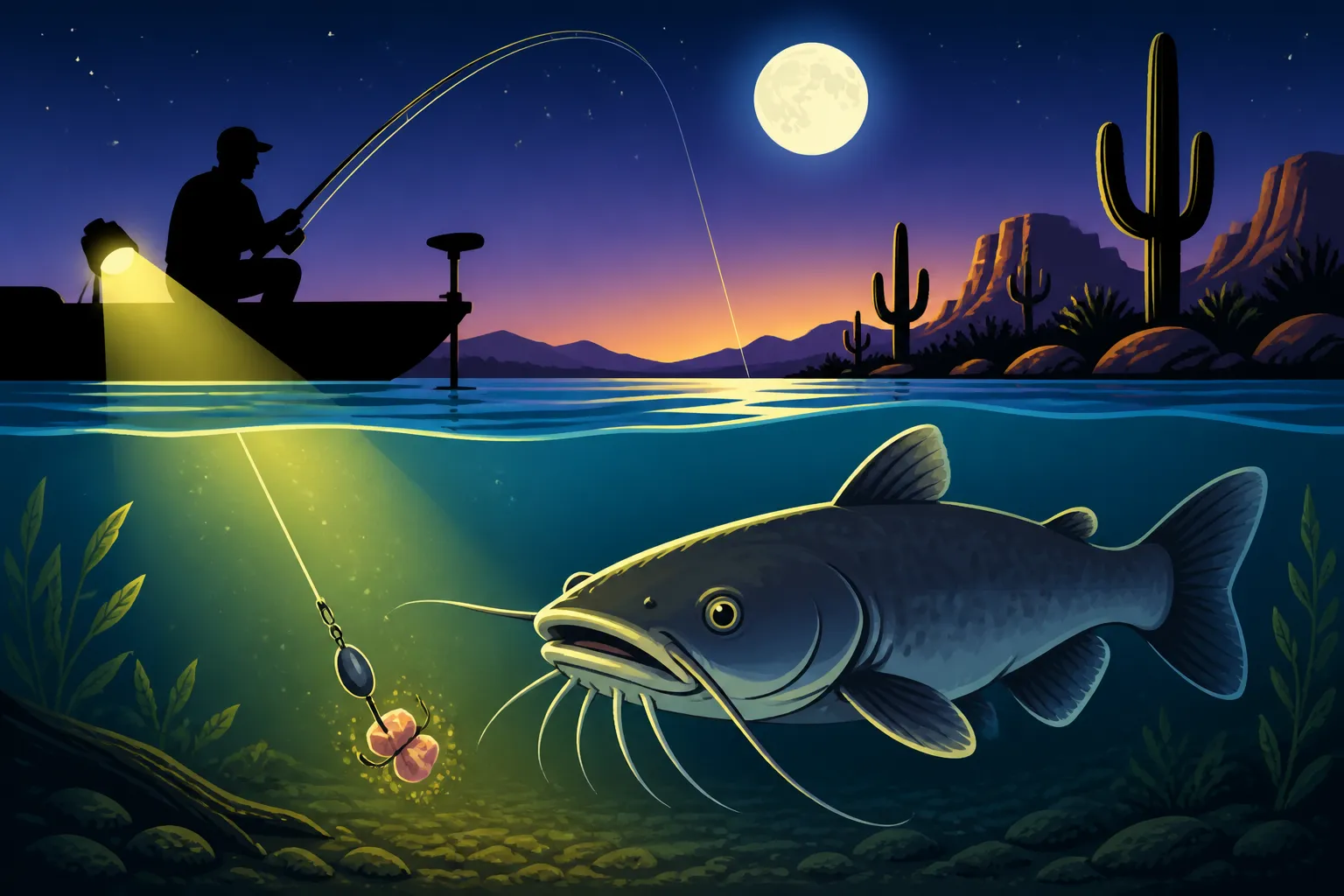
Catfish Night Fishing Techniques
There’s nothing quite like the blazing Arizona sun to make an angler rethink their entire fishing strategy. If you’ve ever found yourself baking under the midday rays, watching the water shimmer with heat, and wondering where all the fish went, you’re not alone. The truth is, during much of the year, Arizona’s catfish become far more active after the sun dips below the horizon, making night fishing not just a pleasant escape from the heat, but often the most productive way to target these whiskered warriors. This guide will walk you through everything you need to know to successfully tackle night fishing for catfish in the Grand Canyon State.
Why Night Fishing for Catfish in Arizona is a Game-Changer
Daytime fishing for catfish in Arizona, especially during the warmer months, can be a real grind. The scorching sun drives fish deep, crowds can be intense at popular spots, and the overall experience might leave you more frustrated than refreshed. But when the stars come out, everything changes.
Beating the Arizona Heat and Crowds
Let's be honest, one of the biggest deterrents to a good fishing trip in Arizona from late spring through early fall is the oppressive heat. Temperatures can easily soar over 100 degrees Fahrenheit, making even short periods of exposure uncomfortable, if not dangerous. Catfish, much like us, prefer to avoid these extreme conditions. They often retreat to deeper, cooler waters during the day, becoming lethargic and less likely to bite. Night fishing completely sidesteps this problem. As the desert air cools, typically dropping 20-30 degrees from daytime highs, the water surface loses heat, and the entire aquatic ecosystem seems to come alive.
Beyond the heat, popular Arizona lakes like Lake Pleasant, Roosevelt Lake, and Canyon Lake can get incredibly crowded during daylight hours, especially on weekends. Boaters, jet skiers, wakeboarders, and other anglers all vie for space, creating a noisy, turbulent environment that can spook fish and make for a less enjoyable experience. At night, these crowds largely vanish. You'll often find yourself with vast stretches of shoreline or open water almost entirely to yourself, enjoying the tranquility, the starry skies, and the focused pursuit of big catfish without constant interruptions. It's a peaceful, productive alternative that many seasoned Arizona anglers swear by.
Understanding Nocturnal Catfish Behavior
Catfish, by nature, are largely nocturnal feeders. Their highly developed senses – particularly their barbels (whiskers) which are packed with taste buds, and their keen sense of smell – are perfectly adapted for foraging in low-light conditions. While they might opportunistically feed during the day, their primary hunting hours kick into gear as darkness falls. This is when they move out of their deeper, cooler daytime haunts and into shallower feeding areas. They patrol the flats, creek channels, and the edges of submerged structures, actively searching for food.
This shift in behavior means that your chances of encountering actively feeding, aggressive catfish are significantly higher after dark. They're less wary, more focused on finding a meal, and often willing to travel further to strike at an enticing bait. Understanding this fundamental behavioral pattern is the key to unlocking consistent success in Arizona's catfish waters. You're simply fishing when the fish are most inclined to bite, making your efforts much more effective than struggling through the midday doldrums.
Target Species: Channel, Flathead, and Blue Catfish
Arizona is home to several species of catfish, and while their nocturnal habits are a common thread, their preferences for habitat, bait, and fight can vary. Knowing which species you're targeting will help you refine your approach.
Channel catfish are by far the most widespread and commonly caught catfish in Arizona. They thrive in a variety of environments, from the large desert reservoirs to the smaller urban community lakes. They are voracious eaters, often cruising in schools, and are highly receptive to both natural and prepared baits at night. Channel cats are characterized by their sleek bodies, deeply forked tails, and a smattering of dark spots when young. They provide an excellent fight on medium tackle and are superb table fare. When focusing on these, you'll want to think about "drift fishing" or static bottom rigs in areas where they might be schooling up.
Flathead catfish, often considered the apex predator of Arizona's catfish world, are a different beast entirely. They are ambush predators with a broad, flattened head, a slightly rounded tail, and a mottled brown-to-yellow coloration. Unlike channel cats, flatheads primarily feed on live fish, rarely touching prepared or cut baits. They prefer rocky, snag-filled habitats in larger rivers and reservoirs, lying in wait for unsuspecting prey. Targeting flatheads at night requires robust gear and live bait, and their powerful, determined fight is legendary. They are generally more solitary than channel cats, making them a prize catch. If you're hoping to land one of these giants, you'll definitely want to read our Channel Catfish vs Flathead Catfish Identification guide to help you tell them apart.
While less common than channels or flatheads, blue catfish are also present in some Arizona waters, particularly in the lower Colorado River system. Blues are often mistaken for channels but can grow significantly larger, with a distinct hump on their back and a very deeply forked tail. Like flatheads, they can reach enormous sizes, and they also prefer live or fresh cut bait. They are powerful fighters, known for long runs and brute strength. While not as widespread, targeting blues can offer a truly trophy-sized experience. Understanding the subtle differences in their feeding patterns and preferred structure will give you an edge when pursuing any of these fantastic species after dark.
Finding the Right Night Fishing Spots for Catfish
Just because the sun goes down doesn't mean you can throw your bait anywhere and expect success. Catfish, even at night, follow patterns and prefer certain types of structure and depth. Doing a little scouting (during the day, if possible!) can make all the difference.
Key Structures and Depths to Target
As night falls and the water cools, catfish begin to move from their deep daytime sanctuaries into shallower, food-rich areas. However, "shallow" is a relative term and depends heavily on the specific body of water and time of year. Generally, you'll want to focus on areas that offer easy access to deeper water but also have nearby feeding grounds. Look for submerged creek channels, points, humps, and ledges. These topographical features act as highways and staging areas for catfish on their nocturnal patrols. In larger reservoirs like Lake Pleasant, searching for deep water structure around prominent points or submerged islands can be extremely productive.
Don't overlook areas with cover. Submerged timber, rock piles, brush, or even artificial structures like old roadbeds or bridge pilings offer excellent ambush points and food sources (crayfish, baitfish) for catfish. Flathead catfish, in particular, are drawn to heavy cover. When fishing from the bank, look for shorelines that drop off relatively quickly into deeper water, or coves that have submerged vegetation. The transition zones between shallow flats and deeper channels are often hotspots as catfish move up to feed and then retreat to comfort zones. Even a slight current, if present, can concentrate bait and, therefore, catfish. Understanding these areas will greatly improve your chances of success.
Identifying Productive Arizona Lakes and Rivers
Arizona boasts numerous prime locations for night catfishing, each with its unique characteristics and dominant species. Knowing which waters are most productive can help you plan your nocturnal adventures.
The Colorado River system, especially sections like those near Yuma or Lake Havasu, is legendary for its massive flathead catfish, but also holds abundant channel catfish and even some blue catfish. The river's natural flow, diverse structure, and ample forage create an ideal environment for these whiskered giants. Targeting large flatheads here typically involves heavy tackle and live bait in areas with significant current and submerged snags. For channel cats, slower eddies and backwaters can be very productive.
Roosevelt Lake is another powerhouse, particularly for channel catfish, with flatheads also present. Its vast size and complex structure, including numerous coves, submerged timber, and creek arms, offer endless opportunities. Night fishing here often means anchoring up in a productive cove or drifting bait along a main lake point. You can find excellent information on targeting specific species here in our Best Catfish Fishing Spots in Arizona guide.
Lake Pleasant, being the largest lake in the Phoenix area, is incredibly popular and productive for channel catfish, and to a lesser extent, flatheads. Its deep, clear waters mean catfish often relate to main lake points, ledges, and the old Agua Fria River channel. Night fishing here is a fantastic way to escape the daytime boat traffic and enjoy the cool desert air.
Other notable lakes include Alamo Lake, known for its channel and flathead populations, and the Salt River chain (Saguaro, Canyon, Apache Lakes), which all hold good numbers of channel catfish and some flatheads, particularly in their upper reaches and deeper coves. Each of these bodies of water will have different nuances for night fishing, so local knowledge or a good depth map is invaluable.
Community Lakes for Accessible Night Fishing
For many anglers, especially those living in urban centers or seeking a convenient, family-friendly option, Arizona's Community Fishing Program (CFP) lakes offer fantastic night catfishing opportunities. These lakes, managed by the Arizona Game and Fish Department (AZGFD), are typically smaller, easily accessible, and regularly stocked with channel catfish, particularly during the warmer months when the water temperatures are suitable. They are an excellent choice for a quick evening trip or for introducing beginners to the joys of night fishing.
Lakes like Tempe Town Lake (which requires an additional permit) and various community ponds across Phoenix, Tucson, and other cities are often lit at night, providing a safer, more visible environment. While they might not hold the trophy-sized flatheads of larger reservoirs, they offer consistent action for channel catfish, which are still incredibly fun to catch and make for delicious meals. You can often find success simply fishing from a pier or from the bank, making them ideal for anglers without boats.
Keep in mind that while these lakes are accessible, they still adhere to all statewide fishing regulations, including bag limits and the requirement for an Arizona fishing license. Some community lakes may have specific rules regarding night fishing hours or bait restrictions, so always check the local signage or the AZGFD regulations booklet. They're a perfect proving ground for your night fishing techniques and a great way to enjoy the evening without a long drive into the wilderness.
Essential Gear for Arizona Catfish Night Fishing
Night fishing isn't just daytime fishing after dark; it requires some specific gear considerations to ensure safety, comfort, and success. Having the right tools for the job can make a huge difference in your overall experience.
Rods, Reels, and Line for the Fight
When it comes to catfish, especially the hard-fighting flatheads and larger channel cats, you need gear that can take a beating. Don't skimp on quality here.
For rods, think medium-heavy to heavy power with a moderate to fast action. A rod in the 7 to 9-foot range is ideal for casting heavier baits and sinkers while providing enough backbone to handle powerful runs. Longer rods are also beneficial for keeping your line out of shoreline obstacles or lifting fish over brush. Brands like Ugly Stik, Berkley, and Abu Garcia offer durable, affordable rods that are perfect for catfishing. If you're looking to upgrade or just starting, browsing options on Amazon can reveal excellent deals on high-quality catfish-specific rods and combos.
Pair your robust rod with a strong, reliable reel. For most channel catfishing, a baitcasting reel in the 300-400 size or a heavy-duty spinning reel in the 6000-8000 series will do the trick. These reels offer the line capacity and drag necessary to subdue a hard-fighting cat. For larger flatheads and blue cats, you might consider an even heavier conventional reel, often favored for its cranking power and massive line capacity. Make sure your reel has a smooth, consistent drag system; a jerky drag is a sure way to break off a big fish.
Line choice is critical. Monofilament line in 15-30 lb test is a popular choice for channel cats due to its stretch (which helps absorb sudden shocks) and abrasion resistance. However, many experienced night anglers prefer braided line in 30-80 lb test for its superior strength-to-diameter ratio, zero stretch (for better bite detection), and extreme abrasion resistance, especially when fishing around submerged timber or rocky bottom. If you go with braid, consider a 3-5 foot monofilament or fluorocarbon leader to provide a bit of stretch and invisibility. Don't forget, a strong leader material, 30-50 lb test, is essential for tying your hooks and preventing break-offs from sharp teeth or abrasive structures.
Lighting, Safety, and Comfort Essentials
Fishing in the dark requires careful planning for safety and functionality. Proper lighting is non-negotiable.
A good quality headlamp is your best friend. Look for one with adjustable brightness settings, a red-light option (which preserves your night vision and is less likely to spook fish), and a long battery life. Consider carrying a spare or extra batteries. In addition to a headlamp, a powerful lantern or floodlight can be invaluable for illuminating your fishing area, especially if you're setting up a base camp or need to rig multiple rods. Battery-powered LED lanterns are bright, efficient, and safer than propane models.
Safety is paramount when fishing at night. Always tell someone where you're going and when you expect to return. Carry a fully charged cell phone. A basic first-aid kit is essential for dealing with minor cuts, hook punctures, or scrapes. If fishing from a boat, ensure all navigation lights are working, and have enough personal flotation devices (PFDs) for everyone on board. It's a good idea to refresh your knowledge on Boating Safety Gear Requirements in Arizona before heading out. A multi-tool or a good pair of pliers is indispensable for removing hooks, cutting line, and general repairs.
Comfort considerations make a long night much more enjoyable. A comfortable, portable chair is a must. Bring plenty of water to stay hydrated, even when it's cooler at night, and snacks. Insect repellent is crucial in many areas, especially during monsoon season, to ward off mosquitoes and other biting insects. A cooler with ice will keep your drinks cold and, more importantly, preserve any fish you decide to keep. You can find durable, insulated coolers on Amazon that are perfect for extended fishing trips.
Specialized Tackle for Nighttime Rigs
Beyond the basics, a few specialized items can significantly enhance your night fishing experience.
Glow sticks or clip-on LED lights are fantastic for attaching to your rod tips. These allow you to easily see subtle bites, as the light will dip or twitch when a fish takes the bait. Some anglers also use glow-in-the-dark beads or jig heads, which can add an extra visual attractant in the dark water.
Heavy-duty rod holders are a must, especially if you're fishing with multiple rods from the bank. Catfish can hit hard, and a flimsy rod holder might send your rod and reel splashing into the water. Look for sturdy metal holders that can be firmly planted in the ground.
A large landing net with a rubberized or knotless mesh is crucial for safely landing big catfish. The rubberized mesh protects the fish's slime coat if you're planning to release it and prevents hooks from tangling. A long-handled net is particularly useful when fishing from higher banks or boat decks.
Finally, consider a fish gripper or heavy-duty gloves. Catfish spines can deliver a painful poke, and some species, like flatheads, have abrasive mouths. Grippers allow you to control a struggling fish without directly handling it, while gloves offer protection during the unhooking process. Having a dedicated Essential Tackle Box Setup for Arizona Beginners for night fishing can help keep all these specialized items organized and ready.
Best Baits and Rigs for Nocturnal Catfish
One of the most exciting aspects of catfishing is the sheer variety of baits you can use. At night, scent and vibration become even more critical than visual appeal, so choosing the right bait is paramount.
Top Natural and Cut Baits
When it comes to natural baits, live or fresh cut bait reigns supreme for many Arizona catfish anglers, especially when targeting larger flatheads and aggressive channel catfish.
Live baitfish are the absolute top choice for flathead catfish. Small bluegill, green sunfish, carp, or even small stocked trout (where legal) are irresistible to a hungry flathead. The key is to keep them lively and present them near cover where flatheads ambush prey. Rig them through the back or lips on a large, strong circle hook. Remember to check local regulations regarding the use of live bait, as some waters may have restrictions on species or origin. Many anglers believe a struggling baitfish sends out irresistible vibrations that flatheads can't ignore in the dark.
For channel catfish and, to a lesser extent, blue catfish, fresh cut bait is incredibly effective. Shad, carp, bluegill, or even hot dogs cut into chunks release a strong oil and scent trail that channel cats follow directly to your hook. The fresher the bait, the better. Many anglers prefer to "bleed" their baitfish and let them sit for a short period to intensify the scent. Rig cut bait on a single circle hook, ensuring the hook point is exposed for a solid hookset. This powerful scent trail is a major advantage when the fish are relying on their olfactory senses in the dark.
Worms, particularly nightcrawlers, are a classic and consistently effective bait for channel catfish, especially in smaller lakes and ponds. They offer natural movement and scent, attracting a wide range of fish, including smaller cats and panfish. Bunch them up on a hook for maximum appeal. Crayfish (live or dead) are also a natural food source for all catfish species and can be extremely effective, especially in rocky areas where they naturally reside. Present them whole or broken into pieces to release their scent. You can learn more about which baits are most effective by reading our comprehensive guide on the Best Bait for Catfish in Arizona.
Effective Prepared and Scented Baits
While natural baits are often king, a vast array of prepared and scented baits can be incredibly productive for channel catfish, especially in community lakes or when fishing around other anglers. These baits are designed to release powerful, long-lasting scent trails that draw catfish in from a distance.
Punch baits are a favorite among many channel cat anglers. These typically consist of a strong-smelling, often cheese-based concoction that you "punch" onto a treble hook using a stick or specialized tool. Brands like Sonnys, Sure Shot, and Catfish Charlie are popular. The sticky, fibrous texture holds well on the hook, and the intense odor travels far in the water. They are particularly effective when fished on the bottom in calm to slow-moving water. The ease of use and consistent results make them a staple for many night anglers.
Dough baits and stink baits come in various forms, from pre-formed balls to thick pastes that can be molded around a treble hook or sponge. These baits often incorporate strong fish oils, blood, or other pungent ingredients designed to mimic decomposing prey. While messy, their effectiveness for channel catfish is undeniable. Again, the key here is the potent scent. Some anglers even make their own secret recipes, experimenting with ingredients like garlic, anise, or chicken livers to create a unique attractant.
Chicken livers deserve a special mention. They are notoriously messy but incredibly effective for channel catfish. Their soft texture releases a strong blood and oil scent, but they can be difficult to keep on a hook. Many anglers use small mesh bags, pantyhose, or wrap them with thread to secure them. Despite the challenge, their potency for attracting channel cats, especially at night, makes them a go-to for many. They are readily available at most grocery stores, making them a convenient option for a last-minute fishing trip.
Robust Rigs for Powerful Bites
The right rig ensures your bait is presented effectively and that you can handle the powerful strikes of a nocturnal catfish. Simplicity and strength are key.
The Carolina Rig (or Santee Cooper Rig, which is a variation with a peg float) is arguably the most popular and versatile rig for catfishing. It consists of a sliding sinker (egg sinker or no-roll sinker) above a swivel, followed by a leader (typically 12-36 inches) and a strong hook. This setup allows the fish to pick up the bait and move off without immediately feeling the weight of the sinker, leading to more confident bites. The leader length can be adjusted based on water clarity and how far off the bottom you want your bait. For fishing in Arizona's murky waters at night, a shorter leader is often sufficient, keeping the bait directly in the catfish's primary feeding zone.
For flathead catfish, or when fishing in very snaggy terrain, a three-way swivel rig can be highly effective. This rig uses a three-way swivel, with one eye tied to the main line, another to a short leader for your hook and bait, and the third to a lighter leader (often 6-12 inches) with a sinker. If the sinker gets snagged, you only lose the sinker, not the entire rig and fish. This rig also allows your bait to float or suspend slightly off the bottom, making it more visible (via scent) and accessible in areas with soft mud or heavy debris. You can get a step-by-step guide to this by checking out How to Set Up a Bottom Rig for Catfish.
Knots are just as important as the rig itself. Learn to tie strong, reliable knots like the Palomar knot, improved clinch knot, or Snell knot. Practice them in daylight so you can tie them confidently in the dark. Always check your knots and leader for fraying after every fish or after getting snagged. Catfish, especially flatheads, have incredibly strong jaws and abrasive mouths that can quickly weaken lines. Don't let a weak knot be the reason you lose that trophy fish of a lifetime.
Mastering Night Fishing Techniques
Night fishing isn't just about setting your bait and waiting; it involves adapting your techniques to the darkness, honing your senses, and handling fish safely under challenging conditions.
Casting and Presentation in the Dark
Casting accurately in the dark takes practice and a systematic approach. Before you even make your first cast, use your headlamp to get a good visual of your immediate surroundings. Identify any obstacles on the bank, overhead branches, or structures in the water that could cause a snag. If possible, scout your casting lanes during daylight hours. Once darkness falls, rely on familiar landmarks or use a rangefinder during the day to note distances to productive spots.
When casting, focus on a smooth, controlled motion rather than a powerful heave. An overzealous cast in the dark can lead to tangles, backlashes, or worse, sending your heavy rig into an unintended target. If you're fishing with multiple rods, try to spread them out to cover different depths or areas, but always keep track of where each line is to avoid tangles. Consider using a small glow stick or reflective tape on your rod tips so you can easily identify them.
For boat anglers, using a GPS with saved waypoints for productive spots is invaluable. Drop anchor upwind or upcurrent of your target area and cast into it, allowing your bait to settle naturally. For bank anglers, identifying a consistent casting target (like a distant tree line or a specific light) can help maintain accuracy. The goal is to present your bait as quietly and precisely as possible, minimizing disturbance, especially in calm night waters where sounds carry far. Remember, even though catfish are less wary at night, a noisy splash can still put them on edge.
Detecting Subtle Night Strikes
One of the biggest challenges and most rewarding aspects of night fishing is learning to detect subtle bites when you can't see your line. Catfish bites can range from a gentle tap to a rod-bending yank, and you need to be prepared for both.
Visual strike indicators are essential. As mentioned earlier, clip-on LED lights or small glow sticks attached to your rod tip are incredibly effective. A subtle twitch, a slow bend, or a sudden dip in the glowing tip signals a bite. Pay close attention to these visual cues. Even a slight "tick" that seems insignificant can be a catfish mouthing your bait.
Auditory and tactile cues also play a big role. If you're holding your rod, you'll feel the characteristic thumps or pulls of a catfish. If your rod is in a holder, listening closely for the sound of your line peeling off the reel or the rod rattling against the holder can alert you. Many experienced night anglers will place their rod in a holder and then use a small alarm or bell that clips onto the rod tip, giving an audible alert when there's a strike. These audible indicators are particularly useful if you're relaxing, chatting with friends, or simply not staring intently at your rod tip.
It's important to develop a rhythm of checking your rods, even if you don't feel or see a definitive strike. Sometimes, a catfish will simply sit on the bait. Pick up your rod, reel in any slack, and gently test for weight. If you feel resistance, it’s often a fish that has already swallowed the bait. With circle hooks, you typically don't need to set the hook aggressively; simply reeling down until the line becomes tight will usually turn the hook into the corner of the fish's mouth. This is a critical skill to develop for consistent success, and you can practice these techniques by following our guide on Bottom Fishing Techniques for Catfish.
Handling and Releasing Fish Safely at Night
Landing, unhooking, and releasing fish in the dark presents its own set of challenges and requires extra caution. Safety for both you and the fish should be your top priority.
Once you have a fish on the line, take your time reeling it in. Use your headlamp sparingly during the fight, only to check your line or avoid obstacles. When the fish is near, use your large landing net to scoop it up. Avoid trying to hand-land larger catfish, especially flatheads, as their spines can cause serious punctures. Once in the net, carefully bring the fish to a secure, flat area on the bank or boat deck.
Unhooking a catfish in the dark can be tricky. Use your headlamp to illuminate the hook placement. A good pair of long-nosed pliers or a de-hooking tool is essential for safely removing hooks, especially if they are deeply set. Be mindful of the dorsal and pectoral fins, which have sharp spines. If you plan to release the fish, handle it as little as possible. Keep it wet, support its body horizontally, and get it back into the water quickly. For bigger fish, a fish gripper can help you control its head while you remove the hook.
If you decide to keep your catch, place it immediately into a cooler with ice. This not only keeps the fish fresh but also quickly dispatches it humanely. Proper fish handling and swift action are even more critical at night, as your visibility is limited and fumbling can lead to injury to yourself or the fish. Always be aware of your surroundings; sharp objects, uneven terrain, and slippery surfaces pose increased risks in the dark.
Safety and Regulations for Night Fishing in Arizona
Night fishing offers incredible rewards, but it also comes with increased responsibilities regarding safety and adherence to regulations. A well-prepared angler is a safe and successful angler.
Essential Safety Precautions After Dark
Fishing at night in Arizona's diverse environments, from urban lakes to remote desert reservoirs, requires a heightened sense of awareness and specific safety measures. The darkness itself can obscure hazards that are obvious during the day.
Personal safety should always be your top concern. Never fish alone in remote areas at night. If you must, ensure someone knows your exact location and expected return time. Carry a fully charged cell phone, and consider a portable power bank for emergencies. Dress in layers, as desert nights can get surprisingly cool, even after hot days. Closed-toe shoes with good grip are essential for navigating uneven terrain and slippery banks. Be extremely cautious around water, especially if you're unfamiliar with the area; drop-offs and submerged obstacles are invisible in the dark.
Wildlife encounters are more likely at night. Arizona is home to various nocturnal creatures, including snakes (rattlesnakes are active at night!), scorpions, and other insects. Always use your headlamp to scan the ground around you before stepping or reaching into dark areas. Avoid placing hands or feet where you cannot see. Keep your fishing area tidy to avoid attracting curious critters. Bear and mountain lion encounters are rare but possible in more remote, mountainous regions, so understand basic wildlife deterrents if fishing in those areas. For comprehensive advice, check out our Night Fishing Techniques and Safety guide.
Navigation and awareness are critical, whether you're on foot or in a boat. If boating, ensure all your vessel's navigation lights are functional and turned on. Carry a marine radio or two-way satellite messenger if you're in an area with no cell service. From shore, periodically scan your surroundings with a powerful flashlight to stay oriented and check for other anglers or potential hazards. Always be mindful of your footing and avoid consuming alcohol excessively, which can impair judgment and coordination, increasing risks.
Arizona Fishing Regulations and Night Fishing
Just because it's dark doesn't mean the rules change. All standard Arizona fishing regulations apply to night fishing, and officers can and do patrol after hours.
First and foremost, you must have a valid Arizona fishing license on your person. This is non-negotiable. Ensure your license is current and covers the waters you intend to fish. If you're a non-resident, be sure to understand the specific requirements for an Arizona Nonresident Fishing License Guide. Also, be aware of any required stamps or endorsements, such as a trout stamp if you happen to be fishing for trout (though less common during prime night catfishing season). Ignorance of the law is not an excuse, and fines for fishing without a license can be substantial.
Beyond licensing, pay close attention to bag and possession limits for catfish. These limits can vary by species and by specific body of water. For example, some community lakes might have different regulations than large state reservoirs. Always consult the current Arizona Game and Fish Department (AZGFD) Fishing Regulations Booklet. This booklet is your bible for all rules, including size limits, specific regulations for certain waters (Special Regulation Waters), and methods of take. Many anglers download a digital copy to their phone for easy access in the field. Our Arizona Fishing Regulations Explained post covers these in depth.
Finally, be aware of bait restrictions and legal methods of take. While live bait is effective for flatheads, there may be restrictions on what species can be used as live bait or how they are acquired. Also, be mindful of the number of rods you are allowed to fish simultaneously. Most Arizona waters allow two rods per licensed angler, but this can vary. It’s always best to err on the side of caution and double-check before heading out. Respecting these rules not only keeps you out of trouble but also contributes to the sustainable management of Arizona's valuable fisheries.
Preparing for Emergencies and Unexpected Situations
Even the most meticulous planning can't account for every eventuality. Being prepared for emergencies is a crucial part of responsible night fishing.
First aid and medical considerations: A comprehensive first-aid kit is absolutely essential. Include items for cuts, punctures (from hooks or spines), snake bite kits (though their effectiveness is debated, knowing basic first aid for bites is key), pain relievers, and any personal medications you might need. If you have known medical conditions like allergies or diabetes, ensure your fishing partners are aware and know where to find your emergency medications (e.g., EpiPen, insulin). Consider taking a basic wilderness first-aid course.
Vehicle preparedness: If you're driving to a remote location, ensure your vehicle is in good working order. Check your tires, fluid levels, and bring a full-size spare. Carry jumper cables, a flashlight, and basic tools. Getting a flat tire or a dead battery in a remote area at night can quickly turn a fun trip into a dangerous situation. Having enough fuel is also critical, as gas stations can be few and far between in rural Arizona.
Lost or stranded scenarios: While less common at easily accessible community lakes, if you're deep in the wilderness, getting lost or stranded is a possibility. Carry a whistle, a fire starter, and some emergency food and water. A personal locator beacon (PLB) or satellite messenger can be a lifesaver in areas without cell service, allowing you to call for help even in the remotest locations. Knowing basic survival skills can provide immense peace of mind. Familiarize yourself with the area during daylight if possible, and carry a physical map and compass in addition to relying on GPS.
Weather changes: Arizona's weather can be unpredictable, especially during the monsoon season. A clear evening can quickly turn into a violent thunderstorm with heavy rain, lightning, and flash floods. Monitor weather forecasts closely before you go. If a storm rolls in, pack up immediately and seek shelter. Never fish during a lightning storm. Be aware of potential flash flood areas, especially in washes and canyons, which can become deadly in minutes during heavy rainfall upstream. Always have an exit strategy planned.
Here's a quick comparison of popular catfish baits for night fishing:
| Bait Type | Target Species | Scent Level | Messiness | Durability on Hook | Pros | Cons |
|---|---|---|---|---|---|---|
| Live Baitfish | Flathead, Blue Cat | High | Low | Medium-High | Irresistible to predatory cats, natural | Hard to keep alive, species restrictions |
| Fresh Cut Bait | Channel, Flathead, Blue Cat | High | Medium | Medium | Strong scent trail, versatile | Can spoil quickly, requires preparation |
| Chicken Livers | Channel Cat | Very High | Very High | Low | Extremely potent, readily available | Very messy, hard to keep on hook |
| Punch Baits | Channel Cat | High | Medium | High | Long-lasting scent, stays on hook well | Can be messy, specific aroma |
| Dough/Stink Baits | Channel Cat | High | Medium | Medium-High | Consistent for channels, easy to store | Can be messy, less natural appeal |
| Nightcrawlers | Channel Cat | Medium | Low | Medium | Universal appeal, easy to handle | Smaller bites, may attract smaller fish |
Disclaimer
Fishing in Arizona can be a thrilling and rewarding experience, but it's important to remember that conditions can change rapidly. Always prioritize safety, adhere to all local and state regulations, and be mindful of your surroundings. The information provided in this guide is for informational purposes only and should not be considered a substitute for official Arizona Game and Fish Department regulations or professional safety advice. Always consult the latest AZGFD regulations booklet before heading out on the water.