Best Time of Day to Fish in Arizona Heat
There’s nothing quite like the allure of Arizona's stunning lakes and rivers, but let's be honest, fishing in the Grand Canyon State often means grappling with some seriously intense heat. Many anglers find themselves out on the water at the wrong time, fighting the sun more than the fish, and returning home frustrated with an empty cooler and a sunburn. This comprehensive guide is here to unravel the mysteries of fishing in Arizona's warmth, focusing on the absolute best times of day to cast your line when the mercury climbs, and how to make the most of every precious minute on the water.
Understanding Arizona's Unique Heat and How Fish React
Arizona's heat isn't just "warm" – it's often a dry, relentless beast that profoundly impacts everything from water temperatures to oxygen levels in our lakes and rivers. For us anglers, understanding how fish react to these extreme conditions is the first step to successful hot-weather fishing. It's not just about when we're comfortable; it's about when the fish are.
How Water Temperature Impacts Fish Activity
Just like us, fish have an ideal comfort zone, and when water temperatures soar above that, their activity levels plummet. In Arizona's shallow desert lakes, surface temperatures can easily reach the high 80s or even low 90s Fahrenheit in summer. When this happens, many species, especially cool-water fish like trout, become stressed and lethargic, or they seek deeper, cooler refuges. Even warm-water species like bass and catfish, while more tolerant, will become less active during the hottest parts of the day.
Think of it like trying to run a marathon in 110-degree weather – you just can't perform at your peak, and neither can the fish. Their metabolism slows, their need to feed decreases, and they conserve energy. This means they're less likely to chase a fast-moving lure or venture far from protective cover. Understanding these basic principles is key to adapting your approach. You can find out more about the overall seasonal patterns in our guide to Arizona Fishing Seasons Explained.
Understanding Thermoclines and Deep Water Havens
One of the most critical concepts for hot-weather fishing, especially in deeper lakes, is the thermocline. As a lake warms, layers of water form with distinct temperature differences. The surface layer, or epilimnion, is warm and often low in oxygen due to increased bacterial activity. Below that is the thermocline – a transition zone where the temperature drops rapidly with increasing depth. Beneath the thermocline is the hypolimnion, which is cold but can also become anoxic (lacking oxygen) in some lakes, especially if they are very deep and stratified.
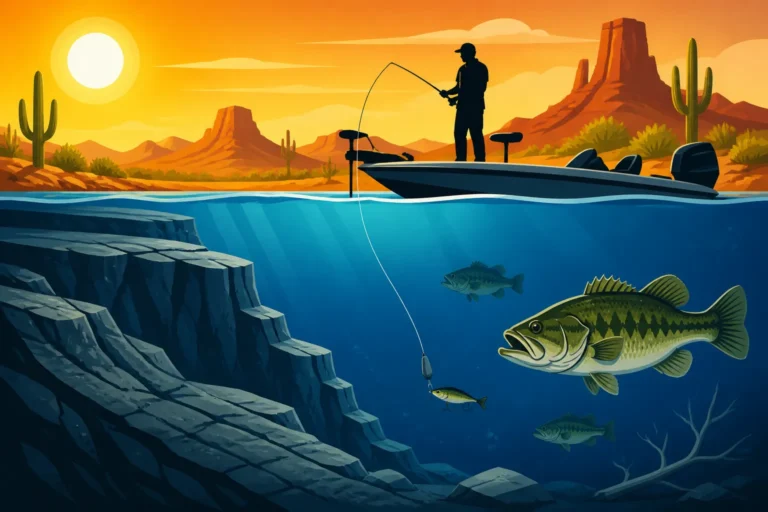
Fish, particularly bass and crappie, will often congregate around the thermocline. It's their sweet spot: cool enough to be comfortable, yet still oxygenated enough to support life. Locating this invisible layer with a quality fish finder can be a game-changer for hot weather fishing. Knowing the depth of the thermocline gives you a starting point for targeting fish that have retreated from the scorching surface.
Species-Specific Responses to Heat
Not all fish react to the heat in the same way, which is why a targeted approach is so important.
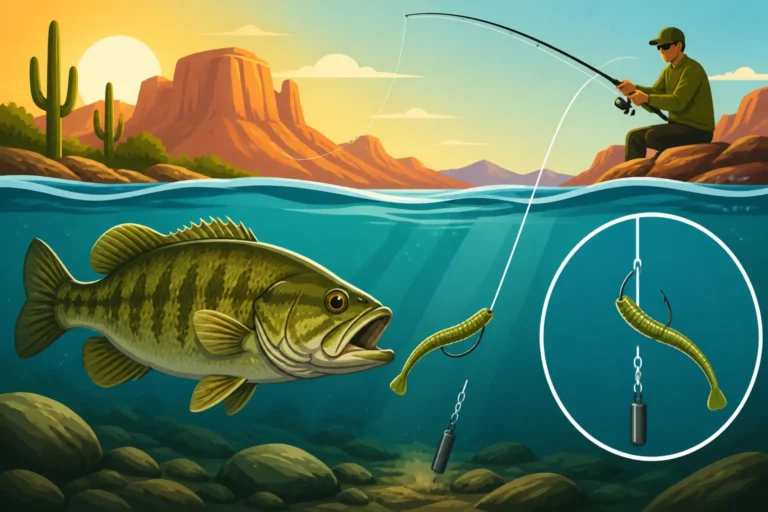
- Bass (Largemouth and Smallmouth): These popular sportfish are warm-water tolerant, but they still prefer cooler conditions. In the heat of summer, largemouth bass will often move to deeper offshore structures, submerged timber, or dense shaded cover like lily pads or overhanging trees. Smallmouth bass, commonly found in clearer, rocky environments like Lake Powell, will also seek deeper rock ledges, points, and canyon walls. They're still catchable, but you'll need to adjust your Best Bass Fishing Techniques for Arizona Lakes to find them in their thermal refuges.
- Catfish (Channel and Flathead): These are truly heat-loving fish. While they might still prefer cooler periods for active feeding, they are much more tolerant of high water temperatures than bass. In fact, some of the best catfishing in Arizona happens at night during the hottest months. They’ll often hold in deeper channels, holes, or near current breaks in rivers, but can also be found cruising shallower flats after dark.
- Crappie (Black and White): Crappie are sensitive to heat and will quickly move to deeper water and structure, often suspending in brush piles, standing timber, or under docks at the depth of the thermocline. They become quite lethargic during midday heat.
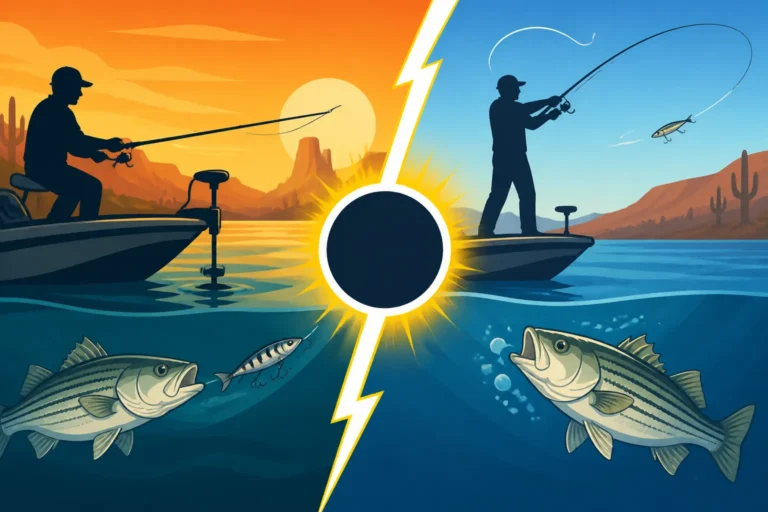
- Striped Bass: Often found in large reservoirs like Lake Pleasant and Lake Powell, stripers are pelagic (open-water) fish. In summer, they tend to follow schools of baitfish, often shad, into deeper, cooler water. They can be found in massive "boils" on the surface during cooler parts of the day, particularly early morning or late evening, but will dive deep when the sun is high. You can learn more about how to catch these powerful fish in our How to Fish for Striped Bass guide.
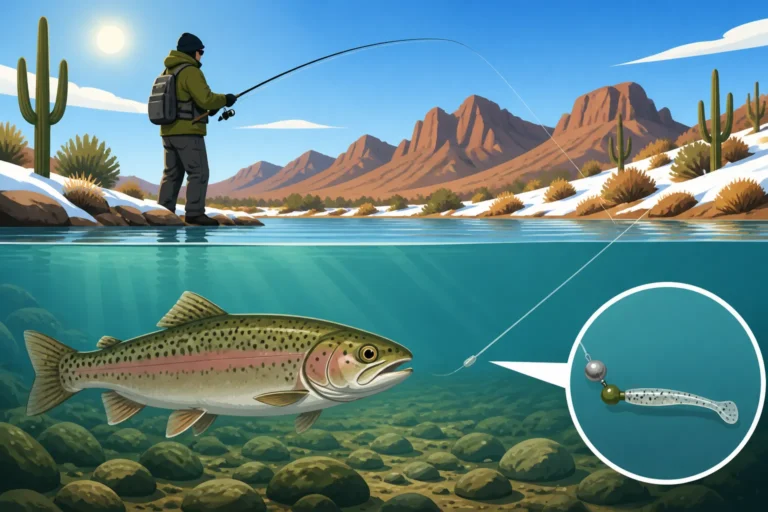
- Trout (Rainbow, Brown): These are cold-water species, plain and simple. In Arizona's low-elevation lakes, summer heat makes trout fishing extremely challenging, if not impossible, as they require colder, oxygen-rich water. They survive mainly in higher elevation lakes and streams or in intensively managed urban ponds that are frequently stocked with cooler water. Targeting them during the heat of the day in lower elevation areas is generally futile.
Early Morning: The Golden Hour for Anglers
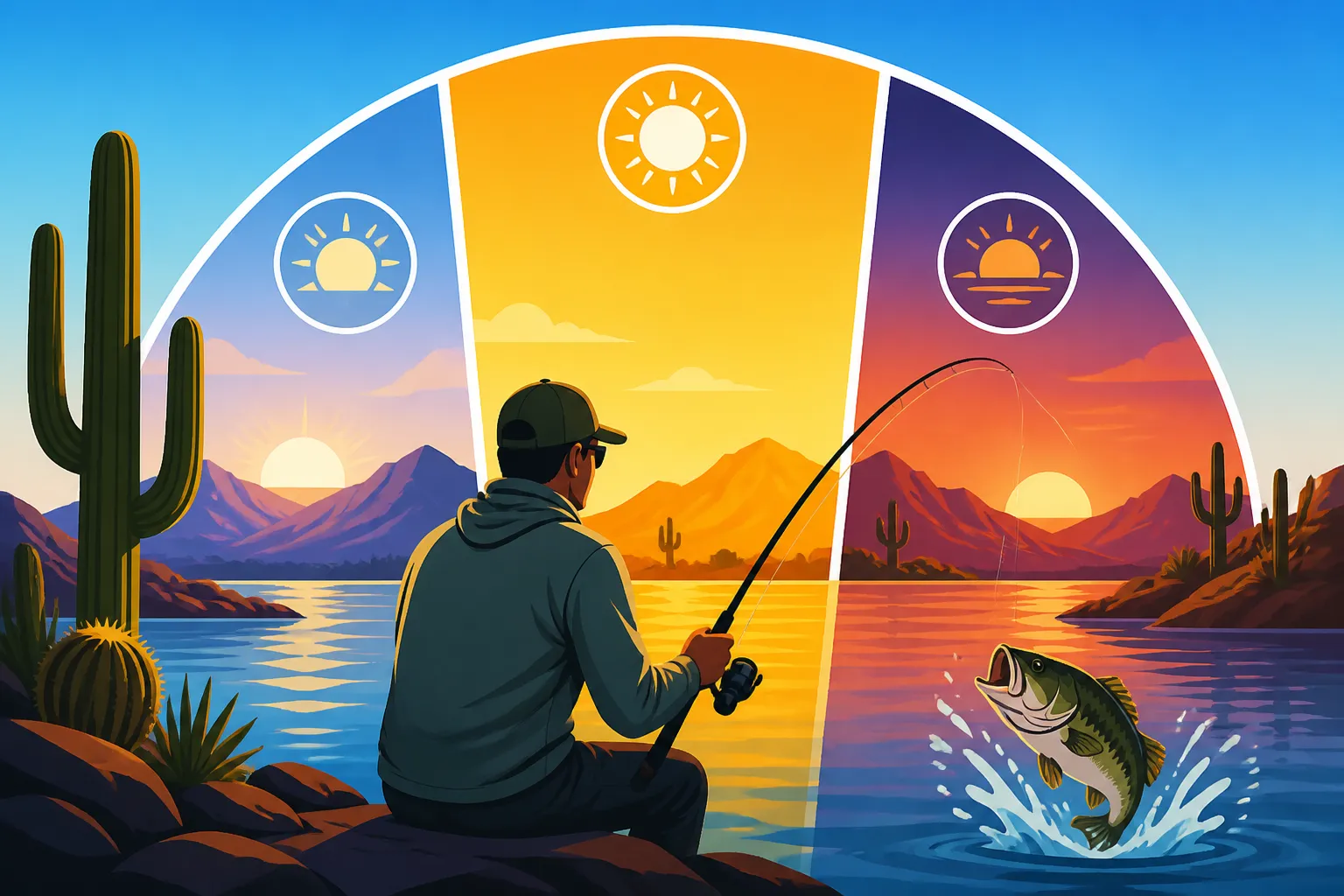
If there's one time of day that stands out for hot weather fishing in Arizona, it's the period right around sunrise. This "golden hour" offers a temporary reprieve from the brutal midday sun, and fish often take advantage of the cooler temperatures and lower light conditions to feed actively.
Prime Time for Topwater and Active Feeders
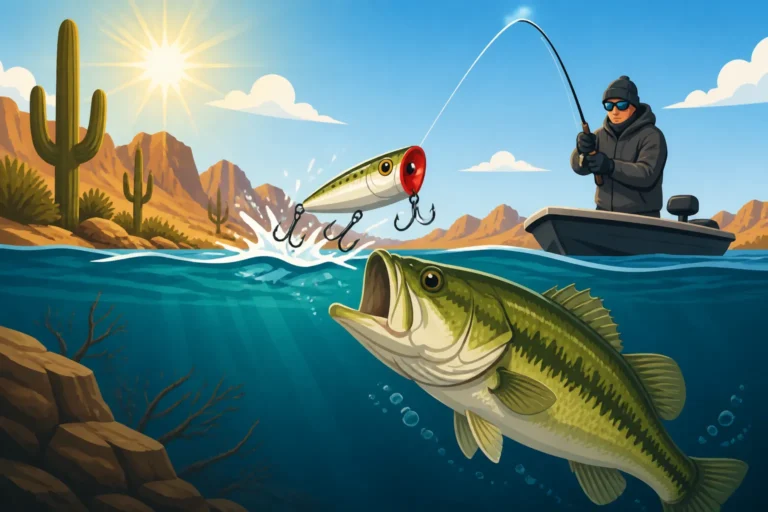
As the sun begins to peek over the horizon, the water's surface is at its coolest point, and ambient light is minimal. These conditions are ideal for many predatory fish to move into shallower waters and ambush prey. This is prime time for throwing topwater lures – poppers, walk-the-dogs, and buzzbaits – especially for largemouth and smallmouth bass. The explosive strikes on topwater are incredibly exciting and often the most productive way to target active fish.
Beyond topwater, this low-light period is excellent for reaction baits like spinnerbaits, crankbaits, and swimbaits, which can draw strikes from fish that are actively foraging before they retreat to deeper, cooler water. Striped bass often exhibit dramatic "boils" during this time, crashing baitfish on the surface, offering thrilling opportunities for fast and furious action. For many species, this narrow window is when they are most willing to chase a presentation.
Pre-Sunrise Prep and Launching Strategies
To truly maximize the early morning bite, you need to be on the water before the sun is up. This means setting your alarm for an ungodly hour, especially in summer, but the payoff is often worth it. Pre-dawn preparation is key: have your boat launched, tackle organized, and rods rigged the night before. By the time you start fishing, you want to be focused on the water, not fumbling with gear.
Arriving at the lake or river in the dark also means you can secure a prime spot before the crowds descend. Many popular Arizona fishing lakes, especially those near major cities, can get incredibly busy as the day progresses. Getting an early start means more peaceful fishing and less competition. Consider launching from a reliable marina or public boat ramp well before first light.
Targeting Specific Species in the AM
While bass are often the stars of the early morning show, other species are also highly active:
- Largemouth Bass: Look for them around shallow cover – docks, lily pads, submerged brush, rocky points, and weed lines. Topwater frogs in thick vegetation or a popper near boat docks can be incredibly effective.
- Smallmouth Bass: Target rocky banks, ledges, and points with small crankbaits, jerkbaits, or even topwater lures like a walking bait. Lake Powell, with its extensive canyon walls, is a fantastic place for smallmouth action at dawn.
- Striped Bass: Keep an eye out for surface activity (boils!) or use a good fish finder to locate schools of baitfish and stripers suspending beneath them. Throwing heavy spoons, swimbaits, or topwater plugs into these boils can yield multiple hook-ups.
- Crappie: While less prone to surface activity, crappie will often move to the shallower edges of their deep-water structure during low light. Present small jigs or minnows near brush piles or standing timber as the sun rises.
- Catfish: Though often considered nocturnal, catfish will still be active and feeding during the pre-dawn and early morning hours, especially in rivers or areas with current. Use stink baits or cut bait on the bottom.
Late Evening and Night Fishing: Beating the Midday Sun
Just as the sun's first rays bring activity, its setting provides another excellent opportunity to target fish in Arizona's heat. As the air cools and the light fades, many fish that retreated to deep water or heavy cover during the day venture out to feed. For some species, the night is when they truly shine.
The Lure of Cooler Temperatures After Dark
As the sun dips below the horizon, the intense solar radiation ceases, and the ambient temperature begins to drop. While the water won't cool dramatically for several hours, the reduced light and a slight temperature drop are enough to trigger renewed feeding activity in many fish. This is particularly true in shallower areas that may have become too hot and bright during the day. Baitfish will often move into these shallows, and predators will follow.
Night fishing in Arizona offers a unique tranquility, far removed from the crowded daytime lakes. The air is often refreshingly cool, and the sounds of wildlife become more pronounced. For many, it's not just about catching fish, but about experiencing the lake in a completely different, peaceful way. This is especially true if you are fishing in some of the Best Urban Fishing Lakes in Arizona, which can be very busy during the day.
Gear and Safety for Nocturnal Angling
Night fishing, while rewarding, requires specific gear and heightened safety awareness.
- Lighting: A reliable headlamp is crucial. Consider one with a red light option to preserve your night vision. Many anglers also use boat-mounted lights or submersible lights to attract baitfish, which in turn attract predators.
- Navigation: If boating, ensure your navigation lights are in perfect working order. A GPS unit or chart plotter is invaluable for navigating in the dark, especially on unfamiliar waters. Know the lake or river thoroughly before venturing out at night.
- Visibility: Wear light-colored clothing. If fishing from the bank, make sure your area is well-lit and free of tripping hazards.
- Safety Gear: Always have a fully charged phone, extra batteries, a first-aid kit, and enough PFDs (personal flotation devices) for everyone on board. It’s harder to spot trouble in the dark.
- Specialized Baits: Consider glow-in-the-dark lures, lures with rattles, or scents to appeal to the fish's other senses. You can often find a good selection of these specialized baits on Amazon, making it easy to stock up before your night trip.
Best Baits and Techniques for Night Fishing
Night fishing favors presentations that are slower, more visible, or more audible to fish operating in low light. Our Night Fishing Techniques and Safety guide covers this in more detail.
- Catfish: Nighttime is prime time for channel and flathead catfish. Use strong-smelling baits like cut bait (shad, bluegill), chicken liver, or prepared stink baits. Fish them on the bottom with a Carolina rig or a simple slip-sinker rig. Target deeper holes, channels, or current breaks in rivers. Many anglers swear by the effectiveness of fishing multiple rods with different baits to see what the fish are keying in on.
- Bass: Largemouth bass will often move shallow after dark, particularly around docks with lights, shallow points, and rocky areas. Black or dark-colored spinnerbaits (with large thumping blades), slow-rolled deep diving crankbaits, or even large worms and jigs worked slowly can be very effective. The silhouette of a dark lure against the faint moonlight can be irresistible.
- Crappie: Crappie are attracted to light at night. Many anglers use submersible green or white lights to draw in zooplankton and baitfish, creating a feeding frenzy beneath their boat. Small jigs tipped with minnows or crappie nibblers fished directly in the light cone are deadly.
- Striped Bass: While surface boils are less common at night, stripers will still feed in the darkness. Trolling large swimbaits or deep-diving crankbaits can be productive, as can fishing live bait (like shad) on the bottom or suspended at the depth of bait schools.
Midday Strategies: When You Absolutely Have to Fish
Let's face it, sometimes life only allows for midday fishing, or you're already out there when the heat ramps up. While it’s certainly the most challenging time to fish in Arizona, it’s not entirely impossible to find success. You just need to drastically change your approach and focus on areas where fish can escape the intense sun and heat.
Deep Water Tactics and Structure Fishing
When the sun is high and temperatures are peaking, fish will retreat to the coolest, most stable environment they can find. This usually means deep water. Learning to effectively fish deep water structures is paramount. Look for submerged humps, ledges, points, roadbeds, old creek channels, and standing timber. These areas provide both cover and cooler temperatures.
Techniques like drop-shotting, Carolina rigging, and deep jigging become your bread and butter. Use sensitive rods and braided line with a fluorocarbon leader to detect subtle bites in deep water. Pay close attention to your fish finder to identify these structures and mark any fish you see holding near them. Remember the thermocline we discussed earlier? This is where it becomes your best friend, guiding you to the most comfortable depth for suspended fish. Our guide on How to Fish Arizona's Desert Lakes dives deeper into these strategies.
Flipping, Pitching, and Heavy Cover
If fish aren't in deep water, their other primary escape route is dense, overhead cover that provides shade and a slight temperature drop. This could mean thick mats of vegetation, dense submerged brush piles, deep docks, or overhanging trees. Targeting these areas requires specialized techniques like flipping and pitching.
Flipping and pitching are precision casting techniques designed to present your bait quietly and accurately into small openings in heavy cover. Use heavy-action rods, strong braided line, and weedless baits like Texas-rigged soft plastics (worms, creature baits) or stout jigs. The bite in this heavy cover can be subtle, but often aggressive once you hook up. It's a game of patience and persistence, but finding a shaded hideout can often reveal a concentration of reluctant feeders.
Finding Shade and Oxygenated Water
Beyond just depth and cover, actively seeking out shade is a midday no-brainer. This could be the shaded side of a cliff face, a large bridge, or even the shadow cast by your boat or a large tree. Even a few degrees of temperature difference in the shade can make fish more comfortable and willing to bite.
Oxygenated water is another crucial factor. While deep water is cool, if it's anoxic, fish won't be there. Look for areas with some current or inflow, or even near aerators in urban ponds. In rivers, current breaks and eddies can concentrate oxygen and provide slightly cooler water. Wind-blown points can also push warmer surface water away, drawing cooler water and baitfish closer to the surface on the windward side. For example, the community lakes mentioned in our Arizona Community Fishing Program Rules are often equipped with aerators, making them potential midday havens.
Seasonal Adjustments for Time of Day
While the focus here is on "Arizona heat," the intensity and duration of that heat vary drastically throughout the year. Adapting your time-of-day strategy to the specific season is crucial for consistent success.
Spring and Fall Transitions
These shoulder seasons are arguably the best times to fish in Arizona because the extreme temperatures of summer and winter are less prevalent.
- Spring: As water temperatures rise from winter lows, fish become incredibly active. Early spring can still favor midday fishing as fish seek warmth, but by late spring, the early morning and late evening bites become dominant, especially as fish move into shallower areas for spawning. You have a wider window of opportunity throughout the day compared to summer.
- Fall: Similar to spring, fall offers excellent fishing as water temperatures cool. Fish are often on the move, fattening up for winter. The early morning and late evening bites are strong, but midday can still be productive, particularly in early fall before the water gets too cold. Don't overlook the potential for extended feeding windows during overcast days in these seasons.
Winter Fishing: Less About Heat, More About Cold
Winter in Arizona, particularly in the lower elevations, can still offer fantastic fishing, but the time-of-day strategy flips on its head.
- Midday is Key: Instead of avoiding the sun, you'll be chasing it! Fish, especially warm-water species like bass, will often move to shallower, sun-warmed flats, dark bottoms, or rocks that absorb heat during the brightest, warmest part of the day. This is when the water temperature is at its highest, however slightly.
- Slow Presentations: Even during the midday window, fish are lethargic due to cold water. Slow-moving baits like jigs, spoons, and slow-rolled crankbaits are generally more effective. Fish are less likely to chase.
- Target Specific Lakes: Many of the larger desert lakes like Lake Pleasant or Roosevelt Lake remain productive throughout the winter. Trout stocking also ramps up in urban lakes during the cooler months, making for great family fishing, often best during the mild midday sun. Our Trout Stocking Season in Arizona guide provides more specific details.
Monsoon Season Considerations
Arizona's monsoon season (typically July to September) presents a unique set of challenges and opportunities. While the overall heat persists, sudden, violent thunderstorms can dramatically impact fishing conditions.
- Pre-Storm Activity: Often, fish become very active just before a monsoon storm rolls in, sensing changes in barometric pressure. This can lead to phenomenal, albeit brief, feeding frenies.
- During and After Storms: Fishing during an active thunderstorm is dangerous and should be avoided. After a storm, the influx of cooler, muddy water into a lake or river can be a mixed bag. The cooler water can trigger feeding, but heavy siltation might deter some species or make sight fishing impossible. For catfish, however, muddy water can often be a boom, as they rely more on scent.
- Safety First: During monsoon season, always keep an eye on the sky and weather forecasts. If you see dark clouds gathering or hear thunder, pack up and get off the water immediately. Lightning is a serious threat on open water. You can read up on more about this in our Arizona Monsoon Season Fishing Guide.
Essential Gear and Safety for Hot Weather Fishing
Regardless of the time of day you choose to fish, if you're out in Arizona's heat, being prepared with the right gear and safety measures is non-negotiable. This isn't just about comfort; it's about staying safe and healthy.
Hydration and Sun Protection are Non-Negotiable
This point cannot be stressed enough: Arizona's heat is dangerous. Dehydration and sunstroke are real risks.
- Hydration: Bring more water than you think you'll need. Electrolyte drinks are also excellent for replenishing what you lose through sweat. Insulated coolers are a must to keep your drinks ice cold. Many anglers keep a small, personal cooler, easily found on Amazon, stocked right next to them in the boat or on the bank.
- Sunscreen: Apply a broad-spectrum, high-SPF sunscreen liberally and reapply frequently, even on overcast days or if you're in the shade. Don't forget sensitive areas like your ears, neck, and the tops of your feet if wearing sandals.
- Protective Clothing: Long-sleeved, lightweight, breathable shirts with UPF (Ultraviolet Protection Factor) ratings are your best friend. Look for fabrics that wick moisture away from your skin. A wide-brimmed hat provides crucial shade for your face and neck, and polarized sunglasses protect your eyes from glare and harmful UV rays, while also helping you spot fish.
- Cooling Towels: These simple yet effective accessories, often just damp microfiber towels, can provide instant relief when draped around your neck. You can find many options for these on Amazon as well.
Boating and Bank Fishing Safety in the Heat
Beyond personal safety, be mindful of your surroundings and equipment.
- Boat Maintenance: Ensure your boat's engine is in top condition to avoid breakdowns in remote areas. Check your battery, fuel levels, and safety equipment like life jackets and a working horn. The heat can be brutal on electronics and batteries.
- Emergency Plan: Always tell someone where you're going and when you expect to return. Have a fully charged cell phone (though service can be spotty in some remote areas).
- Cooler Management: If you plan to keep fish, a good cooler filled with ice is essential to keep your catch fresh in the intense heat. Our guide on Best Coolers for Hot-Weather Fishing in Arizona offers specific recommendations.
- Footwear: Wear closed-toe shoes to protect your feet from hot surfaces, sharp objects, and potential snake bites if bank fishing.
- Wildlife Awareness: Arizona is home to various wildlife, including snakes (rattlesnakes especially), scorpions, and other critters that might also be seeking shade. Be aware of your surroundings, particularly when stepping into overgrown areas or reaching into tight spaces.
Specialized Gear for Hot Weather Success
While the basics cover your safety, some specific gear can enhance your hot weather fishing experience. Our Best Tackle for Desert Lake Fishing guide goes into more depth.
- Rod and Reel: Lighter tackle can make fighting fish less fatiguing in the heat, but don't sacrifice power if you're targeting larger species.
- Line: Fluorocarbon line can be a good choice for clear desert lakes due to its low visibility and good abrasion resistance. Braided line offers superior strength and sensitivity, especially for deep-water techniques.
- Terminal Tackle: Bring a variety of hooks, weights, and swivels to adapt to different depths and conditions.
- Bait Storage: If using live bait, ensure you have a functioning aerated baitwell or a well-insulated bait bucket to keep them alive and lively in the heat.
- Fish Finder: As discussed, a reliable fish finder with temperature readings and depth capabilities is invaluable for locating fish in deep water and identifying thermoclines.
By prioritizing safety and understanding fish behavior in Arizona's heat, you can turn what might seem like an insurmountable challenge into a rewarding fishing adventure. Whether you're chasing the golden hour bite or enjoying the tranquility of a night fishing excursion, a little planning goes a long way.
Time of Day Fishing Strategy Matrix for Arizona Heat
To help visualize your strategy, here's a quick reference guide based on common fish species and fishing conditions in Arizona's scorching climate.
| Time of Day | Target Species | Typical Location/Depth | Recommended Techniques | Key Considerations |
|---|---|---|---|---|
| Pre-Dawn/Early Morning | Largemouth Bass, Smallmouth Bass, Striped Bass, Catfish, Crappie | Shallow banks, weed lines, rocky points, surface (for boils), brush piles | Topwater, spinnerbaits, crankbaits, swimbaits, jigs, live bait (minnows, shad) | BEST active feeding window. Beat the crowds. Prepare gear night before. |
| Midday (High Sun) | Catfish, Deep Bass, Deep Crappie, Striped Bass | Deep humps, ledges, submerged timber, heavy overhead cover, thermocline | Deep jigs, Carolina rigs, drop shots, flipping/pitching, heavy spoons, live bait | CHALLENGING. Focus on depth, shade, oxygenated water. Prioritize hydration/sun protection. |
| Late Afternoon/Evening | Catfish, Largemouth Bass, Striped Bass, Crappie | Shallow flats, points, deep edges, brush piles, dock lights | Spinnerbaits, crankbaits, soft plastics, live bait (cut bait), topwater (as sun sets) | Fish activity increases as sun drops. Good transition bite. |
| Night Fishing | Catfish, Largemouth Bass, Crappie, Striped Bass | Deep holes, current breaks, shallow flats, light sources (docks, submersible lights) | Live bait (cut bait, worms, minnows), dark-colored jigs, slow-rolled spinnerbaits, scent-infused baits | EXCELLENT for nocturnal species. Requires specific lighting and safety gear. |
Disclaimer
Fishing conditions and regulations in Arizona can change. Always check the latest Arizona Game and Fish Department regulations before heading out. This guide provides general advice and should not replace official guidelines or common-sense safety practices.