Night Fishing Spots Near Phoenix
For many anglers in Arizona, the scorching daytime sun can put a real damper on their fishing plans. The heat isn't just uncomfortable; it can also make the fish less active, sending them deep or into hiding. This is where night fishing near Phoenix truly shines, offering a cooler, quieter, and often more productive alternative. If you've been yearning for a peaceful fishing experience where the big ones come out to play, this guide is your go-to resource for discovering the best spots and strategies for after-dark angling in the Valley of the Sun.
Why Night Fishing is a Game-Changer in the Desert
Let's face it, fishing in Arizona during July at high noon is less about casting lines and more about trying not to melt. The relentless sun drives many species of fish into deeper, cooler waters, making them lethargic and less likely to bite. Night fishing flips this script entirely, transforming the entire experience into something truly magical and often more successful.
Escaping the Heat and Crowds
The most immediate benefit of night fishing in Phoenix is, without a doubt, the reprieve from the oppressive heat. As soon as the sun dips below the horizon, those triple-digit temperatures give way to a much more pleasant warmth, or even a comfortable coolness in the higher elevations. This isn't just about your comfort; it's about the fish's comfort too. Cooler surface temperatures bring many species out of their deep-water haunts, making them more accessible and active.
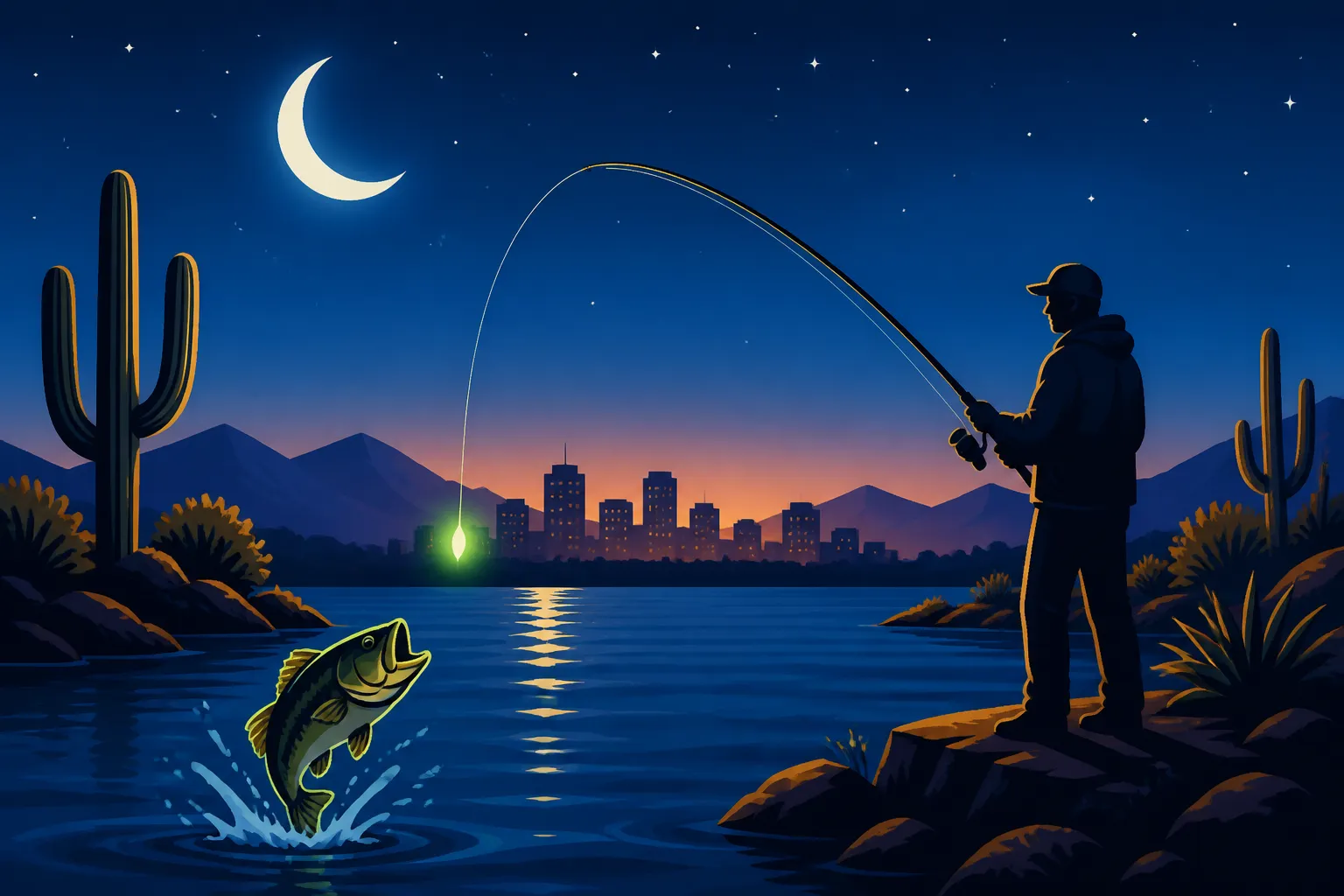
Beyond the temperature, night fishing offers an incredible sense of solitude. While popular lakes can be bustling with boats, jet skis, and swimmers during the day, the night brings a calm that's truly unmatched. You'll find fewer pleasure boaters, fewer bank anglers, and an overall more serene atmosphere. This quiet environment can be a huge advantage, as fish are often less skittish and more willing to venture into shallower feeding grounds. It's just you, the stars, and the subtle sounds of the water – a perfect escape from the city's hustle and bustle.
Tapping into Nocturnal Feeding Patterns
Many of Arizona's most sought-after game fish, especially the larger ones, are primarily nocturnal feeders or become significantly more active under the cover of darkness. This shift in behavior is a goldmine for anglers willing to stay up late. Catfish, for instance, are legendary night predators. Species like channel catfish and flathead catfish rely heavily on their sense of smell and barbels to hunt in low light, making them prime targets after sunset. They move into shallower areas, closer to the banks, to forage for food that might be harder to find during the day.
Striped bass are another species that can really light up the night. At lakes like Lake Pleasant, these powerful fighters often form "boils" on the surface during cooler twilight or nighttime hours, aggressively chasing schools of baitfish. Bass, both largemouth and smallmouth, might also become more adventurous at night, moving out of heavy cover to ambush prey. The darkness provides them with a natural camouflage, giving them the confidence to hunt in areas they might avoid during the bright daylight. Understanding these Seasonal Movement Patterns of Arizona Bass can significantly increase your chances of success after hours.
Top Night Fishing Spots Near Phoenix
While the idea of night fishing is exciting, knowing where to go near a sprawling city like Phoenix is key. We're lucky to have several fantastic options within a reasonable drive, each offering its own unique opportunities for after-dark angling.
Lake Pleasant Regional Park
Lake Pleasant is arguably the most popular and productive spot for night fishing near Phoenix, and for good reason. Located just a short drive north of the city, this vast reservoir is renowned for its healthy populations of striped bass, largemouth bass, and white bass, all of which become incredibly active at night.
The sheer size of Lake Pleasant means there are countless coves, points, and underwater structures to explore. One of the biggest draws for night anglers here is the potential for incredible striped bass action. As mentioned earlier, "striper boils" where schools of stripers push baitfish to the surface are common at dusk and dawn, and often continue well into the night, especially during the warmer months. These are chaotic, exhilarating events where multiple fish can be caught in rapid succession. Targeting stripers often means looking for active feeding frenzies or fishing deep ledges and humps with cut bait or glow-in-the-dark lures. For those seeking a deeper dive into this fishery, our Lake Pleasant Arizona Fishing Guide offers even more insights.
For catfish enthusiasts, Lake Pleasant also holds a good number of channel and flathead catfish. They'll cruise the shallower flats and coves at night, making them accessible to both boat and bank anglers. You'll find good access near the main boat ramps and around the designated camping areas, though always be mindful of park rules and quiet hours if you're not staying overnight. The lighted areas around the Scorpion Bay Marina and Pleasant Harbor Marina can also attract baitfish, which in turn attract predatory species, making them excellent spots to start.
Roosevelt Lake
As Arizona's largest lake, Theodore Roosevelt Lake, often just called Roosevelt Lake, offers an immense amount of water to explore, and it's a fantastic destination for night fishing, particularly for crappie and catfish. While it's a bit further east from Phoenix than Lake Pleasant (about a two-hour drive), the rewards often justify the journey.
Roosevelt is a haven for crappie, and spring and fall nights can be absolutely phenomenal. Crappie tend to congregate around submerged timber, brush piles, and ledges. Night fishing for crappie often involves using submersible lights to attract plankton and baitfish, which in turn draw in the crappie. Anglers will typically vertical jig small jigs or minnows directly under the lights. The Tonto Creek arm and the areas around Salinity Point are known hot spots. Our comprehensive Roosevelt Lake Arizona Fishing Guide provides more details for daytime and nighttime excursions.
Catfish are also abundant here, with both channel and flathead catfish growing to impressive sizes. Flatheads particularly thrive in Roosevelt's warmer waters and rocky structure, becoming very active hunters after dark. Focus your efforts on deep bends in the river channel, rocky points, and areas with submerged timber using large cut bait or live bluegill. The quieter coves and slower-moving sections of the lake are prime territory for these nocturnal giants.
Saguaro Lake
Closer to Phoenix and part of the Salt River chain, Saguaro Lake offers a beautiful setting for night fishing with significant populations of largemouth bass, yellow bass, and channel catfish. It's an excellent choice for anglers looking for a shorter drive and a more intimate lake experience compared to the vastness of Pleasant or Roosevelt.
Saguaro's rocky banks, submerged structures, and abundant shoreline vegetation provide excellent cover for fish, which they often leave to feed at night. Largemouth bass, in particular, will venture into shallower waters after dark, making them susceptible to topwater lures that create a commotion or dark-colored jigs and worms fished slowly along the bottom. The lighted fishing piers and docks at Saguaro Lake Marina can also be productive, attracting baitfish and the predators that follow them.
For catfish, the deeper coves and the main channel offer plenty of opportunities. Using stink baits, chicken livers, or cut bait on a Carolina rig near the bottom can yield excellent results. Saguaro also has a strong population of yellow bass, which are a blast to catch at night on small spoons or jigs, often schooling up in open water. This lake provides a stunning backdrop for night fishing, with the towering saguaros silhouetted against the starry sky.
Tempe Town Lake
If you're looking for a highly accessible, urban night fishing experience right in the heart of the East Valley, Tempe Town Lake is a unique option. While it might not boast the trophy fish of the larger reservoirs, it's regularly stocked by the Arizona Game and Fish Department (AZGFD) with a variety of species, including trout in the cooler months, and always holds good populations of bass, sunfish, and catfish.
Night fishing here is often about convenience and a quick getaway. The lake is well-lit, making navigation and setup easy. Anglers target catfish using standard bottom-fishing techniques with a variety of baits. Bass can be found near the bridge pilings and lighted areas, often biting on dark-colored soft plastics or spinnerbaits. During the winter, when trout are stocked, night fishing for them can be surprisingly productive, especially if you're using PowerBait or small inline spinners.
It's crucial to check the specific regulations and operating hours for Tempe Town Lake, as they can differ from larger state parks. Some areas may have restrictions on fishing after certain hours, or require a specific permit in addition to your Arizona Fishing License Guide. However, for a quick, urban fishing fix under the stars, Tempe Town Lake is a solid contender. For more specific advice on this urban oasis, check out our Tempe Town Lake Arizona Fishing Guide.
Essential Gear and Techniques for Arizona Night Fishing
Night fishing isn't just about showing up after dark; it requires some specific gear and a tweak to your usual daytime techniques to be truly successful and, most importantly, safe. The darkness changes everything, from how fish react to how you navigate your surroundings.
Lighting and Visibility
This might seem obvious, but proper lighting is paramount. A good headlamp with a red-light option is indispensable. The red light preserves your night vision better than white light, allowing your eyes to adjust more quickly when you switch it off. Use white light sparingly, primarily for tying knots or handling fish. Portable LED lanterns are great for illuminating your general area, especially if you're bank fishing, but ensure they don't create too much glare on the water, which can spook fish.
For boat anglers, navigation lights are not just recommended, they are legally required for safety. Even a kayak needs a 360-degree white light to be visible to other vessels. When you're out there, you'll appreciate how clearly other boats stand out with their lights, and you want to afford them the same courtesy.
One specialized piece of gear for serious night anglers, especially those targeting striped bass or using monofilament line, is a black light. Black lights illuminate fluorescent fishing lines (many mono lines have fluorescent properties), allowing you to see subtle bites and line movements you'd otherwise miss in the dark.
Bait and Lure Selection
The darkness affects a fish's primary senses. While sight is diminished, their lateral line (which detects vibrations) and sense of smell become even more crucial. This means your bait and lure choices need to reflect that.
- For Catfish: You can't go wrong with strong-smelling baits. Stink baits, cut bait (like shad or hot dogs), chicken liver, and even shrimp are all highly effective. The key is to get that scent trail out into the water. Our guide on the Best Bait for Catfish in Arizona offers more choices.
- For Bass and Striped Bass:
- Dark-colored lures: Black, blue, and purple lures create a stronger silhouette against the moonlit sky or lighter lake bottom, making them easier for fish to detect. Jigs, worms, and spinnerbaits in these colors are excellent choices.
- Vibrating lures: Crankbaits, bladed jigs, and ChatterBaits that produce strong vibrations can be incredibly effective. Fish can feel these vibrations through their lateral line long before they see the lure.
- Topwater: Don't shy away from topwater lures at night, especially during warmer months. Poppers, buzzbaits, and walk-the-dog style baits that create a distinct surface disturbance can draw explosive strikes from aggressive bass or stripers.
- Glow-in-the-dark lures: Some anglers swear by glow-in-the-dark jigs or soft plastics, especially for crappie or deep-water stripers. Just remember to "charge" them with a flashlight periodically.
- Check out the Best Baits and Lures for Arizona Fishing for more general recommendations that can be adapted for night fishing.
Fishing Techniques Under the Stars
Your approach to fishing will also need to adapt to the nighttime environment.
- Slow it Down: Fish are often less aggressive and more deliberate in their strikes at night. Slow your retrieve, pause frequently, and give fish plenty of time to find and commit to your bait.
- Target Structure: Just like during the day, fish relate to structure. At night, they might move shallower, but they'll still be near cover – submerged brush, rock piles, ledges, and drop-offs. Use your fish finder if you have one to locate these areas, even if you can't see them with your eyes.
- Noise Awareness: While many daytime noises are absent, be mindful of any unnatural sounds you make. Dropping tackle, loud talking, or banging around in a boat can still spook fish in the quiet of the night.
- Listen: Pay attention to the sounds of the lake. Splashes, gulping sounds, or baitfish jumping can all indicate active fish, especially striped bass.
- Patience is Key: Night fishing often involves long periods of quiet, punctuated by bursts of intense action. Stay patient, stay alert, and trust your instincts.
Here’s a quick overview of recommended gear and techniques:
| Item | Purpose | Key Features/Techniques | Target Species |
|---|---|---|---|
| Headlamp | Hands-free illumination | Red-light option (preserves night vision) | All |
| Lantern | General area lighting (bank/boat) | Soft light, not too bright to spook fish | All |
| Black Light | See fluorescent line for subtle bites | Illuminates mono line; great for stripers | Stripers, Bass |
| Heavy-Scent Baits | Attract fish by smell | Stink baits, cut bait, chicken liver, shrimp | Catfish |
| Dark-Colored Lures | Strong silhouette visibility | Black, blue, purple jigs, worms, spinnerbaits | Bass, Stripers |
| Vibrating Lures | Attract fish via lateral line | Crankbaits, bladed jigs, ChatterBaits | Bass, Stripers |
| Topwater Lures | Surface commotion | Poppers, buzzbaits, walk-the-dog (dawn/dusk/full moon) | Bass, Stripers |
| Submersible Lights | Attract plankton & baitfish | Green or white LED lights dropped into water | Crappie |
| Slow Retrieves | Give fish time to react | Pause frequently, subtle movements | All |
| Target Structure | Find fish hideouts/feeding lanes | Ledges, coves, submerged timber, bridge pilings | All |
For a comprehensive guide on specific night angling methods, our article on Night Fishing Techniques and Safety offers even more valuable tips. If you're looking to learn from local experts who know these waters like the back of their hand, platforms like FishingBooker can help you find and book experienced guides for a night fishing adventure, ensuring you hit the prime spots with the right gear.
Safety and Regulations for Night Angling
While night fishing offers unparalleled tranquility and excitement, it's crucial to prioritize safety and adhere to all regulations. The darkness adds an extra layer of challenge, so preparation is key.
Essential Safety Preparations
The desert environment at night can be deceiving. What seems like a comfortable temperature can drop significantly, especially in the higher desert elevations or if a breeze picks up.
- Tell Someone Your Plans: Always inform a friend or family member exactly where you are going and when you expect to return. Share your specific location if possible, especially if you're venturing off-the-beaten-path.
- Dress in Layers: Even if it's hot during the day, nights can get cool. Bring extra layers of clothing, including a waterproof jacket, just in case.
- Bring Plenty of Water and Snacks: Dehydration is a year-round concern in Arizona. Even though it's cooler at night, you're still exerting yourself.
- First-Aid Kit: A well-stocked first-aid kit is essential for any outdoor excursion, doubly so at night when help might be harder to reach.
- Communication Device: Ensure your cell phone is fully charged. Consider a portable charger. If you're in a remote area, a satellite messenger might be a wise investment.
- Navigation: If you're boating, have a reliable GPS or chart plotter. Know the waterbody well before venturing out at night. Marked hazards that are visible during the day disappear after dark.
- Personal Flotation Devices (PFDs): These are non-negotiable, especially for boat and kayak anglers. Wear your PFD, don't just have it on board. The water can be pitch black, and disorientation can set in quickly if you fall in. Remember, PFD Requirements for Kids in Arizona are strict, but it's wise for all ages to wear them at night.
- Insect Repellent: Mosquitoes and other biting insects can be quite active around water bodies at night, especially during the monsoon season.
- Wildlife Awareness: Coyotes, javelina, and even snakes are more active at night. Be aware of your surroundings and avoid leaving food out.
Understanding Arizona Fishing Regulations
Just because it's dark doesn't mean the rules change! All standard Arizona fishing regulations apply to night fishing.
- Fishing License: You absolutely need a valid Arizona fishing license. Make sure you understand the Arizona Fishing License Guide and that your license is current. There are different Arizona Fishing License Types Compared for residents and non-residents, and even specific Fishing License Age Requirements in Arizona.
- Bag and Possession Limits: Be aware of the daily bag and possession limits for the species you are targeting. These limits are in place to ensure sustainable fish populations. Our Fishing Bag and Possession Limits Explained article can clarify these rules.
- Species-Specific Rules: Some fish have specific length limits or seasons. For example, certain bass species might have slot limits, or trout may have different rules in specific waters. Consult the current AZGFD fishing regulations booklet, which you can usually find online or at license dealers.
- Prohibited Baits and Methods: Ensure any bait you use is legal for the specific body of water. Some waters prohibit live bait or certain types of baitfish.
- Park Hours and Access: Double-check the operating hours of any park or lake you plan to visit. While some state parks offer 24-hour access, many smaller community lakes and city parks close at sunset. Trespassing or fishing in closed areas can result in fines.
- Leave No Trace: Pack out everything you pack in. Leave the fishing spot cleaner than you found it. This includes fishing line, bait containers, and any trash. This ensures these beautiful spots remain enjoyable for everyone.
Before heading out, a quick visit to the Arizona Game and Fish Department website or picking up a physical copy of their annual regulations booklet is always a good idea. Staying informed keeps you safe and ensures you're a responsible angler. When planning a guided trip, a charter service found on platforms like FishingBooker will typically handle all the regulatory compliance for you, allowing you to focus purely on the fishing.
Disclaimer
Please note that fishing conditions, regulations, and access points can change. Always consult the latest Arizona Game and Fish Department regulations before heading out. Exercise caution and prioritize safety when enjoying any outdoor activity, especially during nighttime hours.